Things to do in the Basque Country: stroll through Petit Bayonne and taste the ham and chocolate, watch the surfers at Biarritz and Anglet, explore the harbour at Saint-Jean-de-Luz, follow the Basque Corniche to Hendaye, ride the little train up La Rhune and wander through the villages of Espelette, Sare and Ainhoa. The French Basque Country has two complementary faces: a lively Atlantic coast from Bayonne to Hendaye and a green, hilly hinterland stretching to the Pyrenees.
The best times are June and September, with mild days, an ocean warm enough for swimming and fewer crowds than in July and August. Be warned: this is one of the rainiest regions in France, even in summer. This guide covers the highlights, two itineraries, budget, transport, where to stay and the month-by-month climate based on Météo-France normals.

Our travel deals for Basque Country
Affiliate links: we earn a commission, at no extra cost to you.
 FlightsKiwi.comCompare flights and airline combinations to Basque Country.Compare flights

French Basque Country at a glance
- Location western Pyrénées-Atlantiques(the provinces of Labourd, Lower Navarre and Soule), on the border with Spain
- Main towns Bayonne, Biarritz, Anglet, Saint-Jean-de-Luz, Hendaye
- Language French; Basque (Euskara) is widely used on signs
- Currency the euro · currencies
- Airports Biarritz-Pays Basque (in Anglet)Direct TGV inOui and Ouigo trains link Paris-Montparnasse with Bayonne, Biarritz, Saint-Jean-de-Luz and Hendaye
- Entry US and UK citizens: no visa for up to 90 days in the Schengen area · travel.state.gov · GOV.UK
- Electricity check voltage and plug types before you go · plugs
- Recommended length a long weekend for the coast, a week with the interior
- Budget see our budget section
When to go to the Basque Country
The best months are June and September, followed by May and October. The climate is oceanic, mild and damp: in Biarritz the average high never exceeds 25.1 °C (77 °F) (August) and winter stays mild (12 to 13 °C, 54 to 55 °F, in the afternoon). But an average of 1473.6 mm (58.0 in) of rain falls each year, spread over about 141 rainy days, with a peak in November (206.9 mm (8.1 in)). Even in July there are on average more than 9 rainy days. Days with a warm, dry south wind can push temperatures up in any season.
When to go to the Basque Country: key points
- Best times: June and September; May and October for hiking
- Swimming: from late June to late September, on supervised beaches
- Surfing: all year round, bigger waves from autumn to spring
- Warmest month: August, average high of 25.1 °C (77 °F) in Biarritz
- Wettest month: November, 206.9 mm (8.1 in) on average
- Avoid if possible: 15 August and the week of the Fêtes de Bayonne if you want peace and quiet
| Month | Avg max | Avg min | Rain | Crowds | Prices | Verdict |
|---|---|---|---|---|---|---|
| January | 12.2 °C (54 °F) | 5.0 °C (41 °F) | 139.6 mm (5.5 in) | Very low | Low | ❌ Mild but very wet |
| February | 12.8 °C (55 °F) | 4.9 °C (41 °F) | 110.4 mm (4.3 in) | Very low | Low | ⚠️ Wet, good swells for surfing |
| March | 15.2 °C (59 °F) | 7.1 °C (45 °F) | 102.8 mm (4.0 in) | Low | Low | ⚠️ Early spring, changeable weather |
| April | 16.8 °C (62 °F) | 8.8 °C (48 °F) | 117.7 mm (4.6 in) | Moderate (Easter) | Moderate | ⚠️ Green countryside, frequent showers |
| May | 19.9 °C (68 °F) | 11.9 °C (53 °F) | 116.1 mm (4.6 in) | Moderate (holiday weekends) | Moderate | ✅ Hiking and villages, cool ocean |
| June | 22.5 °C (72 °F) | 14.9 °C (59 °F) | 99.2 mm (3.9 in) | Moderate to high | High | ✅ Long days, first swims |
| July | 24.2 °C (76 °F) | 16.9 °C (62 °F) | 77.3 mm (3.0 in) | Very high | Very high | ⚠️ Least rainy month, but crowds and high prices |
| August | 25.1 °C (77 °F) | 17.2 °C (63 °F) | 87.5 mm (3.4 in) | Very high | Very high | ⚠️ Warmest, coast packed |
| September | 23.3 °C (74 °F) | 14.5 °C (58 °F) | 118.2 mm (4.7 in) | Moderate | Moderate | ✅ Ocean still mild, fewer people |
| October | 20.2 °C (68 °F) | 11.9 °C (53 °F) | 147.3 mm (5.8 in) | Low | Moderate to low | ⚠️ Autumn colours, more rain |
| November | 15.4 °C (60 °F) | 7.9 °C (46 °F) | 206.9 mm (8.1 in) | Very low | Low | ❌ Wettest month |
| December | 12.9 °C (55 °F) | 5.7 °C (42 °F) | 150.6 mm (5.9 in) | Low | Low | ❌ Wet, festive atmosphere in town |
- Spring (March to May): the hills are very green and the villages quiet. Afternoons reach 15 to 20 °C (59 to 68 °F), with frequent showers: ideal for hiking, less so for the beach.
- Summer (June to August): 22 to 25 °C (72 to 77 °F), the least rainy period, but also the busiest on the coast. The Fêtes de Bayonne, at the end of July, draw huge crowds.
- Autumn (September to November): September is often the best month, with the ocean still mild. October remains pleasant; Espelette celebrates its pepper at the end of the month. November is the wettest month of the year.
- Winter (December to February): mild but damp. Experienced surfers enjoy the big swells; the towns stay lively, but some coastal accommodation closes.
To compare with other late-summer destinations, see our selection of where to go in September.
Things to do in the Basque Country: the highlights
Bayonne
Where the Nive meets the Adour, Bayonne is the capital of the northern Basque Country. The Nive quays with their colourful half-timbered houses, Sainte-Marie cathedral and its cloister, and Petit Bayonne, home to the Basque Museum, are all easy to explore on foot. It is also the town of ham and chocolate, and several makers open their shops to visitors. Every summer, at the end of July, the Fêtes de Bayonne bring together hundreds of thousands of people dressed in white and red.
Biarritz
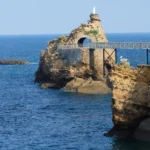
A seaside resort born in the 19th century, Biarritz combines Belle Époque architecture with surf culture. Walk from the lighthouse to the Grande Plage, then on to the Rocher de la Vierge, linked to the shore by a footbridge. The Côte des Basques beach, at the foot of the cliffs, is the historic birthplace of surfing in France. The Aquarium and the Cité de l’Océan are good options on rainy days.
Anglet and the surf beaches
Between Bayonne and Biarritz, Anglet has several kilometres of sandy beaches in a row, popular with surfers and surf schools. A promenade runs along the shore, and the Pignada forest behind it provides shade for walks and bike rides.
Saint-Jean-de-Luz and Ciboure
Saint-Jean-de-Luz, a fishing port and family resort, opens onto a bay sheltered by sea walls, one of the few calm beaches on this coast. The church of Saint-Jean-Baptiste, where Louis XIV married the Infanta Maria Theresa in 1660, and the shipowners’ houses of the old town are well worth a look. Across the harbour, Ciboure, birthplace of Maurice Ravel, keeps its Basque houses along the port.
The Basque Corniche, Guéthary and Hendaye
Between Saint-Jean-de-Luz and Hendaye, the Basque Corniche runs along flysch cliffs, layers of flaky rock plunging into the ocean; a coastal path lets you walk part of it. North of Saint-Jean-de-Luz, Guéthary is a former fishing village popular with surfers. Hendaye, the border town, has a long family beach and the Château d’Abbadia, a château-observatory built in the 19th century for a scientist and explorer.
La Rhune
A 905 m (2,969 ft) summit on the Spanish border, La Rhune offers a panorama over the coast and the Pyrenees. Go up on foot (several trails) or by the little rack railway from the Col de Saint-Ignace, between Sare and Ascain; book in high season. The summit is often in the clouds: check the weather before going up. You will probably meet pottoks, the small Basque horses.
Espelette, Sare and Ainhoa
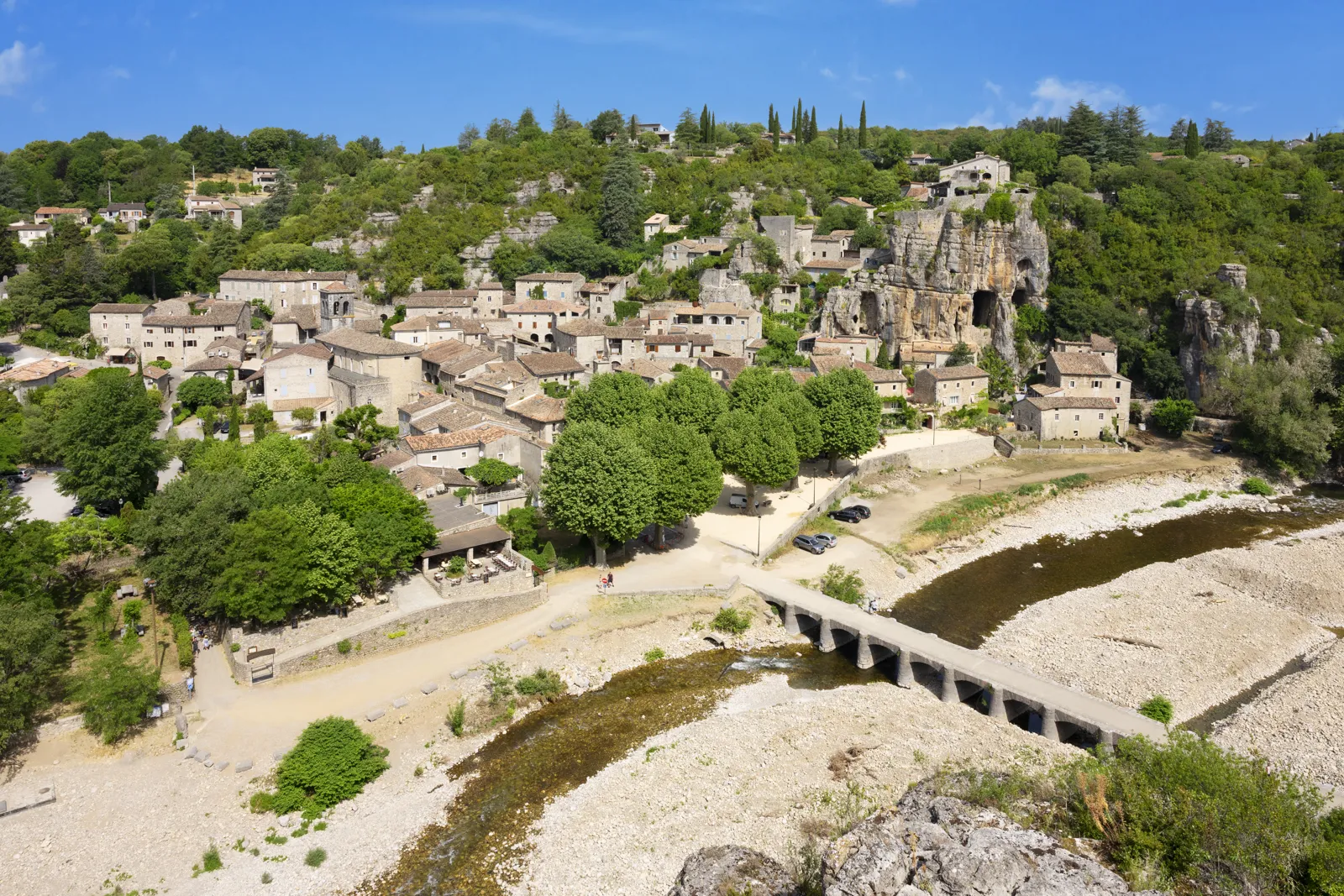
Espelette is known for its pepper, protected by an appellation of origin, which you can see drying in garlands on the façades in autumn. Sare, at the foot of La Rhune, has caves open to visitors. Ainhoa, a one-street bastide lined with white houses with red or green shutters, is among the most photographed villages. On every square, the pelota fronton (wall) recalls the importance of Basque pelota.
Cambo-les-Bains and the Nive valley
A spa town on the Nive, Cambo is home to the Villa Arnaga, Edmond Rostand’s former house surrounded by formal French gardens. Further up, Itxassou is known for its cherries and the Pas de Roland, a pierced rock by the river. Bidarray is a starting point for rafting and hiking.
Saint-Jean-Pied-de-Port, Irouléguy and the hinterland
In Lower Navarre, Saint-Jean-Pied-de-Port, a fortified town on the Nive, is a major stop on the Way of St James (Camino de Santiago) before the crossing of the Pyrenees. The Irouléguy vineyards climb the nearby slopes. Further east, the Iraty forest, one of the largest beech forests in Europe, and the Kakouetta gorges, in Soule, draw hikers.
The Spanish Basque Country
Across the Bidasoa river, Hondarribia and its old town are minutes from Hendaye, and San Sebastián (Donostia), with its Bay of La Concha and pintxos bars, about 30 km (19 mi) away. Bilbao and the Guggenheim Museum make a day trip. For more ideas beyond the Pyrenees, see our Spain guide.
Itinerary suggestions
4 days on the Basque coast
- Day 1: Bayonne (Nive quays, cathedral, Basque Museum, chocolate makers)
- Day 2: Biarritz (lighthouse, Grande Plage, Rocher de la Vierge, Côte des Basques) and Anglet
- Day 3: Guéthary, Saint-Jean-de-Luz and Ciboure
- Day 4: the Basque Corniche, Hendaye and the Château d’Abbadia, or a trip to San Sebastián
7 to 8 days between ocean and mountains
- Days 1-2: Bayonne, Biarritz, Anglet
- Day 3: Saint-Jean-de-Luz, Ciboure, the Basque Corniche
- Day 4: La Rhune by little train, Sare and its caves, Ainhoa
- Day 5: Espelette, Itxassou, Cambo-les-Bains and the Villa Arnaga
- Day 6: Saint-Jean-Pied-de-Port and the Irouléguy vineyards
- Day 7: the Iraty forest or the Kakouetta gorges
- Day 8: San Sebastián on the Spanish side
To plan the route and stops by car, see our tips for preparing a road trip. Heading north, the Dordogne makes a good stop.
How much does a trip to the Basque Country cost?
| Item (per person per day) | Budget | Comfort |
|---|---|---|
| Accommodation (sharing a double room) | roughly €35 to €60 (campsite, hostel, simple room) | roughly €100 to €180 |
| Meals | roughly €25 to €35 (set lunches, pintxos) | roughly €50 to €80 |
| Local transport | roughly €5 to €15 (bus, regional train) | roughly €15 to €25 (car) |
| Activities (surfing, little train, museums) | roughly €10 to €15 | roughly €20 to €35 |
| Total | roughly €80 to €120 per person per day | roughly €170 to €300 per person per day |
Getting there and around the Basque Country
- By train: TGV inOui and Ouigo trains link Paris-Montparnasse directly with Bayonne, Biarritz, Saint-Jean-de-Luz and Hendaye, via Bordeaux. See our tips for cheap train travel.
- By air: Biarritz-Pays Basque airport, in Anglet, has domestic and European routes that change with the seasons; check current routes with the airport and the airlines.
- On the coast: regional trains between Bayonne, Biarritz, Saint-Jean-de-Luz and Hendaye, plus the local bus network. In summer, parking in Biarritz or Saint-Jean-de-Luz is difficult.
- In the hinterland: a car is almost essential, although a railway line links Bayonne with Cambo-les-Bains and Saint-Jean-Pied-de-Port.
- To Spain: the « topo » (Spanish Basque train) runs from Hendaye to San Sebastián.
Where to stay in the Basque Country
Bayonne is the most convenient base without a car, thanks to its station and prices lower than on the seafront. Biarritz and Anglet suit beach and surf stays. Saint-Jean-de-Luz, with its sheltered bay, is ideal for families and close to La Rhune and Spain. For the interior, choose a guesthouse in Espelette, Sare, Ainhoa or Saint-Jean-Pied-de-Port. Book several months ahead for July and August.
Entry requirements, health and safety
- US citizens: you may enter the Schengen area, including France, for up to 90 days for tourism or business without a visa; your passport should be valid at least three months beyond your period of stay (six months recommended), and immigration officers may ask for proof of sufficient funds and a return ticket (U.S. Department of State, travel.state.gov, last updated August 11, 2025).
- UK citizens: no visa for up to 90 days in any 180-day period as a tourist; your passport must have been issued less than 10 years before you arrive and be valid at least 3 months after the day you plan to leave the Schengen area. The EU Entry/Exit System (EES) is being implemented: fingerprints and a photo may be taken at the border, free of charge (UK FCDO, GOV.UK, updated 22 October 2026).
- Health and emergencies: UK travellers need a GHIC or valid EHIC for medically necessary state healthcare; everyone should have travel insurance covering medical costs. Emergency numbers: 112 (European emergency number, with some English-speaking staff) and 15 (medical emergencies) (GOV.UK; travel.state.gov).
- Crossing into Spain: the U.S. State Department (travel.state.gov, last updated August 11, 2025) notes that France has temporarily reintroduced border controls with its Schengen neighbours: carry your passport for a day trip to San Sebastián.
- Ocean: swim only on supervised beaches and between the flags; the UK FCDO (GOV.UK, updated 22 October 2026) warns of strong undercurrents along the Atlantic coast. Start surfing with a school and respect the zones for surfers and swimmers.
- Hiking: fog comes down quickly on La Rhune and the ridges; check the weather and conditions, do not hike alone and leave your itinerary with someone, as GOV.UK advises for the mountains.
For surfing, rafting or a trip into Spain, check what your travel insurance covers.
Practical tips for the Basque Country
- Rain: always keep a raincoat handy; the weather changes quickly.
- Food: gâteau basque with black cherry or custard, Bayonne ham, axoa (veal stew), piperade, Ossau-Iraty sheep’s cheese, Irouléguy wine.
- Basque pelota: matches are held in many villages in summer; tourist offices publish the programmes.
- Etiquette: Basque is a living language; a few words such as « kaixo » (hello) and « milesker » (thank you) are appreciated.
- Mobile data: good coverage on the coast, patchier in the valleys; check your home carrier’s roaming charges before you go.
Frequently asked questions
What to do in the Basque Country in a weekend?
Spend one day in Bayonne and Biarritz (Nive quays, cathedral, Grande Plage, Rocher de la Vierge) and one day in Saint-Jean-de-Luz, on the Basque Corniche and La Rhune, or in the villages of Espelette and Ainhoa.
What is the best time to visit the Basque Country?
June and September: 22 to 23 °C (72 to 73 °F) in the afternoon in Biarritz according to Météo-France 1991-2020 normals, an ocean warm enough for swimming and fewer crowds than in July and August. May and October are good for hiking.
Does it rain a lot in the Basque Country?
Yes: Biarritz gets an average of 1473.6 mm (58.0 in) of rain a year, with about 141 rainy days. July is the driest month (77.3 mm (3.0 in)), November the wettest (206.9 mm (8.1 in)).
How do you get to the Basque Country?
By train, TGV inOui and Ouigo services link Paris-Montparnasse directly with Bayonne, Biarritz, Saint-Jean-de-Luz and Hendaye. By air, the nearest airport is Biarritz-Pays Basque, whose routes change with the seasons.
Do you need a car in the Basque Country?
Not on the coast, which is well served by regional trains and buses. For the inland villages, La Rhune and Soule, a car is much more practical.
Can you visit San Sebastián from the French Basque Country?
Yes, San Sebastián is about 30 km (19 mi) from Hendaye, reachable by car, bus or the Spanish Basque train from Hendaye. Carry your passport.
Our sources
- Météo-France: climate sheet for Biarritz-Pays-Basque (code 64024001), 1991-2020 statistics
- Wikipedia: « Gare de Bayonne » article (TGV inOui and Ouigo services)
- Entry requirements, health and safety checked on 26 October 2026: U.S. Department of State, France country information (last updated August 11, 2025) and UK FCDO, GOV.UK foreign travel advice for France (updated 22 October 2026)
- Our methodology
Updated October 2026.
For other French regions, see our guides to Brittany and Carcassonne, our France travel guide and our destinations in Europe.