Do you need a plug adapter? Almost certainly, for a large share of our destinations. If you travel from the United States (type A and B plugs, 120 V, 60 Hz), your plugs fit 27 of the 99 destinations in our table without an adapter, and in most others you need one. If you travel from the United Kingdom (type G, three rectangular pins, 230 V), your plug fits only 23 of the 99 destinations, and most of the rest need an adapter, although the voltage is usually the same. The table below gives, for each of the 99 destinations on our site, the plug type, voltage and frequency, plus our verdict on adapters and voltage for US and UK travelers.
Plug types are lettered A to O. In the US and Canada, sockets are types A and B; in the UK and Ireland, type G; much of continental Europe uses types C, E and F; Australia and New Zealand use type I. Compatibility depends on both the plug and the socket: a US two-pin (type A) plug also fits a type B socket, but a grounded three-pin (type B) plug does not fit a type A socket.
Plug adapters: the essentials
- From the US: no adapter in 27 of 99 destinations (types A or B); 2 accept two-pin plugs only; 70 need an adapter.
- From the UK: no adapter in 23 of 99 destinations (type G); 76 need an adapter.
- Voltage: 79 destinations run at 200 V or more, so US appliances that are not dual-voltage need a converter; 20 run at 100 to 130 V, so check the label of UK appliances.
- Phone and laptop chargers almost always say « 100-240 V »: a simple adapter is enough. Hair dryers and straighteners often do not.
- An adapter changes the plug shape, not the voltage. Only a transformer (converter) changes the voltage.
Electrical plugs by country
Plug types are lettered A to O. Click a country to open our full guide. The « Adapter » and « Voltage » columns are our reading of the data, for a traveler with US appliances (types A and B, 120 V) or UK appliances (type G, 230 V).
| Country | Plug types | Voltage | Frequency | US traveler: adapter? | US traveler: voltage issue? | UK traveler: adapter? | UK traveler: voltage issue? |
|---|---|---|---|---|---|---|---|
| South Africa | C, M, N | 230 V | 50 Hz | Yes | Dual-voltage device or converter for 120 V-only appliances | Yes | No |
| Albania | C, F | 230 V | 50 Hz | Yes | Dual-voltage device or converter for 120 V-only appliances | Yes | No |
| Germany | C, F | 230 V | 50 Hz | Yes | Dual-voltage device or converter for 120 V-only appliances | Yes | No |
| Argentina | C, I | 220 V | 50 Hz | Yes | Dual-voltage device or converter for 120 V-only appliances | Yes | No |
| Aruba | A, B, F | 127 V | 60 Hz | No | No | Yes | Check for « 100-240 V » on the label |
| Australia | I | 230 V | 50 Hz | Yes | Dual-voltage device or converter for 120 V-only appliances | Yes | No |
| Austria | C, F | 230 V | 50 Hz | Yes | Dual-voltage device or converter for 120 V-only appliances | Yes | No |
| The Bahamas | A, B | 120 V | 60 Hz | No | No | Yes | Check for « 100-240 V » on the label |
| Belgium | C, E | 230 V | 50 Hz | Yes | Dual-voltage device or converter for 120 V-only appliances | Yes | No |
| Belize | A, B, G | 110 V | 60 Hz | No | No | No | Check for « 100-240 V » on the label |
| Bhutan | C, D, F, G, M | 230 V | 50 Hz | Yes | Dual-voltage device or converter for 120 V-only appliances | No | No |
| Bolivia | A, B, C | 230 V | 50 Hz | No | Dual-voltage device or converter for 120 V-only appliances | Yes | No |
| Botswana | D, G, M | 230 V | 50 Hz | Yes | Dual-voltage device or converter for 120 V-only appliances | No | No |
| Brazil | C, N | 127 V | 60 Hz | Yes | No | Yes | Check for « 100-240 V » on the label |
| Bulgaria | C, F | 230 V | 50 Hz | Yes | Dual-voltage device or converter for 120 V-only appliances | Yes | No |
| Benin | C, E | 220 V | 50 Hz | Yes | Dual-voltage device or converter for 120 V-only appliances | Yes | No |
| Cambodia | A, C, G | 230 V | 50 Hz | Two-pin (type A) plugs only | Dual-voltage device or converter for 120 V-only appliances | No | No |
| Canada | A, B | 120 V | 60 Hz | No | No | Yes | Check for « 100-240 V » on the label |
| Cape Verde | C, F | 220 V | 50 Hz | Yes | Dual-voltage device or converter for 120 V-only appliances | Yes | No |
| Chile | C, F, L | 220 V | 50 Hz | Yes | Dual-voltage device or converter for 120 V-only appliances | Yes | No |
| China | A, I | 220 V | 50 Hz | Two-pin (type A) plugs only | Dual-voltage device or converter for 120 V-only appliances | Yes | No |
| Cyprus | G | 240 V | 50 Hz | Yes | Dual-voltage device or converter for 120 V-only appliances | No | No |
| Colombia | A, B | 120 V | 60 Hz | No | No | Yes | Check for « 100-240 V » on the label |
| South Korea | C, F | 220 V | 60 Hz | Yes | Dual-voltage device or converter for 120 V-only appliances | Yes | No |
| Costa Rica | A, B | 120 V | 60 Hz | No | No | Yes | Check for « 100-240 V » on the label |
| Croatia | C, F | 230 V | 50 Hz | Yes | Dual-voltage device or converter for 120 V-only appliances | Yes | No |
| Cuba | A, B, C, L | 110 V | 60 Hz | No | No | Yes | Check for « 100-240 V » on the label |
| Denmark | C, E, F, K | 230 V | 50 Hz | Yes | Dual-voltage device or converter for 120 V-only appliances | Yes | No |
| Egypt | C, F | 220 V | 50 Hz | Yes | Dual-voltage device or converter for 120 V-only appliances | Yes | No |
| United Arab Emirates | G | 230 V | 50 Hz | Yes | Dual-voltage device or converter for 120 V-only appliances | No | No |
| Ecuador | A, B | 120 V | 60 Hz | No | No | Yes | Check for « 100-240 V » on the label |
| Spain | C, F | 230 V | 50 Hz | Yes | Dual-voltage device or converter for 120 V-only appliances | Yes | No |
| United States | A, B | 120 V | 60 Hz | No | No | Yes | Check for « 100-240 V » on the label |
| Ethiopia | C, E, F, L | 220 V | 50 Hz | Yes | Dual-voltage device or converter for 120 V-only appliances | Yes | No |
| Finland | C, F | 230 V | 50 Hz | Yes | Dual-voltage device or converter for 120 V-only appliances | Yes | No |
| Greece | C, F | 230 V | 50 Hz | Yes | Dual-voltage device or converter for 120 V-only appliances | Yes | No |
| Guatemala | A, B | 120 V | 60 Hz | No | No | Yes | Check for « 100-240 V » on the label |
| Georgia | C, F | 220 V | 50 Hz | Yes | Dual-voltage device or converter for 120 V-only appliances | Yes | No |
| Hong Kong | G, D, M | 220 V | 50 Hz | Yes | Dual-voltage device or converter for 120 V-only appliances | No | No |
| Hungary | C, F | 230 V | 50 Hz | Yes | Dual-voltage device or converter for 120 V-only appliances | Yes | No |
| India | C, D, M | 230 V | 50 Hz | Yes | Dual-voltage device or converter for 120 V-only appliances | Yes | No |
| Indonesia (Bali) | C, F | 230 V | 50 Hz | Yes | Dual-voltage device or converter for 120 V-only appliances | Yes | No |
| Ireland | G | 230 V | 50 Hz | Yes | Dual-voltage device or converter for 120 V-only appliances | No | No |
| Iceland | C, F | 230 V | 50 Hz | Yes | Dual-voltage device or converter for 120 V-only appliances | Yes | No |
| Italy | C, F, L | 230 V | 50 Hz | Yes | Dual-voltage device or converter for 120 V-only appliances | Yes | No |
| Jamaica | A, B | 110 V | 50 Hz | No | No | Yes | Check for « 100-240 V » on the label |
| Japan | A, B | 100 V | 50/60 Hz | No | No | Yes | Check for « 100-240 V » on the label |
| Jordan | B, C, D, F, G, J | 230 V | 50 Hz | No | Dual-voltage device or converter for 120 V-only appliances | No | No |
| Kenya | G | 240 V | 50 Hz | Yes | Dual-voltage device or converter for 120 V-only appliances | No | No |
| Kyrgyzstan | C, F | 220 V | 50 Hz | Yes | Dual-voltage device or converter for 120 V-only appliances | Yes | No |
| Laos | A, B, C, E, F | 230 V | 50 Hz | No | Dual-voltage device or converter for 120 V-only appliances | Yes | No |
| Latvia | C, F | 230 V | 50 Hz | Yes | Dual-voltage device or converter for 120 V-only appliances | Yes | No |
| Madagascar | C, E | 220 V | 50 Hz | Yes | Dual-voltage device or converter for 120 V-only appliances | Yes | No |
| Malaysia | C | 230 V | 50 Hz | Yes | Dual-voltage device or converter for 120 V-only appliances | Yes | No |
| Maldives | D, G, J, K, L | 230 V | 50 Hz | Yes | Dual-voltage device or converter for 120 V-only appliances | No | No |
| Malta | G | 230 V | 50 Hz | Yes | Dual-voltage device or converter for 120 V-only appliances | No | No |
| Morocco | C, E | 220 V | 50 Hz | Yes | Dual-voltage device or converter for 120 V-only appliances | Yes | No |
| Mauritius | C, E, G | 230 V | 50 Hz | Yes | Dual-voltage device or converter for 120 V-only appliances | No | No |
| Mexico | A, B | 120 V | 60 Hz | No | No | Yes | Check for « 100-240 V » on the label |
| Mongolia | C, E, F | 220 V | 50 Hz | Yes | Dual-voltage device or converter for 120 V-only appliances | Yes | No |
| Montenegro | C, F | 230 V | 50 Hz | Yes | Dual-voltage device or converter for 120 V-only appliances | Yes | No |
| Mozambique | C, F, M | 220 V | 50 Hz | Yes | Dual-voltage device or converter for 120 V-only appliances | Yes | No |
| Namibia | D, M | 220 V | 50 Hz | Yes | Dual-voltage device or converter for 120 V-only appliances | Yes | No |
| Nicaragua | A, B | 120 V | 60 Hz | No | No | Yes | Check for « 100-240 V » on the label |
| Norway | C, F | 230 V | 50 Hz | Yes | Dual-voltage device or converter for 120 V-only appliances | Yes | No |
| New Caledonia | C, F | 220 V | 50 Hz | Yes | Dual-voltage device or converter for 120 V-only appliances | Yes | No |
| New Zealand | I | 230 V | 50 Hz | Yes | Dual-voltage device or converter for 120 V-only appliances | Yes | No |
| Nepal | C, D, M | 230 V | 50 Hz | Yes | Dual-voltage device or converter for 120 V-only appliances | Yes | No |
| Oman | G | 240 V | 50 Hz | Yes | Dual-voltage device or converter for 120 V-only appliances | No | No |
| Uganda | G | 240 V | 50 Hz | Yes | Dual-voltage device or converter for 120 V-only appliances | No | No |
| Uzbekistan | C, E, F | 220 V | 50 Hz | Yes | Dual-voltage device or converter for 120 V-only appliances | Yes | No |
| Panama | A, B | 120 V | 60 Hz | No | No | Yes | Check for « 100-240 V » on the label |
| Netherlands | C, F | 230 V | 50 Hz | Yes | Dual-voltage device or converter for 120 V-only appliances | Yes | No |
| Philippines | A, B, C | 230 V | 60 Hz | No | Dual-voltage device or converter for 120 V-only appliances | Yes | No |
| Poland | C, E | 230 V | 50 Hz | Yes | Dual-voltage device or converter for 120 V-only appliances | Yes | No |
| French Polynesia | A, B, C, E, F | 110 V | 50/60 Hz | No | No | Yes | Check for « 100-240 V » on the label |
| Puerto Rico | A, B | 120 V | 60 Hz | No | No | Yes | Check for « 100-240 V » on the label |
| Portugal | C, E, F | 230 V | 50 Hz | Yes | Dual-voltage device or converter for 120 V-only appliances | Yes | No |
| Peru | A, B, C | 220 V | 60 Hz | No | Dual-voltage device or converter for 120 V-only appliances | Yes | No |
| Qatar | D, F, G, L | 240 V | 50 Hz | Yes | Dual-voltage device or converter for 120 V-only appliances | No | No |
| Romania | C, F | 230 V | 50 Hz | Yes | Dual-voltage device or converter for 120 V-only appliances | Yes | No |
| United Kingdom | G, D, M | 230 V | 50 Hz | Yes | Dual-voltage device or converter for 120 V-only appliances | No | No |
| Rwanda | C, E, G | 230 V | 50 Hz | Yes | Dual-voltage device or converter for 120 V-only appliances | No | No |
| Dominican Republic | A, B, C | 120 V | 60 Hz | No | No | Yes | Check for « 100-240 V » on the label |
| Czech Republic | C, E | 230 V | 50 Hz | Yes | Dual-voltage device or converter for 120 V-only appliances | Yes | No |
| Saint Lucia | A, B, G | 240 V | 50 Hz | No | Dual-voltage device or converter for 120 V-only appliances | No | No |
| Seychelles | G | 240 V | 50 Hz | Yes | Dual-voltage device or converter for 120 V-only appliances | No | No |
| Singapore | C, G, M | 230 V | 50 Hz | Yes | Dual-voltage device or converter for 120 V-only appliances | No | No |
| Slovenia | C, F | 230 V | 50 Hz | Yes | Dual-voltage device or converter for 120 V-only appliances | Yes | No |
| Sri Lanka | D, G, M | 230 V | 50 Hz | Yes | Dual-voltage device or converter for 120 V-only appliances | No | No |
| Switzerland | C, J | 230 V | 50 Hz | Yes | Dual-voltage device or converter for 120 V-only appliances | Yes | No |
| Sweden | C, F | 230 V | 50 Hz | Yes | Dual-voltage device or converter for 120 V-only appliances | Yes | No |
| Senegal | C, D, E, K | 230 V | 50 Hz | Yes | Dual-voltage device or converter for 120 V-only appliances | Yes | No |
| Tanzania | D, G | 230 V | 50 Hz | Yes | Dual-voltage device or converter for 120 V-only appliances | No | No |
| Taiwan | A, B | 110 V | 60 Hz | No | No | Yes | Check for « 100-240 V » on the label |
| Thailand | A, B, C, O | 230 V | 50 Hz | No | Dual-voltage device or converter for 120 V-only appliances | Yes | No |
| Tunisia | C, E | 230 V | 50 Hz | Yes | Dual-voltage device or converter for 120 V-only appliances | Yes | No |
| Turkey | C, F | 230 V | 50 Hz | Yes | Dual-voltage device or converter for 120 V-only appliances | Yes | No |
| Vietnam | A, B, C, F | 220 V | 50 Hz | No | Dual-voltage device or converter for 120 V-only appliances | Yes | No |
The most searched cases
What plug in the United States?
Types A and B (two flat pins, with or without a round grounding pin), at 120 V and 60 Hz. UK travelers need an adapter. Your « 100-240 V » chargers work; an appliance that is 230 V only will heat poorly or not at all, and may burn out. See our United States guide.
What plug in Japan?
Types A and B as in the United States, but at 100 V, with 50 Hz in the east (Tokyo) and 60 Hz in the west (Osaka, Kyoto). US plugs fit, but many Japanese sockets have only two slots, so a grounded three-pin plug may need a two-pin adapter; UK travelers need an adapter. See our Japan guide.
What plug in England and the United Kingdom?
Type G, three rectangular pins, at 230 V and 50 Hz. US travelers need an adapter and a dual-voltage appliance or a converter for devices that are 120 V only. The same socket is used in Ireland, Malta, Cyprus, Hong Kong, the United Arab Emirates, Kenya and the Seychelles. See our United Kingdom guide.
What plug in Australia and New Zealand?
Type I (two flat pins in a V, plus an earth pin), at 230 V. An adapter is required from both the US and the UK; US travelers also need dual-voltage devices or a converter. See our Australia guide.
And Thailand, Bali and Morocco?
In Thailand, hybrid sockets (types A, B, C and O) often accept US two-pin plugs, but not always the thicker plugs: a universal adapter avoids unpleasant surprises, and it is needed from the UK. In Bali (types C and F) and Morocco (types C and E), both US and UK travelers need an adapter.
Decision tree: adapter, converter or nothing?
- Does the country list your plug type? (A or B from the US, G from the UK) → no adapter needed.
- Only partly compatible? (for example type A without B) → your two-pin chargers fit; an adapter is advised for the rest.
- No compatible socket? → an adapter is required.
- Voltage differs a lot? (120 V device in a 230 V country, or the reverse) → read the label of each appliance: « INPUT 100-240 V ~ 50/60 Hz » = adapter only; « 120 V » or « 230 V » only = converter, dual-voltage appliance, or leave it at home.
- Heating or motor appliance (hair dryer, straightener, clippers) → prefer a dual-voltage travel model: travel converters struggle with high power.
Which adapter should I buy?
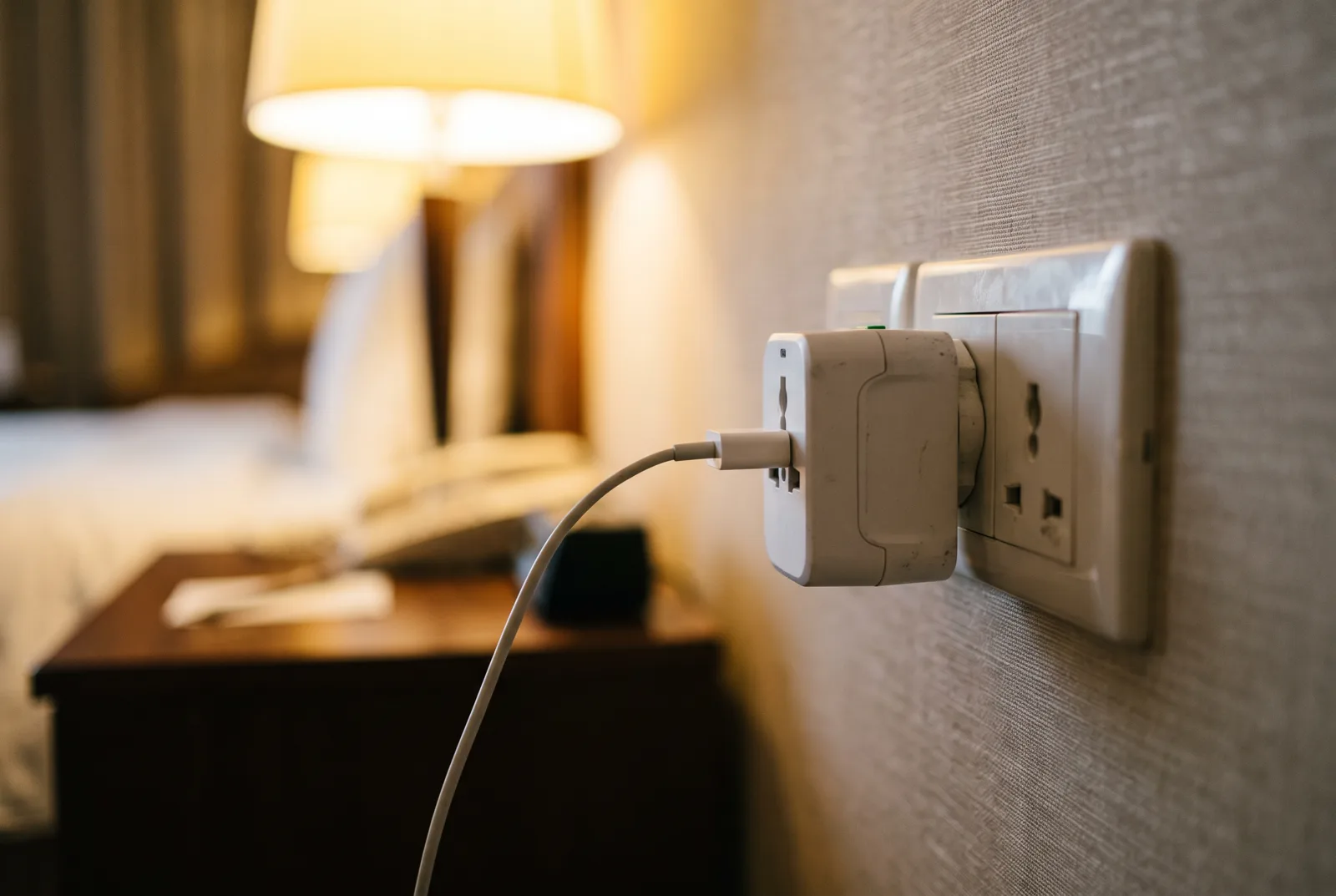
- A universal adapter if you travel often: it usually covers types A, G and I, sometimes more. Check that it accepts grounded plugs if your devices have them.
- A country-specific adapter for a single trip: more compact and more stable in the socket.
- Built-in USB ports let you charge a phone and watch without carrying several chargers.
- A power strip plugged into a single adapter is handy in a hotel room, as long as all devices support the local voltage.
Buy it before you leave: the choice is smaller at the airport. To finish packing, see our list of what to pack and the rules for the carry-on bag (power banks in the cabin only).
Frequently asked questions
Do I need an adapter for the United States?
From the UK, yes: US sockets are types A and B, at 120 V and 60 Hz. UK travelers with « 100-240 V » chargers need only a plug adapter.
Do I need an adapter for England?
From the US, yes, a type G adapter. The voltage is 230 V, so US appliances that are not dual-voltage also need a converter. From the UK, no.
What is the difference between an adapter and a transformer?
An adapter only changes the shape of the plug. A transformer (or converter) changes the voltage, for example from 120 V to 230 V.
Will my phone work in Japan?
Yes: phone chargers generally accept 100 to 240 V. UK travelers need a type A adapter; US travelers can use their plugs directly, though some sockets lack a grounding slot.
In which countries do I not need an adapter?
From the US, in countries whose sockets are type A or B (for example the US, Canada, Mexico, Japan, Taiwan, Colombia, Costa Rica). From the UK, in countries with type G sockets (for example Ireland, Malta, Cyprus, Hong Kong, the UAE, Kenya).
Why isn’t the IEC cited directly?
The International Electrotechnical Commission’s « World Plugs » site has been withdrawn. We use its plug-type letters through the reference table that preserved them, and the voltages of the IEC 60038 standard.
Our sources
- International Electrotechnical Commission (IEC): « World plugs » page, consulted 15 October 2026 (tool withdrawn); nomenclature of types A to O and IEC 60038 voltage standard.
- Wikipedia (English): « Mains electricity by country » table, which reproduces the nomenclature of the former IEC World Plugs and national standards, consulted 15 October 2026.
- Counts, adapter and voltage verdicts for US and UK travelers, and decision tree: Destination de Voyage, for the countries covered on the site.
- Our methodology
Updated November 2026.