This Norway travel guide covers the land of fjords, mountains plunging into the sea and the northern lights. The country is safe, well organised and easy to travel around, but expensive: a successful trip is planned mainly around the season and the budget. Here you will find the essentials: what to see, which itinerary to follow, how many days to allow and what budget to plan. To compare with the North Atlantic, see our Norway or Iceland comparison.
To locate the cities, regions, relief, national parks and airports, see our map of Norway.
Norway at a glance
CapitalOslo
LanguageNorwegian; English is spoken almost everywhere
The best time is from June to August for the fjords, hiking and the midnight sun: it is 20 to 23 °C (68 to 73 °F) in the afternoon in Oslo and the days are very long. For the northern lights, head north from late September to March. May and September are good compromises, quieter and cheaper. All the month-by-month details, with official normals, are in our article on the best time to visit Norway.
What to see in Norway: the highlights
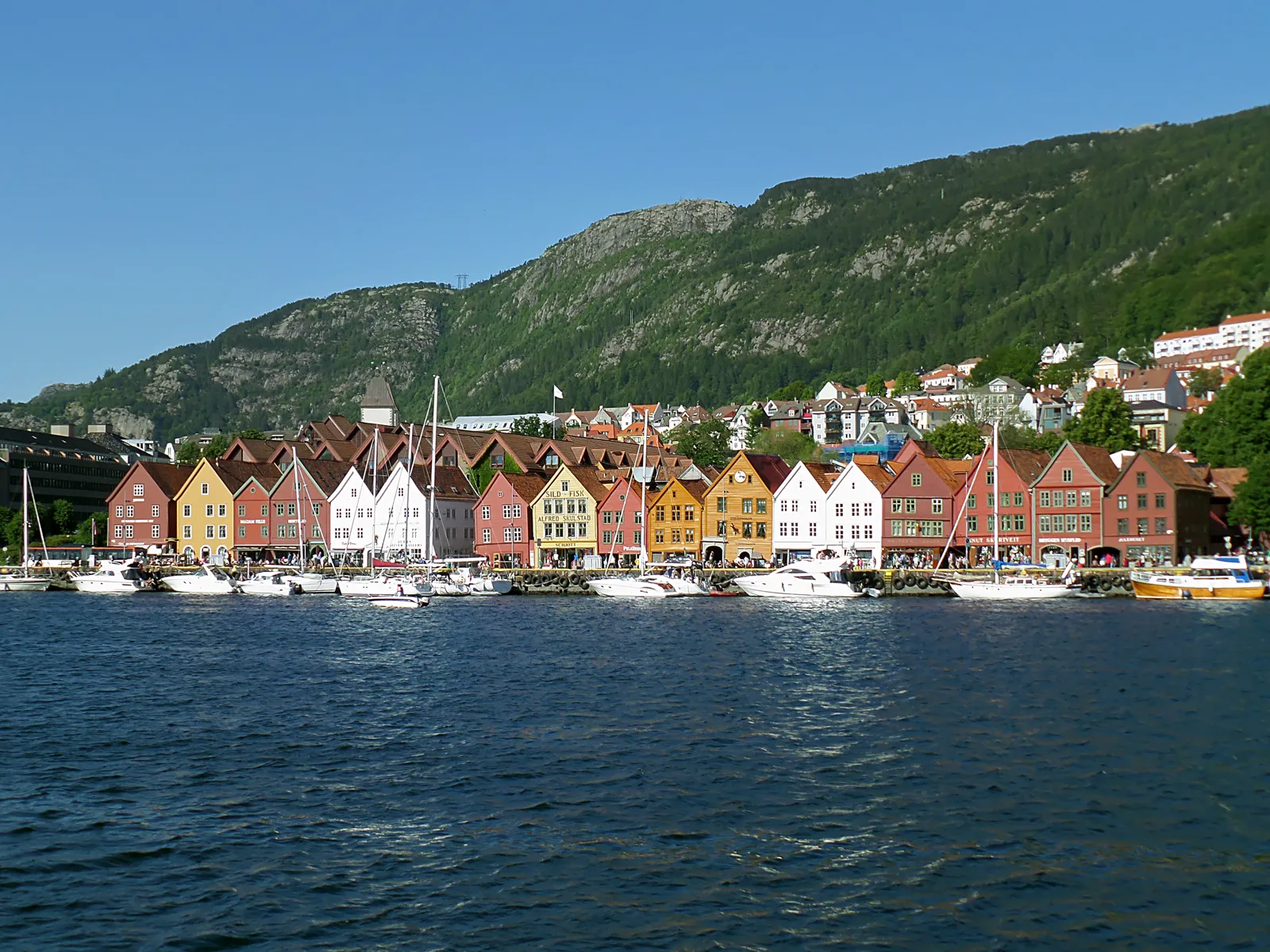
The wooden Hanseatic houses of Bryggen in Bergen
Oslo
The capital can be explored in two or three days: the Opera House, whose roof you can walk on, the Munch Museum, Vigeland Park and its sculptures, the Bygdøy peninsula and its maritime museums, and the Aker Brygge district on the fjord. Public transport also serves the islands of the Oslofjord in summer. To choose between the two Scandinavian countries, read our Sweden or Norway comparison.
Bergen
A former Hanseatic town, Bergen is the gateway to the fjords. The Bryggen wharf and its wooden houses are a UNESCO World Heritage Site. The Mount Fløyen funicular offers a view over the city and the sea. Bergen is also the departure port of the Coastal Express (Hurtigruten) to the north. Our guide to Bergen: things to do and when to go covers the city in detail.
The western fjords
The Geirangerfjord and the Nærøyfjord, UNESCO-listed, are among the country’s most famous landscapes. The Sognefjord, the longest, can be explored by boat or by road. The Flåm Railway descends from the high plateaus to the head of the Aurlandsfjord. Near Stavanger, the Preikestolen (Pulpit Rock) hike leads to a cliff towering 604 metres (1,982 ft) above the Lysefjord: allow about 3.8 km (2.4 mi) each way, 334 m (1,096 ft) of ascent and 3 to 4 hours there and back. The site received around 300,000 visitors in 2024: set off early in the morning in summer.
The Atlantic Road and Ålesund
Between Molde and Kristiansund, the Atlantic Road hops from islet to islet over a series of bridges. Ålesund, rebuilt in the early 20th century in Art Nouveau style, is a good base for reaching Geiranger.
Trondheim
The country’s third city, Trondheim is known for Nidaros Cathedral, a pilgrimage site, and its colourful old warehouses along the Nidelva river. It is a logical stop on the road between south and north.
The Lofoten Islands
North of the Arctic Circle, this archipelago lines up steep peaks, fishing villages with red cabins (rorbuer) and pale sandy beaches. People come in summer for hiking and the midnight sun, and in winter for the northern lights. The islands are linked by road and reached by ferry or plane.
Tromsø and the far north
Tromsø is the main base for watching the northern lights, dog sledding and excursions into the Arctic fjords. Further north, Alta and the North Cape complete the trip. The UK FCDO notes that winter is long, temperatures can drop to −25 °C (−13 °F) and below, and weather conditions can worsen quickly (GOV.UK, updated 25 August 2026): travel in the far north needs specific preparation.
Svalbard
Far north of the mainland, the Svalbard archipelago and its main town, Longyearbyen, are reached by plane from Oslo or Tromsø. People come for the glaciers, Arctic wildlife and long periods of continuous daylight or darkness. Unlike mainland Norway, Svalbard is not in the Schengen area, and you need a passport to enter (travel.state.gov, last updated July 9, 2026). GOV.UK advises following the Governor of Svalbard’s safety advice, including on protecting yourself from polar bears and the risks of glaciers and avalanches outside Longyearbyen; the State Department reports deaths and injuries to tourists from animal attacks and boating accidents. Outside town, trips are generally made with a guide.
Itinerary ideas for Norway
7 to 10 days: Oslo and the fjords
Days 1 and 2: Oslo (Opera House, Munch Museum, Bygdøy)
Day 3: train to Myrdal, then the Flåm Railway
Day 4: cruise on the Nærøyfjord, night in the area
Days 5 and 6: Bergen (Bryggen, Mount Fløyen)
Days 7 to 10: drive to Geiranger and Ålesund, or to Stavanger and Preikestolen
2 weeks: from the fjords to Lofoten (June to August)
Days 1 and 2: Oslo
Days 3 to 5: Flåm, the Nærøyfjord, Bergen
Days 6 to 8: Geiranger, Ålesund, the Atlantic Road
Day 9: Trondheim
Days 10 to 14: fly to Bodø or Tromsø, then Lofoten
In winter, a short 4- to 6-day trip to Tromsø or Lofoten is enough to give yourself several chances of seeing the northern lights.
Budget for a trip to Norway
Norway is one of the most expensive destinations in Europe, especially for eating out and alcohol. Cooking for yourself, staying in campsites or cabins and travelling outside July–August help keep costs down. Approximate amounts per person per day, excluding flights (converted at the European Central Bank rate of 23 October 2026 and rounded):
Item
Tight budget
Comfortable
Accommodation (based on a shared double room)
about NOK 370–630 (camping, hostel, cabin)
about NOK 940–1,780
Meals
about NOK 260–370 (supermarket, self-catering)
about NOK 630–1,050
Local transport
about NOK 160–260
about NOK 310–520 (car hire, ferries, tolls)
Activities and sightseeing
about NOK 100–210
about NOK 310–630
Total per day
about NOK 940–1,360
about NOK 2,090–3,660
Rough estimates that vary with the season and region. Guided winter excursions (northern lights, sledding) cost considerably more.
Hiking, viewpoints and most of the nature are free. The right to roam (allemannsretten) allows camping, under conditions, on much uncultivated land: check the local rules. GOV.UK notes that police enforce campfire bans in many hiking areas in summer.
Norway: who is it for?
Our verdict depending on how you like to travel, based on the places, conditions and budget ranges in this guide:
Nature and hiking: ideal from June to August: the western fjords, Preikestolen, Lofoten, with the right to roam allowing camping under conditions.
Northern lights: a very good choice from late September to March: Tromsø, Lofoten and the far north, with dog sledding and Arctic fjord excursions.
Rail travel: yes: the Oslo–Bergen and Oslo–Trondheim lines and the Flåm Railway are famous for their scenery.
Families: yes: a safe, well-organised country, equipped cabins (hytter) at campsites, the Bygdøy museums in Oslo. Long drives in the fjords require patience.
Couples: yes: a night in a rorbu in Lofoten, a cruise on the Nærøyfjord, the Coastal Express to the north.
Tight budget: difficult: it is one of the most expensive destinations in Europe; allow roughly NOK 940–1,360 per person per day, cooking for yourself and staying in campsites or cabins.
City break: as an add-on: Oslo and Bergen each take two or three days, but the country’s main appeal is its nature.
Getting around Norway
Car: the best way to enjoy the fjords. According to the State Department (travel.state.gov, last updated July 9, 2026), mountain roads tend to be narrow and winding with many tunnels, many mountain roads close because of snow from late autumn to late spring, winter tyres are mandatory from November to April, headlights must always be on, speed limits are photo-enforced and the blood alcohol limit is 0.02%. UK photocard licences can be used for up to 90 days (GOV.UK, updated 25 August 2026). Allow for longer journey times than planned, ferries and tolls.
Train: the Oslo–Bergen and Oslo–Trondheim lines and the Flåm Railway are famous for their scenery.
Plane: essential for the north (Tromsø, Bodø, Lofoten, Alta), as road distances are very long.
Boat: local ferries, fast boats in the fjords and the Coastal Express (Hurtigruten) between Bergen and Kirkenes.
Bus: buses complement the network, particularly in the fjords and Lofoten, with sometimes limited services out of season.
Where to stay in Norway
In Oslo, the centre and the Grünerløkka district are convenient; in Bergen, stay near Bryggen or the centre. In the fjords and Lofoten, options are more limited: village hotels, B&Bs, cabins and campsites. Rorbuer, former fishermen’s cabins, are a typical form of accommodation in Lofoten.
In summer, book early in the fjords and Lofoten, and in Tromsø during the northern lights season. Many campsites offer equipped cabins (hytter), an affordable option for a family or group.
Entry requirements for Norway
US citizens: Norway applies Schengen rules. Your passport should be valid for at least three months beyond your period of stay, and the State Department recommends at least six months’ validity; you need sufficient proof of funds and a return ticket. Svalbard is outside Schengen and requires a passport (U.S. Department of State, travel.state.gov, last updated July 9, 2026).
UK citizens: no visa for up to 90 days in any 180-day period. Your passport must have been issued less than 10 years before the day you arrive and be valid at least 3 months after the day you plan to leave the Schengen area; you may need to show a return or onward ticket. The EU Entry/Exit System (EES) is being implemented. You need your passport to travel to Svalbard. Cash of NOK 25,000 or more must be declared (GOV.UK, updated 25 August 2026).
Health and safety
Health: UK travellers can use a GHIC or EHIC for medically necessary state healthcare (GOV.UK). The State Department describes medical facilities as widespread and of high quality, but limited outside big cities and in the remote north. Take out travel insurance covering medical costs, and medical evacuation if you go to Svalbard.
Crime: Norway has a low level of crime (travel.state.gov). Both sources warn of petty theft around Oslo, particularly at Oslo Central Station, airports and railway stations.
Nature: according to GOV.UK, the weather can change quickly, producing Arctic conditions even in summer on exposed mountain tops; extreme weather can cause floods and landslides. Check the avalanche risk with the Norwegian Avalanche Warning Service (Varsom).
Money: cards are accepted almost everywhere, even for a coffee, and some places no longer take cash. Check your bank’s foreign transaction fees. Our currency converter helps you estimate your spending.
Mobile data: the mobile network is very good in towns; check your home carrier’s roaming charges, and expect patchy coverage in remote mountain areas.
Hiking: check the weather forecast (yr.no) and the avalanche risk (varsom.no), take a map, warm and waterproof clothing, tell someone your route and turn back if conditions worsen.
Alcohol: expensive, and drink-driving limits are very low (0.02%, according to travel.state.gov).
Etiquette: respect nature (leave no litter), be punctual, and keep your voice down on public transport.
Light: in summer in the north, an eye mask helps you sleep; in winter, bring a head torch.
Food: fish and seafood dominate: salmon, cod (including the dried stockfish of Lofoten), prawns and, in season, king crab in the north. Brunost, a slightly sweet brown cheese, often appears at breakfast. Restaurants are expensive: lunch, with dishes of the day, is often more affordable than dinner. Bakeries and supermarkets let you put together picnics for hiking days.
Not for short stays as a US or UK citizen. Norway is in the Schengen area: UK citizens can stay up to 90 days in any 180-day period, and US citizens need a passport valid at least three months beyond their stay (six months recommended). Svalbard is outside Schengen and requires a passport.
How much does a week in Norway cost?
Excluding flights, allow roughly NOK 940–1,360 per person per day on a tight budget (camping, supermarket shopping) and NOK 2,090–3,660 for a comfortable trip. July–August and winter excursions in the north push the budget up.
When is the best time to visit Norway?
From June to August for the fjords, hiking and the midnight sun. From late September to March for the northern lights in the north.
How many days do you need to visit Norway?
A week to ten days lets you see Oslo, Bergen and one or two fjords. You need two weeks to add Lofoten or Tromsø, flying to the north.
Do you need to rent a car in Norway?
It is the most flexible option for the fjords and Lofoten. Between Oslo, Bergen and Flåm, train and boat are enough. For the far north, flying is often more practical.
What can you see in Norway in a week?
In 7 days, focus on one region: Oslo then Bergen by train, with the Nærøyfjord and the Flåm Railway; or, in winter, Tromsø and the far north for the northern lights. Lofoten and the Geirangerfjord need a few more days.
Can you see the northern lights and the midnight sun on the same trip?
No: the northern lights need a dark night sky, which is absent during the midnight sun period. In Tromsø, the sun does not set from about mid-May to late July, while the northern lights season runs from late September to March. So you have to choose between summer and winter.
Transparency: this page contains affiliate links, labelled as such. If you book through them we may earn a commission at no extra cost to you; it does not influence our content or recommendations. How we fund the site.