For a Bali travel guide in one line: allow ideally 10 days to 2 weeks and aim for the dry season, from May to September. Bali is the most visited island in Indonesia, and for good reason: terraced rice fields, Hindu temples, volcanoes, surf beaches and craft villages fit into an area about 140 km (87 mi) wide. But the south of the island is also very crowded. This guide helps you choose your areas, build an itinerary and get around without wasting time. To avoid the crowds in the south while enjoying the dry weather, visiting Bali in May is often a good compromise, detailed on our dedicated page.
Our travel deals for Bali
Affiliate links: we earn a commission, at no extra cost to you.
FlightsKiwi.comCompare flights and airline combinations to Bali.
Airport: Ngurah Rai (Denpasar), in the south of the island; international flights usually connect via a regional hub
Ideal length: 10 days to 2 weeks to combine the south, the centre and a neighbouring island
Best time: May to September (dry season)
Religion: mainly Hindu, unlike the rest of Indonesia
Time zone: UTC+8 all year: 8 hours ahead of London in winter, 7 in summer; 13 hours ahead of New York in winter
Tourist levy: IDR 150,000 per foreign tourist, on top of the visa, payable online or on arrival (GOV.UK)
What to see in Bali: the areas to know
Ubud and central Bali
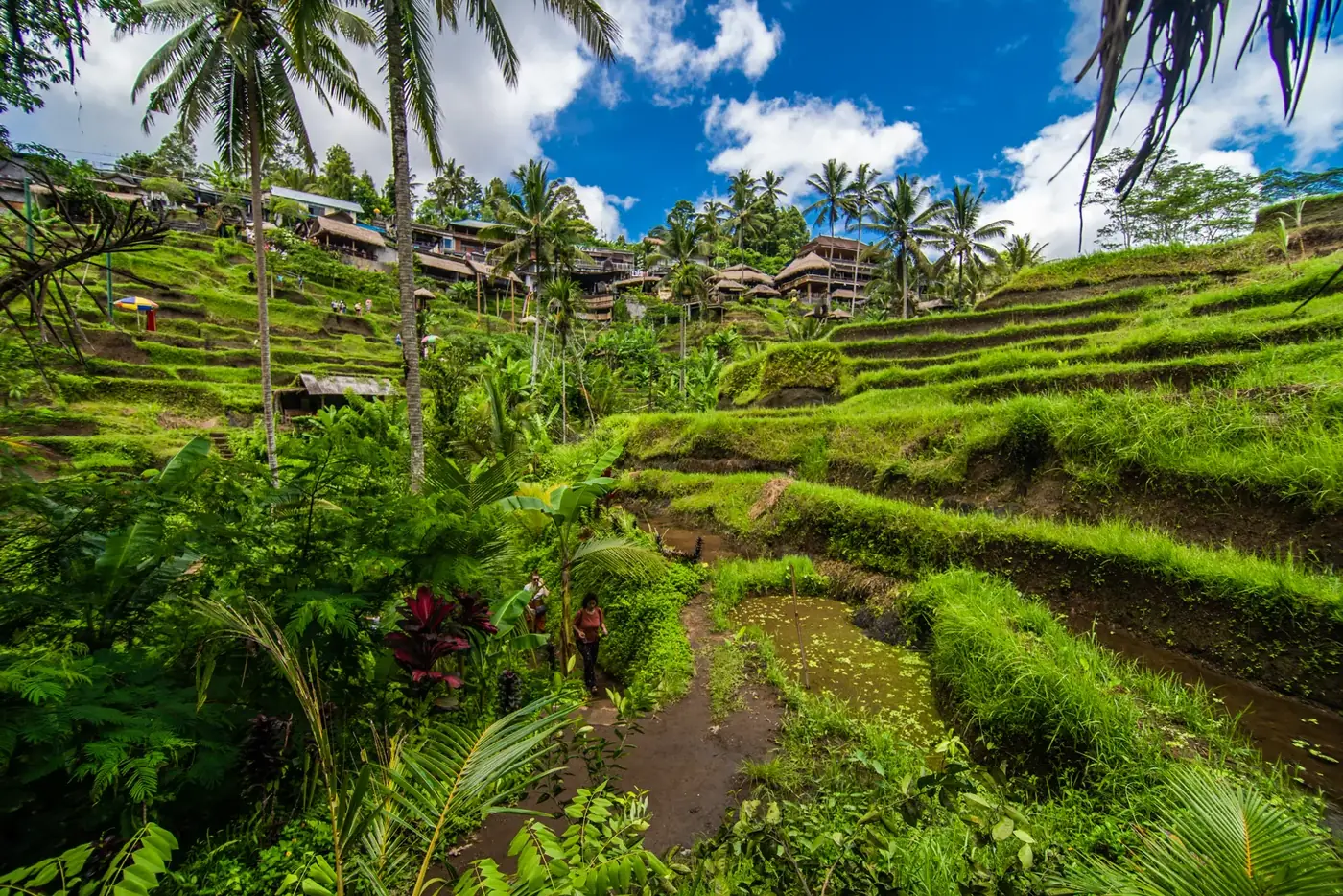
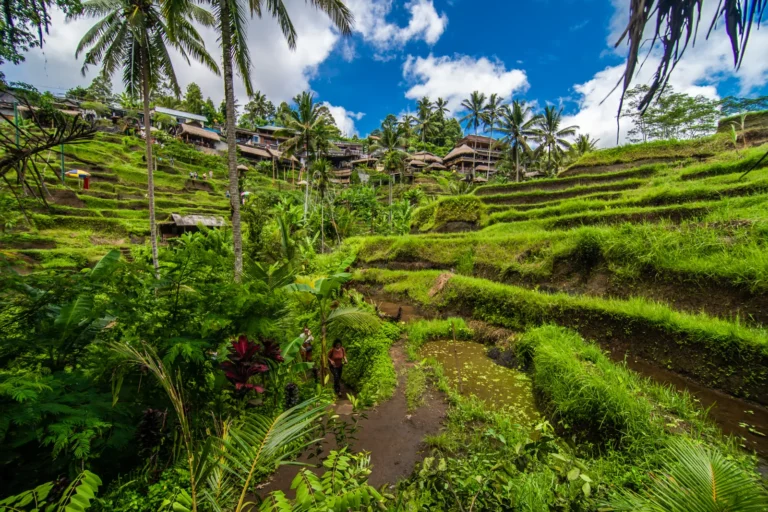
The terraced rice fields of Tegallalang, near Ubud, Bali
Ubud is the cultural heart of Bali: royal palace, craft market, Balinese dance performances in the evening, the Monkey Forest, galleries and workshops. Around town, the Tegallalang rice terraces, the sacred spring of Tirta Empul and the rock reliefs of Gunung Kawi make good day trips. The Campuhan Ridge walk at sunrise lets you escape the bustle. Ubud is also the base for many cooking classes and yoga retreats. The town centre is congested: stay a little outside if you want peace. Our guide to Ubud, the cultural heart of Bali covers rice fields, temples and where to stay.
Uluwatu and the Bukit peninsula
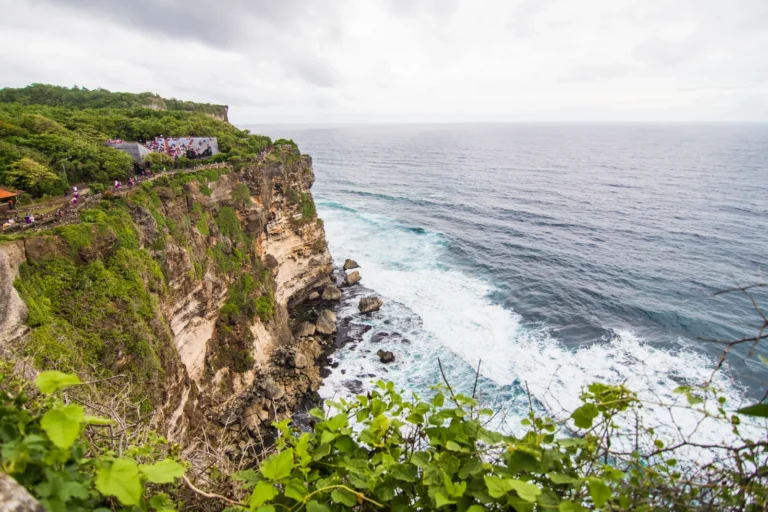
South of the airport, the Bukit peninsula lines up limestone cliffs and white sand coves: Padang Padang, Bingin, Melasti, Nyang Nyang. Uluwatu temple, perched above the ocean, hosts the kecak dance at sunset. It is one of the island’s great surf spots, with most waves suited only to experienced surfers. Several beaches can only be reached by long stairways.
In the south of the island, our page on visiting Uluwatu gives the sunset time for the kecak and the temple rules.
Canggu, Seminyak and Kuta
The west coast, north of the airport, is where the action is: cafés, shops, beach clubs and surf schools for beginners. Kuta is the oldest and most popular, Seminyak more upmarket, Canggu favoured by surfers and digital nomads. The downside: very heavy traffic and rapid development. Tanah Lot temple, on a rock in the sea, lies a little further northwest.
Sanur and Nusa Dua
On the southeast coast, Sanur is a quiet resort, with a seafront promenade and water sheltered by the reef. It is also the departure point for boats to Nusa Penida and Nusa Lembongan. Nusa Dua, further south, groups large hotels in a landscaped enclave with well-kept beaches: a practical option for families, but far from local life.
Off Bali, our page on visiting Nusa Penida covers boat access, Kelingking and safety advice.
Amed and east Bali
Along the east coast, Amed is a string of fishing villages at the foot of Mount Agung, known for snorkelling and diving. Nearby, at Tulamben, the wreck of the USAT Liberty can be reached from the beach. The east is also home to Lempuyang temple and its « Gates of Heaven », the Tirta Gangga water palace and the Sidemen valley, with rice fields quieter than Ubud’s.
Munduk and the north
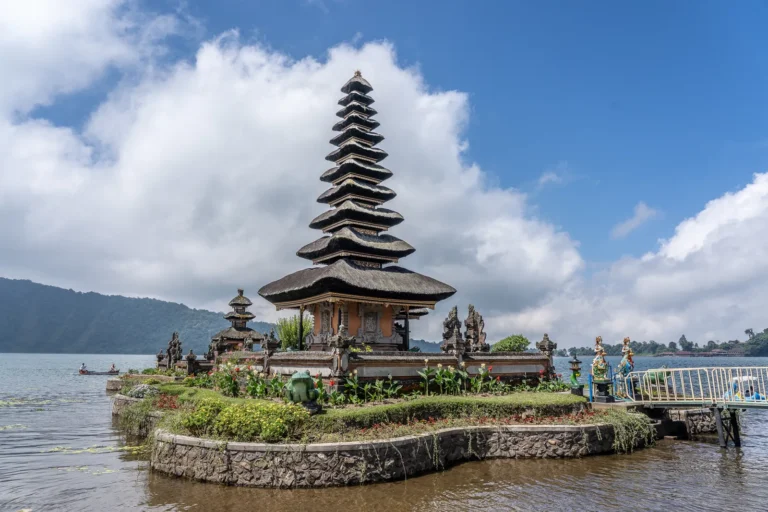
In the mountains of the north-centre, Munduk has a cooler climate, coffee and clove plantations and many waterfalls. Lakes Bratan and Tamblingan are nearby, with Ulun Danu Beratan temple on the water’s edge. Further southwest, the Jatiluwih rice terraces are part of the Unesco-listed cultural landscape of Bali, which protects the traditional subak irrigation system.
Mount Batur and Kintamani
Mount Batur is an active volcano whose sunrise climb is one of the most popular excursions on the island: departure around 4 am, about two hours of climbing. Climbs are led by local guides. It is cold at the summit before dawn: bring a jacket. Kintamani, on the caldera rim, overlooks Lake Batur. GOV.UK advises checking with local authorities for updates on exclusion zones before travelling to volcanic areas.
Nusa Penida and Nusa Lembongan
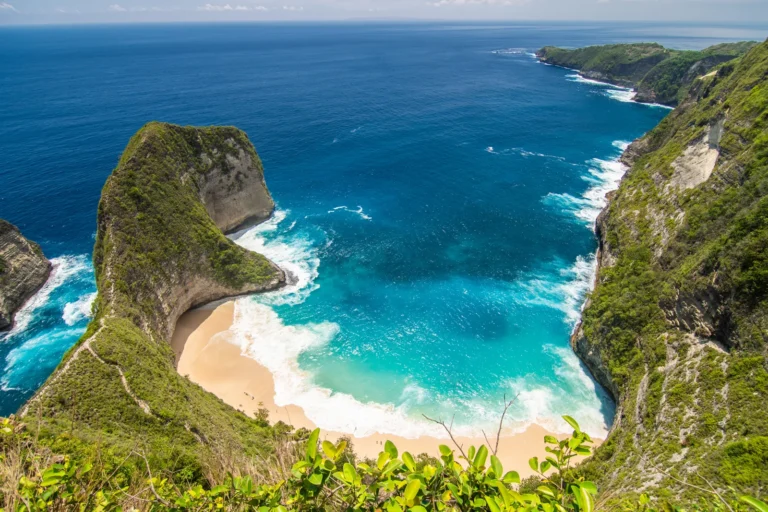
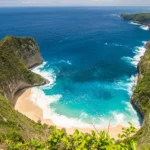
Kelingking beach and its cliff on the island of Nusa Penida
A short fast-boat ride from Sanur, Nusa Penida is known for its spectacular cliffs (Kelingking, Broken Beach, Diamond Beach) and for diving with manta rays. Roads there are narrow and in poor condition in places: better to hire a driver than drive yourself. Nusa Lembongan, smaller and more developed, is ideal for one or two quiet nights. Take care at Kelingking: the path down to the beach is very steep.
Things to do in Bali: 10 highlights
For a first trip, here is the checklist of experiences not to miss, to spread across your itinerary:
Highlight
Area
✔ Watch the kecak dance at sunset at Uluwatu temple
Uluwatu
✔ Walk through the rice terraces of Tegallalang and Jatiluwih (Unesco subak landscape)
Ubud / north-centre
✔ Bathe at the sacred spring of Tirta Empul
Ubud
✔ Climb Mount Batur for sunrise
Kintamani
✔ See the Kelingking cliffs on Nusa Penida and dive with manta rays
Nusa Penida
✔ Snorkel at Amed and dive the USAT Liberty wreck at Tulamben
East
✔ Pass through the « Gates of Heaven » at Lempuyang and visit the Tirta Gangga water palace
East
✔ Reach the waterfalls and lakes of Munduk and Ulun Danu Beratan temple
North
✔ Take a first surf lesson in Canggu or Kuta
West coast
✔ Join a Balinese cooking class or a yoga session in Ubud
Ubud
The 10 most iconic experiences, detailed area by area above.
Days 1 and 2: Uluwatu (beaches, temple and kecak at sunset)
Days 3 to 5: Ubud (rice fields, temples, Tirta Empul); sunrise climb of Mount Batur
Day 6: excursion to the east (Sidemen, Tirta Gangga) or to Nusa Penida
Day 7: Sanur or Seminyak before your flight home
10 days: the south, the mountains, the east and the islands
Days 1 and 2: Uluwatu or Canggu
Days 3 to 5: Ubud and its surroundings, Mount Batur
Days 6 and 7: Munduk (waterfalls, lakes, Jatiluwih on the way)
Days 8 and 9: Amed (snorkelling, Tulamben, Lempuyang)
Day 10: Sanur; or, for 12 days, two nights on Nusa Penida or Nusa Lembongan
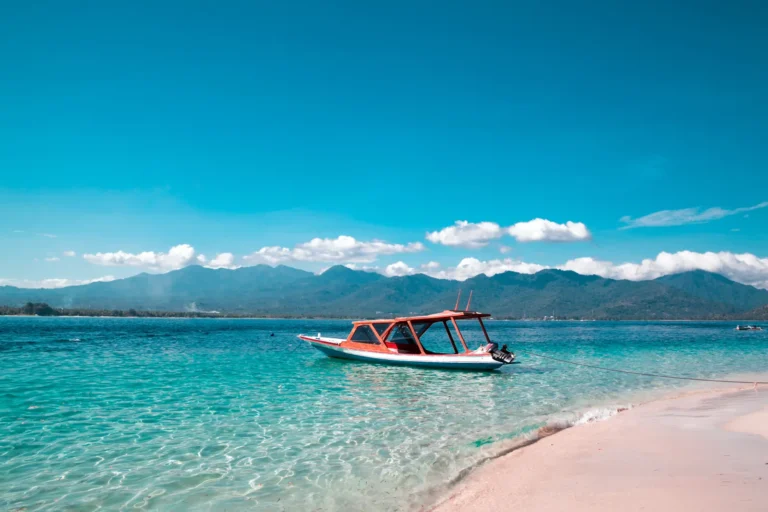
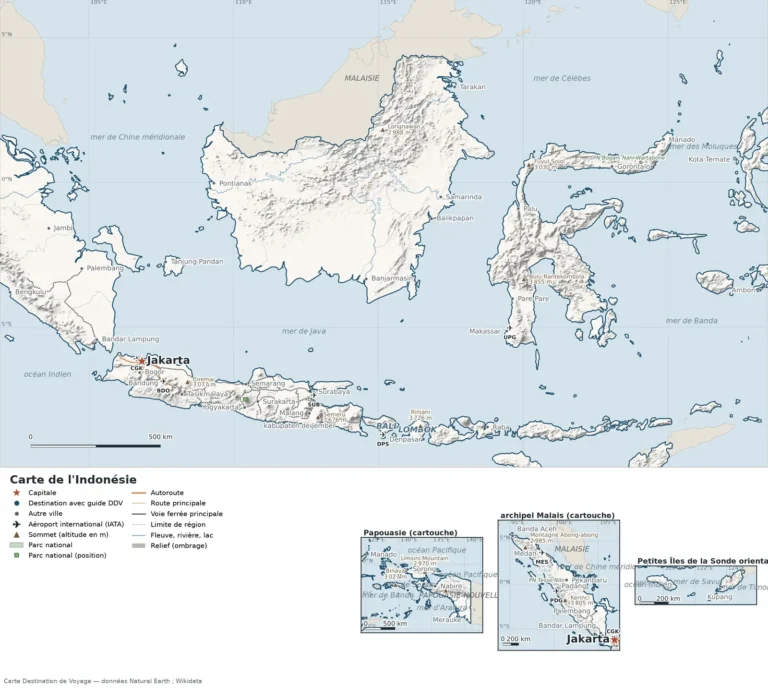
With two weeks, add Lombok or the Gili Islands, a few hours away by fast boat, or a short flight to Labuan Bajo for Komodo National Park: ideas in our Indonesia travel guide.
Bali airport transfer: official taxi, ride-hailing and private transfer
At Ngurah Rai airport (Denpasar), the official option is the airport taxi counter, outside the arrivals hall; public transport is limited, and many travellers book a private transfer to their hotel.
The official airport taxi
According to Indonesia’s official tourism website (Indonesia.travel, checked 26 October 2026), Ngurah Rai Airport Taxi is the only taxi with a service counter at the airport and the only one allowed to offer rides from the airport. The counter is outside the arrivals hall: turn right as you exit. You take a paper slip and pay the driver on arrival; the fare depends on your destination, so ask at the counter before setting off. Indonesia.travel notes that the taxi works out cheaper for up to three people travelling together.
Ride-hailing and public transport
Ride-hailing apps can be used, with pick-up at the point shown in the app. The public bus (Trans Sarbagita network, according to Indonesia.travel) serves central Denpasar, but with fixed stops and little room for luggage: check locally that the service runs at your arrival time. The official page’s airport details are not recent, so check current arrangements on arrival.
Option
Where to get it
Official fare
Source
Official airport taxi
Counter outside arrivals (turn right)
Depends on destination, ask at the counter
Indonesia.travel
Ride-hailing (app)
Point shown in the app
Price in the app
–
Public bus
International terminal stop
Not published on the official page
Indonesia.travel
Private transfer
Arrivals hall, driver with a sign
Price fixed when booking
–
Booking a private transfer in Bali
A private transfer (a driver waiting for you on arrival, price agreed when booking) makes most sense if you arrive late in the evening, as a family or group, with lots of luggage, or if your accommodation is poorly served by public transport. It is particularly useful for Ubud, the north or the east of the island, or after an overnight flight. Before booking, check what the price includes (luggage, child seats, tolls, night surcharges), the free waiting time if your flight is late, flight tracking, the exact meeting point in the terminal and the cancellation terms.
Source: Indonesia.travel (Indonesian Ministry of Tourism), page « Denpasar – Bali Ngurah Rai Airport » (official site, checked 26 October 2026).
Where to stay in Bali by area
Area
Who for?
Type of accommodation
Ubud
Culture, nature, yoga
Family guesthouses, hotels overlooking jungle or rice fields
Uluwatu (Bukit)
Beaches, surf, sunsets
Villas, clifftop hotels, surf camps
Canggu
Beginner surf, cafés, nightlife
Guesthouses, villas, hostels
Seminyak
Restaurants, shops, beach clubs
Boutique hotels and villas with pools
Sanur
Families, quiet, departures to Nusa Penida
Seafront hotels, guesthouses
Nusa Dua
Families, beach stay without a car
Large chain hotels
Amed, Sidemen, Munduk
Peace, diving, hiking
Small hotels and bungalows
For a first trip, two or three bases are enough: a beach in the south, Ubud, and a quieter area in the east or north.
Bali has many private villas with pools, often affordable for a group. Check the exact location before booking: a villa « in Canggu » may be 30 minutes’ drive from the beach in traffic.
Getting around Bali
Private driver by the day: the most practical option for excursions and changing areas. The price is negotiated for 8 to 10 hours, fuel included.
Ride-hailing apps: Grab and Gojek work in much of the island (car or motorbike taxi), but some areas restrict access. The U.S. State Department recommends reputable companies such as Blue Bird or Grab, booked via their apps.
Scooter: very widespread, but traffic is heavy: GOV.UK reports a large increase in moped and motorbike accidents, some fatal, in Bali. UK citizens cannot drive on a UK licence and need a UK-issued International Driving Permit; helmets are required by law (travel.state.gov, GOV.UK). Check that your insurance covers you.
Fast boats: from Sanur to Nusa Penida and Nusa Lembongan; from Padang Bai or Serangan to Lombok and the Gili Islands. Departures may be cancelled in rough seas, and the State Department notes that boat incidents are frequent and life jackets often lacking.
Journey times: distances are short but roads are slow. Allow about 1 to 1.5 hours between the airport and Ubud, more at rush hour.
When to go to Bali
✓ Ideal~ Good, with caveats✕ AvoidAverage max. temperature · click a month to see where to go
✅ Best months: April, may, June, July, August, September, October
❌ Period to avoid: January
The best time is May to September, during the dry season: little rain, often calm seas on the east coast, passable trails. July-August is the most expensive and busiest period. From November to March, the rainy season brings heavy but often short showers, lower prices and very green landscapes. Also watch out for Nyepi, the Balinese day of silence, usually in March, when Ngurah Rai airport is closed for the entire day (GOV.UK). Month-by-month climate and official data: our article on when to go to Bali. For the dry high season, our page on Bali in July covers crowds, prices and areas to avoid in the south.
Budget for a stay in Bali
Bali suits very different budgets. Indicative amounts per person per day, excluding international flights (converted from euros at the European Central Bank rate of 23 October 2026):
Item
Budget
Comfort
Accommodation (based on a shared double room)
roughly IDR 200,000 to IDR 510,000
roughly IDR 1,000,000 to IDR 3,050,000
Meals
roughly IDR 160,000 to IDR 300,000 (warungs)
roughly IDR 510,000 to IDR 1,000,000
Transport (driver, ride-hailing, boat)
roughly IDR 100,000 to IDR 300,000
roughly IDR 410,000 to IDR 810,000
Activities and temple entry
roughly IDR 100,000 to IDR 300,000
roughly IDR 410,000 to IDR 1,200,000
Total per day
roughly IDR 610,000 to IDR 1,400,000
roughly IDR 2,350,000 to IDR 6,100,000
Indicative estimates, varying with the season and area. Prices rise in July-August and over the end-of-year holidays.
Our verdicts by traveller type, based on the places, conditions and budget ranges in this guide:
Culture: a very good choice: the temples of Uluwatu, Tanah Lot and Ulun Danu Beratan, the sacred spring of Tirta Empul, Balinese dances in Ubud, the Unesco-listed subak rice fields.
Surf and beach: yes: beginner schools in Canggu and Kuta, waves for experienced surfers at Uluwatu, coves on the Bukit peninsula. Some beaches can only be reached by long stairways.
Diving and snorkelling: excellent: Amed, the USAT Liberty wreck at Tulamben, manta rays around Nusa Penida. The State Department notes that diving is lightly regulated and that hyperbaric chambers are only available in Bali and Ambon.
Families: yes: Sanur and Nusa Dua have sheltered water and well-kept beaches. Avoid the Kelingking path with children and any contact with monkeys and dogs.
Couples: yes: villas with pools, hotels overlooking the jungle in Ubud, sunsets from the Uluwatu cliffs, one or two nights on Nusa Lembongan.
Wellness: ideal: yoga classes, retreats and cooking classes in Ubud.
Budget travellers: very suitable: roughly IDR 610,000 to IDR 1,400,000 per person per day in a guesthouse, eating in warungs. Add the visa on arrival and the island’s tourist levy.
Entry requirements for Bali, health and safety
US citizens
According to the U.S. Department of State (travel.state.gov, last updated July 9, 2026), you need a passport with at least 6 months of validity and a return or onward flight booking. You can apply in advance for an electronic visa on arrival (e-VOA) when entering at Jakarta or Bali (Ngurah Rai) airports: it costs IDR 500,000, is valid for 30 days and can be extended once for 30 days. Overstaying is fined IDR 1 million per day and can lead to detention, deportation or a ban.
UK citizens
According to the UK FCDO (GOV.UK foreign travel advice, updated 18 September 2026), you must have a visa. A 30-day, single-entry visa on arrival (VOA) is available for tourism; it costs IDR 500,000 (cash or card). Your passport must be valid for at least 6 months after arrival with at least 2 blank pages, and you need proof of an onward or return journey. You can also apply online at least one week before travel. Complete the free All Indonesia arrival card within 72 hours of arrival, and avoid sites that ask for payment for it.
Health: GOV.UK states that tap water is not safe to drink in Indonesia and that rabies is present, with many street dogs in Bali and elsewhere and monkeys around temples: seek immediate medical help after any bite or scratch. See a travel health clinic before you go.
Drugs: Indonesia has a zero-tolerance policy; possession, use or trafficking can lead to long prison sentences (GOV.UK).
Drinks: methanol poisoning and drink spiking have been reported in tourist areas (GOV.UK, travel.state.gov); be careful with spirits and never leave a drink unattended.
Natural hazards: volcanic eruptions, earthquakes, tsunamis and floods occur; follow local authorities’ advice on exclusion zones (GOV.UK).
Emergencies: ambulance 118, police 110 (GOV.UK).
Bali tourist levy: The Bali provincial government charges a tourist levy of IDR 150,000 (about £8, according to GOV.UK) to all foreign tourists arriving in Bali, payable online or on arrival.
Crime: GOV.UK reports frequent bag-snatching in Bali and scams at tattoo parlours, nail salons and spas; agree prices in advance. Only use licensed money changers (Bank of Indonesia logo and QR code).
Women travellers: GOV.UK notes that reported cases of sexual assault are high in Bali and Lombok; be alert at night and avoid poorly lit areas.
These rules change: check them again before you leave.
Practical tips for Bali
In temples: a sarong and sash are required; they are often lent or rented at the entrance. Do not climb on walls or shrines.
Offerings: the small baskets (canang sari) placed on the ground in front of houses and shops are sacred: avoid stepping on them.
Monkeys: at Uluwatu and in the monkey forests, put away glasses, phones and hats: thefts are frequent.
Money: prefer ATMs inside banks or convenience stores, and count your notes at the exchange counter. Our currency converter helps you make sense of amounts in rupiah.
Water: do not drink tap water; many places to stay have refill stations for your bottle.
See also
To choose your dates, read the best time to visit Bali, with the climate month by month and the date of Nyepi. If you are travelling in summer, our pages on Bali in August and Bali in September compare crowds and weather, and Bali in October describes the end of the dry season. Before booking, check the time in Indonesia. Still undecided? Our Bali or Thailand comparison sets the two destinations side by side, and our guide to Lombok presents the neighbouring island.
Frequently asked questions
How many days do you need in Bali?
A week lets you see Uluwatu, Ubud and Mount Batur. With 10 days to 2 weeks, you can add the east (Amed, Sidemen), the north (Munduk) and a neighbouring island such as Nusa Penida or the Gilis.
Where should you stay in Bali on a first trip?
The simplest is to combine two bases: Ubud for culture and rice fields, then a beach area in the south (Uluwatu, Sanur or Seminyak depending on the atmosphere you want).
Should you rent a scooter in Bali?
It is not essential. A driver by the day or ride-hailing apps are enough for most journeys. If you rent a scooter, you need a valid licence (UK citizens need a UK-issued International Driving Permit, according to GOV.UK), a helmet, which is required by law, and great care, as traffic is heavy.
When is the best time to go to Bali?
From May to September, during the dry season. May, June and September offer the best balance between weather, crowds and prices.
Is Bali safe?
Broadly yes, with precautions. GOV.UK and the U.S. State Department highlight road accidents, bag-snatching, drink spiking and methanol poisoning, rabies (avoid contact with dogs and monkeys) and very strict drug laws.
Do you need a visa for Bali?
Yes. US and UK citizens can get a 30-day visa on arrival or e-VOA (IDR 500,000), extendable once for 30 days. You also need a passport valid at least 6 months, proof of onward or return travel, the All Indonesia arrival card within 72 hours of arrival and the Bali tourist levy (IDR 150,000).
What budget do you need for 10 days in Bali?
Excluding international flights, allow roughly IDR 6,100,000 to IDR 14,200,000 per person for 10 days on a tight budget, and roughly IDR 23,300,000 to IDR 60,800,000 in comfort, based on our daily estimates. Add the visa on arrival and the tourist levy.
Our sources
Denpasar climate normals: 1961-1990 normals for the Denpasar station published by the Indonesian Agency for Meteorology, Climatology and Geophysics (BMKG) on the WMO World Weather Information Service


 FlightsKiwi.comCompare flights and airline combinations to Bali.Compare flights