This New York travel guide is built around three questions: what to see, where to stay and how many days to plan. The city is best discovered on foot, from the skyscrapers of Midtown to the cobbled streets of SoHo, from Central Park to the Brooklyn Bridge. It is huge, expensive and very busy, but easy to get around thanks to the subway, which runs day and night. This guide helps you choose your neighborhoods, prioritize your visits and build a 3- to 5-day stay.
For a green break, our guide to visiting Central Park suggests routes from 2 hours to a full day and the best season based on the official bloom calendar.

Our travel deals for New York
Affiliate links: we earn a commission, at no extra cost to you.
 FlightsKiwi.comCompare flights and airline combinations to New York.Compare flights
- Airport transferKiwitaxiPrivate driver booked in advance at a fixed price.Book a transfer
- Tickets and toursTiqetsEntry tickets and guided tours to book online; compare with the official price.See tickets
- City passGo CityMulti-attraction pass at a fixed price: worth it only if you visit a lot.See passes
- eSIMAiraloData plan to install before you leave (eSIM-compatible phone).See plans





New York at a glance
- Airports JFK and LaGuardia (Queens), Newark (New Jersey); JFK and Newark handle most international flights
- Ideal length 4 to 5 days for a first visit
- Best time late April to June and September to early November
- Time zone UTC−5, UTC−4 in summer: 5 hours behind London most of the year
- Entry US citizens: domestic travel; UK citizens: approved ESTA or US visa before travel (GOV.UK)
- Budget one of the most expensive cities in the world; the hotel often accounts for half of spending
Things to do in New York: the highlights
Central Park
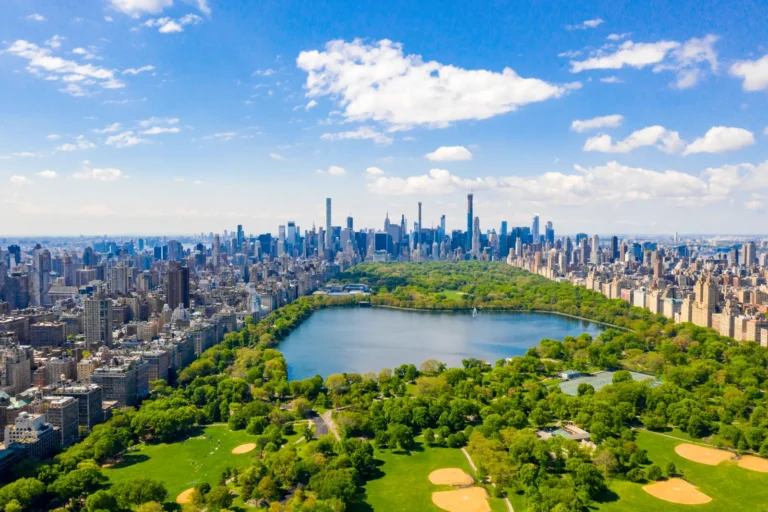
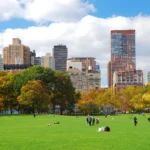
Central Park is a 341-hectare (843-acre) rectangle in the middle of Manhattan, between 59th and 110th Streets, Fifth Avenue and Central Park West. Designed by Frederick Law Olmsted and Calvert Vaux from 1858, it is entirely man-made: lakes, hills, rocks and woods are the result of colossal works. It deserves at least half a day.
- Bethesda Terrace and its fountain: the heart of the park, at the end of the elm-lined Mall
- Bow Bridge: the cast-iron bridge over the Lake, one of the most photographed views in the city
- Strawberry Fields: the John Lennon memorial, on the west side at 72nd Street, opposite the Dakota building where he lived
- Belvedere Castle: a small castle with views over the park, which also houses the city’s official weather station
- The Jacqueline Kennedy Onassis Reservoir: circled by a path of about 2.5 km (1.6 mi), very popular with joggers
- Conservatory Garden: a quieter formal garden in French and Italian styles, in the northeast (around 105th Street)
The park can be explored on foot or by bike. Pedicabs often charge by the minute: have the total price confirmed before getting in. In winter, an ice rink is set up in the southern part.
The Statue of Liberty and Ellis Island
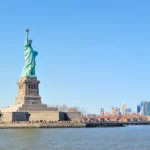
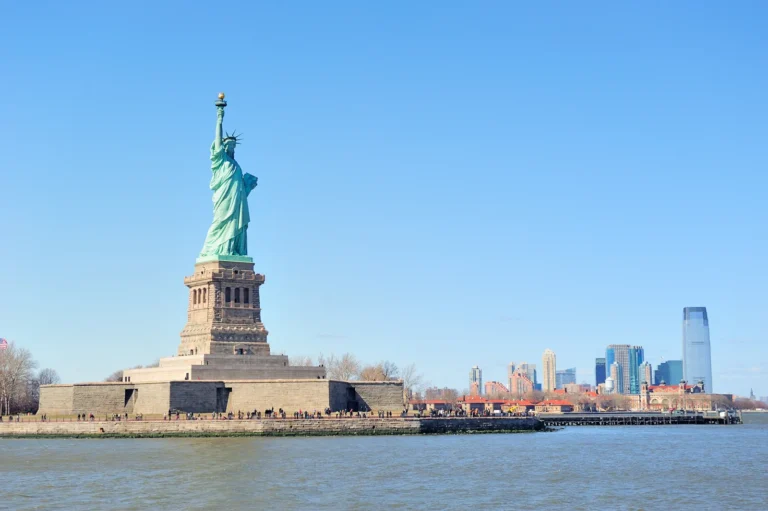
A gift from France, dedicated on October 28, 1886, the Statue of Liberty was sculpted by Frédéric Auguste Bartholdi on an internal structure designed by Gustave Eiffel. It stands about 93 meters (305 ft) tall including its pedestal. It can only be reached by the official ferry operator’s boats, from Battery Park at the southern tip of Manhattan or from Liberty State Park in New Jersey. The ticket includes a stop at Ellis Island, whose immigration museum tells the story of millions of immigrants who arrived between the late 19th and mid-20th centuries.
- Pedestal and crown access: requires specific tickets in limited numbers; the crown often sells out months in advance
- Security check: similar to an airport’s; take the first ferry of the morning to avoid the wait
- Scams: in Battery Park, street sellers offer « tickets to the statue » that are often just cruises with no stop: buy from the official website
- Free alternative: the free Staten Island Ferry passes the statue during its crossing of about 25 minutes
Times Square and Broadway
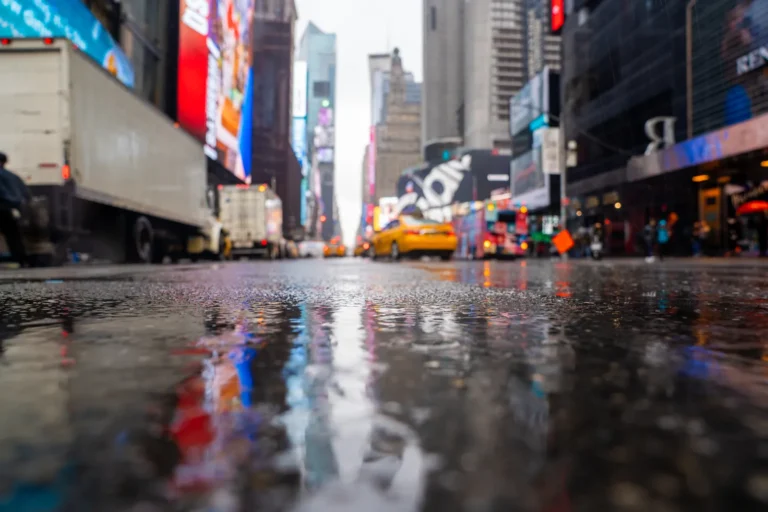
Times Square is the intersection formed by Broadway and Seventh Avenue, between 42nd and 47th Streets. It was called Longacre Square until 1904, when the New York Times moved there. Its giant screens are lit day and night, and part of the square is pedestrianized. It is most impressive at nightfall, but also the most crowded spot in the city.
In Manhattan, our Times Square page gives the time of nightfall each month and the official New Year’s Eve rules.
- Musicals: about forty Broadway theaters surround the square. The TKTS booth, under the red steps of Duffy Square, sells discounted same-day tickets
- Costumed characters: they ask for money after a photo; you are not obliged to accept
- Restaurants: those on the square are expensive and often mediocre; walk a few blocks west (Hell’s Kitchen, Ninth Avenue) to eat better
- New Year’s Eve: the midnight ball drop draws huge crowds, with access controlled from the afternoon
Observation decks: Empire State Building, Top of the Rock, One World, Edge and Summit
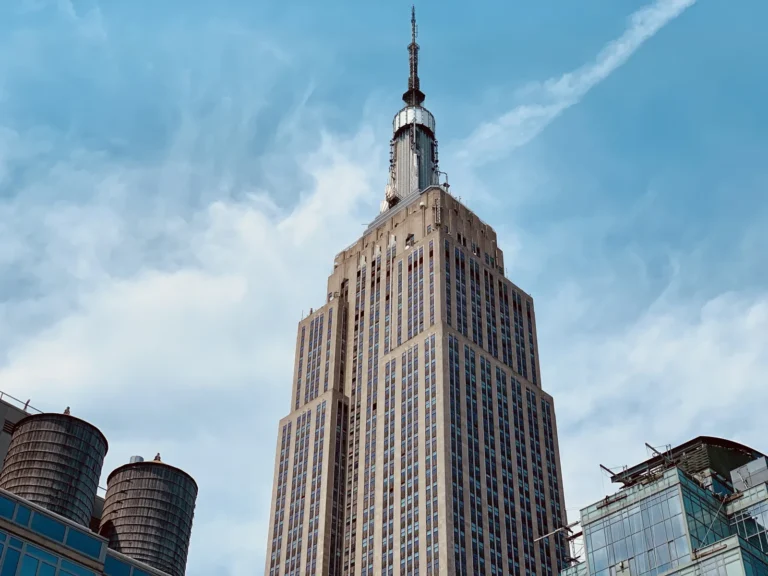
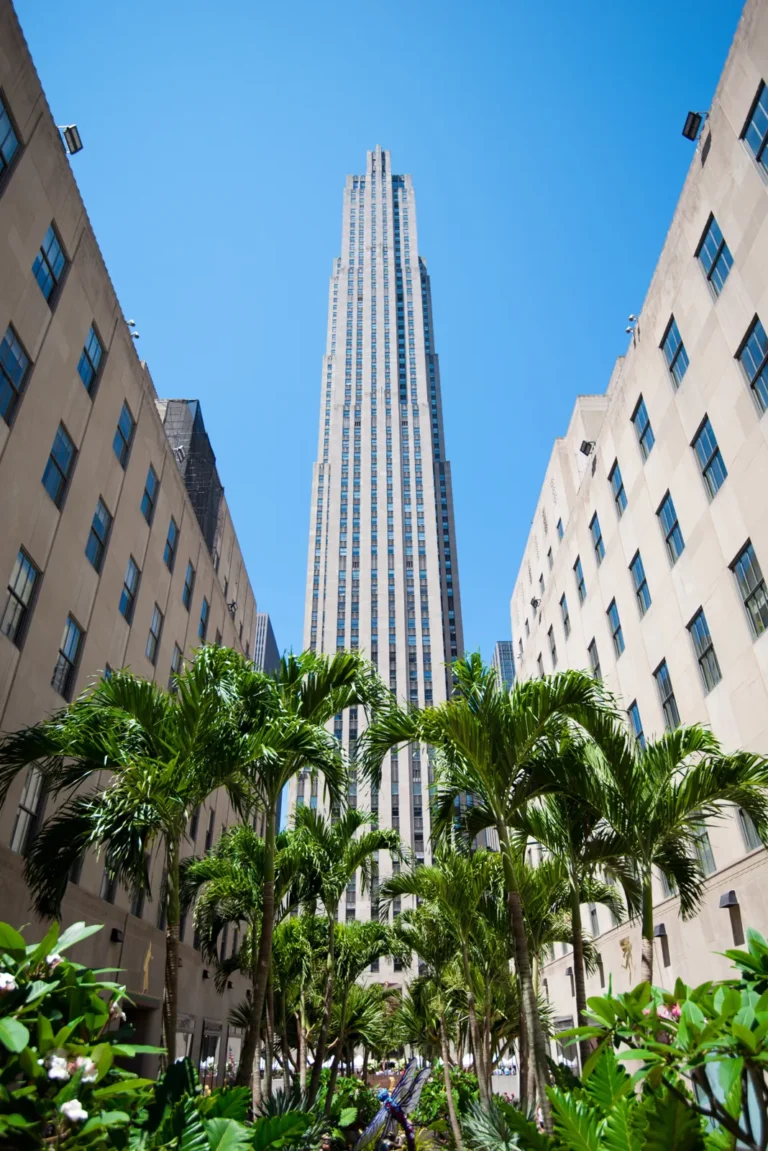
New York has several paid observation decks. The Empire State Building, a 1930s icon, offers the classic view over Midtown. Top of the Rock, at Rockefeller Center, has the advantage of showing the Empire State and Central Park. One World Observatory overlooks Lower Manhattan and the harbor, Edge (Hudson Yards) has a cantilevered terrace, and Summit One Vanderbilt plays with mirrors. One is enough for most stays; book a sunset slot, the most popular.
The 9/11 Memorial and Lower Manhattan
On the site of the Twin Towers, two large pools bear the names of the victims of the 2001 and 1993 attacks. The open-air memorial is free to visit; the underground museum charges admission and needs at least two hours. The neighborhood includes Wall Street, the Bowling Green bull, Santiago Calatrava’s Oculus and Battery Park.
The Brooklyn Bridge and DUMBO
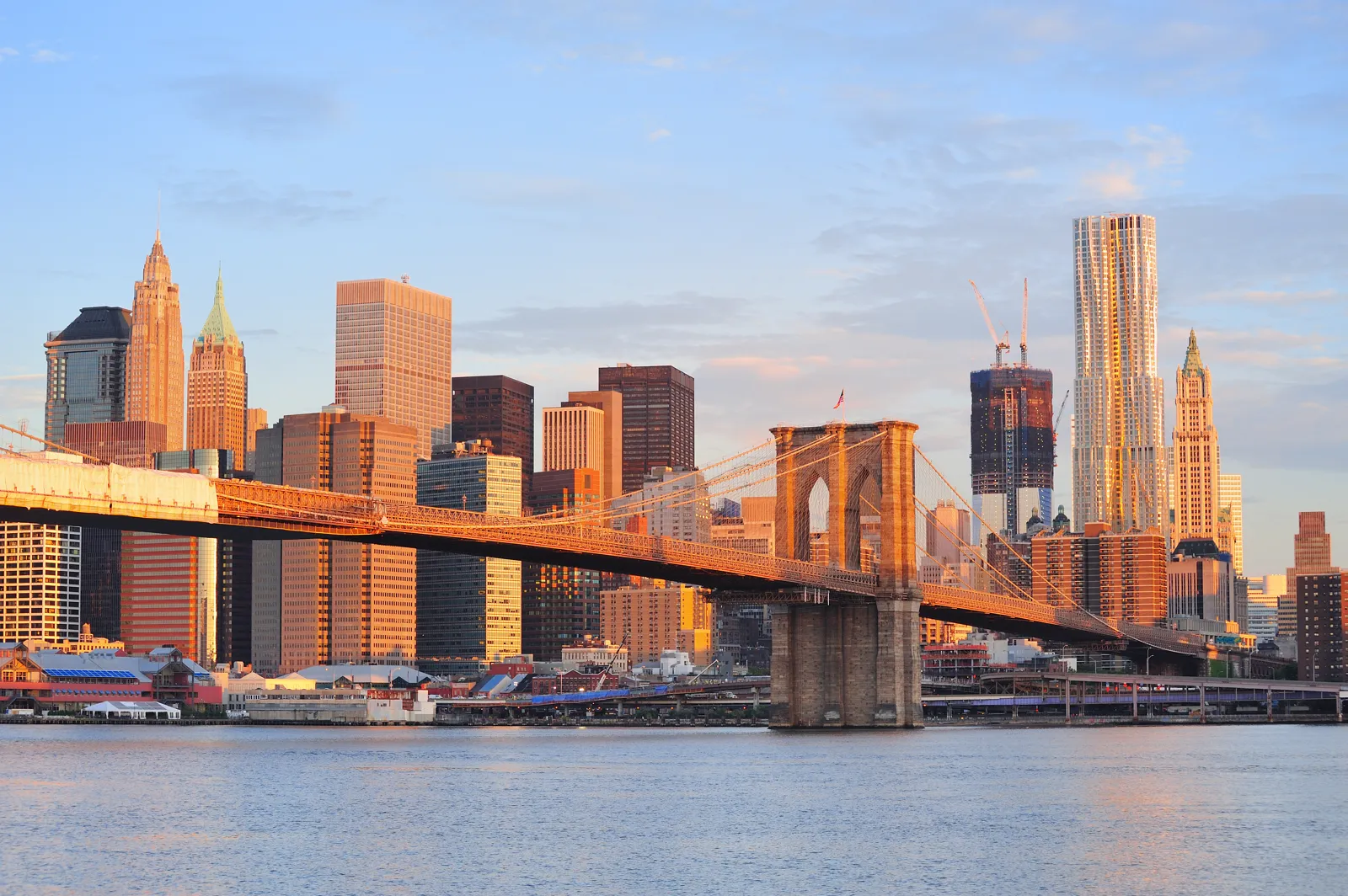
Opened in 1883, the Brooklyn Bridge can be crossed on foot via an elevated promenade, in 30 to 45 minutes with photo stops. Start from Manhattan late in the day to have the skyline view on the way back, or from Brooklyn to have it in front of you. On the other side, DUMBO and Brooklyn Bridge Park offer the best views of Manhattan. The promenade is very busy in the afternoon; early in the morning it is much quieter.
The High Line, Chelsea and Hudson Yards
The High Line is a former elevated railway turned into a planted promenade, about 2.3 km (1.4 mi) long, between the Meatpacking District and Hudson Yards. It passes near Chelsea Market, a former biscuit factory turned food hall, and Little Island, a park on piles in the Hudson. Entry to the High Line is free.
The major museums
The Metropolitan Museum of Art (the Met), on Fifth Avenue, covers 5,000 years of art history: you will need to choose your galleries. MoMA, in Midtown, is the benchmark for modern art. The Guggenheim is worth it for Frank Lloyd Wright’s spiral building alone, and the American Museum of Natural History, facing Central Park, is a big hit with children. Allow half a day per major museum, and check closing days before you go.
New York neighborhoods
New York has five boroughs: Manhattan, Brooklyn, Queens, the Bronx and Staten Island. Most visitors spend most of their time in Manhattan, but Brooklyn and Queens are well worth the trip.
Midtown
Postcard Manhattan: Times Square, Rockefeller Center, Fifth Avenue and its department stores, Grand Central Terminal, the Public Library and Bryant Park, the Empire State Building. Very central and well connected, but noisy and busy day and night.
To see the Empire State Building and Central Park from above, our guide Top of the Rock: tickets, hours and sunset calculates the time of the sunset slot for each month.
Lower Manhattan and the Financial District
The southern tip of the island, where New York was born: Wall Street, the 9/11 Memorial, Battery Park and the ferries to the Statue of Liberty. The area empties somewhat in the evening, once the offices close.
SoHo, Greenwich Village, the East Village and the Lower East Side
Low-rise buildings, cast-iron facades (SoHo), tree-lined streets and cafés (West Village), bars and restaurants of every origin (East Village, Lower East Side). Chinatown and what remains of Little Italy are close by. This is where New York feels most like a city on a human scale.
Chelsea and the Meatpacking District
Art galleries, the High Line, Chelsea Market and trendy restaurants. The area links the Village and Midtown, along the Hudson.
Upper West Side and Upper East Side
On either side of Central Park, the residential neighborhoods of well-off New Yorkers. To the east, Fifth Avenue’s Museum Mile (the Met, the Guggenheim); to the west, the Natural History Museum and Lincoln Center. Quieter in the evening.
Harlem
North of Central Park, Harlem is the birthplace of the African American cultural renaissance of the 1920s. People come for the Apollo Theater, brownstone architecture, soul food and, on Sunday mornings, gospel services. In churches, dress appropriately and follow the rules: they are first and foremost places of worship.
Brooklyn
Brooklyn is a world of its own. Brooklyn Heights and DUMBO offer the views of Manhattan, Williamsburg is packed with shops, bars and weekend markets, and Prospect Park, designed by the same landscape architects as Central Park, is bordered by the Brooklyn Museum and the Botanic Garden. In summer, Coney Island keeps its beach and amusement park.
Queens and the Bronx
Queens is the most cosmopolitan borough: Flushing for Chinese food, Astoria for Greek, Long Island City for the view of Midtown. The Bronx is home to Yankee Stadium, a large zoo and a botanical garden. Both are reached by subway, best as an add-on to a longer stay.
Itinerary: 3 to 5 days in New York
3 days: the essentials of Manhattan
- Day 1: the Statue of Liberty and Ellis Island (first ferry), the 9/11 Memorial, Wall Street, then a walk across the Brooklyn Bridge late in the day and dinner in DUMBO
- Day 2: Grand Central, the Public Library and Bryant Park, Rockefeller Center, Fifth Avenue, MoMA; Times Square and a Broadway show in the evening
- Day 3: Central Park in the morning (Bethesda Terrace, Bow Bridge, Strawberry Fields), the Met or the Natural History Museum, then an observation deck at sunset
5 days: Manhattan, Brooklyn and Harlem
- Days 1 to 3: the program above
- Day 4: the High Line, Chelsea Market, Little Island, the West Village and SoHo on foot, an evening in the East Village
- Day 5: Harlem in the morning (gospel if it is a Sunday), then Brooklyn in the afternoon: Williamsburg, or Prospect Park and the Botanic Garden; in summer, Coney Island
Group your visits by neighborhood: distances are long and north–south journeys take time, even by subway. Tourist passes (several attractions for a flat price) only pay off if you visit many paid sites back to back: do the math before buying.
Free things to do in New York
Many of New York’s must-sees cost nothing, which helps balance a tight budget:
- Central Park: Bethesda Terrace, Bow Bridge, Strawberry Fields, the loop around the Reservoir
- The Brooklyn Bridge: the walk across, then the views of Manhattan from DUMBO and Brooklyn Bridge Park
- The Staten Island Ferry: a crossing of about 25 minutes past the Statue of Liberty
- The High Line: the planted promenade between the Meatpacking District and Hudson Yards, then Little Island
- The 9/11 Memorial: the two open-air pools (the museum charges admission)
- Times Square at nightfall, Grand Central Terminal, the Public Library and Bryant Park
- Neighborhoods on foot: SoHo, Greenwich Village, Chinatown, Harlem, Williamsburg
New York airport transfers: AirTrain, train, bus and taxi from JFK, Newark and LaGuardia
New York is served by three major airports run by the Port Authority of New York and New Jersey: John F. Kennedy (JFK) and LaGuardia (LGA) in Queens, and Newark (EWR) in New Jersey. The best option depends on your arrival airport and where you are staying.
From JFK: AirTrain, then subway or train
AirTrain JFK links the terminals to Jamaica and Howard Beach stations, where you connect to the subway (and, at Jamaica, the LIRR commuter train). According to the airport’s website (checked 26 October 2026), a ride costs $8.75, charged when you enter or exit those two stations, by contactless card, phone or OMNY card; children under 5 ride free. A group fare exists with OMNY: $8.75 for the first rider and $4.50 for each additional rider, up to 5 riders (maximum $26.75), provided everyone taps within 5 minutes. The subway or train fare is extra.
Yellow taxi from JFK: flat fare to Manhattan
According to the city’s Taxi and Limousine Commission (TLC, checked 26 October 2026), yellow taxi rides between JFK and Manhattan, in either direction, cost a flat $70, plus the official surcharges ($0.50 MTA State Surcharge, $1.00 Improvement Surcharge, a $5.00 rush-hour surcharge on weekdays from 4 to 8 pm, the $2.50 congestion surcharge south of 96th Street and the $0.75 congestion pricing toll south of 60th Street), tolls and the tip. A $2 airport access fee applies to pickups at JFK and LaGuardia. To other boroughs, the taxi runs on the meter.
From LaGuardia and Newark
At LaGuardia, the Q70 « LGA Link » bus is free and serves Terminals B and C to connect with the subway, according to the airport’s website; other MTA bus routes also serve the airport. Taxis from LaGuardia run on the meter, with a $5 surcharge according to the TLC. At Newark, AirTrain takes you to the airport rail station, served by NJ Transit and Amtrak; it is free between terminals, parking lots and rental car areas, and costs $8.75 to the station if you do not already have an NJ Transit or Amtrak ticket. For a New York taxi to Newark, the TLC sets the meter fare plus a $20 surcharge and tolls (including the driver’s return tolls).
| Option | Where to catch it | Official fare | Source |
|---|---|---|---|
| AirTrain JFK + subway/LIRR | JFK terminals → Jamaica or Howard Beach | AirTrain $8.75 (+ subway or train) | jfkairport.com |
| Yellow taxi JFK → Manhattan | Terminal taxi lines | Flat $70 + surcharges, tolls, tip | nyc.gov (TLC) |
| Q70 LGA Link bus | LaGuardia, Terminals B and C | Free | laguardiaairport.com |
| AirTrain Newark + train | EWR terminals → airport rail station | Included with an NJ Transit/Amtrak ticket ($8.75 otherwise) | newarkairport.com |
Booking a transfer in New York
A private transfer booked in advance (a driver waiting on arrival, price fixed at booking) mainly makes sense for late arrivals, bulky luggage, families with young children or groups, when the cost is shared. Before booking, check what the price includes (tolls, luggage, waiting time if the flight is late), the exact meeting point in the terminal, the cancellation terms and the name of the company that actually provides the ride.
Sources: Port Authority, AirTrain JFK (jfkairport.com), AirTrain Newark (newarkairport.com) and LaGuardia public transportation (laguardiaairport.com) pages; NYC Taxi and Limousine Commission, « Taxi Fare » page (nyc.gov), checked 26 October 2026.
Where to stay in New York
| Neighborhood | Best for | Good to know |
|---|---|---|
| Midtown (Times Square, Bryant Park) | First visit, short stay | Very central, many hotels, noisy |
| Lower Manhattan | Sightseeing in the south, slightly gentler prices on weekends | Quiet in the evening, close to the ferries |
| Chelsea, Greenwich Village, SoHo | Neighborhood atmosphere, restaurants | Boutique hotels, high rates |
| Upper West Side | Families, Central Park, quiet | More residential, well connected by subway |
| Brooklyn (Williamsburg, Downtown Brooklyn) | Longer stay, mid-range budget | A few subway stops from Manhattan |
| Long Island City (Queens) | Tight budget | One subway stop from Midtown, views of Manhattan |
Rooms are often small, even in upscale hotels. Short-term rentals of entire apartments are heavily regulated in New York: be wary of listings that look too good to be true and favor hotels or registered rooms in a host’s home. For a first visit, a hotel near a subway station served by several lines saves a lot of time.
Getting around New York
- Subway: open 24 hours a day, it serves Manhattan, Brooklyn, Queens and the Bronx. You pay by tapping a contactless bank card or phone on the OMNY reader; according to the MTA (checked 26 October 2026), the base fare is $3, and once you have spent $35 on subway and local bus rides within seven days from your first tap with the same card, the rest of that period is free.
- On foot: the best way to discover Manhattan. The grid plan makes it easy to find your way north of 14th Street.
- Yellow taxis and rideshare: plentiful, but slow at rush hour. A congestion pricing toll applies in Manhattan south of 60th Street and is added to rides (TLC). Tipping is expected in taxis.
- From the airports: from JFK, AirTrain connects to the subway or commuter train; from Newark, AirTrain connects to trains to Penn Station; from LaGuardia, buses link to the subway. Yellow taxis from JFK to Manhattan charge a flat fare, plus surcharges, tolls and tip (see above).
- Ferries and bikes: the Staten Island Ferry is free; NYC Ferry routes link Manhattan, Brooklyn and Queens. Citi Bike shared bikes are handy along the waterfronts and in the parks.
When to go to New York
✅ Best months: April, may, June, September, October, November, December
The best times are late April to June and September to early November: between 17 and 27 °C (63 and 81 °F) in the afternoon on average in Central Park. Summer is hot and humid (average high of 29.4 °C (85 °F) in July), winter cold and sometimes snowy. December draws visitors for its lights, but it is the most expensive month; January and February are the cheapest. For month-by-month climate, events and tips, see our article on when to go to New York. For spring, often milder and cheaper than December, our page on New York weather in April details temperatures and events.
Budget for a trip to New York
New York is among the most expensive cities in the world, especially for accommodation. Rough amounts per person per day, excluding international flights (to convert, use our currency converter):
| Item | Budget | Comfort |
|---|---|---|
| Accommodation (shared double room) | roughly US$90–145 | roughly US$225–390 |
| Meals | roughly US$40–65 | roughly US$90–170 |
| Transportation (subway, a few taxis) | roughly US$10–20 | roughly US$30–55 |
| Sights, observation decks, shows | roughly US$35–65 | roughly US$65–170 |
| Total per day | roughly US$175–295 | roughly US$410–785 |
To keep costs down: stay in Brooklyn or Long Island City, enjoy the free sights (Central Park, the High Line, the Brooklyn Bridge, the Staten Island Ferry, the 9/11 Memorial), buy Broadway tickets at the TKTS booth and have lunch at delis or food halls rather than restaurants. In restaurants, plan a tip of about 18 to 20% of the pre-tax bill.
Entry requirements, health and safety
- US citizens: a trip to New York is domestic travel, with no entry formalities.
- UK citizens: according to the UK FCDO (GOV.UK, updated 18 August 2026), you need an approved ESTA (only via the official ESTA website or ESTA Mobile app) or a US visa before you travel; some travel histories (Cuba since 12 January 2021, Iran, Iraq, Libya, North Korea, Somalia, Sudan, Syria or Yemen since March 2011) and arrests or criminal records can make you ineligible. Your passport must be valid for the length of your stay, and officials may inspect your electronic devices.
- Health: medical treatment is expensive and some hospitals ask non-residents for a deposit; UK prescriptions are not valid in the US (GOV.UK). Take out insurance covering medical costs. Emergency number: 911.
- Safety: according to GOV.UK, violent crime and gun crime rarely affect tourists, but take care in unfamiliar areas and avoid walking alone through quieter areas at night. Watch your belongings in crowds and on the subway, and never accept substances offered in the street: illegal drugs carry severe penalties.
Practical tips for New York
- Tipping: tips are part of staff pay. Allow about 18 to 20% in restaurants, 1 to 2 dollars per drink at the bar, and a tip in taxis.
- Taxes: prices shown in shops and restaurants do not include sales tax, which is added at the register.
- Alcohol: the legal age for buying and drinking alcohol is 21 across the US (GOV.UK); ID may be requested.
- Reservations: observation decks, the Statue of Liberty crown, the 9/11 Museum and popular restaurants should be booked ahead, especially in high season.
Who is New York for?
- First visit: yes: three days are enough for the essentials of Manhattan, with a subway running day and night.
- Families: yes: Central Park, the Natural History Museum, popular with children, and the Upper West Side, a quiet neighborhood suited to families.
- Culture and shows: yes: the Met, MoMA, the Guggenheim and about forty Broadway theaters, with discounted tickets at the TKTS booth.
- Tight budget: difficult: roughly US$175–295 per day on a budget. Staying in Brooklyn or Long Island City and enjoying the free sights brings the bill down considerably.
- Couples: yes: a walk across the Brooklyn Bridge late in the day, an observation deck at sunset, dinner in DUMBO.
Further reading
To choose between spring, fall and the December lights, see when to go to New York, with the month-by-month climate. If you are looking for the lowest prices, see New York in February. Finally, to time your bookings, check the time difference in the United States.
Frequently asked questions
How many days do you need in New York?
Three days let you see the essentials of Manhattan: the Statue of Liberty, Central Park, Times Square, a museum and an observation deck. With 4 to 5 days, you can add Brooklyn, Harlem, the High Line and a Broadway show without rushing.
Where should you stay in New York on a first visit?
Midtown is the most convenient for a short first stay, as everything is close and well connected. For a quieter atmosphere and a slightly gentler budget, look at the Upper West Side, Brooklyn or Long Island City, as long as you are near a subway station.
How do you visit the Statue of Liberty?
By the official operator’s ferries, from Battery Park (Manhattan) or Liberty State Park (New Jersey). The ticket includes Ellis Island. Access to the pedestal and especially the crown requires specific tickets, to be booked well in advance. The free Staten Island Ferry lets you see the statue from the water.
Do you need a visa for New York?
US citizens need no formalities. UK citizens need an approved ESTA, applied for on the official ESTA website or app, or a US visa before travel, according to the UK FCDO (GOV.UK, updated 18 August 2026).
Is New York dangerous?
The areas visitors frequent are generally safe, and according to GOV.UK violent crime rarely affects tourists. The main risks are pickpocketing in crowds and on the subway. Stay alert late at night in quiet stations.
How much does a trip to New York cost?
Excluding flights, roughly US$175–295 per person per day on a budget and roughly US$410–785 for a comfortable trip, or roughly US$1,230–2,070 for a week on a budget. Accommodation often accounts for half the spending: staying in Brooklyn or Long Island City and enjoying the free sights brings the bill down considerably.
What is the best time to visit New York?
Late April to June and September to early November, with afternoons averaging 17 to 27 °C (63 to 81 °F) in Central Park. January and February are the cheapest months, December the most expensive. The month-by-month detail is on our page about when to go to New York.
Our sources
- Entry, safety and health information read on 26 October 2026: UK FCDO, foreign travel advice for the USA (GOV.UK, updated 18 August 2026)
- Airport transfers checked on 26 October 2026: Port Authority (AirTrain JFK, AirTrain Newark, LaGuardia public transportation) and NYC Taxi and Limousine Commission, Taxi Fare
- MTA: fares and OMNY fare cap, checked 26 October 2026
- New York climate normals: 1991–2020 normals for the Central Park station (Belvedere Castle), NOAA / National Weather Service
- European Central Bank euro reference rates, 23 October 2026 (budget conversions)
- Our methodology
Updated October 2026.
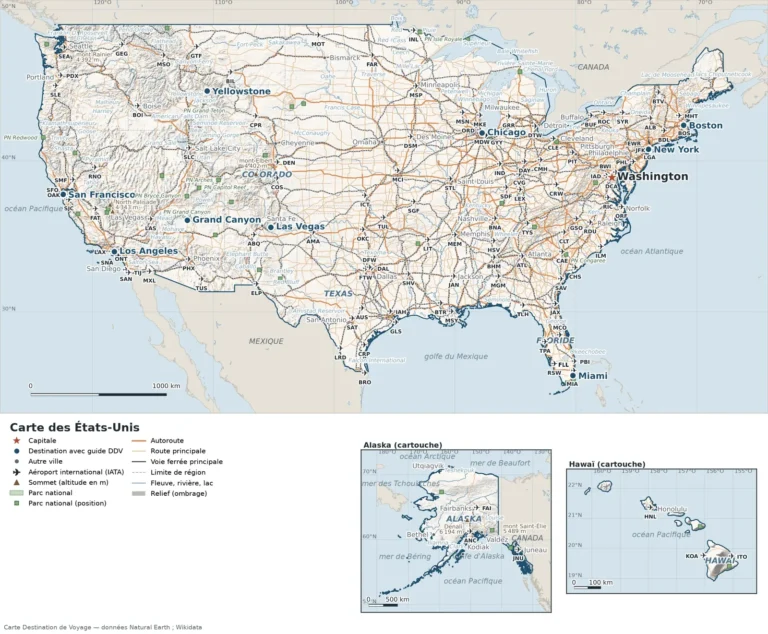
To combine New York with other regions, see our United States travel guide, our California page or all our destinations in North America.