Looking for things to do in Washington, D.C.? The US federal capital packs the country’s great symbols into a few miles: the Capitol, the White House, the memorials of the National Mall and the Smithsonian Institution museums, most of them free. Washington is easy to explore on foot and by Metro in three or four days. This guide covers the highlights, the neighborhoods, the best time to go according to official climate normals, an itinerary and a realistic budget. If a three- or four-day trip suits you, our Boston travel guide follows the same format for New England.
To get inside the presidential residence, our guide to visiting the White House explains the tour request and works out the lead times for each month.
Our travel deals for Washington, D.C.
Affiliate links: we earn a commission, at no extra cost to you.
FlightsKiwi.comCompare flights and airline combinations to Washington, D.C..
The National Mall is the great esplanade, more than 3 km (2 mi) long, that links the Capitol to the Lincoln Memorial. It holds the main museums and memorials and, at its center, the obelisk of the Washington Monument, which rises more than 555 ft (169 m). An elevator takes you to the observation level: according to the National Park Service (nps.gov, checked 26 October 2026), you need a timed-entry ticket, sold in advance on Recreation.gov, usually about 30 days ahead, with same-day tickets handed out on site from 8:45 a.m. Wear good shoes: the Mall is longer than it looks.
The Capitol and the Library of Congress
The seat of Congress can be visited on a guided tour from the Capitol Visitor Center. According to the official Visit the Capitol site (visitthecapitol.gov, checked 26 October 2026), all tours are free; booking online is recommended, and walk-in visitors are placed on the next available tour. Security checks are strict: check the list of prohibited items. Just behind, the Library of Congress, one of the largest libraries in the world, impresses with the decoration of its Thomas Jefferson Building. The neighboring Supreme Court also opens some rooms to the public on weekdays.
The White House
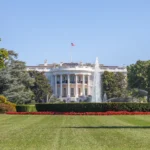
The presidential residence can be seen from Lafayette Square to the north and from the Ellipse to the south. Tours of the interior are very hard to get and must be requested well in advance through official channels: do not build your trip around one. The nearby White House Visitor Center tells the story of the building.
The Lincoln Memorial and the memorials
At the western end of the Mall, the Lincoln Memorial houses the seated statue of Abraham Lincoln; it was from its steps that Martin Luther King Jr. gave his « I Have a Dream » speech in 1963. In front lies the Reflecting Pool, flanked by the World War II, Korean War and Vietnam memorials, the last with its black wall bearing the names of the fallen. In the evening, the illuminated monuments are quieter and very photogenic.
The Tidal Basin and the cherry blossoms
Around the Tidal Basin stand the Jefferson Memorial, the Franklin Delano Roosevelt Memorial and the Martin Luther King Jr. Memorial. In spring, the cherry trees given by the city of Tokyo in 1912 bloom around the basin: the blossom, which draws huge crowds, usually comes between late March and early April, alongside the National Cherry Blossom Festival. Exact dates vary each year: follow the National Park Service forecasts.
The Smithsonian Institution museums
The Smithsonian Institution runs around twenty museums and the National Zoo, most of them free. On the Mall, the most visited are the National Museum of Natural History (Hope Diamond, dinosaurs), the National Air and Space Museum, the National Museum of American History and the National Museum of African American History and Culture, for which free timed passes may be required. The National Gallery of Art, also free, holds a large collection of European and American painting. The United States Holocaust Memorial Museum rounds off the visit. Choose two or three museums a day at most.
Georgetown
Washington’s oldest neighborhood lines up brick houses, shops and restaurants along M Street and the Chesapeake & Ohio Canal, a quiet place for a stroll. The Potomac waterfront is pleasant at sunset. Georgetown University and the stairs made famous by The Exorcist also draw the curious. Georgetown has no Metro station: come by bus or walk from Foggy Bottom.
Arlington National Cemetery and Mount Vernon
Across the Potomac in Virginia, Arlington National Cemetery, reached by Metro, holds the grave of John F. Kennedy and the Tomb of the Unknown Soldier, where you can watch the changing of the guard. Further south, Mount Vernon, George Washington’s estate on the Potomac, makes a day or half-day trip, with its mansion, gardens and outbuildings.
Washington’s neighborhoods
Neighborhood
Atmosphere
Best for
National Mall and Penn Quarter
Museums, monuments, convention center
First visit, everything on foot
Capitol Hill
Row houses, Eastern Market
A quiet stay near the Capitol
Dupont Circle
Embassies, cafés, bookshops
Lively, central area
Georgetown
Historic, shopping, on the Potomac
Elegant stay, pricier
U Street and Shaw
Bars, music venues, African American history
Nightlife
Navy Yard and The Wharf
Redeveloped waterfront, restaurants
Modern stay, baseball stadium
As in any large city, take care in unfamiliar areas at night (see our safety section).
Itinerary: 3 to 4 days in Washington
Day 1: the Capitol (guided tour), Library of Congress, Supreme Court, then the National Air and Space Museum or the National Gallery of Art
Day 2: Washington Monument, the National Museum of Natural History and the Museum of American History, then the White House from outside
Day 3: the memorials by bike or on foot (Lincoln, World War II, Vietnam, Tidal Basin), then Georgetown at sunset
Day 4: Arlington National Cemetery, the National Museum of African American History and Culture or the Holocaust Memorial Museum; evening at The Wharf
Washington combines easily with a stay in New York, by Amtrak train from Union Station. For a longer East Coast trip, see our road trip guide, or carry on to Chicago and Montreal.
When to go to Washington
The best time to visit Washington is April to mid-June and mid-September to October: 20 to 27 °C (68 to 81 °F) in the afternoon, pleasant parks and the cherry blossom season in late March and early April. Summer is hot and humid, with highs around 31-32 °C (88-90 °F) in July and August and frequent thunderstorms. Winter is cold but dry and bright: 7 to 9 °C (45 to 48 °F) in the afternoon from December to February, with frosty nights and occasional snow.
Month
High
Low
Rain
Rainy days
Crowds
Prices
Verdict
January
7.1 °C (45 °F)
-1.1 °C (30 °F)
73 mm (2.9 in)
10
Low
Low
⚠️ Cold, quiet museums
February
9.1 °C (48 °F)
-0.1 °C (32 °F)
67 mm (2.6 in)
9
Low
Low
⚠️ Cold, low prices
March
13.6 °C (56 °F)
3.7 °C (39 °F)
89 mm (3.5 in)
11
Medium → high
Medium → high
⚠️ Cool; late March: cherry blossoms
April
20.0 °C (68 °F)
9.1 °C (48 °F)
82 mm (3.2 in)
11
High
High
✅ Blossoms early in the month, mild
May
24.7 °C (76 °F)
14.4 °C (58 °F)
100 mm (3.9 in)
12
High (school trips)
High
✅ Pleasant, parks in bloom
June
29.5 °C (85 °F)
19.7 °C (67 °F)
107 mm (4.2 in)
11
High
High
✅ Hot; best early in the month
July
32.0 °C (90 °F)
22.4 °C (72 °F)
110 mm (4.3 in)
11
High
Medium
❌ Hot, humid, thunderstorms
August
31.0 °C (88 °F)
21.7 °C (71 °F)
83 mm (3.3 in)
9
Medium
Medium
❌ Hot and humid, Congress in recess
September
27.1 °C (81 °F)
17.8 °C (64 °F)
100 mm (3.9 in)
9
Medium
Medium
✅ Heat easing
October
20.8 °C (69 °F)
11.2 °C (52 °F)
93 mm (3.7 in)
8
Medium
Medium → high
✅ Mild, fall colors
November
14.6 °C (58 °F)
5.3 °C (42 °F)
74 mm (2.9 in)
8
Low
Low
⚠️ Cool, peak foliage early in the month
December
9.3 °C (49 °F)
1.4 °C (35 °F)
87 mm (3.4 in)
10
Medium (holidays)
Medium
⚠️ Cold, holiday lights
Temperatures, precipitation and days with at least 0.01 in of precipitation (rounded): NOAA 1991-2020 normals for the Ronald Reagan Washington National Airport station, converted to °C and mm. Crowds and prices: estimate based on tourist seasons.
Spring (March-May): the most popular season, with the cherry blossoms and mild temperatures. It is also school-trip season: museums and monuments are packed and hotels expensive.
Summer (June-August): sticky heat and late-day thunderstorms, but long evenings and plenty of outdoor events. The free, air-conditioned museums make a good refuge. On the Fourth of July, Independence Day ends with fireworks over the Mall.
Fall (September-November): the best compromise: bearable heat, often clear skies, colorful foliage in October and early November, and lower prices than in spring.
Winter (December-February): dry cold, few visitors and cheaper hotels, except around the holidays and major political events. The free museums easily fill a stay.
Plan
Best time
Cherry blossoms
Late March to early April, depending on the year
Quiet museums and monuments
January-February, November
Walks, cycling on the Mall
April-May, late September-October
Fourth of July
July, despite the heat
Tight budget
January-February, August
Check for exceptional closures of federal sites, which can happen during major official events.
Our view by traveler profile, based on the information in this guide:
Profile
Our view
Why
Culture and history
✅ Ideal
Capitol, Library of Congress, memorials and Smithsonian museums: the city packs the country’s great symbols into a few miles.
Families
✅ Yes
A wide range of free museums (dinosaurs, air and space), the National Zoo, and everything on foot or by Metro.
Couples
✅ Yes
Illuminated, quieter monuments in the evening, Georgetown at sunset, The Wharf waterfront.
Tight budget
⚠️ Possible
The Mall’s museums and monuments are free, but accommodation is expensive: roughly US$135 to 200 per person per day on a tight budget.
Nature and beaches
❌ Not ideal
A city break: the Georgetown canal, the Potomac banks and Mount Vernon offer some greenery, but no beach.
First trip to the US
✅ Yes
Washington combines easily with New York by train.
Budget for a trip to Washington
Good news: most of the major museums and all the monuments on the Mall are free. Accommodation is the biggest expense, especially in spring and on weekdays, when the city hosts conventions and delegations. Rough amounts per person per day, excluding flights:
Item
Tight budget
Comfort
Accommodation (shared double room)
roughly US$70 to 110 (hostel, hotel out of the center)
roughly US$170 to 280
Meals (tips and tax included)
roughly US$45 to 60
roughly US$90 to 135
Transport (Metro, bus)
roughly US$9 to 13
roughly US$17 to 35
Paid sights and activities
roughly US$0 to 10
roughly US$17 to 45
Total per day
roughly US$135 to 200
roughly US$280 to 450
Rough estimates, converted from euros at the European Central Bank rate of 23 October 2026; they vary with the season. Displayed prices usually exclude sales tax, and tipping is customary in restaurants.
Getting around Washington
From the airport: Washington Dulles, the main international airport, is about 40 km (25 mi) west of the city; according to WMATA (wmata.com, checked 26 October 2026), it has its own Metro station on the Silver Line, linked to the terminal by an underground walkway. Reagan National, very close to the center, is also served by Metro. Baltimore/Washington Airport (BWI) is linked by train.
Metro: the Metrorail network serves the Mall, Arlington and most neighborhoods. According to WMATA (checked 26 October 2026), you tap a SmarTrip card or a contactless credit or debit card at the faregates when you enter and exit (use the same one both times); full one-way fares range from $2.25 to $6.75 depending on distance, day and time.
Buses: handy for Georgetown, which has no Metro.
Bike: the Capital Bikeshare system is ideal for linking the memorials.
Car: pointless in the city, where parking is expensive; useful only for Mount Vernon or the surroundings.
Train: Union Station links Washington to New York, Philadelphia and Baltimore by Amtrak.
Where to stay in Washington
Penn Quarter and Downtown: walking distance from the Mall and museums, well connected.
Dupont Circle: central, lively in the evening, many mid-range hotels.
Capitol Hill: quiet, near the Capitol and Union Station.
Georgetown: charming but pricier and without Metro.
Arlington (Virginia): across the Potomac, often cheaper and linked to the center by Metro.
Entry requirements, health and safety
US citizens: a trip to Washington, D.C. is domestic travel, with no entry formalities.
UK citizens: according to the UK FCDO (GOV.UK, updated 18 August 2026), you need an approved ESTA (applied for only via the official ESTA website or the ESTA Mobile app) or a US visa before you travel; travel to Cuba on or after 12 January 2021, or to certain other countries since March 2011, can make you ineligible for an ESTA. Your passport must be valid for the length of your stay, and a valid ESTA or visa does not guarantee entry.
Health: UK prescriptions are not valid in the US; you need a prescription from a US provider (GOV.UK). Take out insurance that covers medical costs.
Safety: as in any large city, stay alert on public transport and avoid walking alone at night through quiet, unfamiliar areas.
Emergencies: 911 (ambulance, fire, police), according to GOV.UK.
If you are continuing to New York, also see when to go to New York to time both cities for the same period.
Frequently asked questions
How many days do you need in Washington?
Allow 3 to 4 days for the Mall, the Capitol, the memorials, two or three Smithsonian museums and Georgetown; add a day for Arlington and Mount Vernon.
What is the best time to visit Washington?
April to mid-June and mid-September to October. According to NOAA 1991-2020 normals, highs exceed 31 °C (88 °F) in July and August, with high humidity, and fall below 10 °C (50 °F) from December to February.
Are Washington’s museums free?
Most Smithsonian Institution museums and the National Gallery of Art are free. Some require a free timed pass at busy times.
Can you visit the White House?
Tours of the interior are rare and very hard to get. The facade can be seen from Lafayette Square and the Ellipse, and the visitor center tells the story of the building.
Do UK visitors need an ESTA for Washington?
Yes: according to GOV.UK (updated 18 August 2026), British citizens need an approved ESTA or a US visa before travelling. US citizens need no formalities.
Can you visit Washington without a car?
Yes, and it is even recommended: Metro, buses, bikeshare and walking are enough, and parking is expensive.


 FlightsKiwi.comCompare flights and airline combinations to Washington, D.C..Compare flights