What are the best things to do in Copenhagen? The Danish capital is explored on foot and by bike, between the colorful facades of Nyhavn, the Tivoli Gardens, the royal palaces and neighborhoods where people swim in the harbor in summer. The city is expensive but compact: three or four days are enough to see the essentials and add a day trip to Helsingør, the Louisiana museum or Malmö in Sweden. This guide brings together the highlights, neighborhoods to stay in, the month-by-month climate, an itinerary and a realistic budget. If you are torn between Copenhagen and the Swedish capital, our Copenhagen or Stockholm comparison helps you choose.
Our travel deals for Copenhagen
Affiliate links: we earn a commission, at no extra cost to you.
FlightsKiwi.comCompare flights and airline combinations to Copenhagen.
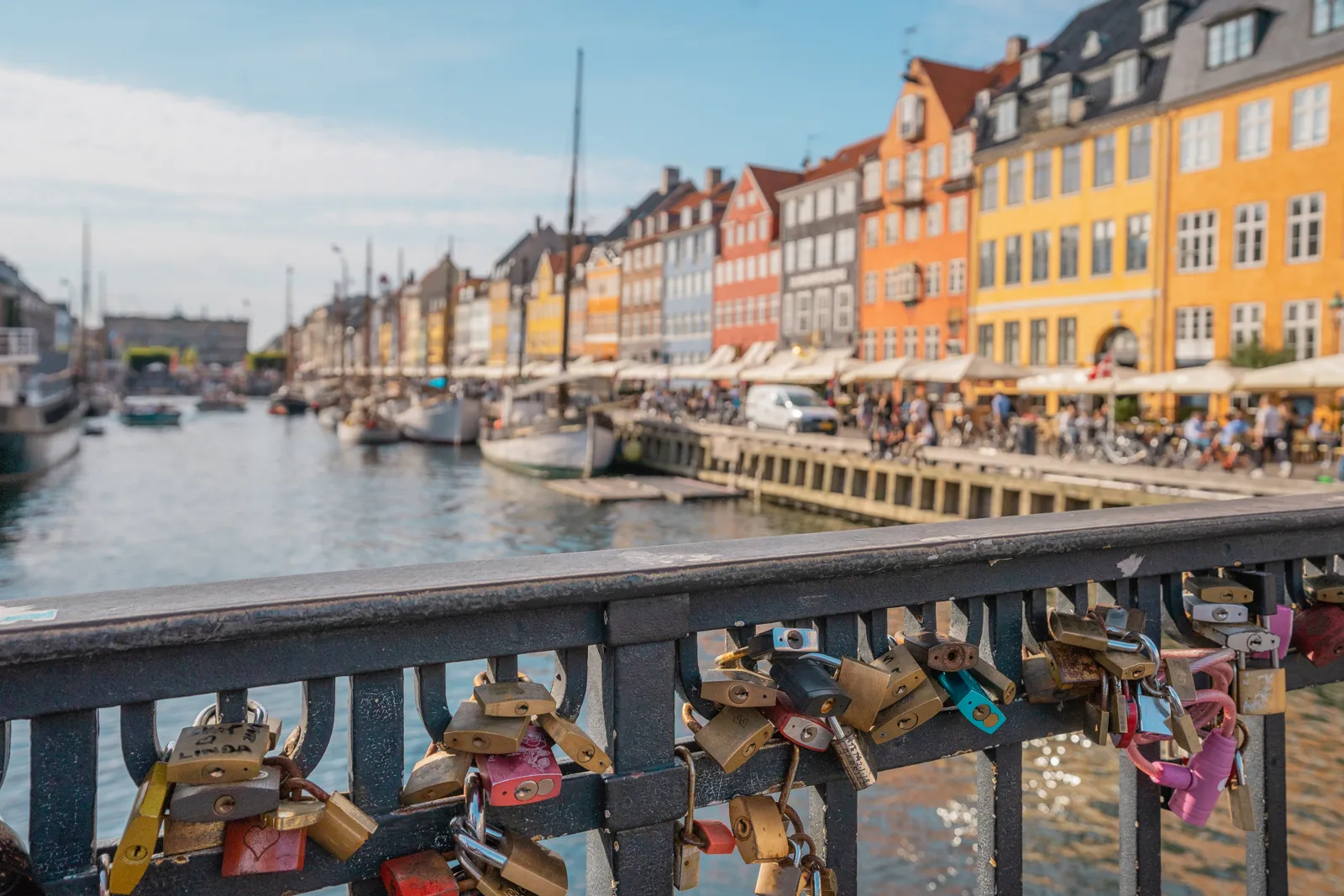
The Nyhavn canal, lined with 17th- and 18th-century houses painted ocher, red and blue, is the image of Copenhagen. Hans Christian Andersen lived in several of these houses. The terraces on the sunny quay are expensive: grab a takeaway coffee and sit on the edge of the quay like the Danes. It is also the starting point for most canal boat tours, about an hour long, which pass the Opera House, the Little Mermaid and Christianshavn.
The Nyhavn canal and its colorful houses.
Tivoli Gardens
Opened in 1843 opposite the central station, Tivoli is one of the oldest amusement parks in the world: rides, gardens, pavilions and concert halls. It is not open all year: it runs by seasons (summer, Halloween, Christmas). Check the calendar before you go. Entry and rides are paid separately; an unlimited ride pass pays off if you do several rides. In the evening, the lights are worth the visit even without a ride.
The Little Mermaid and the Kastellet
The bronze statue inspired by Andersen’s tale, on its rock since 1913, is small and often surrounded by groups. Arrive early in the morning, or combine it with a walk on the ramparts of the Kastellet, the nearby star-shaped citadel, and St Alban’s Anglican Church. It takes about an hour on foot from Nyhavn along the waterfront.
Amalienborg, the Marble Church and Frederiksstaden
The four rococo palaces of Amalienborg, around an octagonal square, are the royal family’s winter residence. The changing of the guard takes place every day at noon on the square; part of the palaces houses a museum. In line with it, the Marble Church (Frederikskirken) and its large dome can be visited freely during opening hours. The Frederiksstaden district, laid out in the 18th century, is the most elegant in the city.
Rosenborg Castle and the King’s Garden
Built by Christian IV in the early 17th century, Rosenborg is a small Renaissance castle housing the Danish crown jewels, displayed in the basement. The King’s Garden (Kongens Have) around it is the busiest park in the center, ideal for a picnic. Right next door, the Torvehallerne covered market has around sixty stalls: smørrebrød, fish, pastries.
Christiansborg, Strøget and the Round Tower
On Slotsholmen island, Christiansborg Palace brings together Parliament, the royal reception rooms, the ruins of earlier castles and the stables. The palace tower offers a free view over the city. Across the canal, Strøget, one of Europe’s longest pedestrian streets, links City Hall Square to Kongens Nytorv. The Round Tower (Rundetårn), a 17th-century observatory, is climbed by a spiral ramp with no steps.
Christianshavn and Christiania
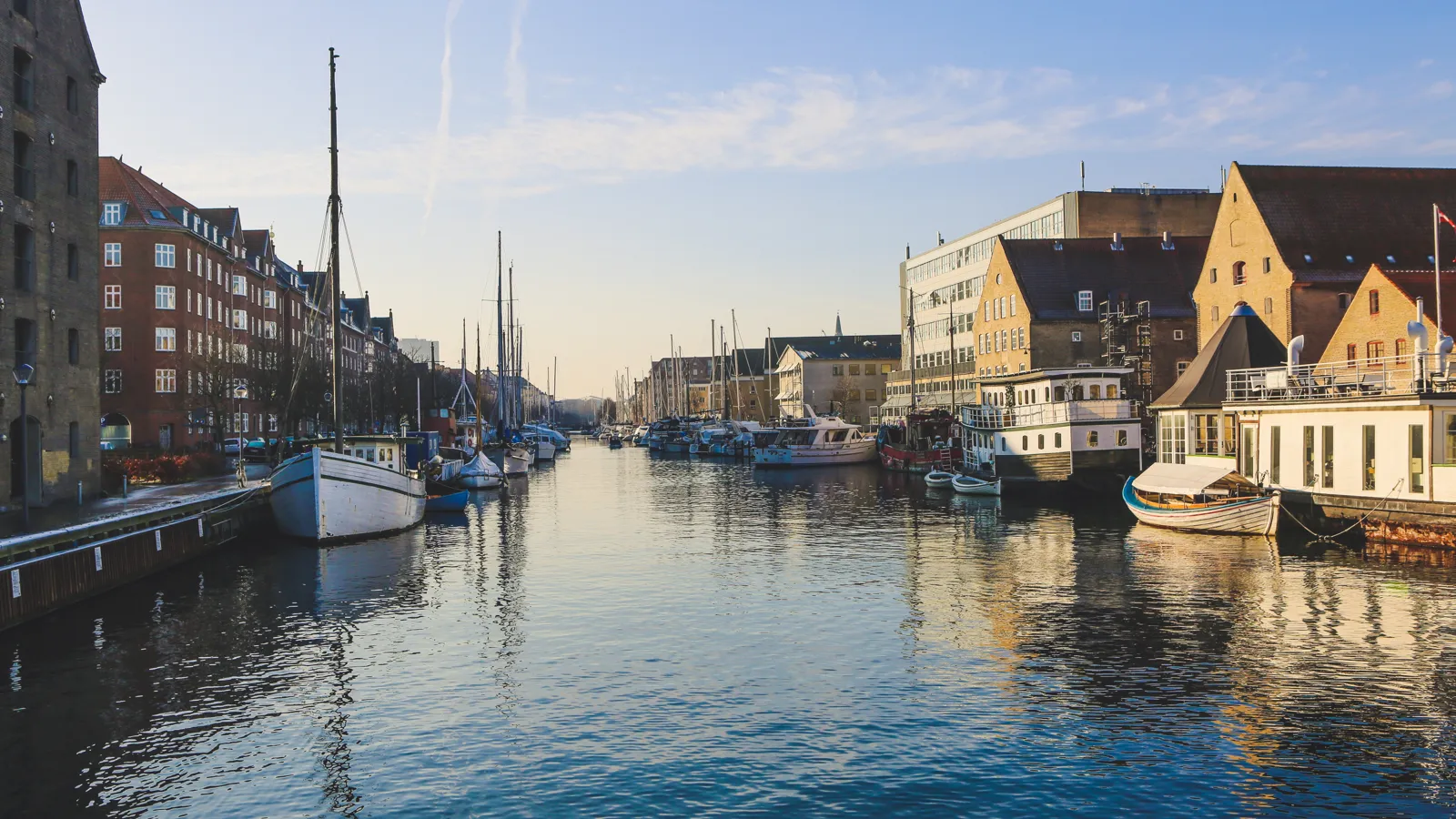
Christianshavn, a neighborhood of canals and sailors’ houses, is explored on foot or by boat. The twisted spire of the Church of Our Saviour (Vor Frelsers Kirke) is climbed by an outside staircase, with wide views over the harbor. Next door, Christiania, a self-governing community founded in 1971 on a former military base, draws many curious visitors. The UK FCDO advises taking extra care in Christiania and Nørrebro, particularly late at night, after instances of gang violence: stay on the main paths and respect residents’ signs (especially about photos).
The canals of Christianshavn.
Museums
The National Museum (Nationalmuseet) traces Denmark’s history from the Vikings to the present day. The Ny Carlsberg Glyptotek, founded by brewer Carl Jacobsen, shows ancient sculpture and French painting around a winter garden. The National Gallery of Denmark (SMK) and Designmuseum Danmark complete the list. The Copenhagen Card, which includes transport and many museums, pays off if you visit several places a day.
Harbor baths, Nørrebro and Vesterbro
The harbor water is clean enough to swim in summer: the Islands Brygge and Kalvebod Bølge baths, supervised during the season, are free. To get off the beaten track, stroll around Nørrebro (Jægersborggade, Assistens Cemetery, where Andersen is buried) or Vesterbro’s Meatpacking District, full of restaurants and bars. The Reffen street-food market, on Refshaleøen island, opens in the warmer months.
Day trips from Copenhagen
Three day trips are easy by regional train. Kronborg Castle in Helsingør, the setting for Shakespeare’s Hamlet, is a UNESCO World Heritage Site. The Louisiana Museum of Modern Art, in Humlebæk on the coast, combines its collections with a sculpture garden facing the sea. Malmö, in Sweden, is reached over the Øresund Bridge: take your passport, as the UK FCDO points to border control requirements for travel from Denmark to Sweden.
Copenhagen neighborhoods
Neighborhood
Atmosphere
Best for
Indre By (historic center)
Strøget, Nyhavn, Rosenborg, everything on foot
A short first visit, a comfortable budget
Vesterbro
Central station, Tivoli, Meatpacking District, bars
Practical and lively; pickpockets operate around the central station
Nørrebro
Multicultural, cafés, small restaurants
Travelers who want to live like locals; extra care late at night (UK FCDO)
Østerbro
Residential, quiet, close to the lakes and the Kastellet
Families, quiet stays
Christianshavn
Canals, old houses, near the harbor
A village feel in the city
Frederiksberg
Green, well-to-do municipality, park and zoo
Quiet, well served by metro
The U.S. Department of State notes aggressive pickpockets at Copenhagen Central Station, Copenhagen Airport and on the quays.
Itinerary: 3 to 5 days in Copenhagen
Day 1: Strøget, Christiansborg and its tower, Nyhavn, a canal boat tour, then Tivoli in the evening (in season)
Day 2: Amalienborg (changing of the guard at noon), the Marble Church, the Kastellet and the Little Mermaid, then lunch at Torvehallerne and Rosenborg Castle
Day 3: Christianshavn, the Church of Our Saviour, Christiania, then the harbor baths or the National Museum depending on the weather, and an evening in Vesterbro
Day 4: day trip to Helsingør (Kronborg) with a stop at the Louisiana museum on the way back
Day 5: Malmö via the Øresund Bridge, or Nørrebro and the Ny Carlsberg Glyptotek
With only two days, focus on the historic center, Nyhavn and a boat tour on day one, then Amalienborg, Rosenborg and Christianshavn on day two.
When to go to Copenhagen
The best time to visit Copenhagen is May to September: 17 to 22 °C (63 to 72 °F) in the afternoon, very long days around the solstice and the season for terraces, harbor baths and Tivoli. July and August are the warmest and busiest months. Winter is gray, damp and short on light (around 40 to 50 hours of sunshine a month in December and January), but the city comes alive in late November with Christmas markets and a decorated Tivoli. Copenhagen has a temperate maritime climate: few hard frosts, rarely great heat, and rain spread throughout the year.
The table uses the official normals of the Danish Meteorological Institute for Copenhagen.
Month
High °C (°F)
Low °C (°F)
Rain mm (in)
Sunshine (h/month)
Crowds
Prices
Verdict
January
3.4 (38)
0.7 (33)
53 (2.1)
52
Low
Low
❌ Cold and damp, very short days
February
3.6 (38)
0.8 (33)
37 (1.5)
68
Low
Low
⚠️ Quiet and cheaper, little light
March
6.5 (44)
1.7 (35)
42 (1.7)
120
Low
Low → medium
⚠️ End of winter, cool wind
April
11.8 (53)
4.2 (40)
36 (1.4)
181
Medium (Easter)
Medium
⚠️ Cool spring, Tivoli reopens
May
16.7 (62)
8.6 (47)
47 (1.9)
230
Medium to high
Medium → high
✅ Mild, bright, parks in bloom
June
19.6 (67)
11.9 (53)
64 (2.5)
213
High
High
✅ Very long days, terraces
July
22.2 (72)
14.3 (58)
61 (2.4)
228
Very high
High
✅ Warmest, harbor baths, crowds
August
21.8 (71)
14.1 (57)
68 (2.7)
199
Very high
High
✅ Warm, showers possible
September
17.5 (64)
10.8 (51)
61 (2.4)
142
Medium
Medium
✅ Best compromise
October
12.6 (55)
7.1 (45)
63 (2.5)
101
Medium (Halloween at Tivoli)
Medium
⚠️ Cool and wet
November
7.6 (46)
3.3 (38)
56 (2.2)
55
Low, then high at month-end
Medium
⚠️ Gray, Christmas markets late in the month
December
4.4 (40)
1.5 (35)
57 (2.2)
41
High (Christmas)
High over the holidays
⚠️ Dark but Christmassy
Temperatures, precipitation and sunshine: 1981-2010 standard climate normals of the Danish Meteorological Institute (DMI) for Copenhagen (DMI report 18-19). Crowds and prices: estimate based on tourist seasons.
Spring (April-May): 12 to 17 °C (54 to 63 °F) in the afternoon; April is one of the driest months. Cherry trees bloom at Bispebjerg Cemetery, Tivoli reopens and terraces come out.
Summer (June-August): 20 to 22 °C (68 to 72 °F), rarely more than 30 °C (86 °F). The sun sets late in June. It is the season for the harbor baths, Reffen and the Copenhagen Jazz Festival, usually in July. Hotels are at their most expensive.
Autumn (September-October): September stays mild (17 °C / 63 °F) with fewer visitors; October turns wet and windy. Tivoli reopens for Halloween.
Winter (November-March): 3 to 5 °C (37 to 41 °F) in the afternoon, often overcast skies and darkness by mid-afternoon in December. Snow is possible but rarely lasts. The Christmas markets, at Tivoli and Nyhavn, usually open in mid- or late November.
Plan
Best time
City break, monuments and canals
May to September
Harbor swimming, outdoor life
July-August
Tivoli
Opening seasons: summer, Halloween, Christmas (check the calendar)
Christmas markets and hygge
Late November to December
Tight budget, few visitors
January to March, outside school holidays
Tivoli and festival dates change every year: check them before booking.
Our view by profile, based on the sights, budget and conditions described in this guide.
Profile
Our view
Couple
✅ Canals, a boat tour from Nyhavn, Tivoli lit up at night.
Family
✅ Tivoli, supervised harbor baths in summer, bikes everywhere; Østerbro suits family stays.
Tight budget
❌ One of the most expensive cities in Europe: roughly DKK 670 to 1,050 a day, lighter with bikes, markets and free sights.
Culture
✅ Rosenborg and Christiansborg, the National Museum, the Glyptotek, and Kronborg or Louisiana on a day trip.
Swimming
⚠️ Possible in the harbor in July-August only; the rest of the year, the city is mostly about walking and cycling.
Short breaks
✅ A compact city with a direct metro from the airport: three or four days cover the essentials.
Budget for a trip to Copenhagen
Copenhagen is one of the most expensive cities in Europe, especially for accommodation, restaurants and alcohol. Transport is efficient but not cheap. Estimates per person per day, excluding flights, converted from euros at the European Central Bank rate of 23 October 2026:
Item
Tight budget
Comfort
Accommodation (per person, sharing a double room)
about DKK 335 to 525
about DKK 820 to 1,420
Meals
about DKK 225 to 335
about DKK 450 to 750
Transport (metro, bus, bike)
about DKK 60 to 90
about DKK 90 to 150
Sights and activities
about DKK 75 to 150
about DKK 185 to 300
Total per day
roughly DKK 670 to 1,050
roughly DKK 1,500 to 2,470
Rough estimates, varying with the season and the krone exchange rate. Accommodation prices peak from June to August.
To cut costs: rent a bike rather than buying lots of tickets, eat at markets (Torvehallerne, Reffen) or grab a takeaway smørrebrød, enjoy free sights (Nyhavn, the Kastellet, the Christiansborg tower, the harbor baths) and work out whether the Copenhagen Card pays off for your plans.
Getting around Copenhagen
From the airport: the M2 metro line links the airport with the center, and trains run to the central station. Fares depend on the number of zones: buy tickets from machines or in the official Rejsebillet app of Din Offentlige Transport.
By bike: the locals’ favorite way to get around, with wide bike lanes everywhere. Cyclists often have the right of way, and many accidents happen when pedestrians do not give way to bikes (UK FCDO, U.S. Department of State): look before stepping onto a bike lane.
Metro, buses and harbor buses: the metro is driverless. The harbor buses are part of the network and make an inexpensive cruise.
On foot: the historic center, Nyhavn and Christianshavn are easy to explore on foot.
Train: regional trains serve Helsingør, Humlebæk (Louisiana) and Malmö from the central station.
Car: pointless in the city, where parking is expensive and limited.
Copenhagen airport transfer: metro, train, taxi and private transfer
Copenhagen Airport (Kastrup) is linked to the center by metro and train. For most travelers, there is no need to book anything in advance: a regular public transport ticket is enough.
Which ticket to buy?
Greater Copenhagen works on a zone system shared by buses, trains and the metro. According to Din Offentlige Transport, for single tickets you pay for the number of zone rings you travel through, including the zone where your journey starts. Check current fares on dinoffentligetransport.dk or in the Rejsebillet app: some guides still show old prices.
Taxi
Taxis wait outside the terminal. Ask the driver for the price before setting off.
Booking a transfer in Copenhagen
A private transfer booked in advance (a driver waiting on arrival, a price fixed at booking) mainly makes sense for a late arrival, bulky luggage, a family with young children or a group sharing the cost. Given how frequent the metro is, it is mostly useful for groups or if your accommodation is far from a station. Before booking, check what the price includes (tolls, luggage, waiting time if your flight is late), the exact meeting point in the terminal, the cancellation terms and the name of the company that actually does the trip.
On trains to and from the airport, keep an eye on your luggage, including in the overhead racks (UK FCDO). Following the introduction of the EU Entry/Exit System, allow extra time at passport control for flights to or from non-Schengen countries, including the UK.
Where to stay in Copenhagen
For a first visit, the historic center (Indre By) and the area around Nyhavn put everything within walking distance, at a high price. Vesterbro, near the central station, has many hotels in all categories and restaurants; choose streets near the Meatpacking District or Værnedamsvej. Nørrebro and Østerbro, 10 to 15 minutes by bike from the center, are quieter and often cheaper. Design hostels and capsule hotels help keep the budget down.
In July-August, during big concerts and the Christmas market, book several months ahead: places fill quickly and prices rise sharply.
Entry requirements, health and safety
US citizens: according to the U.S. Department of State (travel.state.gov, last updated October 22, 2026), you may enter Denmark for up to 90 days for tourism without a visa. Your passport must be valid for at least three months after the date you intend to leave the Schengen area; six months’ validity is recommended. You will need sufficient proof of funds and a return ticket.
UK citizens: according to the UK FCDO (GOV.UK, updated 11 August 2026), you can travel to the Schengen area, including Denmark, without a visa for up to 90 days in any 180-day period. Your passport must have been issued less than 10 years before you arrive and be valid for at least 3 months after you plan to leave; you may need to show a return or onward ticket. The EU Entry/Exit System (EES) may require fingerprints and a photo at the border.
Health: UK travelers need a GHIC or EHIC for medically necessary state healthcare (UK FCDO). For non-life-threatening emergencies, call the medical helpline 1813 in greater Copenhagen, staffed by English-speaking doctors and nurses, who will arrange an appointment (U.S. Department of State).
Safety: the U.S. Department of State rates Denmark Level 2: Exercise Increased Caution due to terrorism. Pickpockets and bag snatchers operate in crowded places, including the central station, the airport, Christiania, Nyhavn and Kongens Nytorv (UK FCDO, U.S. Department of State). Take extra care in Christiania and Nørrebro late at night.
Drugs: illegal drugs, including cannabis, are strictly prohibited, even in small quantities, and severe penalties apply (UK FCDO), including in Christiania.
Money: cards are accepted almost everywhere, even for small amounts, and some shops no longer take cash. If a card terminal offers to charge you in your home currency, choose Danish kroner.
Tipping: service is included in prices; rounding up the bill is common but optional.
Water: bring a reusable bottle and fill it up as you go.
Mobile data: check your roaming plan or buy an eSIM before you go.
Language: almost all Danes speak English. « Hej » (hello) and « tak » (thank you) are enough to be polite.
Weather: pack a windbreaker and a warm layer, even in summer: the weather changes quickly.
Three days let you see Nyhavn, Tivoli, Amalienborg, Rosenborg and Christianshavn. Allow four to five days to add Helsingør, the Louisiana museum or Malmö.
When is the best time to go to Copenhagen?
From May to September, with 17 to 22 °C (63 to 72 °F) in the afternoon according to the Danish Meteorological Institute’s 1981-2010 normals. Late November and December are popular for the Christmas markets, despite the cold and lack of light.
Is Copenhagen very expensive?
Yes, it is one of the most expensive cities in Europe. Allow roughly DKK 670 to 1,050 per person per day on a tight budget and DKK 1,500 to 2,470 for comfort, excluding flights. Bikes, markets and free sights help cut costs.
Can you pay in euros in Copenhagen?
The currency is the Danish krone. Some tourist shops accept euros at a poor rate; cards, accepted almost everywhere, are the simplest option.
How do you get from the airport to central Copenhagen?
The M2 metro line links the airport with the city center, and trains run to the central station. Buy a ticket covering the right number of zones.
Is Copenhagen safe?
Crime levels are generally low, but the U.S. Department of State rates Denmark Level 2: Exercise Increased Caution due to terrorism. Watch out for pickpockets in crowded areas and take extra care in Christiania and Nørrebro late at night (UK FCDO).
Our sources
Copenhagen climate normals: 1981-2010 standard climate normals of the Danish Meteorological Institute (DMI) for Copenhagen (DMI report 18-19)
U.S. Department of State, Denmark country information (travel.state.gov, last updated October 22, 2026) and Denmark travel advisory (Level 2), read on 26 October 2026


 FlightsKiwi.comCompare flights and airline combinations to Copenhagen.Compare flights