To visit Amsterdam is to explore, on foot or by bike, a city of canals lined with narrow 17th-century houses, also home to three of the most visited museums in Europe: the Rijksmuseum, the Van Gogh Museum and the Anne Frank House. The city is compact, flat and easy-going, but expensive and very busy. This guide helps you choose your sights, neighbourhoods and day trips for a stay of 2 to 4 days. With children, a day at Efteling, the fairy-tale theme park in North Brabant, can be planned with our dedicated guide.

Our travel deals for Amsterdam
Affiliate links: we earn a commission, at no extra cost to you.
 FlightsKiwi.comCompare flights and airline combinations to Amsterdam.Compare flights
- Airport transferKiwitaxiPrivate driver booked in advance at a fixed price.Book a transfer
- Tickets and toursTiqetsEntry tickets and guided tours to book online; compare with the official price.See tickets
- City passGo CityMulti-attraction pass at a fixed price: worth it only if you visit a lot.See passes




Amsterdam at a glance
- Airports Schiphol, about 15 minutes by train from Central StationA major European hub with nonstop flights from North America and the UK
- Ideal length 3 days, plus a day for windmills or tulips
- Best time April to June and September
- Time zone UTC+1, UTC+2 in summer; 1 hour ahead of London, 6 hours ahead of New YorkLocal time now: –:–
- Entry Schengen area: no visa for short stays for US and UK citizens · travel.state.gov · GOV.UK
- Currency the euro; cards accepted almost everywhere · currencies
- Electricity check plug types and voltage before you go · plugs
- Budget see our budget section
Things to do in Amsterdam: the highlights
The canals and the Grachtengordel
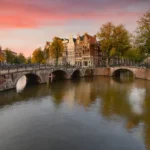
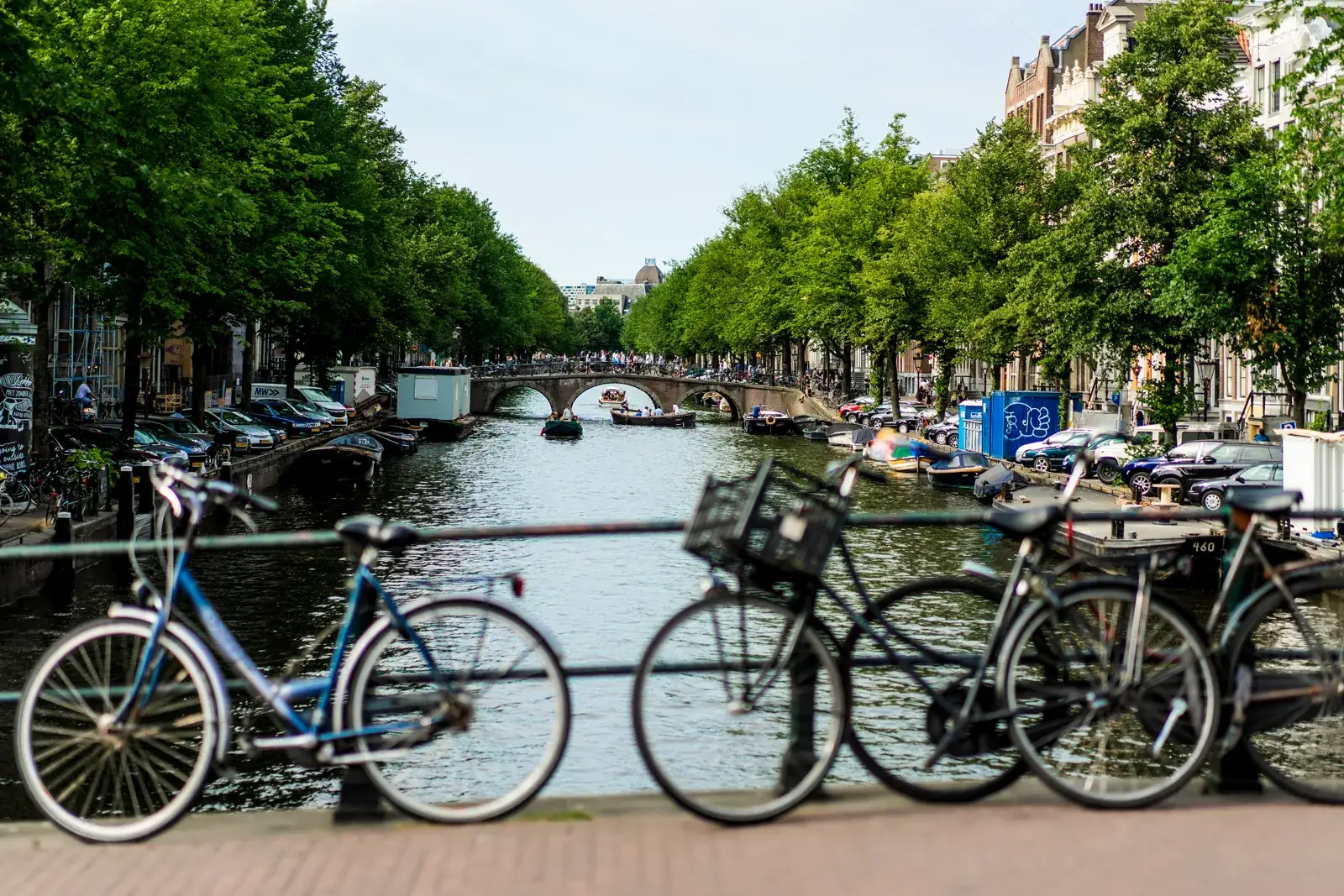
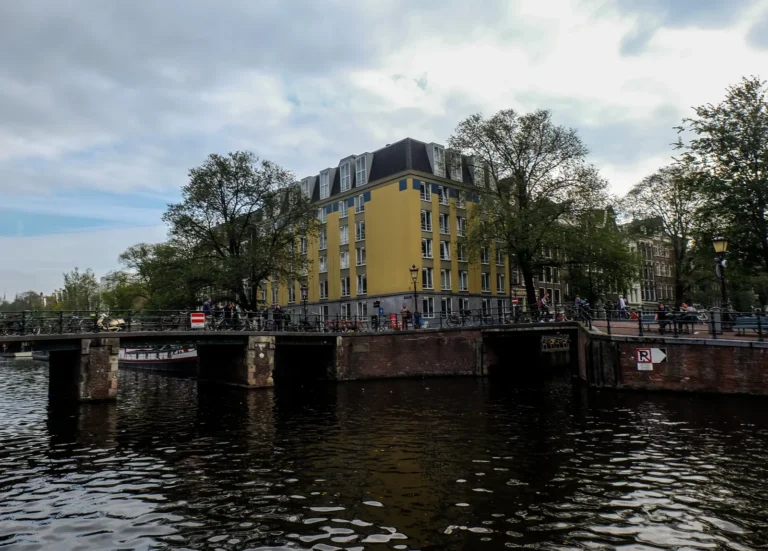
The 17th-century canal ring (Herengracht, Keizersgracht, Prinsengracht), a UNESCO World Heritage Site, forms the heart of the city. The easiest way to explore it is on foot, following the quays and bridges of the Nine Streets (De 9 Straatjes) district. A canal cruise of about an hour gives another view of the gabled houses; small open boats go down narrower canals than the large glass-topped launches.
The Rijksmuseum
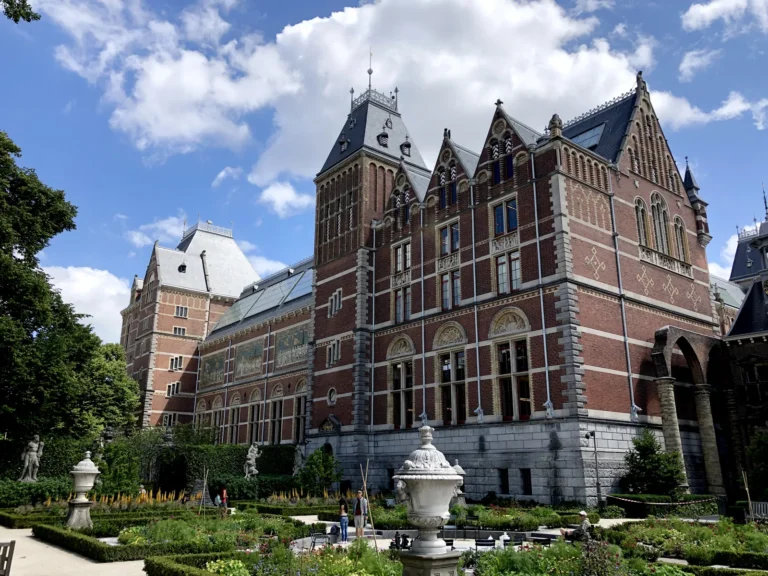
The national museum of the Netherlands presents Dutch art and history, with the great masters of the Golden Age: Rembrandt’s The Night Watch, Vermeer’s The Milkmaid, Frans Hals. Allow at least half a day. The passage under the building is open to cyclists and pedestrians, and its gardens are free to enter.
The Van Gogh Museum
Right next door, on Museumplein, it holds the world’s largest collection of works by Van Gogh: paintings, drawings and letters, presented by period. Entry is by time slot, booked online; weekend and holiday slots sell out fast. The Stedelijk, the museum of modern and contemporary art, is on the same square.
The Anne Frank House
On the Prinsengracht, the annex where Anne Frank and her family hid from 1942 to 1944 is one of the most moving places in the city. Tickets are sold only online, on the museum’s official website, for a specific time slot: book as soon as sales open, as in practice you cannot get in without a ticket.
The Jordaan
A former working-class district west of the main canals, the Jordaan is now one of the most charming: narrow streets, brown cafés, galleries and courtyard almshouses (hofjes), like the nearby Begijnhof, further south, which is free to enter if you stay quiet. The Noordermarkt market is held on Monday mornings and Saturdays.
Vondelpark, De Pijp and the Albert Cuyp market
The Vondelpark, a large English-style park near Museumplein, is where locals stroll and picnic. To the east, the De Pijp district is livened up by the Albert Cuyp market, open on weekdays, where you can try stroopwafels and herring, and by many cafés and restaurants.
The historic centre and the red-light district
Around Dam Square stand the Royal Palace and the New Church. Further east, De Wallen, the oldest district in the city, combines canals, the Old Church and the red-light district. The UK FCDO warns that pickpocketing and bag-snatching are common in central Amsterdam: watch your belongings, do not photograph the windows and be discreet, as this is also a residential area.
Amsterdam-Noord and the IJ
Free ferries link the back of Central Station with the north bank of the IJ in a few minutes. There you will find the EYE film museum, the A’DAM tower and its lookout, and the former NDSM shipyard, now a cultural venue and street-art space. A good half-day off the beaten track.
Day trips: windmills, villages and tulips
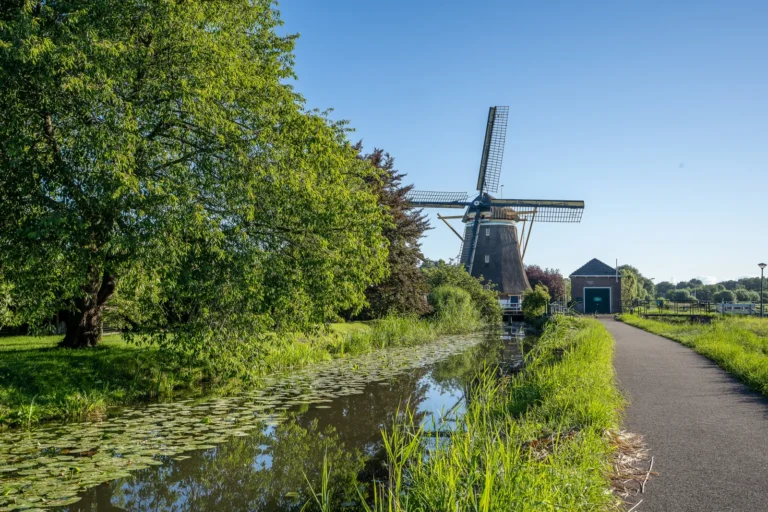
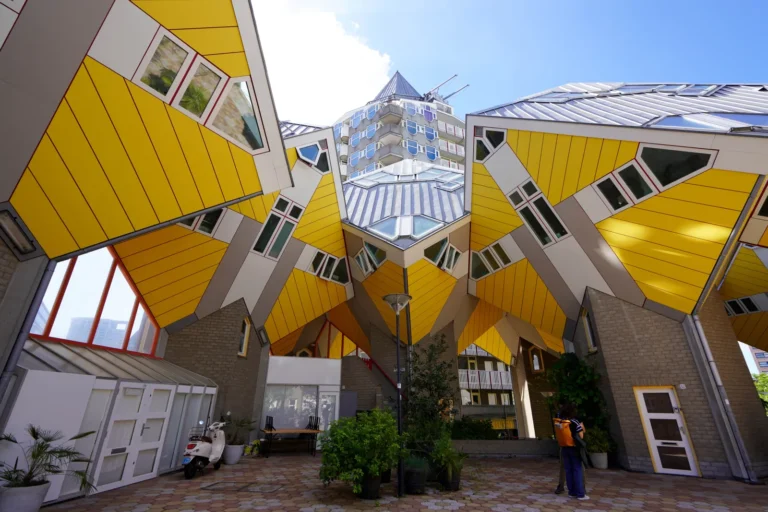
Less than an hour away, Zaanse Schans brings together windmills and wooden houses on the River Zaan. Volendam and Marken, on the IJsselmeer, are former fishing ports. Haarlem, about 15 minutes by train, is a pretty art town, quieter than Amsterdam. In spring, the Keukenhof and the tulip fields can be reached by bus from Schiphol or Leiden. To the south, Rotterdam and its modern architecture offer a complete contrast with Amsterdam’s canals.
In spring, our guide Keukenhof 2027: dates, tickets and access gives the official opening dates and the cheapest way in.
Amsterdam neighbourhoods
- Grachtengordel and the Nine Streets: the postcard setting, central but expensive
- Jordaan: charm, cafés and relative calm, within walking distance of everything
- Museumkwartier and Vondelpark: residential, near the big museums
- De Pijp: lively, lots of restaurants, well served by the metro
- Centre and De Wallen: handy for the station, but noisy at night
- Oost and Noord: newer and often cheaper, a few minutes by tram, metro or ferry


Itinerary: 2 to 4 days in Amsterdam
- Day 1: Dam Square, the Begijnhof, the Nine Streets, the Anne Frank House, then the Jordaan; in the evening, a canal cruise
- Day 2: the Rijksmuseum in the morning, the Van Gogh Museum in the afternoon, a break in the Vondelpark; dinner in De Pijp
- Day 3: the Albert Cuyp market, De Wallen and the Old Church, then the ferry to Amsterdam-Noord (EYE, A’DAM, NDSM)
- Day 4: a trip to Zaanse Schans or Haarlem; in spring, the Keukenhof
With only two days, keep days 1 and 2 and book your museum slots before you leave.
Budget for a stay in Amsterdam
Amsterdam is an expensive city, especially for accommodation, on top of which comes a high municipal tourist tax. Rough amounts per person per day, excluding travel to Amsterdam:
| Item | Budget | Comfort |
|---|---|---|
| Accommodation (based on a shared double room) | roughly €45 to €80 | roughly €110 to €200 |
| Meals | roughly €25 to €40 | roughly €50 to €90 |
| Transport (tram, metro, bike hire) | roughly €8 to €15 | roughly €15 to €25 |
| Sightseeing | roughly €15 to €25 | roughly €30 to €50 |
| Total per day | roughly €90 to €150 | roughly €200 to €350 |
To keep costs down: stay in Amsterdam-Noord, Oost or Haarlem, make the most of the free ferries, parks and markets, and picnic with supermarket food.
Getting around Amsterdam
- On foot: the centre is easy to explore on foot.
- Tram and metro: the GVB network covers the whole city; you can pay directly with a contactless bank card, tapping in and out.
- Bike: the local way to get around. Stay on the cycle paths, obey traffic lights and always lock your bike. On foot, do not walk on cycle paths: GOV.UK notes that cycle paths are busy and cyclists ride at speed, and the State Department warns that trams and buses often cross or share bike and pedestrian paths.
- Ferries: free for crossing the IJ from the back of Central Station.
- Train: Schiphol, Haarlem, Zaandam (for Zaanse Schans), Leiden and Utrecht are linked to Central Station.
- Car: best avoided: parking is very expensive and streets are narrow; leave it at a park-and-ride (P+R) on the outskirts.
Amsterdam Schiphol airport transfer: train, bus 397, taxi and private transfer
Schiphol station is directly beneath the terminal, and the bus station is just outside Schiphol Plaza. For central Amsterdam, the train is generally the fastest option.
The NS train
According to the airport, the journey to Amsterdam Centraal takes 14 to 17 minutes, with eight trains an hour. Trains to Amsterdam always leave from platform 3, according to Schiphol. The fare depends on the journey: NS shows it when you buy.
Paying: contactless card or ticket
For most journeys, you can pay with your contactless bank card or phone, without a ticket or registration: tap in at the gates when you start, then tap out on arrival with the same card. Forgetting to tap out is the classic mistake. Machines near the baggage belts in arrivals halls 1, 2 and 3 and in Schiphol Plaza also sell single tickets and one- to three-day passes.
Bus 397 Amsterdam Airport Express
Line 397 links Schiphol with Amsterdam, replaced at night by the Niteliner N97. The airport lists a single or return ticket online from €6.50. The bus station is undergoing works and some buses temporarily leave from other locations: follow the signs. The Amsterdam Travel Ticket includes the 397 and the N97.
Taxi
Only take a taxi from the official rank in front of Schiphol Plaza, following the signs. The fare is calculated by the meter, drivers accept cards and must give a printed receipt. Turn down taxis offered inside the terminal. Uber and Bolt have their own pick-up point.
| Option | Where to catch it | Official fare | Source |
|---|---|---|---|
| NS train | Station beneath the terminal, platform 3 | Fare shown by NS; contactless card accepted | schiphol.nl |
| Bus 397 / N97 | Bus station outside Schiphol Plaza | From €6.50 online | schiphol.nl |
| Taxi | Official rank, Schiphol Plaza | Meter | schiphol.nl |
Booking your Amsterdam transfer
A private transfer booked in advance (a driver waiting on arrival, price fixed at booking) mainly makes sense for a late arrival, bulky luggage, a family with young children or a group, when the cost is shared. Before booking, check what the price includes (tolls, luggage, waiting if the flight is delayed), the exact meeting point in the terminal, the cancellation terms and the name of the company that actually provides the ride.
Sources: Schiphol, « Public transport », « Train », « Bus » and « Taxi » pages (schiphol.nl), checked on 24 October 2026.
Where to stay in Amsterdam
For a first visit, the Grachtengordel, the Jordaan and the Museumkwartier let you do everything on foot. De Pijp offers a good balance between atmosphere and price. Budget travellers should look at Amsterdam-Noord, Oost, or even Haarlem, 15 minutes away by train. Avoid the red-light district if you want peace and quiet.
Old houses have very steep stairs and often no lift: check before booking if you are travelling with large suitcases. For April, summer and New Year, book several months ahead.
When to go to Amsterdam
✅ Best months: April, may, June, September
❌ Period to avoid: November
The best periods are April to June and September: 14 to 20 °C (57 to 68 °F) in the afternoon, long days and a particularly dry April, according to the KNMI normals. July and August are the warmest (22 °C (72 °F)) but the busiest; winter is cool and grey, but ideal for museums. Month-by-month climate, tulips and festivals: see our article on the best time to visit Amsterdam.
Entry requirements, health and safety
- US citizens: the Netherlands applies Schengen rules. Your passport should be valid for at least three months beyond your period of stay, and you need sufficient proof of funds and a return ticket (U.S. Department of State, travel.state.gov, last updated August 13, 2026).
- UK citizens: no visa for up to 90 days in any 180-day period. Your passport must have been issued less than 10 years before the day you arrive and be valid at least 3 months after the day you plan to leave the Schengen area. The EU Entry/Exit System (EES) is being implemented: fingerprints and a photo may be taken, free of charge (UK FCDO, GOV.UK, updated 11 August 2026).
- ID: according to GOV.UK, anyone aged 14 or over must always be able to show identification; British nationals should use their passport, and the fine for not complying is €100 for those aged 16 or over.
- Health: UK travellers need a GHIC or EHIC for medically necessary state healthcare (GOV.UK); everyone should have travel insurance covering medical costs.
- Pickpockets and scams: pickpocketing and bag-snatching are common in central Amsterdam, around Central Station and on trains and trams to and from Schiphol; Amsterdam police have warned of criminals posing as police officers to get cash and cards from tourists (GOV.UK, updated 11 August 2026).
- Drugs and canals: cannabis is a controlled substance and possession can result in a fine (travel.state.gov); smoking soft drugs in public is illegal, street sellers should be avoided, and people drown in the canals every year, mostly after heavy drinking or cannabis use. Swimming in the Amsterdam canals can cost a €160 fine (GOV.UK).
- Emergencies: dial 112.
Before you go, see our travel insurance guide.
Practical tips for Amsterdam
- Bookings: timed online tickets for the Anne Frank House, the Van Gogh Museum and, in high season, the Rijksmuseum.
- Payment: many shops, cafés and public transport are cashless; check that your card works for contactless payments.
- Weather: pack a waterproof windbreaker in every season; umbrellas cope poorly with the wind.
- Mobile data: check your home carrier’s roaming charges before you go.
- Etiquette: English is very widely spoken; the Dutch are direct and punctual. Respect cycle paths and residents’ peace in the evening.
Amsterdam: who is it for?
Our verdict by traveller profile, based on the information in this guide:
- Couples: yes: the canals of the Jordaan, a small-boat cruise, a day trip to Haarlem.
- Families: yes: a flat, compact city, the Vondelpark, free ferries to Noord; watch out for the steep stairs of old houses and for cycle paths.
- Budget travellers: difficult: roughly €90 to €150 per person per day; stay in Noord, Oost or Haarlem and make the most of parks and markets.
- Culture: yes: the Rijksmuseum, the Van Gogh Museum, the Anne Frank House, the Stedelijk, booked by time slot.
- City break: yes: 2 to 3 days are enough for the essentials, and Schiphol is a major hub.
- Nature and beach: no, except for the tulip fields and windmills on a spring day trip.
Read also
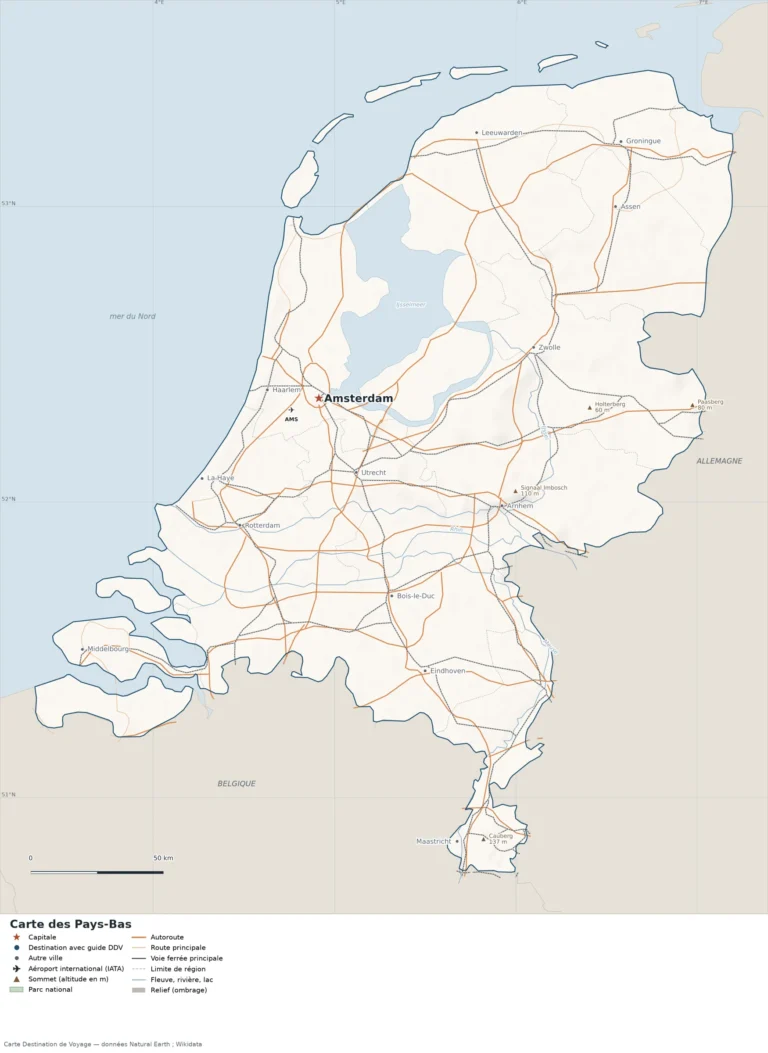
Tulip months, weather and festivals are detailed on our page about the best time to visit Amsterdam. To get out of the capital, see our Netherlands guide and the best time to visit the Netherlands.
Frequently asked questions
How many days do you need to visit Amsterdam?
Two days let you see the canals and two big museums. Allow three to four days to add the Jordaan, Amsterdam-Noord and a trip to the windmills or Haarlem.
How do you get from Schiphol airport to central Amsterdam?
The train links Schiphol with Central Station in 14 to 17 minutes, with eight trains an hour according to the airport. Buses and taxis also make the trip.
Can you visit Amsterdam on foot?
Yes: the historic centre is compact and flat. Trams or bikes are useful for reaching Museumplein, De Pijp or the outer districts.
Do you need to book the Anne Frank House in advance?
Yes. Tickets are sold only online, on the official website, for a specific time slot, and sell out very quickly. Book as early as possible.
Do US and UK citizens need a visa for Amsterdam?
No for short stays: the Netherlands applies Schengen rules. UK citizens can stay up to 90 days in any 180-day period (GOV.UK, updated 11 August 2026); US citizens need a passport valid at least three months beyond their stay (travel.state.gov, last updated August 13, 2026).
Our sources
- Entry requirements, health and safety checked on 26 October 2026: U.S. Department of State, Netherlands country information (last updated August 13, 2026) and UK FCDO, GOV.UK foreign travel advice for the Netherlands (updated 11 August 2026)
- Amsterdam climate: 1991-2020 normals from the Royal Netherlands Meteorological Institute (KNMI), Amsterdam-Schiphol station
- Schiphol: « Public transport », « Train », « Bus » and « Taxi » pages (schiphol.nl), checked on 24 October 2026
- Our methodology
Updated October 2026.
To extend your trip, see our Netherlands travel guide, the page on the best time to visit the Netherlands, our guide to Belgium, our London guide and our other destinations in Europe.