The capital of Scotland grew up around a volcanic crag topped by a castle. Its medieval Old Town and Georgian New Town are a joint UNESCO World Heritage Site and are easy to explore on foot. With national museums that are often free, hills to climb in the middle of the city and historic pubs, allow 3 to 4 days to visit Edinburgh. This guide helps you choose your sights, your neighborhood and your day trips.
Our travel deals for Edinburgh
Affiliate links: we earn a commission, at no extra cost to you.
FlightsKiwi.comCompare flights and airline combinations to Edinburgh.
EntryUS citizens: Electronic Travel Authorisation (ETA) required (travel.state.gov, GOV.UK); UK citizens: domestic travel, no formalities
Currencypound sterling
Electricity230 V, type G plugs (three rectangular pins): US travelers need an adapter; UK plugs fit (VisitScotland)
Budget estimateroughly £85 to £135 per person per day on a tight budget, £185 to £320 for comfort, much more in August
Things to do in Edinburgh: the highlights
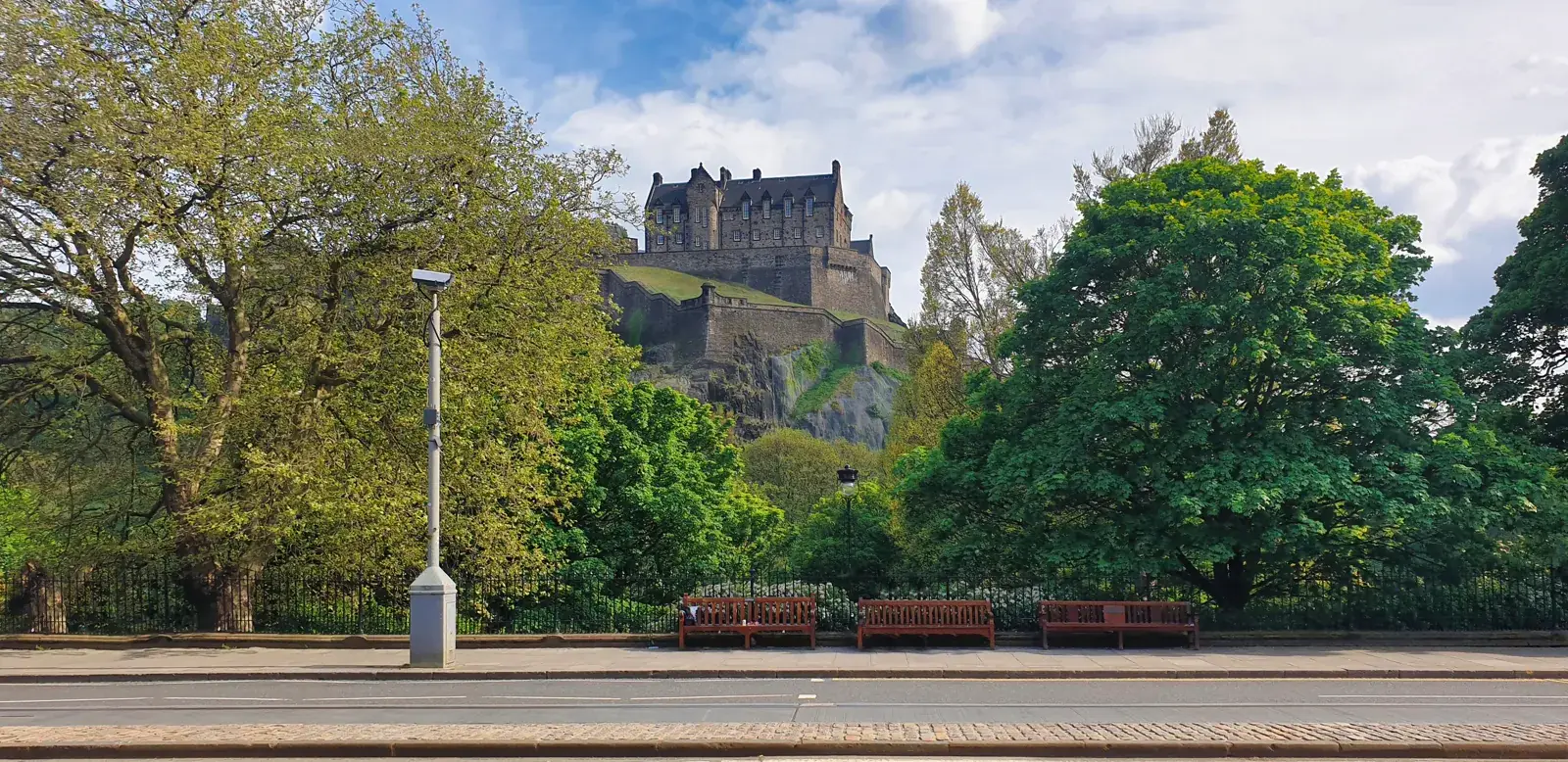
Edinburgh Castle overlooking Princes Street Gardens
Edinburgh Castle
Perched on its volcanic rock, the castle dominates the whole city. Inside are the Honours of Scotland (the Scottish crown jewels), the Stone of Destiny, St Margaret’s Chapel, considered the oldest building in the city, and military museums. The One O’Clock Gun is fired every day, with some exceptions. Book a timed ticket online, especially in summer, and come at opening time.
The Royal Mile and the Old Town
The Royal Mile runs down from the castle to the Palace of Holyroodhouse along the ridge of the Old Town. It is lined with old tenements, St Giles’ Cathedral, shops and pubs. On either side, the « closes », narrow passages, drop down to inner courtyards. Beneath the city, The Real Mary King’s Close is visited with a guide. The Grassmarket and curving Victoria Street, below the castle, are among the most photographed spots.
Holyrood Palace and the Scottish Parliament
At the foot of the Royal Mile, the Palace of Holyroodhouse is the British monarch’s official residence in Scotland; it is open when the royal family is not in residence. You can see the historic apartments and the ruined abbey. Opposite, the contemporary Scottish Parliament building can also be visited.
Arthur’s Seat and Calton Hill
Arthur’s Seat, an extinct volcano in the heart of Holyrood Park, rises to 251 m (823 ft). The climb takes about 45 minutes to an hour from the palace, on paths that are sometimes steep and slippery in wet weather. The view takes in the city, the sea and the Firth of Forth. Easier to reach, Calton Hill, at the end of Princes Street, has neoclassical monuments and a panorama that is popular at sunset.
The New Town and Princes Street
Laid out from the late 18th century, the New Town lines up straight streets, squares and Georgian facades. Princes Street, the main shopping street, runs along the gardens separating the two towns, facing the castle. The Scott Monument, a Gothic tower about 60 m (197 ft) high, can be climbed by a narrow staircase.
The national museums
The National Museum of Scotland traces the country’s history, from geology to everyday objects, with a rooftop terrace. The Scottish National Gallery, on the Mound, shows European and Scottish painting. The permanent collections of these national museums are generally free; only some temporary exhibitions charge.
Dean Village and the Water of Leith
A few minutes’ walk from the West End, Dean Village is a former millers’ village at the bottom of a small valley, along the Water of Leith. A path follows the river to the modern art gallery and on to Stockbridge, a neighborhood of cafés with a Sunday market.
Leith and the Royal Yacht Britannia
Edinburgh’s old port, to the north, is now a district of waterfront restaurants and bars, served by the tram. You can visit the Royal Yacht Britannia, the former royal yacht, moored next to a shopping center.
Day trips from Edinburgh
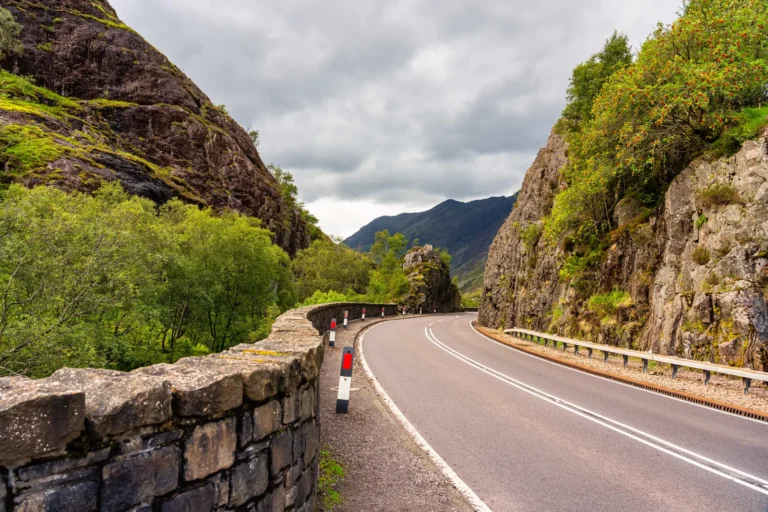
About thirty minutes north, the three bridges over the Firth of Forth, including the World Heritage-listed Forth Bridge, can be seen from South Queensferry. Rosslyn Chapel, to the south, is known for its carvings. Stirling and its castle are less than an hour away by train, and coach day trips go to the Highlands, Loch Ness or Glencoe, at the cost of long hours on the road.
Edinburgh neighborhoods
Old Town: at the foot of the monuments, lively, but noisy and very busy in summer
New Town: elegant, central, quieter in the evening, near Waverley station and the tram
West End and Haymarket: well connected to the airport by tram, a bit more affordable
Stockbridge: a charming residential neighborhood, 15 minutes’ walk from the center
Leith: restaurants and waterfront, linked to the center by tram
Southside and Newington: near Arthur’s Seat and the university, often cheaper
Itinerary: 3 to 5 days in Edinburgh
Day 1: the castle at opening time, the Royal Mile, St Giles’ Cathedral, Victoria Street and the Grassmarket
Day 2: Holyrood Palace, the climb up Arthur’s Seat, the National Museum of Scotland
Day 3: the New Town, the Scottish National Gallery, the Scott Monument, sunset on Calton Hill
Day 4: Dean Village, the Water of Leith to Stockbridge, then Leith and the Royal Yacht Britannia
Day 5: a trip to South Queensferry and the Forth bridges, to Stirling, or into the Highlands
With only two days, focus on the castle, the Royal Mile, Holyrood and Calton Hill. To continue your trip, Edinburgh combines with Glasgow, about an hour away by train, or with the Highlands.
Edinburgh airport transfer: tram, Airlink bus, taxi and private transfer
Edinburgh Airport is west of the city. Two public transport options link it to the center: the tram and the Airlink 100 express bus. Check fares before you travel: airport fares are higher than standard city fares.
Tram: Princes Street and Leith
The tram line runs from the airport to the city center (Princes Street), then on to Leith and Newhaven. Tickets are sold at stop machines, in the Edinburgh Trams app or online; check current fares and timetables on edinburghtrams.com.
Airlink 100 bus: 24/7
According to Lothian Buses (lothianbuses.com, checked 26 October 2026), the Airlink 100 express bus links the airport with Waverley Bridge, near the station, around the clock: departures from the airport up to every 10 minutes from 4:12 am to 1 am, then up to every 20 minutes at night. Official fares: £6 adult single, £8.50 adult open return, £3 child single (ages 5 to 15); contactless payment charges the same. It is the option for arrivals after the last tram.
Taxi
The taxi rank is close to the arrivals area. Edinburgh taxi fares are regulated by the city council; for a trip outside the city, ask for the price in advance.
Option
Where to catch it
Official fare
Source
Tram
Stop in front of the terminal
See edinburghtrams.com
edinburghtrams.com
Airlink 100 bus
In front of the terminal, to Waverley Bridge
£6 single; £8.50 open return
lothianbuses.com
Taxi
Taxi rank near arrivals
Regulated city fares
—
Booking a private transfer in Edinburgh
A private transfer booked in advance is useful if you arrive late at night, travel as a family or with lots of luggage, or if your accommodation is far from bus and tram lines. Before paying, check the total price (luggage, child seats, night supplement), the meeting point at the airport, flight tracking in case of delay, the waiting time included and the cancellation terms. Compare with the official fares in the table above: for one person traveling light, public transport is often enough. In Edinburgh, it mainly makes sense for a group, a late arrival with luggage or a direct departure to the Highlands.
Source: Lothian Buses (Airlink 100), checked 26 October 2026.
Where to stay in Edinburgh
For a first visit, the Old Town and the New Town let you do everything on foot. The West End and Haymarket are handy if you arrive at the airport, thanks to the tram. Stockbridge and Leith suit those who prefer a more residential area with good restaurants.
Options range from hostels, plentiful in the Old Town, to B&Bs in Victorian buildings and boutique hotels in the New Town. Prices are high all year and peak in August and at Hogmanay. According to the City of Edinburgh Council, a visitor levy of 5% applies to paid overnight stays from 24 July 2026, for a maximum of five consecutive nights (for bookings made on or after 1 October 2025): check whether it is included in the price shown.
Getting around Edinburgh
On foot: the center is compact but hilly, with many steps between the Old Town and the New Town.
Tram: a single line links the airport with the city center, then continues to Leith and Newhaven.
Bus: the Lothian Buses network serves every neighborhood; contactless payment is accepted on board.
Train: Waverley station, in the center, serves Glasgow, Stirling, the Highlands and London.
Car: pointless in town; useful for exploring the Highlands. Traffic drives on the left, and Scotland has a stricter drink-driving limit than the rest of the UK (a BAC of roughly 0.05, compared with 0.08 elsewhere in the UK, according to the U.S. Department of State).
When to go to Edinburgh
✓ Ideal~ Good, with caveats✕ AvoidAverage max. temperature · click a month to see where to go
The best periods are May to June and September: 15 to 17 °C (59 to 63 °F) in the afternoon and long days, according to Met Office normals. July is the mildest month (19 °C / 66 °F), August the month of the festivals and the highest prices. Winter is cold and dark, but livened up by Christmas and Hogmanay. Month-by-month climate and events: see our article when to go to Edinburgh.
Budget for a trip to Edinburgh
Edinburgh is an expensive city, especially for accommodation. Free national museums and hills open to all partly make up for it. Estimates per person per day, excluding flights, converted from euros at the European Central Bank rate of 23 October 2026:
Item
Tight budget
Comfort
Accommodation (per person, sharing a double room)
about £38 to £67
about £92 to £184
Meals
about £25 to £38
about £50 to £84
Transport (bus, tram)
about £4 to £8
about £8 to £17
Sights (castle, Holyrood, guided tours)
about £13 to £25
about £29 to £42
Total per day
roughly £85 to £135
roughly £185 to £320
Rough estimates, varying with the season and exchange rates. Accommodation prices can double or more in August and around Hogmanay.
To cut costs: visit the free national museums, climb Arthur’s Seat and Calton Hill, have a pub lunch, and travel preferably from January to March, outside school holidays.
Entry requirements, health and safety
US citizens: according to the U.S. Department of State (travel.state.gov, last updated August 11, 2025), all US citizens traveling to the UK for tourism, family visits, business meetings or short-term study for 6 months or less must have an Electronic Travel Authorisation (ETA) before travel. According to GOV.UK (apply for an ETA, read on 24 October 2026), an ETA costs £20 and lets you visit the UK for up to 6 months; apply only through the official GOV.UK service or app. Your passport must be valid for your whole stay.
UK citizens: travel from elsewhere in the UK to Scotland is domestic travel: no entry formalities.
Health: the State Department encourages US citizens to buy medical evacuation insurance and check that their policy covers them in the UK. Take out travel insurance that covers medical costs.
Safety: the U.S. Department of State rates the United Kingdom Level 2: Exercise Increased Caution due to terrorism; petty crime such as pickpocketing and phone snatching is common in tourist areas. Stay alert in crowds, especially during the August festivals and Hogmanay. Only use licensed taxis or pre-booked car services.
Pedestrians: traffic drives on the left: look right first before crossing (U.S. Department of State).
Emergencies: 999.
Practical tips for Edinburgh
Clothing: pack layers and a waterproof, windproof jacket, even in summer, and shoes with good grip for cobbles and hills.
Money: cards and contactless payment are accepted almost everywhere, including on buses. Check your bank’s foreign transaction fees.
Mobile data: check your roaming plan or buy an eSIM before you go.
Electricity: type G sockets, with three rectangular pins: US travelers need an adapter.
Etiquette: in pubs, order and pay at the bar. Scots are not « English »: avoid the mix-up.
Which travelers is Edinburgh for?
Our view, profile by profile, based on the information in this guide:
Profile
Our verdict
Short break
Ideal: a city you can explore on foot in 3 to 4 days.
History and culture
Ideal: the castle, the Royal Mile, Holyrood Palace and the national museums.
Walkers
Yes: Arthur’s Seat and Calton Hill in the city, the Water of Leith to Stockbridge.
Family
Yes: generally free permanent collections at the national museums, the castle and the Royal Yacht Britannia.
Tight budget
Not ideal: roughly £85 to £135 a day on a tight budget, much more in August; free museums and hills help.
Three days let you see the castle, the Royal Mile, Holyrood, Arthur’s Seat and the New Town. Allow four to five days to add Leith, Dean Village and a day trip.
How do you get from the airport to central Edinburgh?
The tram links the airport with the city center (Princes Street), and the Airlink 100 express bus runs 24/7 to Waverley Bridge (£6 adult single according to Lothian Buses). Taxis also make the trip.
Are Edinburgh’s museums free?
The permanent collections of the national museums and galleries, such as the National Museum of Scotland and the Scottish National Gallery, are generally free. The castle, Holyrood and guided tours charge admission.
Do you need authorization to enter the UK?
US citizens need an Electronic Travel Authorisation (ETA) before traveling, according to the U.S. Department of State; apply only through the official GOV.UK service. For UK citizens, Scotland is domestic travel.
Is Edinburgh safe?
Violent crime is rare, but the U.S. Department of State rates the UK Level 2: Exercise Increased Caution due to terrorism, and petty crime is common in tourist areas. Take the usual precautions in crowds, especially during the August festivals and Hogmanay.
Our sources
U.S. Department of State, United Kingdom country information (travel.state.gov, last updated August 11, 2025) and United Kingdom travel advisory (Level 2), read on 26 October 2026


 FlightsKiwi.comCompare flights and airline combinations to Edinburgh.Compare flights