Looking for things to do in Madrid? Spain’s capital is best explored on foot, from the Puerta del Sol to the Plaza Mayor and the Royal Palace, then along the Paseo del Prado and its three great museums. The city lives late, on café terraces and in the tapas bars of La Latina and Malasaña. It is also a good base for visiting Toledo and Segovia by train. This guide helps you choose your sights, neighborhoods and day trips for a 3 to 5-day stay.
For painting, our guide to visiting the Prado Museum suggests a 2-hour route through the masterpieces, with walking times to the Thyssen and the Reina Sofía.
Indicative budgetroughly €70 to €120 per person per day on a budget, €160 to €300 for comfort
Things to do in Madrid: the highlights
Puerta del Sol, Plaza Mayor and Habsburg Madrid
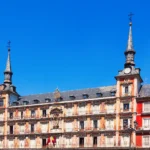
The Puerta del Sol is the symbolic center of the city: it holds kilometer zero of Spain’s road network and the statue of the bear and the strawberry tree, the emblem of Madrid. A few minutes away, the Plaza Mayor, a large 17th-century arcaded square, opens onto the « Madrid de los Austrias », the Habsburg quarter: narrow streets, convents, the Plaza de la Villa and the covered San Miguel market, now a gourmet food hall. If you are also weighing up the Catalan capital, our comparison to choose between Barcelona and Madrid helps you decide by travel style and budget.
The Royal Palace and Almudena Cathedral
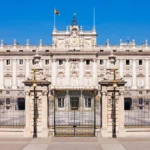
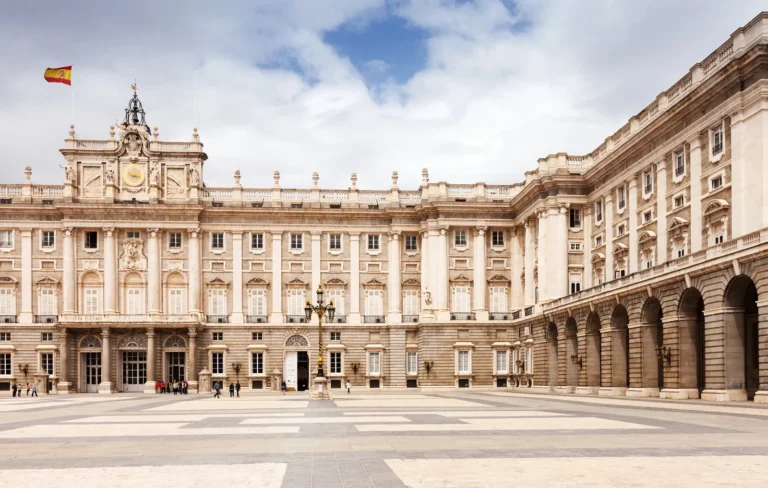
The Royal Palace, the official residence of the monarchy used for state ceremonies, is partly open to visitors: state rooms, the royal armory and the pharmacy. Opposite, Almudena Cathedral was only completed at the end of the 20th century. The Sabatini and Campo del Moro gardens below the palace offer a quiet break; at sunset, the nearby park of the Temple of Debod, an Egyptian temple given to Spain, is a popular viewpoint.
The Prado Museum
The Prado is one of the world’s great art museums. It holds masterpieces by Velázquez (including Las Meninas), Goya, El Greco, Bosch and Titian. Allow at least half a day and plan your visit: the collections are huge. Buy your ticket in advance in high season and check the free entry slots, which draw big crowds.
The Reina Sofía and the Thyssen-Bornemisza
Together with the Prado, they form the « art triangle » of the Paseo del Prado. The Reina Sofía museum is devoted to modern and contemporary art: it displays Picasso’s Guernica as well as works by Dalí and Miró. The Thyssen-Bornemisza museum covers several centuries of European and American painting, from the Italian primitives to 20th-century art, and complements the other two well.
Retiro Park
A former royal garden, the Retiro is the great park of central Madrid. You can rent a rowboat on the lake below the monument to Alfonso XII, see temporary exhibitions in the Crystal Palace, a glass and iron greenhouse, and stroll through the rose garden. Together with the Paseo del Prado, it is part of the « Landscape of Light », inscribed on the UNESCO World Heritage List in 2021.
Gran Vía and the great squares
Built in the early 20th century, the Gran Vía is lined with monumental buildings, theaters and shops. It leads to the Plaza de España and crosses the Calle de Alcalá, which passes the Plaza de Cibeles and its palace, now city hall, then the Puerta de Alcalá. Several rooftop terraces give a view over the whole city.
Lively neighborhoods: La Latina, Lavapiés, Malasaña, Chueca
La Latina is the tapas district, around Calle Cava Baja, and hosts the big Rastro flea market on Sunday mornings. Lavapiés, working-class and multicultural, is packed with restaurants from around the world and alternative venues. Malasaña and Chueca, north of the Gran Vía, are the neighborhoods for cafés, independent shops and nightlife.
Toledo, Segovia and El Escorial
Several UNESCO World Heritage towns can be visited in a day. Toledo, the city « of three cultures » perched above the Tagus, and Segovia, with its Roman aqueduct and alcázar, are less than an hour away by high-speed train. The royal monastery of El Escorial, at the foot of the Sierra de Guadarrama, is served by commuter trains. Ávila and its walls, or Alcalá de Henares, Cervantes’ birthplace, round out the options.
Madrid neighborhoods: where to stay?
Sol and Madrid de los Austrias: the most central, ideal for a first visit, but busy and noisy in the evening
Barrio de las Letras (Huertas): between Sol and the Prado, plenty of bars and restaurants
La Latina: charm and tapas, lively at weekends
Malasaña and Chueca: trendy areas, nightlife
Salamanca: elegant and quiet, pricier, well served by the metro
Retiro and Atocha: near the museums and Atocha station, handy for day trips
Visiting Madrid: a 3 to 5-day itinerary
Day 1: Puerta del Sol, Plaza Mayor, San Miguel market, Madrid de los Austrias, Royal Palace; sunset at the Temple of Debod
Day 2: the Prado in the morning, Retiro Park in the afternoon; tapas in the Barrio de las Letras in the evening
Day 3: the Reina Sofía or the Thyssen, then the Gran Vía, Cibeles and the Puerta de Alcalá; evening in Malasaña or Chueca
Day 4: day trip to Toledo or Segovia by train
Day 5: the Rastro (on Sunday), La Latina and Lavapiés, or a second day trip (El Escorial, Ávila)
With only two days, focus on the historic center, the Royal Palace, the Prado and the Retiro.
Madrid airport transfers: metro, train, Express bus and fixed-fare taxi
Adolfo Suárez Madrid-Barajas airport has four terminals. T4 is far from T1, T2 and T3: check your terminal, as the commuter train only serves T4.
Metro, line 8
According to Aena (aena.es, checked 26 October 2026), line 8 links the airport to Nuevos Ministerios, with one station for T1-T2-T3 (in T2, floor 1) and one at T4 (floor -1). It runs from 6:05 am to 2 am. A single zone A ticket costs €1.50 to €2 depending on the number of stations, plus a €3 airport supplement. At Nuevos Ministerios, change lines for your neighborhood.
Cercanías C1 commuter train
Renfe Cercanías line C1 leaves from Terminal T4 (floor -1) and serves Chamartín, Atocha and Príncipe Pío. Aena (aena.es, checked 26 October 2026) lists one-way fares of €1.70 (1-2 zones), €1.85 (3 zones) or €2.60 (4 zones). It is free for passengers with an AVE high-speed train ticket connecting with a flight.
Airport Express bus (line 203)
The EMT bus links T1, T2 and T4 with Cibeles and Atocha station, 24 hours a day. Single fare €5, payable on board. According to EMT Madrid (emtmadrid.es, checked 26 October 2026), buses run every 15 to 20 minutes by day and every 35 minutes at night, and take about 30 minutes from Atocha to T1, 35 to T2 and 40 to T4 in normal traffic.
Taxi: €33 within the M-30
Official taxis (white with a red stripe) wait at signposted ranks outside each terminal. Between the airport and anywhere inside the M-30 ring road, the fare is fixed at €33, 24 hours a day, with no supplements, according to Aena (aena.es, checked 26 October 2026). Avoid people offering taxis inside the terminal.
Option
Where to catch it
Official fare
Source
Metro line 8
T1-T2-T3 and T4 stations
€1.50 to €2 + €3 supplement
aena.es
Cercanías C1
Terminal T4, floor -1
€1.70 to €2.60 depending on zones
aena.es
Express bus 203
T1, T2, T4
€5
emtmadrid.es
Taxi
Ranks outside each terminal
€33 flat (inside the M-30)
aena.es
Destination de Voyage calculation (based on EMT and Aena fares): for four people, the Express bus costs 4 × €5 = €20 versus €33 for a fixed-fare taxi, a €13 difference; for two, the gap rises to €23. The taxi becomes worthwhile for a group with luggage or if your hotel is far from Atocha and Cibeles.
Booking a transfer in Madrid
A private transfer booked in advance (driver waiting on arrival, price fixed at booking) makes most sense for a late arrival, bulky luggage, a family with young children or a group sharing the cost. For an address inside the M-30, compare it with the €33 official taxi fare. Before booking, check what the price includes (tolls, luggage, waiting time if your flight is late), the exact meeting point in the terminal, the cancellation terms and the name of the company actually providing the ride.
Sources: Aena, Madrid-Barajas « Taxi », « Underground » and « Trains » pages (aena.es); EMT Madrid, Airport Express line (emtmadrid.es), checked 26 October 2026.
Where to stay in Madrid?
For a first visit, stay between Sol, the Plaza Mayor and the Barrio de las Letras: you can do almost everything on foot. For quiet, choose Salamanca or the streets near the Retiro. Near Atocha station, you save time on train day trips.
Options range from hostels to boutique hotels and the big hotels on the Gran Vía. In summer, check for air conditioning; in the center, ask for a room facing the courtyard if you are sensitive to noise. For Easter, May, September and the end-of-year holidays, book early.
Getting around Madrid
Metro: the network is dense and serves the airport (line 8). It is the most practical way to cross the city.
Commuter trains (Cercanías): useful for the airport, Atocha station, El Escorial and Alcalá de Henares.
Buses: an extensive network that complements the metro.
On foot: the historic center, the Paseo del Prado and the Retiro are easy to cover on foot.
High-speed train: for Toledo and Segovia, from Atocha or Chamartín stations depending on the destination; book at busy times.
Car: unnecessary in the city, where traffic and parking are difficult and access to the center is restricted for some vehicles.
When to go to Madrid?
✓ Ideal~ Good, with caveats✕ AvoidAverage max. temperature · click a month to see where to go
✅ Best months: April, may, June, September, October
The best periods are late April to June and mid-September to October: 19 to 29 °C (66 to 84 °F) in the afternoon, according to AEMET normals. July and August are very hot (around 33 °C / 91 °F); winter is dry but cold (10 °C / 50 °F in the afternoon in January). Month-by-month climate and festivals: see our article when to go to Madrid.
Budget for a trip to Madrid
Madrid is generally reasonably priced for a European capital when it comes to food and transport; accommodation varies a lot with the dates. Indicative amounts per person per day, excluding flights:
Item
Budget
Comfort
Accommodation (based on a shared double room)
about €30 to €55
about €80 to €160
Meals
about €25 to €35
about €45 to €80
Transport (metro, bus)
about €5 to €10
about €10 to €20
Sights and museums
about €10 to €20
about €25 to €40
Total per day
roughly €70 to €120
roughly €160 to €300
Indicative estimates, varying with the season and trade fairs.
To keep costs down: have a « menú del día » (set lunch menu) on weekdays, and make use of the museums’ free slots (check their official websites) and the parks.
Entry requirements, health and safety
US citizens: Spain is in the Schengen area. Your passport should be valid for at least 3 months beyond your period of stay, and you need sufficient proof of funds and a return ticket (U.S. Department of State, travel.state.gov, last updated August 11, 2025).
UK citizens: no visa for up to 90 days in any 180-day period as a tourist. Your passport must have been issued less than 10 years before the day you arrive and be valid at least 3 months after the day you plan to leave the Schengen area. You may be asked for a return ticket, proof of travel insurance, sufficient funds and accommodation details. Under the EU Entry/Exit System (EES), fingerprints and a photo may be taken at your first entry (GOV.UK, updated 12 August 2026).
Health: UK travellers need a GHIC or EHIC for medically necessary state healthcare, which does not replace travel insurance; whatever your nationality, take out insurance that covers medical costs.
Safety: the U.S. Department of State notes that pickpocketing and theft are very common at tourist spots, train stations and beach destinations; stay alert on the metro, around Sol, on the Gran Vía and at the Rastro.
Emergencies: dial 112 (GOV.UK).
Practical tips for Madrid
Meal times: lunch is around 2 pm and dinner rarely before 9 pm. Many restaurants close between the two services.
Money: cards are accepted almost everywhere, even for small amounts; GOV.UK notes you may be asked for photo ID when paying by card.
Mobile data: check your home carrier’s roaming charges before you go.
Museums: book the Prado and the Royal Palace in advance in high season; check closing days.
Etiquette: a few words of Spanish (« hola », « gracias », « por favor ») are appreciated. Tipping is not compulsory; people often leave a little change.
Who is Madrid for?
Our verdict by type of traveler, based on the information in this guide (sights, budget, seasons).
Profile
Our verdict
Why
Couples
Good fit
Rowing on the Retiro lake, sunset at the Temple of Debod, tapas in the Barrio de las Letras.
Families
Good fit
Retiro Park, a compact center; July and August are very hot.
Tight budget
Very good fit
Roughly €70 to €120 per day: menú del día, free museum slots, cheap metro.
Culture
Very good fit
Prado, Reina Sofía, Thyssen-Bornemisza, Royal Palace, day trips to Toledo and Segovia.
Nightlife
Very good fit
Malasaña, Chueca, La Latina and Lavapiés.
Beach
Poor fit
No sea: combine with the Balearic Islands or Andalusia.
Frequently asked questions
How many days do you need in Madrid?
Three days let you see the historic center, the Royal Palace, the Prado and the Retiro. Allow four to five days to add the Reina Sofía, the Thyssen and a day trip to Toledo or Segovia.
How do you get from the airport to central Madrid?
Metro line 8 links the airport to the center with one change. The Cercanías C1 train serves T4, the Express bus 203 runs 24 hours a day for €5, and taxis charge a flat €33 to anywhere inside the M-30.
Can you visit Toledo and Segovia from Madrid?
Yes, each as a day trip: the high-speed train links them to Madrid in under an hour. Book your tickets in advance at busy times.
Do you need to book the Prado Museum?
It is advisable in high season and at weekends, to avoid queues. The free slots attract big crowds: arrive early or buy a ticket.
What to do in Madrid in 3 days?
Day 1: Puerta del Sol, Plaza Mayor, Royal Palace and sunset at the Temple of Debod. Day 2: the Prado then the Retiro. Day 3: the Reina Sofía or the Thyssen, then the Gran Vía, Cibeles and the Puerta de Alcalá.
What is the nicest neighborhood in Madrid?
It depends on what you want: Sol and Habsburg Madrid for a first visit, La Latina for tapas, Malasaña and Chueca for going out, Salamanca for peace and quiet.
Is Madrid safe?
Generally yes. The U.S. Department of State notes, however, that pickpocketing and theft are very common at tourist spots and train stations. Watch your belongings on the metro and in crowds.
For tourist cards, our Madrid pass page compares the Go City pass and the public transport Tourist Travel Pass.
Madrid climate normals: 1991-2020 normals for the Madrid-Retiro station (Retiro Park, city center, 667 m / 2,188 ft above sea level), Spanish State Meteorological Agency (AEMET)


 FlightsKiwi.comCompare flights and airline combinations to Madrid.Compare flights





 Andalusia
 Balearic Islands
 When to go
 Map
 PortAventura
 Time difference
 Barcelona
 Bilbao
 San Sebastian
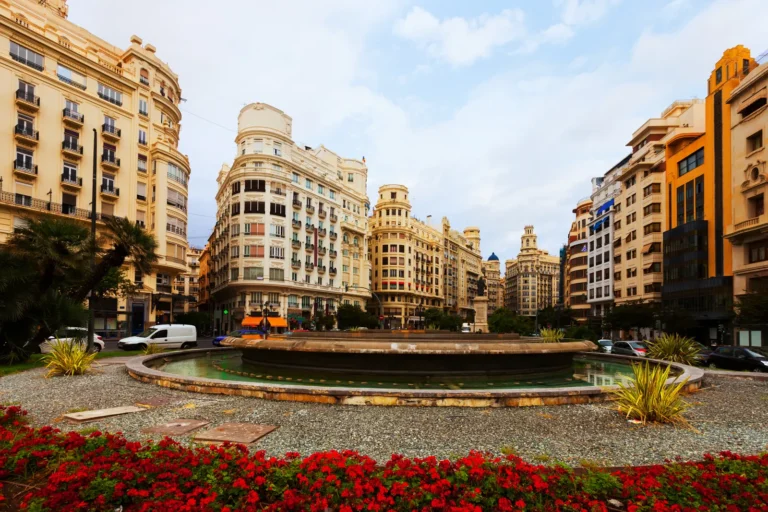 Valencia
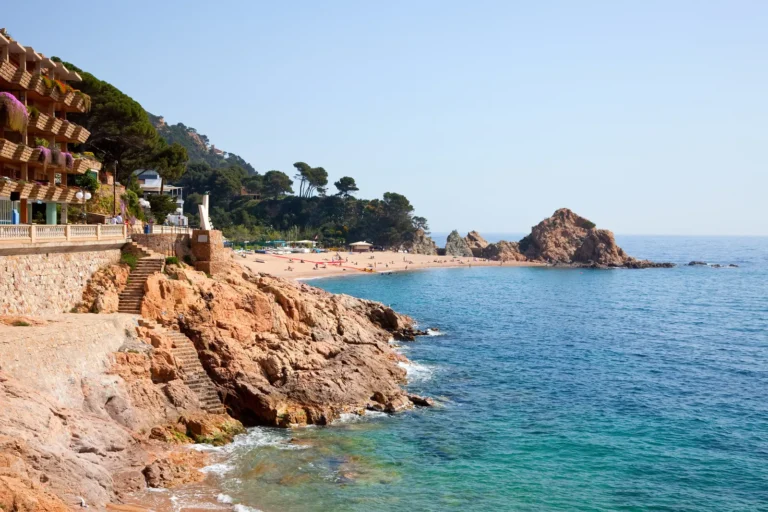 Costa Brava
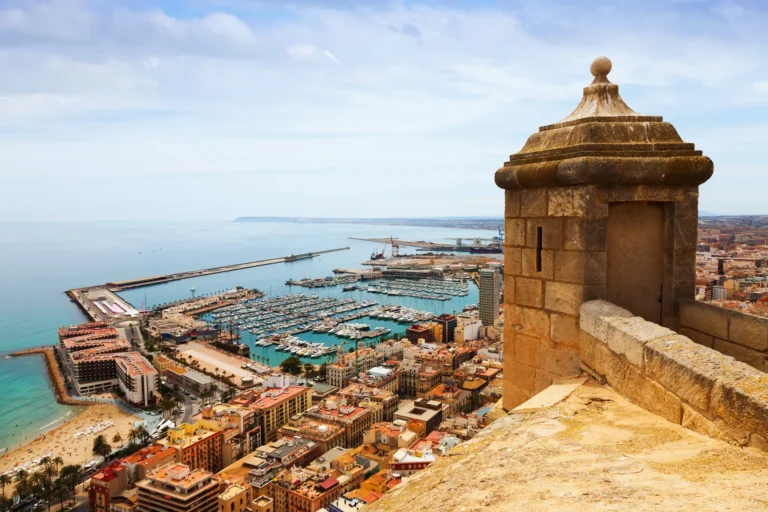 Alicante