
The Costa Brava, in Spain, is the Catalan coastline of the province of Girona: a rocky coast stretching between Blanes and the French border. Coves, whitewashed fishing villages, medieval inland villages and the Dalí “triangle”: for things to do on the Costa Brava, allow a week to see its three sectors, ideally in June or September. Across the border, on the French side, see our page on things to do in Perpignan.
This guide covers the highlights from north to south, an itinerary, the budget, the climate based on official AEMET normals and our own calculation: the number of rain days to expect over a week, month by month.

Our travel deals for Costa Brava
Affiliate links: we earn a commission, at no extra cost to you.
 FlightsKiwi.comCompare flights and airline combinations to Costa Brava.Compare flights

Costa Brava at a glance
- Location Catalonia, Girona province, from Blanes(south) to Portbou (French border)
- Languages Catalan and Spanish
- Currency the euro (€) · currencies
- Time zone UTC+1, UTC+2 in summer: 1 hour ahead of London, 6 hours ahead of New York · detailsLocal time now: –:–
- Airports Girona and Barcelona; by car via the AP-7 motorway · details
- Entry Schengen area: no visa for UK citizens for up to 90 days in any 180-day period; US citizens need a passport valid 3 months beyond their stay · travel.state.gov · GOV.UK
- Electricity check voltage and plug types before you go · plugs
Things to do on the Costa Brava: the highlights
The coast is divided into three sectors: the Alt Empordà in the north (Cap de Creus, Cadaqués, Roses), the Baix Empordà in the center (Begur, Calella de Palafrugell, medieval villages) and La Selva in the south (Tossa de Mar, Lloret de Mar, Blanes). Further south toward Tarragona, our page PortAventura: park, tickets and opening hours helps you plan a day at Catalonia’s biggest theme park.
Cadaqués and Cap de Creus natural park
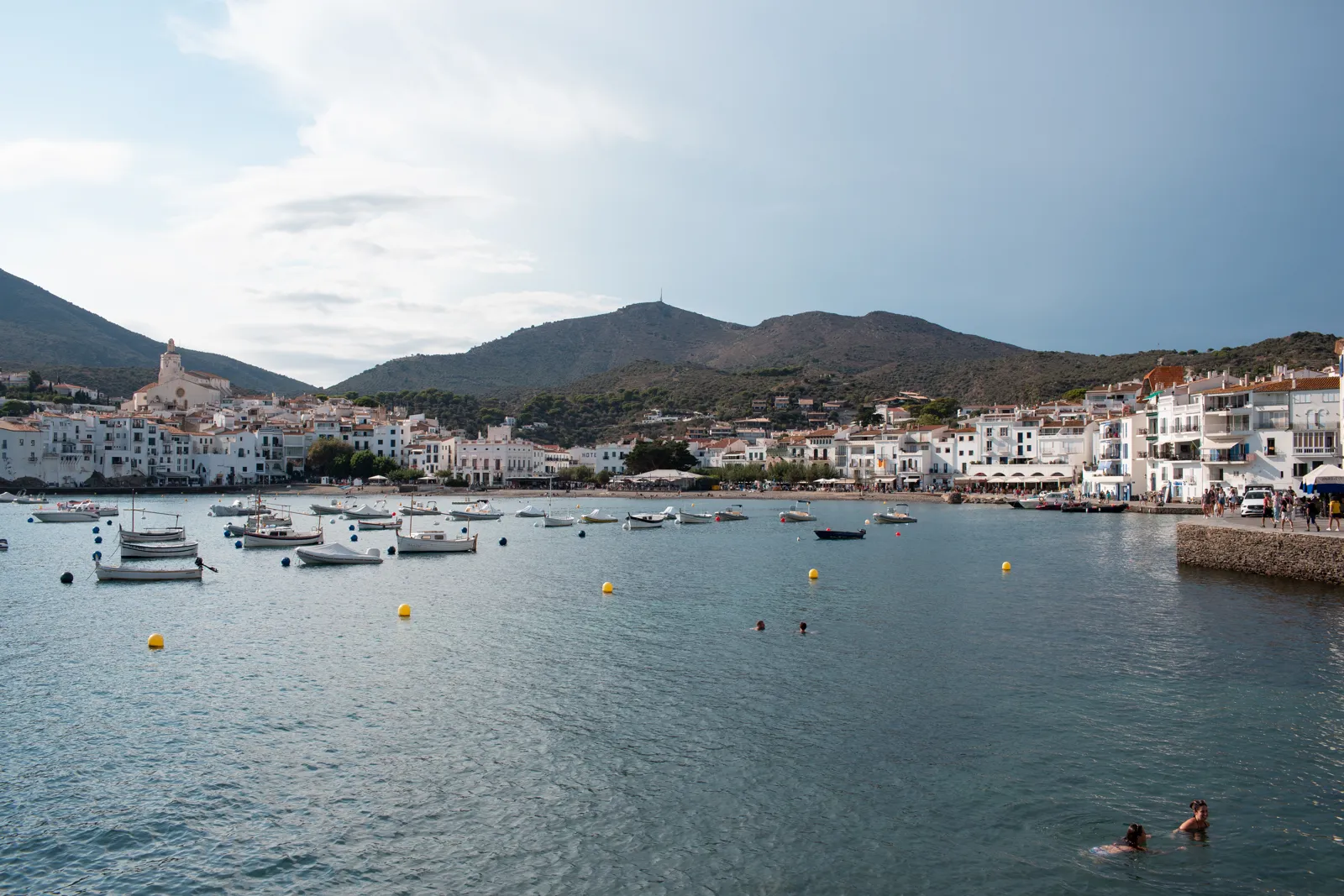
At the end of a winding road, Cadaqués lines up its white houses around an enclosed bay. Cap de Creus natural park, the easternmost point of the Iberian Peninsula, offers a landscape of rocks sculpted by the tramontana wind, coves reachable on foot or by boat (Cala Culip, among others) and a lighthouse. In Portlligat, right next door, you can visit Salvador Dalí’s house-studio, by reservation.
Figueres and the Dalí triangle
The Dalí Theatre-Museum in Figueres, designed by the artist himself, is the region’s great museum. Together with the Portlligat house and Púbol castle, which Dalí gave to Gala, it forms the “Dalí triangle”. Book online in summer: slots go fast.
Empúries and L’Escala
By the sea, the archaeological site of Empúries preserves the remains of a Greek colony and then a Roman town. The neighboring small town of L’Escala is famous for its anchovies.
The Medes Islands and L’Estartit
Off L’Estartit, the Medes Islands archipelago is a protected marine reserve: diving, snorkeling and glass-bottom boat trips are offered in season. The Montgrí massif overlooks L’Estartit beach.
Begur, Pals and Peratallada
Begur, perched below its castle, gives access to some of the finest coves on the coast (Sa Tuna, Aiguablava, Sa Riera). Inland, Pals and Peratallada are stone medieval villages with narrow lanes, to combine in half a day with Ullastret and its Iberian site.
Calella de Palafrugell and the Camí de Ronda
Calella de Palafrugell and Llafranc, former fishing ports, are linked by a section of the Camí de Ronda, the coastal path that runs along much of the Costa Brava. Above them, the Cap Roig gardens host a music festival in summer. It is one of the best sectors for walking from cove to cove.
Tossa de Mar, Lloret de Mar and Blanes
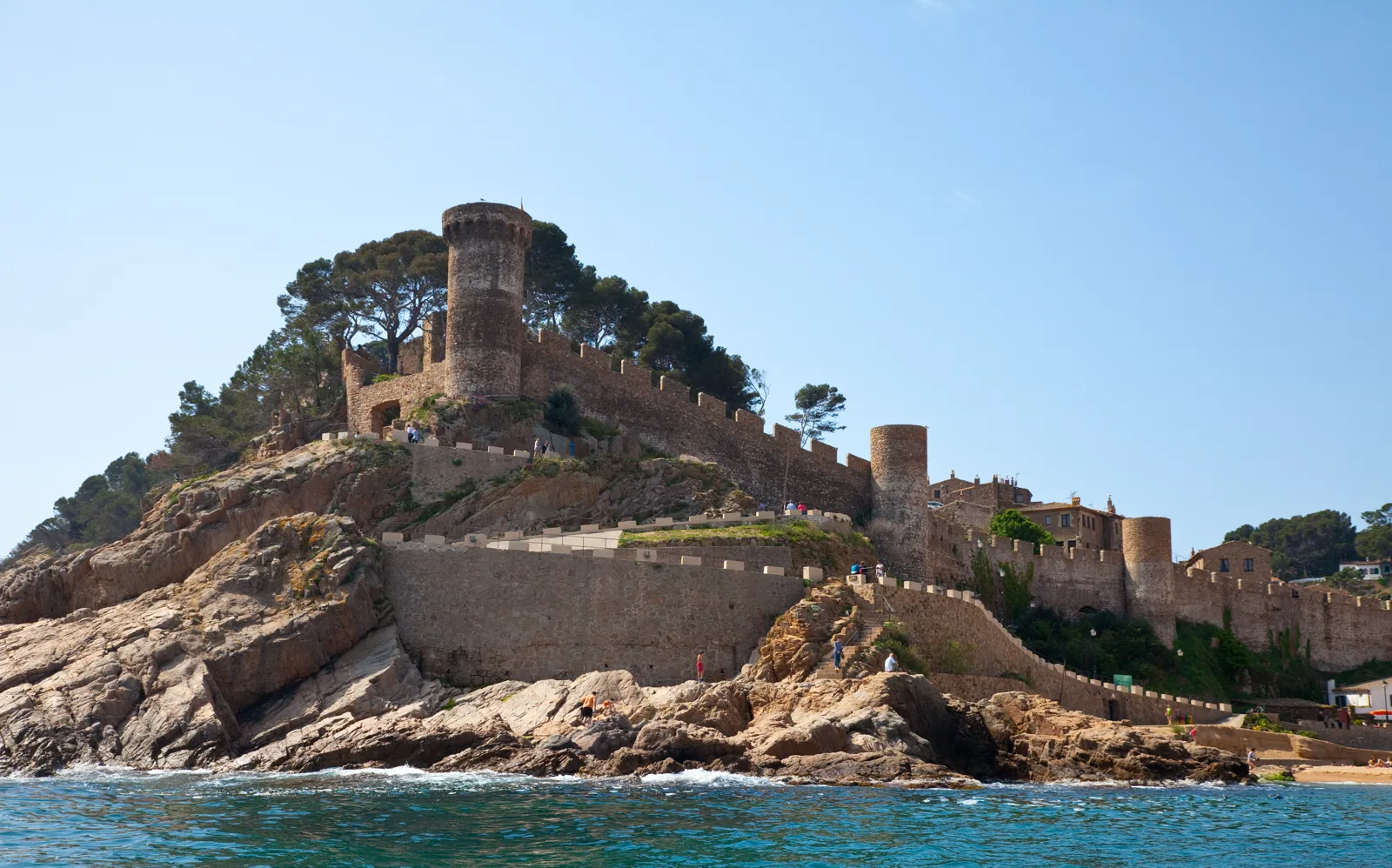
Tossa de Mar has kept a fortified medieval enclosure (the Vila Vella) above its beach. Further south, Lloret de Mar is the liveliest resort; Blanes, gateway to the Costa Brava, is home to the Marimurtra botanical gardens.
Girona
Inland, Girona deserves at least half a day: colorful houses along the Onyar, the cathedral and its grand staircase, the old Jewish quarter (the Call) and a walk along the ramparts. It is also a good base if you arrive by train.
Which part of the Costa Brava should you choose?
| If you are looking for… | Go to… | Why |
|---|---|---|
| Wild scenery, hiking | The north: Cap de Creus, Cadaqués, El Port de la Selva | Little-developed coast, trails, natural park |
| Coves and charming villages | The center: Begur, Calella de Palafrugell, Llafranc | Coves, Camí de Ronda, medieval villages nearby |
| Long beaches for children | Roses, L’Estartit, Platja d’Aro | Long, easy-access beaches |
| Nightlife, tight budget | The south: Lloret de Mar | Large choice of hotels and nightlife |
| Culture | Figueres, Girona, Empúries | Dalí, old town, archaeology |
| No car | Girona, Tossa de Mar, Lloret de Mar | Train to Girona, then bus |
Itinerary: one week on the Costa Brava
- Day 1: Girona (old town, ramparts, the Call)
- Day 2: Figueres and the Dalí Theatre-Museum, then the road to Cadaqués
- Day 3: Cap de Creus and Portlligat (Dalí’s house, by reservation)
- Day 4: Empúries, L’Escala, then L’Estartit (trip to the Medes Islands)
- Day 5: Pals, Peratallada, Ullastret; night in Begur
- Day 6: Begur’s coves and the Camí de Ronda from Calella de Palafrugell to Llafranc
- Day 7: Tossa de Mar and its Vila Vella, return via Barcelona or Girona
In 3 days, focus on the center (Begur, Calella, Pals) and Figueres. To extend your trip, continue to Barcelona, south of the coast, or combine with the Balearic Islands. Planning tips in our road trip guide.
When to go to the Costa Brava
June and September are the best months: 26 to 27 °C (79 to 81 °F) in the afternoon in Girona according to AEMET, long days and fewer visitors than in July-August. July and August are the hottest (around 30 °C / 86 °F) and driest (32 mm / 1.3 in in July), but also the busiest and most expensive. October is the wettest month (88 mm / 3.5 in on average). From November to March, days are mild (13 to 17 °C / 55 to 63 °F) but many seaside hotels and restaurants close.
The normals below are for Girona airport, inland: on the coast, nights are generally less cool than at this station.
| Month | High °C (°F) | Low °C (°F) | Rain mm (in) | Rain days in 7 days | Sunshine (h/month) | Sunset | Crowds | Verdict |
|---|---|---|---|---|---|---|---|---|
| January | 13.1 (56) | 1.1 (34) | 62 (2.4) | 1.1 | 147 | 5:40 pm | Very low | ❌ Cool, resorts closed |
| February | 14.1 (57) | 1.7 (35) | 51 (2.0) | 1.2 | 156 | 6:19 pm | Very low | ❌ Cool, resorts closed |
| March | 16.7 (62) | 4.1 (39) | 50 (2.0) | 1.2 | 179 | 6:53 pm | Low | ⚠️ Mild, ideal for Girona and Dalí |
| April | 18.8 (66) | 6.2 (43) | 67 (2.6) | 1.7 | 194 | 8:27 pm | Medium | ⚠️ Mild, cold sea |
| May | 22.4 (72) | 10.1 (50) | 71 (2.8) | 1.6 | 224 | 9:00 pm | Medium | ✅ Pleasant for walking |
| June | 26.6 (80) | 14.3 (58) | 60 (2.4) | 1.2 | 247 | 9:24 pm | High | ✅ Ideal, sea warming up |
| July | 30.1 (86) | 17.1 (63) | 32 (1.3) | 0.7 | 285 | 9:21 pm | Very high | ⚠️ Very hot, crowds |
| August | 29.8 (86) | 17.0 (63) | 46 (1.8) | 1.2 | 261 | 8:48 pm | Very high | ⚠️ Very hot, crowds |
| September | 26.1 (79) | 14.1 (57) | 70 (2.8) | 1.5 | 195 | 7:57 pm | High | ✅ Ideal, warm sea |
| October | 21.8 (71) | 10.5 (51) | 88 (3.5) | 1.4 | 167 | 7:06 pm | Medium | ⚠️ Mild but rainy |
| November | 16.6 (62) | 5.2 (41) | 70 (2.8) | 1.2 | 143 | 5:26 pm | Very low | ❌ Rainy, closures |
| December | 13.6 (56) | 2.0 (36) | 56 (2.2) | 1.1 | 132 | 5:16 pm | Low | ❌ Cool, resorts closed |
Over a week in July, expect less than one rain day on average; in April-May or September-October, about one and a half. To compare with the rest of the country, see when to go to Spain and when to go to Barcelona.
Budget for the Costa Brava
- Accommodation: the biggest expense. Campsites, hostales and guesthouses on a budget, boutique hotels for more comfort; prices rise sharply in July-August.
- Meals: the lunchtime menu of the day remains the most economical option.
- Transport: the bus is cheaper than a rental car, but also budget for fuel and paid parking in summer.
- Sights: the Dalí museums and archaeological sites charge admission; check prices on their official websites.
Getting around the Costa Brava
- By car: the most practical way to link coves and villages. The AP-7 runs inland; the coastal roads (Cadaqués, Tossa) are slow and winding. In summer, car parks near the coves fill up quickly or charge. UK photocard licences can be used in Spain (GOV.UK); US drivers should check the Transportation section of travel.state.gov.
- By train: high-speed trains between Barcelona and France stop at Figueres-Vilafant and Girona, which are also served by regional trains. The railway does not follow the coast: you then need a bus.
- By bus: lines link Girona, Figueres and Barcelona with the coastal towns; services are less frequent out of season.
- On foot: the Camí de Ronda links many villages, in sections.
Where to stay on the Costa Brava
| Base | Best for | Highlights |
|---|---|---|
| Cadaqués | Couples, hikers | Village with character, Cap de Creus; expensive accommodation, slow access |
| Roses / L’Escala | Families | Long beaches, Empúries |
| Begur, Calella de Palafrugell, Llafranc | Couples, cove lovers | Center of the coast, Camí de Ronda, medieval villages nearby |
| Tossa de Mar | A stay without a car | Old town, beach, buses to Girona and Barcelona |
| Girona | Budget, train travel | Lively all year, high-speed rail station |
Entry requirements, health and safety
- US citizens (travel.state.gov, last updated August 11, 2025): Schengen rules apply. Your passport should be valid for at least 3 months beyond your stay, and you need sufficient proof of funds and a return ticket.
- UK citizens (GOV.UK, updated 12 August 2026): no visa for up to 90 days in any 180-day period as a tourist. Your passport must have been issued less than 10 years before the day you arrive and be valid for at least 3 months after the day you plan to leave the Schengen area. The EU Entry/Exit System (EES) means fingerprints and a photo may be taken at your first entry, free of charge.
- Lost passport: according to GOV.UK, you cannot use a police report to leave Spain: you need a new passport or an emergency travel document.
- Health: UK travellers can use a GHIC or EHIC for medically necessary state healthcare, which does not replace travel insurance; whatever your nationality, take out insurance covering medical costs. Emergency number: 112.
- Safety: the U.S. Department of State notes that pickpocketing and theft are very common at tourist spots, airports, train stations and beach destinations. GOV.UK warns of extreme heat in summer, wildfires and flash floods (follow AEMET warnings), and of strong undercurrents on some beaches: never swim when the red flag is flying.
- On the road: GOV.UK warns that “highway pirates” target foreign-registered and hire cars, flagging drivers down and claiming something is wrong with their car; if you decide to stop, do so in a public, well-lit area such as a service station, and be wary of anyone offering help.
See our travel insurance guide.
Practical tips for the Costa Brava
- Meal times: lunch is around 2 pm and dinner rarely before 8:30 pm.
- Coves: arrive early in summer; bring water shoes and shade, as many coves have no facilities.
- Tramontana: when it blows in the north, choose the beaches of the center and south.
- Language: a few words of Catalan (bon dia, gràcies) are appreciated.
Frequently asked questions
What is the most beautiful place on the Costa Brava?
It depends on what you are looking for: Cadaqués and Cap de Creus for the scenery, Begur and Calella de Palafrugell for the coves, Pals and Peratallada for the medieval villages, Tossa de Mar for its fortified old town by the sea.
How many days do you need to visit the Costa Brava?
Three days are enough for the central coast and Figueres; a week lets you see all three sectors, from Cadaqués to Tossa de Mar, plus Girona.
Can you visit the Costa Brava without a car?
Partly: train to Girona or Figueres, then bus to the coastal towns, and walking on the Camí de Ronda. Remote coves and inland villages are easier by car.
What is the best time to visit the Costa Brava?
June and September: about 26-27 °C (79-81 °F) in the afternoon according to AEMET normals for Girona, and fewer visitors than in July-August. October is the wettest month.
How do you get to the Costa Brava?
Fly into Girona or Barcelona, take the high-speed train (stops at Figueres-Vilafant and Girona on the Barcelona – France line), or drive along the AP-7 motorway.
Our sources
- AEMET (Agencia Estatal de Meteorología): 1981-2010 climate normals, Girona Aeropuerto station, checked 15 October 2026
- Destination de Voyage calculation: rain days in 7 days (based on AEMET) and sunset on the 15th of the month (NOAA solar algorithm)
- Wikipedia: articles on Girona and Figueres–Vilafant stations (high-speed services between Barcelona and France)
- Entry requirements, health and safety read on 26 October 2026: U.S. Department of State, Spain country information (travel.state.gov, last updated August 11, 2025), and UK FCDO, foreign travel advice for Spain (GOV.UK, updated 12 August 2026)
- Our methodology
Updated October 2026.
To go further, see our Spain travel guide and our other destinations in Europe.
