Things to do in Barcelona? To visit Barcelona for a weekend or 3 to 4 days, book the Sagrada Família and Park Güell, walk along Passeig de Gràcia, through the Gothic Quarter and the Born, then end the day on Barceloneta beach or on Montjuïc hill. Within a few kilometers, Barcelona combines Gaudí’s architecture, a medieval center, lively neighborhoods and city beaches. The Catalan capital is easy to explore on foot and by metro, but it is very busy: the best-known monuments must be booked in advance. This guide helps you choose your sights, neighborhoods and accommodation for a 2- to 4-day stay.

Our travel deals for Barcelona
Affiliate links: we earn a commission, at no extra cost to you.
 FlightsKiwi.comCompare flights and airline combinations to Barcelona.Compare flights
- Airport transferKiwitaxiPrivate driver booked in advance at a fixed price.Book a transfer
- Tickets and toursTiqetsEntry tickets and guided tours to book online; compare with the official price.See tickets
- City passGo CityMulti-attraction pass at a fixed price: worth it only if you visit a lot.See passes




Barcelona essentials
- Airport: Barcelona-El Prat, about 15 km (9 mi) from the center
- Ideal length: 3 to 4 days for a first visit
- Best time: May-June and September; April and October for sightseeing
- Languages: Catalan and Spanish, both official
- Time zone: UTC+1 (UTC+2 in summer), one hour ahead of London, usually six hours ahead of New York
- Entry: Schengen rules for US and UK citizens (see entry requirements below)
- To book: Sagrada Família, Park Güell, Gaudí’s houses
Things to do in Barcelona: the Sagrada Família
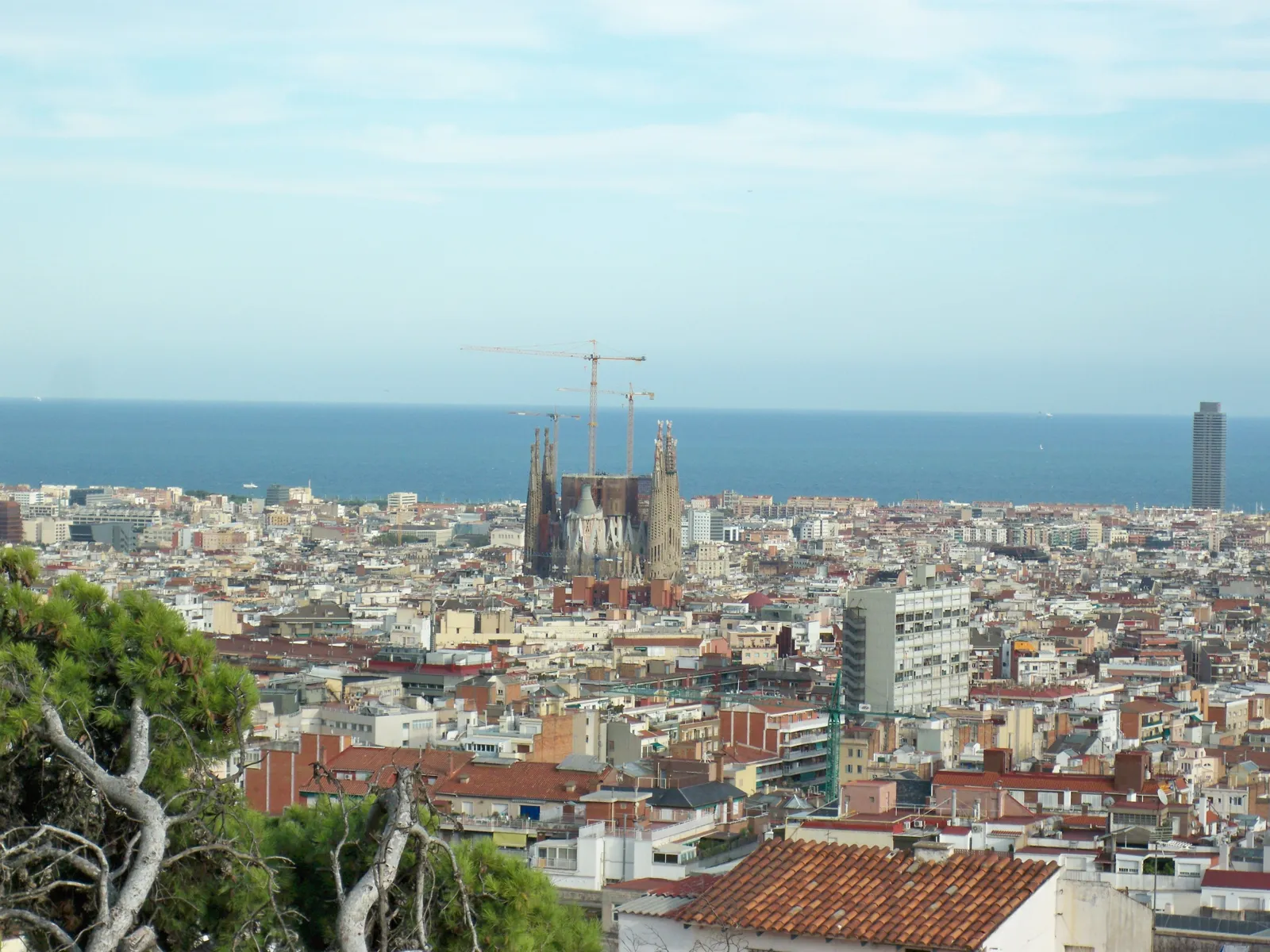
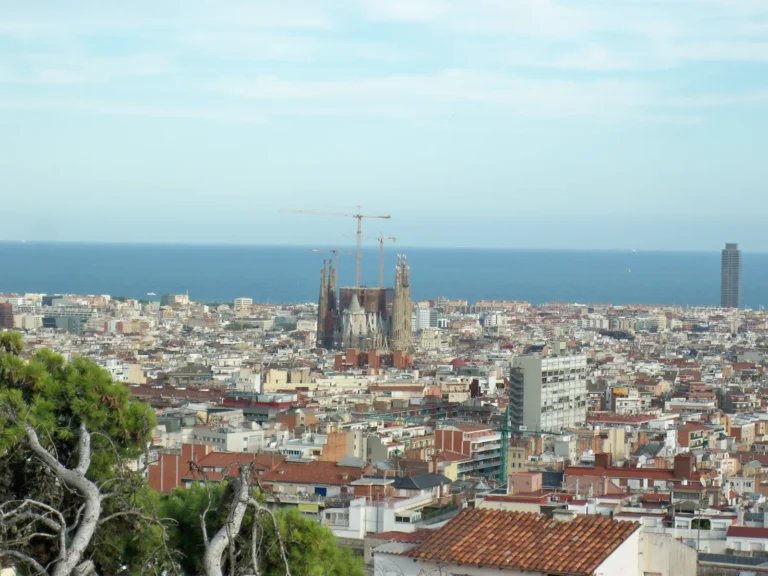
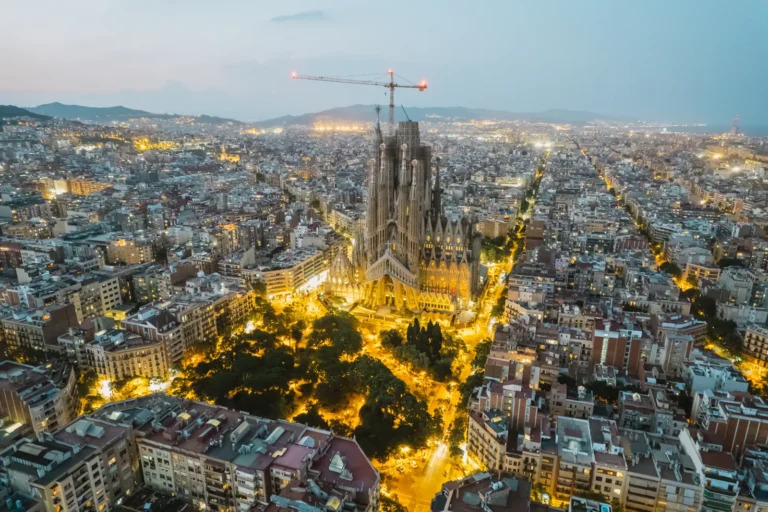
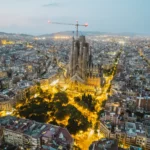
The Sagrada Família basilica is Barcelona’s most visited monument. The first stone was laid on 19 March 1882; Antoni Gaudí took over the project in 1883 and devoted the rest of his life to it, until his death in 1926. He saw only one tower completed, that of Saint Barnabas, in 1925. The Nativity façade and the crypt have been UNESCO World Heritage Sites since 2005, and Pope Benedict XVI consecrated the basilica on 7 November 2010. Work continues: in 2026, the centenary of Gaudí’s death, the completion of the Tower of Jesus Christ, the tallest in the temple, is at the heart of the celebrations.
What to see at the Sagrada Família
- The Nativity façade: the oldest, facing north-east, the only one built in Gaudí’s lifetime, covered in exuberant sculpture
- The Passion façade: on the opposite side, more austere and angular, sculpted in the 20th century
- The nave: columns that branch out like trees and stained glass that colors the light, warm in the afternoon on the west side, cooler in the morning on the east
- The towers: optional, with views over the city; according to the official site they are the only part of the basilica not accessible to wheelchair users, and bags are not allowed up (temporary storage below)
- The museum and crypt: models, plans and the history of the building work
Tickets, prices and visiting rules
According to the official site (checked 26 October 2026), tickets are sold online only (website or official app), roughly two months before the visit date. They are nominative, personal and non-transferable, and official photo ID is required at the entrance; personal details cannot be changed after booking. The official ticket page also showed a temporary closure notice when we checked: confirm opening on the official site before you go.
| Individual ticket | Full price | Under 30s, students | Seniors |
|---|---|---|---|
| Basilica (audio guide on the app) | €26 | €24 | €21 |
| Basilica with guided tour | €30 | €28 | €23 |
| Basilica and towers | €36 | €34 | €28 |
| Guided tour and towers | €40 | €38 | €32 |
- Opening hours: November to February, Monday to Saturday 9 am-6 pm (Sunday 10:30 am-6 pm); March and October, Monday to Friday 9 am-7 pm; April to September, Monday to Friday 9 am-8 pm (Saturday 9 am-6 pm all year); shorter hours on some holidays and during celebrations
- Quiet hour: since 2 February 2026, from 9 am to 10 am, with earphones required for any audio and voices kept down in the basilica
- Dress code: no see-through clothing or swimwear; trousers and skirts at least mid-thigh; no bare shoulders in the Chapel of the Holy Sacrament
- Security: bags are checked; food and drink are not allowed; come without a large backpack
- Length of visit: allow about 1.5 hours for the basilica, longer with the towers and museum
Beware of resale sites that imitate the official ticket office: as tickets are nominative and cannot be changed, a mistake in the name or date can stop you getting in.
Gaudí’s other works
Park Güell
Originally designed as a garden city for industrialist Eusebi Güell, Park Güell overlooks the city from the Gràcia district. Its paid Monumental Zone includes the great undulating mosaic bench, the Hypostyle Room, the dragon stairway and the entrance pavilions. According to the official site (checked 26 October 2026), tickets are sold online for a set entry time: you have 30 minutes to get in, you can stay as long as you like, but you cannot leave and come back. The Gaudí House Museum, inside the park, is sold as a separate combined option. The park is on a slope: wear good shoes and bring water in summer.
Casa Batlló and La Pedrera
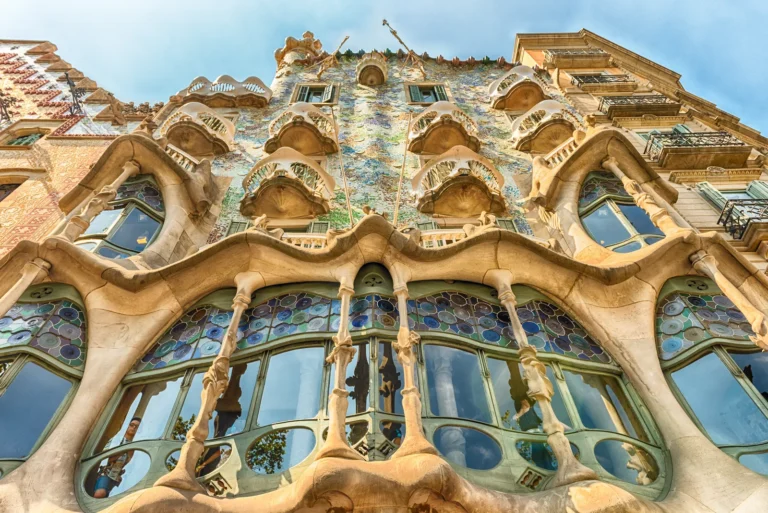
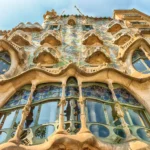
On Passeig de Gràcia, the Eixample’s elegant avenue, two Gaudí houses stand a few blocks apart. Casa Batlló, with its mask-like balconies and scaly roof, can be visited inside. Casa Milà, nicknamed La Pedrera (“the quarry”), is known for its undulating stone façade and its roof terrace dotted with sculpted chimneys. Both are visited with a timed ticket, preferably bought on their official websites; late-afternoon slots and night visits go fast.
Palau Güell and Casa Vicens
Palau Güell, near La Rambla, shows Gaudí’s work on a town mansion, from basement to roof. Casa Vicens, in Gràcia, is his first major house, with colorful ceramic façades. Less crowded, they round off a stay focused on Modernisme well.
What to see in Barcelona: the highlights
The Gothic Quarter and the cathedral
The Barri Gòtic is the city’s historic heart: narrow lanes, hidden squares, remains of the Roman walls and the cathedral of Santa Eulàlia with its cloister. Plaça Sant Jaume brings together the city hall and the Catalan government. The quarter is best discovered on foot, ideally early in the morning, before the groups arrive.
La Rambla and La Boqueria market
La Rambla runs down from Plaça de Catalunya to the port. It is a must, but also the most touristy spot and the most exposed to pickpockets. La Boqueria market, on the left as you walk down, is much photographed; for actual shopping, the Santa Caterina (Born) or Sant Antoni markets are quieter.
The Born and the Picasso Museum
The Born, east of the Gothic Quarter, mixes shops, bars and workshops. Here you will find the basilica of Santa Maria del Mar, a masterpiece of Catalan Gothic, and the Picasso Museum, housed in medieval palaces on Carrer de Montcada. The nearby Ciutadella Park is a good place for a break.
The Palau de la Música Catalana and Sant Pau
Two masterpieces by Lluís Domènech i Montaner, Barcelona’s other great Modernista architect. The Palau de la Música, a concert hall with a spectacular stained-glass skylight, can be visited on a tour or during a concert. The former Hospital de Sant Pau, a few blocks from the Sagrada Família, is a complex of mosaic-decorated pavilions.
Montjuïc
Montjuïc hill, south-west of the center, is home to the National Art Museum of Catalonia (MNAC), the Joan Miró Foundation, the 1992 Olympic venues, gardens and a castle with views over the port. You can go up on foot, by bus or by cable car. At the foot of the hill, Plaça d’Espanya and Avinguda Maria Cristina lead to the museum.
Viewpoints: the Carmel bunkers and Tibidabo
The former anti-aircraft shelters of Turó de la Rovira, known as the Carmel bunkers, offer one of the finest panoramas over the city; they are very busy at sunset, and residents ask for quiet. Higher up, Tibidabo, the summit of the Collserola range, has a church and an old amusement park popular with families.
Barcelona’s neighborhoods
Ciutat Vella: Gòtic, Born, Raval and Barceloneta
The old town includes the Gothic Quarter, the Born, the Raval (more working-class and multicultural, around the MACBA contemporary art museum) and Barceloneta, a former fishermen’s quarter by the beach. Everything is within walking distance, but it is also the area most crowded with tourists and the noisiest at night.
The Eixample
The 19th-century grid district, with its chamfered blocks, concentrates the Modernista architecture: Passeig de Gràcia, Casa Batlló, La Pedrera, Sagrada Família. Central, well connected and quieter than the old town, it is a good base for a first stay.
Gràcia
A former village absorbed into the city, Gràcia has kept its little squares, neighborhood shops and terraces. It is the gateway to Park Güell and one of the most pleasant districts for an evening out without the crowds of Ciutat Vella.
Poblenou and the seafront
A former industrial district that has been converted, Poblenou runs along the Bogatell and Mar Bella beaches. Its Rambla is calm and local; the district suits those who want to stay near the sea, a few metro stops from the center.
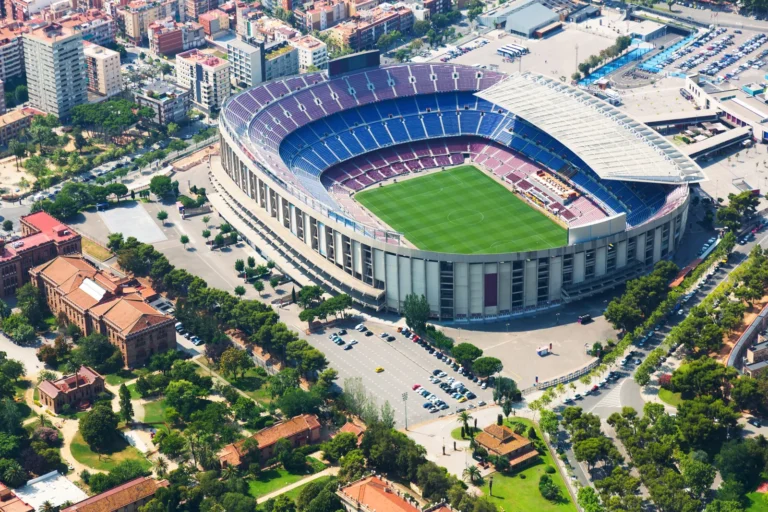
For football fans, our guide to visiting Camp Nou and the Barça museum covers the building work, official tickets and opening hours.
Barcelona’s beaches
The city has several kilometers of developed beaches, reachable by metro. In practice, the swimming season runs from June to September.
- Barceloneta and Sant Sebastià: the closest to the old town, very lively and often crowded
- Nova Icària and Bogatell: wider, a little quieter, near the Olympic port
- Mar Bella and Nova Mar Bella: to the north-east, more family- and sports-oriented
- Tips: never leave your belongings unattended, as thefts on beaches are frequent; follow the beach flags (GOV.UK warns of strong undercurrents on some Spanish beaches: never swim under a red flag)
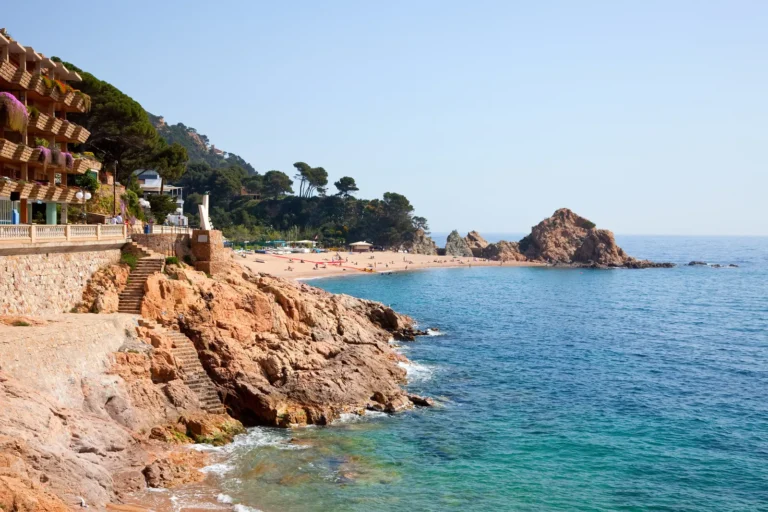
- For more peace: the coves of the Costa Brava, to the north, or Sitges beach, to the south, about 40 minutes by train

What to do in Barcelona at a glance
| What to see | Neighborhood | Booking |
|---|---|---|
| Sagrada Família | Eixample | Essential, online, nominative ticket |
| Park Güell | Gràcia | Essential for the Monumental Zone |
| Casa Batlló and La Pedrera | Eixample (Passeig de Gràcia) | Advisable in high season; façades free to see from the street |
| Gothic Quarter and cathedral | Ciutat Vella | Lanes free to explore |
| The Born and the Picasso Museum | Ciutat Vella | Advisable for the museum in high season |
| La Rambla and La Boqueria | Ciutat Vella | No |
| Palau de la Música Catalana | Ciutat Vella | Book a guided tour or concert |
| Montjuïc (MNAC, Miró Foundation, castle) | Montjuïc | Depends on the museum |
| Carmel bunkers | Carmel hill | No, free access |
| Barceloneta and Poblenou beaches | Seafront | No |
Itinerary: a weekend in Barcelona, 2 to 4 days
2 days: the essentials
- Day 1: Sagrada Família in the morning (booked ticket), Passeig de Gràcia with Casa Batlló and La Pedrera, then the Gothic Quarter, the cathedral and the Born late in the day
- Day 2: Park Güell early in the morning, lunch in Gràcia, La Rambla and La Boqueria, then Barceloneta and sunset on the beach
3 days: with Montjuïc
- Days 1 and 2: the program above
- Day 3: Montjuïc (MNAC or Miró Foundation, castle), down to Plaça d’Espanya, evening at the Palau de la Música or in the Raval
4 days: with a day trip
- Days 1 to 3: the program above
- Day 4: a trip to Montserrat (monastery and mountain trails, by train then rack railway or cable car), or a day in Sitges or Girona; otherwise, the Carmel bunkers, Sant Pau and Poblenou
Group your visits by neighborhood and schedule booked monuments in the morning, when it is less crowded. Tourist passes only pay off if you visit many of the paid sites they include: check the list before buying.
Barcelona airport transfer: metro, train, Aerobús and taxi
Josep Tarradellas Barcelona-El Prat airport has two terminals, T1 and T2, linked by a free shuttle. Before choosing your transport, check your arrival terminal on your ticket: the commuter train leaves only from T2, while the metro and the Aerobús serve both.
Metro L9 Sud: watch your ticket
Line L9 Sud stops at Aeroport T1 and Aeroport T2 stations. It does not go directly to the center: you have to change, for example at Torrassa (L1) or Zona Universitària (L3). Key point: according to TMB’s 2026 fare table (checked 26 October 2026), the T-casual is not valid at the airport stations; you need the single “Airport ticket” (€5.90) or another accepted pass such as the T-usual or the Hola Barcelona card.
Rodalies R2 Nord train
The R2 Nord commuter train leaves from Terminal T2 and serves Barcelona Sants, Passeig de Gràcia and El Clot-Aragó. It is part of the integrated fare network. If you arrive at T1, take the free shuttle to T2 first. Check timetables with the operator.
Aerobús
The Aerobús links both terminals with the city center. Check fares and timetables on its official website at the time of purchase.
Taxi
Taxis wait outside both terminals. The fare is shown on the meter; ask for a receipt on arrival.
| Option | Where to catch it | Official fare | Source |
|---|---|---|---|
| Metro L9 Sud (+ change) | Aeroport T1 and T2 stations | Airport ticket €5.90 | tmb.cat |
| R2 Nord train | Terminal T2 only | Integrated network ticket (see operator) | atm.cat |
| Aerobús | T1 and T2 | Shown at purchase | aerobusbarcelona.es |
| Taxi | Terminal taxi ranks | Meter | — |
Booking a transfer in Barcelona
A private transfer booked in advance (a driver waiting on arrival, price fixed at booking) makes most sense for a late arrival, bulky luggage, a family trip with young children or a group sharing the cost. Before booking, check what the price includes (tolls, luggage, waiting time if your flight is late), the exact meeting point in the terminal, the cancellation terms and the name of the company that actually operates the trip.
Where to stay in Barcelona
| Neighborhood | Best for | Good to know |
|---|---|---|
| Eixample (Dreta and Esquerra) | First visit, couples, families | Central, quiet in the evening, many hotels |
| Gothic Quarter and Born | Doing everything on foot | Lively and noisy at night, rooms often small |
| Gràcia | Neighborhood feel, longer stay | A little off-center, close to Park Güell |
| Barceloneta and Poblenou | Beach stay | Further from Gaudí’s monuments, well served by metro |
| Sants and Poble-sec | Mid-range budget, arriving by train | Near Sants station and Montjuïc |
| Raval | Budget travelers | Central and lively, but some streets are best avoided late at night |
Well-located hotels are expensive in high season: you will often pay more than €150 a night for a decent double room in summer, much less in winter. Barcelona city council strictly regulates tourist apartment rentals: check that the property displays a tourist registration number and use identified platforms and establishments. In summer, an air-conditioned room is almost essential.
Tourist tax
Catalonia applies a tax on stays in tourist establishments (hotels, tourist apartments, campsites, cruise ships), to which Barcelona adds a municipal surcharge. According to the Catalan Tax Agency (checked 26 October 2026), it is due per person per night, up to a maximum of 7 nights for the same stay, and under-17s are exempt. The amount depends on the category of establishment; it is usually paid on site or added to the booking, on top of the room price. Ask your accommodation for the exact amount.
Getting around Barcelona
- On foot: the old town and the Eixample are easy to walk; allow about 30 minutes between Plaça de Catalunya and the Sagrada Família.
- Metro and bus: the metro serves most sights, from the Sagrada Família to Barceloneta. Multi-journey cards (such as the T-casual, 10 journeys) work out much cheaper than single tickets and are also valid on buses and commuter trains in the urban zone.
- From the airport: a metro line, commuter trains and buses link El Prat with the center; the special airport fare is not included in all multi-journey cards. Taxis are available outside the terminals.
- Bike and scooter: there are many cycle lanes; the municipal bike-sharing service is for residents only, but private rental companies exist.
- By car: GOV.UK notes that Barcelona requires foreign-registered vehicles to be registered in advance to enter its low emission zone (ZBE).
- Day trips: regional trains to Montserrat, Sitges and Girona; high-speed trains to Madrid, Valencia and southern France.
When to go to Barcelona
✅ Best months: April, may, June, September, October
The best periods are May to June and September: 22 to 26 °C (72 to 79 °F) in the afternoon according to AEMET normals, and a sea warm enough for swimming in June and September. April and October are perfect for sightseeing. July-August are hot, humid and crowded, and September-October are the wettest months, with brief showers. Winter, mild by day (14 °C / 57 °F), is ideal for a cultural weekend at low prices. Month-by-month climate, festivals and tips: see our article when to go to Barcelona.
Budget for a stay in Barcelona
Barcelona is one of the most expensive cities in Spain for accommodation, but meals remain reasonably priced. Indicative amounts per person per day, excluding travel to Barcelona:
| Item | Budget | Comfort |
|---|---|---|
| Accommodation (shared double room) | roughly €35 to €70 | roughly €90 to €180 |
| Meals | roughly €25 to €40 | roughly €50 to €90 |
| Public transport | roughly €5 to €10 | roughly €10 to €25 |
| Sights (Sagrada Família, Park Güell, museums) | roughly €15 to €30 | roughly €35 to €70 |
| Total per day | roughly €80 to €150 | roughly €185 to €365 |
To cut costs: have the “menú del día”, a fixed-price lunch offered on weekdays in many restaurants, enjoy the free spots (Gothic Quarter, beaches, Carmel bunkers, Ciutadella Park, Gaudí façades seen from the street) and look into the free slots offered by some museums.
Entry requirements, health and safety
- US citizens (travel.state.gov, last updated August 11, 2025): Schengen rules apply. Your passport should be valid for at least 3 months beyond your stay, and you need sufficient proof of funds and a return ticket.
- UK citizens (GOV.UK, updated 12 August 2026): no visa for up to 90 days in any 180-day period as a tourist. Your passport must have been issued less than 10 years before the day you arrive and be valid for at least 3 months after the day you plan to leave the Schengen area. The EU Entry/Exit System (EES) means fingerprints and a photo may be taken at your first entry, free of charge.
- Lost passport: according to GOV.UK, you cannot use a police report to leave Spain: you need a new passport or an emergency travel document.
- Health: UK travellers can use a GHIC or EHIC for medically necessary state healthcare, which does not replace travel insurance; whatever your nationality, take out insurance covering medical costs. Emergency number: 112.
- Safety: the U.S. Department of State notes that pickpocketing and theft are very common at tourist spots, airports, train stations and beach destinations. GOV.UK warns of extreme heat in summer, wildfires and flash floods (follow AEMET warnings), and of strong undercurrents on some beaches: never swim when the red flag is flying.
- Barcelona: the U.S. Department of State advises not letting your guard down at airport security, particularly at Barcelona airport. Pickpockets target La Rambla, the metro, the beaches and the areas around monuments: keep your bag closed and in front of you, your phone put away, and nothing on the table at café terraces. The Spanish police AlertCops app lets you contact the police discreetly (GOV.UK).
- Documents: keep your original documents somewhere safe and carry copies; bring your passport for the Sagrada Família, which requires official photo ID.
- Consular help: U.S. Consulate General Barcelona: (+34) 93-280-2227 (travel.state.gov).
Practical tips for Barcelona
- Meal times: lunch is around 2 pm and dinner rarely before 9 pm. Many restaurants close between the two services.
- Language: Catalan is the city’s language, alongside Spanish. A few words of Catalan (bon dia, gràcies) are appreciated; signs are bilingual.
- Etiquette: the city suffers from mass tourism. Avoid wearing swimwear away from the beach, making noise at night in residential areas and drinking in the street; GOV.UK notes that drinking alcohol in the street is illegal in some areas of Spain and can bring an on-the-spot fine.
- Mobile data: check your roaming charges before you go, or use a travel eSIM.
- Emergencies: dial 112.
Who is Barcelona for?
Our view, profile by profile, based on the information in this guide:
| Profile | Our verdict |
|---|---|
| Weekend break | Ideal: the essentials can be seen in 2 to 4 days on foot and by metro. |
| Architecture and culture | Ideal: Sagrada Família, Park Güell, Gaudí’s houses, Palau de la Música, Picasso and Miró museums. |
| Families | Yes: more family-friendly beaches at Mar Bella, Tibidabo amusement park, the Eixample as a quiet base. |
| City beach | Yes from June to September: Barceloneta, Bogatell, Mar Bella, keeping an eye on your belongings. |
| Nightlife | Yes: Born, Gràcia, Raval, with dinners rarely before 9 pm. |
| Budget travel | Possible: roughly €80 to €150 per day; the “menú del día” and free sights keep costs down, but accommodation stays expensive. |
Further reading
The month-by-month climate is covered on our page when to go to Barcelona. To continue in Spain, our Spain travel guide and our Madrid guide help you build a tour, and the page when to go to Spain compares the regions.
Frequently asked questions
How many days do you need to visit Barcelona?
Two days let you see the Sagrada Família, Park Güell, Passeig de Gràcia, the Gothic Quarter and the beach. With 3 to 4 days, you add Montjuïc, the museums and a trip to Montserrat or along the coast without rushing. Further south, on the Costa Daurada, PortAventura, its tickets and how to get there have their own guide if you are traveling with children.
Do you need to book the Sagrada Família in advance?
Yes. Tickets are sold online only, roughly two months before the visit, for a specific time slot, and they are nominative: official photo ID is required at the entrance (official site, checked 26 October 2026). In high season, morning slots and tower access sell out days or even weeks ahead. Buy on the official website or app.
Which neighborhood should you stay in in Barcelona?
The Eixample is the best compromise for a first stay: central, quieter than the old town and close to Gaudí’s works. The Gothic Quarter and the Born suit those who want to do everything on foot, Gràcia a neighborhood feel, and Barceloneta or Poblenou the beach.
Do you have to pay a tourist tax in Barcelona?
Yes. Catalonia charges a tax per person per night in tourist accommodation, up to a maximum of 7 nights, with a municipal surcharge in Barcelona. Under-17s are exempt (Catalan Tax Agency). The amount depends on the category of accommodation.
Is Barcelona dangerous?
The main risks are pickpocketing and bag snatching, which are very common in tourist areas, according to the U.S. Department of State (travel.state.gov, last updated August 11, 2025), which also warns travelers to stay alert at airport security, particularly at Barcelona airport. Watch your belongings on La Rambla, in the metro and on the beaches.
What to do in Barcelona on a weekend?
On day one, the Sagrada Família in the morning (booked ticket), Passeig de Gràcia, then the Gothic Quarter and the Born. On day two, Park Güell early in the morning, Gràcia, La Rambla and La Boqueria, then Barceloneta late in the day. Book the two Gaudí sites before you leave: that is what makes a two-day weekend work.
Our sources
- Entry requirements, health and safety read on 26 October 2026: U.S. Department of State, Spain country information (travel.state.gov, last updated August 11, 2025), and UK FCDO, foreign travel advice for Spain (GOV.UK, updated 12 August 2026)
- Official Sagrada Família site (sagradafamilia.org): prices, FAQs (tickets, ID, quiet hour, dress code) and opening hours, checked 26 October 2026
- Official Park Güell site (parkguell.barcelona, Barcelona city council): tickets and access conditions, checked 26 October 2026
- TMB, 2026 metro and bus fares (Airport ticket, T-casual), checked 26 October 2026
- Catalan Tax Agency (atc.gencat.cat): tax on stays in tourist establishments, checked 26 October 2026
- Barcelona climate normals: 1991-2020 normals for the Barcelona airport station (El Prat), Spanish State Meteorological Agency (AEMET)
- Our methodology
Updated October 2026.
To combine Barcelona with other regions, see our Spain travel guide and our page when to go to Spain, or browse our destinations in Europe. Barcelona is also a major cruise port: see our page on Mediterranean cruises.
Our guides: Barcelona (5 guides)
Cities, islands and regions
When to go
Sights and landmarks
Other destinations in the region
 Andalusia
 Balearic Islands
 When to go
 Map
 PortAventura
 Time difference
 Bilbao
 Madrid
 San Sebastian
 Valencia
 Costa Brava
 Alicante