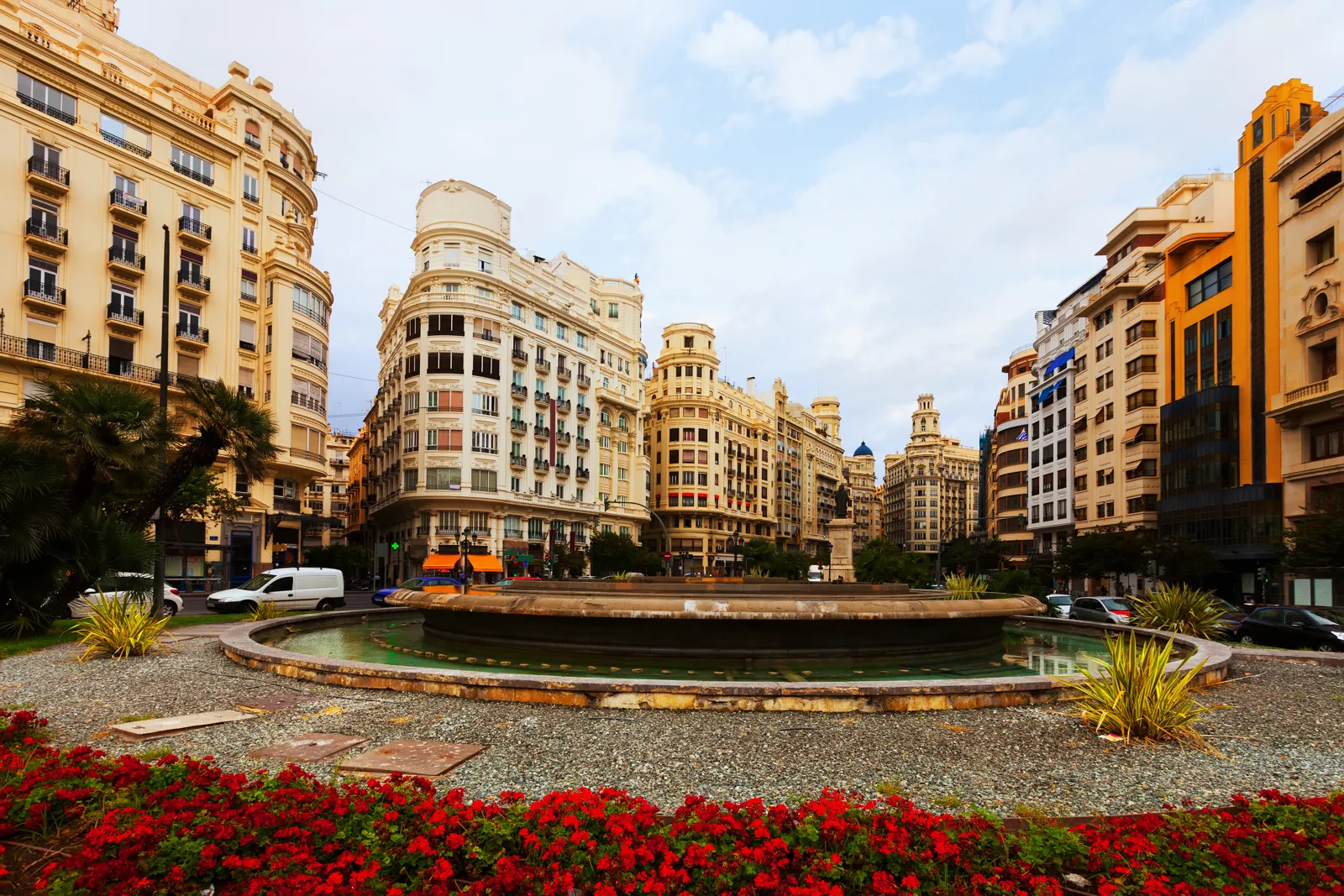
When is the best time to visit Spain? April to June and September to October: it is warm and pleasant without excess almost everywhere, the Mediterranean becomes swimmable from June, and you avoid the crushing heat of the interior and the July–August crowds. Summer suits the beach and the north of the country; Andalusia and Madrid are often too hot for sightseeing then. The country has contrasting climates: continental in Madrid (cold in winter, very hot in summer), Mediterranean on the coasts, oceanic and rainier in the north.
Spain does not have one climate but several: a Mediterranean climate on the east coast and in the Balearic Islands, a continental climate on the central plateau (cold winters, scorching summers in Madrid), an Andalusia that is very hot in summer and mild in winter, and a green, temperate and rainy Atlantic north coast (Basque Country, Cantabria, Asturias, Galicia). Here is how to choose your month, based on the 1991–2020 climate normals published by Spain’s national meteorological agency (AEMET). The Canary Islands, off the coast of Africa, have a climate of their own: they have a dedicated page.

Our travel deals for Spain
Affiliate links: we earn a commission, at no extra cost to you.
 FlightsKiwi.comCompare flights and airline combinations to Spain.Compare flights

When to go to Spain at a glance
- Best times April to June and September–October
- For the beach June to September on the Mediterranean and in the Balearic Islands; July–August on the north coast
- For Andalusia (Seville, Córdoba, Granada) March to May and October–November; avoid July–August (average highs above 36 °C (97 °F) in Seville)
- For Madrid and inland cities April to June and September–October
- For the north (Bilbao, San Sebastián, Galicia) June to September, the least rainy period
- To avoid if possible the interior and the south in midsummer, Holy Week and August if you dislike crowds and high prices
- Winter sun the south and east coasts stay mild (about 16–17 °C (61–63 °F) in the afternoon); for a beach in winter, head to the Canary Islands
When to go to Spain by priority
- Best weather: April to June and September–October; June to September for the beach
- Cheapest: November to March, outside the Christmas holidays and major festivals
- Fewest crowds: January–February and November, the low season; in August, inland cities are quieter than the coasts, but scorching
- Events: Fallas in Valencia (mid-March), Holy Week and the Seville April Fair (dates vary, March to May), San Fermín in Pamplona from July 6 to 14
Spain: the calendar at a glance
✅ Best months: March, April, may, June, September, October
❌ Period to avoid: July, August
Spain weather month by month
The table below gives the normals for Madrid (Retiro Park station, in the city center), in the heart of the country. The climate there is more contrasting than on the coasts: cold in winter, very hot in summer. Other regions are compared further down. All the regions compared on this page can be found on the map of Spain.
| Month | Avg. max | Avg. min | Rain | Crowds | Prices | Verdict |
|---|---|---|---|---|---|---|
| January | 10.0 °C (50 °F) | 3.0 °C (37 °F) | 32 mm (1.3 in) | Low | Low | ⚠️ Cold and dry, good for museums |
| February | 12.2 °C (54 °F) | 3.7 °C (39 °F) | 34 mm (1.3 in) | Low | Low | ⚠️ Still cool, frost possible in the morning |
| March | 16.2 °C (61 °F) | 6.3 °C (43 °F) | 35 mm (1.4 in) | Moderate | Moderate | ✅ Early spring, good for a city break |
| April | 18.9 °C (66 °F) | 8.2 °C (47 °F) | 46 mm (1.8 in) | High (Holy Week) | Moderate to high | ✅ Mild, a few showers |
| May | 23.2 °C (74 °F) | 11.9 °C (53 °F) | 48 mm (1.9 in) | Moderate | Moderate | ✅ The best month for the interior |
| June | 28.9 °C (84 °F) | 16.5 °C (62 °F) | 20 mm (0.8 in) | Moderate | Moderate to high | ✅ Hot and sunny, long evenings |
| July | 32.8 °C (91 °F) | 19.5 °C (67 °F) | 9 mm (0.4 in) | Moderate (high on the coasts) | High | ❌ Too hot for sightseeing, heat waves |
| August | 32.0 °C (90 °F) | 19.3 °C (67 °F) | 10 mm (0.4 in) | Low in cities (high on the coasts) | High | ❌ Heat in the cities, crowded coasts |
| September | 26.5 °C (80 °F) | 15.5 °C (60 °F) | 24 mm (0.9 in) | Moderate | Moderate to high | ✅ Bearable heat returns |
| October | 19.7 °C (67 °F) | 11.1 °C (52 °F) | 64 mm (2.5 in) | Moderate | Moderate | ✅ Pleasant, the wettest month in Madrid |
| November | 13.5 °C (56 °F) | 6.4 °C (44 °F) | 52 mm (2.0 in) | Low | Low | ⚠️ Cool and changeable |
| December | 10.3 °C (51 °F) | 3.7 °C (39 °F) | 42 mm (1.7 in) | Moderate (holidays) | Moderate | ⚠️ Cold but often sunny, Christmas atmosphere |
Note: these averages smooth out the extremes. Heat waves regularly push temperatures above 40 °C (104 °F) in the interior and in Andalusia in summer. AEMET publishes weather warnings (heat, storms, wildfire risk), which are worth checking during your stay.
Spain’s seasons: pros and cons
Spring (March to May): the ideal season for cities and Andalusia
This is the best season to visit. In Seville, average highs rise from 22 °C (72 °F) in March to 28 °C (82 °F) in May; in Madrid, from 16 to 23 °C (61 to 73 °F). Andalusian patios are in flower and the countryside is still green. The sea is still cool for swimming. April and May remain fairly wet in Madrid and in the north (almost 100 mm (3.9 in) in April in Bilbao).
- Pros: ideal temperatures for walking in cities, big spring festivals (Holy Week, Seville April Fair), prices still moderate outside festivals
- Cons: cold sea, possible showers, accommodation in high demand and expensive during Holy Week and the April Fair
- Our tip: May is the most balanced month for a Madrid–Andalusia circuit
Summer (June to August): beach, north and late evenings
Summer is the coasts’ high season. The Mediterranean and the Balearic Islands are dry and hot (about 30 °C (86 °F) in the afternoon in Valencia and Palma in August), with warm seas. But the interior becomes a furnace: an average high of 36 °C (97 °F) in Seville in July–August, almost 33 °C (91 °F) in Madrid, and much more during heat waves. The north enjoys its best season: 25–26 °C (77–79 °F) in Bilbao and much less rain.
- Pros: warm sea, near-guaranteed good weather on the Mediterranean, village fiestas and festivals, pleasant north coast
- Cons: heat waves in the interior and the south, crowds and prices at their peak on the coasts and in the Balearic Islands in August, wildfire risk
- Good to know: in August, many people from Madrid go on vacation; some shops and restaurants in the capital close for a few weeks
- Who is it for? Families and beach lovers; for sightseeing, prefer mornings and late afternoons, or the north of the country
Autumn (September to November): warm sea without the crowds
September is an excellent month: the sea is still warm, the heat eases (26 °C (79 °F) in Madrid, 32 °C (90 °F) in Seville) and the vacationers go home. October is still pleasant in the south (26 °C (79 °F) in Seville). Be careful, though: autumn is the season of stormy rain on the Mediterranean coast. September and October are the wettest months in Valencia, Barcelona and Palma (60 to 86 mm (2.4 to 3.4 in)), often as intense, brief episodes (known as DANA or gota fría) that can cause flooding.
- Pros: warm sea in September, ideal temperatures in the south in October, grape harvest, falling prices
- Cons: risk of violent storms on the Mediterranean, shortening days, beach resorts partly closing from October
- Our tip: follow AEMET warnings in case of an alert, and stay away from watercourses and flood-prone areas
Winter (December to February): city breaks and mild weather in the south
Winter is cold in Madrid (10 °C (50 °F) in the afternoon, about 3 °C (37 °F) at night) and on the plateau, with snow in the mountains (Pyrenees, Sierra Nevada near Granada). The south and east coasts stay mild: 16 to 17 °C (61 to 63 °F) in the afternoon in Seville and Valencia in January. The north is the rainiest region in winter (130 mm (5.1 in) in January in Bilbao). It is the low season: low prices and museums without queues, but the sea is too cold for swimming.
- Pros: low prices, cities enlivened by the year-end festivities, mild weather in Andalusia and on the Valencia coast, skiing in the Sierra Nevada and the Pyrenees
- Cons: cold in the interior, rain in the north, beach resorts and the Balearic Islands at a standstill
- Who is it for? A weekend in Madrid, Barcelona, Seville or Valencia; for the beach, it is the Canary Islands
When to go to Spain by region
The differences are large between the south, scorching in summer, the contrasting central plateau, the mild Mediterranean and the rainy Atlantic north. Comparison of the normals for five cities:
| Month | Madrid | Barcelona | Seville | Valencia | Bilbao |
|---|---|---|---|---|---|
| January | 10.0 °C (50 °F) / 32 mm (1.3 in) | 14.0 °C (57 °F) / 41 mm (1.6 in) | 16.3 °C (61 °F) / 56 mm (2.2 in) | 16.8 °C (62 °F) / 39 mm (1.5 in) | 13.5 °C (56 °F) / 130 mm (5.1 in) |
| February | 12.2 °C (54 °F) / 34 mm (1.3 in) | 14.5 °C (58 °F) / 30 mm (1.2 in) | 18.3 °C (65 °F) / 46 mm (1.8 in) | 17.4 °C (63 °F) / 30 mm (1.2 in) | 14.2 °C (58 °F) / 109 mm (4.3 in) |
| March | 16.2 °C (61 °F) / 35 mm (1.4 in) | 16.4 °C (62 °F) / 42 mm (1.7 in) | 21.6 °C (71 °F) / 47 mm (1.9 in) | 19.4 °C (67 °F) / 40 mm (1.6 in) | 16.6 °C (62 °F) / 98 mm (3.9 in) |
| April | 18.9 °C (66 °F) / 46 mm (1.8 in) | 18.5 °C (65 °F) / 47 mm (1.9 in) | 24.0 °C (75 °F) / 52 mm (2.0 in) | 21.2 °C (70 °F) / 33 mm (1.3 in) | 18.1 °C (65 °F) / 97 mm (3.8 in) |
| May | 23.2 °C (74 °F) / 48 mm (1.9 in) | 21.7 °C (71 °F) / 42 mm (1.7 in) | 28.2 °C (83 °F) / 34 mm (1.3 in) | 24.0 °C (75 °F) / 36 mm (1.4 in) | 21.0 °C (70 °F) / 76 mm (3.0 in) |
| June | 28.9 °C (84 °F) / 20 mm (0.8 in) | 25.5 °C (78 °F) / 26 mm (1.0 in) | 32.9 °C (91 °F) / 6 mm (0.2 in) | 27.5 °C (82 °F) / 26 mm (1.0 in) | 23.5 °C (74 °F) / 58 mm (2.3 in) |
| July | 32.8 °C (91 °F) / 9 mm (0.4 in) | 28.3 °C (83 °F) / 27 mm (1.1 in) | 36.3 °C (97 °F) / 1 mm (0.0 in) | 29.9 °C (86 °F) / 7 mm (0.3 in) | 25.4 °C (78 °F) / 52 mm (2.0 in) |
| August | 32.0 °C (90 °F) / 10 mm (0.4 in) | 28.9 °C (84 °F) / 51 mm (2.0 in) | 36.2 °C (97 °F) / 3 mm (0.1 in) | 30.6 °C (87 °F) / 15 mm (0.6 in) | 26.3 °C (79 °F) / 53 mm (2.1 in) |
| September | 26.5 °C (80 °F) / 24 mm (0.9 in) | 26.0 °C (79 °F) / 86 mm (3.4 in) | 31.6 °C (89 °F) / 33 mm (1.3 in) | 28.0 °C (82 °F) / 70 mm (2.8 in) | 24.5 °C (76 °F) / 75 mm (3.0 in) |
| October | 19.7 °C (67 °F) / 64 mm (2.5 in) | 22.3 °C (72 °F) / 82 mm (3.2 in) | 26.3 °C (79 °F) / 75 mm (3.0 in) | 24.6 °C (76 °F) / 63 mm (2.5 in) | 21.5 °C (71 °F) / 112 mm (4.4 in) |
| November | 13.5 °C (56 °F) / 52 mm (2.0 in) | 17.6 °C (64 °F) / 46 mm (1.8 in) | 20.3 °C (69 °F) / 73 mm (2.9 in) | 20.2 °C (68 °F) / 52 mm (2.0 in) | 16.6 °C (62 °F) / 171 mm (6.7 in) |
| December | 10.3 °C (51 °F) / 42 mm (1.7 in) | 14.5 °C (58 °F) / 37 mm (1.5 in) | 16.9 °C (62 °F) / 77 mm (3.0 in) | 17.4 °C (63 °F) / 48 mm (1.9 in) | 14.1 °C (57 °F) / 127 mm (5.0 in) |
Madrid and the center (Toledo, Segovia, Salamanca)
The central plateau has a continental climate: 10 °C (50 °F) in the afternoon in January in Madrid, 33 °C (91 °F) in July. Winter nights are cold (3 °C (37 °F) on average). The best periods are April to June and September–October. In summer, Madrid is best visited early in the morning and in the evening, when the city comes alive. Winter, dry and often sunny, suits museums.
Andalusia (Seville, Córdoba, Granada, Málaga)
This is Spain’s hottest region in summer: an average high of 36 °C (97 °F) in Seville in July and August, almost no rain from June to August, and much higher peaks during heat waves. The interior (Seville, Córdoba) is then hard to visit during the day. Winter, however, is mild (16 °C (61 °F) in the afternoon in January in Seville) and autumn stays warm. Aim for March to May and mid-September to November. Granada, higher up, is cooler; the Costa del Sol, by the sea, is the busiest part in summer.
Barcelona, Catalonia and the Costa Brava
A moderate Mediterranean climate: 14 °C (57 °F) in the afternoon in winter, 28–29 °C (82–84 °F) in July–August, with humidity that makes summer feel heavy. The wettest months are September and October (more than 80 mm (3.1 in)). For Barcelona, May–June and September are the best choices; for the beach on the Costa Brava, June to September.
Valencia and the Mediterranean coast (Costa Blanca, Murcia)
The coast is the mildest in the country: 17 °C (63 °F) in the afternoon in January in Valencia, 30–31 °C (86–88 °F) in July–August, and little rain, except in September–October (70 and 63 mm (2.8 and 2.5 in)), the period of violent storms. The swimming season runs from June to September, even early October. The mild winter also makes it an off-season sun destination.
The Balearic Islands (Mallorca, Menorca, Ibiza)
In Palma de Mallorca, average highs go from 16 °C (61 °F) in winter to 30 °C (86 °F) in August, with a warm sea until September. It hardly rains in July (5 mm (0.2 in)), but autumn is wet (73 mm (2.9 in) in October). The season runs from May to October; June and September avoid the prices and crowds of August. In winter, many beach hotels close.
The north: Basque Country, Cantabria, Asturias, Galicia
The north coast is « Green Spain »: an oceanic climate, mild and humid. In Bilbao, it rains more than 1,100 mm (43.3 in) a year, with a peak in November (171 mm (6.7 in)), but summer is temperate (25–26 °C (77–79 °F) in the afternoon) and drier (52 to 58 mm (2.0 to 2.3 in) a month from June to August). It is the best region to travel in midsummer, from June to September, when the south is too hot.
The Canary Islands: a case apart
Located off the coast of Morocco, the Canary Islands have a mild climate all year and are the only Spanish destination where you can swim comfortably in winter. For details, see our article when to go to the Canary Islands.
Which region by month?
This table summarizes the best period for each major region, based on the AEMET normals and the seasons detailed above.
| Region | Jan | Feb | Mar | Apr | May | June | Jul | August | Sep | Oct | Nov | Dec |
|---|---|---|---|---|---|---|---|---|---|---|---|---|
| Madrid and the center | ⚠️ | ⚠️ | ✅ | ✅ | ✅ | ✅ | ❌ | ❌ | ✅ | ✅ | ⚠️ | ⚠️ |
| Andalusia (Seville, Córdoba, Granada) | ⚠️ | ⚠️ | ✅ | ✅ | ✅ | ⚠️ | ❌ | ❌ | ⚠️ | ✅ | ✅ | ⚠️ |
| Barcelona and the Costa Brava | ⚠️ | ⚠️ | ⚠️ | ⚠️ | ✅ | ✅ | ⚠️ | ⚠️ | ✅ | ⚠️ | ⚠️ | ⚠️ |
| Valencia and the Costa Blanca | ⚠️ | ⚠️ | ⚠️ | ⚠️ | ⚠️ | ✅ | ✅ | ✅ | ✅ | ⚠️ | ⚠️ | ⚠️ |
| Balearic Islands (Mallorca, Ibiza) | ⚠️ | ⚠️ | ⚠️ | ⚠️ | ✅ | ✅ | ✅ | ⚠️ | ✅ | ⚠️ | ⚠️ | ⚠️ |
| North (Basque Country, Galicia) | ⚠️ | ⚠️ | ⚠️ | ⚠️ | ⚠️ | ✅ | ✅ | ✅ | ✅ | ⚠️ | ⚠️ | ⚠️ |
| Canary Islands | ✅ | ✅ | ✅ | ✅ | ✅ | ✅ | ✅ | ✅ | ✅ | ✅ | ✅ | ✅ |
Details by destination: when to go to Madrid, to Barcelona, to Andalusia and to the Balearic Islands.

When to go to Spain by trip type
| Trip | Best time | Where? |
|---|---|---|
| First trip (cities and culture) | April to June, September–October | Madrid, Barcelona, Seville, Granada |
| Beach and swimming | June to September | Balearic Islands, Costa Brava, Costa Blanca, Costa del Sol |
| Summer beach without a heat wave | July–August | North coast: San Sebastián, Cantabria, Asturias |
| Beach in winter | November to March | Canary Islands |
| Andalusia and its monuments | March to May, October–November | Seville, Córdoba, Granada |
| Hiking | May–June, September | Pyrenees, Picos de Europa; Mallorca in spring and autumn |
| Camino de Santiago | May–June, September | Navarre, Castile, Galicia |
| Budget | November to March, outside holidays | Madrid, Valencia, Seville |
| Family trip | June, late August, October | Balearic Islands, Mediterranean coast, Canary Islands |
| Skiing | December to March | Sierra Nevada, Pyrenees |
| Road trip | April to June, September–October | Andalusia, Castile, north coast |
Major events to fit into your trip
| Period | Event | Location |
|---|---|---|
| Mid-March (until March 19) | Fallas: giant monuments burned on the last night | Valencia |
| Variable date (March–April) | Holy Week (Semana Santa): processions | Nationwide, especially Seville and Andalusia |
| April or May (after Easter) | April Fair (Feria de Abril) | Seville |
| July 6 to 14 | San Fermín festival | Pamplona |
| Late August | La Tomatina (tomato fight) | Buñol, near Valencia |
| Around September 24 | La Mercè festival | Barcelona |
| October 12 | National Day | Nationwide |
Spain month by month
January: Cold in Madrid (10 °C (50 °F) in the afternoon), mild on the south coast and in Valencia (16–17 °C (61–63 °F)). Sales, museums without waits. For the beach, only the Canary Islands.
February: Close to January. Carnival in several cities, notably Cádiz. Skiing in the Sierra Nevada and the Pyrenees.
March: Spring arrives in the south (22 °C (72 °F) in Seville). Fallas in Valencia in mid-March. Some years, Holy Week falls at the end of the month.
April: An excellent month in Andalusia (24 °C (75 °F) in Seville). Holy Week and the Seville April Fair depending on the year: book early. Showers possible in Madrid and the north.
May: The best month for cities: 23 °C (73 °F) in Madrid, 28 °C (82 °F) in Seville, long days. The sea is still cool.
June: Start of the beach season, heat still bearable in the interior, moderate crowds before July. A very good month to combine everything.
July: Intense heat in the interior and the south (33 °C (91 °F) in Madrid, 36 °C (97 °F) in Seville), warm sea, very busy coasts. San Fermín in Pamplona. Ideal for the north.
August: Peak crowds and prices on the coasts and in the Balearic Islands, inland cities quieter and scorching. Wildfire risk: follow AEMET warnings.
September: Warm sea, fading crowds, falling heat: one of the best months. First storms possible on the Mediterranean.
October: Still 26 °C (79 °F) in Seville, 24–25 °C (75–77 °F) in Valencia. It is also a period of intense rain episodes on the east coast. National Day on the 12th.
November: Rainy in the north (171 mm (6.7 in) in Bilbao) and cool in Madrid, still mild in Andalusia (20 °C (68 °F)). Low prices.
December: Cold but often dry and sunny in Madrid, mild in the south. Christmas lights and markets in the big cities.
When to book your trip to Spain
For July–August on the coasts and in the Balearic Islands, book accommodation and car rental 3 to 6 months ahead. Do the same for Holy Week and the April Fair in Seville, Fallas in Valencia or San Fermín in Pamplona: hotels are stormed and prices soar. For a spring or autumn city break, 1 to 2 months is generally enough, and in winter you will easily find something at the last minute.
Planning your trip to Spain
- Entry requirements: passport and visa rules depend on your nationality: see our entry requirements for Spain.
- Time difference: mainland Spain is on Central European Time (UTC+1, UTC+2 in summer); the Canary Islands are 1 hour behind.
- Currency: the euro. Bank cards are accepted almost everywhere.
- Weather warnings: according to the UK FCDO (GOV.UK, updated 12 August 2026), extreme weather can affect many parts of Spain, particularly in summer, and wildfires often happen in the summer months, including on the islands; check warnings from AEMET and report any fire to the emergency services on 112. The U.S. State Department (travel.state.gov, last updated August 11, 2025) lists heat waves, droughts and severe storms among the main weather events in Spain, with temperatures that can exceed 40 °C (104 °F) in regions such as Andalusia.
For more, see our complete Spain travel guide.
Also worth reading to prepare your trip: Andalusia, the Balearic Islands, when to go to Portugal, when to go to Italy.
Frequently asked questions
What is the best month to go to Spain?
May, June and September are the most balanced months: pleasant heat across the country, little rain and fewer crowds than in July–August. For Andalusia, April, May and October are also excellent.
When should you go to Spain to swim?
From June to September on the Mediterranean coast and in the Balearic Islands, where the sea is warmest in August and September. In winter, swimming is only pleasant in the Canary Islands.
Is Andalusia too hot in summer?
Often, yes, for sightseeing: the average high reaches 36 °C (97 °F) in Seville in July–August according to AEMET normals, with peaks above 40 °C (104 °F) during heat waves. Prefer spring or autumn, or sightsee early in the morning.
Where should you go in Spain in August?
To the north coast (Basque Country, Cantabria, Asturias, Galicia), where it is about 25–26 °C (77–79 °F) in the afternoon, or to the coasts and islands if you want the beach, booking early. Avoid the interior and Andalusia if you dislike the heat.
What is the cheapest time to go to Spain?
From November to March, outside the Christmas holidays and major festivals. It is a good time for a city break in Madrid, Valencia or Seville, where winter stays mild in the south.
When should you go to Spain in winter?
For mild weather, aim for Andalusia and the Valencia coast (16 to 17 °C (61 to 63 °F) in the afternoon in January). For the beach, choose the Canary Islands. Madrid and the center are cold but often sunny.
Where should you go in Spain in November?
Preferably the south: Andalusia stays mild in November (about 20 °C (68 °F) in the afternoon), while Madrid is cool (13.5 °C (56 °F) average high) and the north is very rainy (about 171 mm (6.7 in) in Bilbao). Prices are low and sites are quiet. For warmth and swimming, the Canary Islands are the safest option at this time of year.
What is the best time for a road trip in Spain?
April to June and September–October: temperatures allow driving and visiting the interior (Andalusia, Castile) without the summer heat. In July–August, favor an itinerary along the cooler north coast.
Our sources
- Spain’s national meteorological agency (AEMET): 1991–2020 normals for the Madrid-Retiro, Barcelona airport, Seville airport, Valencia, Palma port and Bilbao airport stations
- Weather and wildfire information read on 26 October 2026: UK FCDO, foreign travel advice for Spain (GOV.UK, updated 12 August 2026), and U.S. Department of State, Spain country information (travel.state.gov, last updated August 11, 2025)
- Our methodology
Updated November 2026.