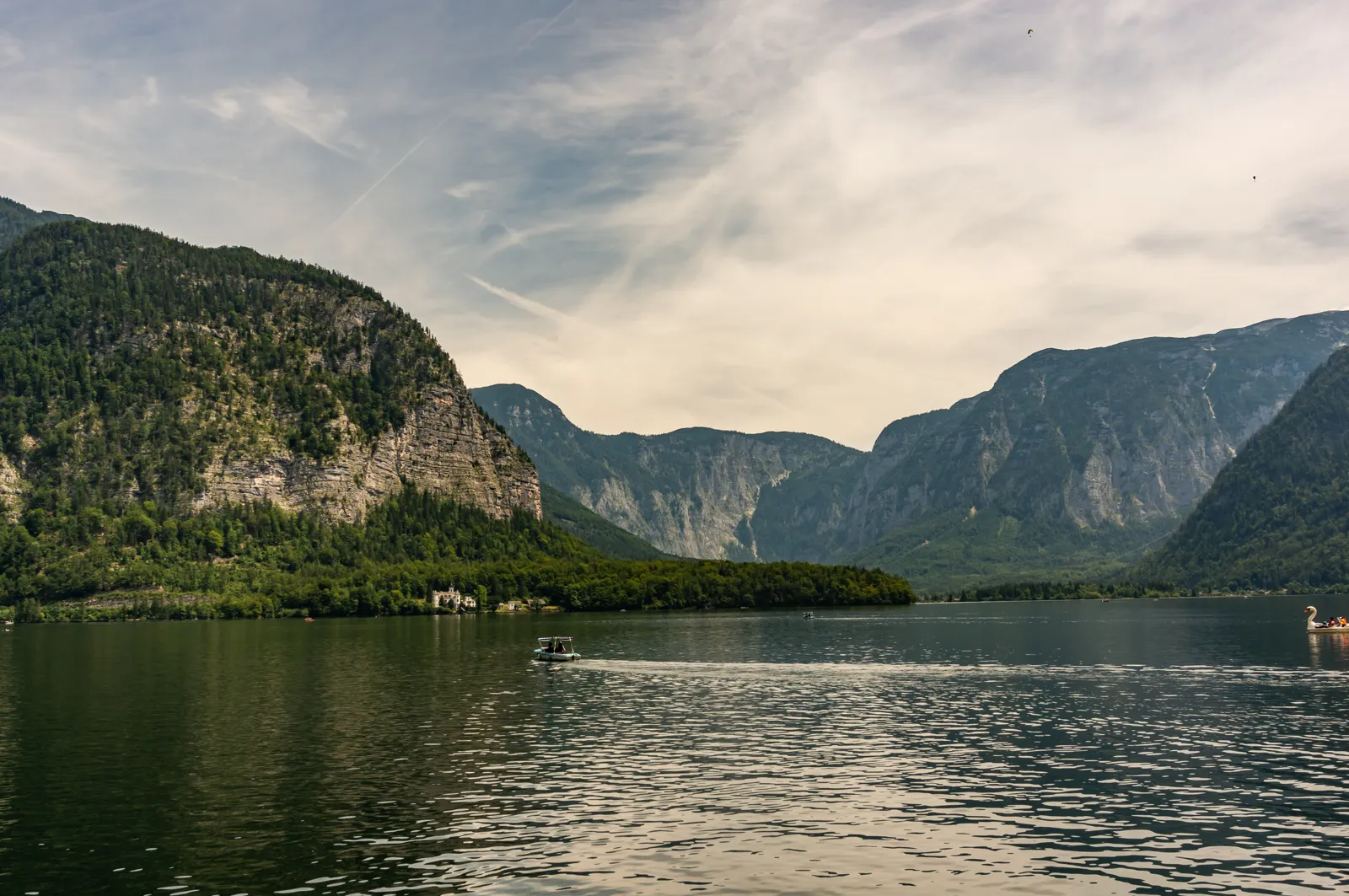
When is the best time to visit Austria? It depends on your plans: May to September for Vienna, the lakes and mountain hiking, with June and September as the best compromises; December to March for skiing in the Alps; and late November to Christmas for the Advent markets. July–August is the summer high season, hot in Vienna and often stormy in the Alps. Vienna and the Alpine resorts are located on the map of Austria.
The Austrian climate is continental, but strongly influenced by relief. The east (Vienna, Burgenland) is the driest and warmest in summer. The Alpine west (Tyrol, Salzburg, Vorarlberg) is cooler and clearly wetter, with peak precipitation in summer and snow at altitude for a good part of the year. Here is how to choose your month, based on the normals of the Austrian meteorological institute (ZAMG, now GeoSphere Austria).

Our travel deals for Austria
Affiliate links: we earn a commission, at no extra cost to you.
 FlightsKiwi.comCompare flights and airline combinations to Austria.Compare flights

When to go to Austria at a glance
- Best times June and September to combine cities, lakes and mountains
- For Vienna April to June and September–October; December for the Christmas markets
- For mountain hiking from late June to September, when mountain huts and summer lifts are open
- For skiing December to March, April in high-altitude resorts and on glaciers
- For the lakes (Salzkammergut, Carinthia) July–August for swimming
- Avoid if possible November (gray, between seasons, many lifts closed) and the winter school holidays in the resorts if you want quiet
- Best value May, early June, late September and October
When to go to Austria by priority
- Best weather: June and September to combine cities, lakes and mountains; December to March for skiing
- Cheapest: May, early June, late September and October
- Fewest crowds: May, September and October; November is quiet but gray, with many lifts closed
- Events: Viennese balls in January–February, Salzburg Festival from late July to late August, Advent markets from late November to December
To plan your stay, see our Austria travel guide.
Austria: the calendar at a glance
✅ Best months: April, may, June, September, October
❌ Period to avoid: November
Austria weather and climate month by month
The table below gives the normals for Vienna (city-center station, Innere Stadt), where most travelers arrive. Salzburg, Innsbruck and Graz are compared below: in the Alps it is cooler and it rains more.
| Month | Avg. max | Avg. min | Rain | Crowds | Prices | Verdict |
|---|---|---|---|---|---|---|
| January | 4.2 °C (40 °F) | −0.1 °C (32 °F) | 38 mm (1.5 in) | Moderate (balls) | Moderate | ⚠️ Cold in Vienna, ski season |
| February | 7.0 °C (45 °F) | 1.1 °C (34 °F) | 34 mm (1.3 in) | Moderate | Moderate to high (skiing) | ⚠️ Ball season, skiing at its peak |
| March | 11.0 °C (52 °F) | 4.0 °C (39 °F) | 46 mm (1.8 in) | Low | Moderate | ⚠️ End of ski season, city still cool |
| April | 17.4 °C (63 °F) | 8.6 °C (47 °F) | 40 mm (1.6 in) | Moderate (Easter) | Moderate | ✅ Mild spring in Vienna |
| May | 21.1 °C (70 °F) | 12.3 °C (54 °F) | 78 mm (3.1 in) | Moderate | Moderate | ✅ Ideal for cities and the Wachau |
| June | 25.7 °C (78 °F) | 16.4 °C (62 °F) | 82 mm (3.2 in) | High | Moderate to high | ✅ Start of summer, mountains opening up |
| July | 26.9 °C (80 °F) | 17.7 °C (64 °F) | 80 mm (3.1 in) | Very high | High | ⚠️ High season, thunderstorms in the mountains |
| August | 26.6 °C (80 °F) | 17.5 °C (64 °F) | 74 mm (2.9 in) | Very high | High | ⚠️ Crowds, Salzburg Festival |
| September | 21.6 °C (71 °F) | 13.8 °C (57 °F) | 67 mm (2.6 in) | Moderate | Moderate | ✅ Hiking, grape harvest, crowds falling |
| October | 15.0 °C (59 °F) | 8.9 °C (48 °F) | 48 mm (1.9 in) | Moderate → low | Moderate → low | ✅ Autumn colors, pleasant cities |
| November | 9.5 °C (49 °F) | 5.0 °C (41 °F) | 43 mm (1.7 in) | Low | Low | ❌ Gray shoulder season, Christmas markets at the end of the month |
| December | 4.7 °C (40 °F) | 0.7 °C (33 °F) | 40 mm (1.6 in) | High (Advent, holidays) | High | ⚠️ Cold, Christmas markets, start of skiing |
Note: in Vienna, the city center stays above 0 °C (32 °F) at night on average even in winter, an effect of the city. In the Alpine valleys, winter nights are much colder (−4.5 °C (24 °F) average minimum in January at Innsbruck) and summer rain is almost twice as heavy as in Vienna.
Austria’s seasons: pros and cons
Spring (April to June): cities and valleys in bloom
Spring is a very good season for Vienna, Salzburg and the Wachau valley. In Vienna, highs rise from 17 °C (63 °F) in April to 26 °C (79 °F) in June. In the mountains, the snow melts gradually: high-altitude trails, passes and summer lifts generally open between late May and late June. Rain increases from May, often as showers.
- Pros: pleasant temperatures in the city, Schönbrunn and Belvedere gardens in bloom, moderate prices in May, few crowds outside Easter and Pentecost
- Cons: high-mountain hiking still limited by snow, Alpine roads such as the Grossglockner not always open before May, more frequent rain in May–June
- Our tip: May and early June for a Vienna, Wachau, Salzburg and Hallstatt circuit
Austria in summer (July–August): mountains, lakes and festivals
Summer is the season for hiking, lakes and festivals. Vienna is hot (27 °C (81 °F) in the afternoon in July, more during heat waves), the Alps are cooler: about 24 °C (75 °F) in Salzburg and Innsbruck. It is also the wettest season in the west of the country: more than 150 mm (5.9 in) per month from June to August in Salzburg, as often violent afternoon thunderstorms. Hallstatt and the best-known sites are very crowded.
- Pros: summer huts and lifts open, swimming in the lakes, Salzburg Festival, terraces and open-air concerts in Vienna
- Cons: thunderstorms in the mountains (start early), crowds in Hallstatt and Salzburg, higher prices, heat in Vienna
- Who is it for? Hikers, families and classical music lovers
Autumn (September–October): the quiet season
September is often the most pleasant month for the mountains: more stable weather than in summer, fewer thunderstorms, crowds falling after the holidays. In Vienna it is still 22 °C (72 °F) in the afternoon in September and 15 °C (59 °F) in October. It is the grape harvest season in the Wachau and Styria, and the season of the Almabtrieb, the descent of the herds, in mountain villages. Huts and some lifts close gradually from late September or October.
- Pros: hiking in stable weather, golden larches in October, grape harvest and wine taverns (Heurigen), falling prices
- Cons: shorter days, possible first snow at altitude, many mountain facilities closing in October
- Our tip: the second half of September to combine Vienna and a week of hiking in Tyrol
Austria in winter (December to March): skiing, balls and Christmas markets
Winter is cold (about 4 °C (39 °F) in the afternoon in Vienna in January and −4.5 °C (24 °F) at night in Innsbruck). It is the main ski season in the Alps, from December to March, and until April in high-altitude resorts. In Vienna, winter is also the season of balls, from January to the end of carnival, and of opera. From late November to Christmas, Advent markets liven up every city.
- Pros: skiing, snowy landscapes, Christmas markets, Viennese balls, cafés and museums
- Cons: cold and short days, high prices in the resorts during school holidays, avalanche risk off-piste
- Who is it for? Skiers, and travelers on a cultural weekend in Vienna or Salzburg
When to go to Austria by region
The further west you go toward the Alps, the cooler it is and the more it rains in summer. Comparison of the normals for four cities:
| Month | Vienna | Salzburg | Innsbruck | Graz |
|---|---|---|---|---|
| January | 4.2 °C (40 °F) / 38 mm (1.5 in) | 3.4 °C (38 °F) / 59 mm (2.3 in) | 3.9 °C (39 °F) / 47 mm (1.9 in) | 3.9 °C (39 °F) / 20 mm (0.8 in) |
| February | 7.0 °C (45 °F) / 34 mm (1.3 in) | 6.2 °C (43 °F) / 53 mm (2.1 in) | 7.2 °C (45 °F) / 37 mm (1.5 in) | 7.7 °C (46 °F) / 29 mm (1.1 in) |
| March | 11.0 °C (52 °F) / 46 mm (1.8 in) | 10.2 °C (50 °F) / 87 mm (3.4 in) | 11.7 °C (53 °F) / 54 mm (2.1 in) | 11.6 °C (53 °F) / 35 mm (1.4 in) |
| April | 17.4 °C (63 °F) / 40 mm (1.6 in) | 15.7 °C (60 °F) / 78 mm (3.1 in) | 16.5 °C (62 °F) / 55 mm (2.2 in) | 17.2 °C (63 °F) / 52 mm (2.0 in) |
| May | 21.1 °C (70 °F) / 78 mm (3.1 in) | 19.3 °C (67 °F) / 115 mm (4.5 in) | 20.2 °C (68 °F) / 86 mm (3.4 in) | 20.8 °C (69 °F) / 93 mm (3.7 in) |
| June | 25.7 °C (78 °F) / 82 mm (3.2 in) | 23.2 °C (74 °F) / 151 mm (5.9 in) | 24.0 °C (75 °F) / 114 mm (4.5 in) | 25.0 °C (77 °F) / 121 mm (4.8 in) |
| July | 26.9 °C (80 °F) / 80 mm (3.1 in) | 24.3 °C (76 °F) / 158 mm (6.2 in) | 24.7 °C (76 °F) / 121 mm (4.8 in) | 25.9 °C (79 °F) / 124 mm (4.9 in) |
| August | 26.6 °C (80 °F) / 74 mm (2.9 in) | 24.0 °C (75 °F) / 164 mm (6.5 in) | 24.3 °C (76 °F) / 135 mm (5.3 in) | 25.4 °C (78 °F) / 129 mm (5.1 in) |
| September | 21.6 °C (71 °F) / 67 mm (2.6 in) | 19.9 °C (68 °F) / 112 mm (4.4 in) | 20.6 °C (69 °F) / 83 mm (3.3 in) | 21.2 °C (70 °F) / 94 mm (3.7 in) |
| October | 15.0 °C (59 °F) / 48 mm (1.9 in) | 14.4 °C (58 °F) / 73 mm (2.9 in) | 15.5 °C (60 °F) / 68 mm (2.7 in) | 15.3 °C (60 °F) / 64 mm (2.5 in) |
| November | 9.5 °C (49 °F) / 43 mm (1.7 in) | 8.5 °C (47 °F) / 72 mm (2.8 in) | 9.3 °C (49 °F) / 59 mm (2.3 in) | 9.2 °C (49 °F) / 54 mm (2.1 in) |
| December | 4.7 °C (40 °F) / 40 mm (1.6 in) | 4.0 °C (39 °F) / 72 mm (2.8 in) | 4.1 °C (39 °F) / 55 mm (2.2 in) | 4.0 °C (39 °F) / 40 mm (1.6 in) |
Vienna, the Wachau and the east
The east is the driest and warmest region of the country. Vienna can be visited year-round; the best windows are April–June and September–October. The Wachau, on the Danube, is at its best in spring, during the apricot blossom, and in September–October, for the grape harvest. Between apricot blossom and grape harvest, our Vienna travel guide helps you combine the capital and the Wachau at the right time.
Salzburg and the Salzkammergut
Salzburg is one of the wettest cities in Austria: more than 150 mm (5.9 in) per month from June to August. Pack an umbrella whatever the season. May–June and September are the best times for the city and for the Salzkammergut lakes (Hallstatt, Wolfgangsee); July–August for swimming and the festival.
Tyrol and the western Alps
In Innsbruck, highs reach 24 to 25 °C (75 to 77 °F) in summer, with cool nights. For hiking, aim for late June to September; for skiing, December to March. At altitude the weather changes fast: check the forecasts and avalanche bulletins before any outing.
Graz, Styria and Carinthia
The south is sunnier and has dry winters (20 mm (0.8 in) in January at Graz), but summers there are stormy, with more than 120 mm (4.7 in) per month from June to August. Carinthia and its lakes (Wörthersee, Millstätter See) are a swimming destination from June to early September. The wine route of southern Styria is best explored in September–October.
Which region by month?
The east is the driest and warmest; the Alps have two seasons, skiing in winter and hiking in summer.
| Region | Jan | Feb | Mar | Apr | May | Jun | Jul | Aug | Sep | Oct | Nov | Dec |
|---|---|---|---|---|---|---|---|---|---|---|---|---|
| Vienna, the Wachau and the east | ⚠️ | ⚠️ | ⚠️ | ✅ | ✅ | ✅ | ⚠️ | ⚠️ | ✅ | ✅ | ❌ | ⚠️ |
| Salzburg and the Salzkammergut | ⚠️ | ⚠️ | ⚠️ | ⚠️ | ✅ | ✅ | ✅ | ✅ | ✅ | ⚠️ | ❌ | ⚠️ |
| Tyrol and the western Alps | ✅ | ✅ | ✅ | ⚠️ | ⚠️ | ⚠️ | ✅ | ✅ | ✅ | ⚠️ | ❌ | ✅ |
| Graz, Styria and Carinthia | ⚠️ | ⚠️ | ⚠️ | ⚠️ | ⚠️ | ✅ | ✅ | ✅ | ✅ | ✅ | ❌ | ⚠️ |
✅ recommended period, ⚠️ possible with caveats, ❌ less favorable. Summary of the normals and the recommendations detailed on this page.
When to go to Austria by trip type
| Your trip | Best time | Where? |
|---|---|---|
| Cultural city break | April to June, September–October | Vienna, Salzburg, Graz |
| Mountain hiking | Late June to September | Tyrol, Salzburg, Hohe Tauern |
| Skiing | December to March (April at altitude) | Tyrol, Salzburg, Vorarlberg |
| Lakes and swimming | July–August | Salzkammergut, Carinthia |
| Christmas markets | Late November to December | Vienna, Salzburg, Innsbruck, Graz |
| Classical music | Opera season (autumn to spring), Salzburg Festival in summer | Vienna, Salzburg |
| Wine and gastronomy | September–October | Wachau, Styria, Vienna’s Heurigen |
| Budget | May, October, January outside school holidays | Vienna, Graz, Linz |
| Family trip | July–August | Lakes, Tyrol, Vienna |
Major events to build into your trip
| Period | Event | Location |
|---|---|---|
| January 1 | New Year’s Concert of the Vienna Philharmonic | Vienna |
| January–February (until the end of carnival) | Ball season, including the Opera Ball | Vienna |
| June (date varies) | Donauinselfest, free music festival on the Danube Island | Vienna |
| July–August | Bregenz Festival, with its floating stage on Lake Constance | Bregenz |
| Late July to late August | Salzburg Festival (opera, theater, concerts) | Salzburg |
| Late September–October | Almabtrieb (descent of the herds) in many villages | Tyrol, Salzburg, Vorarlberg |
| October 26 | National Day | Nationwide |
| Late November to December | Advent markets | All cities, notably Vienna and Salzburg |
Austria month by month
January: Cold (4 °C (39 °F) in the afternoon in Vienna), peak ski season. New Year’s Concert and start of ball season in Vienna.
February: Viennese balls and skiing. Winter school holidays in Austria, Germany and elsewhere in Europe fill the resorts: book early.
March: End of ski season at mid-altitude, good conditions at altitude. Cities stay cool (11 °C (52 °F) in Vienna).
April: Spring in Vienna (17 °C (63 °F)), blossom in the Wachau. Skiing still possible on glaciers and in high resorts.
May: One of the best months for cities: 21 °C (70 °F) in Vienna, gardens in bloom. The high mountains remain snowy.
June: Start of summer (26 °C (79 °F) in Vienna), summer lifts and huts open. Donauinselfest in Vienna. Thunderstorms possible in the Alps.
July: Summer high season: hiking, lakes, Salzburg and Bregenz festivals. One of the wettest months in the west (158 mm (6.2 in) in Salzburg).
August: Hot and lively, crowds in Hallstatt and Salzburg. Start hikes early to avoid afternoon thunderstorms.
September: Excellent month for the mountains and cities: more stable weather, crowds falling, grape harvest.
October: Autumn colors, Heurigen and new wines. National Day on October 26. Gradual closing of mountain facilities.
November: Gray shoulder season: resorts closed, mountains hard to reach. Christmas markets usually open in the second half of the month.
December: Advent markets, illuminations and start of the ski season. Cold, but very lively.
When to book your trip to Austria
For a ski stay during the February school holidays, or at Christmas and New Year, book 4 to 6 months ahead: accommodation in the best-known resorts goes quickly. Do the same for the Salzburg Festival, whose tickets go on sale months ahead. For Vienna in spring or autumn, 1 to 2 months is usually enough, except on Advent weekends.
Planning your trip to Austria
- Entry requirements: rules depend on your nationality; see the entry requirements for Austria before you travel.
- Currency: the euro. Cards are accepted almost everywhere, but some cafés, huts and small shops prefer cash.
- Health: the UK FCDO (GOV.UK, updated 11 August 2026) lists tick-borne diseases among the health risks in Austria, and says UK travelers need a GHIC or EHIC for medically necessary state healthcare, which is not an alternative to travel insurance. The emergency number is 112.
- Mountains: for skiing, mountaineering and other sports classed as particularly dangerous, the UK FCDO says your insurance should include mountain rescue services; off-piste skiing is very dangerous, avalanches are a risk in some areas, and it advises going with a qualified guide and checking the European Avalanche Warning Service. According to the U.S. Department of State (travel.state.gov, last updated September 10, 2026), alpine roads may become dangerous in winter due to snow, ice or avalanches, and some mountain roads may be closed for extended periods.
For more, see our complete Austria travel guide. For other ideas by season, see where to go in December or where to go in September, in July or in February. To compare with neighboring countries: when to go to Switzerland and when to go to Germany.
Frequently asked questions
What is the best month to visit Austria?
June and September are the most versatile: pleasant cities, accessible mountains, open lakes and fewer crowds than in July–August. For skiing, aim for January to March; for Christmas markets, December.
When should you go to Vienna?
April to June and September to October: 17 to 26 °C (63 to 79 °F) in the afternoon according to the official normals. December is in high demand for the Advent markets, and January–February for the balls.
When is the best time for hiking in Austria?
From late June to September, when the snow has melted on high-altitude trails and the huts are open. September often offers more stable weather than summer, when afternoon thunderstorms are frequent.
When should you ski in Austria?
December to March in most resorts, until April in high-altitude resorts and on glaciers. If possible avoid the February school holidays, which are pricier and busier.
Does it rain a lot in Austria?
It depends on the region. Vienna is fairly dry (40 to 80 mm (1.6 to 3.1 in) per month), while Salzburg receives more than 150 mm (5.9 in) per month from June to August. In the Alps, summer is the wettest season, mainly because of thunderstorms.
What is the cheapest time to visit Austria?
For cities: January outside school holidays, May and October. For the mountains: June and late September, between the high seasons.
What is the weather like in Austria in summer?
In Vienna, 26 to 27 °C (79 to 81 °F) in the afternoon in July–August according to the 1991–2020 normals; about 24 °C (75 °F) in Salzburg and Innsbruck. It is the wettest season in the west, with frequent afternoon thunderstorms.
Is it very cold in Austria in winter?
In Vienna, highs are around 4 to 5 °C (39 to 41 °F) in December–January and the city center stays above 0 °C (32 °F) at night on average. In the Alpine valleys it is much colder: −4.5 °C (24 °F) average minimum in January at Innsbruck.
Our sources
- Central Institute for Meteorology and Geodynamics (ZAMG, now GeoSphere Austria): 1991–2020 normals for Vienna-Innere Stadt and Graz-Universität; 1991–2020 temperatures and 1981–2010 precipitation for Salzburg-Flughafen
- World Meteorological Organization: 1991–2020 normals for the Innsbruck-Flugplatz station, distributed by NOAA NCEI
- Health and safety information read on 26 October 2026: UK FCDO, foreign travel advice for Austria (GOV.UK, updated 11 August 2026), and U.S. Department of State, Austria country information (travel.state.gov, last updated September 10, 2026)
- Our methodology
Updated November 2026.