The best time to visit Edinburgh is from May to September: highs reach 15 to 19 °C (59 to 66 °F), days are very long and the city is lively. May and June offer the best balance of light, temperatures and crowds. August is festival month, with a packed city and the highest prices. Winter is cold, dark and damp, but Christmas and Hogmanay (the Scottish New Year) attract many visitors.
Edinburgh has a cool oceanic climate: it is rarely very hot or very cold. According to the Met Office normals, highs go from about 7 °C (45 °F) in December–January to 19 °C (66 °F) in July, and rain is spread across the whole year, with no dry season. The frequent wind often makes it feel colder than the thermometer says. The difference between the seasons lies mainly in the light: about 7 hours of daylight in December, over 17 hours around the summer solstice. Here is how to choose, based on the official normals.

Our travel deals for Edinburgh
Affiliate links: we earn a commission, at no extra cost to you.
 FlightsKiwi.comCompare flights and airline combinations to Edinburgh.Compare flights
- eSIMAiraloData plan to install before you leave (eSIM-compatible phone).See plans


When to go to Edinburgh at a glance
- Best times May–June and September; July for the mildest temperatures
- For the festivals August (Fringe, International Festival, Tattoo), booking very early
- Warmest month July, with an average high of 19.3 °C (67 °F)
- Sunniest month May, with nearly 195 hours of sunshine
- Least rainy month April (41 mm (1.6 in)); the wettest is October (76 mm (3.0 in))
- Big winter event Hogmanay, the Scottish New Year, from December 29 to January 1
- Cheapest period January to March, outside weekends and holidays
When to go to Edinburgh by priority
- Best weather: May–June and September; July for the mildest temperatures (see also where to go in May)
- Cheapest: January to March and November, outside holidays; it is also the cold and dark season
- Fewest crowds: May and September, before and after the festivals; avoid August if you dislike crowds
- Events: Burns Night (January 25), the August festivals (Fringe, International Festival, Tattoo), Hogmanay (December 29 to January 1); check programs every year
Edinburgh: the calendar at a glance
✅ Best months: may, June, July, September
❌ Period to avoid: November
Edinburgh weather month by month
The table below uses the 1991–2020 normals for the Royal Botanic Garden Edinburgh station, about 1.5 km (1 mi) from the center, published by the Met Office, the UK’s national weather service.
| Month | Avg. max | Avg. min | Rain | Crowds | Prices | Verdict |
|---|---|---|---|---|---|---|
| January | 7.3 °C (45 °F) | 1.7 °C (35 °F) | 65 mm (2.6 in) | Low | Low | ⚠️ Cold, dark and damp, Burns Night on the 25th |
| February | 8.0 °C (46 °F) | 1.7 °C (35 °F) | 53 mm (2.1 in) | Low | Low | ⚠️ Cold, low prices, days lengthening |
| March | 9.7 °C (49 °F) | 2.9 °C (37 °F) | 49 mm (1.9 in) | Low to moderate | Low | ⚠️ Cool, late spring |
| April | 12.2 °C (54 °F) | 4.7 °C (40 °F) | 41 mm (1.6 in) | Moderate (Easter) | Moderate | ⚠️ The least rainy month, still cool |
| May | 14.9 °C (59 °F) | 7.1 °C (45 °F) | 48 mm (1.9 in) | Moderate | Moderate | ✅ The sunniest, long days |
| June | 17.4 °C (63 °F) | 9.9 °C (50 °F) | 66 mm (2.6 in) | High | High | ✅ Mild, daylight past 10 pm |
| July | 19.3 °C (67 °F) | 11.6 °C (53 °F) | 72 mm (2.8 in) | High | High | ✅ The mildest, frequent showers |
| August | 19.1 °C (66 °F) | 11.5 °C (53 °F) | 72 mm (2.8 in) | Very high (festivals) | Very high | ⚠️ Festivals, packed city, record prices |
| September | 16.9 °C (62 °F) | 9.7 °C (49 °F) | 55 mm (2.2 in) | Moderate to high | Moderate → high | ✅ Mild and calmer after the festivals |
| October | 13.4 °C (56 °F) | 6.7 °C (44 °F) | 76 mm (3.0 in) | Moderate | Moderate | ⚠️ The wettest, autumn colors |
| November | 9.9 °C (50 °F) | 3.8 °C (39 °F) | 65 mm (2.6 in) | Low | Low | ❌ Gray, windy and short days |
| December | 7.3 °C (45 °F) | 1.6 °C (35 °F) | 67 mm (2.6 in) | High late in the month | Moderate → very high | ⚠️ Christmas markets and Hogmanay, long nights |
Note: according to the same normals, it rains at least 1 mm (0.04 in) on about 10 to 12 days a month throughout the year. Amounts remain modest: Edinburgh receives less than 730 mm (28.7 in) a year, clearly less than the west of Scotland. Sunshine goes from about 50 hours in December to nearly 195 hours in May. Pack a waterproof jacket whatever the season.
Edinburgh’s seasons: pros and cons
Spring (March to May): the return of the light
March is still cool (under 10 °C (50 °F) in the afternoon). April is the least rainy month of the year, but it is still only 12 °C (54 °F). May is the sunniest month, with nearly 15 °C (59 °F) and days that lengthen quickly. The Princes Street gardens and the Royal Botanic Garden bloom. The Easter holidays bring families.
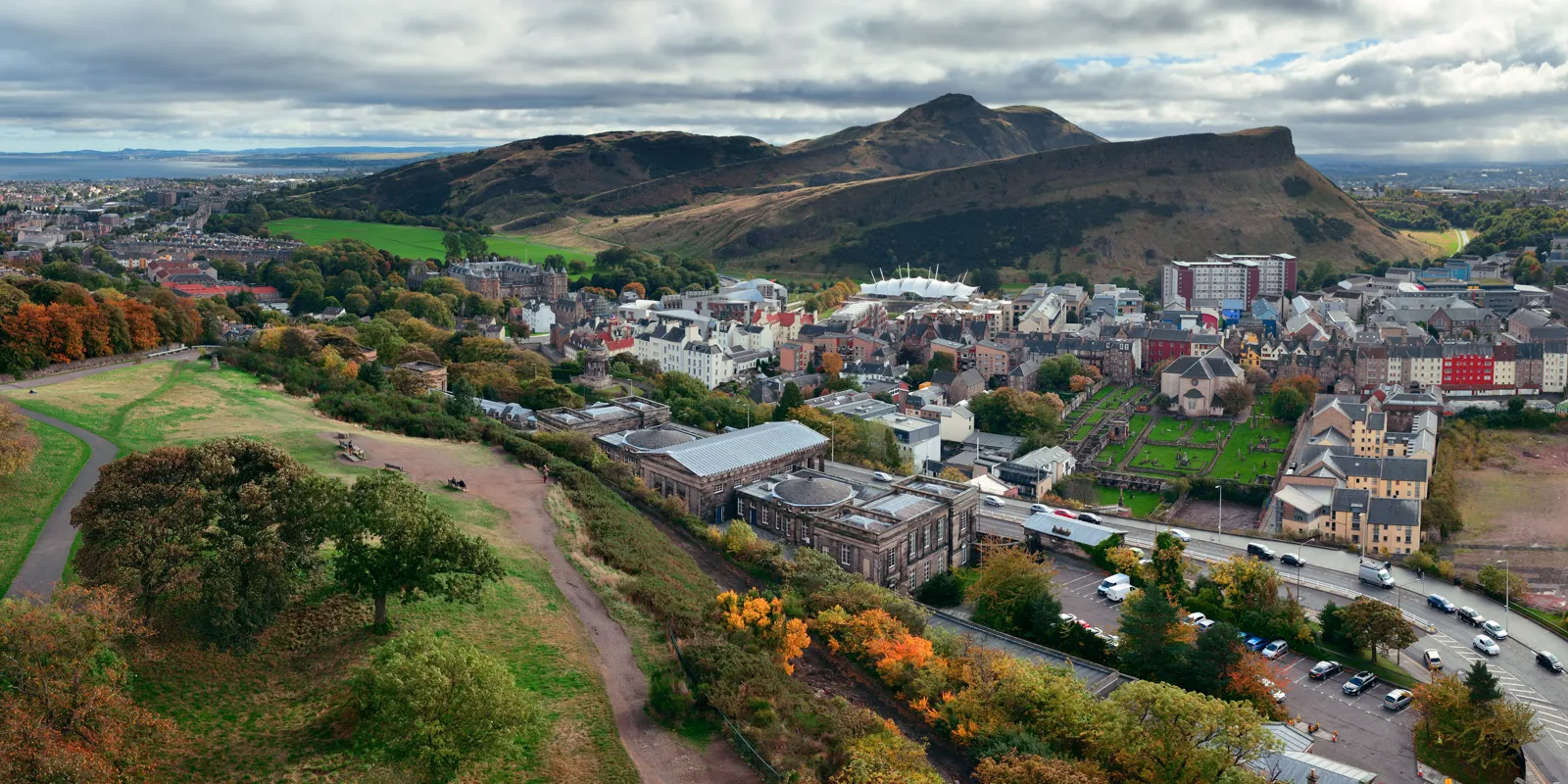
- Pros: light, prices still moderate, pleasant hiking on Arthur’s Seat
- Cons: cool temperatures, especially in the evening, frequent wind
- Our tip: May is the best spring month, to combine Edinburgh with a trip into the Highlands
Summer (June to August): long days and festivals
June and July are mild (17 to 19 °C (63 to 66 °F)) with huge days: it is light until after 10 pm around the solstice. Showers remain frequent, with July and August among the wettest months. August is dominated by the festivals: the Fringe, the International Festival and the Royal Edinburgh Military Tattoo transform the city, which then receives a considerable influx of visitors.
- Pros: the mildest temperatures, bright evenings, an exceptional cultural program in August
- Cons: very expensive and scarce accommodation in August, crowds on the Royal Mile, showers
- Our tip: June or July for the city without the crush; August only if the festivals are your goal, booking 6 months ahead or more
Autumn (September to November): after the festivals
September stays mild (17 °C (63 °F)) and the city breathes after the festivals: it is one of the best months to visit. October is the wettest of the year (76 mm (3.0 in)) but offers autumn colors in the parks and on the hills. November is gray and windy, with days getting shorter and shorter.
- Pros: mild and calmer September, falling prices, autumn atmosphere
- Cons: rain in October, daylight fading fast, wind
- Our tip: September, the best compromise between weather, crowds and prices
Winter (December to February): Christmas, Hogmanay and pub evenings
It is about 7 to 8 °C (45 to 46 °F) in the afternoon and 1 to 2 °C (34 to 36 °F) at night on average; snow is possible but rarely lasts in the city. Days are short: about 7 hours in December. December is livened up by Christmas markets and ends with Hogmanay, which draws a large crowd. January and February are the quietest and cheapest months, apart from Burns Night on January 25, celebrated across Scotland.
- Pros: Christmas atmosphere, low prices in January–February, cozy museums and pubs
- Cons: damp cold, wind, very short days, high prices around Hogmanay
- Who is it for? A cultural city break, year-end holiday lovers, tight budgets in January–February

When to go to Edinburgh by trip type
| Trip | Best time | Where? |
|---|---|---|
| City break and monuments | May–June, September | Castle, Royal Mile, Holyrood, New Town |
| Festivals | August | The whole city, venues and streets of the Old Town |
| Urban hiking | May to September | Arthur’s Seat, Calton Hill, Water of Leith |
| Excursions into the Highlands | May to September | Loch Ness, Glencoe, Stirling |
| Christmas and New Year | December | Princes Street, Old Town |
| Budget | January to March, outside holidays | Everywhere |
Major events in Edinburgh
| Date | Event | Location |
|---|---|---|
| January 25 | Burns Night, honoring the poet Robert Burns: suppers with haggis and poems | Pubs and restaurants |
| Late April | Beltane Fire Festival (check dates every year) | Calton Hill |
| August | Edinburgh Festival Fringe, performing arts festival | The whole city |
| August | Edinburgh International Festival: theater, music, dance | The city’s main venues |
| August | Royal Edinburgh Military Tattoo | Castle Esplanade |
| Late November to early January | Christmas markets and events | Princes Street Gardens, city center |
| December 29 to January 1 | Hogmanay, the Scottish New Year: procession, concerts, fireworks | City center, Princes Street, the Castle |
Edinburgh weather month by month: what to expect
January: Cold (7 °C (45 °F) in the afternoon, 2 °C (36 °F) at night) and dark. Burns Night on the 25th. Prices at their lowest after the holidays.
February: A little drier (53 mm (2.1 in)), still cold. A good month for museums, which are often free.
March: Cool (10 °C (50 °F)). Days lengthen clearly. Few people.
April: The least rainy month (41 mm (1.6 in)), 12 °C (54 °F). Watch the Easter holidays.
May: The sunniest (nearly 195 hours), 15 °C (59 °F). An excellent month for the city and excursions.
June: Mild (17 °C (63 °F)), endless days around the solstice. Crowds increase.
July: The mildest month (19.3 °C (67 °F)), but frequent showers. High season.
August: Festivals: the city is full and prices soar. Book months ahead.
September: Mild (17 °C (63 °F)) and calmer. One of the best months of the year.
October: The wettest (76 mm (3.0 in)), 13 °C (55 °F). Autumn colors on Arthur’s Seat.
November: Gray and cool (10 °C (50 °F)), short days. Quiet and low prices.
December: Cold (7 °C (45 °F)), Christmas markets, then Hogmanay at the end of the month: book early for New Year.
When to book your stay in Edinburgh
For August, book your accommodation 6 months ahead or more: the festivals send prices soaring and much of the supply is taken months before. For Hogmanay, June, July and spring weekends, 2 to 4 months is advisable. In low season, a few weeks’ notice is often enough. Compare flight and train options when you book.
Planning your trip to Edinburgh
- Entry requirements: rules depend on your nationality and can change; see the entry requirements for Scotland in our country guide and check them with official sources before you leave.
- Time difference: Scotland is on the same time as London (GMT in winter, BST in summer) and 5 hours ahead of New York.
- Currency: the pound sterling. Cards are accepted almost everywhere.
- Health and insurance: according to the U.S. State Department (travel.state.gov, last updated August 11, 2025), the UK Government encourages tourists to make sure they are covered by personal health or travel insurance, and U.S. Medicare and Medicaid do not work overseas. For all emergencies, dial 999.
To plan your visit, see our Edinburgh travel guide. For a trip around the rest of the country, see when to go to Scotland and our Scotland travel guide.
Frequently asked questions
What is the best month to visit Edinburgh?
May, June and September: 15 to 17 °C (59 to 63 °F) in the afternoon, long days and reasonable crowds. July is the mildest month but busier, and August is for festival lovers.
Does it rain a lot in Edinburgh?
It rains often, but not much: about 10 to 12 rainy days a month and less than 730 mm (28.7 in) a year according to the Met Office normals. October is the wettest month, April the driest.
When are the Edinburgh festivals?
The Fringe, the International Festival and the Royal Edinburgh Military Tattoo take place in August. Exact dates change every year: check the official websites before booking.
Is Edinburgh cold in winter?
Highs hover around 7 to 8 °C (45 to 46 °F) and lows around 1 to 2 °C (34 to 36 °F) from December to February. Wind and damp sharpen the feeling of cold, and daylight lasts only about 7 hours in December.
When should you visit Edinburgh to avoid the crowds?
From January to March, outside weekends and holidays, and in November. Avoid August and the Hogmanay period if you want calm.
When is Hogmanay in Edinburgh?
Edinburgh’s Hogmanay runs from December 29 to January 1, with the biggest celebrations on December 31. Dates, program and ticketing are published each year: check the official website and book early.
Our sources
- Met Office (UK national weather service): 1991–2020 normals for the Royal Botanic Garden Edinburgh (RBGE) station
- U.S. Department of State, United Kingdom country information (travel.state.gov, last updated August 11, 2025), read on 26 October 2026
- VisitScotland and Forever Edinburgh: Burns Night (January 25) and Edinburgh’s Hogmanay (December 29 to January 1), read on 11 November 2026
- Our methodology
Updated November 2026.