When is the best time to visit Denmark? From May to September, with June, July and August the mildest months (19 to 23 °C (66 to 73 °F) in the afternoon in Copenhagen) and very long days around the solstice. May, June and September offer the best compromise between weather, light and crowds. December also has its fans, for the Christmas markets and a glowing Tivoli, despite the cold and short days. Copenhagen and the rest of the kingdom appear on the map of Denmark. To string together your visits, see whether the Copenhagen Card pays off for your program.
Denmark has a temperate oceanic climate, softened by the sea that almost entirely surrounds it. Summers are cool rather than hot, winters gray and damp at around 0 to 4 °C (32 to 39 °F), and the wind often blows, especially on the Jutland coasts. Rainfall is moderate but spread across the whole year, with a maximum from late summer to autumn. Here is how to choose your period, based on the normals of the Danish Meteorological Institute.

Our travel deals for Denmark
Affiliate links: we earn a commission, at no extra cost to you.
 FlightsKiwi.comCompare flights and airline combinations to Denmark.Compare flights

When to go to Denmark at a glance
- Best times May–June and September; July–August for beaches and relative warmth
- Warmest July, about 22.7 °C (73 °F) in the afternoon in Copenhagen
- Coldest January and February, about 3 °C (37 °F) in the afternoon and nights close to 0 °C (32 °F)
- Driest February and April in Copenhagen (about 23 mm (0.9 in) and 33 mm (1.3 in))
- Wettest late summer and autumn, especially in Jutland
- Highlights Midsummer Eve (Sankt Hans) on June 23, summer festivals, Tivoli in summer, at Halloween and at Christmas
- Avoid if possible November to February if you are looking for light: days are very short
When to go to Denmark by priority
- Best weather: June to August (19 to 23 °C (66 to 73 °F) in the afternoon in Copenhagen), with June the most balanced
- Cheapest: May and September, quieter and cheaper than summer
- Fewest crowds: May and September
- Events: Midsummer Eve (Sankt Hans) on the evening of June 23, Roskilde Festival in late June – early July, Copenhagen Jazz Festival in July, Christmas markets from mid-November to late December
Denmark: the calendar at a glance
✅ Best months: may, June, July, August, September
❌ Period to avoid: January, February, November
Denmark weather month by month
The table below gives the normals for the Copenhagen Airport station (Kastrup), the arrival point for most travelers. Copenhagen, on the island of Zealand, is a little drier than the west of the country, which is exposed to North Sea winds. Since Kastrup is where most travelers arrive, our Copenhagen travel guide helps you organize the first days.
| Month | Avg. max | Avg. min | Rain | Crowds | Prices | Verdict |
|---|---|---|---|---|---|---|
| January | 3.3 °C (38 °F) | 0.7 °C (33 °F) | 37 mm (1.5 in) | Low | Low | ❌ Cold, gray, very short days |
| February | 3.4 °C (38 °F) | 0.8 °C (33 °F) | 23 mm (0.9 in) | Low | Low | ❌ The driest month, but cold |
| March | 6.3 °C (43 °F) | 1.7 °C (35 °F) | 35 mm (1.4 in) | Low | Low to moderate | ⚠️ End of winter, still cool |
| April | 11.3 °C (52 °F) | 4.0 °C (39 °F) | 33 mm (1.3 in) | Moderate (Easter) | Moderate | ⚠️ Cool spring, parks turning green |
| May | 15.8 °C (60 °F) | 7.9 °C (46 °F) | 41 mm (1.6 in) | Moderate | Moderate | ✅ Mild, bright, before the crowds |
| June | 19.2 °C (67 °F) | 11.7 °C (53 °F) | 50 mm (2.0 in) | High | High | ✅ The longest days, Sankt Hans |
| July | 22.7 °C (73 °F) | 14.0 °C (57 °F) | 51 mm (2.0 in) | Very high | High | ✅ The warmest, beaches and festivals |
| August | 21.4 °C (71 °F) | 14.0 °C (57 °F) | 50 mm (2.0 in) | High | High | ✅ Still mild, sea at its warmest |
| September | 17.4 °C (63 °F) | 11.0 °C (52 °F) | 59 mm (2.3 in) | Moderate | Moderate | ✅ Good compromise, more rain |
| October | 12.2 °C (54 °F) | 7.2 °C (45 °F) | 50 mm (2.0 in) | Low to moderate | Moderate | ⚠️ Autumn colors, wind and rain |
| November | 7.6 °C (46 °F) | 3.7 °C (39 °F) | 48 mm (1.9 in) | Low | Low | ❌ Gray and dark, Christmas markets begin |
| December | 4.6 °C (40 °F) | 1.8 °C (35 °F) | 46 mm (1.8 in) | Moderate (Christmas) | Moderate to high | ⚠️ Christmas atmosphere, little light |
Sun and sea: according to VisitDenmark, the official tourist board, April and May have the most hours of sunshine, and sea temperatures average between 17 and 22 °C (63 and 72 °F) in June and July. For swimming, aim for July and August.
Note: the gap between the seasons is less marked than in continental Europe. Even in July, a day of westerly wind can top out at 17 or 18 °C (63 or 64 °F), and heat waves remain short. Conversely, winters are rarely very harsh, but damp and wind make the cold more biting. The factor that changes most with the season is light: day lasts about 17.5 hours in Copenhagen at the summer solstice, and barely 7 hours at the winter solstice.
Denmark’s seasons: pros and cons
Spring (April–May): the parks wake up
Danish spring is cool in April (11 °C (52 °F) in the afternoon in Copenhagen) and becomes pleasant in May (16 °C (61 °F)). The Rosenborg gardens and Copenhagen’s parks bloom, terraces reopen and days lengthen quickly. Tivoli reopens for its summer season in spring. It is a good time to visit cities and museums before the summer vacationers arrive, as long as you pack a windproof jacket.
- Pros: returning light, little rain, prices still moderate, lively cities without the July crowds
- Cons: cool nights, cold sea, frequent wind on the coasts
- Our tip: May is the best spring month for a city break in Copenhagen or Aarhus
Summer (June to August): high season
Summer is the best season to enjoy the country outdoors: 19 to 23 °C (66 to 73 °F) in the afternoon, endless evenings and a social life turned outward, from the harbor baths of Copenhagen to the beaches of Jutland. It is also the festival season, including Roskilde in late June – early July, and Midsummer Eve, celebrated on the evening of June 23 with bonfires on the beaches. July is when Danes take their main vacations: some restaurants and shops close for a few weeks and coastal accommodation is snapped up.
- Pros: mild temperatures, very long days, all sites open, swimming possible for the brave
- Cons: highest prices, crowds in Copenhagen and Skagen, showers always possible
- Who is it for? Families (Legoland, beaches), cycling, festival and island lovers
Autumn (September–October): calm returns
September stays mild (17 °C (63 °F) in the afternoon) and tourist sites empty out after the school year starts. It is, however, a wetter month, like October, when autumn storms begin to sweep the country. The beech forests take on their colors in October. Tivoli decorated for Halloween livens this period up a little.
- Pros: fewer visitors, falling prices, pleasant low light, autumn colors
- Cons: more rain and wind, days that shorten quickly in October
- Who is it for? Travelers who favor museums, food and quiet cities
Winter (November to March): hygge and Christmas markets
Winter is gray, damp and dark: about 3 to 5 °C (37 to 41 °F) in the afternoon from December to February, nights around 0 °C (32 °F), and a sun that sets around 3:30 pm in Copenhagen in December. Snow is possible but rarely lasts long. Yet this is the season of « hygge », the Danish art of living made of candles, cozy cafés and evenings by the fire. From mid-November to late December, Tivoli and city centers host Christmas markets. January and February are the quietest and cheapest months.
- Pros: Christmas atmosphere, few tourists in January–February, low prices outside the holidays
- Cons: very little light, gray and windy weather, many outdoor attractions closed
- Good to know: many museums, castles and theme parks have reduced hours or close in winter; Legoland Billund, for example, only operates in season: check dates before you go
When to go to Denmark by region
The country consists of the Jutland peninsula, attached to Germany, and several hundred islands, including Funen (Odense), Zealand (Copenhagen) and, isolated in the Baltic Sea, Bornholm. Comparison of the normals for three DMI stations:
| Month | Copenhagen (airport) | Aarhus (airport) | Skagen |
|---|---|---|---|
| January | 3.3 °C (38 °F) / 37 mm (1.5 in) | 3.5 °C (38 °F) / 56 mm (2.2 in) | 3.0 °C (37 °F) / 52 mm (2.0 in) |
| February | 3.4 °C (38 °F) / 23 mm (0.9 in) | 3.8 °C (39 °F) / 38 mm (1.5 in) | 2.7 °C (37 °F) / 32 mm (1.3 in) |
| March | 6.3 °C (43 °F) / 35 mm (1.4 in) | 6.4 °C (44 °F) / 49 mm (1.9 in) | 4.6 °C (40 °F) / 40 mm (1.6 in) |
| April | 11.3 °C (52 °F) / 33 mm (1.3 in) | 11.4 °C (53 °F) / 38 mm (1.5 in) | 8.4 °C (47 °F) / 34 mm (1.3 in) |
| May | 15.8 °C (60 °F) / 41 mm (1.6 in) | 15.8 °C (60 °F) / 46 mm (1.8 in) | 13.7 °C (57 °F) / 44 mm (1.7 in) |
| June | 19.2 °C (67 °F) / 50 mm (2.0 in) | 18.9 °C (66 °F) / 63 mm (2.5 in) | 17.2 °C (63 °F) / 55 mm (2.2 in) |
| July | 22.7 °C (73 °F) / 51 mm (2.0 in) | 21.4 °C (71 °F) / 60 mm (2.4 in) | 19.5 °C (67 °F) / 49 mm (1.9 in) |
| August | 21.4 °C (71 °F) / 50 mm (2.0 in) | 21.0 °C (70 °F) / 61 mm (2.4 in) | 19.2 °C (67 °F) / 62 mm (2.4 in) |
| September | 17.4 °C (63 °F) / 59 mm (2.3 in) | 17.1 °C (63 °F) / 73 mm (2.9 in) | 15.5 °C (60 °F) / 76 mm (3.0 in) |
| October | 12.2 °C (54 °F) / 50 mm (2.0 in) | 12.1 °C (54 °F) / 68 mm (2.7 in) | 11.4 °C (53 °F) / 76 mm (3.0 in) |
| November | 7.6 °C (46 °F) / 48 mm (1.9 in) | 7.6 °C (46 °F) / 63 mm (2.5 in) | 7.3 °C (45 °F) / 66 mm (2.6 in) |
| December | 4.6 °C (40 °F) / 46 mm (1.8 in) | 4.6 °C (40 °F) / 59 mm (2.3 in) | 4.7 °C (40 °F) / 59 mm (2.3 in) |
Copenhagen and Zealand
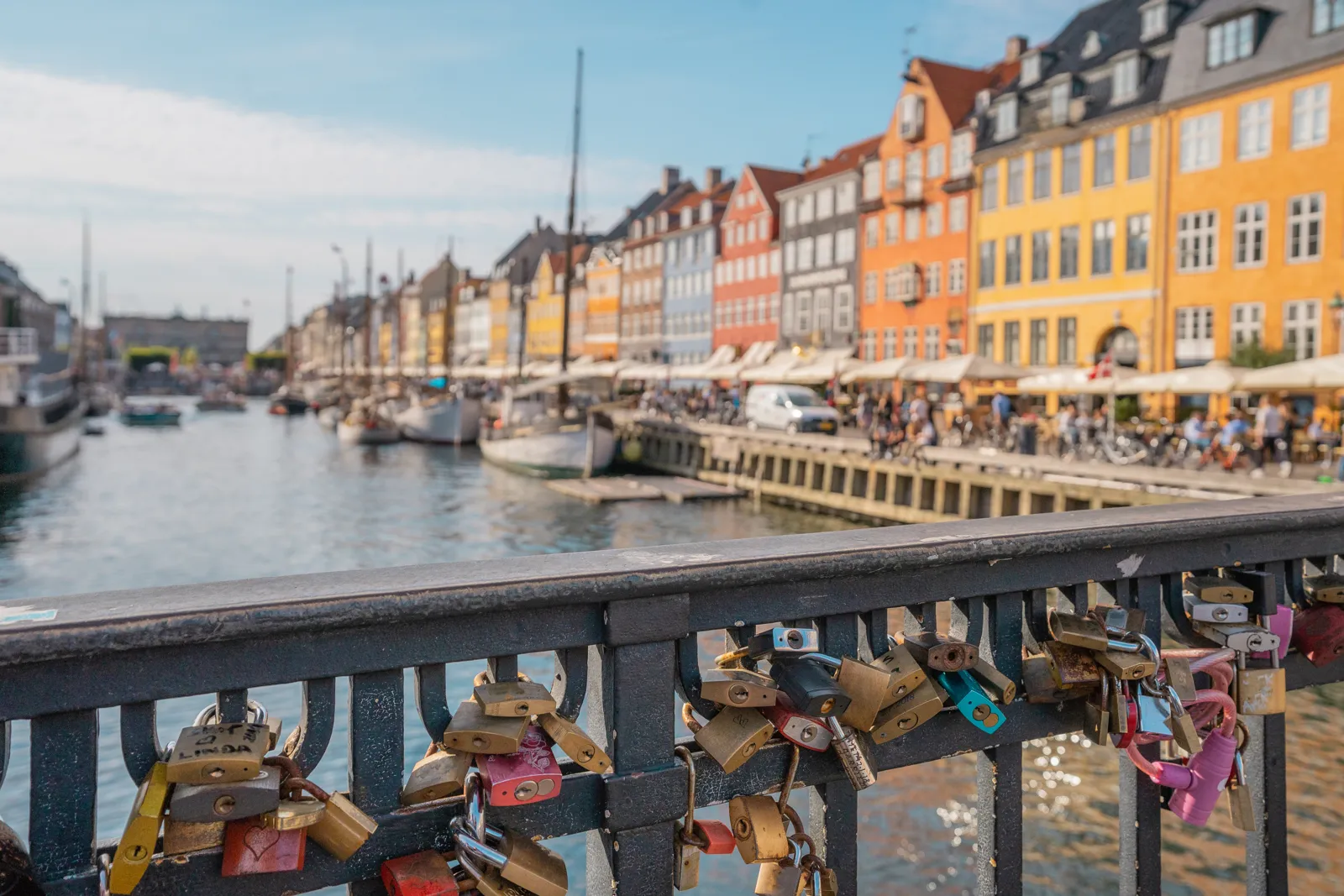
The capital is the driest region and one of the mildest in summer. It can be visited all year, but May to September lets you enjoy the quays of Nyhavn, the harbor baths and bike rides. North Zealand (Kronborg Castle in Helsingør, the Louisiana museum) and Roskilde combine easily as excursions. In December, Tivoli and the Christmas markets make up for the lack of light.
Jutland (Aarhus, Ribe, Billund)
West Jutland, facing the North Sea, is windier and wetter, especially from September to December. Aarhus, on the east coast, has temperatures close to Copenhagen. Aim for June to August for the west-coast beaches and Legoland Billund, and May to June or September for the cities.
Skagen and North Jutland
At the northern tip of the country, Skagen is clearly cooler: 19.5 °C (67 °F) in the afternoon in July, against 22.7 °C (73 °F) in Copenhagen. Its famous light, which attracted painters in the 19th century, is at its best from June to August, but that is also when the small town is busiest. Autumn there is rainy and windy.
Funen and the southern islands
Odense, Andersen’s hometown, and the South Funen archipelago are best explored from May to September, by bike or by ferry between the islands. Outside the season, some ferry links are less frequent.
Bornholm
Isolated in the Baltic Sea, Bornholm is best visited from June to August, for its beaches, rocks and round churches. Many accommodations and restaurants close outside the season.
When to go to Denmark by trip type
| Your trip | Best time | Where? |
|---|---|---|
| City break in Copenhagen | May–June, September | Copenhagen |
| Beaches and swimming | July–August | West coast of Jutland, Bornholm, North Zealand |
| Cycling and islands | June to September | South Funen, Bornholm, Zealand |
| Family vacation | July–August (or spring holidays) | Legoland Billund, Tivoli, Den Gamle By in Aarhus |
| Music festivals | Late June to July | Roskilde, Copenhagen, Aarhus |
| Christmas markets | Mid-November to December | Copenhagen (Tivoli, Nyhavn), Aarhus, Odense |
| Castles and Viking history | May to September | Helsingør, Roskilde, Ribe, Jelling |
| Budget | January–March, November | Copenhagen outside the holidays, Aarhus, Odense |
Major events to plan your trip around
| Period | Event | Location |
|---|---|---|
| Spring to September | Tivoli summer season | Copenhagen |
| Evening of June 23 | Midsummer Eve (Sankt Hans): bonfires on beaches and in parks | Nationwide |
| Late June – early July | Roskilde Festival (music) | Roskilde |
| July | Copenhagen Jazz Festival | Copenhagen |
| Mid-October to early November | Tivoli decorated for Halloween | Copenhagen |
| Mid-November to late December | Christmas markets and Christmas at Tivoli | Copenhagen, Aarhus, Odense |
| December 24 | Christmas Eve, a family celebration: many shops closed | Nationwide |
Denmark month by month: what to expect
January: The heart of winter: about 3 °C (37 °F) in the afternoon, nights close to 0 °C (32 °F) and just over 7 hours of daylight. A quiet city and low prices, ideal for museums and cafés.
February: The driest month in Copenhagen (23 mm (0.9 in)), but still cold and gray. Few visitors, except during school holidays.
March: The end of winter (6 °C (43 °F)). Days lengthen clearly. Outdoor attractions gradually reopen late in the month or in April.
April: Cool spring (11 °C (52 °F)). Parks turn green, Easter brings a little crowding. A good month for Copenhagen without the crowds.
May: One of the best months: 16 °C (61 °F), little rain, bright evenings. Terraces fill up and excursions to Helsingør and Roskilde are pleasant.
June: The month of the longest days, 19 °C (66 °F) in the afternoon. Midsummer Eve on June 23, start of the festival season. A very good month for the whole country.
July: The warmest month (22.7 °C (73 °F) in Copenhagen). Danish main vacations: beaches, festivals and crowds. Book early.
August: Close to July, with the sea at its warmest. Danish vacations end around mid-August, after which crowds ease.
September: Still 17 °C (63 °F) in the afternoon, fewer people but more rain (59 mm (2.3 in)). A good compromise for cities and cycling.
October: Cooler (12 °C (54 °F)), windy, autumn colors in the forests. Tivoli decorated for Halloween. Days shorten quickly.
November: Gray and dark (7.6 °C (46 °F)). A quiet month until the Christmas markets open, from mid-November.
December: Cold (4.6 °C (40 °F) in the afternoon), barely 7 hours of daylight, but Christmas atmosphere across the country. Prices rise around the holidays.
When to book your trip to Denmark
Denmark is an expensive destination and Copenhagen’s hotel capacity fills quickly in summer. For a stay from June to August, book your accommodation 2 to 3 months ahead, more if your stay coincides with a big festival or if you are aiming for a holiday house on the Jutland coast, very popular with Danes and Germans. For the Christmas markets, one to two months is generally enough. Outside the season, a few weeks’ notice is often sufficient. Compare flight and train options when you book.
Planning your trip to Denmark
- Entry requirements: rules depend on your nationality and can change; see the entry requirements for Denmark in our country guide and check them with official sources before you leave.
- Time difference: Denmark is on Central European Time (UTC+1, or UTC+2 in summer): 1 hour ahead of London and 6 hours ahead of New York.
- Currency: the Danish krone (DKK), not the euro. Cards are accepted almost everywhere, including for small amounts. Our currency converter helps you estimate prices.
- Health: the UK FCDO (GOV.UK, updated 11 August 2026) advises checking vaccine recommendations at least 8 weeks before your trip and having appropriate travel insurance; dial 112 and ask for an ambulance in an emergency.
- Weather: whatever the season, pack a waterproof and windproof jacket; in winter, warm clothing and a hat.
To go further, see our complete Denmark travel guide. Hesitating between several destinations? See our ideas for where to go in June and where to go in December, or compare with the best time to visit Norway and when to go to Sweden. In summer, see also where to go in July.
Frequently asked questions
What is the best month to visit Denmark?
June is often the most balanced: about 19 °C (66 °F) in the afternoon in Copenhagen, the longest days of the year and crowds still lower than in July. May and September are good alternatives, quieter and cheaper.
Is Denmark very cold in winter?
It is cool rather than very cold: in January and February, average highs are about 3 °C (37 °F) at Copenhagen Airport and lows close to 1 °C (34 °F), according to the Danish Meteorological Institute’s 1991–2020 normals. Damp and wind sharpen the feeling of cold, and days are very short.
Can you swim in Denmark?
Yes, in July and August, on the beaches of Jutland, Bornholm or Zealand, and in the harbor baths of Copenhagen. The water stays cool. Swim in supervised areas and find out about currents, especially on the North Sea coast.
What is the wettest month in Denmark?
In Copenhagen, September is the wettest month (about 59 mm (2.3 in)) and February the driest (about 23 mm (0.9 in)). On the west coast and in Skagen, autumn is clearly wetter, with over 70 mm (2.8 in) in September and October.
When are the Christmas markets in Copenhagen?
Generally from mid-November to late December, at Tivoli, Nyhavn and in the city center. Exact dates change every year: check them before booking.
What is the cheapest time to visit Denmark?
January, February, March and November, outside school holidays. Accommodation prices peak in July, during the big festivals and around the year-end holidays.
When should you go to Copenhagen?
From May to September to enjoy the quays, the harbor baths and cycling: about 16 °C (61 °F) in the afternoon in May, 19 to 23 °C (66 to 73 °F) from June to August, 17 °C (63 °F) in September (DMI normals, Copenhagen Airport). May, June and September are less busy than July. In December, Tivoli and the Christmas markets make up for the cold and lack of light.
What is the temperature in Copenhagen in winter?
About 3 to 5 °C (37 to 41 °F) in the afternoon from December to February and nights close to 1 °C (34 °F) at Copenhagen Airport, according to the DMI 1991–2020 normals. Daylight lasts only about 7 hours at the winter solstice.
Our sources
- Danish Meteorological Institute (DMI): normals for the Copenhagen Airport and Aarhus Airport stations (temperatures 1991–2020, rainfall 1971–2000) and Skagen (1971–2000)
- UK FCDO, foreign travel advice for Denmark (GOV.UK, updated 11 August 2026), read on 26 October 2026
- VisitDenmark: « Weather in Denmark » (sunshine, sea temperature), Sankt Hans Aften (visitdenmark.com) and Roskilde Festival, read on 11 November 2026
- Tivoli Gardens, opening hours and seasons, read on 11 November 2026
- Our methodology
Updated November 2026.