Using this Greece travel guide starts with a choice between the mainland and its ancient sites (Athens, Delphi, Meteora, the Peloponnese) and the islands, spread across two seas (the Cyclades, Crete, the Dodecanese, the Ionian Islands). In the eurozone and the Schengen area, with no visa needed for short tourist stays by US or UK citizens, it is an easy destination to organise. This guide covers what to see, what to do, itineraries from 7 days to 2 weeks, the budget and practical information.
To locate the cities, regions, relief, national parks and airports, see our map of Greece.
EntrySchengen area: no visa for up to 90 days for US citizens (tourism or business) and UK citizens (in any 180-day period) · travel.state.gov · GOV.UKUS: 6 months’ passport validity recommended; UK: valid 3 months after leaving the Schengen area
Electricitycheck voltage and plug types before you go · plugsReference: IEC World Plugs
The best time runs from mid-April to June and from September to mid-October: pleasant warmth, little rain, sea warm enough for swimming for much of these months and fewer people than in midsummer. July and August are peak season on the islands, with intense heat, the meltemi wind in the Aegean, prices at their highest and a high wildfire risk (the UK FCDO notes a high risk from April to October). From November to March it is mild but rainy and most islands slow right down: this is city-break season for Athens. All the details, region by region and month by month, are in our article on the best time to visit Greece.
What to see in Greece: the highlights
Athens
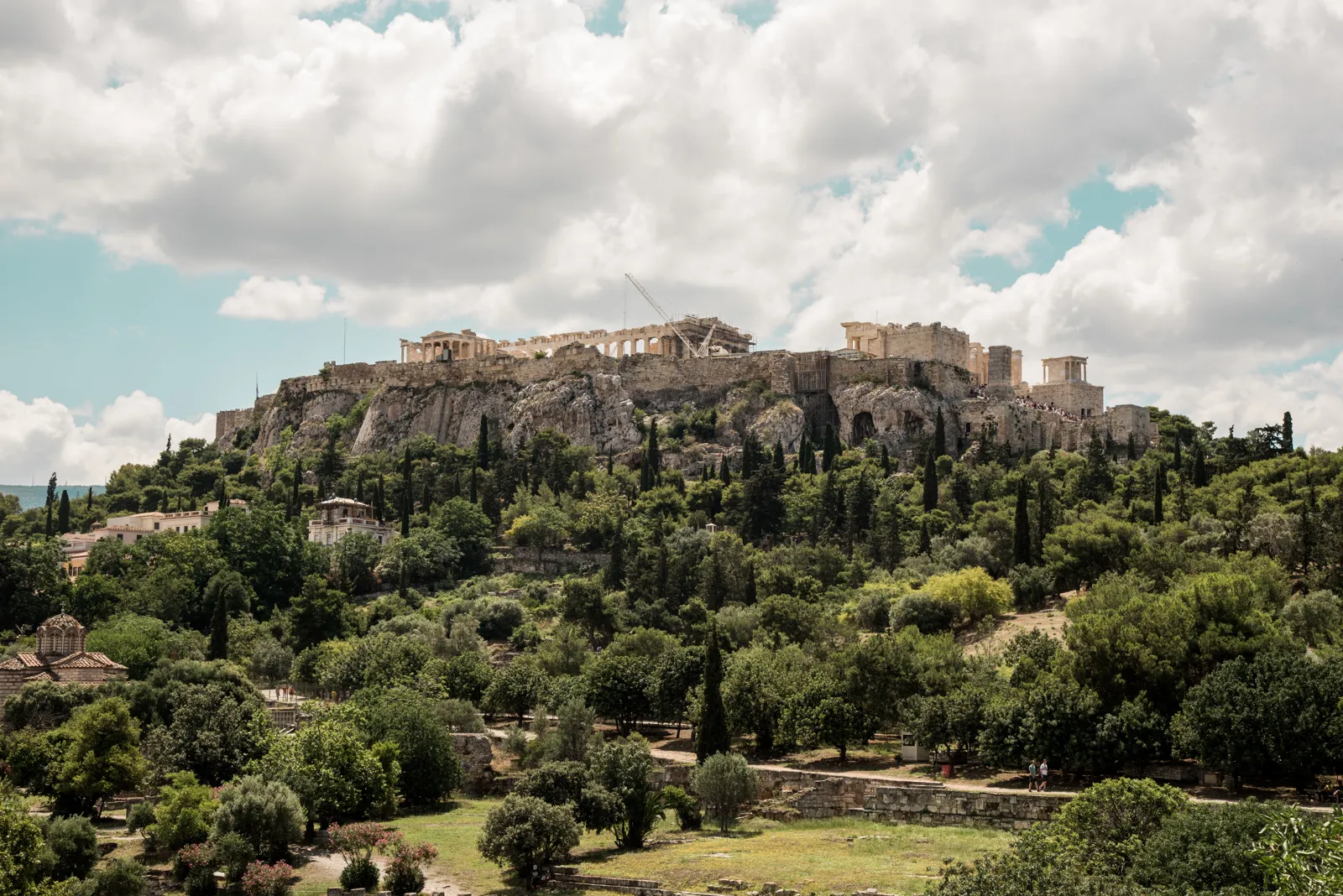
The Acropolis of Athens
The capital deserves at least two days. The Acropolis and the Parthenon, the Acropolis Museum, the Ancient Agora, the Temple of Olympian Zeus and the National Archaeological Museum are the essential visits. The Plaka district at the foot of the Acropolis and Lycabettus Hill for the view complete the programme. In summer, visit the sites at opening time: the heat builds quickly. The port of Piraeus, linked by metro, is the departure point for many ferries to the islands. Early visits, Piraeus by metro: a two-day stay in Athens links easily with the ferries to the islands.
Delphi and Meteora
About two and a half hours’ drive from Athens, Delphi is the ancient sanctuary of Apollo, clinging to the slopes of Mount Parnassus. Further north, Meteora is a group of Orthodox monasteries built on top of rock pillars above the town of Kalambaka. Both sites are World Heritage-listed and combine well over two or three days on the road.
At the foot of Parnassus, our guide to visiting Delphi covers tickets, opening hours and the route through the sanctuary.
The Peloponnese
This large peninsula south-west of Athens holds many of the ancient sites: Mycenae, the theatre of Epidaurus, and Olympia, birthplace of the Olympic Games. Add Nafplio, the first capital of modern Greece, the Byzantine town of Monemvasia and the wild Mani region. The Peloponnese is best explored by car.
The Cyclades: Santorini, Mykonos, Naxos, Paros, Milos
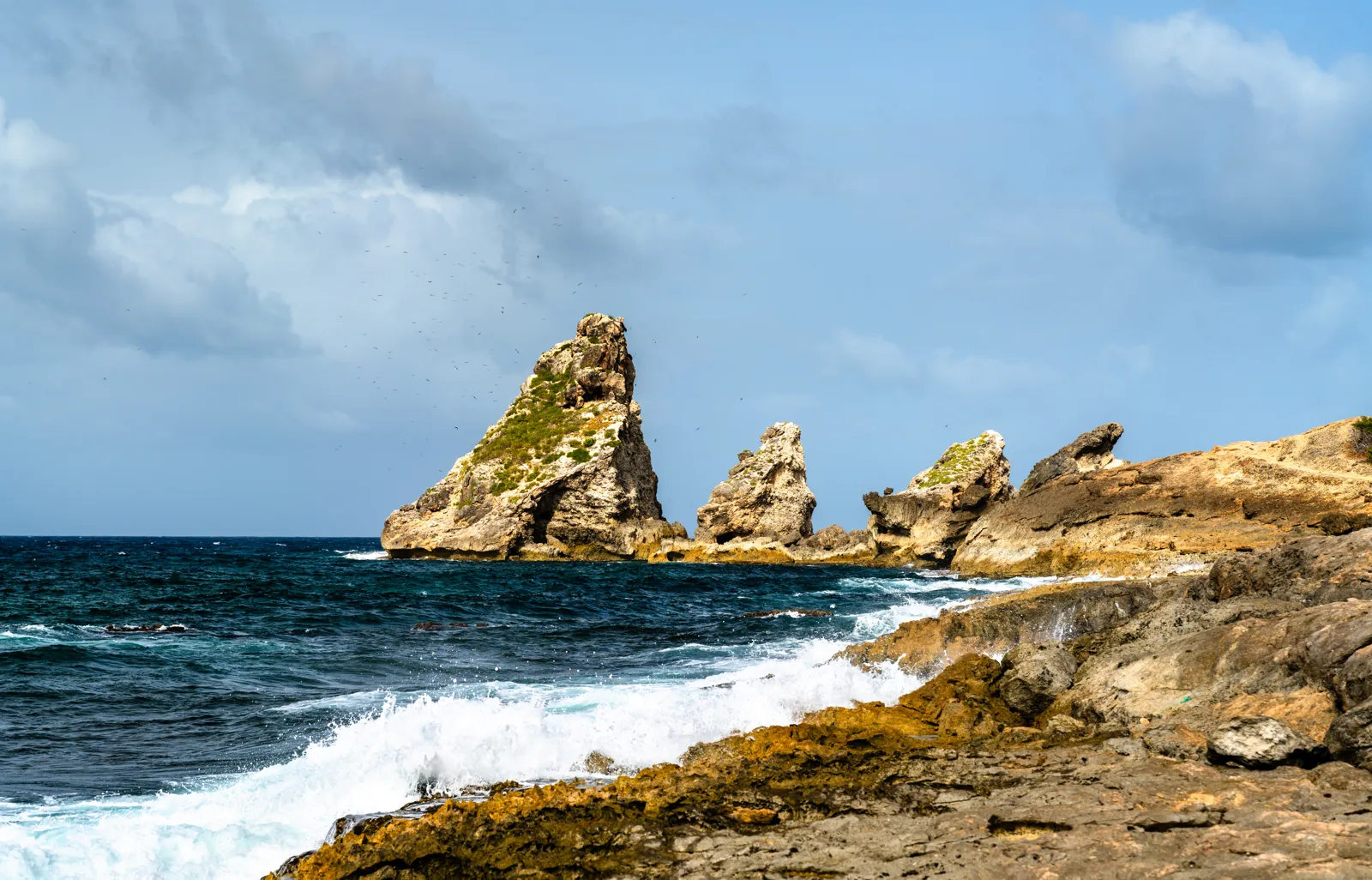
This is the classic image of Greece: whitewashed villages, blue-domed chapels and coves. Santorini is known for its caldera and sunsets, Mykonos for its nightlife, but both are very busy and expensive in summer. Naxos and Paros, larger and more varied, are more affordable; Milos is famous for its seaside rock formations. Ferries link the islands, mainly from May to October. More expensive and crowded in summer, the best-known Cyclades require planning: planning a trip to Mykonos starts with choosing when to go.
Crete
The largest Greek island can fill a one- or two-week stay on its own: the Minoan palace of Knossos near Heraklion, the Venetian old towns of Chania and Rethymno, the Samaria Gorge for hiking, and the beaches of Balos and Elafonisi in the west. It is also where the swimming season lasts longest. Details in our Crete guide. With the longest swimming season in Greece, the Crete weather month by month shows how far you can stretch your holiday.
Rhodes and the Dodecanese
Close to the Turkish coast, Rhodes is known for its fortified medieval old town, a World Heritage Site, and for the acropolis of Lindos overlooking the sea. The neighbouring islands (Symi, Kos, Patmos) are reached by boat. Like Crete, Rhodes stays pleasant until October. Medieval old town, Lindos and nearby islands: our Rhodes travel guide helps you organise these boat trips.
Corfu and the Ionian Islands
In the west of the country, the Ionian Islands are greener than the Aegean ones. Corfu appeals with its Venetian-influenced old town and wooded coasts; Kefalonia and Zakynthos with their beaches beneath cliffs. Summer is a little less windy than in the Cyclades. Wooded coasts and less wind than in the Aegean: the Corfu weather month by month lets you compare with the Cyclades.
Thessaloniki
Greece’s second city, Thessaloniki is a lively student city known for its UNESCO-listed Byzantine churches and early Christian monuments, its seafront promenade and its food. It is a good base for the beaches of Halkidiki and for a tour of the north.
Epirus and Zagori
In the north-west, Epirus is mountain Greece: the stone villages of Zagori, linked by old arched bridges, and the Vikos Gorge attract hikers. Ioannina, on its lake, makes a good base. The region combines with Meteora or with Corfu, opposite on the coast.
Things to do in Greece
Beyond the sites, a trip to Greece is built around a few experiences:
Visit the ancient sites: the Acropolis, Delphi, Mycenae, Epidaurus, Olympia, Knossos. In summer, go at opening time.
Island-hop by ferry: two or three nearby islands in the same archipelago (Naxos, Paros and Santorini, for example) rather than islands far apart.
Hike: the Samaria Gorge in Crete, trails around Meteora, the villages of Zagori in Epirus.
Enjoy the beaches: Crete (Balos, Elafonisi), Milos, Naxos, the coasts of Kefalonia and Zakynthos.
Taste Greek food: meze, Greek salad, tzatziki, moussaka, souvlaki and gyros, grilled fish in harbour tavernas.
Join a local festival: Orthodox Easter and 15 August are the high points of the year (expect crowds and book ahead).
Which Greek island should you choose?
Island
Who is it for?
Good to know
Santorini
Caldera views, sunsets, honeymoons
Very busy and expensive in July–August
Naxos
First trip, families, beaches and villages
Large, varied island with lower prices
Paros
A balance of beaches, villages and nightlife
Well connected by ferry
Milos
Coves and rock formations
Quieter, a vehicle is useful
Crete
Longer stays: sites, hiking, beaches
The longest swimming season
Rhodes
Medieval old town and beaches
Pleasant until October
Corfu
Green landscapes, Venetian old town
Less wind in summer than the Cyclades
Rough comparison, based on the descriptions in this guide.
Itinerary ideas for Greece
7 to 10 days: Athens and the Cyclades
Days 1 to 3: Athens (Acropolis, museums, Plaka)
Days 4 to 6: ferry to Naxos or Paros
Days 7 and 8: Santorini
Days 9 and 10: back to Athens by ferry or plane, or fly home from Santorini depending on the season
2 weeks: the mainland and Crete
Days 1 to 3: Athens
Days 4 to 6: the Peloponnese by car (Mycenae, Epidaurus, Nafplio, Olympia)
Days 7 and 8: Delphi, then Meteora
Day 9: back to Athens, then ferry or flight to Crete
Days 10 to 14: Crete (Heraklion and Knossos, Rethymno, Chania, the western beaches)
10 days: a mainland road trip
Days 1 and 2: Athens
Days 3 to 5: the Peloponnese (Nafplio, Mycenae, Epidaurus, Monemvasia or the Mani)
Day 6: Olympia
Day 7: Delphi
Days 8 and 9: Meteora, with a possible extension to Zagori
Day 10: back to Athens
Budget for a trip to Greece
Meals and transport in Greece are reasonably priced by Western European standards, but accommodation rises sharply in summer on the best-known islands. Approximate amounts per person per day, excluding international flights:
Item
Tight budget
Comfortable
Accommodation (based on a shared double room)
about €25–45
about €70–150
Meals
about €20–30 (gyros, simple tavernas)
about €45–70
Transport (bus, ferries, rental)
about €10–20
about €25–40
Activities and sightseeing
about €5–15
about €15–40
Total per day
about €60–90
about €150–250
Rough estimates that vary with the season and island. Expect to pay considerably more in July–August on Santorini and Mykonos.
Ferry tickets add up if you hop between several islands: fast boats cost more than conventional ferries. Admission to the major ancient sites varies with the season.
Getting around Greece
Ferries: the main way to reach the islands, from Piraeus, Rafina or Lavrio near Athens. Sailings are more frequent from May to October. The meltemi can cause delays or cancellations in summer, and GOV.UK warns of regular strikes, sometimes called at short notice, that can affect ferries, buses, trains and flights: avoid taking a ferry the day before your flight home.
Plane: domestic flights link Athens with the main islands (Crete, Rhodes, Santorini, Corfu…) and Thessaloniki: handy to save time.
Car: the most flexible option for the Peloponnese, the north and large islands such as Crete. Greek law requires US visitors to carry a valid US licence and an International Driving Permit, even if the rental company does not ask for it; the State Department notes that Greece has one of the highest traffic fatality rates in the EU (travel.state.gov, last updated February 19, 2026). UK photocard licences can be used; rental companies may require a year of driving experience, a higher minimum age or an IDP (GOV.UK, updated 11 August 2026). Avoid driving in central Athens and leave nothing visible in the vehicle.
Bus: the intercity bus network (KTEL) serves most mainland towns and the large islands at moderate prices.
In Athens: metro, tram and bus; the metro links the airport with the centre and the port of Piraeus.
Scooters and quads: widely rented on the islands, but GOV.UK reports serious injuries and deaths from quad bike accidents every year. A moped requires a licence with at least category A1, helmets are compulsory, and quad biking is excluded from many insurance policies; the State Department adds that small motorbike and ATV rental firms often carry no insurance.
Getting there
Greece’s main international airport is Athens (ATH), followed by Thessaloniki (SKG) and, especially in summer, the island airports such as Heraklion (HER), Rhodes (RHO), Corfu (CFU) and Santorini (JTR). Check current routes from your home airport with the airlines and the airports.
Where to stay in Greece
In Athens, the Plaka, Monastiraki and Koukaki districts let you explore the historic centre on foot. On the islands, people usually stay in the main town (often called « Chora »), convenient for ferries and restaurants, or near a beach, quieter but sometimes isolated without a vehicle. On Santorini, accommodation with caldera views (Fira, Oia, Imerovigli) is the most expensive. For popular caldera-view stays, the Santorini weather month by month helps you pick a cheaper period.
Options range from rooms in private homes and small family guesthouses to rental apartments and upscale hotels. On the islands, many establishments open only from April–May to October. In July and August, book several months ahead.
Entry requirements for Greece, health and safety
US citizens: Greece is in the Schengen area, so you may enter without a visa for up to 90 days for tourism or business. Greek law requires three months of passport validity beyond your departure date, but the State Department recommends at least six months. You must be able to show proof of sufficient funds (often met with credit cards) and a return ticket if asked; a passport reported lost or stolen will be refused (U.S. Department of State, travel.state.gov, last updated February 19, 2026).
UK citizens: no visa for up to 90 days in any 180-day period as a tourist. Your passport must have been issued less than 10 years before the day you arrive and be valid at least 3 months after the day you plan to leave the Schengen area; you may be asked for a return ticket. Under the EU Entry/Exit System, the Greek authorities have indicated that they will not collect fingerprints and photos from UK travellers: follow the advice of officials on the ground (GOV.UK, updated 11 August 2026).
ID: always carry your passport; the police may not accept a copy (GOV.UK).
Health: for vaccines, GOV.UK refers to TravelHealthPro and travel.state.gov advises being up to date on CDC-recommended vaccinations. Bring prescription medicines with a doctor’s letter, as some medicines are strictly controlled. UK travellers can use a GHIC or EHIC for state healthcare; whatever your nationality, take out travel insurance covering medical costs. Swim at supervised beaches.
Wildfires and heat: GOV.UK warns of a high wildfire risk from April to October. Make sure your phone is set to receive emergency alerts, and follow @112Greece for official updates. Causing a wildfire is a criminal offence even if unintentional. Emergency number: 112.
Earthquakes: tremors and earthquakes occur regularly (travel.state.gov); learn the safety procedures and follow the authorities’ instructions.
Theft: thefts of passports, wallets and bags are common on the metro and in crowded tourist places, particularly in central Athens (GOV.UK). Use your hotel safe.
Practical tips for Greece
Money: the euro. Carry some cash for village tavernas, small islands and some rental agencies.
Mobile data: check your home carrier’s roaming charges before you leave. Wi-Fi is widespread in accommodation and cafés, and an eSIM is a simple way to get local data.
Timing: Greeks eat late, often after 9 pm in summer. Many ancient sites close earlier in winter: check opening hours.
In churches and monasteries: cover shoulders and knees; at Meteora, appropriate dress is required.
Etiquette: an open palm pushed towards someone is an insulting gesture. Tipping is not compulsory, but leaving a few euros at restaurants is customary.
Nature: never light fires outdoors (GOV.UK says it is both dangerous and illegal) and never throw away cigarette butts in summer.
Greece: who is it for?
Culture and history: yes: the Acropolis, Delphi, Meteora, Mycenae, Epidaurus, Olympia, Knossos. In summer, visit the sites at opening time.
Beach: yes from June to September: the Cyclades, Crete (Balos, Elafonisi), Milos, the Ionian Islands. Crete and Rhodes stay pleasant until October.
Hiking: yes outside summer: the Samaria Gorge, the Meteora trails, the Zagori villages and the Vikos Gorge.
Road trip: yes on the mainland: the Peloponnese, Delphi and Meteora are best explored by car.
Tight budget: fairly: roughly €60–90 per person per day; Naxos and Paros are more affordable than Santorini or Mykonos.
Nightlife: yes on Mykonos, very busy and expensive in summer.
Not for short stays if you are a US or UK citizen: up to 90 days for tourism without a visa (in any 180-day period for UK citizens). The State Department recommends six months’ passport validity for US citizens; UK passports must be valid 3 months after you leave the Schengen area. Check travel.state.gov or GOV.UK before you leave.
When is the best time to visit Greece?
Mid-April to June and September to mid-October: pleasant warmth, little rain and fewer people than in July–August. Crete and Rhodes stay pleasant for the beach until October.
How much does a week in Greece cost?
Excluding flights, allow roughly €60–90 per person per day on a budget trip and €150–250 for a comfortable one. Prices soar in July–August, especially on Santorini and Mykonos.
How many days do you need to visit Greece?
One week lets you see Athens and two Cycladic islands. Two weeks give you time to add the Peloponnese, Delphi and Meteora, or to combine the mainland and Crete.
Which Greek islands should you choose for a first trip?
Naxos and Paros for a good balance of beaches, villages and prices; Santorini for the caldera, ideally outside July–August; Crete for a longer, more varied stay; Corfu for greener landscapes.
Is it safe to travel to Greece?
Yes, with the usual precautions: watch out for thieves on the metro and in crowded tourist places, especially in central Athens, and in summer for wildfires and heat. Check the latest advice on travel.state.gov or GOV.UK before you leave.
What should you not miss in Greece?
Visit the Acropolis and the Acropolis Museum in Athens, see Delphi or Meteora, spend a few days on one or two Cycladic islands and, if you have time, explore Crete or the Peloponnese.
Transparency: this page contains affiliate links, labelled as such. If you book through them we may earn a commission at no extra cost to you; it does not influence our content or recommendations. How we fund the site.