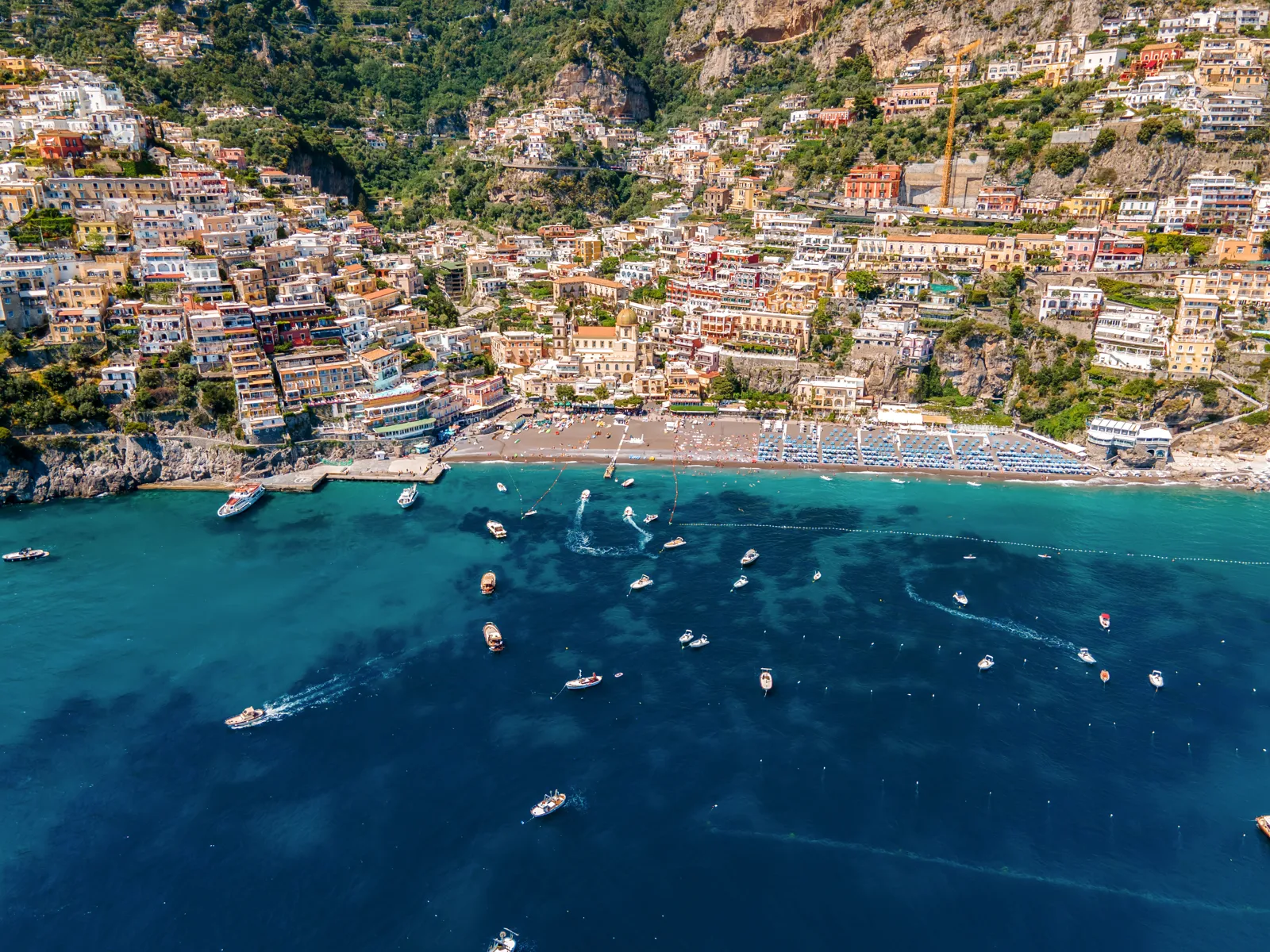
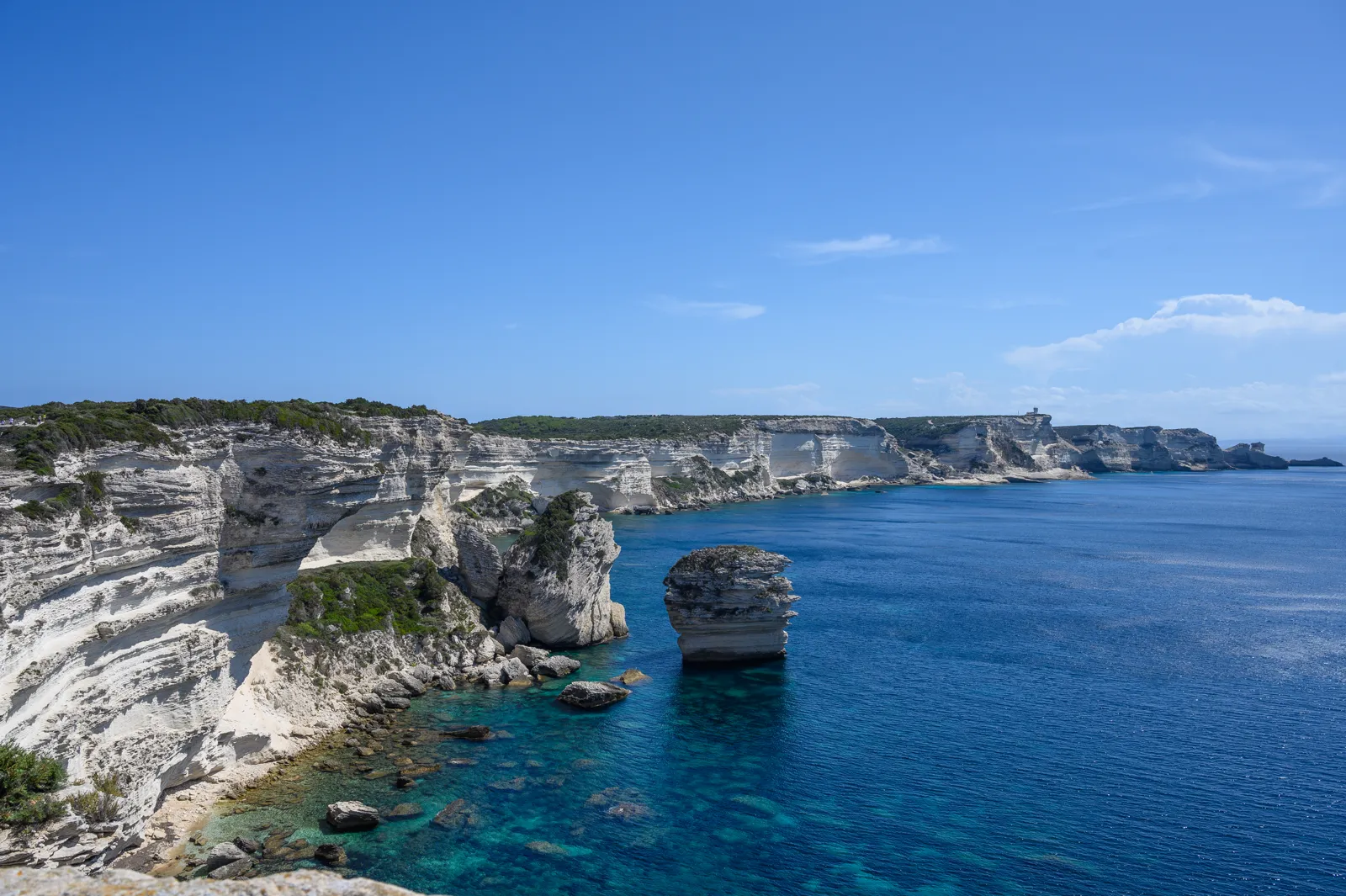
For a Crete travel guide in one sentence: allow a week to discover the centre and the west (Heraklion, Knossos, Chania, Balos) and two weeks to tour the island by car, with a budget of roughly €65 to €120 per person per day on a small budget, excluding flights. The largest Greek island stretches about 260 km (162 mi) from west to east, between mountains over 2,400 m (7,900 ft) and beaches on three seas. You visit the palaces of the Minoan civilisation, Venetian harbours, gorges and mountain villages. This guide helps you choose your stops, itinerary and season. If you are weighing it against the Ionian Sea, our Crete or Corfu comparison sets climate and sea side by side.
Our travel deals for Crete
Affiliate links: we earn a commission, at no extra cost to you.
FlightsKiwi.comCompare flights and airline combinations to Crete.
Time zoneUTC+2, UTC+3 in summer: 2 hours ahead of London, 7 hours ahead of New York · detailsLocal time now: –:–
AirportsHeraklion (HER) and Chania (CHQ)(many routes are seasonal; out of season, connect via Athens)
EntrySchengen area: no visa for up to 90 days for US citizens (tourism or business) and UK citizens (in any 180-day period) · US: travel.state.gov · UK: GOV.UK
Electricity230 V / 50 Hz, type F plugs (Visit Greece); US and UK travellers need an adapter, and US devices must accept 230 V · plugs
✅ Best months: April, may, June, September, October
❌ Period to avoid: January, December
The best times are May-June and September-October: 24 to 28 °C (75 to 82 °F) in the afternoon, almost no rain and a pleasant sea from June to October. July and August are the hottest (about 30 °C, or 86 °F, on average in Heraklion) and the busiest; December and January are the wettest. All the details, month by month: the best time to visit Crete.
Where to go in Crete: the highlights
Heraklion and the Palace of Knossos
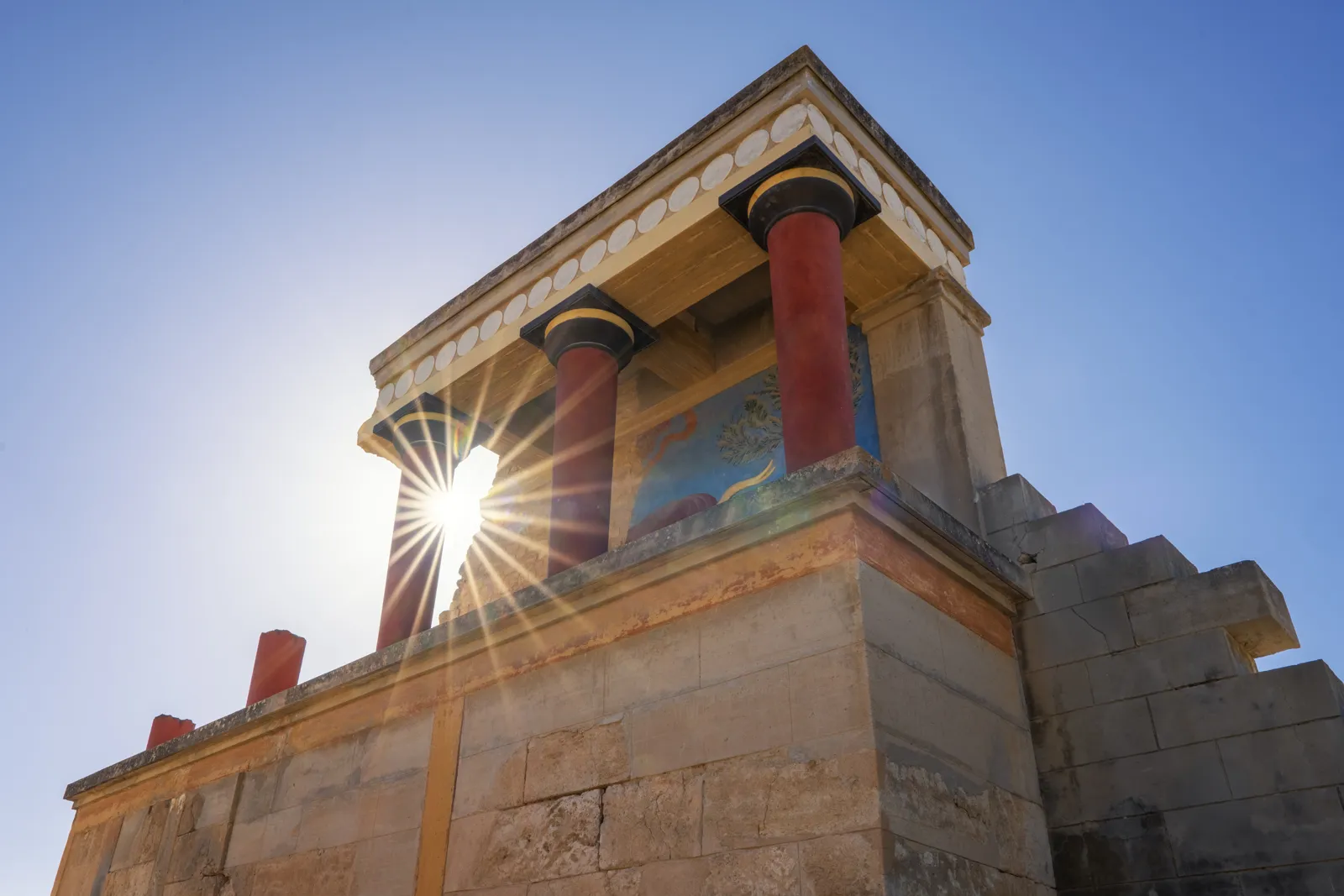
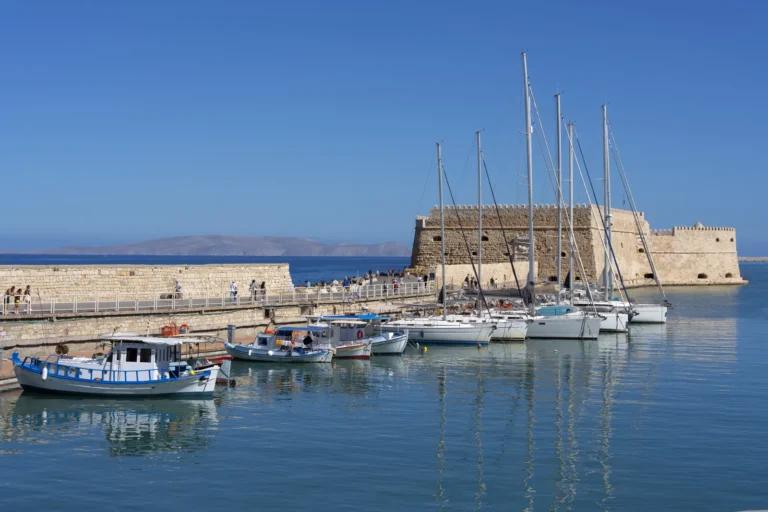
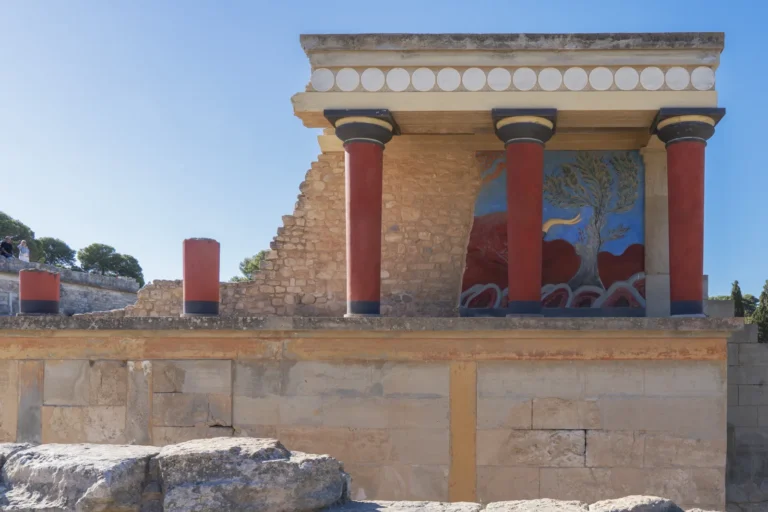
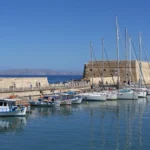
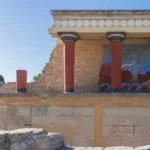
A few kilometres from Heraklion, Knossos is the largest site of the Minoan civilisation, linked to the myth of the Minotaur. Part of the palace was restored in the early 20th century, which helps you understand its layout. Complete the visit with the Heraklion Archaeological Museum, which holds Minoan frescoes, pottery and objects. In town, the Venetian walls and the old harbour are worth a stroll. Come early to Knossos: the site is very busy and has little shade.
The north bastion of the Palace of Knossos.
Chania
Its Venetian harbour, lighthouse and lanes make it one of the most pleasant towns in Greece. It is the best base for the west of the island: the Akrotiri peninsula, Balos lagoon, Elafonissi and the gorges. To enjoy the gorges and Balos in good conditions, compare with the best time to visit Greece across the islands.
Rethymno
Between Heraklion and Chania, Rethymno keeps a Venetian and Ottoman old town (Rimondi fountain, minarets, the Fortezza) lined by a long beach. A handy halfway stop, with easy access to the villages of the hinterland.
The Samaria Gorge
In the Lefka Ori (White Mountains) national park, the Samaria Gorge runs for about 16 km (10 mi) from the Omalos plateau down to the village of Agia Roumeli on the south coast, from where you leave by boat. The hike usually takes 5 to 7 hours and requires good fitness. According to the park’s official site, samaria.gr (checked 26 October 2026), the national park opens from 1 May to 31 October each year (in 2026 it reopened on 19 May after maintenance work), and access can be suspended in bad weather: check conditions before you go. The Imbros Gorge, shorter, is an alternative.
Balos and Elafonissi
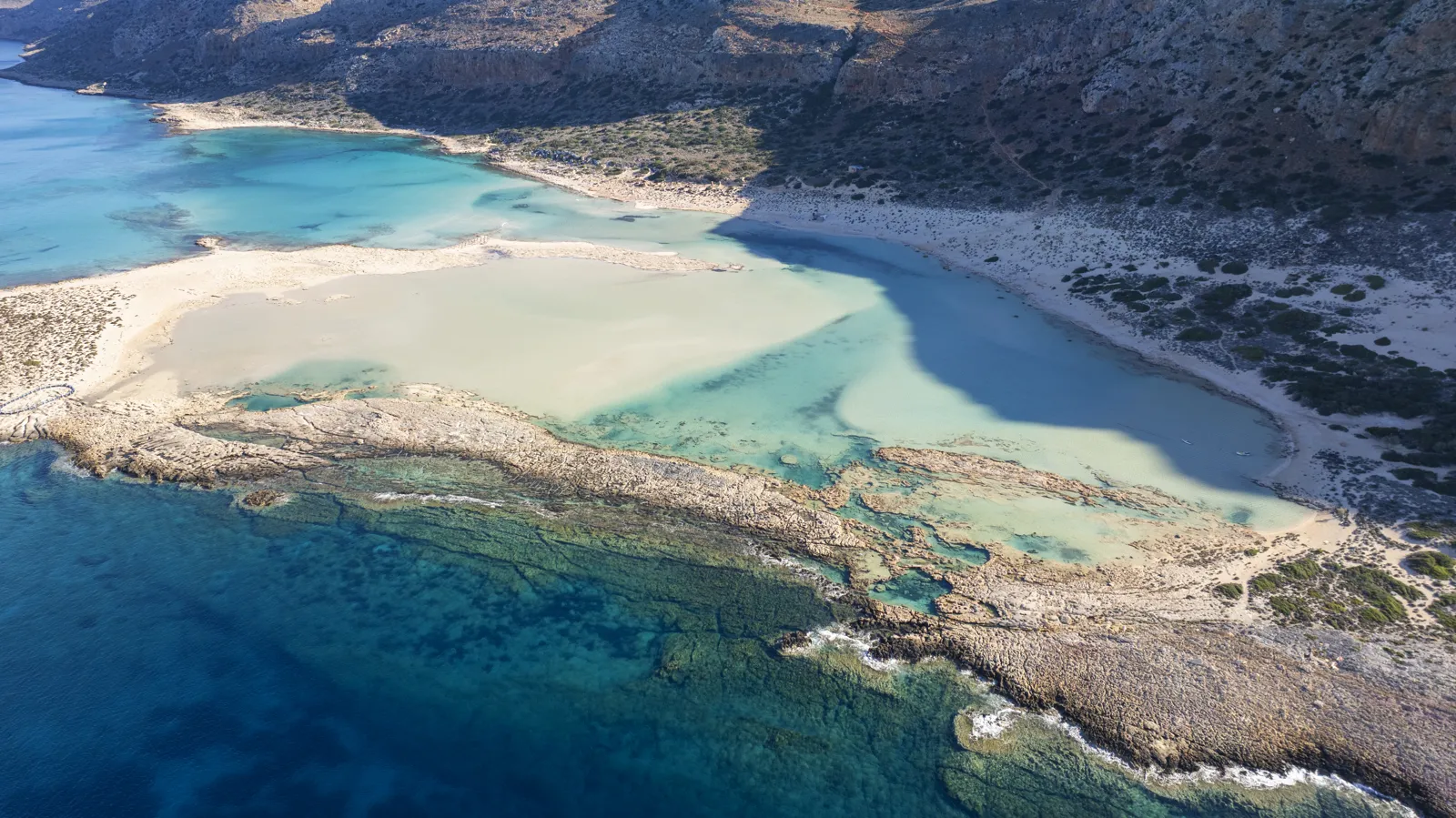
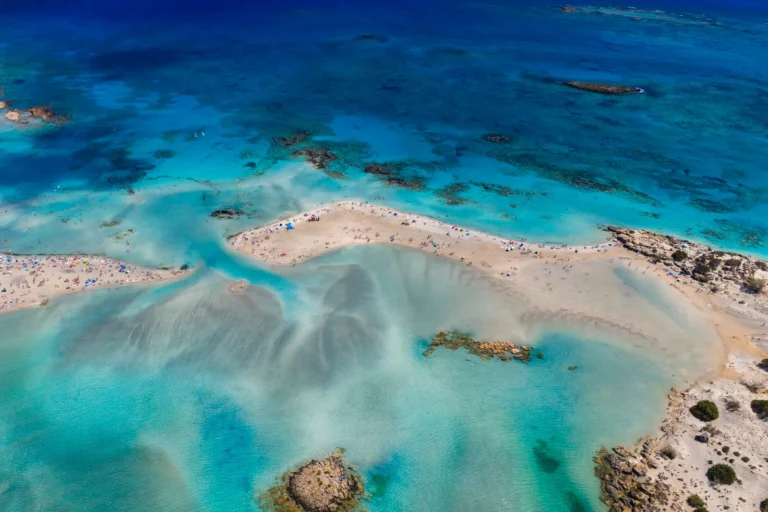
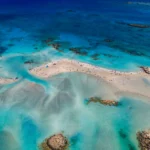
In the far north-west, Balos lagoon, at the foot of the Gramvousa peninsula, is reached by a dirt road and then on foot, or by boat from Kissamos. In the south-west, Elafonissi is known for its shallow water and pink-tinged sand. Both sites are protected and very busy in summer: come early and stay within the permitted areas.
Balos lagoon.
Agios Nikolaos and Spinalonga
On the Gulf of Mirabello, Agios Nikolaos is a lively resort around a small lake. From Elounda or Plaka, boats run to the islet of Spinalonga, a Venetian fortress that became a leper colony in the 20th century.
Phaistos, Gortyn and Matala
In the Messara plain in the south, the Minoan palace of Phaistos overlooks the plain, and Gortyn keeps the ruins of the island’s Roman capital. Matala bay, with its caves cut into the cliff, is a nearby beach stop. If you are hesitating with the Dodecanese, read our Crete or Rhodes comparison.
Sfakia, Loutro and the south-west coast
The south-west coast, at the foot of the Lefka Ori, is the wildest part of the island. Chora Sfakion is the port for boats running along the coast; Loutro, a small white village with no road access, can only be reached by sea or by coastal paths. Further west, Paleochora is a quiet little resort, well placed for Elafonissi. Allow time: the roads across the mountains are slow and boat timetables vary with the season.
The Lasithi plateau and the east
The Lasithi plateau, farmed and ringed by mountains, is home to the Dikteon cave, linked in mythology to the birth of Zeus. Further east, the palm forest of Vai and the Sitia area are quieter than the rest of the island.
Things to do in Crete: 10 experiences not to miss
To sum up what to see and do in Crete on a first trip, here are the stops presented above, to tick off as you like:
Visit the Palace of Knossos and the Heraklion Archaeological Museum
Wander around Chania’s Venetian harbour
Walk through Rethymno old town and up to the Fortezza
Hike down the Samaria Gorge (or the shorter Imbros Gorge)
Reach Balos lagoon by boat from Kissamos or by the dirt road
Swim in the shallow water of Elafonissi
Take the boat to Spinalonga from Elounda or Plaka
See the palace of Phaistos and the ruins of Gortyn, then the caves of Matala
Sail along the south coast to Loutro, a village with no road access
Go up to the Lasithi plateau and visit the Dikteon cave
The best beaches in Crete
The island has beaches on three seas. Here are the ones to fit into your itinerary, by region:
Beach
Region
Good to know
Balos
North-west
Lagoon; reached by dirt road then on foot, or by boat from Kissamos
Elafonissi
South-west
Shallow water, pink-tinged sand; protected site
Matala
South
Bay lined with caves cut into the cliff
Vai
East
Palm-forest beach, quieter region
Rethymno
North
Long town beach below the old town
Loutro and the south-west coast
South-west
Villages reached by boat or coastal path
Balos and Elafonissi are protected and very busy in summer: come early and stay within the permitted areas.
Suggested itineraries in Crete
7 to 10 days: the centre and the west
Days 1-2: Heraklion, Knossos and the archaeological museum
Day 3: Rethymno and its old town
Days 4-6: Chania, Balos and Elafonissi
Day 7: the Samaria or Imbros Gorge (depending on opening)
Days 8-10: the south coast (Chora Sfakion, Loutro, Paleochora) or back to Heraklion via Phaistos and Matala
2 weeks: around the island
Days 1-3: Chania, Akrotiri, Balos
Days 4-5: Elafonissi and Paleochora
Days 6-7: the Samaria Gorge, Sfakia and Loutro
Day 8: Rethymno
Days 9-10: Matala, Phaistos and Gortyn
Days 11-12: Heraklion and Knossos
Days 13-14: the Lasithi plateau, Agios Nikolaos and Spinalonga
Flying into Chania and out of Heraklion (or the reverse) saves backtracking; check the one-way fees for your hire car.
Indicative amounts per person per day, excluding flights:
Item
Small budget
Comfort
Accommodation (based on a shared double room)
about €25 to €45
about €60 to €130
Meals
about €20 to €35
about €40 to €70
Transport (shared car hire, fuel, bus)
about €15 to €25
about €25 to €45
Sightseeing and activities
about €5 to €15
about €15 to €40
Total per day
about €65 to €120
about €140 to €285
Indicative estimates that vary a lot with the season: prices peak in August.
Village tavernas and bakeries are the best friends of a small budget. Accommodation prices drop noticeably in May, June, September and October compared with August.
Who is Crete for?
Our verdicts by profile, based on the places, conditions and budget ranges presented in this guide:
Beach: a very good choice: Balos, Elafonissi, Matala, Vai and the south-coast villages, with a pleasant sea from June to October.
Hiking: excellent: the Samaria Gorge (about 16 km, 5 to 7 hours) or the Imbros Gorge, coastal paths to Loutro, the Lasithi plateau. Check the opening of the Samaria park.
Culture and history: yes: the Minoan palaces of Knossos and Phaistos, the Heraklion Archaeological Museum, the Roman ruins of Gortyn, the Venetian harbours of Chania and Rethymno.
Families: yes: the shallow water of Elafonissi, the long beach at Rethymno, the boat to Spinalonga. Keep Samaria for fit children and plan for shade at Knossos.
Couples: yes: Chania harbour in the evening, Loutro reachable only by sea or on foot, the upmarket hotels of Elounda.
Small budget: moderate: about €65 to €120 a day, hire car included. May, June, September and October are much cheaper than August.
Without a car: partly: KTEL buses link the towns of the north coast, but many beaches, villages and trailheads are far from them.
Getting around Crete
Car: the most practical way to explore the island. A fast road runs along the north coast; mountain roads and roads to the south coast are winding and slower than the distances suggest. Some dirt roads (Balos) are forbidden or not covered by rental contracts: read the terms. The U.S. State Department warns that driving at night and on mountain roads can be hazardous and that thieves break into rental cars; Greek law requires US visitors to carry an International Driving Permit.
Bus (KTEL): a regular network links the towns of the north coast and serves some sites and villages in the south.
Boat: on the south coast, boats link Agia Roumeli, Loutro, Sfakia and Paleochora; others serve Balos and Spinalonga in season. Ferries link the island with Piraeus and other islands.
Taxi: useful to reach a trailhead or the airport.
Where to stay in Crete
Base
Best for
Good to know
Chania
Town, west of the island
Lively old town, difficult parking
Rethymno
Town and beach
Handy central base
Heraklion
Knossos, museums, flights
More urban, less charm
Agios Nikolaos or Elounda
Sea, Spinalonga
Elounda more upmarket
South coast (Paleochora, Loutro, Matala)
Quiet, sea
Longer access, some villages without a road
Inland villages
Hiking, traditional life
Car essential
Accommodation ranges from studios and guesthouse rooms to large resort hotels on the north coast. For a tour, plan two or three bases (west, centre, east). In August, book several months ahead.
Mistakes to avoid on a trip to Crete
Underestimating driving times: mountain roads and roads to the south coast are winding and much slower than the distances suggest.
Taking the Balos road without reading your contract: some dirt roads are forbidden or not covered by rental companies.
Leaving belongings visible in the car: the UK FCDO advises keeping valuables out of sight and locking your vehicle.
Planning Samaria without checking it is open: the park only opens part of the year and can close in bad weather.
Booking too late for August: accommodation and hire cars go several months ahead.
Arriving at Knossos in the middle of the day: the site is very busy and has little shade; come early.
Entry requirements, health and safety
US citizens: Greece is in the Schengen area, so you may enter without a visa for up to 90 days for tourism or business. Greek law requires three months of passport validity beyond your departure date, but the State Department recommends at least six months; you must be able to show proof of sufficient funds and a return ticket if asked (U.S. Department of State, travel.state.gov, last updated February 19, 2026).
UK citizens: no visa for up to 90 days in any 180-day period in the Schengen area. Your passport must have been issued less than 10 years before you arrive and be valid for at least 3 months after the day you plan to leave; you may be asked for a return or onward ticket and proof of funds. Greek authorities have indicated they will not collect fingerprints and photos from UK travellers under the EU Entry/Exit System (UK FCDO, GOV.UK, updated 11 August 2026).
Health: according to the UK FCDO (updated 11 August 2026), treatment may be limited on the islands and some islands face serious shortages of ambulances; UK travellers need a GHIC or EHIC for state healthcare, which is not a substitute for travel insurance. The U.S. State Department strongly recommends insurance that covers medical evacuation.
Safety: the main risks are theft, including from cars in summer, earthquakes, wildfires and heat. The UK FCDO advises enabling emergency alerts on your phone to receive the Greek government’s warnings.
Wildfires: the UK FCDO (updated 11 August 2026) reports a high wildfire risk from April to October; causing a wildfire is a criminal offence in Greece, even if unintentional. Do not light fires or barbecues.
Swimming: many organised beaches use flags, and a red flag means you must not enter the water; do not dive into unknown water (UK FCDO, updated 11 August 2026).
Hiking: trails often lack shade and markings vary; plan your route, avoid the peak hours of sun and make sure your insurance covers mountain rescue (UK FCDO, updated 11 August 2026).
Emergencies: call 112 (ambulance, fire, police); for an ambulance you can also dial 166 (UK FCDO). Visit Greece lists the Tourist Police on 1571 (24/7).
Archaeological sites: do not remove anything, not even stones; the export of antiquities is strictly regulated (travel.state.gov).
A week lets you discover half the island, for example Heraklion and the west (Chania, Balos, Samaria). Allow two weeks for a full tour by car, without rushing.
Do you need a car in Crete?
It is strongly recommended for a tour: KTEL buses link the northern towns well, but many beaches, villages and trailheads are far from them.
Which airport should you choose for Crete?
Chania for the west (Balos, Elafonissi, Samaria), Heraklion for the centre and the east (Knossos, Agios Nikolaos). For a tour of the island, fly into one and out of the other.
Is the Samaria Gorge difficult?
The hike is about 16 km (10 mi), mostly downhill, and usually takes 5 to 7 hours. It requires good fitness and good shoes. According to samaria.gr, the park opens from 1 May to 31 October and access can be suspended in bad weather.
Is Crete safe?
The main risks reported by the UK FCDO and the U.S. State Department are theft (including from rental cars), road accidents, heat and summer wildfires. Enable emergency alerts on your phone.
Is Crete expensive?
Allow roughly €65 to €120 per person per day on a small budget, and €140 to €285 for comfort, excluding flights. Prices peak in August; accommodation is much cheaper in May, June, September and October.
Where to go in Crete on a first trip?
For a first visit, combine Heraklion and Knossos, Rethymno and Chania, with a day at Balos or Elafonissi. Add the Samaria Gorge if the park is open, or Spinalonga and Agios Nikolaos if you stay in the east.
Our sources
Climate normals: Heraklion airport station, published by the Hellenic National Meteorological Service (HNMS)


 FlightsKiwi.comCompare flights and airline combinations to Crete.Compare flights

 When to go
 Delphi
 Time difference
 Greek islands
 Kefalonia
 Map
 Mykonos
 Santorini
 Amorgos
 Corfu
 Hydra
 Kos
 Lefkada
 Milos
 Naxos
 Paros
 Rhodes
 Skiathos
 Thessaloniki
 Zakynthos
 Athens