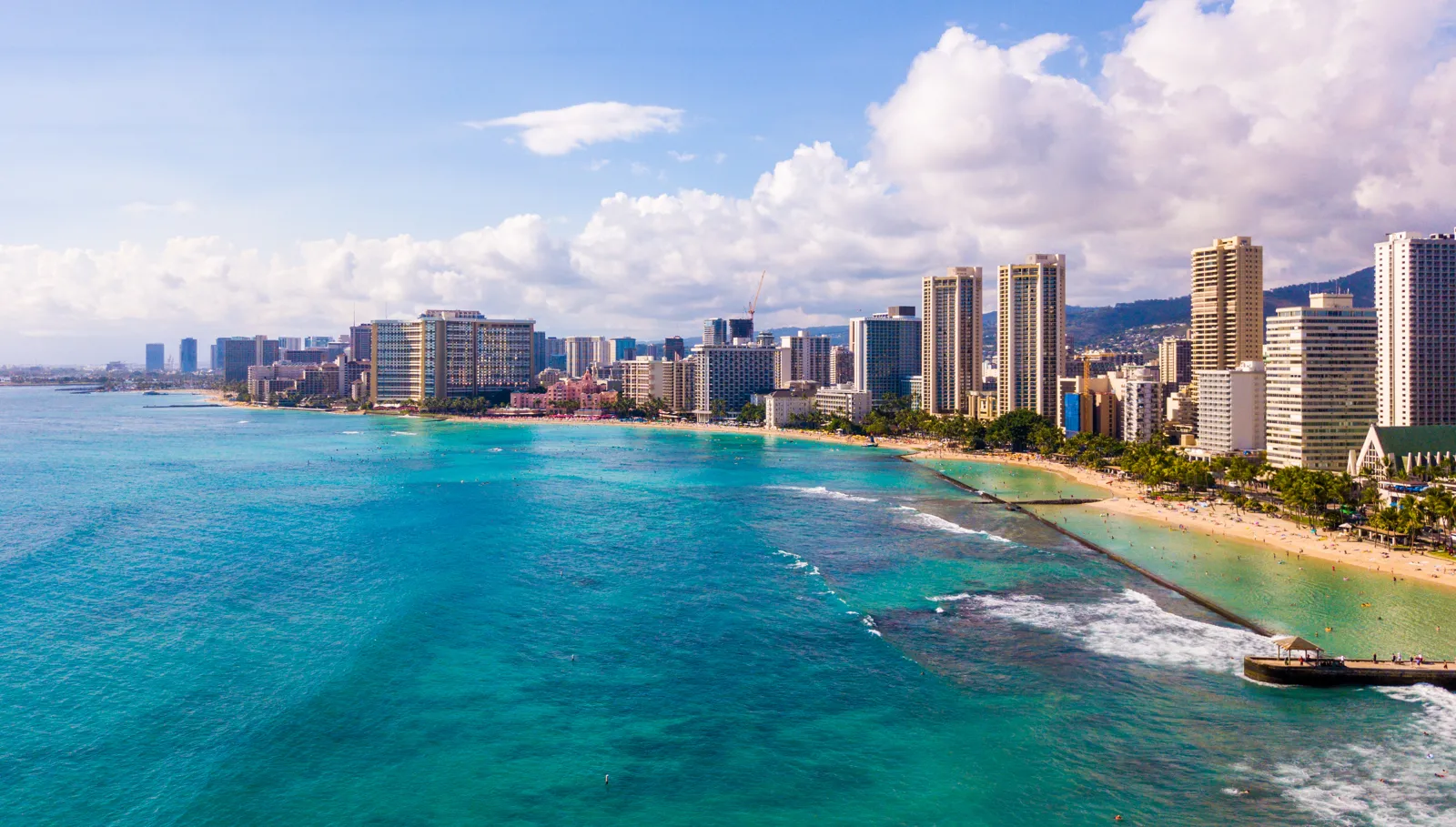
Greece has thousands of islands, of which a little over 200 are inhabited. They are nothing alike: the whitewashed villages and wind of the Cyclades, the green hills of the Ionian Islands, the medieval towns of the Dodecanese, the mountains and beaches of Crete. This Greek islands guide helps you choose an archipelago to suit your tastes, plan your ferries and travel at the right time. For questions common to any island trip (entry rules, accommodation, packing), see our general guide as well.

Our travel deals for Greek islands
Affiliate links: we earn a commission, at no extra cost to you.
 FlightsKiwi.comCompare flights and airline combinations to Greek islands.Compare flights

Greek islands: key facts
- Four main groups: the Cyclades and Crete in the Aegean, the Dodecanese close to Turkey, the Ionian Islands in the west
- Getting there: ferries from Piraeus, Rafina or Lavrio (Athens), domestic flights, or flights to the main islands, nonstop or with a connection depending on the season
- Best time: June and September for swimming; May and October for Crete and Rhodes
- Season: in practice May to mid-October; many hotels and restaurants close in winter
- Wind: the meltem blows across the Aegean in July and August and can delay ferries
- Suggested length: 3 to 4 nights per island, 2 or 3 islands for a first 10 to 14 day trip
Which Greek island should you choose? The short answer
| What you want | Suggested islands | Archipelago |
|---|---|---|
| First trip, a balance of beaches and villages | Naxos, Paros | Cyclades |
| Caldera scenery, sunsets | Santorini (outside July and August if possible) | Cyclades |
| Nightlife | Mykonos, Ios | Cyclades |
| Coves and rock formations | Milos | Cyclades |
| A long, varied stay (mountains, sites, beaches) | Crete | Southern Aegean |
| Medieval history, beach weather until October | Rhodes | Dodecanese |
| Small, quiet islands | Symi, Patmos, Folegandros, Sifnos | Dodecanese, Cyclades |
| Green landscapes, wooded coasts | Corfu, Kefalonia | Ionian Islands |
| With children | Crete, Rhodes, Corfu, Naxos | Several |
Greek islands highlights
The islands and sites covered in this guide at a glance, with our detailed guides where they exist:
- Santorini: villages on the edge of the caldera and the Akrotiri site (Santorini guide)
- Mykonos and Delos: windmills, Little Venice and the sacred island of Delos (Mykonos guide)
- Naxos and Paros: the right balance for a first trip (Naxos guide, Paros guide)
- Milos and the small Cyclades: the rock formations of Sarakiniko, Folegandros, Koufonissia
- Crete: Knossos, Balos lagoon, Elafonissi and the Samaria Gorge (Crete guide)
- Rhodes: the medieval old town and the Lindos acropolis (Rhodes guide)
- Corfu: an old town between two fortresses, coves in the north-east (Corfu guide)
- Zakynthos: Navagio beach and loggerhead turtles (Zakynthos guide)
- Symi and Patmos: a small colourful harbour and a World Heritage monastery
The Cyclades: the classic image of Greece
In the middle of the Aegean, south-east of Athens, the Cyclades form a ring of dry, rocky islands with lime-washed villages. The main town of each island is often called “Chora”. This is the most visited archipelago, the best served by ferries from Piraeus and Rafina, and the one most exposed to the meltem in summer.
Santorini
Santorini was shaped by a volcanic eruption: its villages of Fira, Imerovigli and Oia sit on the edge of a caldera that drops steeply to the sea. The prehistoric site of Akrotiri, buried under ash, and the black-sand beaches round off a visit. It is also the busiest island and one of the most expensive, particularly on days when cruise ships call. Aim for spring or autumn, and if you want the view without the sunset crowd, stay on the caldera outside Oia.
Mykonos
Mykonos is known for its windmills, its “Little Venice” quarter and its summer nightlife. The southern beaches are heavily developed. From the harbour, boats run to the sacred island of Delos, one of the country’s great archaeological sites and a World Heritage site: it is the best reason to stop here if the party scene does not interest you. Delos alone justifies the stop; for the rest of the island, our Mykonos travel guide helps you choose beaches and a base.
Naxos and Paros
Naxos is the largest of the Cyclades: long sandy beaches on the west coast (Agios Prokopios, Plaka), mountain villages inland, and the marble gate of the Temple of Apollo at the entrance to the harbour. Its neighbour Paros has lively villages (Naoussa, Parikia) and varied beaches; it is also a hub for many ferry connections. Both islands strike a good balance of prices, activities and atmosphere for a first trip.
Milos, Folegandros, Sifnos and the small Cyclades
Milos is known for its seaside rock formations, such as Sarakiniko, and for coves reached by boat. Folegandros has one of the most spectacular Choras in the archipelago, on the edge of a cliff. Sifnos is known for its food and its footpaths. The small Cyclades (Koufonissia, Schinoussa), between Naxos and Amorgos, suit travellers looking for quiet, with less frequent ferries.
Crete: an island for a whole trip
The largest Greek island measures about 260 km (162 mi) from east to west. It can fill a one- or two-week stay on its own, ideally with a car. Its climate, the hottest and driest in the country in the shoulder season, makes it the best option for a beach holiday in May or October.
Heraklion and Knossos
The island’s capital is mainly a gateway: its archaeological museum holds the great collections of Minoan civilisation, and the palace of Knossos lies a few kilometres to the south. Visit the site early in the morning in summer.
Chania and Rethymno
In the west, these two towns have kept their harbours and Venetian, then Ottoman, old towns, with lanes, fountains and mosques. Chania is a good base for the west of the island; Rethymno, smaller, lies halfway between Chania and Heraklion.
The western beaches and the gorges
Balos lagoon and Elafonissi beach, with their turquoise water, are the most photographed in Crete and very busy in summer: arrive early. The Samaria Gorge, in the White Mountains, is walked down in a day to the sea, in the good season only. The south of the island (Chora Sfakion, Loutro, Paleochora) is wilder, with villages partly reached by boat. The gorges can only be walked in the good season: the best time to go to Crete takes that constraint into account.
Eastern Crete
Around Agios Nikolaos and Elounda, the east is more geared to beach holidays. Offshore, the islet of Spinalonga, a former Venetian fortress that became a leper colony in the 20th century, is visited by boat. The Lassithi plateau offers a day out inland.
The Dodecanese: Rhodes, Kos and the small islands
Along the Turkish coast, the Dodecanese were shaped by the Knights of St John, then by the Italian occupation until 1947. The islands are linked by ferry or catamaran, and several connections run to Turkey.
Rhodes
The medieval old town of Rhodes, surrounded by walls and a World Heritage site, is one of the best preserved in Europe: Street of the Knights, Palace of the Grand Master. In the south-east, the white village of Lindos is overlooked by an ancient acropolis. The island stays pleasant for the beach until October. A medieval old town, Lindos and beaches until October: a stay in Rhodes suits the shoulder season well.
Kos, Symi and Patmos
Kos is flat, lined with long beaches and easy to explore by bike. Symi, about an hour by boat from Rhodes depending on the service, is a small harbour of colourful neoclassical houses. Patmos, further north, is a pilgrimage site: the Monastery of Saint John the Theologian and the Cave of the Apocalypse are World Heritage sites.
The Ionian Islands: Corfu, Kefalonia, Zakynthos
West of the mainland, facing Italy, the Ionian Islands are greener than the Aegean ones because they get more rain. Venetian influence is strong and summer is less windy. You reach them by plane, or by ferry from the ports of the western mainland (Igoumenitsa, Patras, Kyllini) and from Italy.
Corfu
Its old town, framed by two fortresses and a World Heritage site, mixes Italian-style arcades with British architecture. The north-east of the island alternates coves with hills covered in olive and cypress trees; the west coast has longer beaches, such as around Paleokastritsa.
Kefalonia, Zakynthos and Lefkada
Kefalonia, the largest, offers mountain scenery, the village of Fiskardo and Myrtos beach at the foot of the cliffs. Zakynthos (Zante) is known for Navagio beach, seen from a viewpoint or reached by boat depending on conditions, and for the loggerhead turtles that nest on its southern beaches. Lefkada is linked to the mainland by a road and attracts windsurfers.
The Aegean: other islands worth knowing
Beyond the Cyclades and the Dodecanese, the Aegean has other archipelagos that are less visited. The Saronic Islands (Aegina, Hydra, Poros) are close to Athens, one to two hours by boat from Piraeus: Hydra, with no cars, suits a short escape. In the north-east, Lesbos, Chios and Samos are larger, greener and more agricultural. The Sporades (Skiathos, Skopelos, Alonissos), in the north, have wooded coasts and the Alonissos marine park.
Ferries between the Greek islands: how to plan
- Departure ports: Piraeus, linked to central Athens by metro, for most of the Cyclades, Crete and the Dodecanese; Rafina and Lavrio, closer to the airport, for some of the Cyclades; the ports of the western mainland for the Ionian Islands.
- Conventional or fast boats: conventional ferries are cheaper and steadier in rough seas; fast boats save time but cost more and are more sensitive to wind.
- Frequency: far more sailings from May to October; some routes between small islands run only in summer or a few days a week.
- Booking: in July and August and over the weekend of Orthodox Easter, book ahead, especially if you are taking a car.
- Meltem: in July and August this north wind can delay or cancel crossings. Never schedule a ferry the day before your flight home.
- Route logic: stay within one archipelago. Going from the Cyclades to the Ionian Islands almost always means returning via Athens or flying.
Suggested Greek island itineraries
10 days: Athens and the Cyclades
- Days 1 and 2: Athens (Acropolis, Acropolis Museum, Plaka)
- Days 3 to 5: Naxos (west coast beaches, inland villages)
- Days 6 and 7: Paros or Milos
- Days 8 and 9: Santorini
- Day 10: return to Athens by ferry or plane, or fly home from Santorini depending on the season
2 weeks: Crete and Santorini
- Days 1 to 3: Heraklion, Knossos and the archaeological museum
- Days 4 to 6: Rethymno and Chania
- Days 7 to 9: the west and south (Balos, Elafonissi, Samaria Gorge depending on the season)
- Days 10 and 11: the east (Spinalonga, Lassithi)
- Days 12 to 14: ferry from Heraklion to Santorini, then fly home
10 days: the Dodecanese
- Days 1 to 4: Rhodes (old town, Lindos, beaches)
- Days 5 and 6: Symi
- Days 7 to 10: Kos or Patmos, then back via Rhodes or Athens
For a trip that combines the mainland (Peloponnese, Delphi, Meteora) with the islands, see our Greece travel guide.
Best time to go, archipelago by archipelago
All the Greek islands have a Mediterranean climate: dry, hot summers and mild, rainy winters. The differences lie in rainfall, heavier in the west, and in the length of the season, longer in the south. Comparison of the official normals:
| Month | Athens (reference for the nearby Cyclades) | Heraklion (Crete) | Rhodes (Dodecanese) | Corfu (Ionian Islands) |
|---|---|---|---|---|
| January | 13.6 °C (56 °F) / 48 mm (1.9 in) | 15.2 °C (59 °F) / 81 mm (3.2 in) | 15.1 °C (59 °F) / 152 mm (6.0 in) | 13.9 °C (57 °F) / 136 mm (5.4 in) |
| February | 14.1 °C (57 °F) / 39 mm (1.5 in) | 15.3 °C (60 °F) / 60 mm (2.4 in) | 15.2 °C (59 °F) / 102 mm (4.0 in) | 14.1 °C (57 °F) / 123 mm (4.8 in) |
| March | 15.9 °C (61 °F) / 42 mm (1.7 in) | 16.8 °C (62 °F) / 49 mm (1.9 in) | 17.0 °C (63 °F) / 69 mm (2.7 in) | 16.0 °C (61 °F) / 100 mm (3.9 in) |
| April | 19.6 °C (67 °F) / 26 mm (1.0 in) | 20.1 °C (68 °F) / 24 mm (0.9 in) | 20.0 °C (68 °F) / 29 mm (1.1 in) | 19.1 °C (66 °F) / 65 mm (2.6 in) |
| May | 24.4 °C (76 °F) / 14 mm (0.6 in) | 24.3 °C (76 °F) / 13 mm (0.5 in) | 24.1 °C (75 °F) / 16 mm (0.6 in) | 24.0 °C (75 °F) / 37 mm (1.5 in) |
| June | 29.2 °C (85 °F) / 5 mm (0.2 in) | 28.5 °C (83 °F) / 4 mm (0.2 in) | 28.3 °C (83 °F) / 2 mm (0.1 in) | 28.2 °C (83 °F) / 16 mm (0.6 in) |
| July | 32.2 °C (90 °F) / 6 mm (0.2 in) | 30.3 °C (87 °F) / 1 mm (0.0 in) | 30.4 °C (87 °F) / 0 mm (0.0 in) | 31.2 °C (88 °F) / 9 mm (0.4 in) |
| August | 32.2 °C (90 °F) / 6 mm (0.2 in) | 30.2 °C (86 °F) / 1 mm (0.0 in) | 30.7 °C (87 °F) / 0 mm (0.0 in) | 31.5 °C (89 °F) / 22 mm (0.9 in) |
| September | 28.3 °C (83 °F) / 12 mm (0.5 in) | 27.5 °C (82 °F) / 18 mm (0.7 in) | 28.1 °C (83 °F) / 6 mm (0.2 in) | 27.5 °C (82 °F) / 88 mm (3.5 in) |
| October | 23.4 °C (74 °F) / 46 mm (1.8 in) | 24.0 °C (75 °F) / 43 mm (1.7 in) | 24.5 °C (76 °F) / 57 mm (2.2 in) | 23.2 °C (74 °F) / 140 mm (5.5 in) |
| November | 18.8 °C (66 °F) / 60 mm (2.4 in) | 20.1 °C (68 °F) / 56 mm (2.2 in) | 20.2 °C (68 °F) / 90 mm (3.5 in) | 18.7 °C (66 °F) / 187 mm (7.4 in) |
| December | 15.1 °C (59 °F) / 62 mm (2.4 in) | 16.7 °C (62 °F) / 82 mm (3.2 in) | 16.7 °C (62 °F) / 153 mm (6.0 in) | 15.2 °C (59 °F) / 190 mm (7.5 in) |
| Archipelago | Best time | Good to know |
|---|---|---|
| Cyclades | June and September; May and early October for sightseeing | Strong meltem in July and August; season runs May to mid-October |
| Crete | May-June and September-October | The longest swimming season; about 24 °C (75 °F) in the afternoon in October |
| Dodecanese (Rhodes, Kos) | May-June and September-October | Almost no rain from June to September; fairly wet winter in Rhodes |
| Ionian Islands | June to mid-September | The greenest and wettest: 88 mm (3.5 in) in September in Corfu |
| Saronic Islands | April to June, September-October | A getaway possible almost all year from Athens |
July and August remain the high season: heat, crowds, the highest prices and a high risk of forest fires, for which the Greek civil protection service publishes a daily risk map. From November to March most islands slow down and there are fewer ferries. All the month-by-month details are in our article on the best time to visit Greece.
Where to stay on the Greek islands
| Island | Where to stay | Who for |
|---|---|---|
| Santorini | Fira, Imerovigli (caldera); Kamari, Perissa (beaches) | Views and sunsets; gentler budget on the beach side |
| Naxos | Chora, Agios Georgios, Agios Prokopios | Everything on foot and beaches nearby |
| Paros | Naoussa, Parikia | Lively atmosphere; convenient harbour |
| Crete | Chania, Rethymno, Heraklion; villages in the south | Venetian towns; quiet and nature |
| Rhodes | Old town, Lindos | Heritage; village and beaches |
| Corfu | Old town, north-east coast | Culture; coves and nature |
Options range from rooms in private homes and family guesthouses to apartments and upscale hotels. Staying in the main town is the most practical without a car, for ferries and restaurants. In July and August, book several months ahead.
Budget for a stay on the Greek islands
The islands cost more than the mainland, especially in summer. Indicative amounts per person per day, excluding flights and ferries:
| Item | Budget | Comfort |
|---|---|---|
| Accommodation (shared double room basis) | roughly €30 to 50 | roughly €80 to 180 |
| Meals | roughly €20 to 30 | roughly €45 to 70 |
| Getting around the island (bus, rental) | roughly €10 to 20 | roughly €25 to 50 |
| Activities and visits | roughly €5 to 15 | roughly €20 to 60 |
| Total per day | roughly €65 to 115 | roughly €170 to 360 |
Ferry tickets come on top of this budget and weigh heavily if you chain several islands, especially by fast boat.
Entry requirements and practical tips
- US citizens: according to the U.S. Department of State (travel.state.gov, last updated February 19, 2026), Greece is a party to the Schengen Agreement and U.S. citizens may enter without a visa for stays of up to 90 days for tourism or business. Your passport should have at least six months of remaining validity (Greek law requires three months beyond your departure date), and you should be able to show proof of sufficient funds and a return ticket or other evidence of onward travel if asked.
- UK citizens: according to the UK FCDO (GOV.UK, updated 11 August 2026), you can travel to the Schengen area without a visa for up to 90 days in any 180-day period. Your passport must have been issued less than 10 years before you arrive and expire at least 3 months after the day you plan to leave the Schengen area. The FCDO adds that the EU Entry/Exit System (EES) is being implemented across the Schengen area, and that Greek authorities have indicated they will not collect biometric data from UK travellers as part of EES.
- Health: for medical entry requirements and recommended vaccines, the FCDO refers UK travellers to TravelHealthPro’s Greece guide; US travellers can check the CDC travellers’ health pages. Take out travel insurance that covers medical costs.
- Wildfires and heat: the FCDO (GOV.UK, updated 11 August 2026) reports a high risk of wildfires from April to October. Never light fires (it is dangerous and illegal), make sure your phone is set to receive emergency alerts, and call 112 for the emergency services.
- Earthquakes: the FCDO warns of a risk of earthquakes and earth tremors in Greece; familiarise yourself with safety procedures and follow the authorities’ instructions.
- Money: the euro. Carry some cash for small islands, where cash machines are scarce.
- Scooters and quad bikes: widely rented on the islands, but accidents are frequent. The FCDO says you need a valid driving licence of at least category A1 (light motorcycle) to hire a moped, that provisional licences are not valid for hiring any vehicle, and that quad biking is classed as an extreme sport and excluded from many insurance policies: read your cover carefully. Helmets are required on quad bikes and mopeds.
See the full rules in the U.S. Department of State Greece page and the UK FCDO Greece travel advice, both read on 26 October 2026.
Read also
To compare the archipelagos month by month, read when to visit Greece, as well as our pages on the best time for Santorini and when to go to Crete. The time difference with Greece page gives the details. If you are torn between Crete and a large Italian island, our comparison Crete or Sicily helps you choose, and our Athens guide prepares the stop before the ferries. To prepare the rest of your trip, see our Greece guide, or discover the Mediterranean another way with our cruise pages.
Frequently asked questions
Which Greek island should you choose for a first trip?
Naxos or Paros for a good balance of beaches, villages and prices, possibly combined with Santorini. Crete suits you if you prefer a single island for a long, varied stay.
Which Greek islands are the quietest?
The small Cyclades (Koufonissia, Schinoussa), Folegandros, Sifnos, Symi or Patmos are quieter than Santorini or Mykonos, with less frequent ferries.
When is the best time to go to the Greek islands?
June and September for swimming, with fewer people than in July and August. Crete and Rhodes, further south, stay pleasant in May and October.
How many islands can you visit in a week?
Two islands at most, or one island plus Athens. Ferry transfers often take half a day, and the meltem can cause delays in summer.
Can you visit the Greek islands out of season?
Yes, but from November to March many hotels and restaurants are closed and there are fewer ferries. Crete, Rhodes and Corfu, larger and inhabited all year, stay the liveliest.
What are the most beautiful Greek islands?
It depends what you are looking for: Santorini for the caldera, Naxos and Paros for a balanced first trip, Milos for its coves, Crete for a long stay, Rhodes for its medieval old town, Corfu and Kefalonia for green landscapes. Our “Which Greek island should you choose?” table sums up these profiles.
How many Greek islands are there?
Greece has thousands of islands and islets, of which a little over 200 are inhabited. They fall into several groups: the Cyclades, the Dodecanese, the Ionian Islands, Crete and other Aegean islands. For weather archipelago by archipelago, see when to visit Greece.
Our sources
- U.S. Department of State, Greece country information (travel.state.gov, last updated February 19, 2026), read 26 October 2026.
- UK FCDO, foreign travel advice for Greece (GOV.UK, updated 11 August 2026), read 26 October 2026.
- Climate normals: Hellenic National Meteorological Service (HNMS): 1955-2010 normals for Athens-Elliniko, Rhodes and Corfu; 1991-2020 normals for Heraklion airport.
- Our methodology
Updated November 2026. Ferry timetables, entry rules and warnings may change: check the official sources before you go.