Corfu, in the Ionian Sea, is one of the greenest Greek islands: olive groves, cypresses and wooded hills run down to coves and wide bays. Its old town, shaped by centuries of Venetian, then French and British rule, is a UNESCO World Heritage Site. This guide covers the things to do in Corfu and helps you choose your base, your stops and your season. To choose between the two islands, see our Corfu or Crete comparison.
Our travel deals for Corfu
Affiliate links: we earn a commission, at no extra cost to you.
FlightsKiwi.comCompare flights and airline combinations to Corfu.
Time zoneUTC+2, UTC+3 in summer: 2 hours ahead of London, 7 hours ahead of New York · detailsLocal time now: –:–
AirportsCorfu International Airport (CFU), on the edge of the town(many routes are seasonal; out of season, connect via Athens)
EntrySchengen area: no visa for up to 90 days for US citizens (tourism or business) and UK citizens (in any 180-day period) · US: travel.state.gov · UK: GOV.UK
Electricity230 V / 50 Hz, type F plugs (Visit Greece); US and UK travellers need an adapter, and US devices must accept 230 V · plugs
❌ Period to avoid: January, February, March, November, December
The tourist season runs from May to October. The best times are mid-May to late June and September: the HNMS normals give 24 to 28 °C (75 to 82 °F) in the afternoon, the sea is pleasant and crowds are reasonable. July and August are the hottest (31 °C, or 88 °F) and the most expensive. From November to March, Corfu is one of the wettest regions of Greece, and most resorts close. Full details, month by month: the best time to visit Corfu. The contrast between scorching summers and wet winters is found elsewhere in the country too; compare with our page on the best time to visit Greece.
What to see in Corfu: the highlights
Corfu old town
The old town, a UNESCO World Heritage Site, is best explored on foot. Its narrow lanes (the kantounia) are lined with ochre Venetian buildings, churches and small squares. The church of Saint Spyridon holds the relics of the island’s patron saint. On the edge of the Esplanade (Spianada), one of the largest squares in Greece, the arcades of the Liston, built during the French period, house cafés. The Palace of St Michael and St George, built by the British, houses a museum of Asian art.
The Old and New Fortresses
The Old Fortress, on a promontory separated from the town by a moat, was strengthened by the Venetians. You climb up to a viewpoint over the town and the Albanian coast. The New Fortress, on the other side of the old town, overlooks the port. Wear good shoes and avoid the hottest hours in summer.
Kanoni and Pontikonisi
South of the town, the Kanoni peninsula offers Corfu’s most famous view: the small Vlacherna monastery, joined to the shore by a causeway, with the tree-covered islet of Pontikonisi just behind. Planes landing at the nearby airport fly overhead. Not far away, Mon Repos park surrounds the villa where Prince Philip was born and holds remains of the ancient city of Korkyra.
The Achilleion
In the village of Gastouri, the Achilleion is the palace built in the late 19th century for Empress Elisabeth of Austria, known as Sisi, and dedicated to the hero Achilles. Its terraced gardens, decorated with statues, overlook the east coast. The palace is popular with coach and cruise excursions: come at opening time or late in the day.
Paleokastritsa
On the west coast, Paleokastritsa brings together several small clear-water bays surrounded by wooded hills. A monastery stands on the headland. Boats leave for the nearby sea caves. Further north, the ruins of the Byzantine castle of Angelokastro, perched on a rock, offer a wide view of the coast. The access road is winding and parking is difficult in summer.
The north-east: Kassiopi and Mount Pantokrator
The north-east coast, facing Albania, alternates pebble coves, small harbours and villas among the olive trees. Kassiopi, a former fishing village below a ruined castle, is a pleasant base. Above it, Mount Pantokrator, the island’s highest point, can be climbed by car or on foot; the abandoned village of Old Perithia, on its slopes, has a few tavernas again.
The west coast and the south: Glyfada, Pelekas, Lake Korission
Glyfada and Agios Gordios have long sandy beaches at the foot of cliffs. Pelekas, a hilltop village, is known for its sunsets. Further south, Lake Korission, a lagoon separated from the sea by dunes, is a nature area for birdwatching. Issos beach, right next to it, is one of the wildest on the island.
Sidari and the Canal d’Amour
In the north, Sidari is known for its sandstone cliffs carved by the sea into coves and passages, including the Canal d’Amour. The resort is very busy in summer. For similar scenery with fewer people, the Peroulades coast and Cape Drastis are close by.
Day trips: Paxos and Albania
From Corfu port, boats run in season to the small islands of Paxos and Antipaxos, known for their clear water. Other crossings link Corfu to Saranda in Albania, a short distance away: check the entry requirements for Albania before you go. For more, see our Albania travel guide and the best time to visit Albania for the Riviera.
Things to do in Corfu: experiences not to miss
Stroll through the UNESCO-listed old town, between the Esplanade and the two fortresses
Go up Mount Pantokrator and have lunch in Old Perithia
Climb to Angelokastro above Paleokastritsa
Take a boat to Paxos and Antipaxos (in season)
Follow the Durrells to Kalami: Lawrence Durrell settled there in 1936 in the « White House », a fisherman’s house by the water
Taste Corfiot cooking: pastitsada, sofrito, bourdeto and kumquat liqueur
Indicative amounts per person per day, excluding flights:
Item
Small budget
Comfort
Accommodation (based on a shared double room)
about €25 to €50
about €70 to €150
Meals
about €20 to €30
about €40 to €70
Transport (shared car or scooter hire, bus)
about €10 to €20
about €20 to €40
Sightseeing and activities
about €5 to €15
about €15 to €50
Total per day
about €60 to €115
about €145 to €310
Indicative estimates that vary with the season: prices peak in July-August and around Easter.
Village tavernas, away from the seafront, remain the most affordable places to eat. Try the island’s specialities, influenced by Venetian cooking: pastitsada (meat stewed and served with pasta), sofrito (veal with garlic and vinegar) or bourdeto (spicy fish). Kumquats, grown on the island, are made into liqueur and jam.
Who is Corfu for?
Our verdict depending on how you travel, based on the information in this guide:
Families: yes: the north-east coves (Kassiopi, Agios Stefanos, Kalami) have a sheltered sea and a quiet atmosphere.
Couples: yes: the quiet north-east, sunsets in Pelekas, a boat trip to Paxos and Antipaxos.
Beach: yes: long sandy beaches at Glyfada and Agios Gordios, the wild beach of Issos near Lake Korission.
Culture: yes: a UNESCO-listed old town, two Venetian fortresses, the Achilleion palace.
Small budget: moderate: about €60 to €115 per person per day; village tavernas and resorts such as Sidari or Roda remain the most affordable.
Nature: yes: Mount Pantokrator, Angelokastro, the Korission lagoon for birds.
Getting around Corfu
Car: the most practical way to explore the island. Roads are often narrow, winding and congested in summer; parking is difficult in the old town and some resorts. The UK FCDO advises keeping valuables out of sight and locking your vehicle at all times; the U.S. State Department notes that thieves break into rental cars to steal passports and luggage.
Bus: intercity buses (KTEL, green buses) link the town with the main resorts; urban buses (blue) serve the town and its immediate surroundings. Services are less frequent out of season.
Scooters and quads: very common, but accidents are frequent; helmets are compulsory; UK travellers need a licence with at least category A1 to hire a moped (UK category P is not valid in Greece), and quad biking is excluded from many insurance policies (UK FCDO, updated 11 August 2026). For cars, Greek law requires US visitors to carry a US licence and an International Driving Permit (travel.state.gov).
Boat: ferries link Corfu with the mainland (Igoumenitsa), Paxos and Albania, and excursion boats run along the coasts in season.
Taxi: useful from the airport, which is very close to the town.
Corfu airport transfer: city bus, taxi and private transfer
Corfu « Ioannis Kapodistrias » International Airport lies on the edge of Corfu Town (Kerkyra). To reach the old town or the port, you can take the urban bus or a taxi. For the resorts in the north or south of the island, you generally have to go through the town or take a taxi.
Urban bus line 15
Line 15 of the Corfu urban bus company (Astiko KTEL Kerkyras) serves the airport. According to the operator’s website (checked 26 October 2026), a new line 15 timetable applies from 24 October 2026; check the timetable for your day of travel, and the fares, on astikoktelkerkyras.gr. The operator also offers a mobile app for buying tickets electronically.
Taxi
Taxis wait outside the terminal. Ask for the price, or for the meter to be used, before setting off, especially for a distant resort.
Intercity buses to the rest of the island
The green buses (intercity KTEL) serve the main beach resorts from the town, with limited frequencies. From the airport you therefore often have to reach the centre first.
Booking a private transfer in Corfu
A private transfer booked in advance is useful if you arrive late in the evening, travel as a family or with a lot of luggage, or if your accommodation is far from the bus routes. Before paying, check the total price (tolls, luggage, child seats, night surcharge), the meeting point at the airport, flight tracking in case of delay, the waiting time included and the cancellation terms. For one person travelling light, public transport is often enough. In Corfu, it is the simplest way to go straight to a resort in the north (Sidari, Kassiopi) or the south (Kavos) with luggage.
The town for culture, the north-east for coves, the west for beaches and sunsets.
For a stay of a week or more, two bases (the town or the north-east, then the west coast) avoid long daily drives on slow roads. In July-August and at Easter, book several months ahead.
Entry requirements, health and safety
US citizens: Greece is in the Schengen area, so you may enter without a visa for up to 90 days for tourism or business. Greek law requires three months of passport validity beyond your departure date, but the State Department recommends at least six months; you must be able to show proof of sufficient funds and a return ticket if asked (U.S. Department of State, travel.state.gov, last updated February 19, 2026).
UK citizens: no visa for up to 90 days in any 180-day period in the Schengen area. Your passport must have been issued less than 10 years before you arrive and be valid for at least 3 months after the day you plan to leave; you may be asked for a return or onward ticket and proof of funds. Greek authorities have indicated they will not collect fingerprints and photos from UK travellers under the EU Entry/Exit System (UK FCDO, GOV.UK, updated 11 August 2026).
Health: according to the UK FCDO (updated 11 August 2026), treatment may be limited on the islands and some islands face serious shortages of ambulances; UK travellers need a GHIC or EHIC for state healthcare, which is not a substitute for travel insurance. The U.S. State Department strongly recommends insurance that covers medical evacuation.
Safety: the U.S. State Department reports pickpocketing at popular tourist sites, break-ins to rental cars and alcohol-related attacks on tourists at some holiday resorts and bars. There is a risk of earthquakes in Greece, and the UK FCDO advises enabling emergency alerts on your phone.
Wildfires: the UK FCDO (updated 11 August 2026) reports a high wildfire risk from April to October; causing a wildfire is a criminal offence in Greece, even if unintentional. Do not light fires or barbecues.
Swimming: many organised beaches use flags, and a red flag means you must not enter the water; do not dive into unknown water (UK FCDO, updated 11 August 2026).
Emergencies: call 112 (ambulance, fire, police); for an ambulance you can also dial 166 (UK FCDO). Visit Greece lists the Tourist Police on 1571 (24/7).
Practical tips for Corfu
Money: cards are widely accepted; keep some cash for small tavernas, kiosks and buses. By law, restaurants must provide an itemised bill (UK FCDO).
Mobile data: check your home carrier’s roaming charges before you go.
Visits: in churches and monasteries, cover shoulders and knees.
Opening hours: in summer, many shops close in the early afternoon; people eat late.
Off season: from late October, many hotels, restaurants and rental agencies in the resorts close; check before booking.
Tipping: not compulsory; leave a few euros or round up if you were happy with the service.
Corfu combines well with the south coast of Albania, opposite Saranda. To compare with other islands, see our guides to the Greek islands, Crete and Santorini.
A week covers the essentials: the old town, the Achilleion, Paleokastritsa, the north-east and a trip to Paxos. With ten days to two weeks, you can change base and spend more time on the beaches.
Where should you stay in Corfu?
Corfu Town suits a cultural stay without a car; the north-east for coves and peace and quiet; the west coast (Paleokastritsa, Glyfada, Agios Gordios) for big beaches and sunsets.
Do you need a car in Corfu?
It is recommended for exploring the island: KTEL buses link the main resorts, but services are limited and many villages and beaches are poorly served.
How do you fly to Corfu?
Corfu International Airport (CFU) is on the edge of the town. Many routes are seasonal; out of season you usually connect via Athens. Check current routes with the airport and the airlines.
Is Corfu safe?
The main risks reported by the UK FCDO and the U.S. State Department are theft at tourist sites and from rental cars, scooter and quad accidents, summer wildfires and swimming conditions.
What to do in Corfu in a week?
Two days for the old town, the fortresses, Kanoni and the Achilleion; a day at Paleokastritsa and Angelokastro; one in the north-east (Kassiopi, Pantokrator, Old Perithia); a trip to Paxos; and two beach days on the west coast.
What are the best beaches in Corfu?
On the west coast, Glyfada and Agios Gordios for sand; in the north-west, the coves of Paleokastritsa; in the north-east, the small sheltered bays of Kassiopi and Kalami; in the south-west, the beach by Lake Korission.
Our sources
Climate data: 1955-2010 normals for the Corfu station published by the Hellenic National Meteorological Service (HNMS)


 FlightsKiwi.comCompare flights and airline combinations to Corfu.Compare flights



 When to go
 Crete
 Delphi
 Time difference
 Greek islands
 Kefalonia
 Map
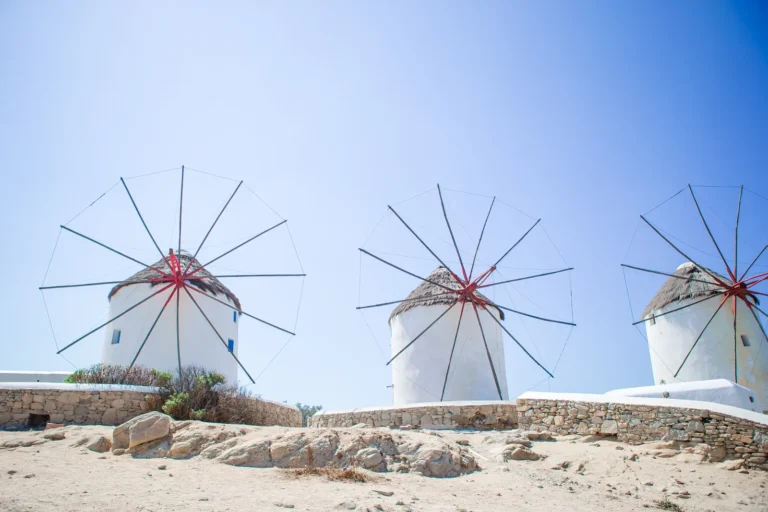 Mykonos
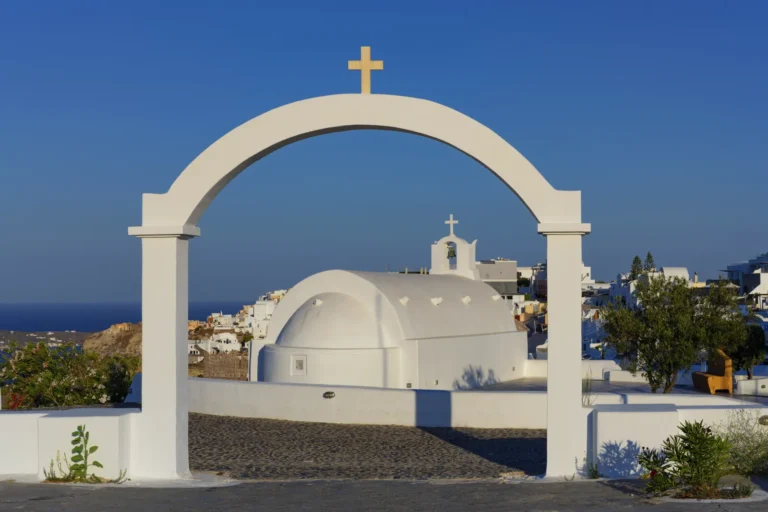 Santorini
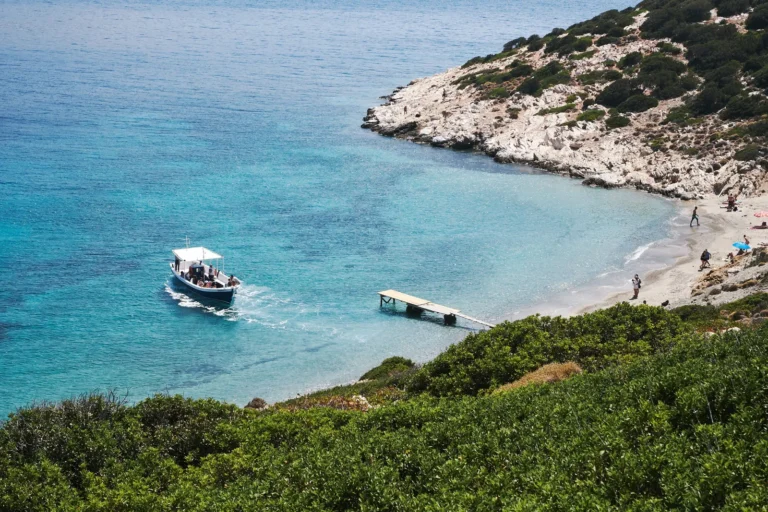 Amorgos
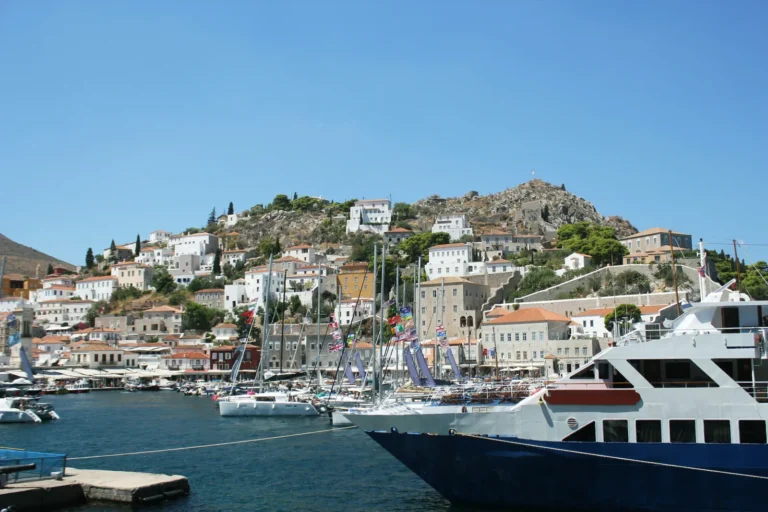 Hydra
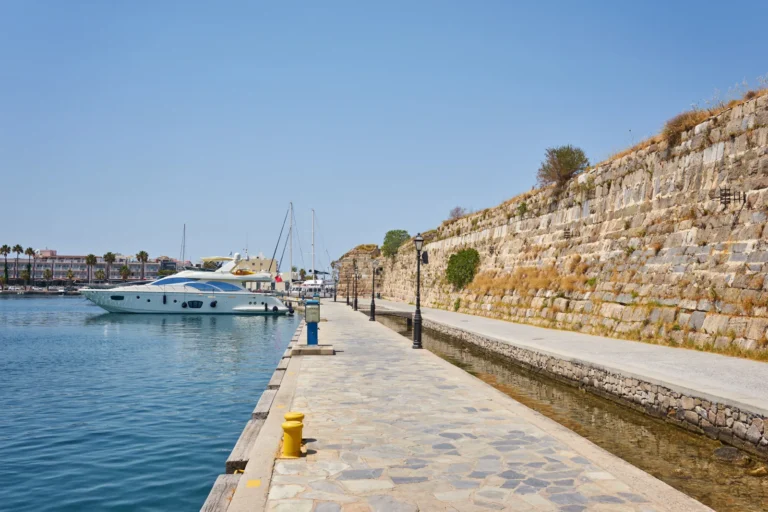 Kos
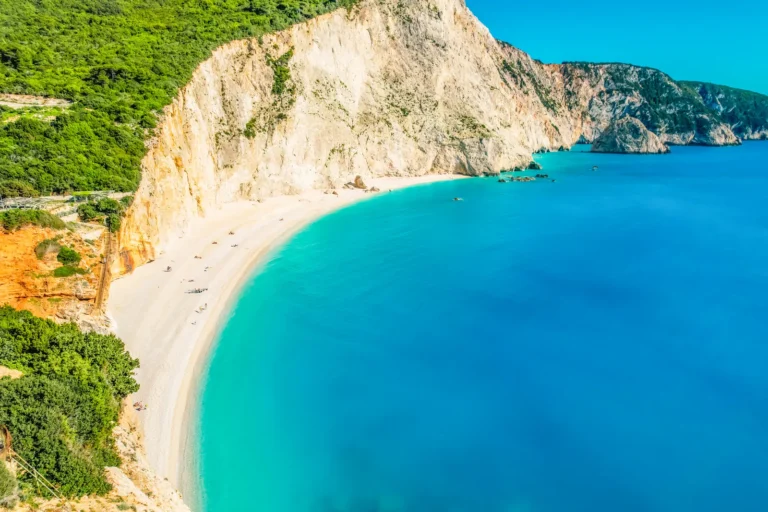 Lefkada
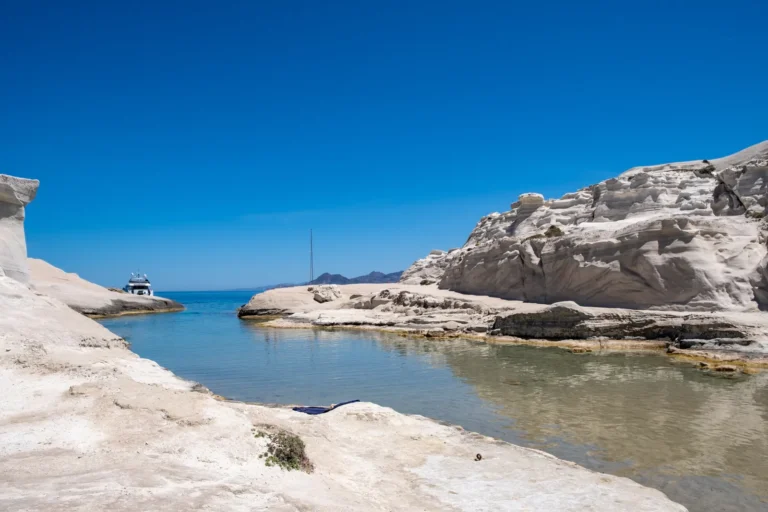 Milos
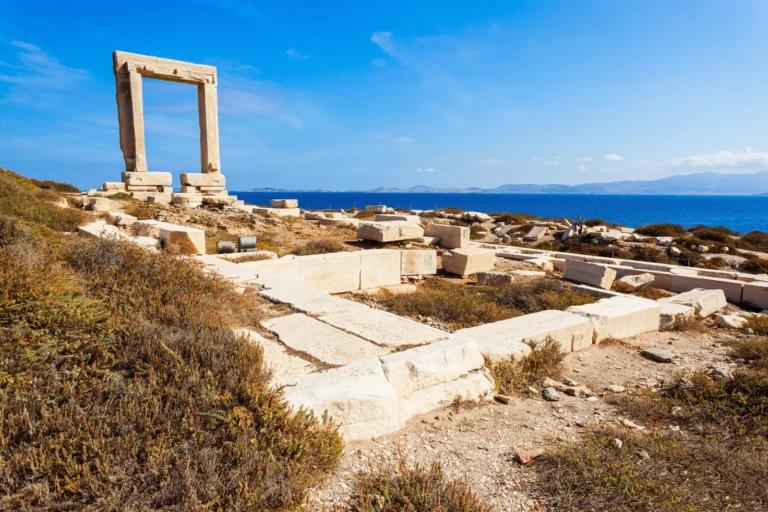 Naxos
 Paros
 Rhodes
 Skiathos
 Thessaloniki
 Zakynthos
 Athens