When is the best time to visit Santorini? The best time to visit Santorini is late April to June and September to mid-October: it is 20 to 28 °C (68 to 82 °F) in the afternoon, it hardly rains and the crowds are thinner than in midsummer. July and August are the hottest, most expensive and busiest months; from November to March the island is quiet and cooler, and many hotels and restaurants close. To compare this high season with its livelier neighbor, our comparison to choose between Mykonos and Santorini uses the same criteria.
Santorini, in the Cyclades, has a dry Mediterranean climate: very little rain from May to September, a mild but windy winter, and most of the precipitation between November and March. The island is small and very exposed to the wind, especially the meltem, the north wind that often blows in summer. Here is how to choose your month, based on measurements from the island’s weather station.

Our travel deals for Santorini
Affiliate links: we earn a commission, at no extra cost to you.
 FlightsKiwi.comCompare flights and airline combinations to Santorini.Compare flights

When to go to Santorini at a glance
- Best times late April to June, September to mid-October
- Best compromise June and September, for a warm sea without the August peak
- Hottest July–August, an average high of about 30 °C (86 °F)
- Wettest December and January (about 53 to 55 mm (2.1 to 2.2 in) a month)
- For walking from Fira to Oia April–May and October
- Plan ahead for Orthodox Easter, August 15 and the port-call days of many cruise ships
When to go to Santorini by priority
- Best weather: late April to June and September to mid-October; May and September are the most balanced
- Cheapest: April, May and October, at mid-range prices with the island open; November to March, low prices but many businesses closed
- Fewest crowds: late April, May or October, avoiding Orthodox Easter and the port-call days of many cruise ships
- Events: Orthodox Easter (date varies, March to May), village festivals in summer, August 15 (peak crowds)
Santorini: the calendar at a glance
✅ Best months: April, may, June, September, October
❌ Period to avoid: January, February, December
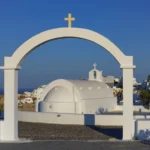
Climate in Santorini month by month
| Month | Avg. max | Avg. min | Rain | Crowds | Prices | Verdict |
|---|---|---|---|---|---|---|
| January | 14.3 °C (58 °F) | 10.1 °C (50 °F) | 53 mm (2.1 in) | Very low | Low | ❌ Cool, windy, many businesses closed |
| February | 14.7 °C (58 °F) | 10.3 °C (51 °F) | 41 mm (1.6 in) | Very low | Low | ❌ Off season, cold sea |
| March | 16.1 °C (61 °F) | 11.3 °C (52 °F) | 45 mm (1.8 in) | Low | Low | ⚠️ Quiet and cool, gradual reopenings |
| April | 19.6 °C (67 °F) | 13.6 °C (56 °F) | 12 mm (0.5 in) | Moderate (Orthodox Easter) | Moderate | ✅ Mild, ideal for walking and sightseeing |
| May | 23.3 °C (74 °F) | 16.9 °C (62 °F) | 8 mm (0.3 in) | Moderate | Moderate | ✅ Dry, bright, prices still reasonable |
| June | 27.9 °C (82 °F) | 21.0 °C (70 °F) | 4 mm (0.2 in) | High | High | ✅ Warm, warming sea, long days |
| July | 30.1 °C (86 °F) | 23.3 °C (74 °F) | 0 mm (0.0 in) | Very high | Very high | ⚠️ Heat, wind and crowds |
| August | 30.2 °C (86 °F) | 23.5 °C (74 °F) | 3 mm (0.1 in) | Very high | Very high | ⚠️ Peak crowds and prices |
| September | 27.2 °C (81 °F) | 21.3 °C (70 °F) | 3 mm (0.1 in) | High | High | ✅ Warm sea, crowds falling |
| October | 22.8 °C (73 °F) | 17.5 °C (64 °F) | 15 mm (0.6 in) | Moderate | Moderate | ✅ Mild, gradual end of season |
| November | 19.4 °C (67 °F) | 14.7 °C (58 °F) | 34 mm (1.3 in) | Low | Low | ⚠️ Rain increasing, reduced offer |
| December | 15.6 °C (60 °F) | 11.5 °C (53 °F) | 55 mm (2.2 in) | Very low | Low | ❌ The wettest month |
These figures come from a station at 183 m (600 ft) above sea level, on the island. By the sea, on the east-coast beaches such as Kamari or Perissa, afternoons are often a little warmer; on the caldera rim, in Fira, Imerovigli or Oia, the wind makes evenings cooler, even in summer. Bring something warm for the sunset from April to June and in October. According to the UK FCDO (GOV.UK, updated 11 August 2026), Greece can experience extreme heat: avoid walking during the hottest hours of the day.
The seasons in Santorini: pros and cons
Spring (March to May): Santorini for walkers
Highs rise from 16 °C (61 °F) in March to 23 °C (73 °F) in May, and rain becomes rare from April (12 mm (0.5 in) on average, 8 mm (0.3 in) in May). It is the ideal season for the trail along the caldera rim between Fira and Oia, for the Akrotiri site and for inland villages such as Pyrgos. Hotels and restaurants reopen between March and April depending on the business. The sea is still cool for most swimmers.
- Pros: pleasant temperatures for walking, soft light, moderate prices, less crowded alleys
- Cons: cold sea, sometimes strong wind, some businesses still closed in March
- Our tip: late April and May, avoiding the Orthodox Easter weekend if possible
Summer (June to August): high season
It hardly rains at all from June to August. Highs reach 28 °C (82 °F) in June and 30 °C (86 °F) in July–August, more during heatwaves. The meltem, often strong in July and August, cools the air but can stir up the sea and disrupt some boats. It is also when the island receives the most visitors, notably on cruise-ship port-call days: the alleys of Oia at sunset and the center of Fira are then very crowded.
- Pros: warm sea, near-guaranteed sun, all boat excursions and all businesses open
- Cons: crowds, peak prices, heat, wind that can cancel boat trips
- Who is it for? A beach and caldera stay; June is more affordable and slightly less busy than July–August
Autumn (September to November): the shoulder season
September keeps the summer’s warmth (27 °C (81 °F)) and a warm sea, with crowds falling once the summer holidays end. October stays mild (23 °C (73 °F)) and still dry (15 mm (0.6 in)), which makes it an excellent month to combine walking, sightseeing and swimming for those who do not mind slightly cooler water. In November the rains return (34 mm (1.3 in)) and part of the tourist offer closes.
- Pros: warm sea in September, softer light, falling prices
- Cons: gradual closures at the end of the season, shorter days, fewer ferry connections
- Our tip: September and the first half of October are among the best dates of the year
Winter (December to February): the island at rest
It is about 14 to 16 °C (57 to 61 °F) in the afternoon and 10 to 12 °C (50 to 54 °F) at night, with the wettest months of the year (41 to 55 mm (1.6 to 2.2 in)). The wind makes it feel colder than the figures suggest. The villages remain inhabited, but many hotels, restaurants and shops close, and ferry and air connections are less frequent. For those who want above all the caldera panoramas without the crowds, it is an option, provided you accept an island in slow motion.
- Pros: caldera without the crowds, low prices, local life
- Cons: no swimming, wind and rain, very reduced offer, less frequent connections
- Who is it for? A short photo and relaxation stay, or a stopover in a wider trip to Greece
When to go to Santorini by area of the island
| Area | Highlights | Best time | Good to know |
|---|---|---|---|
| Fira and Firostefani | Caldera views, lively atmosphere, buses | April–June, September–October | Very busy on cruise-ship port-call days |
| Imerovigli | Panoramas, Skaros rock | May–June, September–October | Quieter than Fira, expensive hotels |
| Oia | Sunsets, white houses | April–May, October | Crowds at sunset in summer |
| Kamari and Perissa (east coast) | Black sand beaches, more affordable hotels | June–September | No caldera views |
| Pyrgos and the interior | Hilltop village, vineyards | April–October | Quiet, car or bus useful |
The caldera: Fira, Imerovigli and Oia
The villages perched on the caldera rim have the island’s most famous views. In spring and autumn you enjoy the terraces and the rim trail without the heat or the crush. In summer, get up early to stroll through Oia and Fira before the groups arrive.
The beaches of the east and south coasts
The gently sloping beaches of Kamari, Perissa and Perivolos, covered in black volcanic sand, are the most practical for swimming. The black sand gets very hot in summer: bring sandals. The swimming season runs mainly from June to September, and into early October for many swimmers.
Pyrgos, Megalochori and the vineyards
The more agricultural interior holds traditional villages and wine estates. The grape harvest generally takes place in summer, on a date that varies from year to year. It is a good alternative to the caldera villages on the busiest days.
When to go to Santorini for your plans
| Your plan | Best time | Good to know |
|---|---|---|
| Beach and swimming | June to September | June and September are cheaper than August |
| Fira–Oia hike | April–May, October | Trail exposed to sun and wind |
| Akrotiri site and museums | April–May, October | Covered site, but heavy crowds in summer |
| Sunsets in Oia | April–May, October | Arrive early or choose another viewpoint |
| Honeymoon | May–June, September | Book hotels with a view several months ahead |
| Tight budget | April, October | Stay in Kamari, Perissa or the interior |
| Combined with Crete or other Cyclades | May–June, September | More ferry connections in season |
Major events in Santorini
| Period | Event | Good to know |
|---|---|---|
| March 25 | Greek Independence Day | Parades, public holiday |
| March to May (date varies) | Orthodox Easter | The most important festival of the year; date often different from Western Easter |
| August 15 | Dormition of the Virgin Mary | Religious festivals, peak crowds in Greece |
| Summer | Village festivals (panigyria) | Patron saint festivals; local dates |
| October 28 | Ochi Day | Parades, national holiday |
Santorini month by month
Santorini in January: Cool (14 °C (57 °F) in the afternoon) and one of the wettest months (53 mm (2.1 in)). Frequent wind, many businesses closed. For the panoramas only.
Santorini in February: Close to January, a little less wet. Lowest prices, very reduced offer, limited connections.
Santorini in March: Still cool (16 °C (61 °F)) and fairly damp (45 mm (1.8 in)). The first hotels reopen; March 25 is a national holiday.
Santorini in April: Mild (20 °C (68 °F)) and increasingly dry. A very good month for walking from Fira to Oia and visiting Akrotiri. Orthodox Easter often falls in April.
Santorini in May: One of the best months: 23 °C (73 °F), almost no rain, island open and still affordable. Sea cool for most swimmers.
Santorini in June: Warm (28 °C (82 °F)), dry, very long days. Start of the beach season before the big crowds.
Santorini in July: The heart of summer: 30 °C (86 °F) on average, no rain, frequent meltem. Crowds and high prices.
Santorini in August: As hot as July, with peak crowds around August 15. Book very early.
Santorini in September: Warm sea, 27 °C (81 °F) in the afternoon, crowds falling. One of the best months of the year.
Santorini in October: Mild (23 °C (73 °F)) and still dry (15 mm (0.6 in)). Ideal for walking; gradual end of season for some businesses.
Santorini in November: Cooler (19 °C (66 °F)) and wetter (34 mm (1.3 in)). Many hotels close.
Santorini in December: The wettest month (55 mm (2.2 in)), cool and windy. Very quiet island.
When to book your trip to Santorini
Santorini has relatively few accommodations with caldera views compared with demand. For June to September, and especially for hotels in Oia and Imerovigli, book 4 to 6 months ahead. For April, May and October, 1 to 3 months is generally enough. Rental cars and quad bikes can also run short in August. Out of season, check ferry schedules before fixing your dates. If you stop over in Athens, a stay in Athens lets you see the Acropolis before the ferry.
Planning your trip to Santorini
- Entry requirements: rules depend on your nationality: see our entry requirements for Greece.
- Currency: the euro.
- Health: according to the UK FCDO (GOV.UK, updated 11 August 2026), get appropriate travel insurance covering local treatment and medical evacuation; a GHIC or EHIC is not an alternative to travel insurance.
- Safety: according to the UK FCDO (GOV.UK, updated 11 August 2026), there is a risk of earthquakes and earth tremors in Greece, which can also experience wildfires, extreme heat and flash floods; set your phone to receive emergency alerts. Many organized beaches have a flag system: a red flag means you must not enter the water.
To plan your stay, see our Santorini guide. To compare with the other islands, see when to go to Greece, when to go to Crete, when to go to Corfu, when to go to Malta and our Greece travel guide. To compare with other destinations, see also our selection where to go in May.
Frequently asked questions
What is the best month to visit Santorini?
May and September offer the best balance: dry weather, 23 to 27 °C (73 to 81 °F) in the afternoon, island open and fewer people than in July–August. June and September are the best choices if swimming is your priority.
Can you swim in Santorini in October?
Yes for many swimmers, especially in the first half of the month: the sea keeps some of the summer’s warmth and the afternoon still reaches 23 °C (73 °F) on average. The wind can make getting out of the water chilly.
Is Santorini too crowded in summer?
In July and August, Oia at sunset and the center of Fira are very crowded, especially on days when several cruise ships are in port. Visit early in the morning, stay outside the most popular villages or prefer May, June, September and October.
What is the wettest month in Santorini?
December and January, with about 53 to 55 mm (2.1 to 2.2 in) of rain on average at the National Observatory of Athens station. From June to September it hardly rains.
Is the weather good in Santorini in winter?
It is mild for the season (14 to 16 °C (57 to 61 °F) in the afternoon), but wind and rain are frequent and many hotels and restaurants close. It is a time for panoramas and calm, not for the beach.
Is the wind a problem in Santorini?
The meltem, a north wind that is frequent in summer, cools the air but can make the sea rough and cancel some boat trips. Build some slack into your schedule and bring something warm for evenings on the caldera.
What is the cheapest time to go to Santorini?
From November to March, but many hotels and restaurants are closed and swimming is out of the question. The best compromise between price and weather is in April and October: mild weather, island open and mid-range prices.
When are there the fewest crowds in Santorini?
From November to March the island is very quiet. For an island that is open but less busy, aim for late April, May or October, avoiding the Orthodox Easter weekend and the port-call days of many cruise ships.
Is April a good time for Santorini?
Yes for sightseeing and walking: about 20 °C (68 °F) in the afternoon, 12 mm (0.5 in) of rain on average and moderate crowds. The sea stays cool for swimming, and Orthodox Easter, often in April, draws people.
Our sources
- National Observatory of Athens (meteo.gr): monthly averages for the Santorini station, July 2013 to March 2025
- Health and safety information read on 26 October 2026: UK FCDO, foreign travel advice for Greece (GOV.UK, updated 11 August 2026). Public holiday dates checked on 11 November 2026: Gov.gr, official holidays
- Our methodology
Updated November 2026.