
Choose Santorini for the caldera panoramas, the Oia sunsets, the Akrotiri site and the ridge path between Fira and Oia: it is the island of couples and walkers. Choose Mykonos for the sandy beaches of the south coast, the beach clubs and the nightlife of Chora, with Delos, a UNESCO World Heritage site, half an hour away by boat. Both islands are among the most expensive in Greece: aim for late May-June or September.
Mykonos or Santorini? The two most famous Cyclades have a lot in common: the euro, the meltem wind in July-August and a very quiet low season from November to March. They differ in setting and atmosphere. Santorini is an ancient volcano, with villages perched more than 200 m (656 ft) above the sea and black-sand beaches. Mykonos is lower, with beaches and a party reputation. This comparison uses only the data published in our guides to Mykonos and Santorini.
Mykonos or Santorini: the essentials
- Views and sunsets: Santorini (caldera, Oia, Imerovigli)
- Partying and beach clubs: Mykonos (Paradise, Super Paradise, Chora in the evening)
- Beaches: Mykonos for sandy beaches and sheltered south-coast beaches; Santorini for black volcanic sand
- Archaeology: a tie, Delos from Mykonos, Akrotiri on Santorini
- Climate: Santorini slightly hotter in summer (about 30 °C / 86 °F in July-August, against 28 °C / 82 °F in Mykonos)
- Budget: both are expensive; Santorini slightly less on a small budget (about €75 to 145 a day, against €90 to 150 in Mykonos in high season)
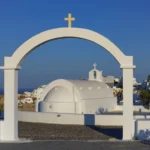
Mykonos or Santorini: criteria compared
| Criterion | Mykonos | Santorini | Advantage |
|---|---|---|---|
| Best time | Late May-June and September | Late April to June and September to mid-October | Santorini (longer season) |
| Summer climate | 27.8 °C (82 °F) average July high, almost no rain | 30.1 °C (86 °F) in July and 30.2 °C (86 °F) in August, almost no rain | Mykonos if you dislike heat |
| Spring | 22.6 °C (73 °F) in May, 5.9 mm (0.2 in) of rain | 23.3 °C (74 °F) in May, 8 mm (0.3 in) of rain | Tie |
| Ferry from Athens | From Piraeus or Rafina; durations vary widely by vessel and season | From Piraeus or Rafina; durations vary widely by vessel and season | Tie |
| Ideal length of stay | 3 to 5 days | 3 to 4 days | Tie |
| Budget per day (small budget / comfort) | Roughly €90 to 150 / €250 to 450 in high season | Roughly €75 to 145 / €200 to 460 | Santorini, narrowly |
| Scenery | Chora lanes, windmills, Little Venice | Caldera, cliffs over 300 m (984 ft), perched villages | Santorini |
| Beaches | Sand, south coast sheltered from the meltem (Ornos, Platis Gialos, Psarou) | Black sand, very hot in summer (Kamari, Perissa, Perivolos) | Mykonos |
| Nightlife | Beach clubs and a very lively Chora | Lively Fira, calmer elsewhere | Mykonos |
| Hiking | Armenistis lighthouse, Ano Mera | Fira-Oia ridge path, about 10 km (6 mi) | Santorini |
| Entry (UK citizens) | Passport issued less than 10 years before arrival and valid 3 months after you leave the Schengen area; visa-free up to 90 days in any 180 | Same (Schengen rules) | Tie |
| Entry (US citizens) | No visa up to 90 days; passport with at least six months of remaining validity advised | Same | Tie |
| Natural hazards | Earthquakes possible (all of Greece); high wildfire risk April to October | Earthquake and volcanic risk, rockfalls on some cliffs; wildfire risk | Mykonos |
Climate: two dry islands, Santorini hotter
Both islands have an almost rain-free summer and a cool, windy, rainy winter. Santorini is about 2 °C (4 °F) hotter in the afternoon in July-August, according to the National Observatory of Athens averages used in our guides. Mykonos gets a little more rain in winter (66 mm / 2.6 in in January, against 53 mm / 2.1 in on Santorini). On both, the meltem, the northerly summer wind, cools the air but roughs up the sea: it can cancel boats to Delos or trips to the Santorini volcano.
| Month | Mykonos: high / rain | Santorini: high / rain |
|---|---|---|
| April | 18.8 °C (66 °F) / 19 mm (0.7 in) | 19.6 °C (67 °F) / 12 mm (0.5 in) |
| May | 22.6 °C (73 °F) / 6 mm (0.2 in) | 23.3 °C (74 °F) / 8 mm (0.3 in) |
| June | 26.3 °C (79 °F) / 4 mm (0.2 in) | 27.9 °C (82 °F) / 4 mm (0.2 in) |
| July | 27.8 °C (82 °F) / 0 mm (0.0 in) | 30.1 °C (86 °F) / 0 mm (0.0 in) |
| August | 27.6 °C (82 °F) / 1 mm (0.0 in) | 30.2 °C (86 °F) / 3 mm (0.1 in) |
| September | 25.7 °C (78 °F) / 10 mm (0.4 in) | 27.2 °C (81 °F) / 3 mm (0.1 in) |
| October | 22.0 °C (72 °F) / 24 mm (0.9 in) | 22.8 °C (73 °F) / 15 mm (0.6 in) |
| January | 14.6 °C (58 °F) / 66 mm (2.6 in) | 14.3 °C (58 °F) / 53 mm (2.1 in) |
Santorini has a slightly longer season: April is already classed as favorable for walking and sightseeing, and October stays mild and dry (15 mm / 0.6 in). In Mykonos, April is mild but the sea is cold, and most hotels reopen between April and May. For detail: when to go to Santorini and when to go to Greece.
What to see: caldera versus Chora and Delos
Santorini
Santorini is first looked at from the rim of its caldera. Fira, the capital, is perched more than 200 m (656 ft) above the sea; Oia, at the northern tip, draws crowds at sunset; Imerovigli and the Skaros rock offer the same views with more calm. The ridge path from Fira to Oia takes 3 to 5 hours on foot. In the south, the Akrotiri site, a Bronze Age town buried in the great eruption about 3,600 years ago, is one of Greece’s major archaeological visits. Add a boat trip to the Nea Kameni volcano and the hot springs, and an assyrtiko tasting around Pyrgos and Megalochori.
Mykonos
Mykonos revolves around Chora, a maze of white lanes designed to disorient pirates, Little Venice and the Kato Mili windmills, the busiest spot at sunset, and the Paraportiani church. Half an hour away by boat, Delos, a World Heritage site, is one of Greece’s major archaeological sites. The village of Ano Mera and its Tourliani monastery show a slower island. The rest of the stay is spent on the beaches: family-friendly at Ornos and Platis Gialos, chic at Psarou, party-oriented at Paradise and Super Paradise, wilder in the north at Agios Sostis.
Beaches: the edge goes to Mykonos
For a beach stay, Mykonos wins. Its south-coast beaches are sheltered from the meltem and served by bus or water taxis. On Santorini, the long beaches of Kamari, Perissa and Perivolos are well equipped, but their black volcanic sand gets very hot in summer, and the famous Red Beach is exposed to rockfalls. Sunbeds are often paid on both islands, sometimes very expensive at the Mykonos beach clubs.
Budget: two of the most expensive islands in Greece
| Item (per person per day) | Mykonos (high season) | Santorini |
|---|---|---|
| Accommodation, small budget / comfort | Roughly €50 to 90 / €150 to 300 | Roughly €35 to 70 / €100 to 250 |
| Meals | Roughly €25 to 40 / €60 to 100 | Roughly €25 to 40 / €50 to 90 |
| Local transport | Roughly €5 to 10 / €30 to 60 | Roughly €5 to 15 / €20 to 40 |
| Activities and beaches | Roughly €10 to 20 / €30 to 60 | Roughly €10 to 20 / €30 to 80 |
| Total | Roughly €90 to 150 / €250 to 450 | Roughly €75 to 145 / €200 to 460 |
Accommodation makes the difference: on Mykonos it is expensive everywhere in summer; on Santorini, it is mainly rooms with a caldera view that push up the bill. To cut costs, stay in Kamari or Perissa on Santorini, in Ornos or Agios Stefanos on Mykonos, take the bus and eat in tavernas and bakeries rather than at beach clubs.
Mykonos or Santorini by traveler profile
| Profile | Verdict | Why |
|---|---|---|
| Couples, honeymoon | Santorini | Caldera sunsets, hotels with a view in Imerovigli and Firostefani |
| Partying and nightlife | Mykonos | Paradise and Super Paradise beach clubs, lively Chora in the evening |
| Families | Mykonos | Easy beaches at Ornos and Platis Gialos; on Santorini, many caldera hotels have only stairs |
| Beach | Mykonos | Sandy beaches and a south coast sheltered from the wind |
| Culture and archaeology | Tie | Delos (UNESCO) on one side, Akrotiri and the Museum of Prehistoric Thera on the other |
| Hiking | Santorini | Fira-Oia path and the Skaros rock |
| Small budget | Santorini, narrowly | Slightly lower budgets on our pages, if you stay away from the caldera |
| Quiet | Santorini off-season | Pyrgos, Megalochori; on Mykonos, only Ano Mera and the north are peaceful |
Couples
Our guide rates Santorini as very well suited to couples: sunsets from Oia, Imerovigli or Pyrgos, hotels with infinity pools over the caldera, wine tastings. Mykonos also works, preferably outside July-August: sunset at Little Venice, Psarou beach, boat trips to the coves. For a shorter break, see also our ideas for a romantic getaway.
Families
Mykonos has the edge thanks to its family-friendly, sheltered beaches, but Chora is noisy in summer and prices climb fast. On Santorini, Kamari, with its equipped beaches and buses to Fira, is the best base; avoid hotels carved into the cliff, reached only by stairs, with small children or strollers.
Partying
No hesitation: Mykonos. Its beach clubs and lively lanes late into the night are its trademark in July-August. Santorini has nightlife concentrated in Fira, but the island draws visitors mainly for its panoramas.
Entry requirements and safety
UK citizens. According to the UK FCDO (GOV.UK, updated 11 August 2026, read 26 October 2026), Greece follows Schengen rules: your passport must have been issued less than 10 years before arrival and expire at least 3 months after the day you plan to leave the Schengen area; you can travel without a visa for up to 90 days in any 180-day period for tourism. US citizens. According to the U.S. State Department (travel.state.gov, last updated February 19, 2026), you may enter Greece without a visa for up to 90 days for tourism or business; your passport should have at least six months of remaining validity, although Greek law requires three months beyond your departure.
The FCDO notes a high risk of wildfires from April to October, a risk of earthquakes and earth tremors, and regular strikes, sometimes called at short notice, that can disrupt ferries and flights. The U.S. State Department also says transport strikes can interrupt seaports and airports. Check ferry and flight times before you travel.
Why not both?
It is the most common option. Our Mykonos guide suggests a 10-day Cyclades circuit: two days in Athens for the Acropolis, three days in Mykonos and Delos, four days on Santorini, reached by direct ferry in season, then back to Athens. Timetables and sea links vary a lot by season: check them before fixing your itinerary. To add other islands, see our guide to the Greek islands and our comparison Naxos or Paros.
Frequently asked questions
Mykonos or Santorini for a couples trip?
Santorini, generally: caldera sunsets, hotels with a view in Imerovigli or Oia, the ridge path and vineyards. Mykonos suits you better if you also want beaches and nightlife.
Which island is cheaper?
Both are among the most expensive in Greece. Our guides indicate roughly €90 to 150 a day per person on a small budget in Mykonos in high season, and €75 to 145 on Santorini, excluding flights. Prices drop in May, June, September and October.
Where are the best beaches?
On Mykonos, with south-coast beaches sheltered from the meltem. On Santorini, the east-coast beaches (Kamari, Perissa) have black volcanic sand, very hot in summer.
What is the best time to go?
Late May-June and September for both islands. Santorini is pleasant from late April to mid-October. July and August are the hottest, windiest and most expensive months.
Can you visit Mykonos and Santorini on the same trip?
Yes: the two islands are linked by direct ferry in season. Allow three days on Mykonos and three to four days on Santorini, with Athens at the start or end of the trip.
How many days do you need?
Three to five days for Mykonos (Chora, Delos, beaches) and three to four days for Santorini (Fira, Oia, caldera path, Akrotiri, volcano).
Our sources
- Our published guides, the source of all data on this page unless stated otherwise: Mykonos, Santorini, when to go to Santorini, when to go to Greece
- Climate: monthly averages of the National Observatory of Athens (meteo.gr network), as cited in those guides
- Entry and safety, read on 26 October 2026: UK FCDO, Greece travel advice (GOV.UK, updated 11 August 2026); U.S. Department of State, Greece country information (last updated February 19, 2026)
- Our methodology
More contests await in our destination comparisons, for example Crete or Sicily. For the whole country: our Greece guide.
Updated November 2026.