
Choose Naxos for long, shallow sandy beaches, mountain villages, hiking up Mount Zas and one of the lowest budgets in the Cyclades: it is the island of families and walkers. Choose Paros for villages that are livelier in the evening (Naoussa, Parikia), varied beaches, the excursion to Antiparos and its position as a ferry crossroads. The two islands are less than an hour apart by boat: many travelers do both.
Naxos or Paros? These two Cyclades neighbors share the same climate, the same ideal season (late May-June and September) and the same entry rules. They differ in size, atmosphere and price. Naxos is the largest island in the Cyclades, mountainous and agricultural. Paros is more compact, livelier in the evening and slightly more expensive. This comparison uses only the data published in our guides to Naxos and Paros.
Naxos or Paros: the essentials
- Climate: identical (both of our pages use the Naxos station normals, as no official normals are published for Paros)
- Budget: advantage Naxos, about €60 to 100 a day on a small budget in high season, against €70 to 110 on Paros
- Families: Naxos, shallow sandy beaches (Agios Georgios, Agios Prokopios)
- Nightlife: Paros, with a very lively Naoussa in summer
- Hiking: Naxos and Mount Zas, the highest point in the Cyclades; Paros has the Byzantine road at Lefkes
- Ferry from Athens: Paros, slightly quicker (about 3 to 5 h, against 3 h 30 to 5 h 30)
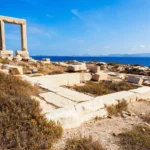
Naxos or Paros: criteria compared
| Criterion | Naxos | Paros | Advantage |
|---|---|---|---|
| Best time | Late May-June and September; April-May and October for walking | Late May-June and September; April-May and October for walking | Tie |
| Summer climate | 27.1 °C (81 °F) in July, almost no rain | Same normals (Naxos station) | Tie |
| Getting there | Fly to Athens, then a domestic flight (about 45 min) or a ferry | Fly to Athens, then a domestic flight (about 40 min) or a ferry | Tie |
| Ferry from Piraeus or Rafina | About 3 h 30 to 5 h 30 | About 3 to 5 h | Paros |
| Ideal length of stay | 5 to 7 days | 4 to 7 days, Antiparos included | Tie |
| Budget per day (small budget / comfort) | Roughly €60 to 100 / €140 to 250 in high season | Roughly €70 to 110 / €160 to 280 in high season | Naxos |
| Beaches | Long sandy beaches on the west coast (Agios Prokopios, Agia Anna, Plaka) | Varied beaches: Kolymbithres rocks, Golden Beach, southern coves | Naxos for length, Paros for variety |
| Villages | Halki, Filoti, Apeiranthos, mountain villages | Naoussa, Parikia, Lefkes | Paros |
| Heritage | Portara, Venetian Kastro, kouroi, Temple of Demeter | Ekatontapiliani church, Parikia kastro | Naxos |
| Nightlife | Less pronounced | Naoussa and Parikia very lively in summer | Paros |
| Off-season | Heavily populated island, lively all year | Most hotels and restaurants closed | Naxos |
| Entry (UK citizens) | Passport issued less than 10 years before arrival and valid 3 months after you leave the Schengen area; visa-free up to 90 days in any 180 | Same (Schengen rules) | Tie |
| Entry (US citizens) | No visa up to 90 days; passport with at least six months of remaining validity advised | Same | Tie |
Climate: no measurable difference
There is no need to choose on weather. As no official normals are published for Paros, both of our guides use those of the HNMS Naxos station: the islands are separated only by a narrow stretch of sea. It rains mostly from November to February and almost never from June to August. The meltem, the northerly summer wind, often blows in July-August: it delights windsurfers, at Mikri Vigla and Agios Georgios on Naxos, and at Golden Beach and Nea Chrysi Akti on Paros, but it roughs up the sea and can disrupt ferries.
| Month | High | Rain | Verdict for both islands |
|---|---|---|---|
| April | 18.7 °C (66 °F) | 17.6 mm (0.7 in) | Mild, cold sea, good for walking |
| May | 22.1 °C (72 °F) | 10.6 mm (0.4 in) | Mild, few crowds |
| June | 25.9 °C (79 °F) | 2.4 mm (0.1 in) | One of the best months |
| July | 27.1 °C (81 °F) | 0.9 mm (0.04 in) | Hot, windy, very busy |
| August | 27.0 °C (81 °F) | 1.6 mm (0.1 in) | Peak crowds and prices |
| September | 25.1 °C (77 °F) | 7.7 mm (0.3 in) | Sea at its best, one of the best months |
| October | 21.9 °C (71 °F) | 38.6 mm (1.5 in) | Mild, end of season |
| December | 15.9 °C (61 °F) | 69.0 mm (2.7 in) | The rainiest month |
The only nuance concerns the interior of Naxos: in mountain villages such as Apeiranthos it is noticeably cooler than by the water, which makes hiking pleasant in spring and autumn. To compare with other islands: when to go to Greece.
What to see: the big agricultural island or the lively villages
Naxos
Naxos announces itself from the port with the Portara, the marble doorway of a 6th-century BC temple that was never finished. Chora climbs toward the Venetian Kastro, with the Catholic cathedral and the archaeological museum. South of the town lie some of the longest sandy beaches in the Cyclades: Agios Georgios, Agios Prokopios, Agia Anna, Plaka, then Kastraki and Alyko, wilder. The interior makes the difference: the Tragea valley and Halki (kitron distillery), Filoti, Apeiranthos and its marble lanes, the unfinished kouroi at Melanes and Apollonas, the Temple of Demeter and the Byzantine frescoes of Panagia Drosiani. Mount Zas, just over 1,000 m (3,300 ft), can be climbed in a few hours round trip.
Paros
Paros plays on its villages. Parikia, the port, is home to the Panagia Ekatontapiliani church, one of the oldest Christian sanctuaries in Greece, and a Venetian kastro built with blocks from ancient temples. Naoussa, in the north, is a much-photographed little fishing port, lively in the evening. Lefkes, in the hills, is linked to Prodromos by the Byzantine road, about an hour on foot. For beaches: the granite rocks of Kolymbithres, Santa Maria for water sports, Golden Beach for windsurfing, Piso Livadi and Logaras for families. Opposite, Antiparos is reached in a few minutes by the Pounta ferry: a quiet village, a stalactite cave, trips to the islet of Despotiko.
Budget: Naxos, one of the most affordable Cyclades
| Item (per person per day, high season) | Naxos | Paros |
|---|---|---|
| Accommodation, small budget / comfort | Roughly €30 to 55 / €80 to 150 | Roughly €35 to 60 / €90 to 170 |
| Meals | Roughly €20 to 30 / €40 to 65 | Roughly €20 to 30 / €45 to 70 |
| Local transport | Roughly €5 to 10 / €20 to 40 | Roughly €5 to 10 / €20 to 40 |
| Activities | Roughly €5 to 15 / €20 to 40 | Roughly €10 to 15 / €20 to 40 |
| Total | Roughly €60 to 100 / €140 to 250 | Roughly €70 to 110 / €160 to 280 |
Naxos owes its gentler prices to its size and its agriculture. On Paros, prices climb sharply in July-August, especially in Naoussa: stay instead in Parikia or in the southern villages. On both islands, buses serve the main beaches in season, and village tavernas remain the cheapest places to eat. Both remain much cheaper than Mykonos or Santorini.
Naxos or Paros by traveler profile
| Profile | Verdict | Why |
|---|---|---|
| Families | Naxos | Shallow sandy beaches, more affordable prices |
| Couples | Paros | White villages of Naoussa, Parikia and Lefkes, sunsets, Antiparos |
| Small budget | Naxos | Lower daily budgets on our pages |
| Hiking | Naxos | Mount Zas, many marked paths between villages and olive groves |
| Windsurfing and kitesurfing | Tie | Mikri Vigla on Naxos, Golden Beach on Paros, in July-August |
| Nightlife | Paros | Naoussa lively in the evening |
| Culture and archaeology | Naxos | Portara, kouroi, Temple of Demeter, Kastro |
| Without a car | Tie | Buses to the beaches and main villages on both islands |
| Off-season | Naxos | Island lived in all year; Paros slows down from November to March |
Families
Naxos has the edge: Agios Georgios, within walking distance of Chora, and Agios Prokopios are shallow, and the island stays more affordable. Paros also works, with the southern beaches (Piso Livadi, Logaras) and the Valley of the Butterflies, but summer prices are slightly higher.
Couples
Our Paros guide rates it ideal for a couple: the lanes of Naoussa and Lefkes, sunset on the Parikia waterfront, a day on Antiparos. Naxos offers the Portara at sunset and quieter mountain villages. Verdict: Paros for atmosphere, Naxos for calm. For a shorter break, see also our ideas for a romantic getaway.
Hiking and nature
Naxos, larger and more mountainous, offers more trails and the highest point in the Cyclades. Paros has one flagship route, the Byzantine road from Lefkes to Prodromos, which is shorter. On both, walk in April-May or October, and start early in summer.
Entry requirements and safety
UK citizens. According to the UK FCDO (GOV.UK, updated 11 August 2026, read 26 October 2026), Greece follows Schengen rules: your passport must have been issued less than 10 years before arrival and expire at least 3 months after the day you plan to leave the Schengen area; you can travel without a visa for up to 90 days in any 180-day period for tourism. US citizens. According to the U.S. State Department (travel.state.gov, last updated February 19, 2026), you may enter Greece without a visa for up to 90 days for tourism or business; your passport should have at least six months of remaining validity, although Greek law requires three months beyond your departure.
The FCDO notes a high risk of wildfires from April to October and regular strikes, sometimes called at short notice, that can disrupt ferries and flights; the U.S. State Department also says transport strikes can interrupt seaports and airports. Check ferry times before you travel, especially in windy weather.
Why not both?
It is the simplest solution in the Cyclades: the two islands are less than an hour apart by ferry. Our guides suggest a 10-day circuit: two days in Athens, three to four days on Paros and Antiparos, two to three days on Naxos, then Santorini or Mykonos before heading home. Paros, a ferry crossroads, has frequent connections in season to Naxos, Mykonos, Santorini, Ios or Amorgos. From Naxos, boats also reach the Small Cyclades (Koufonissia, Iraklia, Schinoussa). Check timetables, which vary a lot by season. For other islands: our guide to the Greek islands and our comparison Mykonos or Santorini.
Frequently asked questions
Naxos or Paros for a family?
Naxos: its west-coast sandy beaches, such as Agios Georgios or Agios Prokopios, are shallow, and prices remain among the most affordable in the Cyclades.
Which island is cheaper?
Naxos: about €60 to 100 a day per person on a small budget in high season according to our guide, against €70 to 110 on Paros, excluding flights. Naoussa is the most expensive area on Paros.
Which island is livelier?
Paros, with Naoussa and Parikia very lively in the evening in summer. Naxos has a less pronounced nightlife.
How do I get to Naxos or Paros?
There is no direct route from most countries: fly to Athens, then take a domestic flight (about 40 to 45 minutes according to our guides) or a ferry from Piraeus or Rafina.
How long is the ferry between Naxos and Paros?
Less than an hour. It is one of the simplest links in the Cyclades, frequent in season.
Which should I choose for hiking?
Naxos, larger and more mountainous, with Mount Zas and many marked paths. Paros offers the Byzantine road at Lefkes, which is shorter.
Our sources
- Our published guides, the source of all data on this page unless stated otherwise: Naxos, Paros, when to go to Greece
- Climate: normals of the Hellenic National Meteorological Service (HNMS), as cited in those guides
- Entry and safety, read on 26 October 2026: UK FCDO, Greece travel advice (GOV.UK, updated 11 August 2026); U.S. Department of State, Greece country information (last updated February 19, 2026)
- Our methodology
More contests await in our destination comparisons. For the whole country: our Greece guide.
Updated November 2026.