The Dolomites, a limestone range in north-eastern Italy, line up walls and towers of pale rock above green alpine pastures. Listed as a UNESCO World Heritage Site in 2009, they spread across several provinces, from South Tyrol to the Veneto. Visiting the Dolomites means hiking around the Tre Cime di Lavaredo, on the Alpe di Siusi or in Val Gardena in summer, and skiing on one of the largest ski areas in the Alps in winter. This Dolomites travel guide brings together the essentials for planning your trip: must-see sights, hikes, when to go, budget, accommodation and transport.

Our travel deals for Dolomites
Affiliate links: we earn a commission, at no extra cost to you.
 FlightsKiwi.comCompare flights and airline combinations to Dolomites.Compare flights

Dolomites at a glance
- Location north-eastern Italy, provinces of Bolzano(South Tyrol), Trento, Belluno and neighbouring areas
- Languages ItalianGerman is the majority language in South Tyrol; Ladin in some valleys (Val Gardena, Val Badia, Val di Fassa)
- Currency euro (€) · currencies
- Time zone UTC+1, UTC+2 in summer (Europe/Rome)1 hour ahead of London, 6 hours ahead of New York most of the yearLocal time now: –:–
- Airports Venice and VeronaThen 2 to 3 hours by road; Innsbruck and Milan are other gateways; or train to Bolzano
- Entry Schengen area: no visa for up to 90 days for US citizens (tourism or business) and UK citizens (in any 180-day period) · travel.state.gov · GOV.UKPassport valid at least 3 months beyond your stay (US) or after leaving the Schengen area (UK)
- Electricity 220-volt system, according to the U.S. Department of State · plugsCheck that your devices accept it; you may need a plug adapter
- Budget see our budget section
When to go to the Dolomites
The best time to visit the Dolomites depends on your plans: late June to mid-September for hiking, December to March for skiing. In summer, afternoons reach about 20 to 22 °C (68 to 72 °F) at 1,200 m (3,900 ft), the lifts and mountain huts are open, but afternoon thunderstorms are frequent. September often brings more settled weather and fewer people. May, early June, October and November are shoulder seasons: snow at altitude, lifts closed and many places to stay shut.
When to go to the Dolomites: key points
- Hiking: late June to mid-September, when the huts are open
- Best compromise: the first half of September
- Skiing: December to March, with the best snow conditions generally from January to March
- Wettest: August (about 143 mm, or 5.6 in) and November (about 132 mm, or 5.2 in) in Cortina
- Coldest: January, with an average low of about -5 °C (23 °F) in Cortina
- Avoid: May and November, between seasons, if you want to hike or ski
| Month | High °C (°F) | Low °C (°F) | Rain mm (in) | Rainy days | Crowds | Prices | Verdict |
|---|---|---|---|---|---|---|---|
| January | 3.8 (39) | -5.3 (22) | 48 (1.9) | 5 | High (skiing) | High | ✅ Skiing, cold snow |
| February | 4.7 (40) | -4.9 (23) | 41 (1.6) | 5 | Very high (winter holidays) | Very high | ✅ Skiing, longer days |
| March | 8.0 (46) | -2.2 (28) | 54 (2.1) | 6 | High | High | ✅ Spring skiing, sunshine |
| April | 11.3 (52) | 1.2 (34) | 74 (2.9) | 10 | Low | Medium | ⚠️ End of the ski season, shoulder season |
| May | 15.7 (60) | 5.3 (42) | 113 (4.4) | 14 | Low | Low | ❌ Shoulder season, snow at altitude, many closures |
| June | 19.8 (68) | 8.6 (47) | 115 (4.5) | 13 | Medium | Medium | ⚠️ Huts and lifts gradually open |
| July | 21.9 (71) | 10.3 (51) | 127 (5.0) | 13 | Very high | Very high | ✅ Hiking, afternoon thunderstorms |
| August | 21.5 (71) | 10.4 (51) | 143 (5.6) | 13 | Very high (Ferragosto) | Very high | ⚠️ Peak crowds, the wettest month |
| September | 16.9 (62) | 6.8 (44) | 107 (4.2) | 9 | Medium | Medium to high | ✅ The best month for hiking |
| October | 12.4 (54) | 3.3 (38) | 121 (4.8) | 9 | Low | Low to medium | ⚠️ Autumn colours, huts closed |
| November | 7.0 (45) | -0.7 (31) | 132 (5.2) | 8 | Low | Low | ❌ Wet and snowy shoulder season |
| December | 3.9 (39) | -4.3 (24) | 62 (2.4) | 6 | High (holidays) | High | ✅ Start of the ski season |
These figures apply to Cortina, at 1,216 m (3,990 ft). It is much warmer in the main valleys: in Bolzano (about 260 m, or 850 ft), the 1991-2020 normals for Bolzano published by ISPRA show highs of nearly 30 °C (86 °F) in July. Conversely, you lose on average about 0.6 °C for every 100 m (about 1 °F per 300 ft): at around 2,500 m (8,200 ft), at the passes and around the huts, it can freeze even in summer and snow can fall at any time. Summer precipitation falls mostly as late-day thunderstorms: set off early.
Summer (late June to mid-September): hiking season
This is when everything is open: lifts, huts and pass roads. July and August are very busy, especially at Lago di Braies, the Tre Cime and on the Alpe di Siusi. Snow can linger at altitude until early July on north-facing slopes. Book huts in advance for a trek such as the Alta Via 1.
- Pros: all trails and lifts accessible, long days
- Cons: frequent afternoon thunderstorms, crowds at the famous sites, high prices in August
- Our advice: late June, or the first half of September
Autumn (mid-September to November)
September is often more settled than summer, with cool temperatures ideal for walking. The larches turn yellow in October, but most huts and lifts close between late September and mid-October, and the first snow can fall. November is a quiet, damp shoulder season.
Winter (December to March): ski season
Expect around 4 °C (39 °F) in the afternoon and -5 °C (23 °F) in the morning in Cortina. The Dolomiti Superski area links many resorts, including the famous Sella circuit (Sella Ronda). The Christmas and February holidays are the most expensive periods. Snowshoeing, cross-country skiing and sledging round out the options.
Spring (April to mid-June)
Skiing ends in April. May is the least favourable month: snow at altitude, lifts and huts closed, plenty of rain. The valleys turn green in June and the alpine meadows flower, but the high trails are sometimes still snow-covered.
Month by month: January to March for skiing; April for the end of the season; avoid May; June for flowers and the valleys; July and August for high-altitude hiking, with crowds and thunderstorms; September for quiet hiking; October for the colours, with huts closed; avoid November; December for the start of the ski season. To compare with the rest of the country, see when to go to Italy and our destination ideas for July, September and February.
Things to do in the Dolomites: the must-sees
Tre Cime di Lavaredo
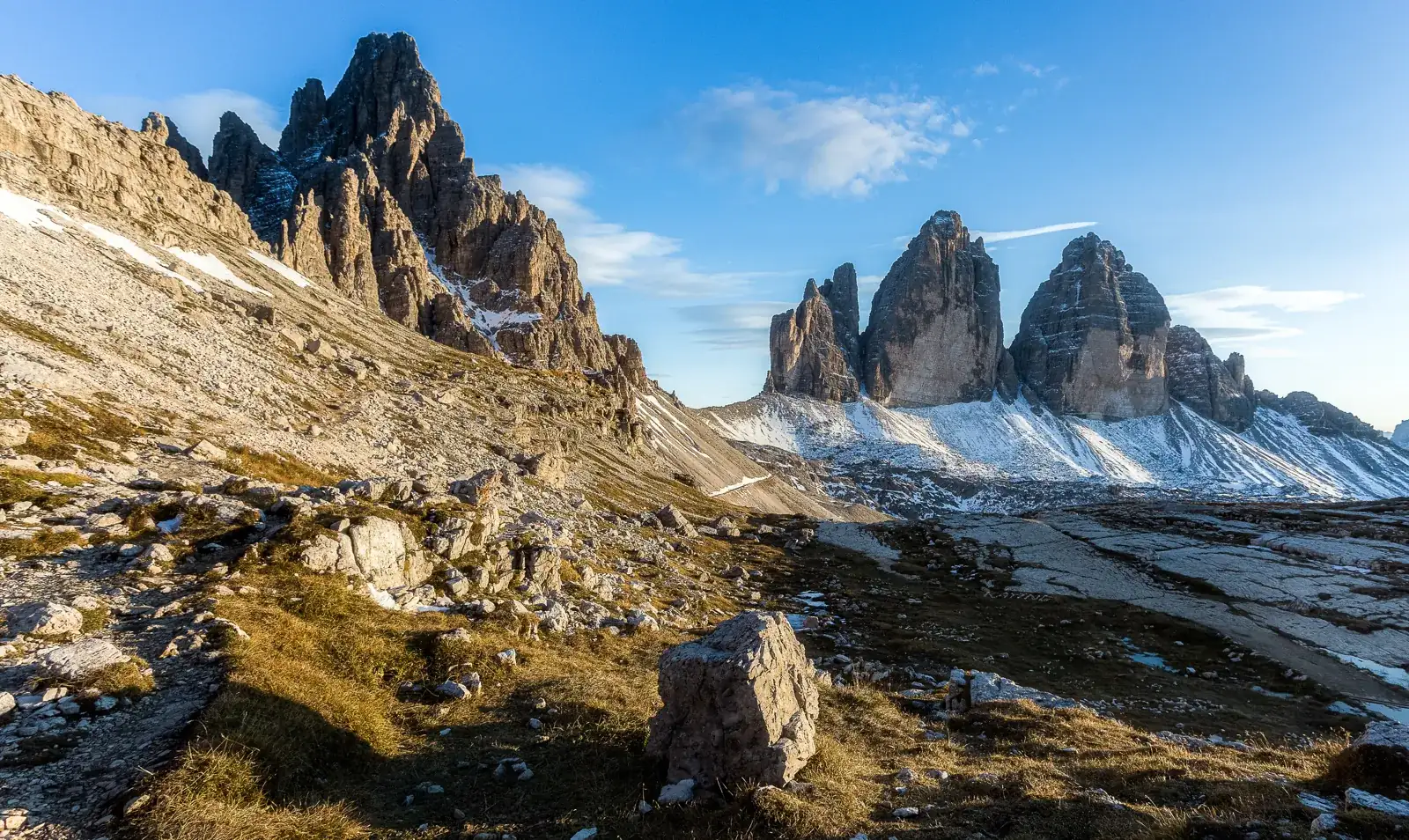
The three rock towers of the Tre Cime are the symbol of the Dolomites. The full circuit, starting from the Auronzo hut, is a loop of about 10 km (6 mi) suitable for fit hikers, with changing views of the three peaks. The road up to the Auronzo hut from Misurina is a toll road and access may be restricted in high season: check before you set off.
Lago di Braies
A green lake at the foot of a rock wall and the starting point of the Alta Via 1, Braies is one of the most photographed sites in the range. A path circles it in about an hour. In summer, car access is restricted at peak times: check the arrangements with the local tourist office, or come by bus.
Val Gardena and Seceda
Ladin-speaking Val Gardena includes Ortisei, Santa Cristina and Selva. Lifts climb to Seceda, whose knife-edge ridge is one of the best-known landscapes in the Dolomites, and towards the Sassolungo. It is a very good base, summer and winter alike.
Alpe di Siusi
This vast plateau of alpine pastures, facing the Sassolungo and the Sciliar, can be explored on foot, by bike or on cross-country skis. The walks are easy and suit families. The access road is closed to private cars during the day, with some exceptions: you go up by cable car from Siusi or by bus.
Cortina d’Ampezzo
A historic resort in the Veneto, Cortina hosted the 1956 Winter Olympics and part of the 2026 Games, together with Milan. It gives access to the Cinque Torri, the Lagazuoi and its First World War tunnels, and the Giau Pass. The Games shared with Milan are a reminder that the city often serves as a gateway: our Milan travel guide covers sights and neighbourhoods.
Val di Funes
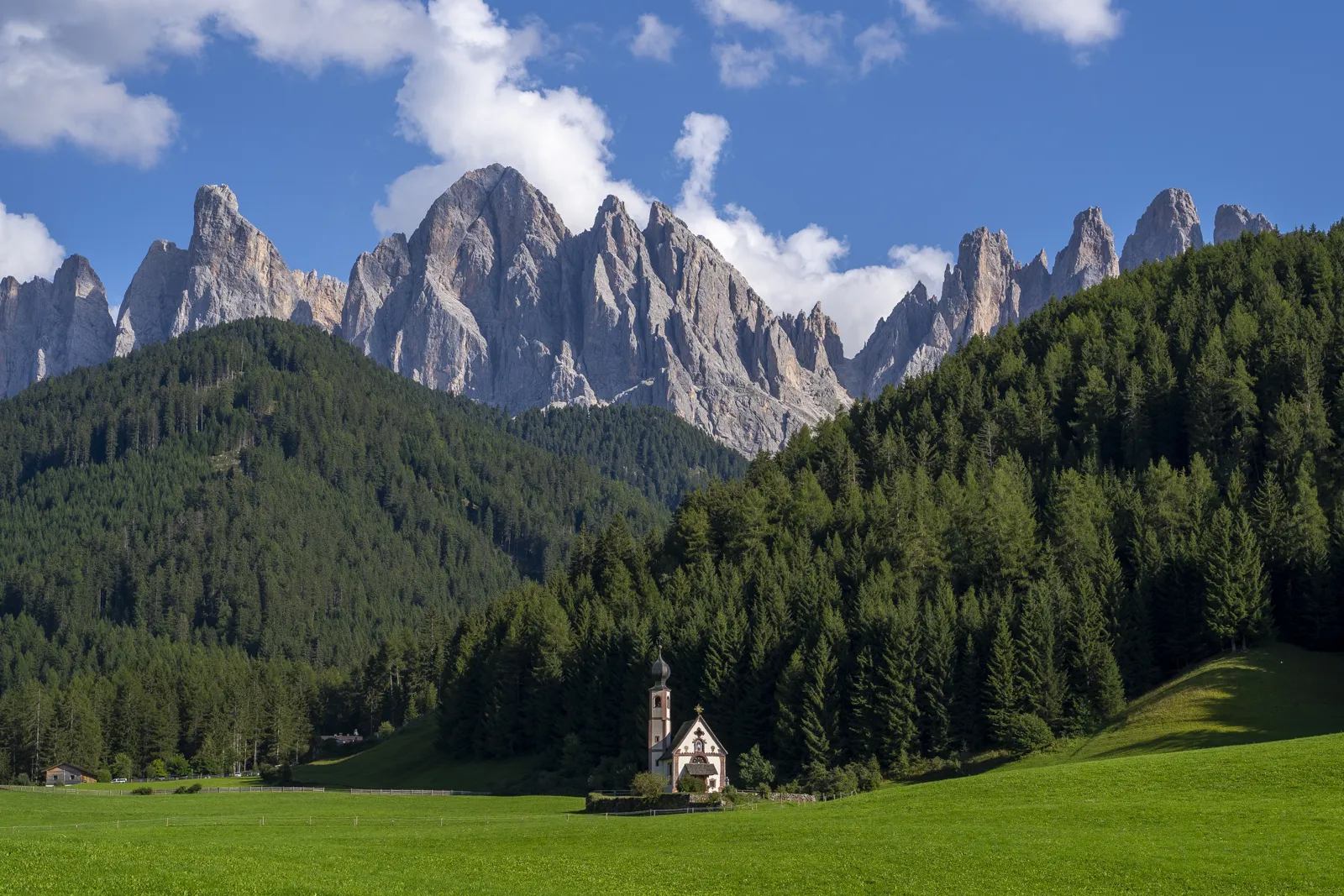
This quiet valley is known for the church of Santa Maddalena set against the Odle (Geisler) peaks. Trails into the Puez-Odle nature park start from the valley.
Lago di Carezza and the Marmolada
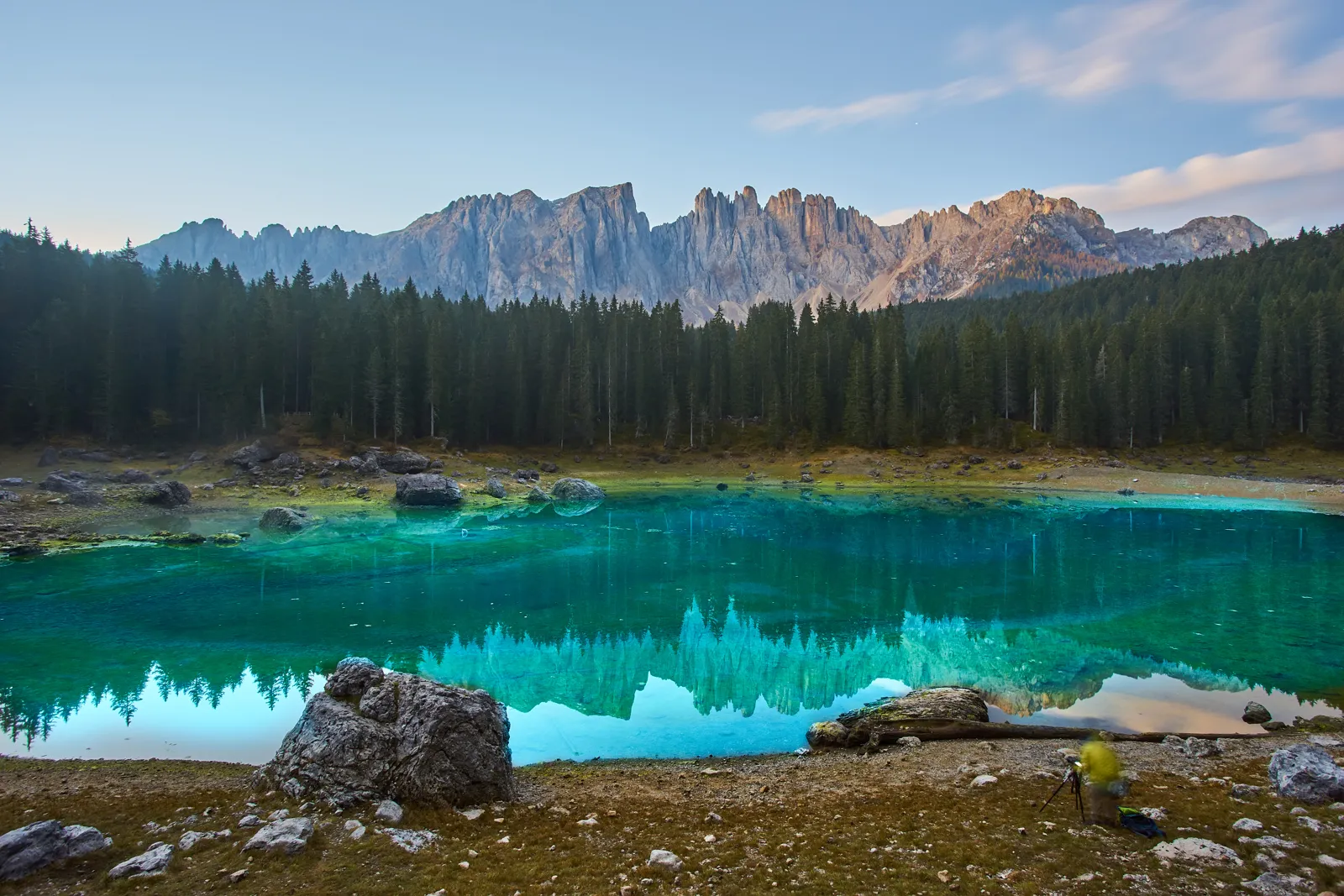
A small lake with colourful reflections at the foot of the Latemar massif, Carezza can be seen on a short walk. Further east, the Marmolada, the highest peak in the Dolomites (3,343 m, or 10,968 ft), can be reached by cable car from Malga Ciapela, depending on the season.
The passes and via ferratas
The pass roads (Sella, Pordoi, Gardena, Giau, Falzarego) offer spectacular views and are very popular with cyclists and motorcyclists in summer. The Dolomites are also the birthplace of the via ferrata, routes equipped with cables: they require specific equipment and experience, or a guide.
Bolzano
The gateway to South Tyrol, Bolzano blends Italian and Austrian influences. Its archaeological museum houses Ötzi, the Iceman. The city, served by train, is a convenient base without a car.
Hiking in the Dolomites
| Hike | Level | Approximate time | Good to know |
|---|---|---|---|
| Tre Cime circuit | Moderate | 3 to 4 h | Starts from the Auronzo hut, toll road |
| Lago di Braies circuit | Easy | About 1 h | Very busy in summer |
| Alpe di Siusi | Easy | Varies | Ideal for families |
| Seceda | Easy to moderate | 2 to 3 h | Up by lift |
| Cinque Torri and Lagazuoi | Moderate | 3 to 5 h | First World War remains |
| Alta Via 1 (Braies – Belluno) | Difficult | 8 to 12 days | Book huts early |
Set off early to avoid thunderstorms and crowds, take warm and waterproof clothing even in midsummer, and check the weather with local services. GOV.UK points out that hiking and mountaineering carry specific risks and advises making sure your insurance covers mountain rescue; follow local safety advice.
Itinerary ideas for the Dolomites
7 days
- Days 1-3: Val Gardena (Seceda, Alpe di Siusi, Val di Funes)
- Day 4: the pass road, then Val Badia
- Days 5-6: Lago di Braies and the Tre Cime di Lavaredo
- Day 7: Cortina d’Ampezzo and the Cinque Torri
10 to 14 days
- Days 1-2: Bolzano and Lago di Carezza
- Days 3-5: Val Gardena, Alpe di Siusi, Val di Funes
- Days 6-7: Val di Fassa and the Marmolada
- Days 8-10: Cortina, Cinque Torri, Lagazuoi, Giau Pass
- Days 11-12: Tre Cime and Lago di Braies
- Days 13-14: return via Venice or Verona
The Dolomites combine well with Venice, about two and a half hours by road from Cortina, or with the Tyrol in Austria via the Brenner Pass. For the whole country, see our Italy travel guide.
Who are the Dolomites for?
Our view by traveller type, based on the information in this guide:
| Profile | Our view | Why |
|---|---|---|
| Hikers | ✅ Ideal | Tre Cime, Seceda, Alta Via 1: from late June to mid-September, huts and lifts are open. |
| Skiers | ✅ Ideal | From December to March, the Dolomiti Superski area links many resorts, including the Sella circuit. |
| Families | ✅ Yes | Easy walks on the Alpe di Siusi, the Lago di Braies circuit in about an hour, Lago di Carezza. |
| Couples | ✅ Yes | Val di Funes, mountain lakes, Cortina and the pass roads; September often brings more settled weather and fewer people. |
| Tight budget | ⚠️ Possible | Roughly €100 to €160 per person per day on a budget; half board in a mountain hut is often good value. |
| Mountaineering and via ferrata | ⚠️ With experience | Via ferratas require specific equipment and experience, or a guide; it can freeze at altitude even in summer. |
Budget for a trip to the Dolomites
Indicative amounts per person per day, excluding flights:
| Item | Budget | Comfort |
|---|---|---|
| Accommodation (sharing a double room, or mountain hut) | roughly €50 to €80 | roughly €110 to €220 |
| Meals | roughly €25 to €40 | roughly €50 to €90 |
| Transport (shared rental car, buses) | roughly €15 to €25 | roughly €25 to €40 |
| Lifts and activities | roughly €10 to €20 | roughly €20 to €50 |
| Total per day | roughly €100 to €160 per person per day | roughly €200 to €350 per person per day |
In mountain huts, half board is common and often good value. Compare multi-day summer lift passes or ski passes according to your plans.
Getting around the Dolomites
- Car: the most flexible way to link valleys and passes. Mountain roads are winding and busy in summer. In winter, equip your car according to local rules (snow tyres or chains). Some access roads are restricted (Braies, Alpe di Siusi, the Tre Cime road). The U.S. State Department notes that break-ins of rented vehicles are common: leave nothing visible.
- Bus: a bus network links the main valleys and sites in season, so you can hike without a car.
- Train: Bolzano and Bressanone are on the Brenner line (Verona – Innsbruck); from there you take the bus.
- Lifts: they mainly run from mid-June to late September and from December to April.
Getting there: the main international gateways are Venice Marco Polo and Verona airports, with Innsbruck and Milan as alternatives; from there, allow 2 to 3 hours by road, or take the train to Bolzano and continue by bus.
Where to stay in the Dolomites
| Base | Best for | Good to know |
|---|---|---|
| Val Gardena (Ortisei, Selva) | Hiking and skiing, first trip | Plenty of lifts, high prices |
| Val Badia (Corvara, La Villa) | Skiing, food | On the Sella Ronda |
| Cortina d’Ampezzo | Tre Cime, Cinque Torri, Lagazuoi | Smart, expensive resort |
| Val di Fassa (Canazei) | Marmolada, Sella | Wide range of options |
| Bolzano | No car, tight budget | City, station, hot in summer |
| Mountain huts | Treks, a night at altitude | Booking essential in summer |
For a one-week stay, two bases are enough: for example Val Gardena for the west and Cortina or Val Pusteria for the east. Book several months ahead for July, August and the winter holidays.
Entry requirements, health and safety
- US citizens: Italy is in the Schengen area. You may enter for up to 90 days for tourism or business without a visa; your passport must be valid at least 3 months beyond your stay, and you need proof of sufficient funds and a return ticket (U.S. Department of State, travel.state.gov, last updated August 11, 2025).
- UK citizens: no visa for up to 90 days in any 180-day period as a tourist. Your passport must have been issued less than 10 years before the day you arrive and be valid at least 3 months after the day you plan to leave the Schengen area. The EU Entry/Exit System (EES) is being implemented: fingerprints and a photo may be taken at your first entry, free of charge (UK FCDO, GOV.UK, updated 21 October 2026).
- ID: under Italian law, police can stop you at any time for an identity check: carry photo ID at all times (GOV.UK).
- Health: UK travellers can use a GHIC or EHIC for medically necessary state healthcare (GOV.UK); travel.state.gov advises being up to date on CDC-recommended vaccinations and recommends insurance that covers medical evacuation.
- Theft: crime levels are generally low, but bag-snatching and pickpocketing are more common in city centres, at major tourist attractions and on public transport (GOV.UK); the State Department notes that break-ins of rented vehicles are common, so never leave luggage in a parked car.
- Mountains: get advice on weather and avalanche conditions before you go; off-piste skiing is very dangerous and should be done with a qualified guide. Make sure your insurance covers mountain rescue and the activities you plan (GOV.UK). The State Department lists avalanches as common in mountainous areas and snowstorms as common in the north in winter.
- Skiing: since 1 November 2025, all skiers, snowboarders and sledgers must wear a CE-certified helmet at all ski resorts, whatever their age; third-party liability insurance is a legal requirement and can be bought locally with a ski pass; off-piste, you must carry tracking equipment, a snow probe and a shovel (GOV.UK).
- Nature: it is illegal to pick various species of flowers, plants and herbs in mountain and wooded areas (GOV.UK).
- Emergencies: 112 (police), 118 (ambulance), 115 (fire), according to GOV.UK; the State Department gives 112 for all emergencies.
Practical tips
- Gear: hiking boots, warm layers, a rain jacket and sunscreen; the weather changes fast at altitude.
- Mountain huts: book for overnight stays and bring cash: not all of them accept cards.
- Languages: in South Tyrol, places often have two or three names (Italian, German, Ladin): useful for reading signs.
- Mobile data: check your home carrier’s roaming charges before you leave; an eSIM is a simple way to get local data. There may be no signal in the mountains.
- Food: knödel, speck and strudel in South Tyrol, polenta and casunziei in the Veneto.
See also our tips for choosing travel insurance and our guide to travelling from place to place.
Further reading to plan your trip
To compare with the rest of the country, see when to go to Italy and our Italy travel guide.
The Dolomites combine easily with Venice, about two and a half hours by road from Cortina: see our Venice guide and the page when to go to Venice to plan both stops.
Frequently asked questions
When is the best time to hike in the Dolomites?
From late June to mid-September, when the huts and lifts are open. The first half of September is often the most pleasant, with fewer people.
How many days do you need to visit the Dolomites?
A week lets you see Val Gardena, the Alpe di Siusi, Lago di Braies and the Tre Cime. Allow 10 to 14 days to add Cortina, the Marmolada and several hikes.
Can you visit the Dolomites without a car?
Yes, in summer, thanks to buses and lifts, by staying in Val Gardena or Bolzano, for example. A car remains more flexible for linking the passes.
Which airport should you choose for the Dolomites?
Venice is convenient for Cortina and the east of the range; Verona, Innsbruck and Bolzano are closer to the west (Val Gardena, Alpe di Siusi). Flying into Venice also lets you add a stop in the lagoon city, as long as you aim for the best time to visit Venice.
Do you need to book mountain huts?
Yes, in July and August, and especially for a trek such as the Alta Via 1. Most huts open from mid-June to late September; check the dates for each one.
Our sources
- Climate normals: 1991-2020 normals for the Cortina d’Ampezzo station (1,216 m, or 3,990 ft) published by ISPRA (Istituto Superiore per la Protezione e la Ricerca Ambientale); 1991-2020 normals for Bolzano published by ISPRA
- Entry requirements, health and safety checked on 26 October 2026: U.S. Department of State, Italy country information (last updated August 11, 2025) and UK FCDO, GOV.UK foreign travel advice for Italy (updated 21 October 2026)
- Our methodology
Updated October 2026.
To extend your trip, see our Italy guide, our Venice guide and our other destinations in Europe.