A trip to Argentine Patagonia takes you to the glaciers of Los Glaciares National Park, the Fitz Roy trails, Ushuaia’s Beagle Channel, the lakes of Bariloche and the wildlife of the Valdés Peninsula. Distances are huge and the season short: this Patagonia travel guide helps you choose your stops, build a realistic itinerary, estimate your budget and, if you wish, combine it with Chilean Patagonia.
Our travel deals for Patagonia
Affiliate links: we earn a commission, at no extra cost to you.
FlightsKiwi.comCompare flights and airline combinations to Patagonia.
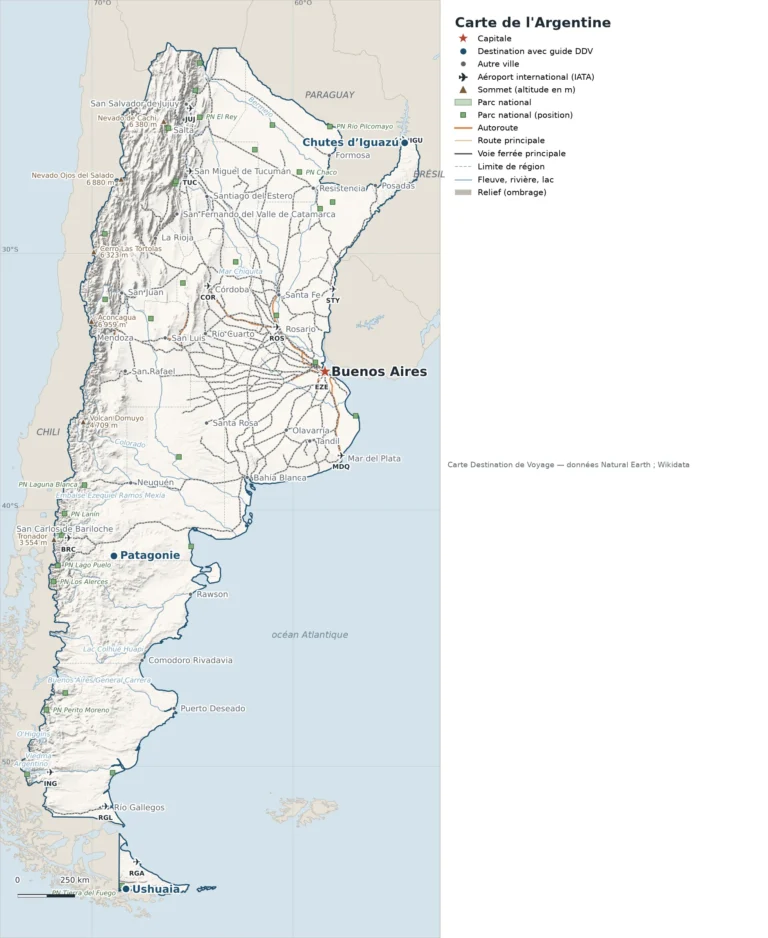
Locationsouthern Argentina, from the Bariloche lakes to Tierra del FuegoPatagonia continues on the Chilean side (Torres del Paine, Punta Arenas)
GatewaysEl Calafate, Ushuaia, Bariloche and Trelew(for Puerto Madryn), by domestic flight from Buenos Aires
Airportsinternational flights land in Buenos Aires (Ezeiza)then about 3 hours by domestic flight to El Calafate
LanguageSpanish
CurrencyArgentine peso (ARS); Chilean peso (CLP) on the Chilean side · currencies
Time zoneUTC−3, no daylight saving time · detailsLocal time now: –:–
EntryUS and UK: no visa for tourist stays of up to 90 days; passport valid for your stay · travel.state.gov · GOV.UK
Electricity220 V, 50 Hz, type I plugs (three flat pins), sometimes type C, according to Visit Argentina · plugsUS and UK travelers need an adapter; US devices must accept 220 V
Best timeNovember to March
Recommended length10 days minimum2 to 3 weeks to combine several regions
✅ Best months: January, February, March, November, December
❌ Period to avoid: may, June, July, August
The tourist season runs from November to March, during the southern summer: about 19 °C (66 °F) in the afternoon in El Calafate in January, very long days and all trails open. November and March are the best compromises. Winter (June to August) is cold and some services close, except for skiing. The month-by-month detail, with official normals, is on our page on when to go to Patagonia.
Things to do in Patagonia: the main sights
Perito Moreno Glacier (El Calafate)
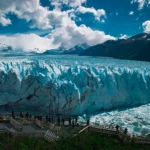
About 80 km (50 mi) from El Calafate, in the UNESCO-listed Los Glaciares National Park, the Perito Moreno is viewed from a network of walkways facing its ice front. You can also approach it by boat, or walk on it with crampons on guided outings. From El Calafate, other boat trips head to the Upsala and Spegazzini glaciers on Lake Argentino.
El Chaltén, Fitz Roy and Cerro Torre
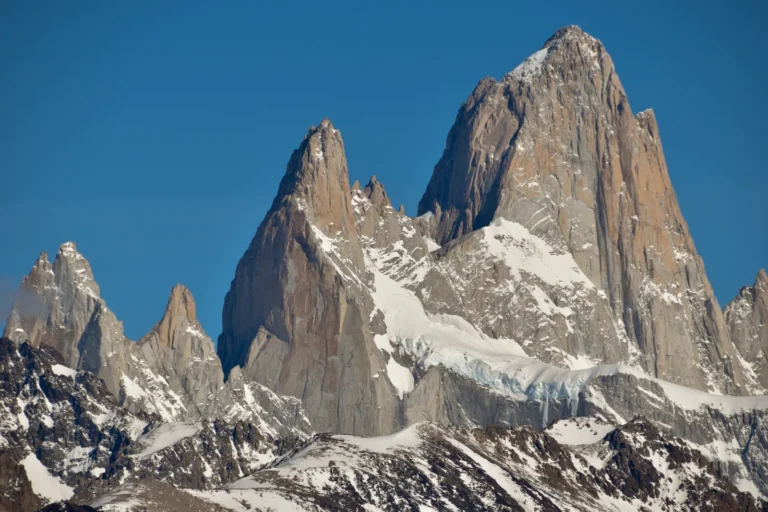
The village of El Chaltén, about three hours by road from El Calafate, is Argentina’s hiking capital. Trails start in the village: Laguna de los Tres at the foot of Fitz Roy (a long day, with a steep final stretch), Laguna Torre facing Cerro Torre, and shorter viewpoints for bad-weather days. Allow several days: the peaks are often in the clouds.
Ushuaia and Tierra del Fuego
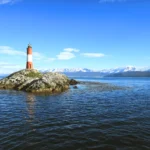
On the Beagle Channel, Ushuaia is Argentina’s southernmost city. Take a boat trip to the islets of sea lions and cormorants and the Les Éclaireurs lighthouse, hike in Tierra del Fuego National Park and climb to the Martial Glacier. It is also the main departure port for Antarctic cruises.
Bariloche and the Seven Lakes Route
In northern Patagonia, San Carlos de Bariloche lies on Lake Nahuel Huapi: viewpoints from Cerro Campanario, the Circuito Chico, chocolate shops and, in winter, skiing at Cerro Catedral. The Seven Lakes Route reaches San Martín de los Andes through forests and lakes. The climate there is milder than in the south in summer.
Puerto Madryn and the Valdés Peninsula
On the Atlantic coast, the UNESCO-listed Valdés Peninsula is home to elephant seals and sea lions, Magellanic penguins and, in certain seasons, southern right whales. Puerto Madryn is the base. Further south, the Punta Tombo reserve hosts a large penguin colony during the southern summer. Check wildlife-watching seasons before booking.
Route 40
The legendary Ruta 40 runs along the Andes from the north to the south of the country. In Patagonia, it links Bariloche to El Calafate over long desert stretches: few petrol stations, crosswinds, sections sometimes gravel. It is a route for road-trip lovers with time on their hands.
Chilean Patagonia: Torres del Paine
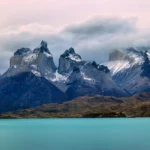
The border is easy to cross from El Calafate: Torres del Paine National Park, reached from Puerto Natales, is the most common extension of a trip to Argentine Patagonia (about half a day by bus). The « W » and « O » hiking circuits require booking refuges or campsites well in advance. Further south, Punta Arenas lies on the Strait of Magellan. To prepare this side of the border, see our Chile travel guide.
Itinerary: suggested routes in Patagonia
10 days: glaciers and hiking
Days 1-2: arrive in Buenos Aires, fly to El Calafate
Day 3: Perito Moreno Glacier (walkways, boat)
Day 4: boat trip on Lake Argentino or a free day
Days 5-8: El Chaltén, hikes to Laguna de los Tres and Laguna Torre (with a spare day for the weather)
Day 9: back to El Calafate
Day 10: fly to Buenos Aires
2 weeks: Argentina and Chile
Days 1-2: Buenos Aires and flight to El Calafate
Days 3-4: Perito Moreno and Lake Argentino
Days 5-8: El Chaltén
Days 9-12: Puerto Natales and Torres del Paine (Chile)
Days 13-14: return via El Calafate or fly from Punta Arenas
3 weeks: from north to south
Days 1-4: Bariloche and the Seven Lakes Route
Days 5-7: Puerto Madryn and the Valdés Peninsula
Days 8-14: El Calafate and El Chaltén
Days 15-18: Ushuaia and Tierra del Fuego
Days 19-21: back to Buenos Aires
The stops are mostly linked by air: plan transition days. To string your stops together without stress, see our tips for a multi-stop trip and for a successful road trip.
Budget for a trip to Patagonia
Patagonia is Argentina’s most expensive region, especially in high season. Prices change quickly with inflation and the exchange rate: the amounts below are orders of magnitude, per person per day, excluding flights:
Item
Budget
Comfort
Accommodation (sharing a double room)
roughly US$30 to $50 (hostel, hostería)
roughly US$100 to $200
Meals
roughly US$20 to $35
roughly US$50 to $90
Local transport
roughly US$10 to $25
roughly US$35 to $65 (rental car)
Activities
roughly US$15 to $30 on average
roughly US$45 to $110 (glacier, boat)
Total per day
roughly US$80 to $125 per person per day
roughly US$200 to $360 per person per day
Indicative estimates, converted from euros at the European Central Bank rate of 23 October 2026. Domestic flights, glacier walks and boat trips push the bill up considerably.
To cut costs: travel in November or March, favour El Chaltén’s free hikes, take long-distance buses when possible and book domestic flights early.
Getting around Patagonia
Plane: essential to link Buenos Aires and the main stops (El Calafate, Ushuaia, Bariloche, Trelew); direct flights between Patagonian cities exist but vary by season.
Bus: regular services between El Calafate and El Chaltén, and to Puerto Natales (Chile); long distances elsewhere.
Rental car: handy around Bariloche and the Valdés Peninsula. The UK FCDO (GOV.UK, updated 7 May 2026) reports that thefts from unattended vehicles, especially hire cars, are common, frequently in Bariloche: leave nothing visible. UK drivers need both the 1949 International Driving Permit and their UK licence; according to the U.S. Department of State, you need an Argentine or international driver’s license.
Crossing into Chile: use official border posts only. On entry, Chile issues a tourist card (tarjeta de turismo) that you must keep and hand back when you leave (UK FCDO, GOV.UK, updated 9 October 2026).
Where to stay in Patagonia
El Calafate: the widest choice in the region, from dorms to hotels with lake views.
El Chaltén: a small village whose hostels and hotels fill up fast: book these first.
Ushuaia: hotels in town or on the hillside; high prices during cruise season.
Bariloche: hotels in the centre or cabañas by the lake.
Estancias: former livestock ranches turned guesthouses, for a quiet night on the steppe.
Entry requirements, health and safety
US citizens: according to the U.S. Department of State (travel.state.gov, last updated July 16, 2026), you need a valid passport; private US citizens do not need a visa for visits of up to 90 days for tourism or business. Travelers with expired or damaged passports may be refused entry.
UK citizens: according to the UK FCDO (GOV.UK, updated 7 May 2026), you can visit Argentina without a visa for tourism for up to 90 days. Your passport must be valid for the proposed duration of your stay. You must declare cash worth more than US$10,000.
Children: a parent traveling alone with a child under 18 who resides in Argentina must present a legalized permission letter from the other parent on departure (travel.state.gov).
Chile: US citizens do not need a visa for tourist stays of 90 days or fewer and receive a Tourist Card on arrival, to be returned on departure (travel.state.gov, last updated July 2, 2026); UK citizens can visit for up to 90 days without a visa (GOV.UK, updated 9 October 2026).
Hiking: the U.S. Department of State strongly discourages hiking alone or separating from your group on a trail, recommends giving your itinerary to park or police officials and buying evacuation insurance: local resources for helping lost or injured visitors in remote areas are limited.
Landmines: on the Chilean side, minefields lie near the border with Argentina in the south (region XII, Magallanes); stick to clearly marked roads and trails and observe warning signs (UK FCDO and U.S. Department of State).
Antarctic cruises from Ushuaia: the U.S. Department of State warns of extreme, unpredictable weather and limited emergency services; there have been accidental deaths due to rough seas.
Health: hantavirus is present in Argentina (UK FCDO, see TravelHealthPro). Emergencies: 911.
Entry requirements checked on 26 October 2026; check them again before you travel. Mountain rescue and evacuations are expensive: read our travel insurance guide before you leave.
Practical tips for Patagonia
Clothing: layers, a waterproof windbreaker, a hat and gloves even in summer, hiking boots.
Money: the best ways to pay in Argentina change often; check just before you leave and bring some cash for El Chaltén.
Mobile coverage: decent in towns, absent on long stretches of road and on trails. Download offline maps.
Weather buffer: keep at least one free day per stop; flights and boats can be cancelled because of the wind.
Who is Patagonia for?
Hikers and adventure lovers: yes, it is the heart of the trip: trails from El Chaltén to Fitz Roy and Cerro Torre, the « W » and « O » circuits of Torres del Paine on the Chilean side. Keep a spare weather day per stop.
Nature and wildlife lovers: yes: the glaciers of Los Glaciares, elephant seals and sea lions, penguins and, in certain seasons, southern right whales around the Valdés Peninsula.
Road trippers: possible on Route 40, if you have time: long desert stretches, few petrol stations, crosswinds.
Budget travellers: less suitable: Patagonia is Argentina’s most expensive region, roughly US$80 to $125 per person per day excluding flights, and domestic flights add to the bill. El Chaltén’s free hikes and buses keep costs down.
Short trips: not recommended: allow 10 days minimum, as the stops are mostly linked by air.
See also
To choose your dates, see when to go to Patagonia, with month-by-month climate normals and the ideal season from November to March. Before booking flights and excursions, also check the time difference with Argentina.
Frequently asked questions
How many days do you need in Patagonia?
Allow 10 days for El Calafate and El Chaltén, two weeks to add Torres del Paine in Chile or Ushuaia, and three weeks to travel through Patagonia from north to south.
Do you have to choose between Argentine and Chilean Patagonia?
No, the two combine easily: Torres del Paine is about half a day by bus from El Calafate. The Argentine side has the Perito Moreno, Fitz Roy and Ushuaia; the Chilean side, Torres del Paine and the Strait of Magellan.
How much does a trip to Patagonia cost?
Excluding flights, roughly US$80 to $125 per person per day on a budget, US$200 to $360 for comfort. Domestic flights, glacier walks and boat trips push the bill up.
What is the best time to visit Patagonia?
November to March, during the southern summer. November and March offer the best balance of weather, crowds and prices.
Can you visit Patagonia without a car?
Yes: flights between the main stops and buses between El Calafate, El Chaltén and Puerto Natales. A car becomes useful around Bariloche or the Valdés Peninsula.
Our sources
Climate: Servicio Meteorológico Nacional (SMN, Argentina): 1991-2020 normals for the El Calafate (airport), Ushuaia (airport), Trelew and San Carlos de Bariloche stations; Dirección Meteorológica de Chile: 1991-2020 normals for Punta Arenas
European Central Bank, euro reference rates of 23 October 2026: budget conversion to US dollars
Visit Argentina, official tourism website (argentina.travel), « What plug is used in Argentina », published 3 June 2025: voltage, frequency and plug types


 FlightsKiwi.comCompare flights and airline combinations to Patagonia.Compare flights