Things to do in Buenos Aires? Start with the Plaza de Mayo and the Casa Rosada, tour the Teatro Colón, stroll through the Recoleta Cemetery, browse the Sunday San Telmo fair, see the colourful houses of the Caminito in La Boca, spend an afternoon in the parks of Palermo and end the evening at a tango milonga. To visit Buenos Aires, allow 4 to 5 days; the best times are October-November and March-April.
Argentina’s capital and the gateway for most trips to the country, Buenos Aires is a huge city of neighborhoods (barrios), each with its own atmosphere. This guide brings together the main sights, two itineraries, budget, transport, where to stay, official safety advice from the US and UK governments and month-by-month climate from Argentina’s national weather service, with a calculation you won’t find elsewhere: the month-by-month temperature gap with Paris, a Northern Hemisphere reference, since the seasons are reversed.
Our travel deals for Buenos Aires
Affiliate links: we earn a commission, at no extra cost to you.
FlightsKiwi.comCompare flights and airline combinations to Buenos Aires.
Time zoneUTC−3, no daylight saving time · details2 hours ahead of New York and 3 hours behind London in the northern winterLocal time now: –:–
AirportsEzeiza International (EZE) for international flightsAeroparque Jorge Newbery (AEP) mainly for domestic flights
EntryUS and UK: no visa for tourist stays of up to 90 days; passport valid for your stay · travel.state.gov · GOV.UK
Electricity220 V, 50 Hz, type I plugs (three flat pins), sometimes type C, according to Visit Argentina · plugsUS and UK travelers need an adapter; US devices must accept 220 V
Ideal length4 to 5 daysA week with Tigre and Colonia del Sacramento
The country’s political heart, the Plaza de Mayo is lined by the Casa Rosada, the seat of the presidency with its pink facade, by the colonial Cabildo and by the Metropolitan Cathedral, where General San Martín is buried. It is also where the Mothers of the Plaza de Mayo have demonstrated since the dictatorship. Tours of the Casa Rosada are offered on certain days, by reservation: check the presidency’s website.
Avenida de Mayo, Café Tortoni and the Obelisk
From the Plaza de Mayo, the Avenida de Mayo lines up Parisian-style facades as far as the Congress. Stop at the Café Tortoni, one of the city’s oldest cafés. Further on, the Obelisk stands in the middle of Avenida 9 de Julio, one of the widest avenues in the world, next to Calle Corrientes, the street of theatres and late-night bookshops.
The Teatro Colón
Buenos Aires’ great opera house, opened in 1908, is renowned for its acoustics. Guided tours in Spanish and English show the auditorium, the foyer and backstage; attending an opera, ballet or concert remains the best way to enjoy it. Book ahead in high season.
Recoleta and its cemetery
The Recoleta Cemetery is a city of marble mausoleums where presidents, writers and elite families are buried; the most visited tomb is Eva Perón’s (Duarte family). Around it, Recoleta is the city’s most upscale neighborhood: the Basílica del Pilar, the National Museum of Fine Arts (free entry) and the Floralis Genérica, a giant steel flower that opens during the day.
San Telmo and its Sunday fair
The city’s oldest neighborhood has kept its cobbled streets and low houses. On Sundays, Calle Defensa turns into a long market of antiques, crafts and street music, with tango couples on Plaza Dorrego. The covered San Telmo Market, with its antique dealers and food counters, is open all week. The U.S. Department of State lists San Telmo among the Buenos Aires areas with higher crime rates: keep your belongings close.
La Boca and the Caminito
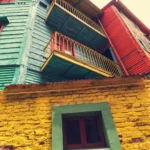
A former Italian immigrant neighborhood, La Boca is known for the Caminito, a lane of corrugated-iron houses painted in bright colours, and for La Bombonera, Boca Juniors’ stadium. The Caminito is very touristy. According to the UK FCDO (GOV.UK, updated 7 May 2026), you should be vigilant in La Boca, especially outside the Caminito tourist area, and stay in the designated tourist area where police patrols are visible; the U.S. Department of State reports violent robberies there by day as well as at night and advises using radio taxis to and from the neighborhood.
Palermo, its parks and museums
The city’s largest neighborhood brings together the parks of the Bosques de Palermo, the rose garden (El Rosedal), the Japanese Garden, MALBA (modern Latin American art) and, in Palermo Soho and Hollywood, streets of shops, restaurants and bars. It is the most pleasant neighborhood for an evening out and one of the most convenient places to stay.
Puerto Madero
The renovated old docks line the basins with restaurants, office towers and the Puente de la Mujer (Woman’s Bridge), designed by Santiago Calatrava. To the east, the Costanera Sur Ecological Reserve, reclaimed from the river, offers a nature walk a few minutes from the centre.
Tango and milongas
You can see tango everywhere: on the street in San Telmo, at dinner shows (cenas show) aimed at visitors, and above all at milongas, dance halls where locals dance late into the night. Many offer a beginners’ class early in the evening. The city holds a tango festival and world championship every year, usually in August: check the dates on the city’s official website.
Day trips: Tigre and Colonia del Sacramento
To the north, the town of Tigre opens onto the Paraná Delta, a maze of channels and islands explored by river bus; get there by train from Retiro station, by day (both the UK FCDO and the U.S. Department of State single out Retiro as an area for particular caution). Across the Río de la Plata, Colonia del Sacramento, in Uruguay, is a small UNESCO-listed colonial town reachable by ferry from Buenos Aires for the day (passport required). The Mataderos market, to the west, showcases gaucho traditions on Sundays.
Itinerary: Buenos Aires in 3 or 5 days
Buenos Aires in 3 days
Day 1: Plaza de Mayo, Casa Rosada, cathedral, Avenida de Mayo and Café Tortoni, the Obelisk, then a guided tour of the Teatro Colón
Day 2: Recoleta (cemetery, Museum of Fine Arts), then the parks of Palermo and an evening in Palermo Soho
Day 3: San Telmo (ideally on a Sunday for the fair), La Boca and the Caminito by taxi, Puerto Madero at sunset, a milonga in the evening
Buenos Aires in 5 days
Days 1 to 3: as above
Day 4: the Tigre delta by boat
Day 5: Colonia del Sacramento in Uruguay, round trip by ferry
Buenos Aires and Paris: reversed seasons in figures
Buenos Aires is in the Southern Hemisphere: its summer falls during the northern winter. We compared the official normals of Buenos Aires and Paris and calculated, for the 15th of each month, day length and sunset time.
Month
High Buenos Aires °C (°F)
High Paris °C (°F)
Difference
Day length on the 15th (Buenos Aires / Paris)
Sunset in Buenos Aires
January
30.1 (86)
7.2 (45)
+22.9 °C
14 h 12 / 8 h 43
20:09
February
28.9 (84)
8.5 (47)
+20.4 °C
13 h 19 / 10 h 12
19:47
March
27.0 (81)
12.5 (55)
+14.5 °C
12 h 19 / 11 h 52
19:12
April
23.2 (74)
16.2 (61)
+7.0 °C
11 h 13 / 13 h 42
18:30
May
19.4 (67)
19.8 (68)
−0.4 °C
10 h 19 / 15 h 17
17:59
June
16.4 (62)
23.2 (74)
−6.8 °C
9 h 51 / 16 h 09
17:49
July
15.5 (60)
25.8 (78)
−10.3 °C
10 h 03 / 15 h 46
18:01
August
17.9 (64)
25.7 (78)
−7.8 °C
10 h 50 / 14 h 23
18:22
September
19.7 (67)
21.5 (71)
−1.8 °C
11 h 52 / 12 h 37
18:44
October
22.6 (73)
16.4 (62)
+6.2 °C
12 h 56 / 10 h 50
19:07
November
26.0 (79)
10.9 (52)
+15.1 °C
13 h 56 / 9 h 11
19:36
December
29.0 (84)
7.6 (46)
+21.4 °C
14 h 27 / 8 h 17
20:02
Destination de Voyage calculation based on the 1991-2020 normals of the SMN (Buenos Aires Central Observatory) and Météo-France (Paris-Orly); sunrise and sunset calculated for the 15th of each month in 2026 with the NOAA solar algorithm (including refraction), local time. These are averages: any given year may differ.
Escaping winter: in January, afternoons are on average 22.9 °C (41 °F) warmer in Buenos Aires than in Paris (30.1 °C / 86 °F against 7.2 °C / 45 °F), with 14 h 12 of daylight.
The northern summer is the porteño winter: in July the gap reverses (−10.3 °C / −19 °F). Afternoons stay mild (15.5 °C / 60 °F), but nights drop to around 7.5 °C (46 °F): bring a warm jacket.
The « neutral » months: in May and October, temperatures in the two cities are close; in Buenos Aires, October is spring and May autumn.
The longest day: in December, the sun sets around 20:02 in Buenos Aires; in June, around 17:49.
When to go to Buenos Aires
The best times are the southern spring (October-November) and autumn (March-April): 20 to 27 °C (68 to 81 °F) in the afternoon, pleasant nights and parks in bloom in spring (the jacarandas usually flower in November). Summer (December to February) is hot and humid, with over 30 °C (86 °F) in January, and the city partly empties as residents go on holiday. Winter (June to August) is mild by day but cool at night, ideal for museums and shows. It rains all year round, with about 7 to 10 rainy days a month: mostly showers and thunderstorms, more frequent in summer and autumn.
Month
High °C (°F)
Low °C (°F)
Rain mm (in)
Rainy days
Sun (h)
Crowds
Prices
Verdict
January
30.1 (86)
20.2 (68)
134.4 (5.3)
8.9
272.8
Medium
Medium
⚠️ Hot and humid, quieter city
February
28.9 (84)
19.4 (67)
129.3 (5.1)
8.0
223.2
Medium
Medium
⚠️ Hot, stormy
March
27.0 (81)
17.7 (64)
120.0 (4.7)
8.2
217.0
Medium
Medium
✅ End of summer, more pleasant
April
23.2 (74)
14.1 (57)
130.3 (5.1)
8.9
168.0
Medium
Medium
✅ Mild autumn
May
19.4 (67)
11.1 (52)
93.5 (3.7)
7.2
158.1
Low
Low
✅ Cool, few crowds
June
16.4 (62)
8.4 (47)
61.5 (2.4)
7.3
135.0
Low
Low
⚠️ Mild winter, cool nights
July
15.5 (60)
7.5 (46)
74.4 (2.9)
7.4
142.6
Medium (holidays)
Medium
⚠️ Coolest month, winter holidays
August
17.9 (64)
8.9 (48)
70.3 (2.8)
7.0
170.5
Medium
Medium
⚠️ Cool, Tango World Championship
September
19.7 (67)
10.6 (51)
80.6 (3.2)
7.4
180.0
Medium
Medium
✅ Spring, milder again
October
22.6 (73)
13.4 (56)
122.9 (4.8)
10.2
204.6
High
High
✅ Mild, terraces
November
26.0 (79)
16.1 (61)
117.6 (4.6)
8.9
246.0
High
High
✅ Jacarandas, very pleasant
December
29.0 (84)
18.5 (65)
122.8 (4.8)
8.9
266.6
Medium
High
✅ Hot, year-end holidays
Temperature, rainfall, rainy days and sunshine: 1991-2020 normals from the Servicio Meteorológico Nacional (SMN, Argentina’s national weather service), Buenos Aires Central Observatory (Agronomía neighborhood). Crowds and prices: estimate based on tourist seasons.
Spring (September to November): the most pleasant season; book early for October-November.
Summer (December to February): humid heat and thunderstorms; many residents go on holiday in January, and some restaurants close for a few weeks.
Autumn (March to May): temperatures come down, soft light, lower prices in May.
Winter (June to August): 15 to 18 °C (59 to 64 °F) in the afternoon, but cool nights and sometimes basic heating in older accommodation.
To combine Buenos Aires with the north or Patagonia, see our page on when to go to Argentina: the best season varies greatly by region. Our ideas for November or March trips may also help.
Budget for visiting Buenos Aires
Item (per person per day)
Budget
Comfort
Accommodation (sharing a double room)
roughly US$15 to $40 (hostel, apartment)
roughly US$65 to $135 (4-star hotel)
Meals
roughly US$15 to $30 (empanadas, set lunches, neighborhood parrillas)
roughly US$40 to $65 (renowned parrilla, Argentine wine)
Transport
roughly US$2 to $6 (Subte, buses with a SUBE card)
roughly US$10 to $25 (radio taxis, ride-hailing)
Activities
roughly US$5 to $20 (museums, often free or cheap)
roughly US$35 to $65 (Teatro Colón, tango show)
Total
roughly US$55 to $90 per person per day
roughly US$135 to $245 per person per day
Indicative estimates excluding flights, converted from euros at the European Central Bank rate of 23 October 2026. With high inflation and a volatile exchange rate, peso prices change quickly: check them just before you travel.
Is Buenos Aires expensive? It depends mainly on the exchange rate at the time of your trip: depending on the year, the city has seemed very cheap or nearly as expensive as Western Europe for foreign visitors. Steak restaurants generally remain affordable.
Getting around Buenos Aires
From Ezeiza airport (international flights): about 35 km (22 mi) from the centre; allow about an hour, more at rush hour, by official taxi booked at the counter, ride-hailing or shuttle. The U.S. Department of State reports taxi scams at international airports and recommends pre-arranging a ride or using a flat-rate « remise » (private car with driver) from the airport counters. Aeroparque Jorge Newbery, on the riverfront, mainly handles domestic flights.
In the city: the Subte (underground, six lines) and a very dense bus network run on the rechargeable SUBE card, sold in stations and kiosks.
Taxis: book taxis in advance if possible; if you hail one in the street, only use a « radio taxi », with a clearly visible logo on the doors (UK FCDO, GOV.UK, updated 7 May 2026).
On foot and by bike: the centre, Recoleta and Palermo are easy to explore on foot; bike-share (EcoBici) and cycle lanes cover much of the city.
To the rest of the country: domestic flights (Iguazú, Salta, Patagonia) and long-distance buses from the Retiro bus terminal, where the U.S. Department of State reports frequent luggage and handbag thefts.
Where to stay in Buenos Aires
Neighborhood
Best for
Highlights
Palermo (Soho, Hollywood)
First visit, couples, nightlife
Restaurants, bars, parks; the most pleasant in the evening
Recoleta
Comfort, quiet
Upscale area, museums, walking distance from the centre
San Telmo
Atmosphere, tight budget
Old-world charm, Sunday fair; take care at night
Centre (Microcentro, Monserrat)
Short stay
Close to the monuments; very quiet and less safe in the evening
Puerto Madero
Upmarket hotels
Modern, along the docks, not very lively
Book early for October-November and the year-end holidays.
Entry requirements, health and safety
US citizens: according to the U.S. Department of State (travel.state.gov, last updated July 16, 2026), you need a valid passport; private US citizens do not need a visa for visits of up to 90 days for tourism or business. Travelers with expired or damaged passports may be refused entry.
UK citizens: according to the UK FCDO (GOV.UK, updated 7 May 2026), you can visit Argentina without a visa for tourism for up to 90 days. Your passport must be valid for the proposed duration of your stay. You must declare cash worth more than US$10,000.
Children: a parent traveling alone with a child under 18 who resides in Argentina must present a legalized permission letter from the other parent on departure (travel.state.gov).
Health: the UK FCDO (GOV.UK, updated 7 May 2026) lists health risks in Argentina including yellow fever, Zika and dengue; check vaccine recommendations before you travel. Medical treatment can be expensive: take out insurance covering medical costs and repatriation; see our travel insurance guide.
Crime: according to the U.S. Department of State (travel.state.gov, last updated July 16, 2026), San Telmo, La Boca, Retiro and the Florida Street area have higher crime rates; avoid « villas » (shanty towns), even in tourist areas. Watch out for the « mustard scam », where thieves steal your bags while an accomplice offers to clean off a substance sprayed on you: refuse help and walk away (GOV.UK).
Drink spiking: drinks and food can be spiked; do not leave drinks unattended and do not accept food or drink from strangers (GOV.UK).
Demonstrations: protests are frequent in Buenos Aires and often block streets; avoid them (travel.state.gov).
Emergencies: 911 for police, ambulance and fire (travel.state.gov); Tourist Police (Comisaría del Turista): +54 911 5050 9260, 24 hours (GOV.UK).
Entry requirements checked on 26 October 2026; check them again before you travel. For customs allowances on your return, check your home country’s rules (e.g. CBP in the US, HMRC in the UK).
Practical tips for Buenos Aires
Money: Argentina’s monetary situation changes often (exchange rate, card payments, withdrawals). Check just before you leave. The U.S. Department of State notes that card issuers may apply a more favorable exchange rate for tourists using foreign cards, and that some US-issued ATM cards do not work at certain ATMs: try another or use a reputable bank. Be cautious when using ATMs.
Timing: people eat late, rarely before 9 pm; milongas start around midnight.
Food and drink: parrilla (grilled beef), empanadas, milanesas, dulce de leche, ice cream, Malbec wine; mate is shared among friends.
Tipping: about 10% in restaurants, often in cash.
Mobile data: a local SIM card or an eSIM avoids roaming charges; see our eSIM guide.
Keep a low profile: avoid showing your phone, jewelry and camera in the street.
Frequently asked questions
How many days do you need in Buenos Aires?
Three days for the main neighborhoods (centre, Recoleta, Palermo, San Telmo, La Boca), five days to add the Tigre delta and Colonia del Sacramento in Uruguay.
What is the best time to visit Buenos Aires?
October-November and March-April: 20 to 27 °C (68 to 81 °F) in the afternoon according to the 1991-2020 normals of the Servicio Meteorológico Nacional. January is hot and humid, July cool.
Which airport do international flights to Buenos Aires use?
Most international flights land at Ezeiza International Airport (EZE), about 35 km (22 mi) from the centre; Aeroparque Jorge Newbery mainly handles domestic flights.
Do you need a visa for Buenos Aires?
Not for US or UK citizens on tourist stays of up to 90 days, according to the U.S. Department of State and the UK FCDO. Your passport must be valid for your stay; check the requirements again before you travel.
Is Buenos Aires dangerous?
As in many big cities, the main risk is theft. The U.S. Department of State reports higher crime rates in San Telmo, La Boca, Retiro and around Florida Street, and the UK FCDO advises staying within the Caminito tourist area in La Boca and using radio taxis.
Can you visit Buenos Aires without a car?
Yes, and it is even recommended: the Subte, buses, radio taxis, ride-hailing and walking are enough. Tigre is reached by train and Colonia by ferry.
Our sources
Servicio Meteorológico Nacional (SMN, Argentina’s national weather service): 1991-2020 normals, Buenos Aires Central Observatory (Agronomía), via the climate table of the Wikipedia article « Buenos Aires »
Météo-France: 1991-2020 normals for Paris-Orly, via the Wikipedia article « Climate of Paris »
Destination de Voyage calculation: temperature differences and sunrise/sunset (NOAA solar algorithm)
European Central Bank, euro reference rates of 23 October 2026: budget conversion to US dollars
Visit Argentina, official tourism website (argentina.travel), « What plug is used in Argentina », published 3 June 2025: voltage, frequency and plug types


 FlightsKiwi.comCompare flights and airline combinations to Buenos Aires.Compare flights