Salta, capital of the province of the same name, is the big city of Argentina’s northwest: a colonial center at the foot of the Andes, from which roads lead to Cafayate, Cachi, the Quebrada de Humahuaca and the high plateaus. Founded in 1582 and nicknamed « Salta la Linda » (Salta the Beautiful), it deserves at least a day for its main square, its high-altitude archaeology museum and the view from Cerro San Bernardo. This guide to Salta covers what to do, how to get there and above all when to go, with the official normals from Argentina’s national weather service: here, the rainy season changes everything.
To place the city: our Argentina travel guide, the map of Argentina and the calendar when to go to Argentina.

Our travel deals for Salta
Affiliate links: we earn a commission, at no extra cost to you.
 Learn the languageTargumiLearn a few words of Spanish before you go — 30% off via our link.See the course
- FlightsKiwi.comCompare flights and airline combinations to Salta.Compare flights
- Airport transferKiwitaxiPrivate driver booked in advance at a fixed price.Book a transfer
- eSIMSailyAnother eSIM plan to compare: data, validity, network.See Saily plans




Salta at a glance
- Time zone UTC−3 all year: 3 hours behind London in winter (4 hours during UK summer time), 2 hours ahead of New York in winter (see time difference in Argentina)
- Climate dry season from April to November; 197 mm (7.8 in) of rain in January against less than 3 mm (0.1 in) a month from June to August (1991–2020 normals)
- Altitude a city at the foot of the Andes, much higher on the Andean roads
- Entry visa-free for up to 90 days for US and UK citizens, passport valid for the length of your stay (travel.state.gov, GOV.UK)
- Highlights Plaza 9 de Julio, cathedral, Cabildo, MAAM museum, San Francisco church, Cerro San Bernardo
What to do in Salta: the highlights
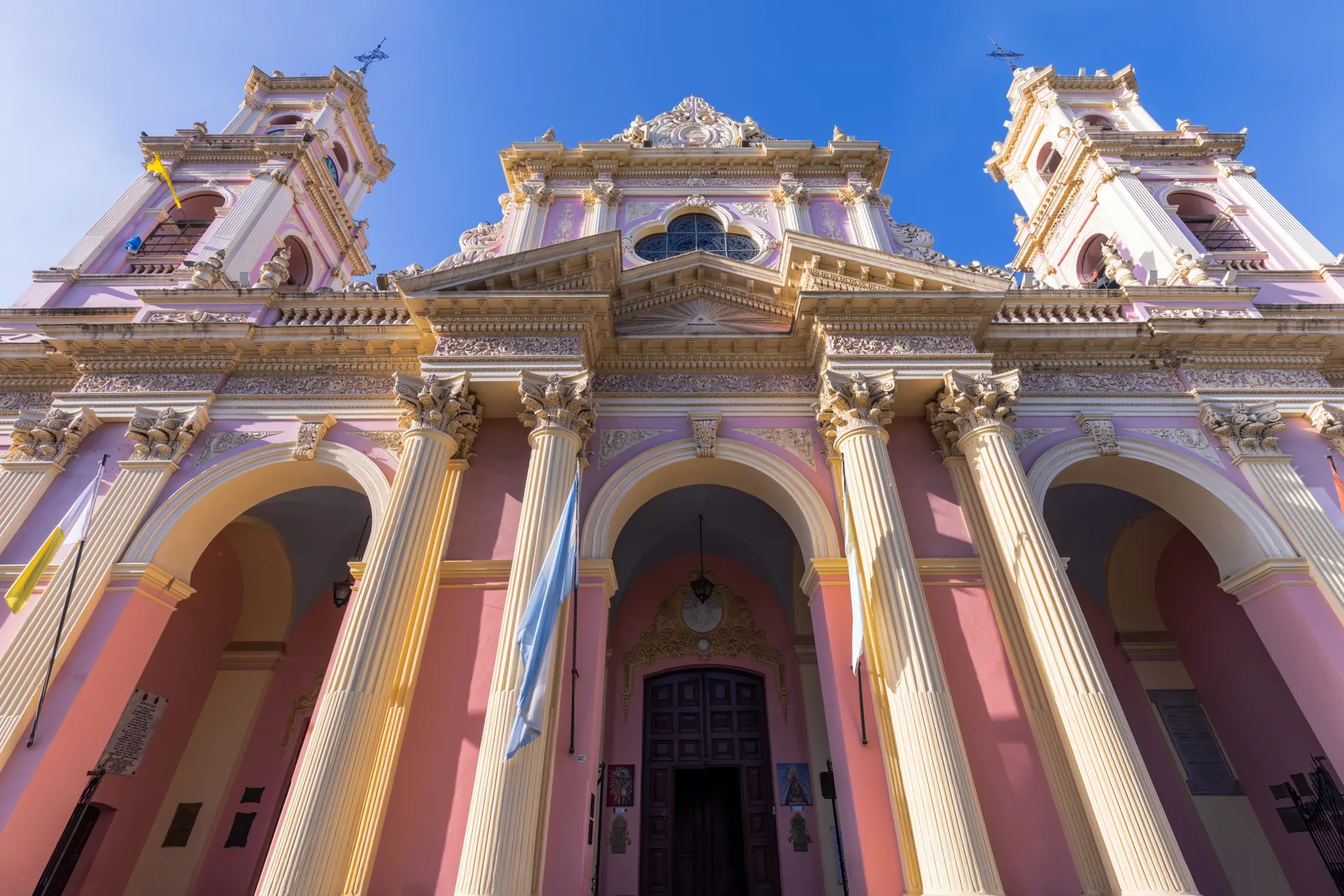
Plaza 9 de Julio, the cathedral and the Cabildo
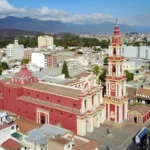
Salta’s center preserves many buildings from the eighteenth, nineteenth and early twentieth centuries. Around Plaza 9 de Julio, almost entirely lined with arcades, stand the neoclassical cathedral, the contemporary art museum in a French-style building, the Cabildo, the former town hall now a history museum, and the high-altitude archaeology museum. A few steps away, San Francisco church and the three pedestrian streets Alberdi, Florida and Caseros complete the walk.
The High Altitude Archaeology Museum (MAAM)
On the main square, the MAAM was created by the province of Salta and opened in 2004 to preserve the discoveries made in 1999 at the summit of the Llullaillaco volcano: the bodies of three Inca children, offered in capacocha ceremonies, with their grave goods. A special display system was developed to present them. It is Salta’s most singular visit; check the museum’s official site for opening hours and the conditions under which the mummies are shown.
Cerro San Bernardo
East of the center, Cerro San Bernardo overlooks the city. Its summit, with a view over Salta and the whole Lerma Valley, can be reached by car, by cable car or by a staircase from the foot of the hill. Come in the late afternoon for the light on the valley.
Calle Balcarce in the evening
The three blocks of Calle Balcarce closest to the train station concentrate Salta’s nightlife: restaurants, bars, cafes and concerts every evening. The local culture blends Spanish and gaucho traditions, which you find in the music and the food.
The Tren a las Nubes and excursions in the Andes
The famous « Train to the Clouds » runs on the eastern part of the Salta–Antofagasta line, one of the highest railways in the world. Today the tourist train leaves from San Antonio de los Cobres, which passengers reach by bus from Salta, and climbs to the La Polvorilla viaduct at high altitude. Running days and the schedule change: check the official site before booking. The big northwest excursions also leave from Salta: Cafayate and its high-altitude vineyards, Cachi, the Quebrada de las Conchas, Purmamarca and the Quebrada de Humahuaca, the Salinas Grandes. Our Argentina travel guide presents these sites.
Salta in three days
- Day 1: Plaza 9 de Julio, cathedral, Cabildo and MAAM, San Francisco church, sunset at Cerro San Bernardo, evening on Calle Balcarce.
- Day 2: excursion to Cafayate through the Quebrada de las Conchas, or to Cachi.
- Day 3: Tren a las Nubes (according to the official calendar) or the road to Purmamarca and the Quebrada de Humahuaca.
When to go to Salta: climate month by month
Salta has a subtropical highland climate, with two sharply distinct seasons. From December to March, the summer concentrates the rain, often as thunderstorms; from April to November, the dry season brings clear skies, mild days and cool nights, even cold in winter. The table combines the official normals with our calculations.
| Month | Avg. max | Avg. min | Rain | Days with precipitation (at least 1 mm) | Day/night gap | Sunrise / sunset on the 15th | Day length |
|---|---|---|---|---|---|---|---|
| January | 27.7 °C (82 °F) | 16.8 °C (62 °F) | 197 mm (7.8 in) | 12.4 | 10.9 °C (20 °F) | 6:45 am / 8:16 pm | 13 h 30 min |
| February | 26.5 °C (80 °F) | 16.1 °C (61 °F) | 147 mm (5.8 in) | 11.2 | 10.4 °C (19 °F) | 7:08 am / 8:03 pm | 12 h 55 min |
| March | 25.1 °C (77 °F) | 15.2 °C (59 °F) | 107 mm (4.2 in) | 10.1 | 9.9 °C (18 °F) | 7:22 am / 7:37 pm | 12 h 15 min |
| April | 22.9 °C (73 °F) | 12.2 °C (54 °F) | 42 mm (1.7 in) | 4.4 | 10.7 °C (19 °F) | 7:36 am / 7:06 pm | 11 h 31 min |
| May | 20.3 °C (69 °F) | 8.1 °C (47 °F) | 10 mm (0.4 in) | 1.7 | 12.2 °C (22 °F) | 7:50 am / 6:45 pm | 10 h 55 min |
| June | 19.8 °C (68 °F) | 4.5 °C (40 °F) | 2 mm (0.1 in) | 0.5 | 15.3 °C (28 °F) | 8:03 am / 6:40 pm | 10 h 36 min |
| July | 19.9 °C (68 °F) | 2.9 °C (37 °F) | 3 mm (0.1 in) | 0.8 | 17.0 °C (31 °F) | 8:05 am / 6:49 pm | 10 h 44 min |
| August | 22.7 °C (73 °F) | 4.8 °C (41 °F) | 2 mm (0.1 in) | 0.7 | 17.9 °C (32 °F) | 7:48 am / 7:03 pm | 11 h 15 min |
| September | 24.7 °C (76 °F) | 7.7 °C (46 °F) | 6 mm (0.2 in) | 1.2 | 17.0 °C (31 °F) | 7:18 am / 7:15 pm | 11 h 56 min |
| October | 26.9 °C (80 °F) | 12.1 °C (54 °F) | 24 mm (0.9 in) | 3.3 | 14.8 °C (27 °F) | 6:47 am / 7:27 pm | 12 h 39 min |
| November | 27.6 °C (82 °F) | 14.2 °C (58 °F) | 59 mm (2.3 in) | 6.6 | 13.4 °C (24 °F) | 6:26 am / 7:45 pm | 13 h 19 min |
| December | 28.4 °C (83 °F) | 16.0 °C (61 °F) | 138 mm (5.4 in) | 10.1 | 12.4 °C (22 °F) | 6:26 am / 8:06 pm | 13 h 40 min |
Reading the table: January is the wettest month (197 mm (7.8 in), 12.4 rainy days); from June to August less than 3 mm (0.1 in) falls a month. The southern winter is dry but contrasted: in July the high reaches 19.9 °C (68 °F) and the low drops to 2.9 °C (37 °F), a gap of 17.0 °C (31 °F). August is the sunniest month (224 hours of sunshine).
Frost, sunshine and rain: our cross table
| Month | Frost days (min at or below 0 °C / 32 °F) | Sunshine (hours per month) | Rain | Day length on the 15th (calculated) |
|---|---|---|---|---|
| January | 0.0 | 196 | 197 mm (7.8 in) | 13 h 30 min |
| February | 0.0 | 164 | 147 mm (5.8 in) | 12 h 55 min |
| March | 0.0 | 159 | 107 mm (4.2 in) | 12 h 15 min |
| April | 0.0 | 159 | 42 mm (1.7 in) | 11 h 31 min |
| May | 0.7 | 157 | 10 mm (0.4 in) | 10 h 55 min |
| June | 4.6 | 171 | 2 mm (0.1 in) | 10 h 36 min |
| July | 8.8 | 205 | 3 mm (0.1 in) | 10 h 44 min |
| August | 4.6 | 224 | 2 mm (0.1 in) | 11 h 15 min |
| September | 0.9 | 211 | 6 mm (0.2 in) | 11 h 56 min |
| October | 0.0 | 211 | 24 mm (0.9 in) | 12 h 39 min |
| November | 0.0 | 214 | 59 mm (2.3 in) | 13 h 19 min |
| December | 0.0 | 217 | 138 mm (5.4 in) | 13 h 40 min |
Key points: in July it freezes on average on nearly 9 nights in the city, and many more at altitude: bring warm clothing for excursions to the high plateaus. For mountain roads, April–May and September–October combine dry skies, mild days and little frost.
Getting to Salta and getting around
Martín Miguel de Güemes International Airport (code SLA) is southwest of the center and is the busiest in northern Argentina. Many visitors reach Salta by a domestic flight, often via Buenos Aires: check flights on the airport and airline websites.
The center is walkable. For excursions, there are three options: a rental car, organized excursions from the city, or a driver. Many northwest roads climb to altitude: find out about their condition before leaving, especially in the rainy season.
Car rental, transfers and excursions
A car gives you the freedom to stop in the quebradas, but check the insurance (unpaved tracks, excess) and the equipment. Before booking a rental, an airport transfer or an excursion, compare the direct operator and resellers: cancellation terms, inclusions, suitable vehicle. For other stops, see our guides to Buenos Aires and Mendoza.
Where to stay in Salta
Around Plaza 9 de Julio, you can do everything on foot, from the museums to the restaurants. The Calle Balcarce area suits those who want to go out in the evening, at the price of more noise. For an excursion-focused stay, lodging with parking makes early departures easier.
Entry requirements, health and safety
- US citizens: according to the U.S. Department of State (travel.state.gov, Argentina page last updated July 16, 2026), you need a valid passport, and US citizens do not need a visa for visits of up to 90 days for tourism or business. Expired or damaged passports may mean you are refused entry. The Department rates Argentina Level 1, « Exercise normal precautions » (advisory updated July 9, 2026).
- UK citizens: according to the UK FCDO (GOV.UK, updated 7 May 2026), your passport must be valid for the proposed length of your stay, and you can visit Argentina without a visa for tourism for up to 90 days. Immigration authorities no longer stamp passports on entry: if you need proof of entry or exit, contact the Argentine Migration Office. You must declare cash or traveller’s cheques worth more than 10,000 US dollars.
- Crime: the State Department says petty crime occurs at times, especially in popular tourist locations; stay aware of your surroundings. The FCDO and the State Department name Buenos Aires, Rosario and Mendoza in their crime warnings; Salta is not named.
- Earthquakes: the FCDO (GOV.UK, updated 7 May 2026) says there is a risk of earthquakes in Argentina, particularly in the provinces of Mendoza, San Juan, Salta and Jujuy: monitor media reports and follow the advice of local authorities.
- Altitude: the FCDO (GOV.UK) says altitude sickness is a risk when hiking in parts of Argentina (see TravelHealthPro); the State Department notes that local resources are limited for helping visitors lost or injured in remote areas, so give your itinerary to park or police officials. Acclimatize gradually before going above 3,000 m (9,800 ft).
- Health: the FCDO lists yellow fever, Zika virus and dengue among the diseases to be aware of in Argentina, and says hantavirus is present; the State Department notes that mosquitoes are prevalent from December to March (see TravelHealthPro and the CDC for vaccine advice).
- See our travel formalities guide and the time difference with Argentina.
Staying connected
Argentina is outside many home roaming deals, so check your plan before departure or consider an eSIM. On the Andean roads coverage can be missing: download your maps offline. See our travel eSIM guide. A few words go a long way here: start learning Spanish on Targumi before your trip, with 30% off via our link.
If you… then…
| If you… | Then… |
|---|---|
| Want dry skies for the Andean roads | Come from April to November (less than 25 mm (1 in) a month from May to October) |
| Fear storms and cut roads | Avoid December to March: up to 197 mm (7.8 in) in January |
| Travel in July–August | Expect cold nights: a low of 2.9 °C (37 °F) in July, with frost on nearly 9 nights |
| Go above 3,000 m (9,800 ft) | Acclimatize gradually |
| Have only one day in the city | Plaza 9 de Julio, MAAM, San Francisco church, Cerro San Bernardo |
| Aim for the Tren a las Nubes | Check the official calendar before building your itinerary |
Frequently asked questions
What can you do in Salta in one day?
Plaza 9 de Julio with the cathedral and the Cabildo, the high-altitude archaeology museum, San Francisco church, then Cerro San Bernardo by cable car and Calle Balcarce in the evening.
What is the best time to go to Salta?
From April to November, during the dry season. From December to March thunderstorms are frequent (197 mm (7.8 in) in January, 1991–2020 normals).
Is it cold in Salta in winter?
Days stay mild (about 20 °C (68 °F) in June–July), but nights are cold: an average low of 2.9 °C (37 °F) in July and frost on nearly 9 nights a month.
Where does the Tren a las Nubes leave from?
From San Antonio de los Cobres, reached by bus from Salta. The train climbs to the La Polvorilla viaduct at high altitude. Check the calendar on the official site.
Do you need a visa for Salta and Argentina?
No visa is needed for US or UK citizens for tourist stays of up to 90 days; your passport must be valid for your stay (U.S. Department of State, last updated July 16, 2026; UK FCDO, GOV.UK, updated 7 May 2026).
How do you get to Salta from Buenos Aires?
By domestic flight to Martín Miguel de Güemes airport. Check the airport and airline websites for current routes.
Our sources
- U.S. Department of State, Argentina country information (travel.state.gov, last updated July 16, 2026) and Argentina travel advisory (Level 1, updated July 9, 2026), read on 26 October 2026
- UK FCDO, foreign travel advice for Argentina (GOV.UK, updated 7 May 2026), read on 26 October 2026
- Servicio Meteorológico Nacional (Argentina): 1991–2020 climate normals, Salta Aero station (87047), published by the World Meteorological Organization (NOAA/NCEI archive)
- Wikipedia (EN) articles « Salta », « Train to the Clouds », « Museum of High Altitude Archaeology » and « Martín Miguel de Güemes International Airport »
- Astronomical calculations: NOAA solar algorithm, applied by Destination de Voyage to the coordinates of Salta (15th of each month, year 2027)
- Our methodology
Updated October 2026.