
Visiting Turin means discovering the former capital of the Dukes of Savoy and the first capital of unified Italy: miles of arcades, Baroque squares, the Egyptian Museum, the oldest museum in the world devoted to Egypt, and the Mole Antonelliana, 167 m (548 ft) high. Things to do in Turin in two or three days, when to go, and how to add a trip to the wine-growing hills of the Langhe: here are the essentials, based on official sources.
Turin is easy to explore on foot thanks to its arcaded streets, which add up to 18 km (11 mi) of covered walkways. It is also the home of bicerin, a hot drink of coffee, chocolate and cream created in a Turin café, and of gianduiotto, a hazelnut chocolate.

Our travel deals for Turin
Affiliate links: we earn a commission, at no extra cost to you.
 FlightsKiwi.comCompare flights and airline combinations to Turin.Compare flights
- Airport transferKiwitaxiPrivate driver booked in advance at a fixed price.Book a transfer
- Tickets and toursTiqetsEntry tickets and guided tours to book online; compare with the official price.See tickets
- Audio guidesWeGoTripSelf-guided audio tours on your phone.See audio tours




Turin at a glance
- Region Piedmont, north-western Italy, at the foot of the Alps
- Airport Turin Caselle (Sandro Pertini), north of the city, linked by suburban train
- Stations Porta Nuova (main terminus) and Porta Susa
- Entry Schengen area, no visa for up to 90 days for US and UK citizens (travel.state.gov, GOV.UK)
- Currency euro (€); time zone: UTC+1, UTC+2 in summer (1 hour ahead of London, 6 hours ahead of New York most of the year)
- Ideal length 2 to 3 days, 4 with the Langhe
Things to do in Turin: the must-sees
The Egyptian Museum
Founded in 1824 by Charles Felix of Savoy from the collection of Bernardino Drovetti, French consul in Egypt, the Museo Egizio is the world’s first Egyptian museum. Champollion studied its papyri there, including the Turin King List, a chronological list of pharaohs. Completely renovated and reopened in 2015, it has 12,000 m² (129,000 sq ft) of exhibition space and receives about 850,000 visitors a year: book your time slot and allow at least half a day.
The Mole Antonelliana and the National Cinema Museum
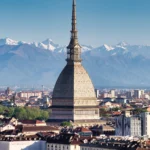
The symbol of the city, the Mole Antonelliana rises to 167 m (548 ft). Since 2000 it has housed the National Cinema Museum. A panoramic lift climbs to a terrace with views over the city and, on clear days, the arc of the Alps: check time slots on the official website before you go.
The Royal Palace and Piazza Castello
Built in the 17th century for the House of Savoy, the Royal Palace is one of the Residences of the Royal House of Savoy listed as a UNESCO World Heritage Site in 1997. The Royal Library adjoins it. On the same square, Palazzo Madama, a Baroque masterpiece, closes the vista of Via Garibaldi.
The cathedral and the Shroud
The cathedral of St John the Baptist houses the Shroud of Turin, a venerated linen cloth kept in a chapel. It is only shown to the public during exceptional exhibitions; the rest of the time, you visit the cathedral.
The arcades, Via Roma and the historic cafés
Via Roma, Via Po and Piazza San Carlo form the heart of the arcades. This is where you will find the historic cafés in which to try bicerin and gianduiotto. Palazzo Carignano, another Baroque façade, is close by.
Porta Palazzo
The Porta Palazzo market, the city’s cosmopolitan soul, mixes Piedmontese produce with flavours from Africa and Asia. Come in the morning.
Parco del Valentino and the Lingotto
Along the Po, Parco del Valentino is the city’s most popular park; its castle blends Baroque style with the influence of French châteaux. Further south, the Lingotto, a former Fiat factory transformed by Renzo Piano, is famous for its rooftop test track.
The Basilica of Superga
On the hill, Filippo Juvarra’s Baroque basilica is reached from the Sassi district by rack railway. The panorama takes in the city and the Alps.
La Venaria Reale
North-west of the city, the Venaria Reale is one of the UNESCO-listed Savoy residences, along with those at Rivoli, Moncalieri, Stupinigi, Racconigi and others. Allow half a day.
The Torino+Piemonte Card
The tourist office (Turismo Torino e Provincia) offers the Torino+Piemonte Card in 24-, 48-, 72- and 120-hour consecutive versions (plus a 72-hour Junior version). It gives free entry to Turin’s main museums and to royal residences, castles and fortresses in Piedmont (the 24-hour version is limited to three free visits), and discounts on the Mole’s panoramic lift and the Sassi-Superga rack tramway, among others. Public transport is not included. Terms and the list of sites are on turismotorino.org (checked 23 October 2026).
Turin in 2 or 3 days: itinerary
| Day | Morning | Afternoon | Evening |
|---|---|---|---|
| 1 | Egyptian Museum (booked slot) | Piazza Castello, the Royal Palace, the cathedral | Arcades of Via Po, a historic café |
| 2 | Porta Palazzo, then the Mole Antonelliana and the Cinema Museum | Parco del Valentino, the banks of the Po | The Piazza Vittorio Veneto area |
| 3 | Venaria Reale | Superga by rack railway | Back to the city centre |
A trip to the Langhe
South of Turin, the hills of the Langhe, Roero and Monferrato are a UNESCO World Heritage Site for their vineyard landscapes. This is Barolo and Barbaresco country, and home to Alba, capital of the white truffle. These landscapes were inscribed on 22 June 2014 (Wikipedia, « Langhe »). Allow a day there; do not drive after a tasting.
For a wider tour of northern Italy, combine Turin with Milan, Lake Como or the Cinque Terre.
When to go to Turin
May-June and September-October are the best times to visit Turin, with 22.2 to 26.4 °C (72 to 80 °F) in the afternoon in May-June and 23.9 °C (75 °F) in September. Be aware that May is also the wettest month (145.3 mm, or 5.7 in, and 11.2 rainy days), and April and October exceed 100 mm (3.9 in). July is the hottest (29.0 °C, or 84 °F) and sunniest month. Winter is cold, with lows below 0 °C (32 °F) in December and January, but dry and often bright.
| Month | High °C (°F) | Low °C (°F) | Rain mm (in) | Rainy days | Sun per day | Verdict |
|---|---|---|---|---|---|---|
| January | 8.0 (46) | −1.5 (29) | 47.8 (1.9) | 5.4 | 3.6 h | ⚠️ Cold, dry, museums |
| February | 10.2 (50) | −0.3 (31) | 47.1 (1.9) | 4.4 | 4.2 h | ⚠️ Cold, dry |
| March | 14.8 (59) | 3.7 (39) | 72.5 (2.9) | 5.8 | 5.1 h | ✅ Mild, fairly dry |
| April | 18.0 (64) | 7.2 (45) | 113.3 (4.5) | 8.6 | 6.0 h | ⚠️ Mild but wet |
| May | 22.2 (72) | 11.6 (53) | 145.3 (5.7) | 11.2 | 6.3 h | ⚠️ Pleasant, the wettest |
| June | 26.4 (80) | 15.5 (60) | 104.3 (4.1) | 8.6 | 7.3 h | ✅ Warm, long sunshine |
| July | 29.0 (84) | 17.4 (63) | 70.5 (2.8) | 5.8 | 8.4 h | ⚠️ Hot, the sunniest |
| August | 28.6 (83) | 17.1 (63) | 76.1 (3.0) | 7.7 | 7.2 h | ⚠️ Hot, possible thunderstorms |
| September | 23.9 (75) | 13.3 (56) | 83.8 (3.3) | 6.4 | 5.6 h | ✅ Ideal, mild and bright |
| October | 18.1 (65) | 8.9 (48) | 106.1 (4.2) | 7.0 | 4.6 h | ✅ Mild, autumn colours |
| November | 12.2 (54) | 3.5 (38) | 69.1 (2.7) | 5.6 | 3.5 h | ⚠️ Cool, grey |
| December | 8.3 (47) | −0.7 (31) | 45.1 (1.8) | 4.4 | 3.5 h | ⚠️ Cold, dry |
The gap between day and night
Turin, at the foot of the Alps, has marked differences between afternoon and night. The average gap is largest in July (11.6 °C, or 20.9 °F) and smallest in November (8.7 °C, or 15.7 °F). In practice, bring a warm layer for the evening even in spring and autumn (Destination de Voyage calculation: average high minus average low, ISPRA 1991-2020 normals).
| Month | Day/night range | Rain per rainy day |
|---|---|---|
| January | 9.5 °C (17.1 °F) | 8.9 mm (0.4 in) |
| February | 10.5 °C (18.9 °F) | 10.7 mm (0.4 in) |
| March | 11.1 °C (20.0 °F) | 12.5 mm (0.5 in) |
| April | 10.8 °C (19.4 °F) | 13.2 mm (0.5 in) |
| May | 10.6 °C (19.1 °F) | 13.0 mm (0.5 in) |
| June | 10.9 °C (19.6 °F) | 12.1 mm (0.5 in) |
| July | 11.6 °C (20.9 °F) | 12.2 mm (0.5 in) |
| August | 11.5 °C (20.7 °F) | 9.9 mm (0.4 in) |
| September | 10.6 °C (19.1 °F) | 13.1 mm (0.5 in) |
| October | 9.2 °C (16.6 °F) | 15.2 mm (0.6 in) |
| November | 8.7 °C (15.7 °F) | 12.3 mm (0.5 in) |
| December | 9.0 °C (16.2 °F) | 10.2 mm (0.4 in) |
To compare with the rest of the country, see when to go to Italy.
Where to stay in Turin
| Area | Best for | Highlights |
|---|---|---|
| Centro (Piazza Castello, Via Roma) | First visit | Everything on foot, museums |
| Around Porta Nuova and San Salvario | Arriving by train, nightlife | Main station, restaurants, nightlife in San Salvario |
| Quadrilatero Romano | Old-town atmosphere | Lanes, bars, close to Porta Palazzo |
| Vanchiglia, Piazza Vittorio | A more local stay | Banks of the Po, close to the Mole |
Getting there and getting around
- By air: Turin Caselle airport, north of the city, is linked to the centre by suburban train.
- By train: the main stations are Porta Nuova and Porta Susa, with high-speed trains to Milan and the rest of Italy; check timetables and service status with the operators before booking.
- In town: the centre is walkable; an automatic metro line links Porta Susa, Porta Nuova and the Lingotto, among others, supplemented by trams and buses. Validate tickets bought from kiosks or machines before travelling: inspectors issue on-the-spot fines (GOV.UK).
- By car: only useful for the Langhe. The State Department notes that break-ins of rented vehicles are common: leave nothing visible.
Entry requirements, health and safety
- US citizens: Italy is in the Schengen area. You may enter for up to 90 days for tourism or business without a visa; your passport must be valid at least 3 months beyond your stay, and you need proof of sufficient funds and a return ticket (U.S. Department of State, travel.state.gov, last updated August 11, 2025).
- UK citizens: no visa for up to 90 days in any 180-day period as a tourist. Your passport must have been issued less than 10 years before the day you arrive and be valid at least 3 months after the day you plan to leave the Schengen area. The EU Entry/Exit System (EES) is being implemented: fingerprints and a photo may be taken at your first entry, free of charge (UK FCDO, GOV.UK, updated 21 October 2026).
- ID: under Italian law, police can stop you at any time for an identity check: carry photo ID at all times (GOV.UK).
- Health: UK travellers can use a GHIC or EHIC for medically necessary state healthcare (GOV.UK); travel.state.gov advises being up to date on CDC-recommended vaccinations and recommends insurance that covers medical evacuation.
- Theft: crime levels are generally low, but bag-snatching and pickpocketing are more common in city centres, at major tourist attractions and on public transport (GOV.UK); the State Department notes that break-ins of rented vehicles are common, so never leave luggage in a parked car.
- Summer heat: the State Department lists heatwaves among Italy’s most frequent weather events; in winter, snowstorms are common in northern and mountainous regions.
- Emergencies: 112 (police), 118 (ambulance), 115 (fire), according to GOV.UK; the State Department gives 112 for all emergencies.
Frequently asked questions
How many days do you need for visiting Turin?
Two days for the centre, the Egyptian Museum and the Mole; three with the Venaria Reale and Superga; four with a day in the Langhe.
When is the best time to visit Turin?
May-June and September-October. May is, however, the wettest month (145.3 mm, or 5.7 in); September offers 23.9 °C (75 °F) in the afternoon with less rain.
Do you need to book the Egyptian Museum?
It is strongly recommended: the museum receives about 850,000 visitors a year. Book a time slot on the museum’s official website.
What documents do you need to visit Turin?
Italy is in the Schengen area: US citizens can stay up to 90 days without a visa with a passport valid at least 3 months beyond their stay (travel.state.gov); UK citizens up to 90 days in any 180-day period, with a passport issued less than 10 years earlier and valid at least 3 months after leaving the Schengen area (GOV.UK).
What should you taste in Turin?
Bicerin (coffee, chocolate and cream), gianduiotto, and in the nearby Langhe, Barolo and, in season, Alba white truffles.
Our sources
- ISPRA (1991-2020 normals) and Aeronautica Militare, Turin Caselle station, via the Wikipedia climate box (« Turin » article), consulted 23 October 2026
- Turismo Torino e Provincia (turismotorino.org): Torino+Piemonte Card page, consulted 23 October 2026
- Wikipedia: « Turin », « Museo Egizio » and « Langhe », consulted 23 October 2026
- Destination de Voyage calculation: day/night range, rain per rainy day, sun per day
- Entry requirements, health and safety checked on 26 October 2026: U.S. Department of State, Italy country information (last updated August 11, 2025) and UK FCDO, GOV.UK foreign travel advice for Italy (updated 21 October 2026)
- Our methodology
Updated October 2026.
To extend your trip, see our guides to Italy and the Dolomites, and our other destinations in Europe.