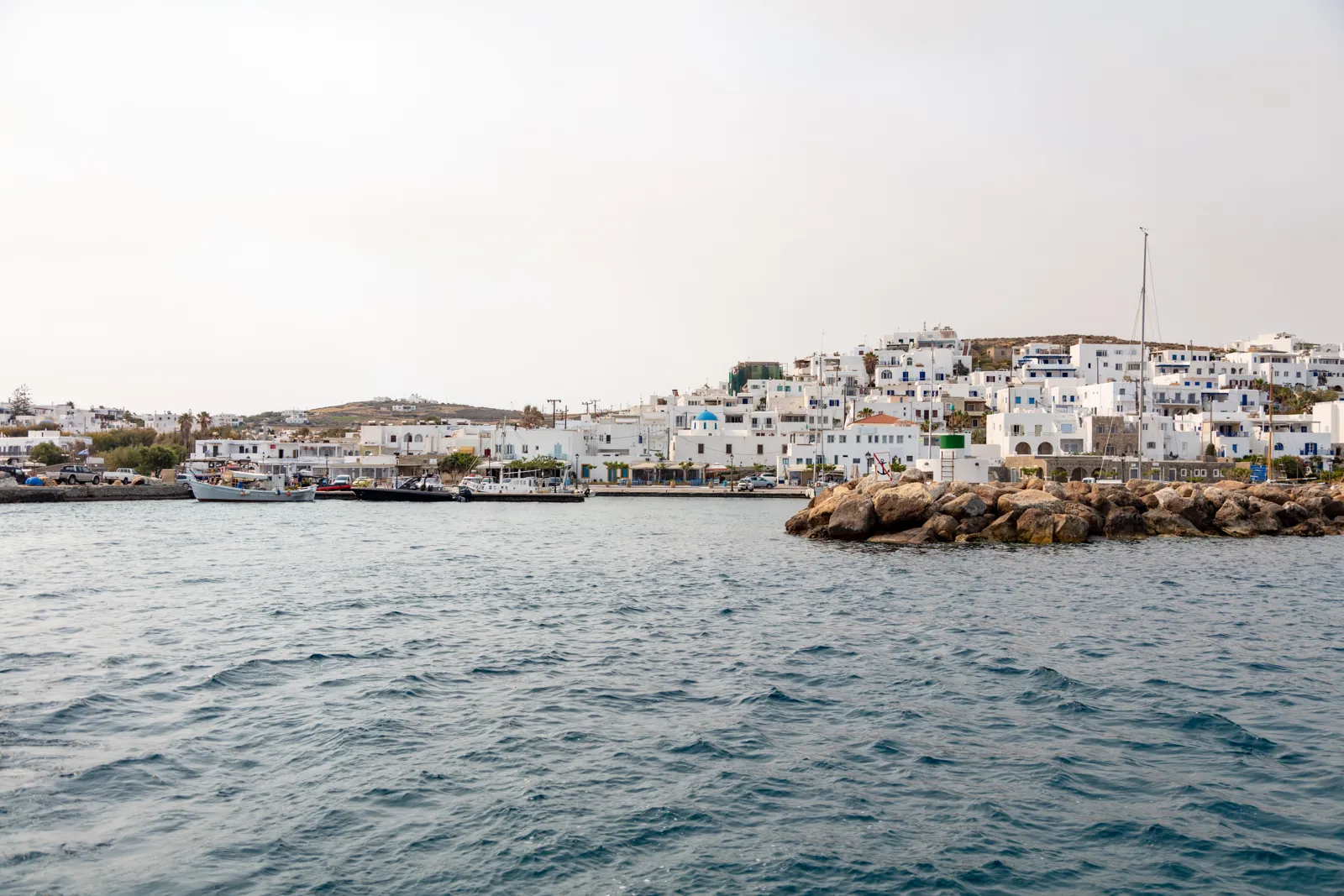
Visiting Naples means discovering a big, dense and noisy city in southern Italy, at the foot of Vesuvius. Its historic centre, a UNESCO World Heritage Site, is packed with Baroque churches, underground passages and historic pizzerias. The city is also the ideal starting point for Pompeii, Herculaneum, Capri and the Amalfi Coast. This guide helps you choose what to see, where to stay, when to go and how to organise 3 to 5 days there.
Our travel deals for Naples
Affiliate links: we earn a commission, at no extra cost to you.
FlightsKiwi.comCompare flights and airline combinations to Naples.
Time zoneUTC+1, UTC+2 in summer (Europe/Rome)1 hour ahead of London, 6 hours ahead of New York most of the year
AirportsNaples CapodichinoClose to the centre, linked by the Alibus shuttle
EntrySchengen area: no visa for up to 90 days for US citizens (tourism or business) and UK citizens (in any 180-day period) · travel.state.gov · GOV.UKPassport valid at least 3 months beyond your stay (US) or after leaving the Schengen area (UK)
Electricity220-volt system, according to the U.S. Department of State · plugsCheck that your devices accept it; you may need a plug adapter
Ideal length3 days for the city5 to 7 days with Pompeii, Vesuvius and Capri
The heart of Naples follows the plan of the ancient Greek city: three parallel streets, the « decumani », crossed by alleys. Spaccanapoli cuts straight through the district. Along the way you will pass the church of Gesù Nuovo, the monastery of Santa Chiara and its tiled cloister, then Via San Gregorio Armeno, the street of nativity-scene figures, open all year and very busy in December. The historic centre is a UNESCO World Heritage Site. Further east, in Basilicata, Matera, the city of the Sassi, is often combined with Puglia.
The Sansevero Chapel and the Veiled Christ
This small 18th-century chapel houses Giuseppe Sanmartino’s Veiled Christ, a marble sculpture whose veil seems transparent. It is one of the most popular visits in the city and space is limited: book your time slot online, especially at weekends and in high season.
The National Archaeological Museum (MANN)
This is one of the world’s great archaeological museums. It holds much of the frescoes, mosaics and objects found at Pompeii and Herculaneum, including the Alexander Mosaic, as well as the Farnese collection of ancient sculpture. Visit it before or after Pompeii: the two complement each other. Allow at least half a day.
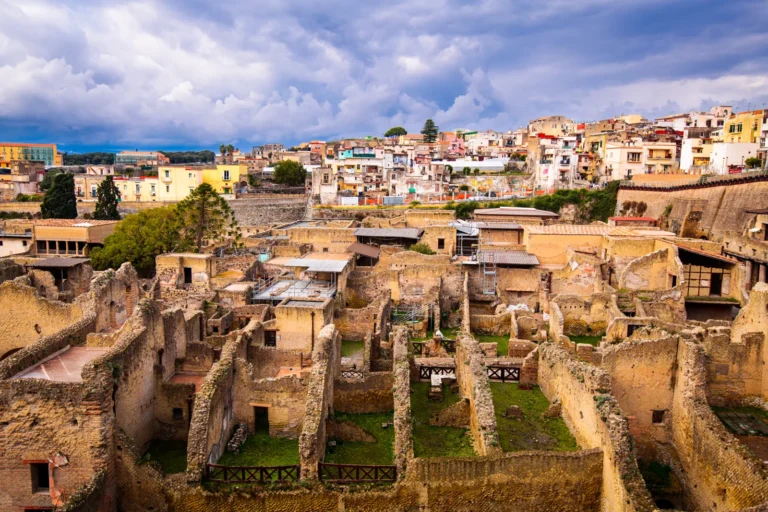
At the foot of Vesuvius, our guide visiting Herculaneum covers tickets, opening hours and getting there by train.
Underground Naples
Beneath the city lies a network of tunnels, Greco-Roman cisterns and shelters used during the Second World War. Several routes can be visited with a guide, including Napoli Sotterranea near Via dei Tribunali and the Galleria Borbonica. The catacombs of San Gennaro, in the Sanità district, round off this visit well.
The Spanish Quarter and Via Toledo
Via Toledo, a major shopping street, links Piazza Dante with the Royal Palace. To the west, the Spanish Quarter (Quartieri Spagnoli) is a network of narrow, lively alleys, with washing hanging from the windows and the Diego Maradona mural. Toledo metro station, decorated on a sea theme, is worth a detour even if you are not taking the metro.
Piazza del Plebiscito, the Royal Palace and Castel Nuovo
Naples’ great public square is lined by the Royal Palace and the church of San Francesco di Paola. Close by, the glass-roofed Galleria Umberto I, the San Carlo theatre, one of the oldest opera houses still in use in Europe, and Castel Nuovo, the harbour fortress, form a group you can see in half a day.
The seafront, Castel dell’Ovo and Posillipo
The partly pedestrianised lungomare runs along the bay from Santa Lucia to Mergellina, facing Vesuvius. Castel dell’Ovo, built on an islet, offers a fine view of the bay. Higher up, the Vomero district and Castel Sant’Elmo, reached by funicular, overlook the whole city.
Capodimonte
North of the centre, the former royal palace of Capodimonte houses a painting museum (Caravaggio, Titian, Raphael and more) in the middle of a large park. It is less crowded than the sights in the centre and combines well with the Sanità district.
Day trips from Naples
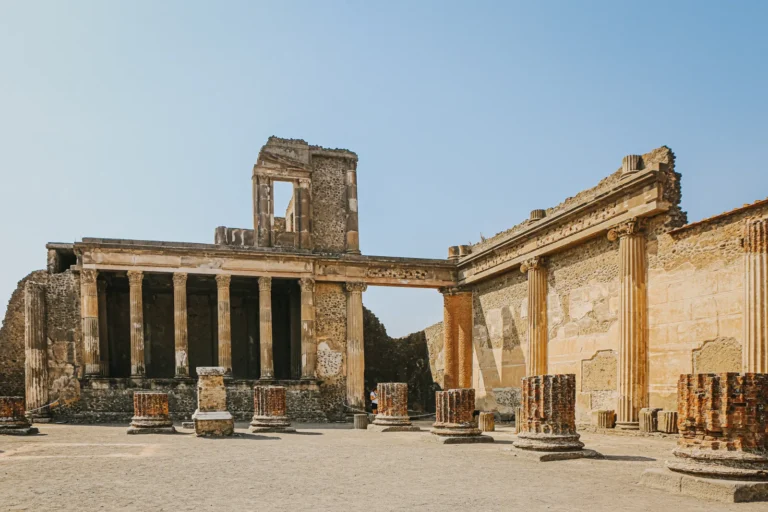
Pompeii: the Roman city buried in AD 79, about 40 minutes by regional train (Circumvesuviana); allow a day, and bring water and a hat in summer.
Herculaneum: smaller and better preserved in places, quicker to visit; on the same train line.
Vesuvius: a path leads to the crater rim; access is by named ticket booked online and may be closed in bad weather or when there is a fire risk.
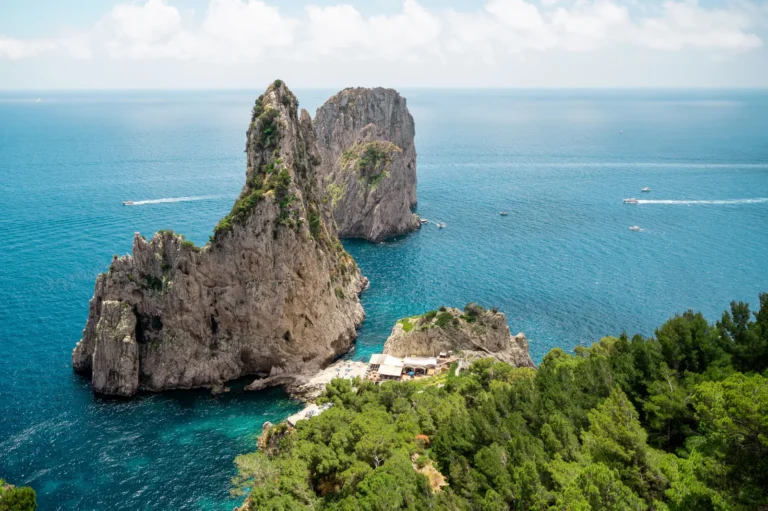
Capri, Ischia and Procida: by boat from the port of Naples (Molo Beverello or Calata Porta di Massa), with more services from April to October.
Sorrento and the Amalfi Coast: Sorrento is at the end of the Circumvesuviana line; for Positano and Amalfi, see our Amalfi Coast guide.
The Phlegraean Fields: west of the city, a volcanic area with ancient sites (Pozzuoli, Baia, Cumae); GOV.UK notes that national emergency planning is in place for the Phlegraean Fields, an area that remains active with regular tremors: follow the instructions of the local authorities.
Days 1 and 2: the historic centre, the MANN and the underground
Day 3: Piazza del Plebiscito, the Royal Palace, Castel dell’Ovo, the Vomero and Sant’Elmo
Day 4: Pompeii in the morning, Herculaneum or Vesuvius in the afternoon
Day 5: Capri by boat
Days 6 and 7: Sorrento and the Amalfi Coast, or Procida and Capodimonte
Naples also combines with Rome, just over an hour away by high-speed train, and with Sicily by overnight ferry or by train.
When to go to Naples: best time and climate
The best time to visit Naples is from April to June and from September to mid-October. Afternoons reach 19 to 28 °C (66 to 82 °F) and the days are long. July and August are hot (over 30 °C, or 86 °F), dry and very busy on the coast. From November to February it is mild but often rainy: November is the wettest month. The table below uses the official normals for Naples Capodichino airport.
Month
High °C (°F)
Low °C (°F)
Rain mm (in)
Crowds
Prices
Verdict
January
13.4 (56)
4.7 (40)
92 (3.6)
Low
Low
⚠️ Cool and damp, ideal for museums
February
13.9 (57)
4.9 (41)
95 (3.7)
Low (carnival)
Low
⚠️ Cool, frequent rain
March
16.4 (62)
7.3 (45)
78 (3.1)
Medium
Medium
⚠️ Changeable spring
April
19.4 (67)
10.0 (50)
99 (3.9)
High (Easter)
Medium → high
✅ Mild, a few showers
May
23.6 (74)
14.3 (58)
59 (2.3)
High
High
✅ One of the best months
June
27.7 (82)
18.4 (65)
33 (1.3)
High
High
✅ Fine and dry, ideal for Capri
July
30.4 (87)
20.9 (70)
29 (1.1)
Very high
Very high
⚠️ Hot, Pompeii is gruelling
August
31.0 (88)
21.4 (71)
36 (1.4)
Very high (Ferragosto)
Very high
⚠️ The hottest, crowds on the coast
September
26.8 (80)
17.6 (64)
89 (3.5)
High
High
✅ Summer without the peak heat
October
23.0 (73)
13.8 (57)
136 (5.4)
Medium
Medium
⚠️ Mild but frequent thunderstorms
November
18.3 (65)
9.5 (49)
152 (6.0)
Low
Low
❌ The wettest month
December
14.3 (58)
5.9 (43)
112 (4.4)
Medium (nativity scenes, holidays)
Medium
⚠️ Damp, Christmas atmosphere
Temperatures and precipitation: 1991-2020 normals for the Naples Capodichino (airport) station, published by the Istituto Superiore per la Protezione e la Ricerca Ambientale (ISPRA). Crowds and prices: estimates based on the tourist seasons.
According to the same normals, Naples has about 10 rainy days in November and December, compared with 2 to 4 in July and August. Sunshine ranges from about 105 hours in December to more than 310 hours in July.
Spring (March to May)
Temperatures rise from 16 to 24 °C (61 to 75 °F). April is still fairly wet (99 mm, or 3.9 in), May much less so. It is the right season for walking around the city and visiting Pompeii without suffering from the heat. Easter and the spring public holidays (25 April, 1 May) draw many Italian and foreign visitors.
Summer (June to August)
June is hot and dry (28 °C, or 82 °F). July and August average over 30 °C (86 °F), with much higher peaks during heatwaves; the State Department lists heatwaves as common in the south in summer, so take them into account for excursions, especially on Vesuvius. The islands and the coast are overrun around 15 August (Ferragosto), and some family businesses close for a few days.
Autumn (September to November)
September extends the summer (27 °C, or 81 °F) with a still-warm sea. Rain returns markedly in October, often as thunderstorms, and peaks in November (152 mm, or 6.0 in). GOV.UK notes that heavy rainfall in winter can cause local flooding: follow local authorities’ advice.
Winter (December to February)
Afternoons reach 13 to 14 °C (55 to 57 °F) and nights rarely drop below 4 °C (39 °F). Sites are quieter and prices lower, except around Christmas, when Via San Gregorio Armeno and its nativity scenes draw crowds. Boat services to the islands are reduced.
When to go to Naples depending on your plans
Plan
Best time
City break and museums
All year; October to April for prices
Pompeii and Herculaneum
April-May, late September-October
Vesuvius
May-June, September (visibility, moderate heat)
Capri, Ischia and swimming
June and September
Nativity scenes and Christmas atmosphere
December
Tight budget
January to March, November
Major events in Naples
Date
Event
Saturday before the first Sunday in May, 19 September and 16 December
Feasts of St Januarius (San Gennaro), the city’s patron saint, at the cathedral
December
Nativity scenes and the Christmas market on Via San Gregorio Armeno
15 August
Ferragosto, a national public holiday
February or March
Carnival (dates vary)
Check dates and times with the city or the diocese: celebrations can change from year to year.
Naples month by month
January: cool (13 °C, or 56 °F) and damp. Museums without crowds, low prices.
February: rainy and cool. Carnival in some years.
March: changeable spring (16 °C, or 61 °F). A good month for the city before high season.
April: mild (19 °C, or 67 °F), a few showers. Easter is in high demand: book early.
May: one of the best months: 24 °C (75 °F), less rain, the feast of St Januarius in early May.
June: hot and dry (28 °C, or 82 °F). Ideal for Capri and swimming.
July: over 30 °C (86 °F). Visit Pompeii at opening time.
August: the hottest month (31 °C, or 88 °F). Crowds and prices at their peak on the coast around the 15th.
September: summer carries on (27 °C, or 81 °F), with fewer people after mid-month.
October: mild (23 °C, or 73 °F) but stormy (136 mm, or 5.4 in). Prices falling.
November: the wettest month (152 mm, or 6.0 in). Quiet and inexpensive.
December: damp (14 °C, or 58 °F), nativity scenes and Christmas lights.
Our view by traveller type, based on the information in this guide:
Profile
Our view
Why
Culture and history
✅ Ideal
A UNESCO-listed historic centre, the National Archaeological Museum, Pompeii and Herculaneum by regional train.
Food lovers
✅ Ideal
Historic pizzerias and street food (pizza fritta, cuoppo): one of the cheapest big cities in Italy to eat in.
Couples
✅ Yes
The lungomare facing Vesuvius, Capri, Ischia and Procida by boat, the Amalfi Coast nearby.
Tight budget
✅ Yes
Roughly €60 to €110 per person per day on a budget; churches, neighbourhoods and the seafront are free.
Families
⚠️ Possible
A dense, noisy city; Pompeii takes a full day, with water and a hat in summer.
Beach
⚠️ Possible
Not a beach destination in itself: swimming is better on Capri or Ischia, ideally in June and September.
Budget for a stay in Naples
Naples remains one of the cheapest big cities in Italy to eat in. Indicative amounts per person per day, excluding flights:
Item
Budget
Comfort
Accommodation (sharing a double room)
roughly €25 to €50
roughly €70 to €140
Meals
roughly €20 to €30
roughly €40 to €70
Transport (metro, bus, regional train)
roughly €5 to €10
roughly €10 to €25
Sightseeing and day trips
roughly €10 to €25
roughly €30 to €50
Total per day
roughly €60 to €110 per person per day
roughly €150 to €280 per person per day
Indicative estimates, varying with the season. A tourist tax per night is added to the price of accommodation. Boats to Capri and Pompeii admission weigh on the budget on excursion days.
To save money: eat pizza or street-fried snacks (pizza fritta, cuoppo), drink your coffee standing at the bar and group together the free sights (churches, lungomare, neighbourhoods).
Getting to Naples and getting around
Naples Capodichino airport is close to the centre, linked by the Alibus shuttle to the central station and the port. You can also arrive by train via Rome, just over an hour away by high-speed train (see our tips for travelling by train).
Metro: line 1 serves the central station (Garibaldi), the centre, Toledo and the Vomero; its « art stations » are sights in themselves.
Funiculars: four lines climb to the Vomero and Posillipo.
Circumvesuviana: regional trains to Herculaneum, Pompeii and Sorrento, from Porta Nolana or Garibaldi station; often crowded, so watch your belongings.
Boats: ferries and hydrofoils to Capri, Ischia, Procida and, in season, Sorrento and the Amalfi Coast.
Car: not recommended in the city (difficult traffic, limited traffic zones); the U.S. State Department also notes that break-ins of rented vehicles are common.
Naples airport transfer: Alibus, fixed-fare taxi and private transfer
Naples Capodichino airport is close to the centre. Two official options dominate: ANM’s Alibus shuttle and taxis, which charge fixed fares set by the City of Naples.
Alibus shuttle
The Alibus links the airport with the central station (Piazza Garibaldi) and the port (Immacolatella, Molo Beverello). A single ticket costs €5.00, according to ANM and Trenitalia. You can buy it from machines, from authorised sellers near the airport, the station and the port, or pay by contactless card. Trenitalia also sells a combined train + Alibus ticket (« Air&Port »). As the timetables published by ANM are inconsistent, check them on anm.it before you arrive.
Fixed-fare taxi (tariffe predeterminate)
The City of Naples fare table (resolution no. 258 of 27 June 2024) sets, from the airport: €21.00 to the central station / Piazza Garibaldi and to the historic-centre ZTL, €24.00 to the port / Molo Beverello / Piazza Municipio, €28.50 to Via Partenope and its hotels. These fares are per car and include luggage, night, public holidays and the airport supplement (excluding tolls and a €5.00 minivan supplement). You must ask for them at the start of the ride, and the driver must give you a receipt.
Shared taxi
The City also offers a shared taxi from the airport to the central station and Molo Beverello at €6.00 per person, extended until 31 December 2026; it leaves as soon as 3 passengers are on board.
Option
Where to catch it
Official fare
Source
Alibus
Airport stop
€5.00
anm.it; trenitalia.com
Fixed-fare taxi
Taxi rank
€21.00 (station, historic centre) to €28.50 (Via Partenope)
comune.napoli.it
Shared taxi
Viale Ruffo di Calabria (former NCC area)
€6.00 per person
comune.napoli.it
Booking a transfer in Naples
A private transfer booked in advance (a driver waiting on arrival, price fixed when booking) makes most sense if you arrive late, have bulky luggage, are travelling as a family with young children, or as a group sharing the cost. It is the logical option for heading straight to Sorrento, the Amalfi Coast or Pompeii. Before booking, check what the price includes (tolls, luggage, waiting if your flight is delayed), the exact meeting point in the terminal, the cancellation terms and the name of the company actually providing the ride.
Sources: City of Naples, 2024 taxi fares and « Taxi collettivo » page (comune.napoli.it); Trenitalia, Napoli Air&Port Link page (trenitalia.com); ANM, Alibus pages (anm.it), checked 24 October 2026.
Where to stay in Naples
Historic centre: ideal for doing everything on foot and for atmosphere, but noisy streets at night.
Toledo and the Spanish Quarter: central, well served by the metro, very lively.
Chiaia and the seafront: a quieter, more elegant district, close to the lungomare and the boats.
Vomero: residential and peaceful, linked to the centre by funicular.
Around the central station: handy for trains and Pompeii, but less pleasant in the evening.
Check for a lift, air conditioning (useful from June to September) and double glazing. For summer weekends, Easter and the end-of-year holidays, book 2 to 3 months ahead.
Entry requirements, health and safety
US citizens: Italy is in the Schengen area. You may enter for up to 90 days for tourism or business without a visa; your passport must be valid at least 3 months beyond your stay, and you need proof of sufficient funds and a return ticket (U.S. Department of State, travel.state.gov, last updated August 11, 2025).
UK citizens: no visa for up to 90 days in any 180-day period as a tourist. Your passport must have been issued less than 10 years before the day you arrive and be valid at least 3 months after the day you plan to leave the Schengen area. The EU Entry/Exit System (EES) is being implemented: fingerprints and a photo may be taken at your first entry, free of charge (UK FCDO, GOV.UK, updated 21 October 2026).
ID: under Italian law, police can stop you at any time for an identity check: carry photo ID at all times (GOV.UK).
Health: UK travellers can use a GHIC or EHIC for medically necessary state healthcare (GOV.UK); travel.state.gov advises being up to date on CDC-recommended vaccinations and recommends insurance that covers medical evacuation.
Theft: crime levels are generally low, but bag-snatching and pickpocketing are more common in city centres, at major tourist attractions and on public transport (GOV.UK); the State Department notes that break-ins of rented vehicles are common, so never leave luggage in a parked car.
In Naples: keep your bag in front of you, especially at the central station and on the Circumvesuviana. GOV.UK lists dengue, biting insects and West Nile disease among the health risks in Italy: protect yourself from heat and mosquitoes in summer.
Volcanoes: there are several active volcanoes in southern Italy; national emergency planning is in place for the Phlegraean Fields, which experience regular tremors. In an emergency, follow the instructions of the local authorities (GOV.UK).
Tickets: if you buy a bus or train ticket from a kiosk or machine, validate it before you start your journey; inspectors issue on-the-spot fines (GOV.UK).
Emergencies: 112 (police), 118 (ambulance), 115 (fire), according to GOV.UK; the State Department gives 112 for all emergencies.
Travel insurance is still useful for cancellation, repatriation or theft: see our travel insurance guide.
Practical tips for Naples
Pizza: Neapolitan pizza is usually eaten whole, with a knife and fork; historic pizzerias have queues: arrive at opening time.
Money: cards are accepted almost everywhere; keep some cash for small shops and street food. Use ATMs in well-lit public areas or inside a bank (travel.state.gov).
Traffic: scooters go everywhere, even in the alleys; stay alert when crossing.
Churches: cover shoulders and knees to visit places of worship.
Mobile data: check your home carrier’s roaming charges before you leave; an eSIM is a simple way to get local data.
Weekend: Naples works well for a short break; see also our cheap weekend ideas.
Naples also combines with Sicily, by overnight ferry or by train: our comparison Sicily or Sardinia helps you choose an island for the next stage of your trip.
Frequently asked questions
How many days do you need for visiting Naples?
Three days let you see the historic centre and the Archaeological Museum and make the trip to Pompeii. Allow five to seven days to add Vesuvius, Capri and the Amalfi Coast.
When is the best time to visit Naples?
From April to June and from September to mid-October: 19 to 28 °C (66 to 82 °F) in the afternoon according to the ISPRA normals. July and August exceed 30 °C (86 °F); November is the wettest month.
How do you get to Pompeii from Naples?
By Circumvesuviana regional train, in about 40 minutes, or by tourist train in season. Set off early to avoid the heat and the crowds.
Is Naples a dangerous city?
According to GOV.UK, crime levels in Italy are generally low, but bag-snatching and pickpocketing are more common in city centres, at tourist attractions and on public transport: watch your belongings and do not display valuables.
Do you need to book the Sansevero Chapel?
Yes, it is strongly recommended: the chapel is small and in high demand. Book your slot online several days ahead, especially at weekends.
Our sources
Climate normals: 1991-2020 normals for the Naples Capodichino (airport) station, published by the Istituto Superiore per la Protezione e la Ricerca Ambientale (ISPRA)
City of Naples (taxi fares and shared taxi), Trenitalia and ANM (Alibus), checked 24 October 2026


 FlightsKiwi.comCompare flights and airline combinations to Naples.Compare flights