Looking for things to do in Tenerife? The largest of the Canary Islands is dominated by Mount Teide, Spain’s highest peak (3,715 m / 12,188 ft). In a single day, you go from the southern beaches to the lava flows of the national park, then to the humid forests and villages of the north. The island combines beach resorts, listed colonial towns and great hikes. This guide helps you choose your base, your stops and your season.
In the center of the island, our page on visiting Mount Teide covers the cable car, the summit permit and access rules.
Our travel deals for Tenerife
Affiliate links: we earn a commission, at no extra cost to you.
FlightsKiwi.comCompare flights and airline combinations to Tenerife.
✅ Best months: January, February, March, April, may, June, September, October, November
Tenerife can be visited all year: AEMET’s WMO 1991-2020 normals give 21.5 °C (71 °F) in the afternoon in January and 29.7 °C (85 °F) in August in Santa Cruz. The best times are April to June and September-October, when it is dry, warm without excess and prices fall. Winter is high season for sun-seekers; what little rain falls comes mostly from November to March, mainly in the north. All the details, month by month: the best time to visit Tenerife.
Things to do in Tenerife: the must-sees
Teide National Park
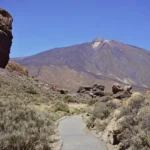
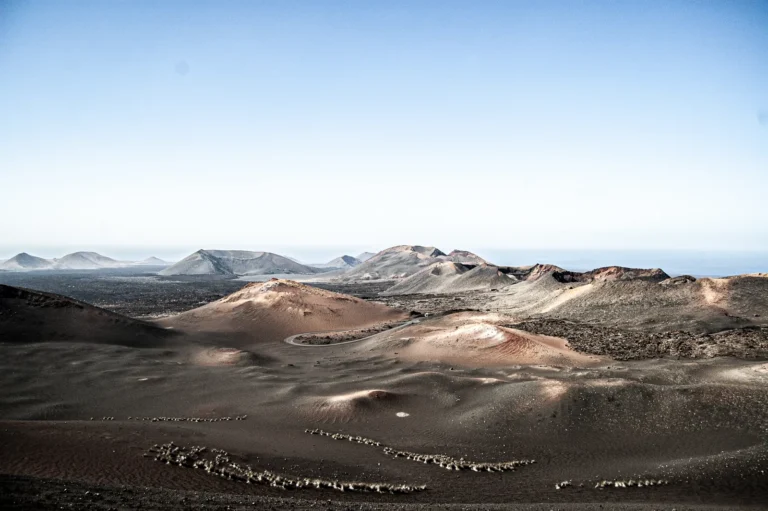
A UNESCO World Heritage Site, Teide National Park occupies the center of the island, around a vast caldera covered in lava flows and strangely shaped rocks such as the Roques de García. A cable car climbs close to the summit; it can close in wind or snow. Access to the crater by the final trail requires a free permit booked in advance with the national park. You will feel the altitude: the UK FCDO notes that altitude sickness may be a risk on Tenerife. Go up gradually and bring warm clothes. Leave nothing visible in your car at viewpoints and trailheads. Before booking, read our guide to car rental in Tenerife: licence, insurance, deposits.
San Cristóbal de La Laguna
The island’s former capital, La Laguna is a UNESCO World Heritage Site for its street plan, which served as a model for many colonial towns in the Americas. Its pedestrian streets are lined with houses with wooden balconies, churches and palaces. A university town, it is lively all year. It is cooler and damper than the coast: bring a jacket.
The Anaga massif
At the northeastern tip of the island, Anaga Rural Park is a massif of jagged ridges covered in laurisilva, a subtropical humid forest. Trails link isolated hamlets and descend to wild beaches such as Benijo and Roque de las Bodegas. The ridge road is winding; the short, maintained Sendero de los Sentidos (Path of the Senses) is a good introduction. The weather changes quickly: check the forecast and trail conditions.
Santa Cruz de Tenerife
The capital is a lively port city, with its squares, the Nuestra Señora de África market and the Auditorio de Tenerife by the water. In February it hosts Carnival, one of the biggest in Spain. North of the city, the pale-sand Las Teresitas beach is the most popular with locals.
Puerto de la Cruz and La Orotava
On the north coast, Puerto de la Cruz is one of the island’s first tourist resorts, with its old fishing quarter, the Lago Martiánez seawater pools and its botanical garden. Just above, La Orotava has a historic center with carved wooden balconies, churches and gardens, in a valley that climbs toward Teide.
Garachico and Icod de los Vinos
Garachico, a small northwestern port, was partly destroyed by a lava flow in the early 18th century; its natural pools carved into the volcanic rock are good for swimming when the sea is calm. Nearby, Icod de los Vinos is known for its thousand-year-old dragon tree, an emblem of the Canary Islands.
Masca and the Teno massif
At the northwestern tip, the Teno massif shelters the hamlet of Masca, perched above a spectacular ravine. The trail down the ravine to the sea is regulated (booking and access fee): check the current conditions before you go. Teno Point and its lighthouse look out over the Los Gigantes cliffs and the island of La Gomera.
Los Gigantes and the south
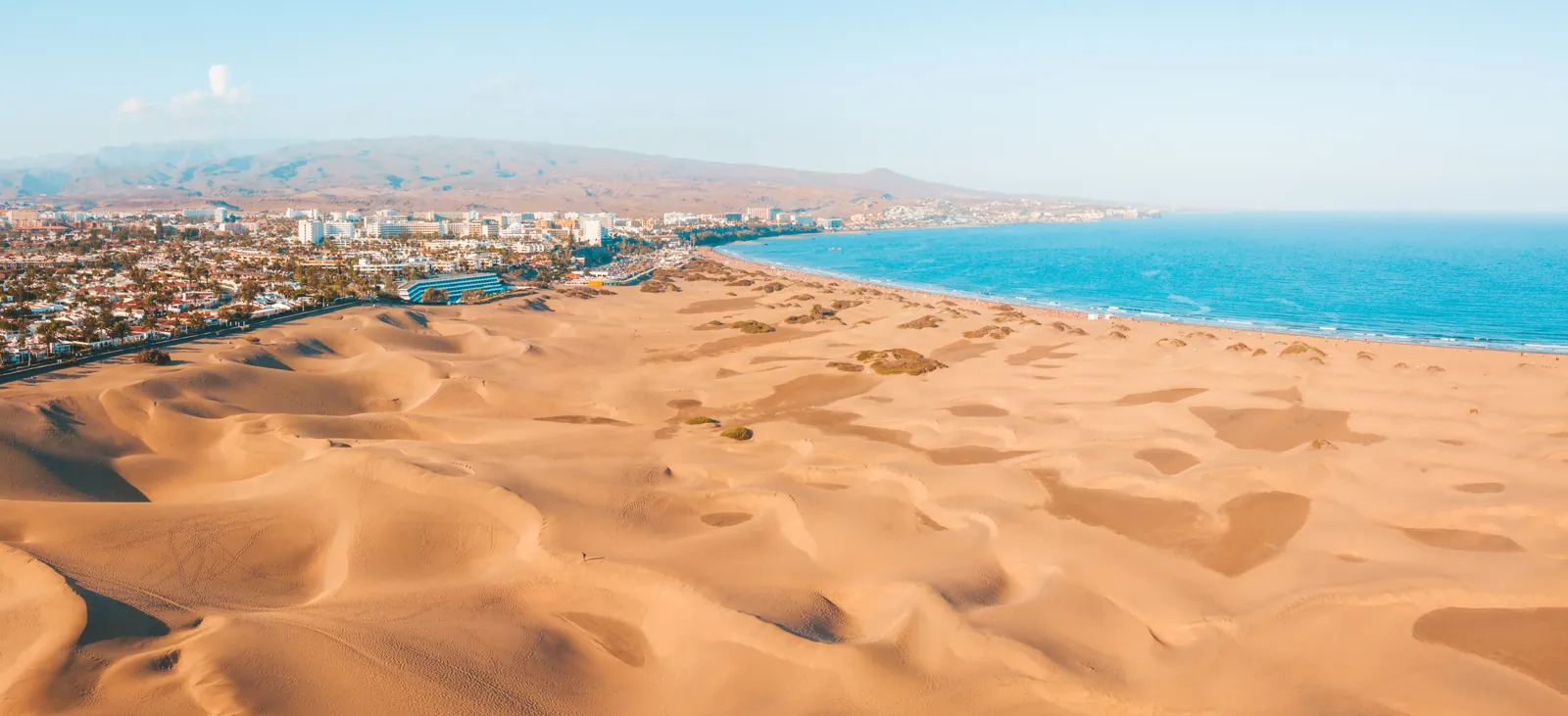
The Los Gigantes cliffs plunge several hundred meters into the ocean; they are best seen by boat. Further south, Costa Adeje, Playa de las Américas and Los Cristianos form the main beach area, with developed beaches, often of dark sand, and a wide choice of hotels. Whale- and dolphin-watching trips leave from these ports: choose a licensed operator that follows Spanish rules on approaching the animals.
Itinerary suggestions for Tenerife
7 days: the island’s highlights
Day 1: arrival, settle in the south or the north
Day 2: Teide National Park (Roques de García, cable car depending on conditions)
Day 3: La Orotava and Puerto de la Cruz
Day 4: Garachico, Icod de los Vinos, Masca and Teno Point
Day 5: Los Gigantes and a boat trip
Day 6: La Laguna and the Anaga massif
Day 7: Santa Cruz, Las Teresitas beach, departure
10 days to 2 weeks: Tenerife and La Gomera
Days 1-3: the south and Los Gigantes, boat trip
Days 4-5: Teide, with a night near the park for sunrise or sunset
Days 6-7: ferry from Los Cristianos to La Gomera (Garajonay National Park)
Days 8-10: the north: La Orotava, Puerto de la Cruz, Garachico, Teno
Days 11-14: La Laguna, Anaga, Santa Cruz
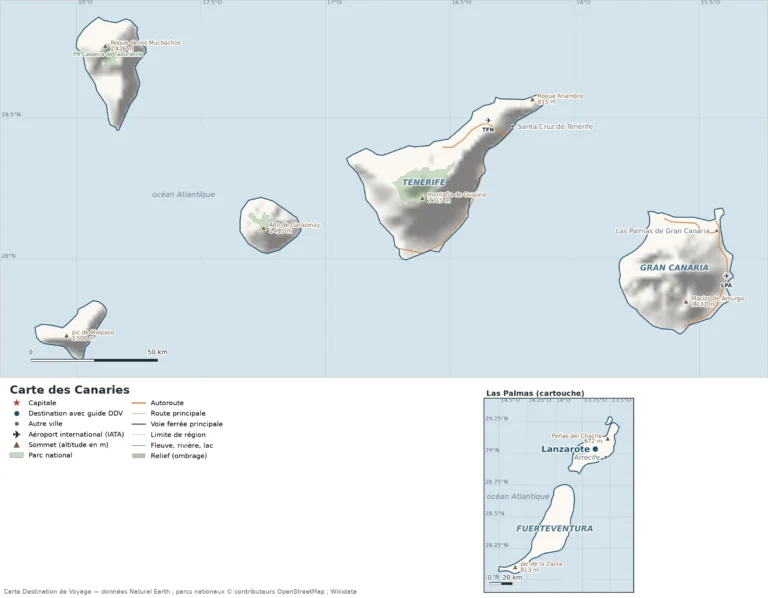
To combine Tenerife with other islands in the archipelago, see our Canary Islands guide.
Budget for a trip to Tenerife
Indicative amounts per person per day, excluding flights:
Item
Budget
Comfort
Accommodation (sharing a double room)
about €25 to 45
about €60 to 130
Meals
about €20 to 30
about €40 to 70
Transport (shared rental car, fuel, bus)
about €10 to 20
about €20 to 40
Sightseeing and activities
about €5 to 15
about €15 to 50
Total per day
roughly €60 to 110
roughly €135 to 290
Indicative estimates, varying with the season: prices peak at Christmas, in February and in August.
Guachinches, family-run taverns in the north serving local wine and simple food, are a good place to eat cheaply. All-inclusive packages in the big southern resorts can be worthwhile outside school holidays.
Getting around Tenerife
Car: the most practical way to explore the island. Highways run along the north and south coasts, but the mountain roads (Teide, Masca, Anaga) are narrow and winding. Leave no valuables in the vehicle: thieves target hire cars (GOV.UK). US drivers must obtain an International Driving Permit before arriving and need one to rent a car (U.S. Department of State); UK photocard licences can be used in Spain (GOV.UK).
Bus (TITSA): the bus network links towns, both airports and many villages. A reasonable option without a car, but services to Teide and the mountain areas are infrequent.
Tram: a line links Santa Cruz with La Laguna.
Ferry: boats leave Los Cristianos for La Gomera, La Palma and El Hierro, and Santa Cruz for Gran Canaria.
Taxi: useful for the airport or the start of a one-way hike.
Tenerife airport transfers: TITSA buses, taxis and private transfers
Tenerife has two airports: Tenerife South (TFS), close to the resorts of Costa Adeje and Los Cristianos, and Tenerife North (TFN), near La Laguna and Santa Cruz. Check your arrival airport before choosing transport: the bus routes are not the same. There is no train; public transport means the TITSA buses (guaguas).
From Tenerife South
According to Aena, the airport operator, buses leave from the terminal, level 0, arrivals side. TITSA routes serving Tenerife South: 10 (Santa Cruz – airport), 40 (Costa Adeje station – Los Cristianos – airport), night route 711 (Santa Cruz – airport – Los Cristianos – Costa Adeje), 415 (El Fraile – airport – San Isidro) and 343, an express linking Puerto de la Cruz with Los Cristianos via both airports.
From Tenerife North
Again according to Aena, buses leave from level -1 (bus parking). Route 20 links the airport with La Laguna and Santa Cruz, route 30 with Puerto de la Cruz, route 104 with Santa Cruz and Puerto de la Cruz. Route 343 links Tenerife North directly with Tenerife South, with no intermediate stop, « in 50 minutes » according to Aena.
Tickets: bank card or Ten+ card
TITSA states that single fares depend on the journey and can be paid by bank card or cash; a same-day return gets a 10% discount on journeys of 20 km (12 mi) or more. For several days of travel, the Ten+ card (€2) can be loaded with a 1-day pass at €10 or a 7-day pass at €50, valid on buses and the tram across the island, according to TITSA’s fares page (checked 26 October 2026); it is sold at the airport machines. Timetables for each route are on the TITSA website.
Taxi
Aena recommends taking a taxi only from the signposted rank in front of the terminal, avoiding drivers who offer their services elsewhere and asking for a receipt in case of a complaint. Aena’s website links to an indicative fare table; we do not reproduce unconfirmed prices.
Option
Where to catch it
Official fare
Source
TITSA bus 10, 40, 711, 415, 343
Tenerife South, level 0, arrivals
Depends on the journey (bank card or cash)
aena.es, titsa.com
TITSA bus 20, 30, 104, 343
Tenerife North, level -1
Depends on the journey
aena.es, titsa.com
Ten+ card
Airport machines
Card €2; 1 day €10; 7 days €50
titsa.com
Taxi
Signposted terminal rank
Indicative table on Aena’s website
aena.es
Booking a private transfer in Tenerife
A private transfer booked in advance is useful if you arrive late at night, travel as a family or with lots of luggage, or if your accommodation is far from the bus routes. Before paying, check: the total price (luggage, child seats, night surcharge), the meeting point at the airport, flight tracking in case of delay, included waiting time and cancellation terms. Compare with the official fares in the table above: for a solo traveler with light luggage, public transport is often enough. It is most useful if you land at Tenerife North and stay in the south (or vice versa), or if your accommodation is in a poorly served mountain village.
Sources: Aena (Tenerife Sur and Tenerife Norte, bus and taxi sections), checked on 24 October 2026, and TITSA (fares and routes serving the airports), checked on 26 October 2026.
Where to stay in Tenerife
Base
Best for
Good to know
Costa Adeje
Beach, families, upscale hotels
The sunniest, very touristy
Los Cristianos and Playa de las Américas
Beach, mid-range budget, nightlife
Ferry to La Gomera, very lively
Los Gigantes and Puerto de Santiago
Quiet, cliffs, boat trips
Smaller beaches
Puerto de la Cruz
Town, green north, moderate prices
Cloudier, often rough sea
La Laguna or Santa Cruz
Culture, local life, North airport
Not much beach, cooler in La Laguna
Rural houses in the north and interior
Hiking, nature
Car essential
One island, two moods: the south for sun, the north for scenery and towns.
For a stay of a week or more, two bases (one in the south, one in the north) avoid long daily drives. During school holidays and Carnival, book several months ahead.
Entry requirements, health and safety
US citizens: the Canary Islands are part of Spain. According to the U.S. Department of State (travel.state.gov, last updated August 11, 2025), your passport should be valid for at least 3 months beyond your stay (6 months recommended); you need sufficient proof of funds and a return ticket.
UK citizens: according to the UK FCDO (GOV.UK, updated 12 August 2026), you can travel to the Schengen area, including Spain, without a visa for up to 90 days in any 180-day period. Your passport must have been issued less than 10 years before you arrive and be valid for at least 3 months after you leave. You may be asked for proof of travel insurance, funds, a return ticket and accommodation, and may have to register under the EU Entry/Exit System (EES). If your passport is lost or stolen, you cannot use a police report to leave Spain: you need a new passport or an emergency travel document (GOV.UK).
Health: UK travelers need a GHIC or EHIC for medically necessary state healthcare, which is not an alternative to travel insurance (GOV.UK). Altitude sickness may be a risk on Teide (GOV.UK).
Safety: thieves use distraction techniques, especially at airports and when collecting a hire car (GOV.UK). Wildfires happen often in summer, including on the islands; check the risk with AEMET and follow the authorities’ instructions (GOV.UK).
Sea and mountains: some beaches, especially around the islands, have strong undercurrents (GOV.UK). Swim on supervised beaches and follow the flags. In the mountains, the weather changes quickly.
Emergencies: 112.
Practical tips
Money: cards are widely accepted; you may be asked for ID when paying by card (GOV.UK). Keep cash for guachinches and small village shops.
Internet: check your provider’s roaming rates for Spain before you leave; an eSIM can be a cheaper option.
Altitude and sun: UV is strong on Teide; sunscreen, sunglasses and warm clothes are essential, even in summer.
Permits: book the Teide summit trail permit in advance and check access conditions for the Masca trail.
Meal times: lunch and dinner are late, as in the rest of Spain.
Tipping: not compulsory; leave a few coins or round up if you enjoyed the service.
Who is Tenerife for?
Our verdict, profile by profile, based on the information in this guide:
Profile
Our verdict
Hikers
Ideal: Teide National Park (free permit for the final summit trail), the Anaga and Teno massifs, the Masca ravine under its regulations.
Beach and sun
Yes: Costa Adeje, the sunniest area, and Los Cristianos; beaches are often dark sand.
Families
Yes: Costa Adeje and Los Cristianos, the Puerto de la Cruz seawater pools, whale-watching trips.
Culture
Yes: UNESCO-listed La Laguna, La Orotava and its wooden balconies, Garachico.
Nightlife
Yes: Los Cristianos and Playa de las Américas are very lively.
Budget travelers
Yes: roughly €60 to 110 per person per day, with the northern guachinches for cheap meals.
Frequently asked questions
How many days do you need in Tenerife?
A week covers the essentials: Teide, La Laguna, Anaga, La Orotava, Garachico, Masca and the south coast. With ten days to two weeks, you can add a trip to La Gomera and more hiking.
Is it better to stay in the north or the south of Tenerife?
The south is sunnier and drier, with most of the beaches and hotels. The north is greener, more authentic and often cheaper, but cloudier. For a tour, combine the two.
Do you need a car in Tenerife?
It is strongly recommended for exploring the island: TITSA buses serve the towns, but mountain areas such as Teide, Masca and Anaga are poorly served. US drivers need an International Driving Permit (travel.state.gov).
Can you climb to the summit of Teide?
Yes, but the final trail to the crater requires a permit booked in advance with the national park. The cable car climbs close to the summit; it can close in wind or snow.
What can you do in Tenerife in 7 days?
A week covers the essentials: Teide National Park, La Orotava and Puerto de la Cruz, Garachico, Masca and Teno Point, Los Gigantes with a boat trip, La Laguna and the Anaga massif, then Santa Cruz and Las Teresitas beach.
What is the most beautiful place in Tenerife?
Teide National Park, crowned by Spain’s highest peak (3,715 m / 12,188 ft), is the island’s signature sight. Masca and the Teno massif, the Anaga massif and the old town of La Laguna round out the visit.
Is Tenerife safe?
Yes, with usual precautions. The main risks are thefts in tourist areas and from cars, especially distraction thefts at airports and car rental desks (GOV.UK), and sea conditions.
In the south of the island, our page on visiting Siam Park covers opening hours, official prices and the water park’s shuttles.
In the north, our Loro Parque guide gives opening hours, ticket rules and the show schedule.
Aena (Tenerife Sur and Tenerife Norte airports: bus and taxi), checked on 24 October 2026; TITSA, « Fares and Discounts » (Ten+ card and passes), checked on 26 October 2026
Climate data: WMO 1991-2020 normals for the Spanish State Meteorological Agency (AEMET) stations of Santa Cruz de Tenerife (60020) and Tenerife South Airport (60025), archive published by NOAA


 FlightsKiwi.comCompare flights and airline combinations to Tenerife.Compare flights