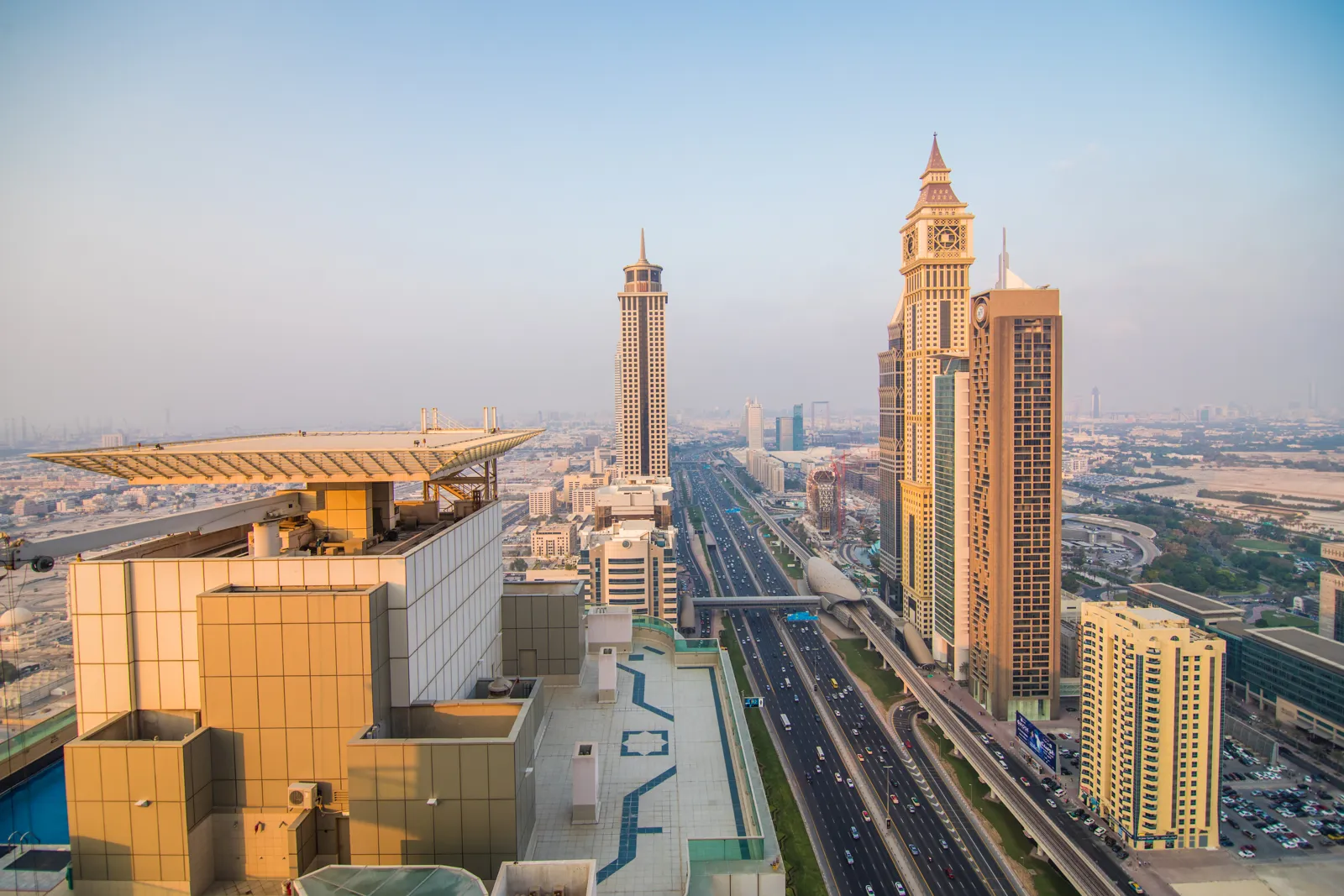
What are the best things to do in Marrakech, and what can you see in a few days? At the foot of the High Atlas, Marrakech is the most visited city in Morocco. Its medina, surrounded by ocher earthen ramparts and listed as a UNESCO World Heritage Site, packs souks, palaces, madrasas and riads around Jemaa el-Fna square. Outside the walls, Gueliz and Hivernage show a more modern face, and the gardens offer a welcome break. This guide helps you choose your sights, your neighborhood and your day trips for a stay of 3 to 5 days.
Safety: the UK FCDO (GOV.UK, updated 19 August 2026) considers that terrorists are likely to try to carry out attacks in Morocco, including in crowded places and places popular with tourists, and reports common petty crime in medinas. Stay alert in busy places such as Jemaa el-Fna, and read the GOV.UK and travel.state.gov advice before you leave.
Our travel deals for Marrakech
Affiliate links: we earn a commission, at no extra cost to you.
FlightsKiwi.comCompare flights and airline combinations to Marrakech.
AirportMarrakech Menara (RAK), a few kilometers from the medina; check current routes with the airlines
Ideal length3 to 4 days, plus one or two days of excursions
Best timeMarch to May and October-November
Time zoneUTC+1, UTC+0 during Ramadan: same time as London in summer, 1 h ahead in winter
EntryUS and UK citizens can visit without a visa for up to 90 days (travel.state.gov, GOV.UK)
Currencythe Moroccan dirham (MAD)
Indicative budgetroughly US$50 to 90 per person per day on a tight budget, US$135 to 280 for comfort
Things to do in Marrakech: the highlights
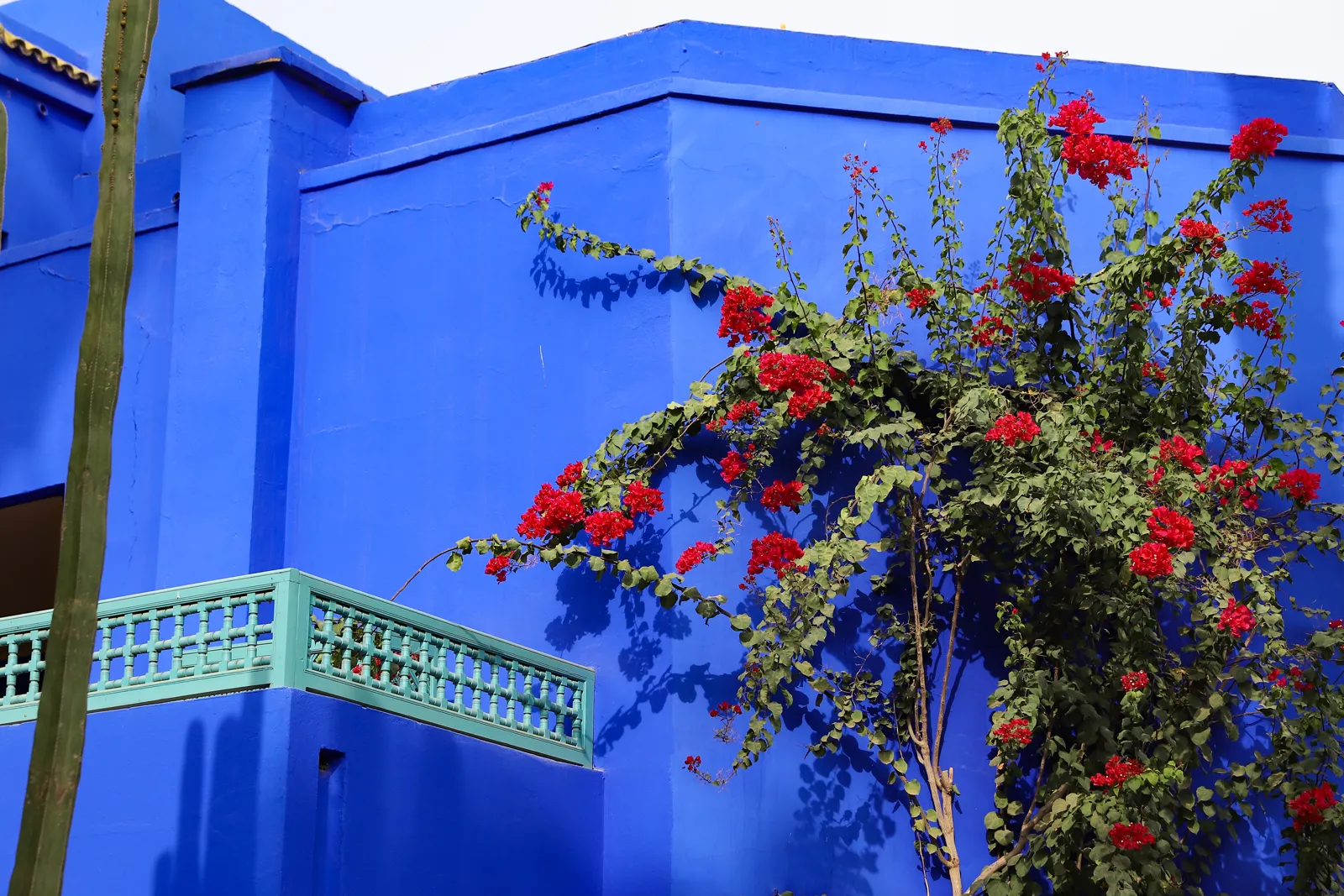
The blue villa of the Majorelle Garden in Marrakech
Jemaa el-Fna square
The heart of the medina, Jemaa el-Fna changes throughout the day: orange juice and vendors in the morning, storytellers, musicians and snake charmers in the afternoon, then open-air food stalls in the evening. The cultural space of the square is inscribed by UNESCO on the list of the Intangible Cultural Heritage of Humanity. The café terraces around it give an overview at sunset. Photos of performers and animals must be paid for: agree on the price first, or refrain.
The Koutoubia
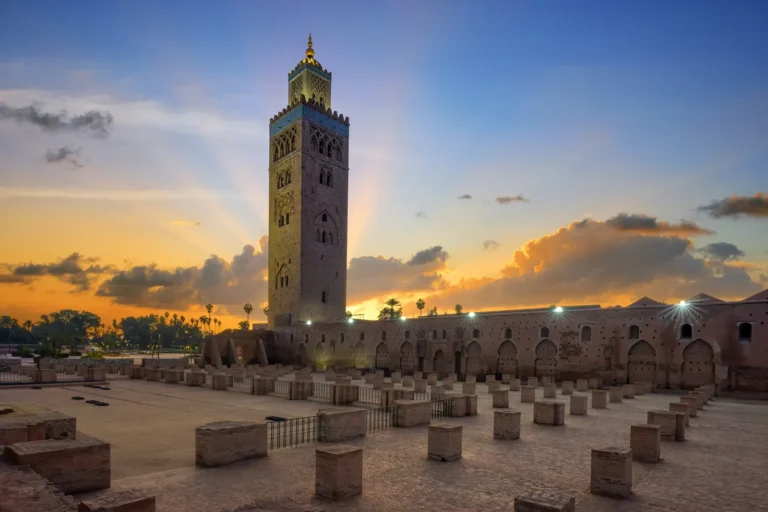
About 77 meters (253 ft) tall, the minaret of the Koutoubia Mosque, built under the Almohads in the 12th century, is a landmark throughout the city. The mosque is not open to non-Muslims, but its gardens, a few steps from Jemaa el-Fna, are free to visit and offer a fine view at sunset.
The souks of the medina
North of the square stretches a maze of lanes organized by trade: dyers, ironworkers, leatherworkers, basket makers, spice and slipper sellers. It is easy to get lost, which is part of the experience. Bargaining is the rule; take your time and set yourself a maximum price. Be wary of people who offer to guide you or claim that a street is closed: they expect a commission. The UK FCDO notes that people posing as official guides commonly harass tourists.
The Ben Youssef Madrasa
A former Koranic school, the Ben Youssef Madrasa is one of the finest monuments in the city: a large courtyard with a pool, surrounded by zellige, carved stucco and cedar wood, and upstairs the small cells of former students. Nearby, the Marrakech Museum and the Almoravid Koubba complete the visit.
The Bahia Palace, El Badi Palace and the Saadian Tombs
South of the medina, near the kasbah and the former Jewish quarter (the Mellah), three sites can be visited in half a day. The Bahia Palace, built in the late 19th century, is a succession of courtyards, gardens and decorated reception rooms. El Badi Palace, built by the Saadian sultan Ahmad al-Mansur in the late 16th century, is now an immense ruin, but its ramparts offer a fine view. The Saadian Tombs house the dynasty’s graves under finely worked domes. Come early: the line is often long.
The Majorelle Garden and the Yves Saint Laurent Museum
In Gueliz, the Majorelle Garden, created by the painter Jacques Majorelle and later bought by Yves Saint Laurent and Pierre Bergé, mixes cacti, bamboo and pools around an intensely blue villa. It also houses a museum devoted to Berber cultures. Next door, the Yves Saint Laurent Museum presents the designer’s work. The garden is very busy: book your ticket online and come at opening time.
In the heart of the medina, Le Jardin Secret recreates a historic riad garden, with an Islamic section and an exotic section. To the south, the Agdal gardens, vast orchards founded in the 12th century, and the Menara gardens, with their pool and pavilion facing the Atlas, are popular walking spots with Marrakchis.
Museums in the medina
Several palaces and mansions in the medina house museums. The Maison de la Photographie, opened in 2009 in a former fondouk, shows photographs of Morocco taken between the 1870s and the 1950s. Dar Si Said, a vizier’s palace built in the late 19th century, houses the National Museum of Weaving and Carpets. Dar el Bacha, built in 1910 and the former residence of Pasha Thami El Glaoui, houses the Museum of Confluences. Check opening hours and prices before your visit.
Hammam, cooking classes and hot-air balloons
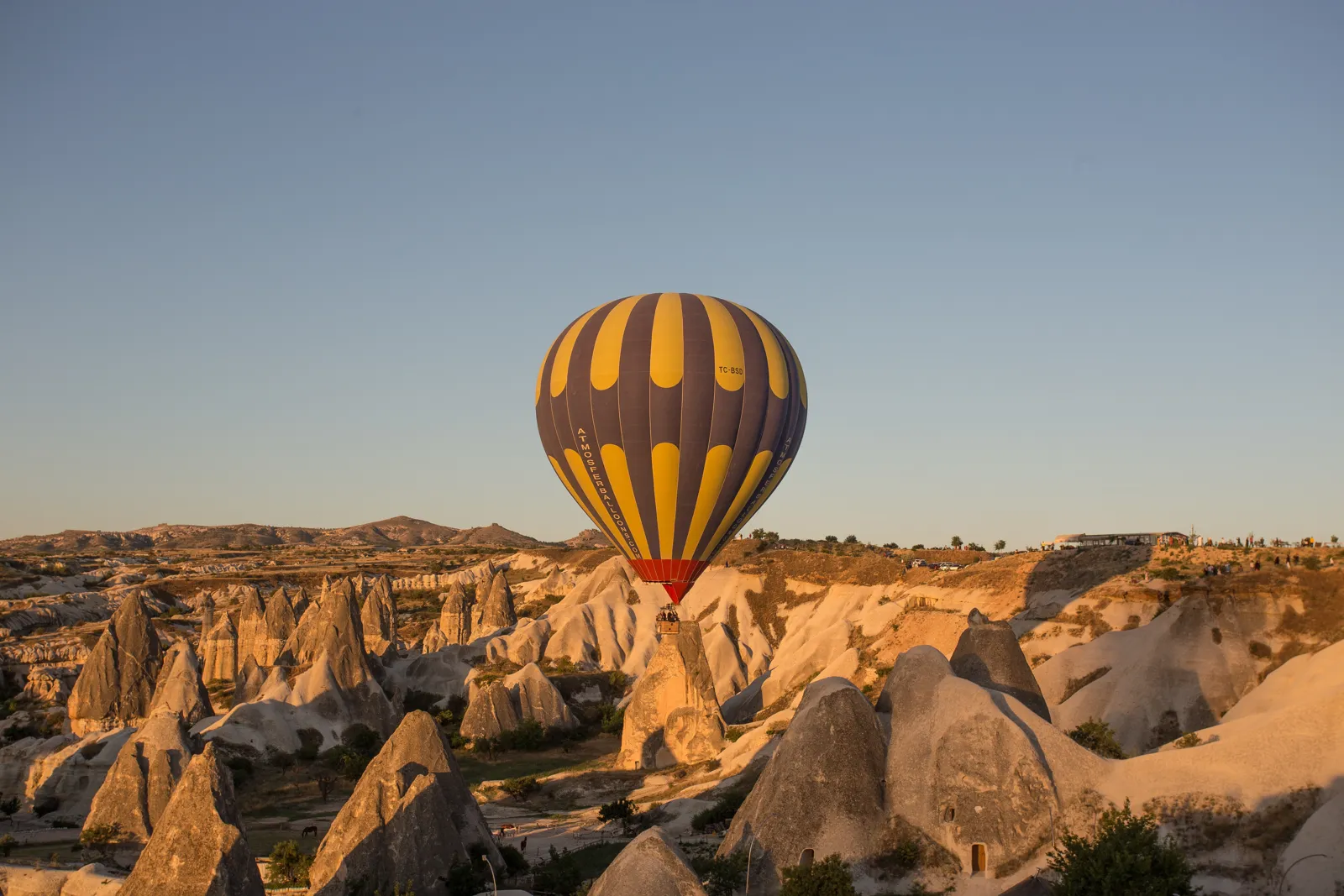
Beyond the monuments, several activities round out a stay: a hammam, public and inexpensive in the neighborhoods, or as a spa in riads and hotels; a Moroccan cooking class, often preceded by a trip to the market, offered by riads and workshops; or a hot-air balloon flight at sunrise over the plain, facing the Atlas, with a very early pickup. Compare providers and check what is included (transfer, insurance, breakfast) before booking; the UK FCDO notes that adventure tourism providers may not meet UK safety standards.
What to eat in Marrakech
The city’s specialty is tanjia: beef or lamb flavored with cumin, saffron, garlic and preserved lemon, sealed in a clay jar and buried in the ashes of a hammam furnace, where it cooks for half a day. Born among the souk traders, it is ordered in the small restaurants of the medina. Also try tagines, couscous and harira, a traditional soup served especially to break the fast during Ramadan. In the evening, the grill stalls of Jemaa el-Fna are the liveliest option; choose those where food is cooked in front of you.
Day trips from Marrakech
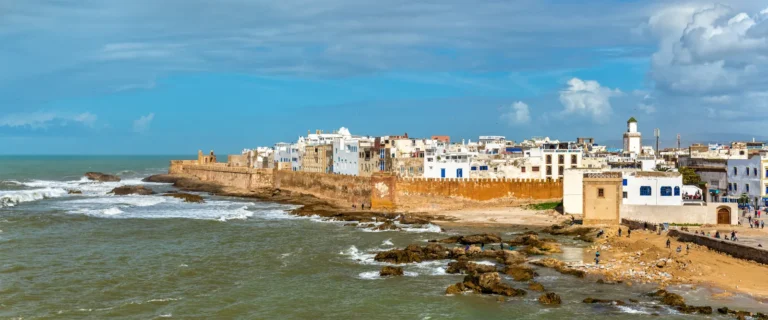
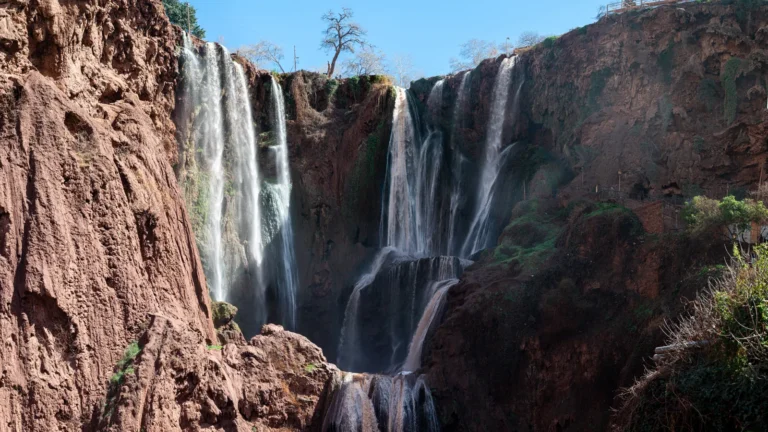
Several day trips are possible: the Ourika Valley and the village of Imlil, at the foot of Toubkal, for a first taste of the Atlas; the stony Agafay desert, about an hour away by road, for dinner or a night in a camp; the Ouzoud waterfalls; or Essaouira, on the Atlantic coast, about 3 hours by road. For Ait Ben Haddou and Ouarzazate via the Tizi n’Tichka pass, plan a very long day, or better, two days. The Atlas villages southwest of Marrakech were hard hit by the September 2023 earthquake, which the UK FCDO says killed almost 3,000 people: check the state of roads and accommodation. Further west, a stay in Essaouira offers a coastal alternative to Atlas day trips from Marrakech.
Marrakech neighborhoods
Medina: riads, souks and monuments on foot; lanes closed to cars, lively atmosphere
Kasbah and Mellah: south of the medina, near the palaces, a little quieter
Gueliz: the new town, restaurants, galleries and cafés, close to the Majorelle Garden
Hivernage: large hotels, nightlife, within walking distance of the medina
Palmeraie: hotels and villas with pools, peaceful, but 15-20 minutes by car from the center
Itinerary: Marrakech in 3 to 5 days
Day 1: Jemaa el-Fna, the Koutoubia and its gardens, the souks; dinner on the square or on a terrace
Day 2: the Ben Youssef Madrasa, the Marrakech Museum, Le Jardin Secret; a hammam late in the day
Day 3: the Bahia Palace, El Badi Palace, the Saadian Tombs and the Mellah; Gueliz in the evening
Day 4: the Majorelle Garden and the Yves Saint Laurent Museum in the morning, then the Agafay desert at sunset
Day 5: a day trip to the Atlas (Ourika or Imlil) or to Essaouira
What to do in Marrakech over a weekend
With only two days, stay in the medina and Gueliz, which you can cover on foot or by petit taxi:
Day 1: the Ben Youssef Madrasa and the Maison de la Photographie in the morning, the souks in the afternoon, then Jemaa el-Fna and its food stalls in the evening
Day 2: the Majorelle Garden at opening time, the Bahia Palace and the Saadian Tombs in the afternoon, sunset in the Koutoubia gardens
For a longer circuit to Fez or the Merzouga desert, see the itineraries in our Morocco travel guide.
Where to stay in Marrakech
The typical accommodation is the riad: a traditional house built around a patio, often with a rooftop terrace. Staying in the medina lets you do everything on foot, but the lanes are often inaccessible by car: ask your riad to meet you at the nearest drop-off point. Gueliz and Hivernage have more conventional hotels, the Palmeraie properties with large gardens and pools.
Before booking, check for heating in winter, air conditioning in summer and a safe for your valuables. For school vacations and holidays, book several months ahead.
Getting around Marrakech
On foot: the only way to discover the medina. Watch out for motorbikes and scooters in the lanes.
Petit taxis: handy for linking the medina, Gueliz and the airport. Insist on the meter or agree on the fare before getting in. The U.S. Department of State recommends petit taxis (tan-colored in Marrakech) at night and in unfamiliar areas, and considers them generally crime-free during the day; it also reports harassment of ride-share drivers and passengers by taxi drivers.
Horse-drawn carriages: they wait near the Koutoubia; agree on the price and duration in advance.
Buses: city lines serve the town, including a shuttle to the airport. The U.S. Department of State does not consider city buses safe.
Train: the ONCF station in Gueliz links Marrakech to Casablanca, Rabat, Fez and Tangier. There is no train to Essaouira or to the south.
Excursions and car: for the Atlas, Agafay or Essaouira, use an agency, a driver or a rental car. The U.S. Department of State describes traffic accidents as a significant hazard in Morocco and roads through the Atlas as steep, narrow and dangerous; avoid driving at night.
When to go to Marrakech
✓ Ideal~ Good, with caveats✕ AvoidAverage max. temperature · click a month to see where to go
✅ Best months: February, March, April, may, October, November
❌ Period to avoid: July, August
The best periods are March to May and October to November: 23 to 29 °C (73 to 84 °F) in the afternoon and little rain, according to the 1991-2020 normals for the Marrakech-Menara station. July and August are scorching (nearly 38 °C / 100 °F), and winter is mild by day but cold at night. For the month-by-month climate, Ramadan and holidays, see our article on the best time to visit Marrakech.
Budget for a stay in Marrakech
Marrakech is more expensive than the rest of Morocco, especially for boutique riads and medina restaurants popular with tourists. Indicative amounts per person per day, excluding flights:
Item
Tight budget
Comfort
Accommodation (based on a shared double room)
about US$20 to 45
about US$65 to 155
Meals
about US$13 to 20
about US$40 to 65
Transportation (petit taxis, buses)
about US$3 to 9
about US$11 to 30
Sightseeing and entry fees
about US$9 to 17
about US$17 to 35
Total per day
roughly US$50 to 90
roughly US$135 to 280
Indicative estimates, varying with the season, converted from euros at the European Central Bank rate of 23 October 2026 and rounded. Excursions (Agafay, Atlas, Essaouira) and the hammam are extra.
To cut costs: eat at the Jemaa el-Fna food stalls or in the small Gueliz restaurants frequented by Moroccans, walk rather than take taxis in the medina, and bargain in the souks.
Who is Marrakech for?
Our verdict by travel style, based on the information in this guide:
Weekend break: ideal: a two-day program between the medina and Gueliz.
Culture: yes: the Ben Youssef Madrasa, the Bahia Palace, the Saadian Tombs, the medina museums and Jemaa el-Fna.
Couples: yes: riads around a patio, hammam, a sunrise balloon flight, dinner in the Agafay desert.
Families: yes: hotels with pools in the Palmeraie, the Majorelle Garden and the Menara gardens; in the medina, car-free lanes but plenty of solicitation.
Tight budget: yes, with roughly US$50 to 90 per person per day, even though Marrakech is more expensive than the rest of Morocco.
Nature: as day trips: the Ourika Valley, Imlil at the foot of Toubkal, the Ouzoud waterfalls.
Entry requirements, health and safety
US citizens: according to the U.S. Department of State (travel.state.gov, last updated July 30, 2026), you need a valid passport with at least one blank page; no visa is required for visits of less than 90 days. If you stay beyond 90 days without requesting an extension, you will have to appear before a judge before leaving. Carry a copy of your passport at all times.
UK citizens: according to the UK FCDO (GOV.UK, updated 19 August 2026), you can visit without a visa for up to 90 days for tourism. Your passport must be valid for at least 3 months after the date you arrive and must not be damaged; make sure it is stamped on entry. A polio vaccination certificate is required if you come from a polio-affected country.
Health: check vaccine recommendations at least 8 weeks before your trip (TravelHealthPro for UK travelers, the CDC for US travelers). Rabies is present and stray dogs are common: do not approach them and seek medical advice immediately after a bite or scratch (UK FCDO). In many areas tap water is not drinkable and ice may be made with tap water (U.S. Department of State).
Crime: petty crime is common in tourist areas, especially in medinas and on beaches (pickpocketing, bag-snatching, theft by motorcyclists), and criminals have used knives in street attacks in major cities and along beaches (UK FCDO, updated 19 August 2026). People posing as official guides commonly harass tourists: use a guide with an official badge. Criminals on motorbikes snatch bags and phones: keep a minimum of cash on you and hold your phone with care.
Terrorism: the UK FCDO considers that terrorists are likely to try to carry out attacks in Morocco, including in places popular with tourists and in crowded places; stay aware of your surroundings and follow the advice of the local authorities. Protests can occur without warning in large cities.
Women travelers: women may receive unwanted attention, especially when traveling alone (UK FCDO); the U.S. Department of State advises traveling with a companion or in a group where possible.
Earthquakes: earthquakes are a risk in Morocco; the 2023 earthquake killed almost 3,000 people. Familiarize yourself with the safety instructions in your hotel (UK FCDO).
Local laws: drinking alcohol anywhere other than a licensed restaurant or bar is illegal; possession of any drugs, including cannabis, carries severe penalties; same-sex relations are illegal (UK FCDO). There have been deaths caused by alcoholic drinks containing methanol.
Emergencies: police 190, gendarmerie 177, ambulance and fire 150 according to the UK FCDO; the U.S. Department of State gives 15 for emergency services and 190 for police from a mobile phone. Check locally on arrival.
Practical tips for Marrakech
Money: the dirham is a closed currency that cannot easily be exchanged outside Morocco (UK FCDO); keep your exchange receipts, as dirhams can be changed back into US dollars only with proof that you exchanged them in Morocco (U.S. Department of State). Be alert at ATMs. Our currency converter helps you estimate your spending. Cards are accepted in mid-range and upscale hotels and restaurants; keep small change for the souks, taxis and tips.
Bargaining: part of the custom in the souks; stay courteous and do not name a price if you do not intend to buy.
Fake helpers: politely decline unsolicited offers of guidance; use an offline map to find your way.
Dress: clothing that covers shoulders and knees is appreciated in the medina, especially for women.
Photos: always ask permission before photographing someone.
Internet: check your carrier’s roaming rates for Morocco; an eSIM or a local SIM card avoids surprises.
Three days let you see the main sights of the medina, the palaces and the gardens. Allow four to five days to add a day trip to the Atlas, the Agafay desert or Essaouira.
Do I need a visa for Marrakech?
No, not for US or UK citizens visiting for less than 90 days. US citizens need a valid passport with at least one blank page; UK citizens a passport valid for at least 3 months after arrival, stamped on entry.
Where should you stay in Marrakech for a first visit?
In a riad in the medina, near Jemaa el-Fna or the Kasbah, so you can do everything on foot. Gueliz suits those who prefer a conventional hotel and a modern district.
What to do in Marrakech in 2 days?
On day one, the Ben Youssef Madrasa, the souks, then Jemaa el-Fna in the evening; on day two, the Majorelle Garden at opening time, the Bahia Palace, the Saadian Tombs and the Koutoubia gardens at sunset.
Which museums should you visit in Marrakech?
The Yves Saint Laurent Museum and the Berber museum in the Majorelle Garden in Gueliz; in the medina, the Marrakech Museum, the Maison de la Photographie, Dar Si Said (National Museum of Weaving and Carpets) and Dar el Bacha (Museum of Confluences).
Is Marrakech a safe city?
The UK FCDO considers that terrorists are likely to try to carry out attacks in Morocco and reports common petty crime in medinas, including bag-snatching by motorcyclists. Stay alert, use official petit taxis and avoid isolated places at night.
How do you get from Marrakech airport to the medina?
Marrakech Menara Airport is a few kilometers from the center. You can take a petit taxi (agree on the fare or insist on the meter), a bus shuttle or the transfer offered by your riad, often the simplest way to find the entrance in the medina.
What to do in Marrakech in the evening?
Head to Jemaa el-Fna, which comes alive at sunset with its grill stalls, storytellers and musicians, then dine in a riad or a medina restaurant. The Koutoubia gardens are pleasant at dusk. Take an official taxi back late at night and avoid isolated lanes after dark.
Our sources
Entry, health and safety information read on 26 October 2026: U.S. Department of State, Morocco country information (travel.state.gov, last updated July 30, 2026), and UK FCDO, foreign travel advice for Morocco (GOV.UK, updated 19 August 2026)
Marrakech climate normals: 1991-2020 normals for the Marrakech-Menara station (airport), published by NOAA (National Oceanic and Atmospheric Administration) from World Meteorological Organization data
Wikipedia, articles on the Maison de la Photographie in Marrakech, Dar Si Said and Dar el Bacha, consulted in October 2026
Wikipedia, articles « Tanjia » and « Harira », consulted in October 2026
European Central Bank, euro reference exchange rates of 23 October 2026 (budget conversion)


 FlightsKiwi.comCompare flights and airline combinations to Marrakech.Compare flights




 Agadir
 When to go
 Chefchaouen
 eSIM Morocco
 Essaouira
 Fez
 Map
 Merzouga
 Ouzoud Falls
 Tangier
 Ouarzazate
 Casablanca
 Rabat