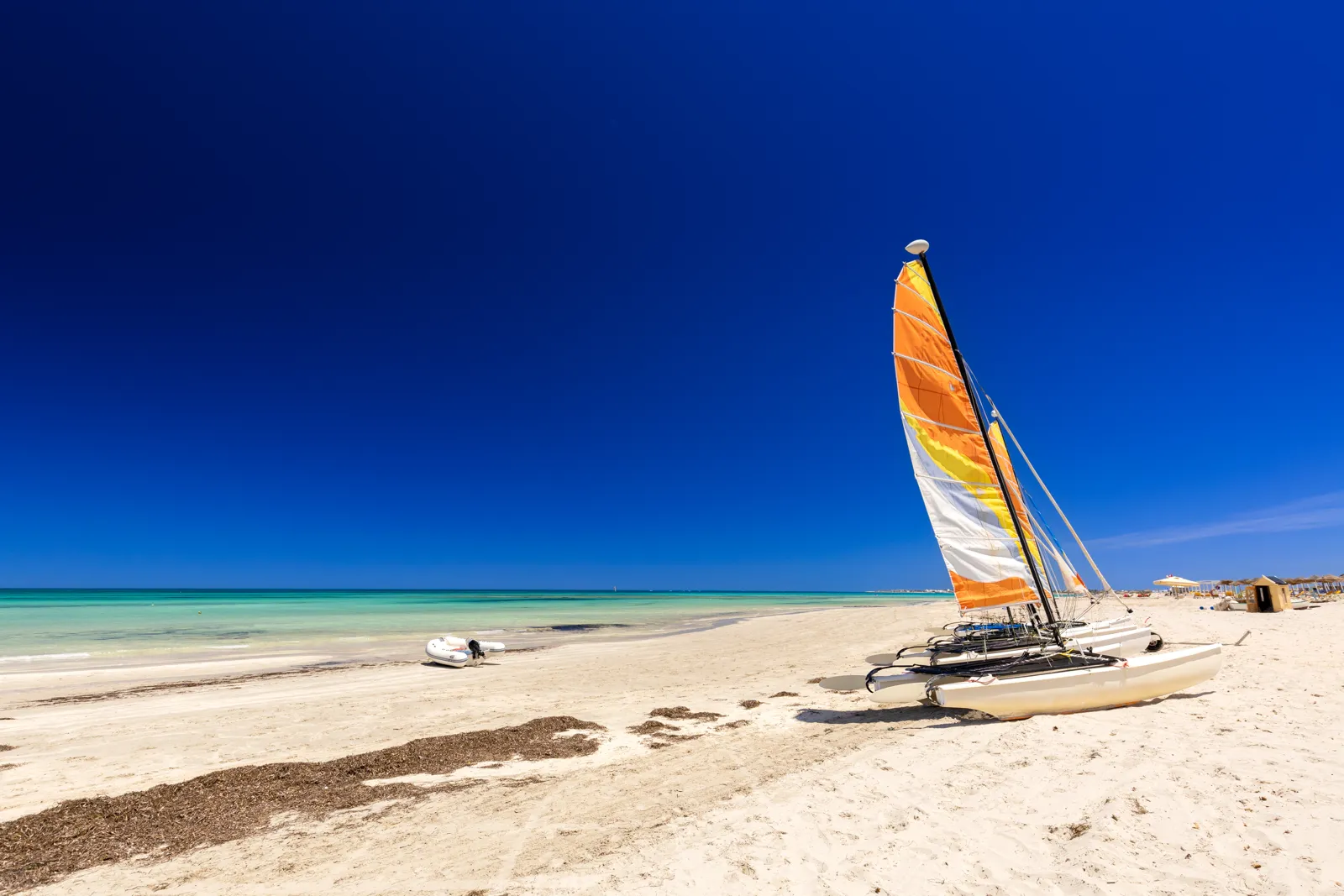
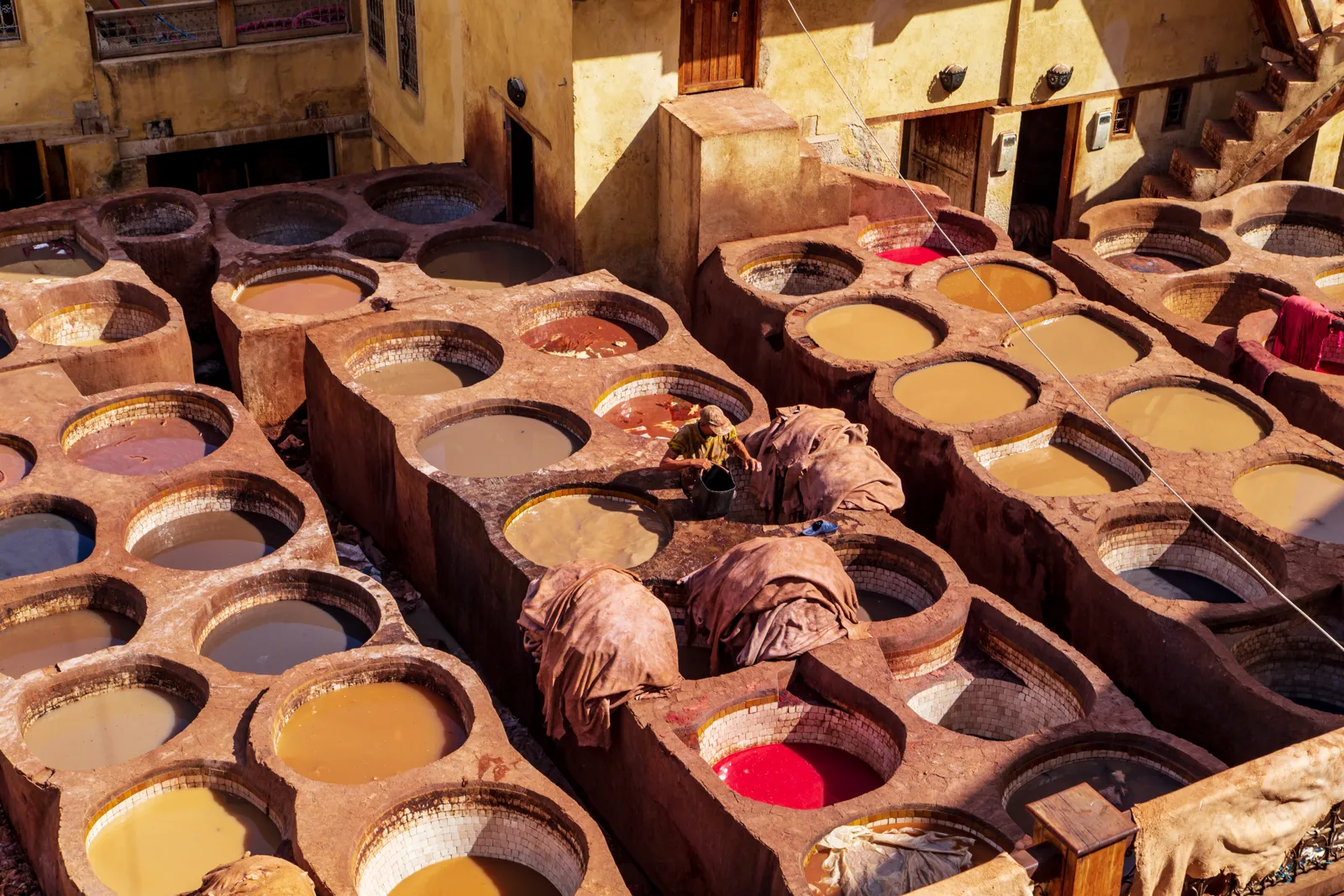
This Tangier travel guide introduces a city facing two seas and Spain, at the entrance to the Strait of Gibraltar. An international zone from 1923 to 1956 and a refuge for writers and painters, Tangier combines a medina and a kasbah perched above the port, a European town with Art Deco facades and a wild Atlantic coast. What is there to do in Tangier? Climb to the kasbah, have tea at Café Hafa, head out to Cape Spartel and the Caves of Hercules. This guide brings together the highlights, the best time to go, how to get there, the budget and safety.
Our travel deals for Tangier
Affiliate links: we earn a commission, at no extra cost to you.
FlightsKiwi.comCompare flights and airline combinations to Tangier.
Morocco in general: the UK FCDO (GOV.UK, updated 19 August 2026) considers that terrorists are likely to try to carry out attacks in Morocco, including at transport hubs and places popular with tourists; petty crime is common in medinas and on beaches.
The Rif: for day trips to Chefchaouen, the U.S. Department of State describes roads through the Rif as steep, narrow, winding and dangerous; drive by day and stay on the main roads. Morocco has a zero-tolerance approach to drugs, including cannabis (UK FCDO).
Algerian border: closed, at the other end of the country (UK FCDO).
Read the GOV.UK and travel.state.gov pages for Morocco before you leave.
Things to do in Tangier: the highlights
The kasbah and the Kasbah Museum
At the top of the medina, the kasbah is the fortified quarter of the city, with whitewashed houses and colorful doors. The former sultan’s palace, Dar el Makhzen, houses the Kasbah Museum, devoted to the history and cultures of the region from prehistory to modern times, with an Andalusian garden. From the sea gate (Bab el Bahr) and the nearby ramparts, the view takes in the port, the strait and, on clear days, the coast of Spain.
The medina, the Petit Socco and the Great Mosque
Between the kasbah and the port, the medina is a maze of sloping lanes, calmer and more residential than those of Marrakech or Fez. The Petit Socco, a small square lined with cafés, was the heart of the international city. Nearby, the Great Mosque is closed to non-Muslims, but you can explore its surroundings as you wander. The souks sell spices, fabrics, leather and products from the Rif.
The Grand Socco and the Mendoubia quarter
The Grand Socco, or 9 April 1947 Square, joins the medina and the new town. Around it are the Sidi Bouabid Mosque with its ceramic minaret, the Mendoubia gardens with their century-old trees, and Cinéma Rif, a film archive and café. The nearby vegetable and fish market is very lively in the morning. The Moorish-style Anglican church of St Andrew’s can also be visited.
The American Legation
In the medina, the American Legation occupies the first building acquired by the United States abroad, in the early 19th century, shortly after Morocco recognized American independence. It is now a museum and cultural center: old maps, paintings, and a wing devoted to the writer Paul Bowles, who lived in Tangier for more than fifty years.
The new town, Boulevard Pasteur and Café Hafa
The European town centers on Boulevard Pasteur and Place de France, with the Café de Paris, opened in the 1920s, and the Terrasse des Paresseux, a viewpoint over the port. The Gran Teatro Cervantes, an Art Nouveau theater opened in 1913, recalls the Spanish presence. Further west, in the Marshan district, Café Hafa, opened in 1921, lines up its stepped terraces above the strait: have a mint tea facing the sea.
Cape Spartel and the Caves of Hercules
About fifteen kilometers (9 mi) to the west, Cape Spartel marks the meeting of the Mediterranean and the Atlantic, with its lighthouse and an ocean view. The road crosses the forest of Perdicaris Park (Rmilat). A little further south, the Caves of Hercules, hollowed out at the ocean’s edge, are famous for their opening to the sea, whose shape recalls the map of Africa. Allow half a day by taxi.
Beaches
The city beach runs along the corniche and the new marina; it is convenient but urban. The most pleasant beaches are on the Atlantic, like Achakar, near the Caves of Hercules, long and open to the ocean: beware of currents and waves, and swim only where there are lifeguards (the UK FCDO notes that many Moroccan beaches have limited or no lifeguard cover). To the east, towards Malabata and the cape, coves look out over the strait.
Asilah, Tetouan and Chefchaouen
Asilah, about 45 minutes to the south, is a small coastal town with Portuguese ramparts and a white medina decorated with murals. Tetouan, about an hour away, has a very authentic medina listed as a UNESCO World Heritage Site. Chefchaouen, the blue town of the Rif, is about 2.5 hours by road: see our Chefchaouen guide to spend a night there. By high-speed train, Rabat and then Casablanca are also within reach, and Fez can be reached in a few hours: see our Fez guide to extend the circuit. If you continue south, our page on what to do in Casablanca prepares that stop.
Itinerary: Tangier in 2 or 3 days
Day 1: the Grand Socco, the Mendoubia gardens, the medina and the Petit Socco, the American Legation, the kasbah and its museum; sunset at Café Hafa
Day 2: Cape Spartel, the Caves of Hercules and Achakar beach in the morning; the afternoon in the new town (Boulevard Pasteur, Gran Teatro Cervantes, Terrasse des Paresseux); dinner at the marina
Day 3: a day trip to Asilah or Tetouan, or departure for Chefchaouen
For a one-week circuit in the north: Tangier (2 nights), Chefchaouen (2 nights), then Fez (2 to 3 nights), or back via Asilah and Rabat by train.
When to go to Tangier
The best time to visit Tangier is May to October: 22 to 29 °C (72 to 83 °F) in the afternoon, little or no rain from June to September and a pleasant sea in summer. June and September are the most balanced months: dry, warm but not too hot, less busy than July-August, when many Moroccans living in Europe return home and the ports and the city are very busy. Winter is mild (16 to 17 °C / 61 to 63 °F in the afternoon), but it is the rainy season: November and December exceed 125 mm (4.9 in). Tangier is also often swept by the easterly wind of the strait, the chergui or levante, which can disrupt ferry crossings.
Month
High °C (°F)
Low °C (°F)
Rain mm (in)
Crowds
Prices
Verdict
January
16.2 (61 °F)
8.8 (48 °F)
104 (4.1 in)
Low
Low
⚠️ Mild but rainy
February
16.8 (62 °F)
9.4 (49 °F)
99 (3.9 in)
Low
Low
⚠️ Mild, frequent rain
March
17.9 (64 °F)
10.1 (50 °F)
72 (2.8 in)
Low to medium
Low
⚠️ Spring, showers
April
19.2 (67 °F)
11.2 (52 °F)
62 (2.4 in)
Medium (Easter)
Medium
✅ Pleasant for sightseeing, some rain
May
21.9 (71 °F)
13.4 (56 °F)
37 (1.5 in)
Medium
Medium
✅ Mild and drier
June
24.9 (77 °F)
16.2 (61 °F)
14 (0.6 in)
Medium
Medium
✅ Dry and warm, ideal
July
28.3 (83 °F)
18.7 (66 °F)
2 (0.1 in)
Very high
High
✅ Dry summer, beaches, very lively city
August
28.6 (83 °F)
19.1 (66 °F)
3 (0.1 in)
Very high
High
⚠️ The hottest, crowds and high prices
September
27.3 (81 °F)
18.3 (65 °F)
15 (0.6 in)
Medium
Medium
✅ Warm sea, fewer people
October
23.7 (75 °F)
15.6 (60 °F)
65 (2.6 in)
Medium
Medium
✅ Mild, rain returns late in the month
November
19.6 (67 °F)
12.2 (54 °F)
135 (5.3 in)
Low
Low
❌ The wettest month
December
17 (63 °F)
9.7 (49 °F)
129 (5.1 in)
Low
Low, rising for the holidays
❌ Mild but very rainy
Temperatures and rainfall: 1961-1990 normals for the Tangier airport station, published by NOAA (rain rounded to the millimeter). Crowds and prices: estimates based on the tourist seasons; the dates of Ramadan and religious holidays change every year.
Spring (March to May): 18 to 22 °C (64 to 71 °F) in the afternoon, green countryside, less rain. A very good season for the city and trips into the Rif.
Summer (June to September): 25 to 29 °C (77 to 83 °F), almost completely dry in July and August. Beaches and terraces, but crowds and prices peak in July-August, especially at the ports.
Autumn (October-November): October stays mild; heavy rain returns from November.
Winter (December to February): 16 to 17 °C (61 to 63 °F) in the afternoon, 9 to 10 °C (48 to 50 °F) at night, frequent rain. Accommodation is not always heated: check before booking.
Plan
Best time
Sightseeing in the city
April to June, September-October
Beaches
June to September
Tangier – Chefchaouen – Fez circuit
April-May, late September-October
Crossing from Spain
Outside July-August, to avoid waits at the ports
Tight budget
January to March, outside school vacations
Ramadan, whose date moves earlier every year, changes the opening hours of restaurants and shops: check before you go.
Tangier remains affordable, slightly more expensive than the Moroccan average in the modern districts. Indicative amounts per person per day, excluding flights (our currency converter helps you follow the dirham rate):
Item
Tight budget
Comfort
Accommodation (based on a shared double room)
about US$17 to 35
about US$55 to 125
Meals
about US$11 to 20
about US$35 to 65
Transportation (petit taxis, grands taxis)
about US$3 to 9
about US$17 to 35
Sightseeing and excursions
about US$6 to 17
about US$20 to 45
Total per day
roughly US$45 to 80
roughly US$135 to 245
Indicative estimates, varying with the season, converted from euros at the European Central Bank rate of 23 October 2026 and rounded.
To cut costs: eat in the small eateries of the medina and at the market, share a grand taxi to Cape Spartel and book the high-speed train in advance.
Getting to and around Tangier
By plane: Tangier Ibn Battouta Airport is about 15 km (9 mi) from the center; check current routes with the airlines. Take a taxi and agree on the fare before getting in.
By ferry: crossings link Tarifa to the Tanger Ville port, right in the center. Ferries from Algeciras mainly arrive at the Tanger Med port, about 45 km (28 mi) to the east. In summer, waits at the ports can be long; check schedules with the operators.
By train: the Al Boraq high-speed train links Tangier to Rabat and Casablanca; conventional trains serve Fez and Meknes. The U.S. Department of State notes that the train system has a good safety record.
Petit taxis: blue and turquoise, for trips within the city; ask for the meter to be switched on.
Grands taxis and buses: for Cape Spartel, Asilah, Tetouan or Chefchaouen. CTM and Supratours are the most reliable bus companies.
On foot: the medina, the kasbah and the city center are walkable; the streets are steep.
Where to stay in Tangier
Kasbah and medina: riads and guesthouses with terraces over the strait; a unique atmosphere, access on foot only, often by stairs
New town (Boulevard Pasteur, Place de France): conventional hotels, convenient for restaurants and taxis
Corniche and marina: recent hotels facing the bay, more expensive, suitable for families
Marshan: a quiet residential district near Café Hafa
Cape Spartel: a few quiet hotels and houses in the countryside, with a car
For a first stay, a riad in the kasbah lets you see the city in the evening. If you have a lot of luggage, a hotel in the new town is simpler. In winter, check that the room is heated. To get around the kasbah lanes with little luggage, a well-chosen travel backpack saves dragging a suitcase over the cobbles.
Entry requirements, health and safety
US citizens: according to the U.S. Department of State (travel.state.gov, last updated July 30, 2026), you need a valid passport with at least one blank page; no visa is required for visits of less than 90 days. If you stay beyond 90 days without requesting an extension, you will have to appear before a judge before leaving. Carry a copy of your passport at all times.
UK citizens: according to the UK FCDO (GOV.UK, updated 19 August 2026), you can visit without a visa for up to 90 days for tourism. Your passport must be valid for at least 3 months after the date you arrive and must not be damaged; make sure it is stamped on entry. A polio vaccination certificate is required if you come from a polio-affected country.
Health: check vaccine recommendations at least 8 weeks before your trip (TravelHealthPro for UK travelers, the CDC for US travelers). Rabies is present and stray dogs are common: do not approach them and seek medical advice immediately after a bite or scratch (UK FCDO). In many areas tap water is not drinkable and ice may be made with tap water (U.S. Department of State).
Medical costs: most providers only accept cash and may require a deposit before admission (U.S. Department of State): insurance covering medical costs and repatriation is essential.
Crime: petty crime is common in tourist areas, especially in medinas and on beaches (pickpocketing, bag-snatching, theft by motorcyclists), and criminals have used knives in street attacks in major cities and along beaches (UK FCDO, updated 19 August 2026). People posing as official guides commonly harass tourists: use a guide with an official badge.
Terrorism: the UK FCDO considers that terrorists are likely to try to carry out attacks in Morocco, including in places popular with tourists and in crowded places; stay aware of your surroundings and follow the advice of the local authorities. Protests can occur without warning in large cities.
Local laws: drinking alcohol anywhere other than a licensed restaurant or bar is illegal; possession of any drugs, including cannabis, carries severe penalties; same-sex relations are illegal (UK FCDO). There have been deaths caused by alcoholic drinks containing methanol.
Fake guides: at the port exit and in the medina, politely decline insistent offers; if you want a guide, book through your accommodation.
Emergencies: police 190, gendarmerie 177, ambulance and fire 150 according to the UK FCDO; the U.S. Department of State gives 15 for emergency services and 190 for police from a mobile phone. Check locally on arrival.
Money: the dirham is a closed currency that cannot easily be exchanged outside Morocco (UK FCDO); keep your exchange receipts, as dirhams can be changed back into US dollars only with proof that you exchanged them in Morocco (U.S. Department of State). Be alert at ATMs. Our currency converter helps you estimate your spending. Cards are accepted in hotels and restaurants in the new town; keep cash for taxis, souks and tips.
Dress: clothing covering shoulders and knees is appreciated in the medina; the UK FCDO notes that women may receive unwanted attention, especially when traveling alone.
Photos: always ask before photographing someone.
Ramadan: during the month of fasting, avoid eating, drinking or smoking in public in the daytime (UK FCDO); many restaurants close until sunset.
Internet: check your carrier’s roaming rates for Morocco; a local SIM card or an eSIM avoids roaming charges.
Frequently asked questions
How many days do you need to visit Tangier?
Two days are enough for the medina, the kasbah, the new town, Cape Spartel and the Caves of Hercules. Add a day for Asilah or Tetouan, and two nights for Chefchaouen.
What is the best time to go to Tangier?
May to October, with 22 to 29 °C (72 to 83 °F) in the afternoon and very little rain from June to September according to NOAA normals. June and September avoid the August crowds. November and December are the wettest months.
How do you get to Tangier?
By plane to Tangier Ibn Battouta Airport (check current routes with the airlines), by ferry from Spain, or by the Al Boraq high-speed train from Rabat and Casablanca.
Can you go from Spain to Tangier by boat?
Yes: ferries link Tarifa to the Tanger Ville port in the city center, and Algeciras to the more distant Tanger Med port. A passport is required.
Is Tangier safe?
The UK FCDO considers that terrorists are likely to try to carry out attacks in Morocco and reports common petty crime in medinas and on beaches. The usual precautions apply: beware of bag-snatching and fake guides, and drive by day on Rif roads during day trips.
Our sources
Entry, health and safety information read on 26 October 2026: U.S. Department of State, Morocco country information (travel.state.gov, last updated July 30, 2026), and UK FCDO, foreign travel advice for Morocco (GOV.UK, updated 19 August 2026)
NOAA: 1961-1990 normals for the Tangier airport station (reproduced in the Wikipedia article « Tangier »)
European Central Bank, euro reference exchange rates of 23 October 2026 (budget conversion)


 FlightsKiwi.comCompare flights and airline combinations to Tangier.Compare flights