A trip to Cancún combines the white-sand beaches of the Hotel Zone, Maya sites such as Chichén Itzá and Tulum, cenotes and the nearby islands of Isla Mujeres and Holbox. The city, founded in the 1970s for tourism, is the gateway to the whole Yucatán Peninsula. This Cancún travel guide helps you choose what to do in Cancún, where to stay, what budget to plan and how to organize a week there.
Our travel deals for Cancún
Affiliate links: we earn a commission, at no extra cost to you.
FlightsKiwi.comCompare flights and airline combinations to Cancún.
✅ Best months: January, February, March, April, may, December
❌ Period to avoid: September, October
The best time is December to April: 29 to 33 °C (84 to 91 °F) in the afternoon and little rain, especially from February to April, according to the normals of Mexico’s Servicio Meteorológico Nacional. Hurricane season runs from June to November according to the UK FCDO (the U.S. Department of State gives May to November for tropical storms), with heavy rain in September and October, and sargassum seaweed is possible from spring to autumn. For the month-by-month climate, sargassum and events, see our article on when to go to Cancún.
Things to do in Cancún: the highlights
The Hotel Zone and its beaches
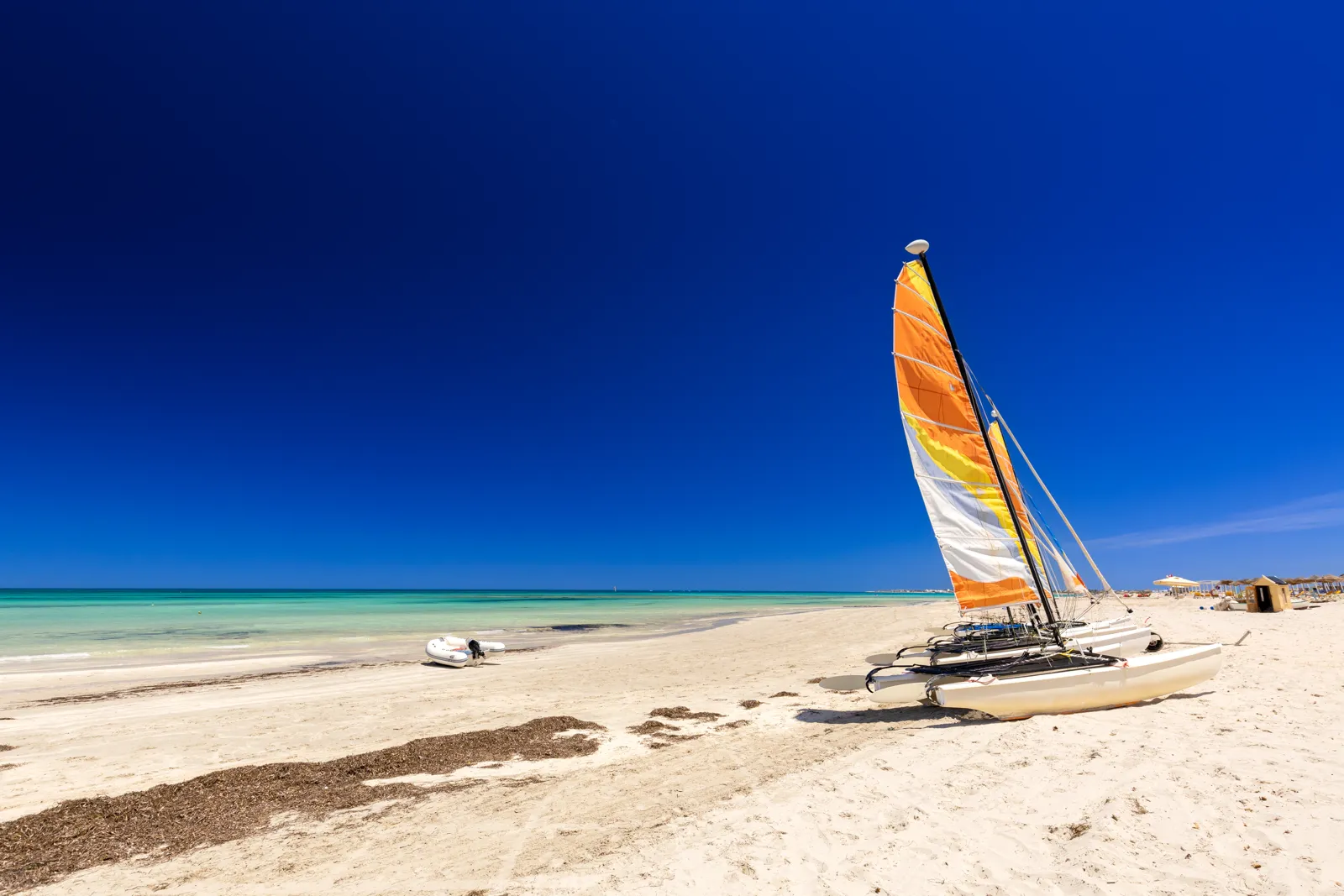
The Hotel Zone (Zona Hotelera) stretches along a long, 7-shaped sandbar between the Nichupté Lagoon and the Caribbean Sea. The northern side, facing the bay, has calmer water (Playa Langosta, Playa Tortugas). The eastern side, facing the open sea, has bigger waves and stronger currents. Playa Delfines, in the south, is one of the few large public beaches without a hotel, with a lookout and the « Cancún » sign. All beaches in Mexico are public, but access sometimes means using passageways between hotels.
Downtown Cancún
A few kilometers from the Hotel Zone, downtown (El Centro) shows another side of the city: Parque de las Palapas, lively in the evening with its street stalls, Mercado 28 for crafts, and restaurants serving Yucatecan food at local prices. This is also where you will find the ADO bus station and the cheapest places to stay.
Isla Mujeres
Reached by ferry from Puerto Juárez or from the Hotel Zone, Isla Mujeres is a small island 7 km (4 mi) long. Playa Norte, in the north, has very calm, shallow water. You can tour the island by golf cart or bicycle down to Punta Sur and its cliffs. The island is also a base for diving and, in season, whale shark trips.
The Museo Maya and the El Rey ruins
In the Hotel Zone, the Museo Maya de Cancún displays objects found across the peninsula and gives access to the small San Miguelito site. A little farther south, the El Rey archaeological site preserves the remains of an ancient coastal Maya city, often populated by iguanas. A good introduction before the major sites.
Chichén Itzá and Valladolid
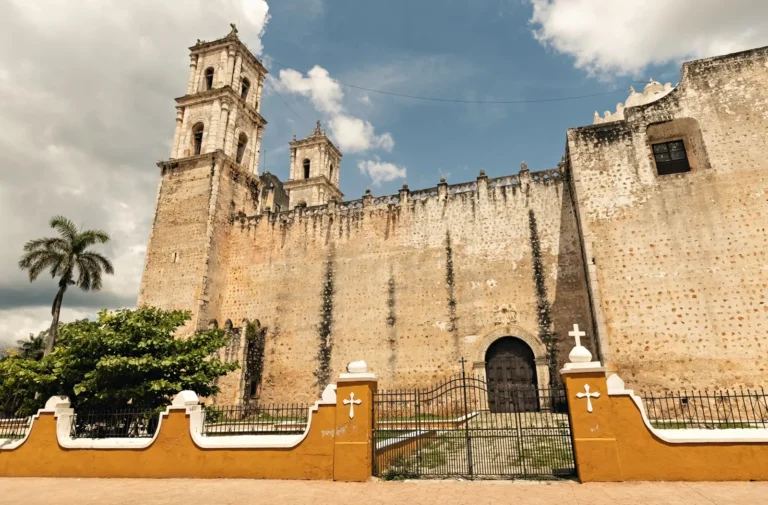
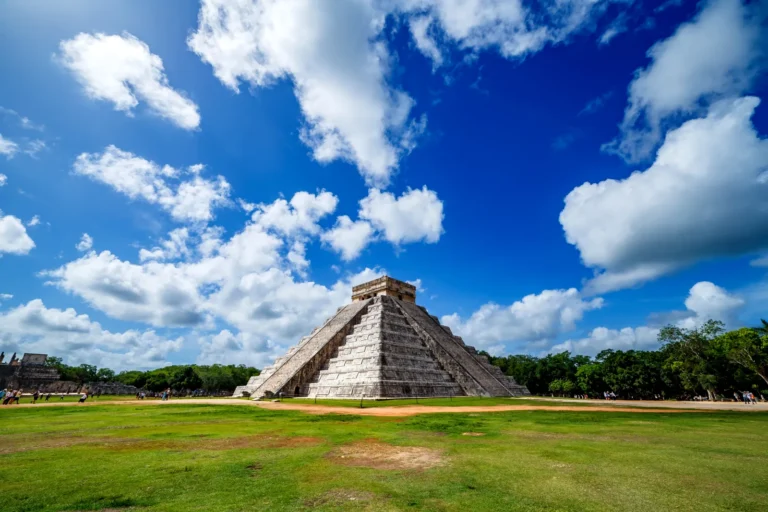
About 2.5 to 3 hours away by road, Chichén Itzá is Mexico’s most famous Maya site, with the Kukulcán pyramid, the ball court and the Sacred Cenote. Arrive at opening time to avoid the heat and the tour groups. The colonial town of Valladolid, 40 minutes away, and the nearby cenotes (Ik Kil, Suytun, Xkeken) make it a good overnight stop.
Tulum and the Riviera Maya
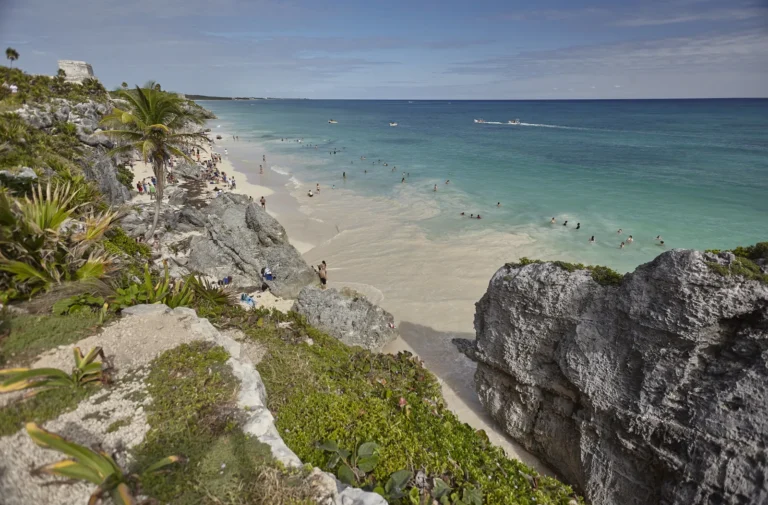
South of Cancún, the Riviera Maya follows the coast down to Tulum, about 2 hours away by road. The Tulum ruins overlook the sea from a cliff. Playa del Carmen, about 1 hour away, has a lively pedestrian street (Quinta Avenida) and ferries to Cozumel, known for its diving. Puerto Morelos, quieter, lies along a protected reef that is ideal for snorkeling. For this stretch farther south on the Riviera Maya, our Tulum travel guide covers the ruins, cenotes and beaches.
The cenotes
These natural freshwater sinkholes, carved into the limestone, are a Yucatán specialty. Some are open to the sky, others are inside caves. The « Ruta de los Cenotes », near Puerto Morelos, groups several of them less than an hour from Cancún. To protect the water, you are often asked to shower first and not to use sunscreen.
Holbox
Northwest of Cancún, Holbox Island is reached by ferry from Chiquilá, about 2 hours away by road. No cars, sand streets, shallow water and sunsets over the lagoon: the island suits a few quiet days. It is also known for whale shark trips in summer.
MUSA, the underwater museum
Between Cancún and Isla Mujeres, MUSA (Museo Subacuático de Arte) brings together several hundred submerged sculptures that serve as an artificial reef. You can see it while snorkeling, diving or on a glass-bottom boat, with an operator.
Itineraries from Cancún
7 to 10 days: 3 nights in Cancún (beaches, Isla Mujeres, Museo Maya), 2 nights in Valladolid (Chichén Itzá, cenotes, Ek Balam), 3 nights in Tulum or Playa del Carmen (ruins, cenotes, Cozumel), returning via Puerto Morelos.
2 weeks: Cancún (3 nights), Holbox (2 nights), Valladolid (2 nights), Mérida and its haciendas (3 nights), Bacalar and its lagoon (2 nights), Tulum (2 nights).
For a tour of the rest of the country (Mexico City, Oaxaca, Chiapas), see our Mexico travel guide.
Budget for a trip to Cancún
Cancún is more expensive than the rest of Mexico, especially in the Hotel Zone. Staying downtown or on Isla Mujeres keeps costs down. Rough amounts per person per day, excluding flights:
Item
Budget
Comfort
Accommodation (based on a shared double room)
roughly MXN 550 to 1,050
roughly MXN 1,900 to 4,200
Meals
roughly MXN 300 to 650
roughly MXN 950 to 1,700
Transportation (R1/R2 buses, colectivos, ADO)
roughly MXN 100 to 300
roughly MXN 550 to 1,050 (car or taxis)
Sights and activities
roughly MXN 300 to 650
roughly MXN 650 to 1,450
Total per day
roughly MXN 1,450 to 2,500
roughly MXN 3,800 to 7,400
Rough estimates per person per day, converted from our euro estimates at the European Central Bank rate of 23 October 2026 and rounded; they vary with the season and the exchange rate. All-inclusive Hotel Zone packages are often sold with the flight.
To save money: stay downtown and take the bus to the beaches, eat at the downtown taquerías or at Parque de las Palapas, use ADO buses and colectivos to Playa del Carmen and Tulum, and travel in early May or early December.
Getting around Cancún and the Yucatán
From the airport: ADO buses link the airport with downtown and Playa del Carmen; taxis and pre-booked shuttles serve the Hotel Zone. The UK FCDO advises using only authorized pre-paid airport taxi services, and the U.S. Department of State advises against hailing taxis on the street (use a hotel taxi, an authorized stand or a trusted ride-sharing app).
City buses: the R1 and R2 routes run the length of the Hotel Zone and on to downtown, at low cost.
ADO buses: comfortable and air-conditioned, they serve Playa del Carmen, Tulum, Valladolid, Chichén Itzá and Mérida.
Colectivos: cheap shared minibuses along the Riviera Maya road.
Tren Maya: the tourist train serves the peninsula (Cancún, Riviera Maya, Valladolid, Mérida and more); check the timetables and the station locations, which are sometimes far from town centers.
Car: practical for cenotes and Maya sites; roads are in good condition, but watch out for speed bumps (« topes »). The UK FCDO recommends using toll roads (« cuotas ») whenever possible, and the U.S. Department of State advises against traveling between cities after dark.
Ferries: to Isla Mujeres (Puerto Juárez and the Hotel Zone), Cozumel (Playa del Carmen) and Holbox (Chiquilá).
Where to stay in Cancún
The Hotel Zone has the big hotels and all-inclusive resorts, right on the beach. On the bay side (km 3 to 9), the sea is calmer and the beaches are generally less affected by sargassum; on the ocean side (km 9 to 20), the beaches are more spectacular but the waves are stronger. Downtown offers simple hotels and hostels for much less, 20 to 30 minutes by bus from the beaches. Isla Mujeres suits those looking for peace and quiet, and Puerto Morelos, halfway to Playa del Carmen, is a good, quieter alternative.
Entry requirements, health and safety
US citizens: according to the U.S. Department of State (travel.state.gov, last updated August 11, 2025), you need a passport book to fly to Mexico (a passport card is not accepted for air travel). Mexican immigration decides on arrival how long you may stay; you may go through an e-gate that prints a receipt with a QR code, and you can download your digital entry record (FMMD) from the National Migration Institute (INM).
UK citizens: according to the UK FCDO (GOV.UK, updated 20 October 2026), you do not need a visa to visit as a tourist; your passport is stamped with the number of days you may stay and must be valid for the duration of your stay. Border officers may ask for a return or onward ticket, proof of accommodation and proof of funds. If you use an airport e-gate, keep the printed ticket to show when you leave. If you transit through the USA, you need an ESTA or a visa.
Quintana Roo entry tax: you must pay an entry tax to visit the state of Quintana Roo, which includes Cancún. You can pay it online before or during your stay (help is available at Cancún Airport) and must show proof of payment at the airport before leaving (GOV.UK). Keep your passport and proof of your entry status with you: the authorities do not accept copies or photos, and tourists cannot do paid or voluntary work (GOV.UK).
Health: the UK FCDO lists Zika, chikungunya and dengue among the health risks in Mexico: use insect repellent. Only drink boiled or bottled water and avoid ice in drinks (GOV.UK). Mexican health providers usually require payment before providing care or before discharging you, and most hospitals do not accept U.S. health insurance (travel.state.gov): insurance covering medical costs and evacuation is essential.
Safety: the U.S. Department of State rates Mexico Level 2, « Exercise increased caution », with some areas at higher risk (travel advisory updated May 28, 2026). According to the UK FCDO (GOV.UK, updated 20 October 2026), rival criminal gangs have clashed in popular Cancún tourist areas; they have not targeted tourists, but several shootings have affected tourists since 2021. Be very cautious after dark in the downtown areas of Cancún, Tulum and Playa del Carmen, and stay in well-lit pedestrian streets and tourist zones. Taxi drivers protesting against Uber have blocked roads near Cancún’s hotels, causing some tourists to miss flights (GOV.UK).
Swimming: some beaches are unpatrolled and sea conditions can be unpredictable (GOV.UK); strong currents and rip tides are common, so take warning flags seriously and stay out of the water when red or black flags are up (travel.state.gov). Crocodiles live in the lagoons around Cancún: respect warning signs and do not walk close to the water (GOV.UK).
Hurricanes: from June to November (GOV.UK), follow weather bulletins from the US National Hurricane Center and the instructions of the authorities and your hotel. Emergency number: 911 (GOV.UK; travel.state.gov).
Practical tips for Cancún
Money: pay in pesos where you can and decline the conversion into your home currency offered by card terminals. The UK FCDO advises using ATMs during daylight hours, inside shops or malls, and avoiding large withdrawals.
Tipping: in restaurants, 10 to 15% is customary; check that it is not already included.
Internet: Wi-Fi is common in hotels; a local eSIM is useful for navigation and driving.
Sun: the sun is strong all year round; in cenotes and on the reefs, wear a UV shirt rather than sunscreen.
Etiquette: a few words of Spanish are appreciated outside the Hotel Zone; cover your shoulders to enter churches.
Food: try cochinita pibil, panuchos and sopa de lima, Yucatán specialties. See our page on Mexican food.
Cancún: who is it for?
Our verdict by traveler profile, based on the information in this guide:
Couples: yes: Isla Mujeres, Holbox, cenotes and Maya sites, away from the Hotel Zone for more peace and quiet.
Families: yes, on the bay side of the Hotel Zone (calmer sea), with Isla Mujeres and the cenotes; some beaches are unpatrolled.
Budget travelers: fair: roughly MXN 1,450 to 2,500 per person per day, staying downtown and using the R1/R2 buses, ADO and colectivos.
Culture: yes: Chichén Itzá, Tulum, El Rey, the Museo Maya and the colonial town of Valladolid.
Diving and snorkeling: yes: MUSA, the Puerto Morelos reef, Cozumel, whale sharks in season.
Nightlife: yes, but the UK FCDO reports gang clashes in Cancún’s tourist areas and advises great caution after dark downtown: stay alert.
Read also
The climate, sargassum and hurricane season are covered month by month on our page about when to go to Cancún. If you are traveling in summer, also read Mexico in August. Finally, Quintana Roo does not change its clocks: check the time difference in Mexico before booking your transfers.
Frequently asked questions
How many days do you need in Cancún?
Three to four days are enough for the beaches, Isla Mujeres and the Museo Maya. Allow a week to ten days to add Chichén Itzá, Valladolid, the cenotes and Tulum.
Do you need a visa for Cancún?
No, for US and UK citizens visiting as tourists: Mexican immigration sets the length of stay on arrival (travel.state.gov; GOV.UK). You must also pay the Quintana Roo entry tax, and UK travelers transiting through the USA need an ESTA or a visa (GOV.UK).
Is Cancún safe?
The tourist areas welcome millions of visitors every year, but the U.S. Department of State rates Mexico Level 2 (exercise increased caution), and the UK FCDO reports clashes between criminal gangs in Cancún’s tourist areas. Be very cautious after dark downtown and watch your belongings.
Do you need to rent a car in Cancún?
Not for the Hotel Zone, which is well served by buses. A car is practical for cenotes and Maya sites, but ADO buses and the Tren Maya also let you get around the peninsula.
Where to swim in Cancún without sargassum?
The bay beaches, in the north of the Hotel Zone, and Playa Norte on Isla Mujeres are generally less affected. The situation changes quickly: check with your hotel just before you leave.
Our sources
Entry, health and safety information read on 26 October 2026: U.S. Department of State, Mexico country information (travel.state.gov, last updated August 11, 2025) and Mexico travel advisory (updated May 28, 2026); UK FCDO, foreign travel advice for Mexico (GOV.UK, updated 20 October 2026)
Cancún climate normals: 1991–2020 climatological normals of the Servicio Meteorológico Nacional (SMN, Conagua), Cancún station 23155
Budget conversions: European Central Bank euro reference rates of 23 October 2026


 FlightsKiwi.comCompare flights and airline combinations to Cancún.Compare flights




 When to go
 eSIM Mexico
 Los Cabos
 Map
 Mexican food
 Mexico City
 Puebla
 Tulum
 Oaxaca
 Valladolid
 Yucatán