Things to do in Mexico City? Start with the Zócalo, the cathedral and the Aztec ruins of the Templo Mayor, see Diego Rivera’s murals in the National Palace, spend half a day at the National Museum of Anthropology in Chapultepec Park, stroll around Coyoacán to Frida Kahlo’s Casa Azul, glide along the Xochimilco canals in a trajinera and climb the pyramids of Teotihuacan. To visit Mexico City, allow 4 to 5 days; the best time is November to April, during the dry season.
Ciudad de México, the capital of Mexico, lies at about 2,240 m (7,349 ft) above sea level: days are mild, nights are cool and summer afternoons bring thunderstorms. This guide covers the highlights, two itineraries, the neighborhoods to stay in, official US and UK safety advice and the month-by-month climate from Mexico’s weather service, with a calculation you will not find elsewhere: how much cooler nights are in Mexico City than in Cancún.
Our travel deals for Mexico City
Affiliate links: we earn a commission, at no extra cost to you.
FlightsKiwi.comCompare flights and airline combinations to Mexico City.
The Plaza de la Constitución, or Zócalo, is one of the largest squares in the world. The Metropolitan Cathedral, built over several centuries, visibly leans: the city stands on the sediments of a former lake. Right next to it, the Templo Mayor, the great temple of Tenochtitlan uncovered from 1978 onward, can be visited along with its museum. The historic center is a UNESCO World Heritage Site together with Xochimilco.
The National Palace and Diego Rivera’s murals
The Palacio Nacional, seat of the presidency, displays Diego Rivera’s great murals on the history of Mexico along its stairways and galleries. You need ID to get in, and opening times vary with official activity. Nearby, the former college of San Ildefonso holds more muralist works.
The Palacio de Bellas Artes and the Alameda
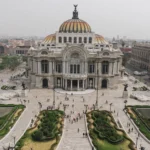
The Palacio de Bellas Artes, with its orange dome, blends Art Nouveau and Art Deco. It displays murals by Rivera, Orozco and Siqueiros and hosts the Ballet Folklórico. Opposite, the Torre Latinoamericana offers a view over the city; Alameda Park and the Casa de los Azulejos, covered in tiles, are a short walk away.
Chapultepec and the National Museum of Anthropology
Chapultepec Park is the city’s great green lung. It is home to Chapultepec Castle and, above all, the National Museum of Anthropology, a world reference for pre-Columbian civilizations: the Aztec hall with the Sun Stone, and the Maya, Olmec and Teotihuacan halls. Allow at least half a day, and check opening days on the official site before you go.
Coyoacán and Frida Kahlo’s Casa Azul
In the south, Coyoacán has kept its cobbled streets, squares and market. The Casa Azul, Frida Kahlo’s birthplace, is the most sought-after museum in the city: buy your tickets online, often several days in advance. The Leon Trotsky House Museum is a few streets away. Farther west, San Ángel is home to the Diego Rivera and Frida Kahlo studio house and a Saturday art market.
Xochimilco and its trajineras
The Xochimilco canals, remnants of the chinampa system (gardens farmed on the lake), are explored by trajinera, a brightly painted boat. At weekends the atmosphere is festive, with mariachis and floating vendors; on weekdays it is quieter. The main landings, such as Nuevo Nativitas, display official hourly rates.
Teotihuacan
About 50 km (31 mi) northeast, the city of Teotihuacan lines up the Pyramids of the Sun and the Moon along the Avenue of the Dead. Set off early: the site is very exposed to the sun, and the altitude is noticeable. Choose a direct first-class coach or an organized tour: the UK FCDO notes that theft on buses is common and that first-class buses on toll roads have fewer incidents than second- and third-class services.
Roma, Condesa and the Basilica of Guadalupe
The Roma and Condesa neighborhoods, with their tree-lined avenues and Art Deco buildings, are packed with cafés, restaurants and galleries. In the north, the Basilica of Our Lady of Guadalupe is the country’s leading pilgrimage site, especially on December 12. For food, from tacos al pastor to the markets, see our page on Mexican food.
Itinerary: Mexico City in 4 or 5 days
Day 1: Zócalo, cathedral, Templo Mayor, National Palace, then Bellas Artes and the Torre Latinoamericana at sunset
Day 2: Chapultepec Park, National Museum of Anthropology, evening in Roma or Condesa
Day 3: Teotihuacan in the morning (direct coach or tour), Basilica of Guadalupe on the way back
Day 4: Coyoacán, Casa Azul (booked in advance), Trotsky Museum, then Xochimilco
Day 5 (optional): San Ángel on a Saturday, or a day trip to Puebla and Cholula, or to Taxco
Mexico City is often the first stop on a trip that ends on the Caribbean coast: see our guides to the Yucatán, Cancún and Tulum.
The altitude effect: Mexico City vs Cancún in figures
At 2,240 m (7,349 ft), Mexico City is nothing like a tropical destination: afternoons are mild, but nights are cool, especially in the dry season. We compared Mexico City’s monthly lows with those of Cancún, at sea level, and calculated the day-night range in Mexico City.
Month
Mexico City low
Cancún low
Nights cooler in Mexico City by…
Day-night range in Mexico City
January
8.5 °C (47 °F)
19.3 °C (67 °F)
10.8 °C (19 °F)
13.9 °C (25 °F)
February
9.5 °C (49 °F)
19.6 °C (67 °F)
10.1 °C (18 °F)
14.8 °C (27 °F)
March
11.1 °C (52 °F)
20.8 °C (69 °F)
9.7 °C (17 °F)
15.0 °C (27 °F)
April
13.1 °C (56 °F)
22.4 °C (72 °F)
9.3 °C (17 °F)
14.4 °C (26 °F)
May
13.7 °C (57 °F)
23.9 °C (75 °F)
10.2 °C (18 °F)
13.5 °C (24 °F)
June
13.8 °C (57 °F)
24.6 °C (76 °F)
10.8 °C (19 °F)
12.0 °C (22 °F)
July
13.0 °C (55 °F)
24.5 °C (76 °F)
11.5 °C (21 °F)
11.7 °C (21 °F)
August
13.2 °C (56 °F)
24.5 °C (76 °F)
11.3 °C (20 °F)
11.4 °C (21 °F)
September
13.1 °C (56 °F)
24.1 °C (75 °F)
11.0 °C (20 °F)
10.6 °C (19 °F)
October
11.8 °C (53 °F)
23.1 °C (74 °F)
11.3 °C (20 °F)
11.7 °C (21 °F)
November
9.9 °C (50 °F)
21.5 °C (71 °F)
11.6 °C (21 °F)
12.9 °C (23 °F)
December
8.5 °C (47 °F)
20.0 °C (68 °F)
11.5 °C (21 °F)
13.9 °C (25 °F)
Destination de Voyage calculation based on the 1991–2020 normals of the Servicio Meteorológico Nacional (Mexico City-Tacubaya; Cancún, airport). Day-night range = average high − average low.
Nights are 9.3 to 11.6 °C (17 to 21 °F) cooler than in Cancún, with the largest gap in November.
The day-night range peaks in March (15.0 °C (27 °F)): from about 26 °C (79 °F) in the afternoon to 11 °C (52 °F) at dawn.
In practice: for a Mexico City-Yucatán combination, pack a jacket or sweater for evenings in the city; you will not need it on the coast.
Altitude: shortness of breath is common in the first days. Both the UK FCDO and the U.S. Department of State warn about altitude sickness in Mexico City and other high cities: take it easy at first and keep Teotihuacan for the second or third day.
When to go to Mexico City
The best time is November to April: this is the dry season, with less than 25 mm (1.0 in) of rain a month and 226 to 262 hours of sunshine. March, April and May are the warmest months (27.5 °C (82 °F) average high in April). From June to September, the rainy season brings afternoon showers and thunderstorms: more than 170 mm (6.7 in) in July and August, with over 20 rainy days, but mornings are often dry. Nights are cool from December to February (8.5 °C (47 °F) average low in January).
Month
Max
Min
Rain
Rainy days
Per 7 days
Sunshine (h)
Crowds
Prices
Verdict
January
22.4 °C (72 °F)
8.5 °C (47 °F)
11.9 mm (0.5 in)
2.7
0.6
233
Medium
Medium
✅ Dry, cool nights
February
24.3 °C (76 °F)
9.5 °C (49 °F)
5.7 mm (0.2 in)
2.1
0.5
232
Medium
Medium
✅ Dry and sunny
March
26.1 °C (79 °F)
11.1 °C (52 °F)
11.8 mm (0.5 in)
3.8
0.9
262
High
High
✅ Dry, warmer
April
27.5 °C (82 °F)
13.1 °C (56 °F)
24.2 mm (1.0 in)
6.7
1.6
239
High
High
✅ Warmest, dry
May
27.2 °C (81 °F)
13.7 °C (57 °F)
59.4 mm (2.3 in)
11.1
2.5
232
Medium
Medium
⚠️ Hot, first storms
June
25.8 °C (78 °F)
13.8 °C (57 °F)
132.5 mm (5.2 in)
16.3
3.8
181
Low
Low
⚠️ Rainy season
July
24.7 °C (76 °F)
13.0 °C (55 °F)
174.0 mm (6.9 in)
21.8
4.9
179
Medium
Medium
❌ Near-daily storms
August
24.6 °C (76 °F)
13.2 °C (56 °F)
175.6 mm (6.9 in)
20.8
4.7
177
Medium
Medium
❌ Near-daily storms
September
23.7 °C (75 °F)
13.1 °C (56 °F)
158.1 mm (6.2 in)
18.2
4.2
148
Low
Low
⚠️ Rainy
October
23.5 °C (74 °F)
11.8 °C (53 °F)
71.3 mm (2.8 in)
10.1
2.3
191
Medium
Medium
✅ End of the rains
November
22.8 °C (73 °F)
9.9 °C (50 °F)
17.4 mm (0.7 in)
3.7
0.9
224
High
High
✅ Dry, Día de Muertos
December
22.4 °C (72 °F)
8.5 °C (47 °F)
5.0 mm (0.2 in)
1.2
0.3
227
High
High
✅ Dry, year-end holidays
Temperatures, rainfall, rainy days and sunshine: 1991–2020 normals of the Servicio Meteorológico Nacional (SMN, Mexico), Tacubaya station. « Per 7 days »: Destination de Voyage calculation, expected rainy days in a week (rainy days in the month × 7 / days in the month). Crowds and prices: our estimate based on tourist seasons and holidays (Holy Week, Día de Muertos, year-end).
Día de Muertos (November 1 and 2) is the most sought-after time: book early. For the rest of the country, where the seasons differ (Caribbean coast, Pacific), see when to go to Mexico.
Budget for visiting Mexico City
Item (per person per day)
Budget
Comfort
Accommodation (based on a shared double room)
roughly MXN 300 to 650 (hostel, simple hotel)
roughly MXN 1,050 to 2,300 (boutique hotel in Roma or Condesa)
Meals
roughly MXN 200 to 400 (tacos, fondas, markets)
roughly MXN 750 to 1,250 (restaurants)
Transportation
roughly MXN 20 to 100 (metro, Metrobús)
roughly MXN 200 to 400 (ride-hailing)
Sights
roughly MXN 100 to 300
roughly MXN 300 to 650 (guided tour to Teotihuacan)
Total
roughly MXN 850 to 1,450
roughly MXN 2,300 to 4,200
Rough estimates per person per day, excluding flights, converted from our euro estimates at the European Central Bank rate of 23 October 2026 and rounded.
Getting around Mexico City
From the airport: Benito Juárez International Airport is close to the center; the UK FCDO advises using only authorized pre-paid airport taxis. A ride-hailing app or Metrobús Line 4 to the historic center are other options.
Metro and Metrobús: fast and very cheap, but packed at rush hour. Pickpocketing and theft are common, including on public transport (GOV.UK). Some cars are reserved for women and children.
Ride-hailing and taxis: the U.S. Department of State advises not to hail taxis on the street but to use a trusted ride-sharing app (Uber and Cabify are available), a hotel taxi or an authorized taxi stand (« sitio »); unlicensed taxi drivers have robbed passengers in Mexico City (GOV.UK).
Buses: public buses vary in security but are generally safe in Mexico City and major tourist areas, according to the U.S. Department of State; keep your belongings close.
Day trips: direct first-class coaches to Teotihuacan, Puebla or Taxco, or organized tours.
Where to stay in Mexico City
Neighborhood
Best for
Strengths
Historic center (around the Zócalo and the Alameda)
First visit, museums
Everything within walking distance; stay in busy, well-lit streets in the evening
Roma Norte and Condesa
Couples, food
Tree-lined streets, cafés, restaurants; a good compromise
Juárez and Reforma
Convenience
Close to the center and Chapultepec, good transport links
Polanco
Comfort
Upscale area near the Museum of Anthropology
Coyoacán
Peace and quiet, longer stays
Village feel; farther from the center
Ask your hotel about areas to avoid after dark; the Mexico City Tourist Police can be reached on +52 55 5207 4155 (GOV.UK).
Entry requirements, health and safety
US citizens: according to the U.S. Department of State (travel.state.gov, last updated August 11, 2025), you need a passport book to fly to Mexico (a passport card is not accepted for air travel). Mexican immigration decides on arrival how long you may stay, and you can download your digital entry record (FMMD) from the National Migration Institute (INM).
UK citizens: according to the UK FCDO (GOV.UK, updated 20 October 2026), you do not need a visa to visit as a tourist; your passport is stamped with the number of days you may stay and must be valid for the duration of your stay. Border officers may ask for a return or onward ticket, proof of accommodation and proof of funds. Keep your passport and entry stamp or e-gate ticket with you: the authorities do not accept copies or photos.
Health: take it easy at altitude (GOV.UK; travel.state.gov). Only drink boiled or bottled water and avoid ice (GOV.UK). Excellent health facilities are available in Mexico City, but providers usually require payment before treatment or discharge, and most hospitals do not accept U.S. health insurance (travel.state.gov): insurance covering all medical costs and evacuation is essential.
Safety: the U.S. Department of State rates Mexico Level 2, « Exercise increased caution », with some areas at higher risk (travel advisory updated May 28, 2026). The UK FCDO (GOV.UK, updated 20 October 2026) notes that street crime is a serious issue in major cities, that « express kidnappings » (forced ATM withdrawals) can happen in urban areas, and that political demonstrations are common in Mexico City, including protests against gentrification in central and tourist areas since July 2025: avoid all demonstrations.
Natural hazards: there is a risk of earthquakes in most of Mexico; the 911 CDMX app (local numbers only) can warn you up to 60 seconds before shaking starts. The Popocatépetl volcano is active and closed to the public, and its ash has disrupted flights at Mexico City airport in the past (GOV.UK).
Money: Mexican peso; cards are accepted in most restaurants and shops, cash is needed for markets, small stalls and trajineras. The UK FCDO advises using ATMs in daylight, inside shops or malls, and avoiding large withdrawals.
Internet: good coverage in the city; see our eSIM guide.
Tipping: about 10 to 15% is customary in restaurants.
Museums: check opening days on each museum’s official site before you go, and expect crowds at weekends.
Four to five days for the historic center, Chapultepec, Coyoacán, Xochimilco and Teotihuacan; a week to add Puebla, Taxco or San Ángel.
What is the best time to visit Mexico City?
November to April, during the dry season. From June to September, afternoon thunderstorms are almost daily, with more than 170 mm (6.7 in) of rain in July and August according to the SMN’s 1991–2020 normals.
Is Mexico City dangerous?
The tourist neighborhoods can be visited with the precautions you would take in any large city. The U.S. Department of State rates Mexico Level 2 (exercise increased caution); both it and the UK FCDO advise against hailing taxis on the street and recommend care with ATMs and on public transport.
Are there nonstop flights to Mexico City?
Mexico City International Airport (MEX) is the country’s main hub, served by many international airlines. Check current routes from your departure city when you book.
Is it cold in Mexico City?
Nights are cool: an average low of 8.5 °C (47 °F) in January and December, more than 10 °C (18 °F) colder than in Cancún. Afternoons stay mild, around 22 to 27 °C (72 to 81 °F) all year round.
Do you need to book Frida Kahlo’s Casa Azul?
Yes, tickets are sold online and often sell out several days in advance.
Our sources
Servicio Meteorológico Nacional (Mexico): 1991–2020 normals for the Tacubaya station and for Cancún (airport), via the climate tables of the Wikipedia articles « Mexico City » and « Cancún »
Destination de Voyage calculation: Mexico City–Cancún difference in lows, day-night range and rainy days per 7 days
Entry, health and safety information read on 26 October 2026: U.S. Department of State, Mexico country information (travel.state.gov, last updated August 11, 2025) and Mexico travel advisory (updated May 28, 2026); UK FCDO, foreign travel advice for Mexico (GOV.UK, updated 20 October 2026)
Budget conversions: European Central Bank euro reference rates of 23 October 2026


 FlightsKiwi.comCompare flights and airline combinations to Mexico City.Compare flights