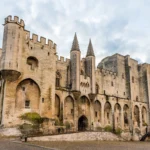
Things to do in Provence? Step inside the Palais des Papes in Avignon, wander the hilltop villages of the Luberon such as Gordes and Roussillon, see the lavender fields of Valensole and Sénanque, walk in the calanques of Marseille and Cassis, then visit the Roman monuments of Arles and Orange. For good conditions in Provence, aim for May, June and September: it is warm without being extreme and less crowded than in July and August. Just to the west, the Roman aqueduct has its own page: Pont du Gard: prices and opening hours.
Tourist Provence mainly covers the Vaucluse, Bouches-du-Rhône and Alpes-de-Haute-Provence departments. Within an hour’s drive you move from village markets to Mediterranean beaches, or from the Verdon Gorge to the Camargue. This guide brings together the highlights, two itineraries, the budget, getting around, where to stay and the month-by-month climate based on official Météo-France normals. Among these trips, the island off the Var coast deserves a day of its own: our Porquerolles travel guide covers beaches, cycling and access rules.
Our travel deals for Provence
Affiliate links: we earn a commission, at no extra cost to you.
FlightsKiwi.comCompare flights and airline combinations to Provence.
Time zoneUTC+1, UTC+2 in summer: 1 hour ahead of London, 6 hours ahead of New York
AirportsMarseille Provence (MRS); TGV stations at Avignon, Aix-en-Provence and Marseille · details
EntrySchengen area: no visa for up to 90 days for US citizens (tourism or business) and UK citizens (in any 180-day period) · travel.state.gov · GOV.UK
Electricitycheck voltage and plug types before you go · plugs
Suggested lengthone week for one areaTwo weeks for a full tour
The best months are May, June and September. The climate is Mediterranean: hot, dry summers (over 30 °C (86 °F) in the afternoon in July and August), mild winters that can be cold at night, and rain concentrated in autumn, often as violent storms. The mistral, a northerly wind common in the Rhône valley, cools the air and clears the sky, but can disrupt boat trips and cycling.
Month
High
Low
Rain
Crowds
Prices
Verdict
January
10.3 °C (51 °F)
2.1 °C (36 °F)
54.8 mm (2.2 in)
Very low
Low
❌ Cool, frequent mistral, many sites running at a slower pace
February
11.9 °C (53 °F)
2.4 °C (36 °F)
36.6 mm (1.4 in)
Low
Low
⚠️ Dry and bright, cold nights
March
16.2 °C (61 °F)
5.3 °C (42 °F)
44.5 mm (1.8 in)
Low
Low
⚠️ Almond trees in bloom, changeable weather
April
19.3 °C (67 °F)
7.9 °C (46 °F)
63.0 mm (2.5 in)
Medium (Easter)
Medium
✅ Mild, ideal for towns and hiking
May
23.6 °C (74 °F)
11.9 °C (53 °F)
60.1 mm (2.4 in)
Medium (holiday weekends)
Medium
✅ Greenery, markets, pleasant temperatures
June
28.1 °C (83 °F)
15.6 °C (60 °F)
37.4 mm (1.5 in)
Medium to high
Medium to high
✅ Start of the lavender season, long days
July
31.1 °C (88 °F)
18.0 °C (64 °F)
38.4 mm (1.5 in)
Very high
Very high
⚠️ Lavender and festivals, but heat and crowds
August
30.8 °C (87 °F)
17.7 °C (64 °F)
40.2 mm (1.6 in)
Very high
Very high
⚠️ Hot, lavender harvested, high wildfire risk
September
25.5 °C (78 °F)
14.0 °C (57 °F)
105.3 mm (4.1 in)
Medium
Medium
✅ Warm sea, grape harvest, fewer people
October
20.3 °C (69 °F)
10.6 °C (51 °F)
94.5 mm (3.7 in)
Low
Medium to low
⚠️ Autumn colours, possible storms
November
14.2 °C (58 °F)
6.0 °C (43 °F)
96.6 mm (3.8 in)
Very low
Low
❌ The wettest month, short days
December
10.6 °C (51 °F)
2.8 °C (37 °F)
48.2 mm (1.9 in)
Low
Low
⚠️ Quiet, nativity scenes and Christmas markets
Temperatures and rainfall: Météo-France 1991-2020 normals, Orange station (Vaucluse). Crowds and prices: our estimate based on tourist seasons.
The table uses Orange, representative of the interior (Avignon, Luberon, Ventoux). The coast is a little milder in winter and noticeably drier over the year:
Station
July high
January low
Annual rainfall
Orange (Vaucluse)
31.1 °C (88 °F)
2.1 °C (36 °F)
720 mm (28.3 in)
Aix-en-Provence
31.0 °C (88 °F)
1.6 °C (35 °F)
609 mm (24.0 in)
Marignane (Marseille airport)
30.7 °C (87 °F)
3.6 °C (38 °F)
532 mm (20.9 in)
1991-2020 normals, Météo-France climate data sheets. Marignane records about 2,900 hours of sunshine a year.
Spring (April-May): the best season for the towns, walking in the Luberon or the Alpilles and enjoying the markets without excessive heat. The sea is still cool.
Summer (June-August): the season of lavender, festivals and swimming. July and August are hot (31 °C (88 °F) on average in the afternoon in Orange), expensive and very busy; some wooded hills may be closed to the public when the wildfire risk is high.
Autumn (September-October): September brings a warm sea and quieter villages. It is also storm season: September to November concentrate the rain (105 mm (4.1 in) in September in Orange).
Winter (November-March): clear light and low prices, but the mistral can be icy and many village restaurants close. The cities (Marseille, Aix, Avignon, Arles) remain pleasant.
Lavender usually flowers from late June to late July depending on altitude and the year: earlier at Sénanque and in the Luberon, later on the Valensole plateau and around Sault. For more seasonal ideas, see our picks of where to go in May, where to go in June and where to go in September.
Things to do in Provence: the highlights
Avignon and the Palais des Papes
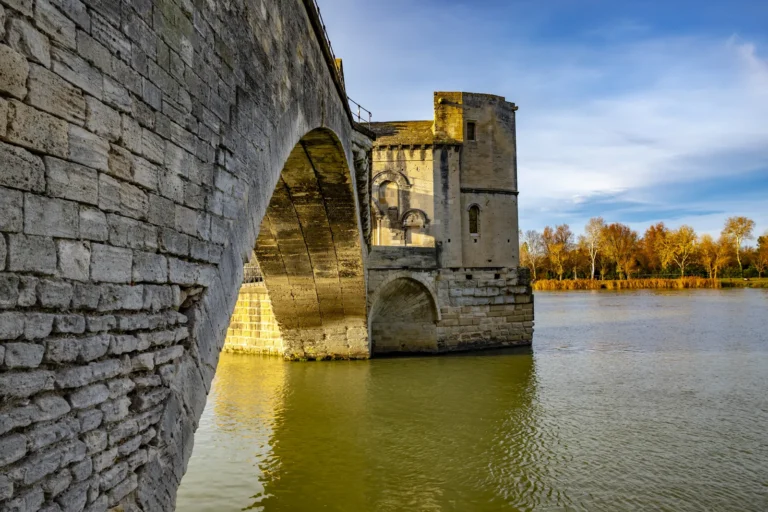
Avignon was the residence of the popes in the 14th century. The Palais des Papes, the largest Gothic palace in Europe, is visited with a tablet or an audio guide; right next to it, the Pont Saint-Bénezet (the « Pont d’Avignon ») stops in the middle of the Rhône. The historic centre is a UNESCO World Heritage Site. In July, the Avignon Festival and its « Off » fringe fill the town with performances: book accommodation very early.
The Luberon: Gordes, Roussillon, Lourmarin
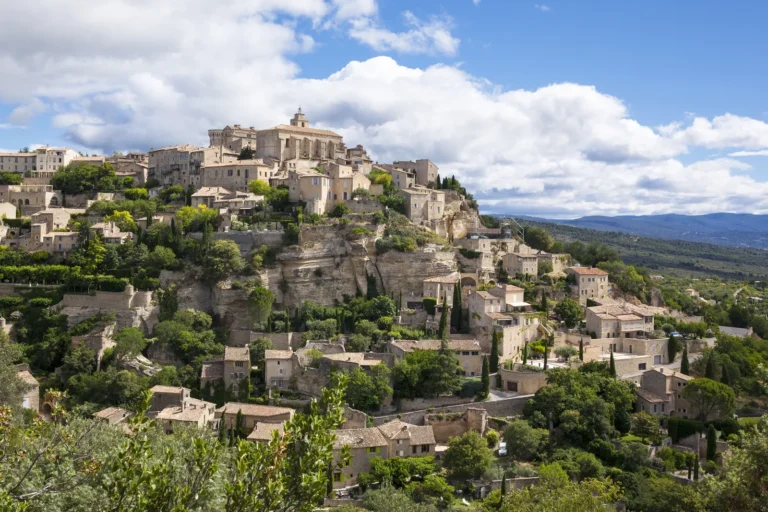
The Luberon groups several of the most visited villages in France. Gordes is built of dry stone on a rocky spur; a few kilometres away, the Cistercian Sénanque Abbey is surrounded by lavender in early summer. Roussillon is known for its ochre cliffs, which you explore on the Sentier des Ocres, and the Colorado Provençal at Rustrel extends these landscapes. Lourmarin, Bonnieux, Ménerbes and L’Isle-sur-la-Sorgue (known for its market and antiques) round off a stay of two or three days. The most photographed hilltop village of the Luberon has its own guide: visiting Gordes.
The Valensole plateau and the Verdon Gorge
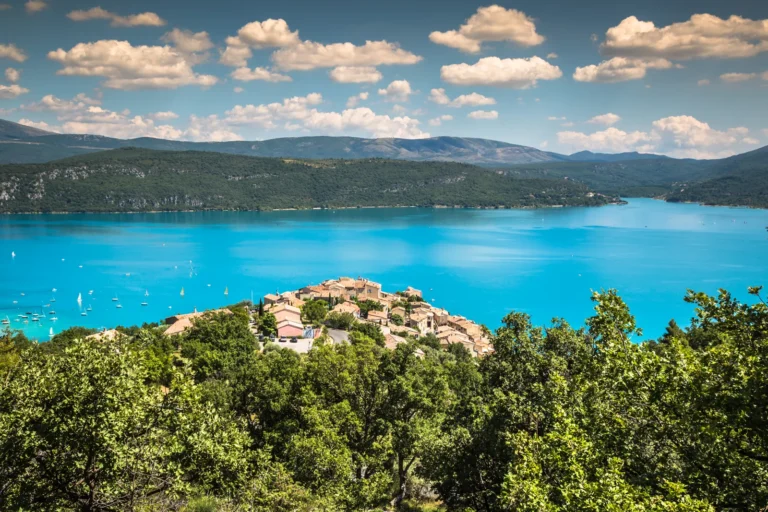
In the Alpes-de-Haute-Provence, the Valensole plateau lines up vast fields of lavandin, most striking in July. A little further east, Moustiers-Sainte-Marie, a village of faience makers clinging to the cliff, opens onto the Verdon Gorge: the Route des Crêtes, Lac de Sainte-Croix, and pedal boat or kayak hire at the entrance to the gorge. The Blanc-Martel trail, at the bottom of the canyon, requires good fitness. Route des Crêtes, Lac de Sainte-Croix and the Blanc-Martel trail: our Verdon Gorge travel guide covers these stops and the rules.
Where the gorge opens out, our guide to visiting Lac de Sainte-Croix brings together the swimming and boating rules.
Arles, the Alpilles and the Camargue
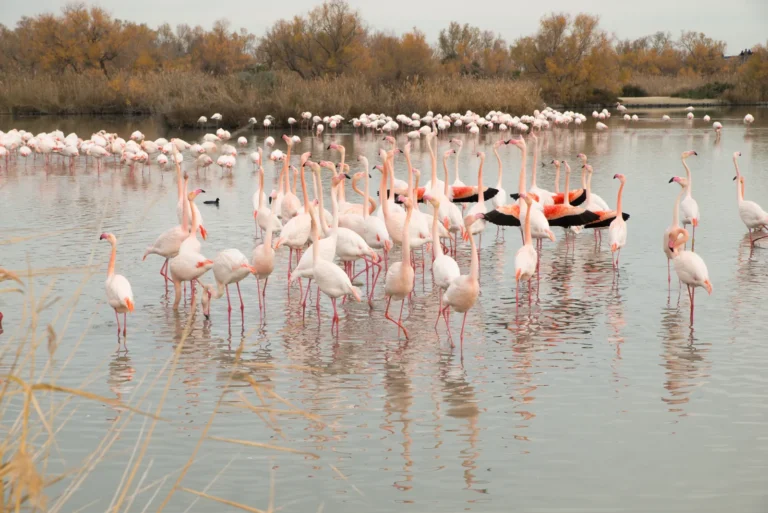
Arles has a Roman amphitheatre and theatre, as well as the Saint-Trophime cloister, all UNESCO-listed. Van Gogh painted more than 300 canvases here; the Fondation Vincent van Gogh and Frank Gehry’s Luma tower add a contemporary touch. To the north-east lie Les Baux-de-Provence and its Carrières de Lumières (immersive shows), then Saint-Rémy-de-Provence and the ancient site of Glanum. To the south, the Camargue: lagoons, pink flamingos, horses and bulls, and Saintes-Maries-de-la-Mer. Flamingos, horses and Saintes-Maries-de-la-Mer: our Camargue travel guide covers the park rules and the best seasons.
Marseille and the calanques
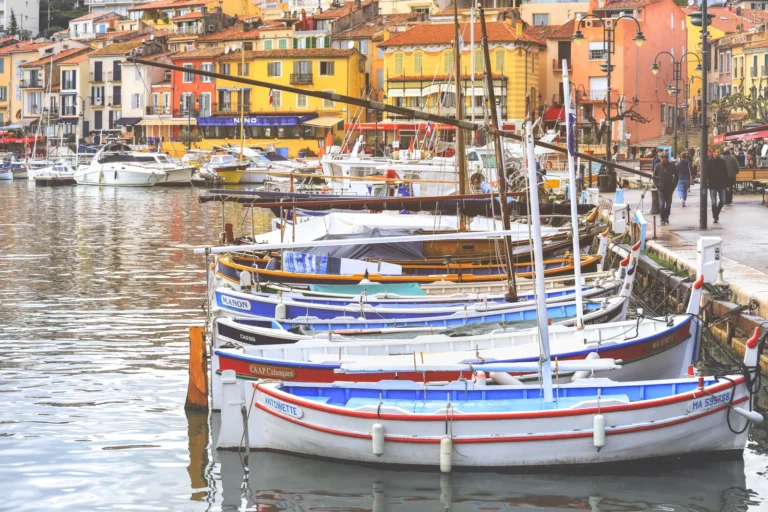
Explore Marseille through the Vieux-Port, the Panier district, the Mucem and Fort Saint-Jean, then Notre-Dame-de-la-Garde, which overlooks the city. The Calanques National Park stretches from Marseille to Cassis: you reach it on foot (Sugiton, Sormiou, En-Vau, Port-Pin) or by boat from the Vieux-Port or Cassis. In summer, access to some hills is restricted according to the wildfire risk and some calanques limit visitor numbers: check the park website and the prefecture’s access map the day before. These calanques can also be reached from the neighbouring port: our Cassis travel guide covers access, beaches and bookings.
Aix-en-Provence and the Sainte-Victoire
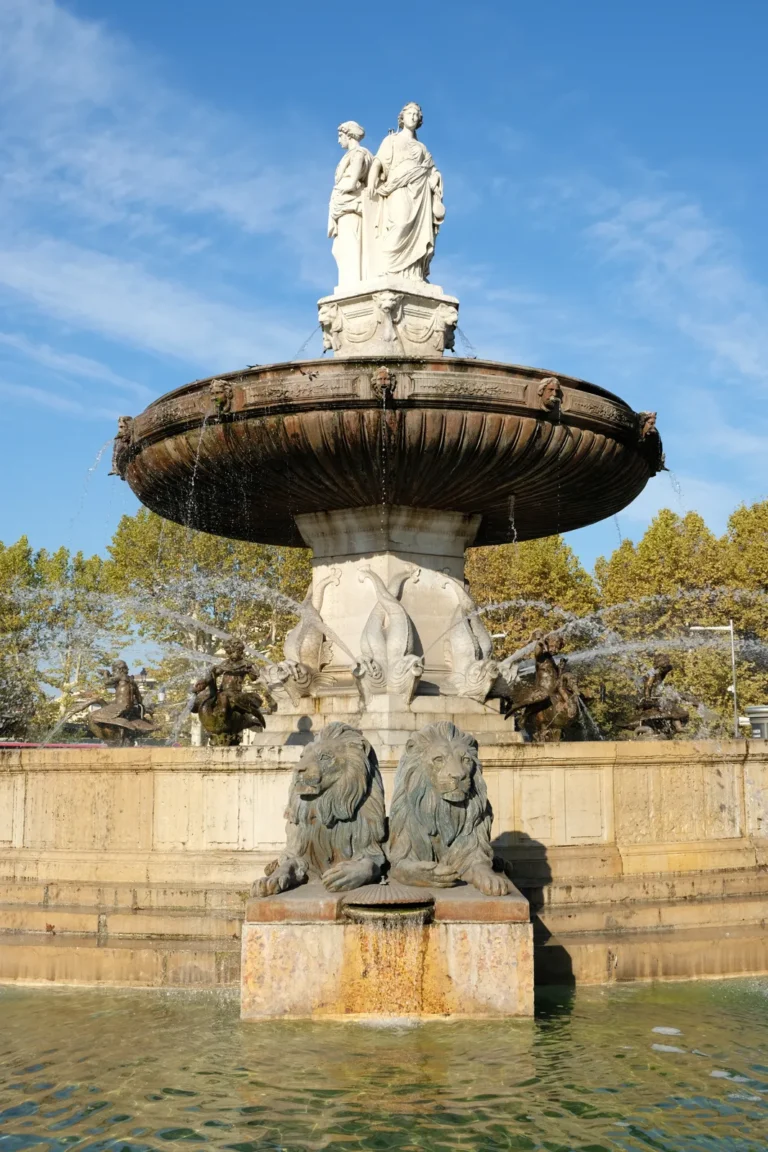
Aix is the town of fountains, the Cours Mirabeau and grand town houses. Cézanne’s studio and the Bibémus quarries recall the painter, who depicted the Montagne Sainte-Victoire dozens of times. You can hike its ridges, preferably early in the morning. Calissons, a sweet made of almond and candied melon, are sold all over town. The Cézanne trail and tips for very hot days are in our guide to visiting Aix-en-Provence.
Orange, Vaison-la-Romaine and Mont Ventoux
The Roman theatre of Orange, with its almost intact stage wall, and the nearby triumphal arch are UNESCO-listed. Vaison-la-Romaine has extensive Roman quarters and a medieval upper town. Mont Ventoux (1,910 m / 6,266 ft), legendary among cyclists, offers a vast view from the summit; the road is often closed in winter. The Dentelles de Montmirail and the vineyards of Gigondas and Châteauneuf-du-Pape are close by.
The Pont du Gard
Just west of Avignon, in the Gard (Occitanie region), the Pont du Gard is a three-tier Roman aqueduct listed by UNESCO. The site includes a museum and trails; you can swim in the Gardon river in summer. It combines easily with Avignon or Uzès.
Days 4 and 5: the Luberon (Gordes, Sénanque, Roussillon, L’Isle-sur-la-Sorgue)
Day 6: the Alpilles (Saint-Rémy, Les Baux-de-Provence)
Day 7: Arles
Days 8 to 10 (optional): the Camargue or Aix-en-Provence
2 weeks: from the Rhône valley to the sea
Days 1 and 2: Avignon
Day 3: Orange and Châteauneuf-du-Pape
Days 4 to 6: the Luberon
Days 7 and 8: Valensole, Moustiers and the Verdon Gorge
Days 9 and 10: Aix-en-Provence and the Sainte-Victoire
Days 11 to 13: Marseille, Cassis and the calanques
Day 14: Arles or the Camargue
Without a car, one base in Avignon and another in Marseille already let you see Arles, Aix, Orange and the calanques by train, bus and boat. To continue to the coast and the hills behind Nice, see our guide to visiting the French Riviera.
Budget for a trip to Provence
Item (per person per day)
Low budget
Comfort
Accommodation (sharing a double room)
roughly €35 to €55 (campsite, hostel, simple B&B)
roughly €90 to €170
Meals
roughly €25 to €40 (markets, lunch set menus)
roughly €50 to €80
Local transport
roughly €10 to €20 (regional trains, buses)
roughly €25 to €40 (shared car hire)
Activities (monuments, boat)
roughly €10 to €15
roughly €20 to €40
Total
roughly €80 to €130
roughly €160 to €280
Rough estimates, excluding travel to Provence. Accommodation prices rise sharply in July and August and during the Avignon Festival.
Several towns offer combined tickets or passes that reduce the cost of monuments (Avignon, Arles): ask at the tourist offices before paying for each site separately.
Who is Provence for?
Our verdicts by traveller profile, based on the places, conditions and budget ranges in this guide:
Culture and heritage: ideal: the Palais des Papes in Avignon, the Roman monuments of Arles and Orange, the Pont du Gard, all UNESCO-listed, and the places linked to Van Gogh and Cézanne.
Couples: a very good choice: hilltop villages of the Luberon, B&Bs and farmhouses, the vineyards of Gigondas and Châteauneuf-du-Pape, lavender from late June to late July.
Families: yes: pedal boats and kayaks at the entrance to the Verdon Gorge, swimming in the Gardon at the Pont du Gard, the ochre trail in Roussillon, horses and flamingos in the Camargue. In July and August, heat and crowds make sightseeing harder.
Hiking and cycling: very well suited: the calanques on foot, the Sainte-Victoire ridges, the Blanc-Martel trail in the Verdon, the climb up Mont Ventoux and the « Autour du Luberon à vélo » route. Some hills may close in summer when the wildfire risk is high.
Beach: yes, around Marseille and Cassis, with the calanques reachable on foot or by boat; the sea is warmest in September.
Low budget: doable but not cheap: roughly €80 to €130 per person per day with campsites, hostels, markets and regional trains. Avoid July, August and the Avignon Festival, when accommodation prices soar.
Without a car: partly: Avignon, Arles, Orange, Aix and Marseille are linked by train, but the Luberon, the Verdon and the hilltop villages require a car or an organised excursion.
Getting around Provence
Train: TGVs serve Avignon TGV, Aix-en-Provence TGV and Marseille Saint-Charles; regional TER trains link Avignon, Arles, Marseille, Orange and Cavaillon. See our tips for travelling cheaply by train.
Bus: the regional ZOU! network serves many villages, with limited frequencies.
Car: essential for the Luberon, the Verdon and the small villages. Car parks at the busiest sites are often paying and fill up quickly in summer.
Bike: waymarked routes cross the Luberon (« Autour du Luberon à vélo ») and Mont Ventoux draws cyclists; avoid the hottest hours in summer.
Boat: shuttles and excursions to the calanques and the Frioul islands from Marseille and Cassis.
Where to stay in Provence
Choose two or three bases depending on your itinerary. Avignon is practical without a car, with its TGV station and trains to Arles and Orange. The Luberon (Gordes, Bonnieux, Lourmarin, L’Isle-sur-la-Sorgue) offers farmhouses, B&Bs and holiday cottages, but requires a car. Saint-Rémy-de-Provence is a good base for the Alpilles and Arles. Aix-en-Provence and Marseille suit the coast and the calanques. For July, book several months ahead, especially in Avignon during the festival.
Entry requirements, health and safety
US citizens: no visa for up to 90 days in the Schengen area, including France, for tourism or business; your passport should be valid at least three months beyond your stay, and you may be asked for proof of funds and a return ticket (U.S. Department of State, travel.state.gov, last updated August 11, 2025).
UK citizens: no visa for up to 90 days in any 180-day period; your passport must have been issued less than 10 years before arrival and be valid at least 3 months after you leave the Schengen area. Under the EU Entry/Exit System (EES), fingerprints and a photo may be taken at your first entry (UK FCDO, GOV.UK, updated 22 October 2026).
Health: UK travellers need a GHIC or valid EHIC for state healthcare; everyone should have travel insurance covering medical costs. Emergency numbers: 15 (medical), 17 (police), 18 (fire), 112 (European emergency number) (GOV.UK, travel.state.gov).
Wildfires: according to the UK FCDO (GOV.UK, updated 22 October 2026), the wildfire risk is highest in the south of France, particularly along the Mediterranean coast, in hot, dry weather, and causing a wildfire is illegal even if accidental. In summer, access to the hills (calanques, Sainte-Victoire, Alpilles, Luberon) can be restricted or banned depending on the risk level: check the map published daily by the prefecture. Never light a fire or throw away a cigarette end. If you witness a fire, call 18 or 112.
Heat: pack a hat, water and sunscreen: summers are hot.
Swimming: choose beaches with lifeguards and follow the flag warnings (GOV.UK); rivers (Verdon, Gardon) can be affected by water releases from dams.
Theft: leave nothing visible in your car at tourist-site car parks.
For outdoor activities (canyoning, kayaking, climbing), check what your travel insurance covers.
Practical tips for Provence
Markets: each village has its own market day; check with the local tourist office and arrive early.
Timing: in summer, sightsee early in the morning and late in the day; many shops in the villages close at lunchtime.
Food and drink: tapenade, aïoli, bouillabaisse in Marseille, calissons from Aix, Côtes-du-Rhône wines and Provence rosés.
Lavender: do not walk between the rows or pick the flowers: the fields are working farms.
Internet: there are a few mobile dead zones in the Verdon and the valleys; check your home carrier’s roaming charges.
Major events in Provence
When
Event
Where
July
Avignon Festival (In and Off)
Avignon
July
Chorégies d’Orange
Roman theatre of Orange
July
Rencontres de la photographie
Arles
Summer
Lavender festivals and village fêtes
Valensole, Sault and villages
December
Santon fairs and nativity scenes
Marseille, Aix, villages
Dates change every year: check them on the official websites before booking.
Base yourself in Avignon or the Luberon: the Palais des Papes, the Pont du Gard, Gordes and Sénanque, Roussillon, the Alpilles and Arles. If you prefer the sea, combine Aix-en-Provence, Marseille and the calanques.
What is the best time to visit Provence?
May, June and September: 24 to 28 °C (75 to 83 °F) in the afternoon in Orange according to Météo-France 1991-2020 normals, with fewer people and lower prices than in July and August.
When can you see the lavender in Provence?
Usually from late June to late July. Flowering starts earlier in the Luberon and at Sénanque, later on the Valensole plateau and around Sault; harvesting often begins from mid-July.
Can you visit Provence without a car?
Yes for the cities: Avignon, Arles, Orange, Aix and Marseille are linked by train. For the Luberon, the Verdon and the hilltop villages, a car or an organised excursion is almost essential.
Do you need to book for the calanques?
Some calanques limit visitor numbers in summer and the hills can be closed when the wildfire risk is high. Check the Calanques National Park website and the prefecture’s access map before you go.
What is the difference between Provence and the French Riviera?
The French Riviera (Côte d’Azur) is the coastline to the east, from Saint-Tropez or Cannes to Menton. Provence usually refers to the interior (Luberon, Alpilles, Verdon) and the coast around Marseille and Cassis.
Near Avignon, our guide to visiting Parc Spirou covers prices, opening calendar and height restrictions.
Our sources
Météo-France: climate data sheets, 1991-2020 statistics, Orange (Vaucluse), Aix-en-Provence and Marignane (Bouches-du-Rhône) stations


 FlightsKiwi.comCompare flights and airline combinations to Provence.Compare flights

 Aix-en-Provence
 Avignon
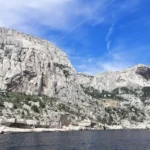 Calanques of Marseille
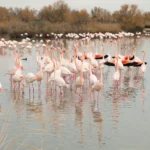 Camargue
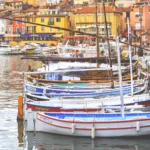 Cassis
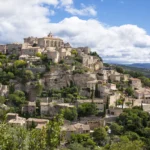 Gordes
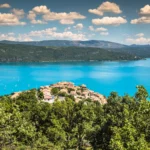 Lake Sainte-Croix
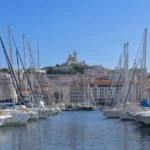 Marseille
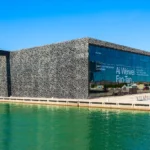 Mucem
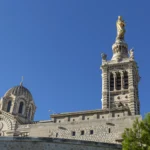 Notre-Dame de la Garde
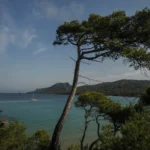 Porquerolles
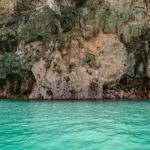 Verdon Gorge