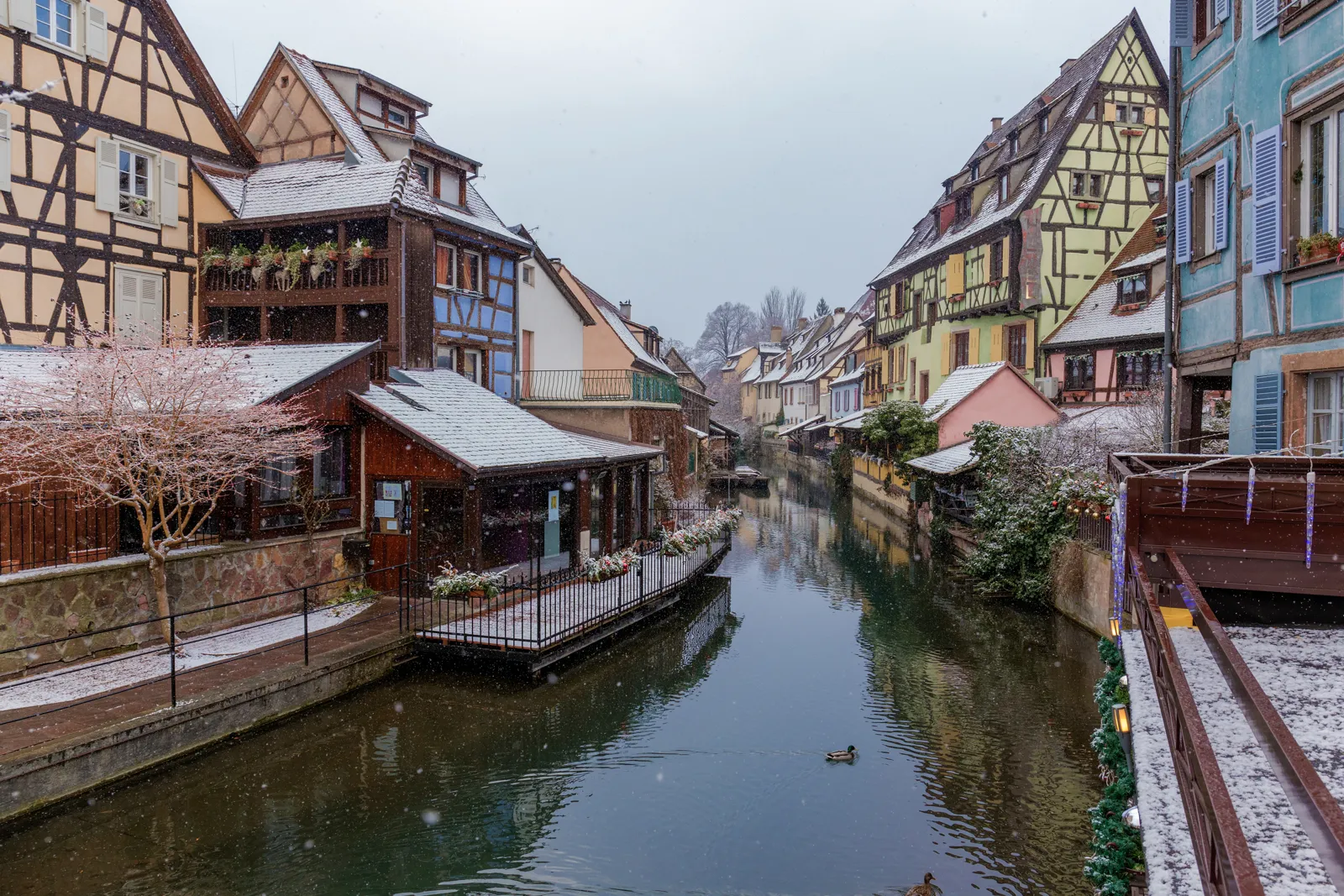
Things to do in Bucharest: tour the Palace of the Parliament, one of the largest administrative buildings in the world, wander the Lipscani old town to the small Stavropoleos Monastery, walk up Calea Victoriei to the Romanian Athenaeum, spend half a day at the Village Museum in Herăstrău Park and step into the Cărturești Carusel bookshop. To visit Bucharest, allow 2 to 3 days; the best times are May–June and September.
The capital of Romania, Bucharest mixes Orthodox churches, Belle Époque palaces that earned it the nickname « Little Paris » and the massive housing blocks of the Ceaușescu era. This guide covers the highlights, two itineraries, budget, where to stay and the month-by-month climate, with an original calculation: Bucharest has the sharpest summer–winter contrast of the European capitals we compared.
Our travel deals for Bucharest
Affiliate links: we earn a commission, at no extra cost to you.
FlightsKiwi.comCompare flights and airline combinations to Bucharest.
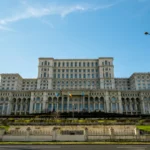
Begun in the 1980s under Nicolae Ceaușescu, the Palace of the Parliament is among the largest administrative buildings in the world. Only part of it can be visited, on a guided tour booked in advance, with ID. Unirii Boulevard, cut through the city to lead up to it, shows the scale of the demolitions of the period; its fountains are sometimes lit up on summer evenings.
The Old Town (Lipscani) and Stavropoleos Monastery
The historic centre, around Lipscani Street, is full of shopping streets, cafés and bars. Here you will find the ruins of the Princely Court (Curtea Veche), the Hanul lui Manuc caravanserai and, above all, Stavropoleos Monastery, a small 18th-century church with a carved porch. The neo-Gothic Caru’ cu Bere beer hall is a famous stop.
Calea Victoriei and the Romanian Athenaeum
Bucharest’s grand avenue links the old town to the north of the centre. It passes the CEC Palace (the former savings bank), Revolution Square, the National Museum of Art in the former royal palace and the Romanian Athenaeum, a late 19th-century concert hall and home of the George Enescu Philharmonic. Right next door, the Cărturești Carusel bookshop fills a renovated all-white building over several floors.
The Village Museum and Herăstrău Park
On the shore of Lake Herăstrău, the Dimitrie Gusti National Village Museum gathers wooden houses, mills and churches from every region of Romania in an open-air setting. It is the best introduction to rural Romania before a tour. The surrounding park (now called King Michael I Park) is good for walks and boating.
The Museum of the Romanian Peasant
Smaller and highly original, this museum displays costumes, ceramics, icons painted on glass and everyday objects in a carefully designed setting. It pairs well with the Village Museum.
The Arch of Triumph and the Spring Palace
On Kiseleff Road, Bucharest’s Arch of Triumph recalls the Arc de Triomphe in Paris. Further north, the Spring Palace, the Ceaușescus’ former private residence, can be visited by reservation: period interiors, mosaic bathrooms, a private cinema.
Parks and thermal baths
Cișmigiu Park, the oldest in the city, is pleasant in spring and autumn; in winter, its lake sometimes becomes an ice rink. North of the city, a large thermal spa complex lets you unwind after sightseeing, all year round.
Day trips: Transylvania, Snagov, the Black Sea
Peleș Castle in Sinaia, Bran Castle and the town of Brașov make a long day trip, better over two days. Snagov Monastery, on an island, is closer. These stops are covered in our Romania travel guide.
Itinerary: Bucharest in 2 or 3 days
Day 1, morning: Palace of the Parliament (booked tour), Unirii Boulevard
Day 1, afternoon: the old town, Stavropoleos, Hanul lui Manuc, dinner in the historic centre
Day 2, morning: Calea Victoriei, Revolution Square, the National Museum of Art, the Romanian Athenaeum, Cărturești Carusel
Day 2, afternoon: Kiseleff Road, the Arch of Triumph, the Village Museum and Herăstrău Park
Day 3: the Museum of the Romanian Peasant and the Spring Palace, or a day trip to Sinaia and Brașov
Bucharest suits a city break: see our cheap weekend breaks and, for another Central European capital, our guide to Hungary.
Scorching summers, freezing winters: Bucharest vs other European capitals
Bucharest has a strongly continental climate: summer afternoons average over 30 °C (86 °F), while January nights drop to −5 °C (23 °F). To measure it, we calculated for each capital the gap between the mean temperature of the warmest month and that of the coldest month.
Capital
Summer/winter gap
Warmest month (mean)
Coldest month (mean)
Bucharest
24.0 °C (43 °F)
23.0 °C (73 °F)
−1.0 °C (30 °F)
Budapest
22.1 °C (40 °F)
22.4 °C (72 °F)
0.2 °C (32 °F)
Helsinki
22.0 °C (40 °F)
18.2 °C (65 °F)
−3.8 °C (25 °F)
Sofia
21.8 °C (39 °F)
21.6 °C (71 °F)
−0.2 °C (32 °F)
Riga
21.7 °C (39 °F)
19.4 °C (67 °F)
−2.3 °C (28 °F)
Podgorica
21.5 °C (39 °F)
28.1 °C (83 °F)
6.6 °C (44 °F)
Warsaw
21.4 °C (39 °F)
19.9 °C (68 °F)
−1.5 °C (29 °F)
Ljubljana
20.8 °C (37 °F)
21.9 °C (71 °F)
1.2 °C (34 °F)
Zagreb
20.6 °C (37 °F)
22.1 °C (72 °F)
1.5 °C (35 °F)
Oslo
20.4 °C (37 °F)
18.1 °C (65 °F)
−2.3 °C (28 °F)
Vienna
20.2 °C (36 °F)
22.3 °C (72 °F)
2.1 °C (36 °F)
Stockholm
20.2 °C (36 °F)
19.2 °C (67 °F)
−1.0 °C (30 °F)
Prague
19.9 °C (36 °F)
21.6 °C (71 °F)
1.7 °C (35 °F)
Madrid
19.6 °C (35 °F)
26.1 °C (79 °F)
6.5 °C (44 °F)
Athens
19.1 °C (34 °F)
29.3 °C (85 °F)
10.2 °C (50 °F)
Berlin
19.0 °C (34 °F)
19.5 °C (67 °F)
0.5 °C (33 °F)
Bern
18.6 °C (33 °F)
18.8 °C (66 °F)
0.2 °C (32 °F)
Rome
18.2 °C (33 °F)
26.1 °C (79 °F)
7.9 °C (46 °F)
Tirana
18.0 °C (32 °F)
25.5 °C (78 °F)
7.5 °C (46 °F)
Paris
15.4 °C (28 °F)
21.2 °C (70 °F)
5.8 °C (42 °F)
Valletta
14.9 °C (27 °F)
27.5 °C (82 °F)
12.6 °C (55 °F)
Brussels
14.9 °C (27 °F)
18.6 °C (65 °F)
3.8 °C (39 °F)
Amsterdam
14.3 °C (26 °F)
18.0 °C (64 °F)
3.7 °C (39 °F)
Lisbon
12.0 °C (22 °F)
23.8 °C (75 °F)
11.8 °C (53 °F)
Dublin
10.4 °C (19 °F)
16.8 °C (62 °F)
6.5 °C (44 °F)
Destination de Voyage calculation: (high + low) / 2 for each month, from 1991–2020 normals of the national weather services as given in the Wikipedia climate tables for each capital (Paris: Météo-France, Luxembourg station). Gap = warmest month − coldest month.
Bucharest comes out on top with a gap of 24.0 °C (43 °F), against 10.4 °C (19 °F) in Dublin and 15.4 °C (28 °F) in Paris.
In July and August, the average high exceeds 30 °C (30.6 °C, 87 °F, in August): sightsee in the morning and keep museums for the afternoon.
In January, the average low is −5.0 °C (23 °F): snow and ice are common.
In practice: the shoulder seasons (May–June, September) offer the best compromise between heat and cold.
When to go to Bucharest
The best months are May, June and September, with 24 to 28 °C (75 to 83 °F) in the afternoon. July and August are hot and very sunny (293 hours of sunshine in July); May and June are the wettest, often with thunderstorms. Winter is cold and grey, with highs of 3 to 6 °C (37 to 43 °F) from December to February, but the Christmas market livens up the centre.
Month
High °C (°F)
Low °C (°F)
Precip. mm (in)
Precip. days
Per 7 days
Sunshine (h)
Crowds
Prices
Verdict
January
3.0 (37)
−5.0 (23)
40.1 (1.6)
6.1
1.4
79
Low
Low
❌ Cold, possible snow
February
6.3 (43)
−3.5 (26)
33.0 (1.3)
5.4
1.4
107
Low
Low
❌ Cold
March
12.3 (54)
0.3 (33)
42.4 (1.7)
6.3
1.4
157
Low
Low
⚠️ Cool
April
18.5 (65)
4.9 (41)
50.2 (2.0)
6.2
1.4
195
Moderate
Medium
✅ Mild, spring
May
24.1 (75)
9.7 (49)
70.4 (2.8)
8.4
1.9
245
High
Medium
✅ Pleasant, thunderstorms
June
28.1 (83)
13.9 (57)
82.7 (3.3)
8.3
1.9
259
High
High
✅ Hot, thunderstorms
July
30.4 (87)
15.6 (60)
68.6 (2.7)
7.1
1.6
293
High
High
⚠️ Very hot
August
30.6 (87)
15.2 (59)
48.9 (1.9)
5.2
1.2
283
High
High
⚠️ Very hot
September
25.0 (77)
10.7 (51)
60.5 (2.4)
4.9
1.1
209
High
Medium
✅ Mild and dry
October
18.0 (64)
5.7 (42)
60.7 (2.4)
5.6
1.3
150
Moderate
Medium
✅ Cool and bright
November
10.5 (51)
1.4 (35)
43.6 (1.7)
5.4
1.3
85
Low
Low
⚠️ Grey, cool
December
4.2 (40)
−3.3 (26)
47.0 (1.9)
6.7
1.5
64
Moderate
Medium
⚠️ Cold, Christmas market
Temperatures, precipitation, precipitation days (≥ 1 mm) and sunshine: 1991–2020 normals for the Bucharest-Băneasa station (Romanian National Meteorological Administration), published by NOAA. « Per 7 days »: Destination de Voyage calculation (precipitation days in the month × 7 / days in the month). Crowds and prices: estimates.
about RON 105 to 160 (Parliament, Spring Palace, thermal baths)
Total
roughly RON 240 to 375 per person per day
roughly RON 590 to 965 per person per day
Indicative estimates excluding flights, converted at the European Central Bank rate of 23 October 2026.
Getting around Bucharest
From the airport: Henri Coandă Airport (Otopeni) is north of the city; trains to Gara de Nord, express buses or ride-hailing.
In the city: the metro, buses and trams cover the city well; the historic centre is best on foot.
Taxis: according to the UK FCDO (GOV.UK, updated 18 September 2026), most Bucharest taxis should list prices on the side and display a company name, drivers sometimes overcharge foreign visitors, and apps such as Uber and Bolt are generally reliable.
Day trips: trains to Sinaia and Brașov from Gara de Nord.
Where to stay in Bucharest
Neighbourhood
Best for
Strengths
Old Town (Lipscani)
First visit, nightlife
Everything on foot; noisy at night
Piața Romană and Calea Victoriei
Couples, culture
Central, quiet, close to museums
Piața Unirii
Convenience
Metro, close to the Parliament
Dorobanți and Floreasca
Comfort
Residential areas, restaurants, close to Herăstrău
Bucharest has a history of devastating earthquakes (travel.state.gov): if you rent an older flat, ask about the building’s condition.
Entry requirements, health and safety
US citizens: according to the U.S. Department of State (travel.state.gov, last updated November 12, 2025), your passport must be valid for at least three months beyond your departure date from Romania. With a valid US passport you can stay up to 90 days in the Schengen area in any 180-day period for tourism or business. Have proof of sufficient funds and a return ticket.
UK citizens: according to the UK FCDO (GOV.UK, updated 18 September 2026), Romania follows Schengen rules: you can travel without a visa for up to 90 days in any 180-day period. Your passport must have been issued less than 10 years before the date you arrive and expire at least 3 months after the date you plan to leave the Schengen area. You may need to show a return or onward ticket and enough money for your stay, and to register your fingerprints and photo under the EU Entry/Exit System (EES).
Health: UK travellers need a GHIC or EHIC for medically necessary state healthcare (GOV.UK). The U.S. Department of State notes that medical care is generally not up to Western standards, that many hospitals require cash payment up front, and advises avoiding contact with stray dogs (rabies). Take out travel insurance.
Safety: GOV.UK warns of petty theft in large towns, especially Bucharest, including near money exchanges and hotels, and of card copying in some bars and restaurants. The U.S. Department of State reports fake plainclothes police officers asking for passports and wallets: insist on a uniformed officer and on going to the police station.
Earthquakes: Romania is in a seismically active area, with the greatest risk in Bucharest (travel.state.gov); the last major earthquake was in 1977 (GOV.UK).
Two days are enough for the Parliament, the old town, Calea Victoriei and the Village Museum. Allow three days to add the Spring Palace or a trip to Sinaia.
What is the best time to visit Bucharest?
May, June and September. July and August exceed 30 °C (86 °F) on average in the afternoon, and winter nights drop below 0 °C (32 °F), according to 1991–2020 normals.
Which airport serves Bucharest?
Henri Coandă International Airport (Otopeni), north of the city, linked to the centre by train, express bus or ride-hailing.
Is Bucharest safe?
Generally yes, but the UK FCDO warns of petty theft, especially in Bucharest, and of taxi overcharging; the U.S. Department of State reports fake police officers. Use Uber or Bolt and keep an eye on your belongings.
Why is Bucharest called « Little Paris »?
For its boulevards and palaces from the late 19th and early 20th centuries, inspired by Parisian architecture, such as the Romanian Athenaeum or the Arch of Triumph.
Do US and UK citizens need a visa for Bucharest?
No: Romania follows Schengen rules, with visa-free stays of up to 90 days in any 180-day period for both (travel.state.gov, GOV.UK). Check passport validity rules before you travel.
Our sources
Romanian National Meteorological Administration, via NOAA: 1991–2020 normals for the Bucharest-Băneasa station (climate table of the Wikipedia article « Bucharest »)
1991–2020 normals for the European capitals compared (national weather services, via the climate tables of each city’s Wikipedia article; Paris: Météo-France, Luxembourg station)
Destination de Voyage calculation: summer/winter gap of the capitals, precipitation days per 7 days
Entry, health and safety information read on 26 October 2026: U.S. Department of State, Romania country information (travel.state.gov, last updated November 12, 2025), and UK FCDO, foreign travel advice for Romania (GOV.UK, updated 18 September 2026)
European Central Bank reference rates of 23 October 2026 (budget conversion)


 FlightsKiwi.comCompare flights and airline combinations to Bucharest.Compare flights