
Looking for things to do in Cassis? Stroll around the harbour and the lanes of the old village, walk or sail to the calanques of Port-Miou, Port-Pin and En-Vau, drive up to Cap Canaille along the Route des Crêtes, swim at the Grande Mer or Bestouan beaches and taste the white AOC Cassis wine. About 25 km (16 mi) east of Marseille, this small fishing town is the eastern gateway to the Calanques National Park. On the Côte Vermeille, our guide to visiting Collioure covers another small Mediterranean port loved by painters.
To visit Cassis in good conditions, aim for May, June and September: the sea is warm enough to swim, the trails are passable and the crowds are thinner than in July and August. This guide covers the highlights, the access rules for the calanques checked on the national park’s official site, the budget, transport and the month-by-month climate from Météo-France normals.

Our travel deals for Cassis
Affiliate links: we earn a commission, at no extra cost to you.
 FlightsKiwi.comCompare flights and airline combinations to Cassis.Compare flights

Cassis at a glance
- Location Bouches-du-Rhône, between Marseille and La Ciotat
- Currency euro (€) · currencies
- Time zone UTC+1, UTC+2 in summer: one hour ahead of London, six hours ahead of New YorkLocal time now: –:–
- Getting there Marseille Provence Airport or Marseille Saint-Charles station, then a regional TER train to Cassis · details
- Entry Schengen area: no visa for up to 90 days for US citizens (tourism or business) and UK citizens (in any 180-day period) · US: travel.state.gov · UK: GOV.UK
- Calanques access to the massifs regulated from 1 June to 30 September depending on fire risk
- Recommended stay one day for the village and a calanqueTwo or three days to make the most of it
- Budget see our budget section
When to go to Cassis
The best months are May, June and September. The climate is Mediterranean: hot, very dry summers, mild winters and rain concentrated in autumn in stormy bursts. The mistral blows often: it clears the sky but cools the water and can make the sea rough, which sometimes cancels boat trips. In summer, land access to the calanques can be banned on days of very high fire risk: this is the main constraint in July and August.
When to go to Cassis: key points
- Best times: May, June and September
- Swimming: June to September
- Hiking in the calanques: March to June, September to November (except on summer closure days)
- Hottest month: July, average high of 30.7 °C (87 °F) at Marignane
- Wettest month: September, 82 mm (3.2 in) on average
- Avoid if possible: weekends in July and August (full car parks, crowded trails)
| Month | Max | Min | Rain | Crowds | Prices | Verdict |
|---|---|---|---|---|---|---|
| January | 11.8 °C (53 °F) | 3.6 °C (38 °F) | 47.1 mm (1.9 in) | Very low | Low | ⚠️ Quiet and bright, mistral sometimes cold |
| February | 12.8 °C (55 °F) | 3.7 °C (39 °F) | 29.8 mm (1.2 in) | Low | Low | ⚠️ Dry, ideal for walking in the sun |
| March | 16.4 °C (62 °F) | 6.5 °C (44 °F) | 29.5 mm (1.2 in) | Low | Low | ✅ Hiking in the calanques, few people |
| April | 19.3 °C (67 °F) | 9.4 °C (49 °F) | 51.6 mm (2.0 in) | Medium (Easter) | Medium | ✅ Pleasant trails, sea still cool |
| May | 23.5 °C (74 °F) | 13.3 °C (56 °F) | 37.7 mm (1.5 in) | Medium (long weekends) | Medium | ✅ Good balance of walking and first swims |
| June | 27.9 °C (82 °F) | 17.2 °C (63 °F) | 27.9 mm (1.1 in) | High | High | ✅ Sea warming up, long days |
| July | 30.7 °C (87 °F) | 19.7 °C (67 °F) | 10.8 mm (0.4 in) | Very high | Very high | ⚠️ Ideal for swimming, crowds and possible closures |
| August | 30.5 °C (87 °F) | 19.4 °C (67 °F) | 25.8 mm (1.0 in) | Very high | Very high | ⚠️ Hot, crowded trails, high fire risk |
| September | 25.9 °C (79 °F) | 15.9 °C (61 °F) | 82.0 mm (3.2 in) | Medium | Medium | ✅ Warm sea, grape harvest, first storms |
| October | 21.3 °C (70 °F) | 12.6 °C (55 °F) | 73.3 mm (2.9 in) | Low | Medium to low | ✅ Mild, good month for hiking |
| November | 15.7 °C (60 °F) | 7.7 °C (46 °F) | 75.9 mm (3.0 in) | Very low | Low | ⚠️ Autumn rain, short days |
| December | 12.4 °C (54 °F) | 4.4 °C (40 °F) | 40.9 mm (1.6 in) | Low | Low | ⚠️ Quiet, off-season village |
- Spring (March to May): the best season to walk to Port-Pin and En-Vau or climb to Cap Canaille, with 16 to 23 °C (61 to 73 °F) in the afternoon; the sea stays cool until late May.
- Summer (June to August): 28 to 31 °C (82 to 87 °F), almost no rain, pleasant water. From 1 June to 30 September, access to the massifs is set each day by the prefecture; the village car parks fill up early in the morning.
- Autumn (September to November): September keeps summer weather with fewer people, but it is the wettest month (82 mm, or 3.2 in, on average), often in a few storms. October is excellent for hiking.
- Winter (December to February): about 12 °C (54 °F) in the afternoon, often clear skies, a quiet village. Some restaurants close, but the trails stay open.
To compare with other late-summer destinations, see our selection of where to go in September.
Things to do in Cassis: the highlights
The harbour and the old village
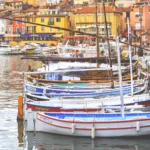
The harbour is the heart of Cassis: colourful façades, pointus (traditional fishing boats), café terraces and boats leaving for the calanques. Behind the quays, narrow streets lead to Place Baragnon, the Saint-Michel church and the town hall. The castle overlooking the bay is private property: admire it from the harbour or the beach. In the morning, before the day-trippers arrive, the village is much quieter.
The calanques of Port-Miou, Port-Pin and En-Vau
Three calanques can be reached on foot from Cassis. Port-Miou, the closest, is a long inlet occupied by a marina. Port-Pin, about an hour’s walk further on, has a small beach shaded by pines. En-Vau, the most famous, framed by high cliffs, involves a steep, rocky descent: wear good shoes, take plenty of water and allow at least half a day for the round trip. Note: according to the national park, work on a water reservoir disrupts access to the Port-Miou area until June 2027; walkers must detour via Port-Pin between the Col de la Gardiole or the Auberge de la Fontasse and Port-Miou, adding about an hour, and the cycle track between the Fontasse and Port-Miou is closed.
The calanques by boat or kayak
From the harbour, operators run tours of 3, 5, 8 or 9 calanques, lasting from about 45 minutes to 2 hours. It is the only way to see the calanques on days when the massifs are closed: according to the national park, boat visits are still allowed, but landing is strictly forbidden. Kayaks and paddleboards can be hired locally or on the beach; do not venture far when the mistral blows.
Cap Canaille and the Route des Crêtes
East of Cassis, Cap Canaille is among the highest sea cliffs in France. The Route des Crêtes runs along it to La Ciotat, with several viewpoints over the bay and the calanques. According to the national park, it is closed on red fire-risk days between 1 June and 30 September. The wind can be violent up there: keep away from the edge.
Beaches
The Grande Mer pebble beach is the main one, right next to the harbour. Le Bestouan, further west, is a small pebble beach popular with families, and L’Arène, below the village, is more secluded. Calanques such as Port-Pin and En-Vau offer natural coves with no facilities at all: bring everything and take your rubbish home.
The Cassis vineyards
Cassis is one of the oldest wine appellations in Provence, known above all for its white wines. About a dozen estates are spread over the slopes between the village and Cap Canaille; several open their cellars for tastings. A white Cassis traditionally goes with fish and bouillabaisse.
The market and local food
The market is held on Place Baragnon and the surrounding streets several mornings a week (ask the tourist office for the exact days). On the harbour, restaurants serve grilled fish, sea urchins in season and bouillabaisse. Navettes, dry biscuits flavoured with orange blossom, are sold in bakeries.
Trails to Marseille and La Ciotat
The GR 51-98 crosses the Calanques massif from Cassis to Marseille, with exposed sections for experienced hikers only. To the east, the Cap Canaille trails lead to La Ciotat. In summer, all these hikes depend on whether the massifs are open that day.
The calanques: access rules and booking
The Calanques National Park stretches from Marseille to La Ciotat. The rules below are published by the park on its official site (checked 26 October 2026); they can change, so check them before every outing. Park rules also apply on the Var island: see things to do on Porquerolles before spending the day there.
| Rule | What you need to know |
|---|---|
| Fire risk (1 June – 30 September) | Every day between 5 and 6 pm, the prefecture publishes the next day’s risk level, massif by massif (« Calanques, Cap Canaille and Grand Caunet »). On a red day: no land access, Route des Crêtes closed, boat visits allowed without landing. |
| Where to check | The official « Mes Calanques » app or the Bouches-du-Rhône prefecture’s fire-risk map. |
| Sugiton and Pierres Tombées (Marseille side) | Free reservation required in peak season. In 2026: 20 and 21 June, every day from 27 June to 30 August, 5-6 and 12-13 September. Bookings open three days ahead at 9 am; they are cancelled, without rebooking, if the massifs are closed. |
| Cassis calanques (Port-Miou, Port-Pin, En-Vau) | No reservation mentioned by the park; access depends on the massif being open in summer. Works at Port-Miou until June 2027. |
Checklist before an outing in the calanques
- Check after 6 pm the day before whether the massif is open (« Mes Calanques » app or the prefecture’s map)
- Book Sugiton if you go on the dates concerned
- Take at least 1.5 to 2 litres (50 to 70 fl oz) of water per person, a hat and sunscreen
- Walking shoes: the descents to En-Vau are slippery
- Set off early in the morning in summer
- No smoking, no fires, take your rubbish home
- Sugiton bookings are cancelled if the massifs close, with no rebooking
Itinerary ideas for Cassis
1 day in Cassis
- Morning: walk to Port-Pin (or En-Vau for strong walkers), setting off early
- Midday: picnic in the calanque or lunch on the harbour
- Afternoon: swim at the Grande Mer, then a stroll through the old village
- Late afternoon: sunset from the Route des Crêtes (if open)
3 days between Cassis, Marseille and La Ciotat
- Day 1: Cassis, the harbour, a calanque on foot
- Day 2: boat tour of the calanques, tasting at a wine estate, Route des Crêtes
- Day 3: Marseille (Vieux-Port, Le Panier, Notre-Dame-de-la-Garde) or La Ciotat and its beaches
To extend your stay towards Avignon, the Luberon or Arles, see our Provence guide; to continue east, our page on visiting the French Riviera.
Budget for a stay in Cassis
| Item (per person per day) | Tight budget | Comfort |
|---|---|---|
| Accommodation (sharing a double room) | roughly €45 to €70 (campsite, simple room) | roughly €110 to €200 |
| Meals | roughly €25 to €40 (picnics, set lunches) | roughly €50 to €90 |
| Local transport | roughly €5 to €15 (shuttle, parking) | roughly €15 to €25 |
| Activities (boat, kayak, tasting) | roughly €15 to €20 | roughly €25 to €50 |
| Total | roughly €90 to €140 | roughly €180 to €320 |
Getting around Cassis
- Train: Cassis station is on the Marseille-Toulon TER line, about 3 km (2 mi) from the centre; a shuttle or bus links it to the harbour. See our tips for travelling cheaply by train.
- Car: the centre is largely pedestrianised and car parks fill up early in season. Use the car parks at the edge of town and the shuttles when they run.
- On foot: the village is easy to explore on foot, and Port-Miou is about 30 minutes from the harbour.
- Boat: excursions to the calanques from the harbour, and seasonal links to La Ciotat in some years.
Where to stay in Cassis
The centre, around the harbour, is the most convenient: everything is within walking distance, but rooms are scarce and expensive in summer. The upper districts and the road to La Ciotat have hotels with parking and holiday rentals. On a tight budget, staying in Marseille, Aubagne or La Ciotat and coming by train is a good option. Book several months ahead for July-August and May weekends.
Entry requirements, health and safety
- US citizens: no visa for up to 90 days in the Schengen area, including France, for tourism or business; your passport should be valid at least three months beyond your stay, and you may be asked for proof of funds and a return ticket (U.S. Department of State, travel.state.gov, last updated August 11, 2025).
- UK citizens: no visa for up to 90 days in any 180-day period; your passport must have been issued less than 10 years before arrival and be valid at least 3 months after you leave the Schengen area. Under the EU Entry/Exit System (EES), fingerprints and a photo may be taken at your first entry (UK FCDO, GOV.UK, updated 22 October 2026).
- Health: UK travellers need a GHIC or valid EHIC for state healthcare; everyone should have travel insurance covering medical costs. Emergency numbers: 15 (medical), 17 (police), 18 (fire), 112 (European emergency number) (GOV.UK, travel.state.gov).
- Heat: the calanques trails have little shade; set off early and carry plenty of water.
- Wildfires: never light a fire or smoke in the massifs, and respect closures ordered by the prefecture; the UK FCDO points out that causing a wildfire in France, even by accident, is illegal.
- Cliffs: at Cap Canaille and above the calanques, stay on the trails, especially in strong wind.
- Sea: there are no lifeguards in the calanques; be careful jumping from rocks.
For hiking, kayaking or diving, check what your travel insurance covers.
Practical tips for Cassis
- Arrive early: before 9 am in summer, to park and walk while it is cool.
- Picnic: there are no refreshment stands in the Cassis calanques; bring everything.
- Respect the park: stay on marked trails, pick nothing, take your rubbish home.
- Internet: mobile coverage can be weak deep in the calanques; download the map and the « Mes Calanques » app before you set off, and check your home carrier’s roaming charges.
Frequently asked questions
What can you do in Cassis in one day?
Walk early to Port-Pin or En-Vau, have lunch on the harbour, swim at the Grande Mer and finish on the Route des Crêtes if it is open. Without walking, a boat tour shows several calanques in one to two hours.
Do you need to book to visit the Cassis calanques?
The national park does not mention any reservation for Port-Miou, Port-Pin and En-Vau. The free, compulsory reservation applies to Sugiton and Pierres Tombées, on the Marseille side, on certain summer dates. However, from 1 June to 30 September, access to the massifs can be banned depending on the fire risk.
How do you know if the calanques are open?
The prefecture publishes the next day’s risk level every day between 5 and 6 pm. Check the « Mes Calanques » app or the Bouches-du-Rhône prefecture’s map. On a red day, only boat visits are possible, without landing.
What is the best time to visit Cassis?
May, June and September: 23 to 28 °C (73 to 82 °F) in the afternoon according to Météo-France 1991-2020 normals at Marignane, sea warm enough to swim from June and fewer people than in July and August. March-April and October are perfect for hiking.
How long does it take to walk to En-Vau?
Allow about 1.5 to 2 hours’ walk from Port-Miou each way, with a steep final descent. With the works at Port-Miou until June 2027, some routes are longer: check the park’s detour map.
Can you visit Cassis without a car?
Yes: TER trains link Marseille with Cassis station, then a shuttle or bus goes down to the harbour. Once there, everything can be done on foot or by boat.
Our sources
- Calanques National Park (calanques-parcnational.fr): pages « Accès calanques risque incendie », « Réservation Sugiton: les dates du dispositif 2026 » and the news item on the Port-Miou reservoir works, checked 26 October 2026
- Météo-France: 1991-2020 normals, Marseille-Marignane station (Marseille Provence Airport), the nearest reference station (via the Wikipedia article « Marseille »)
- Entry requirements, health and safety checked on 26 October 2026: U.S. Department of State, France country information (last updated August 11, 2025) and UK FCDO, GOV.UK foreign travel advice for France (updated 22 October 2026).
- Our methodology
Updated October 2026.
For more ideas, see our France travel guide and our destinations in Europe.

