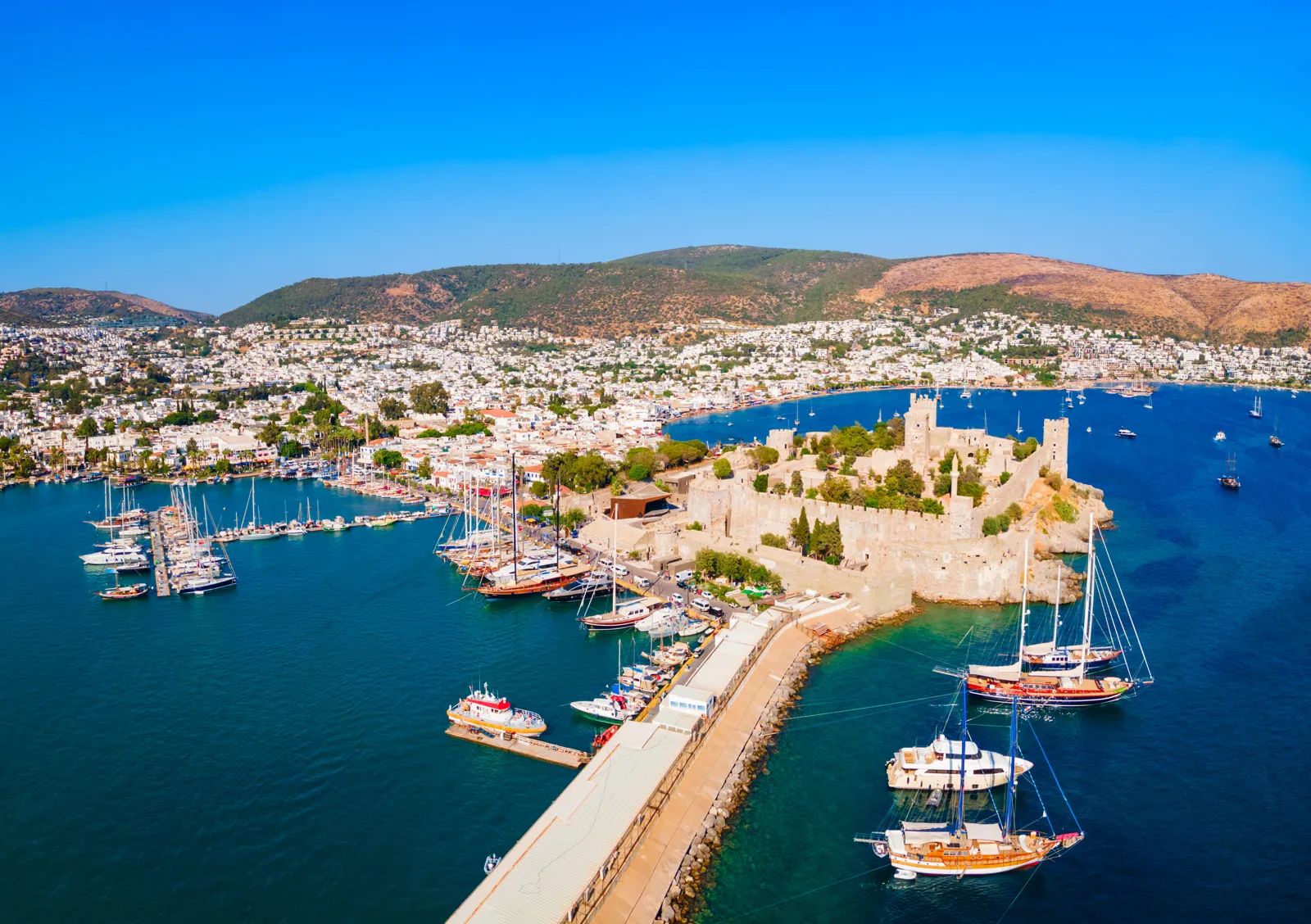
Sète, a fishing port in the Hérault set between the Mediterranean and the Étang de Thau lagoon, is worth visiting for its canals, colourful quays, Mont Saint-Clair and its seaside cemetery, and for its seafood: tielle, Bouzigues oysters, grilled fish. Things to do in Sète? One day is enough for the essentials; 2 to 3 days let you add the Lido beaches and a tour of the lagoon. The best months are May, June and September.
This guide covers the highlights, a walking route, tips for getting there without a car and the official climate, with a calculation that the usual guides do not offer: the number of rain days to expect over a week, month by month.

Our travel deals for Sète
Affiliate links: we earn a commission, at no extra cost to you.
 FlightsKiwi.comCompare flights and airline combinations to Sète.Compare flights

Sète at a glance
- Location Hérault (Occitanie), south-west of Montpellier
- Access railway station in the centre; nearest airport Montpellier · details
- Suggested length 1 day for the essentials2 to 3 days with the beaches and the Étang de Thau
- Market covered market hall open every morning7 am-2 pm according to the tourist office
- Main festival the Fête de la Saint-Louis, the highlight of summer(dates from the tourist office), with water jousting on the Canal Royal
- Specialities tielleMacaronade, bourride, oysters and mussels from the Étang de Thau
- Time zone UTC+1, UTC+2 in summer: 1 hour ahead of London, 6 hours ahead of New York
- Entry Schengen area: no visa for up to 90 days for US citizens (tourism or business) and UK citizens (in any 180-day period) · travel.state.gov · GOV.UK
- Electricity check voltage and plug types before you go · plugs
Things to do in Sète: the highlights
The Canal Royal and the quays
The Canal Royal runs through the centre: colourful façades, trawlers, café terraces. This is where the water jousting takes place, a Sète tradition in which two boats face off and each jouster tries to knock the other into the water. The Fête de la Saint-Louis is the highlight; tournaments are held all summer.
The market hall and the tielle
The central market hall, open in the morning, brings together fishmongers, oyster farmers and stalls selling tielles, the octopus-and-tomato pies typical of the town. The market is liveliest on Wednesday mornings and at weekends. It is the best place to taste the produce of the Étang de Thau.
Mont Saint-Clair
The hill overlooking the town (175 m / 574 ft) offers views of the sea on one side and the Étang de Thau on the other. You can climb it on foot via steep steps, by car or by bus. The Notre-Dame-de-la-Salette chapel and its terrace make a good viewpoint; the Pierres Blanches forest, on the slope, is good for walking.
The seaside cemetery and the Musée Paul Valéry
Clinging to the slope facing the sea, the Cimetière Marin holds the graves of the poet Paul Valéry and the theatre director Jean Vilar. Just above, the Musée Paul Valéry combines fine arts with rooms devoted to the poet; its terrace overlooks the sea. Nearby, the Théâtre de la Mer, in the former Fort Saint-Pierre, hosts concerts and shows in summer.
The Espace Georges Brassens
The singer, born in Sète, is buried in the Le Py cemetery, close to the space devoted to him: a museum with an audio tour of his life and songs.
The Quartier Haut and La Pointe Courte
The Quartier Haut, the cradle of fishermen of Italian origin, is a maze of sloping streets, with street-art murals on the MaCO (open-air museum) trail. At the other end of town, La Pointe Courte is a hamlet of fishermen’s huts on the lagoon that gave its title to Agnès Varda’s first film (1955).
The MIAM and the Musée de la Mer
The International Museum of Modest Arts (MIAM), on the quays, exhibits popular art and everyday objects. The Musée de la Mer tells the story of the port and devotes some of its rooms to jousting.
The Môle Saint-Louis and the lighthouse
At the end of the harbour, the Môle Saint-Louis breakwater stretches out into the sea to the lighthouse: a walk to take late in the day, with the town in the background.
The Lido beaches and the Corniche
To the south-west, the Corniche beach and then the Lido unroll several kilometres of sand between the sea and the lagoon, as far as Marseillan. You can get there by bus or by bike along the path beside the beach. Closer to the centre, the Crique de l’Anau is a small swimming spot below Mont Saint-Clair.
The Étang de Thau, Bouzigues and Balaruc
Opposite Sète, the Étang de Thau is covered with oyster tables. In Bouzigues, you can taste oysters and mussels facing the beds; Balaruc-les-Bains is a spa resort. Boat trips leave from the port of Sète to discover the shellfish farms.
Itinerary: one day in Sète on foot
- 9 am: central market hall, taste a tielle
- 10:30 am: the Canal Royal and the quays as far as the Môle Saint-Louis
- 12:30 pm: fish lunch on the quays
- 2:30 pm: seaside cemetery, Musée Paul Valéry and Théâtre de la Mer
- 4:30 pm: climb Mont Saint-Clair (on foot or by bus)
- Late afternoon: sunset from the Salette terrace or at La Pointe Courte
For a second day: the Lido beach in the morning, then a tour of the Étang de Thau via Bouzigues. Sète combines easily with Montpellier, linked by regional train, or with the lagoons of the Petite Camargue.
When to go to Sète
May, June and September are the most pleasant months: 21 to 25 °C (70 to 77 °F) in the afternoon, little rain, and a town less crowded than in August. July is the driest month (2 rain days on average according to Météo-France); it is also peak season. October is the wettest month (nearly 91 mm / 3.6 in), with Mediterranean storm episodes that can be violent: follow Météo-France weather warnings. Winter is mild but often windy.
| Month | High | Low | Rain | Rain days per 7 days | Sunset | Verdict |
|---|---|---|---|---|---|---|
| January | 10.8 °C (51 °F) | 5.3 °C (42 °F) | 51.4 mm (2.0 in) | 1.2 | 5:34 pm | ⚠️ Mild, windy, quiet |
| February | 11.6 °C (53 °F) | 5.5 °C (42 °F) | 51.8 mm (2.0 in) | 1.1 | 6:15 pm | ⚠️ Mild, windy, quiet |
| March | 14.6 °C (58 °F) | 7.9 °C (46 °F) | 39.7 mm (1.6 in) | 1.0 | 6:51 pm | ⚠️ Cool, peaceful town |
| April | 16.9 °C (62 °F) | 10.1 °C (50 °F) | 48.3 mm (1.9 in) | 1.3 | 8:27 pm | ✅ Pleasant for sightseeing |
| May | 20.6 °C (69 °F) | 13.8 °C (57 °F) | 42.3 mm (1.7 in) | 1.1 | 9:02 pm | ✅ Ideal, no crowds |
| June | 24.9 °C (77 °F) | 17.4 °C (63 °F) | 25.2 mm (1.0 in) | 0.8 | 9:27 pm | ✅ Ideal, swimming possible |
| July | 27.8 °C (82 °F) | 20.0 °C (68 °F) | 11.5 mm (0.5 in) | 0.5 | 9:23 pm | ⚠️ Hot, crowds |
| August | 27.4 °C (81 °F) | 19.9 °C (68 °F) | 26.4 mm (1.0 in) | 0.7 | 8:48 pm | ⚠️ Saint-Louis festival, crowds, high prices |
| September | 23.7 °C (75 °F) | 16.8 °C (62 °F) | 56.7 mm (2.2 in) | 0.9 | 7:56 pm | ✅ Warm sea, fewer people |
| October | 19.3 °C (67 °F) | 13.6 °C (56 °F) | 90.9 mm (3.6 in) | 1.3 | 7:02 pm | ⚠️ Heavy rain possible |
| November | 14.3 °C (58 °F) | 9.0 °C (48 °F) | 65.2 mm (2.6 in) | 1.2 | 5:20 pm | ⚠️ Cool, rainy |
| December | 11.4 °C (53 °F) | 6.2 °C (43 °F) | 51.3 mm (2.0 in) | 1.1 | 5:09 pm | ⚠️ Cool, quiet |
How to read the calculation: over a week in Sète, it rains on average less than one day in July, and a little over one day in October or April: rain falls in heavy but infrequent showers. To compare with other cities, see our ranking of the sunniest cities in France.
Budget for Sète
Accommodation prices rise markedly in July and August and during the Saint-Louis festival: compare rates when you book.
Getting there and getting around Sète
- By train: the station is a few minutes’ walk from the canals. TGV high-speed trains run to Paris-Gare-de-Lyon, and frequent regional TER trains serve Montpellier, Béziers and Narbonne.
- By air: the nearest airport is Montpellier, then train or car.
- By car: via the A9 motorway; parking is paying and difficult in the centre in summer. Leave the car on the outskirts.
- Locally: the whole centre can be done on foot; city buses for Mont Saint-Clair and the beaches; water shuttles in season.
- By bike: a greenway runs along the Lido towards Marseillan.
Where to stay in Sète
| Area | Best for | Strengths |
|---|---|---|
| Centre and canals | First visit, no car | Station, market hall, restaurants on foot |
| Quartier Haut | Village atmosphere | Lanes, views, relative calm |
| Mont Saint-Clair | Couples, views | Panorama over the sea and the lagoon; a car is useful |
| Corniche and Lido | Beach stays, families | Direct access to the sand |
Entry requirements, health and safety
- US citizens: no visa for up to 90 days in the Schengen area, including France, for tourism or business; your passport should be valid at least three months beyond your stay, and you may be asked for proof of funds and a return ticket (U.S. Department of State, travel.state.gov, last updated August 11, 2025).
- UK citizens: no visa for up to 90 days in any 180-day period; your passport must have been issued less than 10 years before arrival and be valid at least 3 months after you leave the Schengen area. Under the EU Entry/Exit System (EES), fingerprints and a photo may be taken at your first entry (UK FCDO, GOV.UK, updated 22 October 2026).
- Health: UK travellers need a GHIC or valid EHIC for state healthcare; everyone should have travel insurance covering medical costs. Emergency numbers: 15 (medical), 17 (police), 18 (fire), 112 (European emergency number) (GOV.UK, travel.state.gov).
- Swimming: the UK FCDO (GOV.UK, updated 22 October 2026) advises understanding the beach flag warning system and following it closely, as sea conditions can be dangerous even for strong swimmers.
Practical tips for Sète
- Jousting: the tournament calendar is published each summer; the stands along the Canal Royal fill up early for the Saint-Louis festival.
- Oysters: avoid gathering them yourself; buy them from producers or at the market hall.
- Wind: the tramontane can blow hard; on those days choose the lagoon or the town over the beach.
- Mediterranean storm episodes: in autumn, check Météo-France weather warnings before a boat trip or a hike.
Frequently asked questions
What to do in Sète in one day?
The market hall, the Canal Royal, the Môle Saint-Louis, the seaside cemetery and the Musée Paul Valéry, then Mont Saint-Clair late in the day. Everything can be done on foot, except the climb up the hill, which is possible by bus.
What day is the market in Sète?
The central market hall is open every morning (7 am-2 pm according to the tourist office). Wednesday mornings and weekends are the liveliest.
When is the Sète water jousting?
Tournaments are held all summer on the Canal Royal; the highlight is the Fête de la Saint-Louis. Check the year’s calendar with the tourist office.
Can you visit Sète without a car?
Yes: the station is close to the centre, the main sights can be done on foot and buses serve Mont Saint-Clair and the beaches.
What is the best time to go to Sète?
May, June and September, for mild weather and the sea, with fewer people than in July and August. October is the wettest month according to Météo-France.
Our sources
- Météo-France: 1981-2010 normals, Sète station, via the Wikipedia article « Sète »
- Destination de Voyage calculation: rain days over a week, sunset (NOAA solar algorithm)
- Archipel de Thau tourist office: « Les incontournables de Sète » page (market hall opening hours), consulted on 15 October 2026
- Rail links: Wikipedia article « Gare de Sète », consulted on 15 October 2026
- Entry requirements, health and safety checked on 26 October 2026: U.S. Department of State, France country information (last updated August 11, 2025) and UK FCDO, GOV.UK foreign travel advice for France (updated 22 October 2026).
- Our methodology
Updated October 2026.
To continue in the south, see our guides to Carcassonne and the Camargue, our France travel guide and our other destinations in Europe.