
Mexican food is far more than tacos and guacamole. Each region has its own dishes, chiles and drinks, from the moles of Oaxaca to the cochinita pibil of the Yucatán. This guide to Mexican food helps you know what to try, where to eat it and how to enjoy street food without spoiling your trip. To taste these dishes on the spot, see our guide to what to do in Oaxaca.

Our travel deals for Mexican food
Affiliate links: we earn a commission, at no extra cost to you.
 FlightsKiwi.comCompare flights and airline combinations to Mexican food.Compare flights
- eSIMAiraloData plan to install before you leave (eSIM-compatible phone).See plans


Mexican food at a glance
- Base of the cuisine corn, beans and chile, completed by tomato, squash, avocado, cacao and vanilla
- Heritage traditional Mexican cuisine has been on UNESCO’s Representative List of the Intangible Cultural Heritage of Humanity since 2010
- Regions not to miss Oaxaca (moles), Puebla, the Yucatán, Mexico City and Jalisco
- Street food tacos, quesadillas, tamales, elotes… everywhere, from morning to night
- Drinks aguas frescas, café de olla, hot chocolate, tequila, mezcal, pulque
- Food and water safety bottled or boiled water only, avoid ice, be careful with uncooked vegetables (UK FCDO and U.S. State Department advice)
What makes Mexican cuisine
The foundation of Mexican cuisine is ancient: corn, beans and chile. Corn is almost always nixtamalized, that is, cooked in limewater before being ground. This step, inherited from pre-Hispanic cultures, gives the dough (masa) for tortillas, tamales and many snacks. Corn tortillas accompany most meals, the way bread does elsewhere; in the north of the country, wheat tortillas (harina) are eaten more often.
Chiles are at the center of everything, fresh or dried. They are not only there to add heat: dried and toasted, like ancho, guajillo or pasilla, they bring smoky and fruity notes to sauces. The habanero, widely used in the Yucatán, is among the hottest.
A heritage recognized by UNESCO
In 2010, UNESCO inscribed “Traditional Mexican cuisine – ancestral, ongoing community culture, the Michoacán paradigm” on the Representative List of the Intangible Cultural Heritage of Humanity. It is the cuisine as a whole that is recognized, not a particular dish: contrary to a common belief, guacamole and tacos are not individually inscribed.
The UNESCO entry describes a complete cultural model, from growing crops to tasting. It cites in particular:
- the trio of corn, beans and chile as the basis of the food system;
- farming methods such as the milpa (crops grown together around corn) and the chinampa (an artificial growing island in a lake area, still visible in Xochimilco, south of Mexico City);
- the nixtamalization of corn and traditional utensils such as the grinding stone (metate) and the stone mortar (molcajete);
- the role of tortillas and tamales in Day of the Dead offerings;
- the collectives of traditional women cooks of the state of Michoacán, who carried the nomination.
Dishes to try, region by region
| Region | Dishes to try | Typical drink |
|---|---|---|
| Mexico City (CDMX) | Tacos al pastor, quesadillas, tlacoyos, tortas, esquites, churros | Pulque, atole |
| Oaxaca | Mole negro and other moles, tlayudas, quesillo, chapulines | Mezcal, hot chocolate |
| Puebla | Mole poblano, chiles en nogada, cemitas | Chocolate, aguas frescas |
| Yucatán and Quintana Roo | Cochinita pibil, sopa de lima, panuchos, salbutes, papadzules | Horchata, agua de chaya |
| Jalisco (Guadalajara) | Birria, torta ahogada, pozole | Tequila, tejuino |
| Michoacán | Carnitas, corundas, uchepos | Charanda, atole |
| Pacific coast and Baja California | Fish tacos, aguachile, ceviche | Beer, michelada |
| North (Monterrey, Sonora) | Carne asada, cabrito, wheat tortillas | Beer |
Mexico City and the center of the country
The capital is the best place for a first approach: it has cuisines from all over the country. The emblematic dish is the taco al pastor: pork marinated in chiles and achiote, cooked on a vertical spit (trompo), served on a small tortilla with pineapple, onion and cilantro. Also try tlacoyos, oval blue-corn cakes filled with beans or cheese, quesadillas (in Mexico City, they do not always contain cheese: specify con queso if you want it), tortas (sandwiches) and, in the evening, esquites, corn kernels served in a cup with mayonnaise, cheese, lime and chile.
Oaxaca, the land of moles
Oaxaca is often considered the country’s food capital. It is famous for its moles, slow-simmered sauces made from dried chiles, spices, seeds and sometimes chocolate. Mole negro, the best known, is dark and complex; there are also red, yellow and green moles. Other specialties: the tlayuda, a large crispy tortilla topped with bean paste, lard, cheese and grilled meat, quesillo, string cheese wound into a ball, and chapulines, grasshoppers toasted with lime and chile, sold in markets.
Puebla
Puebla claims mole poblano, a red-brown sauce of chile and chocolate most often served over turkey or chicken. It is also the city of chiles en nogada: a poblano chile stuffed with meat and fruit, covered in a walnut sauce and sprinkled with pomegranate seeds. Its colors (green, white, red) recall the flag; it is a seasonal dish, served mainly in late summer, around the September national holiday.
The Yucatán and the Riviera Maya
The cuisine of the peninsula, influenced by Maya culture, is different from the rest of the country. Cochinita pibil is pork marinated in achiote and bitter orange juice, slow-cooked in banana leaves; it is eaten in tacos or a torta, often in the morning. Sopa de lima is a chicken broth flavored with the local lime. On the Caribbean coast, fish and seafood dominate. Mérida is the best city to discover this cuisine; in the hotel zones of Cancún and Tulum, the offer is more international. To taste regional cooking without leaving the coast, a stay in Cancún can include a day in Mérida.
Jalisco and Guadalajara
In Jalisco, the birthplace of tequila and mariachi, try birria, meat (often goat or beef) stewed in a spicy broth, served as a soup or as tacos for dipping. The torta ahogada, a Guadalajara specialty, is a pork sandwich “drowned” in a tomato sauce and a chile sauce. Pozole, a soup of large corn kernels (cacahuazintle) and meat, comes in white, red or green versions depending on the region; it is garnished with radish, lettuce, oregano and lime.
The coasts and the north
On the Pacific coast, fish and seafood reign: battered fish tacos in Baja California, aguachile (raw shrimp “cooked” in lime and chile) in Sinaloa, ceviches almost everywhere. In the north, cattle country, people mostly eat grilled meat (carne asada), cabrito (kid goat) in Monterrey and wheat tortillas.
The must-tastes in Mexico
Ten food experiences presented in this guide, to place on your itinerary:
- A taco al pastor straight from the trompo, in the evening, at a taquería in Mexico City
- The chinampas of Xochimilco, south of Mexico City, one of the farming methods cited by UNESCO
- Mole negro and a tlayuda in Oaxaca, then a tasting at a mezcalería
- Chapulines, grasshoppers toasted with lime, in an Oaxaca market
- Chiles en nogada in Puebla, especially in late summer
- Cochinita pibil in the morning and sopa de lima in Mérida, in the Yucatán
- Birria and torta ahogada in Guadalajara, in Jalisco
- Fish tacos in Baja California and aguachile in Sinaloa, keeping food safety advice in mind
- A shoulder-to-shoulder meal at a covered-market fonda, or a comida corrida at lunchtime
- A pulque in a pulquería in the center of the country, or a hot chocolate whisked Oaxaca-style
Dishes you will find everywhere
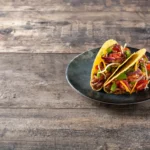
- Tacos: the basis of street food, with endless fillings (pastor, suadero, carnitas, barbacoa, fish…). You order them singly or by threes and add salsas, onion, cilantro and lime yourself.
- Tamales: corn dough filled (meat, chile, cheese, or a sweet version), steamed in a corn husk or banana leaf. Often sold in the morning, with an atole.
- Enchiladas: rolled, filled tortillas covered in chile sauce (green, red or mole).
- Chilaquiles: the classic breakfast: fried tortilla pieces simmered in a salsa, with cream, cheese, onion, and often an egg or chicken.
- Guacamole: mashed avocado, lime, onion, chile, cilantro, served as a starter or side.
- Desserts: churros (with hot chocolate), flan, tres leches (cake soaked in three milks), pan dulce (Mexican pastries, such as the concha).
By contrast, giant burritos, nachos covered in melted cheese or chili con carne belong mainly to Tex-Mex cooking, born in the United States.
Street food: how to go about it
Street food (comida callejera) is part of everyday life: taco stands, tamale carts in the morning, sellers of elotes (corn on the cob) and cut fruit in the afternoon, taquerías open late at night.
- Ordering: you state the filling and the number of tacos, then pay at the end by saying what you ate. Carry small bills and coins: many stands do not accept cards.
- Hours: tamales and atole in the morning; comida (the main meal) between about 2 p.m. and 5 p.m., often with an inexpensive set menu (comida corrida) in small restaurants; tacos al pastor mainly in the evening.
- Markets: every city has a covered market with counters (fondas) where you eat seated shoulder to shoulder. It is a good alternative to street stands.
- Choosing a stand: follow the locals. A stand with a line renews its ingredients constantly; also check whether the meat is cooked in front of you and served hot.
Mexican drinks
Non-alcoholic
- Aguas frescas: flavored waters served from a large jar: jamaica (hibiscus flower), horchata (rice, cinnamon), tamarindo, or fresh fruit. Prefer them in restaurants that use purified water (see food and water safety below).
- Café de olla: coffee brewed in a clay pot with cinnamon and unrefined cane sugar (piloncillo).
- Hot chocolate: cacao originated in Mesoamerica; in Oaxaca, chocolate is often ground with sugar and cinnamon and whisked in water or milk.
- Atole and champurrado: thick hot corn-based drinks, the second with chocolate, drunk at breakfast with tamales.
Alcoholic
- Tequila: distilled from blue agave, in Jalisco and a few neighboring states. It is often drunk neat, in a small glass, to be sipped rather than downed in one go.
- Mezcal: distilled from various agave varieties whose heart is cooked, traditionally in earth ovens, which gives it its smoky taste. Oaxaca is the main production region; mezcalerías let you taste several.
- Pulque: a fermented, milky drink made from agave sap, of pre-Hispanic origin. It is drunk in pulquerías, mainly in the center of the country.
- Beer and michelada: beer is widely drunk; the michelada combines it with lime, salt and hot sauces.
Drink alcohol in moderation. The UK FCDO (GOV.UK, updated 20 October 2026, read 26 October 2026) warns that criminals have drugged travelers’ drinks, so do not leave food and drinks unattended in bars and restaurants, and that there have been deaths and cases of serious illness caused by alcoholic drinks containing methanol in Mexico; it is not possible to identify methanol by taste or smell. Seek urgent medical attention if you or someone with you shows signs of methanol poisoning.
Food and water safety: official advice
Digestive problems are common among travelers. What the official sources we read say about Mexico:
- The UK FCDO (GOV.UK, updated 20 October 2026, read 26 October 2026): only drink boiled or bottled water and avoid ice in drinks; there have been reported cases of Cyclospora, a food and water bug, affecting travellers returning from Mexico.
- The U.S. Department of State (travel.state.gov, last updated August 11, 2025, read 26 October 2026): tap water in many areas is not safe to drink; bottled water is safe and should be requested at restaurants and hotels; you may want to request no ice in your drinks since it may be made from tap water; uncooked vegetables can make you sick.
In practice, this calls for caution with ceviches, aguachile, raw seafood, salads and pre-cut fruit sold on the street. Cooked dishes served piping hot, such as tacos straight off the griddle or pozole, carry less risk. For tap water, do not drink it and use bottled water.
For vaccines and other health precautions for Mexico (for example hepatitis A and typhoid, which spread through food and water), check the CDC’s Travelers’ Health pages (US) or NHS TravelHealthPro (UK), and talk to your doctor or a travel clinic before departure.
Where to eat according to your itinerary
To build your itinerary, see our Mexico travel guide. The calendar matters too: chiles en nogada are eaten mainly in August-September, and the Day of the Dead, in early November, comes with specific breads and dishes. To choose your dates according to the climate, see when to go to Mexico.
Who is it for?
Our verdicts by traveler profile, based on the places, conditions and budget ranges presented in this guide:
- Small budget: ideal: single tacos, morning tamales, comida corrida in small restaurants and market counters let you eat well for little. Carry small bills, as many stands do not accept cards.
- Families: yes, gently: chile is often served separately in salsas, and you can ask sin chile. Favor cooked dishes served piping hot, and bottled water.
- Curious food lovers: excellent: moles of Oaxaca, chapulines, pulquerías, mezcalerías, regional cuisines very different from one state to the next.
- Cautious travelers: yes, by following the official advice: bottled or boiled water, no ice, careful with uncooked vegetables, cooked food served hot. Ceviches and aguachile call for more caution.
- Spirits lovers: yes: tequila in Jalisco, mezcal in Oaxaca, pulque in the center, to be enjoyed in moderation.
Further reading
To place the specialties on your itinerary, our Mexico travel guide presents the regions, and the best time to go to Mexico helps you choose your dates according to the climate. Chiles en nogada are eaten mainly in late summer: our page on going to Mexico in August details the weather at that season. For Maya cuisine, see our guide to the Yucatán and, if you are staying on the coast, the one on Cancún.
Frequently asked questions
What is the most typical dish in Mexico?
There is not just one: Mexican cuisine is very regional. Tacos are the most widespread dish, mole (Oaxaca, Puebla) is often presented as the most emblematic, and cochinita pibil is the great specialty of the Yucatán.
Is Mexican cuisine on the UNESCO heritage list?
Yes. Since 2010, “Traditional Mexican cuisine – ancestral, ongoing community culture, the Michoacán paradigm” has been on the Representative List of the Intangible Cultural Heritage of Humanity. It is traditional cuisine as a whole that is inscribed, not a particular dish.
Is it safe to eat street food in Mexico?
Street food is part of the trip, but follow the official advice: bottled or boiled water, no ice, be careful with uncooked vegetables. Choose busy stands where the food is cooked in front of you and served hot.
Can you drink tap water in Mexico?
No. The UK FCDO says to drink only boiled or bottled water and avoid ice in drinks, and the U.S. State Department says tap water in many areas is not safe to drink.
Is Mexican food very spicy?
The dishes themselves are not always: chile is often served separately, in salsas. Taste them before helping yourself and ask for sin chile or que no pique if you prefer to avoid the heat.
What is the difference between tequila and mezcal?
Both are agave spirits. Tequila is made from blue agave, mainly in Jalisco. Mezcal can use different agave varieties whose heart is traditionally cooked in earth ovens, hence its smoky taste; Oaxaca is the main production region.
What typical Mexican dishes should I try?
Everywhere: tacos, tamales, enchiladas, chilaquiles at breakfast and guacamole. By region: the moles of Oaxaca, the cochinita pibil of the Yucatán, and the specialties of Puebla and Jalisco detailed above. To plan your food itinerary, see our guide to Mexico and when to go to Mexico; the Tex-Mex version is found in Texas.
Our sources
- UNESCO, Intangible Cultural Heritage: entry “Traditional Mexican cuisine – ancestral, ongoing community culture, the Michoacán paradigm” (inscribed 2010, decision 5.COM 6.30), consulted on ich.unesco.org.
- Food, water and drink safety read on 26 October 2026: UK FCDO, foreign travel advice for Mexico (GOV.UK, updated 20 October 2026), and U.S. Department of State, Mexico country information (travel.state.gov, last updated August 11, 2025).
- Our methodology
Updated October 2026.