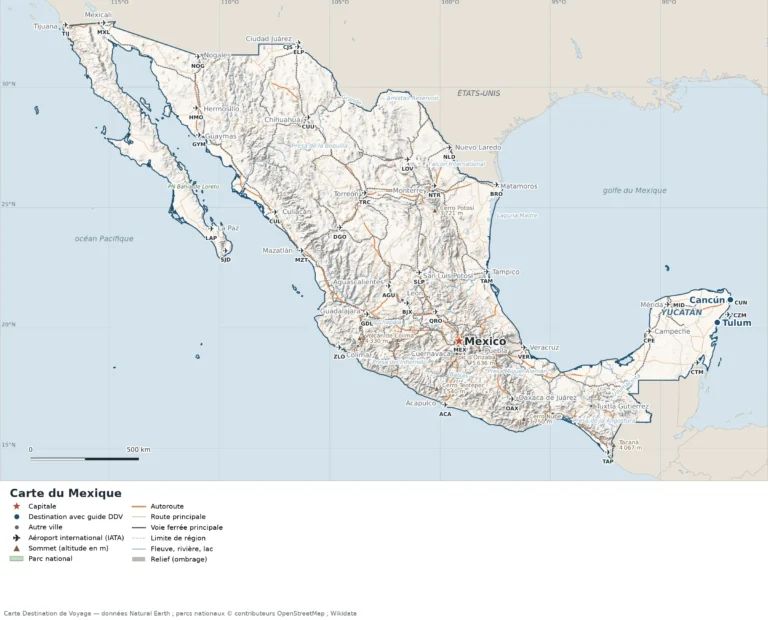
A trip to the Yucatán combines the great Maya sites (Chichén Itzá, Uxmal, Ek Balam, Calakmul), the colonial cities of Mérida, Valladolid and Campeche, hundreds of cenotes and two very different coasts: the Caribbean Sea to the east and the Gulf of Mexico to the west. The peninsula spans three states, Yucatán, Campeche and Quintana Roo. This Yucatán travel guide helps you choose what to do in the Yucatán, which itinerary to follow, what budget to plan and how to get around.

Our travel deals for Yucatán
Affiliate links: we earn a commission, at no extra cost to you.
 FlightsKiwi.comCompare flights and airline combinations to Yucatán.Compare flights
- eSIMAiraloData plan to install before you leave (eSIM-compatible phone).See plans


Yucatán at a glance
- Location peninsula in southeastern Mexico(states of Yucatán, Campeche and Quintana Roo); main inland city: Mérida
- Language Spanish; Yucatec Maya is also spoken
- Currency Mexican peso (MXN) · currencies
- Time zone Mérida and Campeche UTC−6, Quintana Roo (Cancún, Tulum) UTC−5, no daylight saving · detailsLocal time now: –:–
- Airports Cancún (CUN), the main international gateway; Mérida (MID)Check current routes with the airlines
- Entry US and UK: no visa for tourism; length of stay set on arrival; entry tax in Quintana Roo · travel.state.gov · GOV.UK
- Electricity check voltage and plug types before you leave · plugs
- Budget see our budget section
When to go to the Yucatán
✅ Best months: January, February, March, November, December
❌ Period to avoid: September
The best time is December to March: 30 to 33 °C (86 to 91 °F) in the afternoon in Mérida and very little rain, according to the normals of the Servicio Meteorológico Nacional. April and May are very hot inland (36 °C (97 °F) in May). From June to October, thunderstorms are frequent, and hurricane season runs from June to November (UK FCDO). For the month-by-month climate, regions and events, see our page on when to go to the Yucatán.
Things to do in the Yucatán: the highlights
Mérida
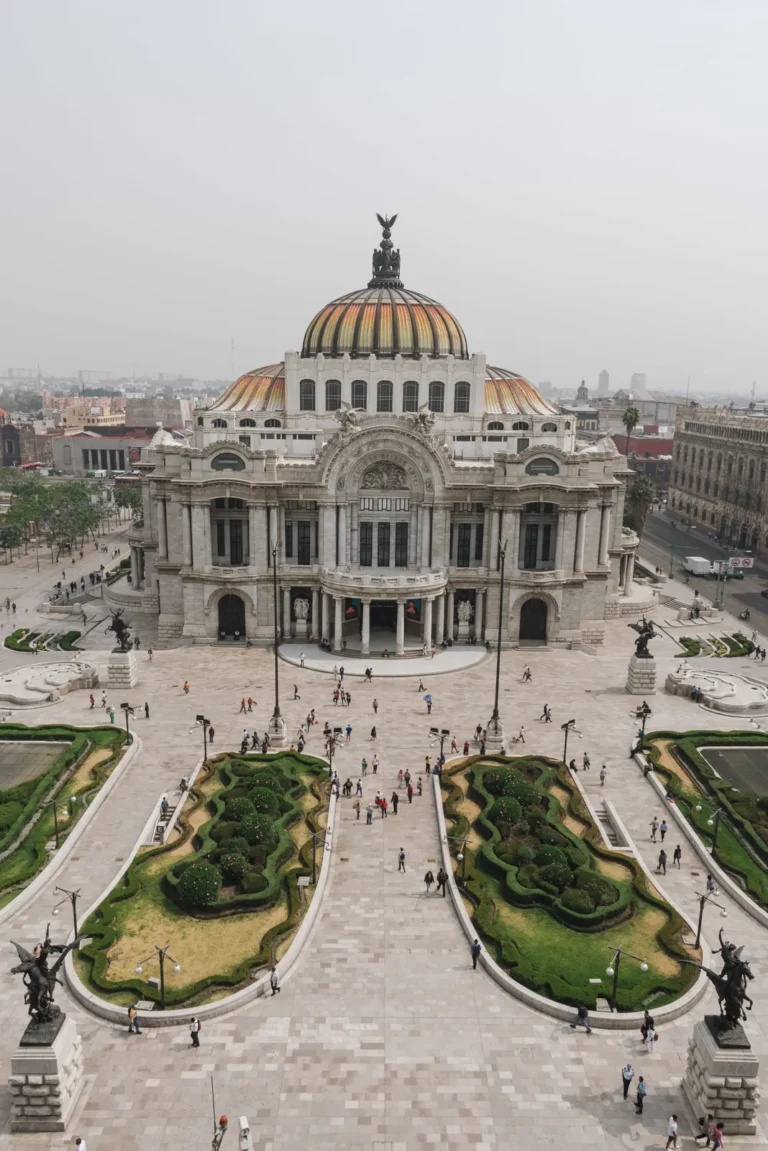
The capital of Yucatán state is the ideal base for the interior. Around the Plaza Grande stand the cathedral, the Casa de Montejo and the Government Palace with its murals. Paseo de Montejo is lined with mansions from the henequen boom. The Gran Museo del Mundo Maya presents Maya history and culture. In the evening, the city regularly puts on free shows in the center.
Chichén Itzá
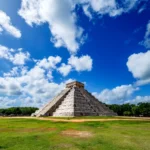
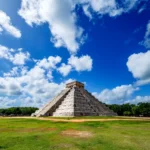
Mexico’s most visited Maya site, a UNESCO World Heritage Site, with the Kukulcán pyramid, the Great Ball Court, the Temple of the Warriors and the Sacred Cenote. Arrive at opening time to avoid the heat and the groups coming from Cancún. The site is about 2 hours from Mérida and 45 minutes from Valladolid. See our full guide to visiting Chichén Itzá.
Uxmal and the Puuc Route
South of Mérida, Uxmal stands out for the Pyramid of the Magician, with its rounded corners, and the Nunnery Quadrangle, with its carved façades. The Puuc Route then links several smaller sites in the same style, Kabah, Sayil, Xlapak and Labná, as well as the Loltún caves. A car is useful for this circuit.
Valladolid and Ek Balam
A small colonial town with colorful façades, Valladolid is the best base for Chichén Itzá. Cenote Zací is right in town, and the Suytun, Xkeken and Samula cenotes are a few kilometers away. To the north, Ek Balam preserves remarkable stucco decoration on its great acropolis.
Izamal, the yellow city
Between Mérida and Valladolid, Izamal is known for its yellow-painted façades and its large Franciscan convent built on top of an ancient pyramid. Several Maya pyramids, including Kinich Kak Moo, can be visited in the middle of town.
The cenotes of Cuzamá and Homún
Southeast of Mérida, the area around Cuzamá and Homún has dozens of cenotes, many of them in caves. Some are reached by « truck », a horse-drawn cart running on old rails. No sunscreen before swimming, and a life jacket is recommended.
Celestún and Río Lagartos
These two biosphere reserves, in the west and north of the peninsula, protect mangroves and lagoons that are home to pink flamingos. You can see them on boat trips with local guides who keep their distance from the birds. Near Río Lagartos, the Las Coloradas salt flats are known for their pink water.
Campeche and Calakmul
A fortified city on the Gulf, Campeche has kept its ramparts and a colorful historic center listed by UNESCO. Farther south, Calakmul is a huge Maya city deep in a forest reserve, where you can climb tall pyramids and hear howler monkeys. The site is isolated: plan a night in the area.
Progreso, Sisal and the Gulf coast
About 40 minutes north of Mérida, Progreso is the city’s local beach, with a long pier and a seafront that gets busy at weekends. Farther west, Sisal, a former henequen port, is a quiet fishing village. The Gulf water is greener and less clear than in the Caribbean, but the coast is calm, lightly developed and less exposed to sargassum.
The Caribbean coast: Tulum, Bacalar, Holbox
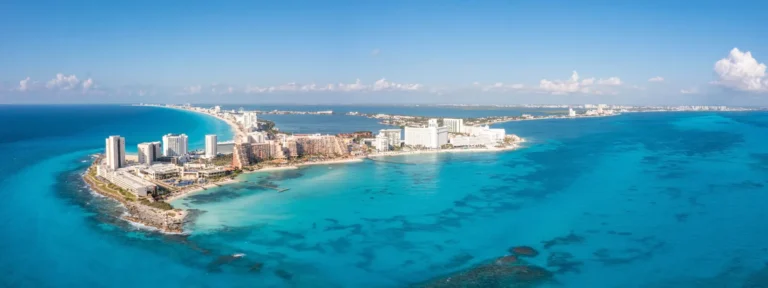
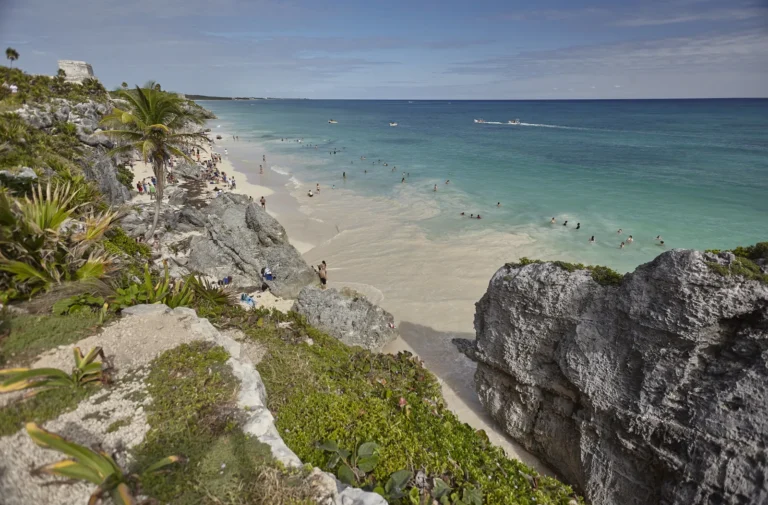
To the east, the Quintana Roo coast brings together the beaches of the Riviera Maya, the seaside ruins of Tulum, Bacalar Lagoon with its shades of blue and car-free Holbox Island. Cancún, with its airport, is the gateway: see our guide to Cancún and the surrounding area.
Itineraries in the Yucatán
- 10 days: Cancún (1 night), Valladolid (2 nights, Chichén Itzá and Ek Balam), Mérida (3 nights, Izamal, Uxmal, the Cuzamá cenotes), returning via Tulum (3 nights) and Cancún.
- 2 weeks: Cancún, Holbox (2 nights), Valladolid (2 nights), Mérida (3 nights with Celestún), Uxmal and the Puuc Route (1 night), Campeche (1 night), Calakmul (1 night), Bacalar (2 nights), Tulum (2 nights).
- 3 weeks: the same route, plus Palenque in Chiapas or an extension to Belize or Guatemala.
To go further: our guides to travel in Belize and travel in Guatemala, the peninsula’s neighbors, and our tips for a successful road trip.
Budget for a trip to the Yucatán
The interior (Mérida, Valladolid, Campeche) is much cheaper than the Caribbean coast. Rough amounts per person per day, excluding flights:
| Item | Budget | Comfort |
|---|---|---|
| Accommodation (based on a shared double room) | roughly MXN 300 to 750 | roughly MXN 1,250 to 2,900 |
| Meals | roughly MXN 200 to 400 | roughly MXN 650 to 1,250 |
| Transportation (ADO buses, colectivos) | roughly MXN 200 to 400 | roughly MXN 550 to 950 (car rental) |
| Sites and activities | roughly MXN 300 to 550 | roughly MXN 550 to 1,050 |
| Total per day | roughly MXN 1,050 to 1,900 | roughly MXN 2,700 to 5,300 |
To save money: stay in central Mérida and Valladolid, eat at markets and loncherías, take ADO buses between towns, and travel in May or November.
Who is the Yucatán for?
Our verdicts by traveler profile, based on the places, conditions and budget ranges in this guide:
- Culture: ideal: Chichén Itzá, Uxmal, Ek Balam and Calakmul, plus the colonial cities of Mérida, Valladolid and Campeche, whose historic center is a UNESCO site.
- Nature and adventure: a very good choice: the cave cenotes of Cuzamá and Homún, the flamingos of Celestún and Río Lagartos, the pyramids of Calakmul in a forest reserve. A car makes the Puuc Route and Calakmul easier.
- Budget travelers: yes, inland: allow roughly MXN 1,050 to 1,900 per person per day, staying in central Mérida and Valladolid, eating at markets and taking ADO buses. The Caribbean coast is much more expensive.
- Couples: yes: colonial houses with patios in Mérida, restored haciendas around Mérida and Uxmal, Bacalar Lagoon and car-free Holbox.
- Families: possible with a few precautions: life jackets in the cenotes, site visits at opening time because of the heat, calm Gulf beaches at Progreso and Sisal. Avoid April–May, very hot inland.
- Beach: the Caribbean coast (Tulum, Bacalar, Holbox) is the answer; the Gulf coast is quieter and less exposed to sargassum, but its water is greener. For a mainly beach-focused stay, the Cancún area is better suited.
Getting around the Yucatán
- ADO buses: reliable and air-conditioned, they link Cancún, Valladolid, Mérida, Campeche, Tulum and Bacalar, as well as Chichén Itzá. The UK FCDO notes that first-class buses on toll roads have fewer incidents than second- and third-class services.
- Colectivos: cheap shared minibuses for villages, cenotes and short trips.
- Tren Maya: the tourist train loops around the peninsula (Cancún, Valladolid, Mérida, Campeche, Bacalar, Tulum and more). Some stations are far from town centers: check timetables and transfers.
- Car: the most flexible option for the Puuc Route, the cenotes and Calakmul. Roads are in good condition; watch out for « topes » (speed bumps). The UK FCDO recommends toll roads (« cuotas ») whenever possible, and the U.S. Department of State advises against traveling between cities after dark.
- Ferries: to Holbox (from Chiquilá), Isla Mujeres and Cozumel.
Where to stay in the Yucatán
Most travelers change base every two or three days. In Mérida, stay in the historic center or near Paseo de Montejo, often in colonial houses with a patio and pool. In Valladolid, the center lets you do everything on foot. For the experience, several restored haciendas around Mérida and Uxmal have become hotels. On the coast, Tulum, Bacalar and Holbox mostly offer small, more expensive hotels.
Entry requirements, health and safety
- US citizens: according to the U.S. Department of State (travel.state.gov, last updated August 11, 2025), you need a passport book to fly to Mexico (a passport card is not accepted for air travel). Mexican immigration decides on arrival how long you may stay, and you can download your digital entry record (FMMD) from the National Migration Institute (INM).
- UK citizens: according to the UK FCDO (GOV.UK, updated 20 October 2026), you do not need a visa to visit as a tourist; your passport is stamped with the number of days you may stay and must be valid for the duration of your stay. Border officers may ask for a return or onward ticket, proof of accommodation and proof of funds. If you transit through the USA, you need an ESTA or a visa.
- Quintana Roo entry tax: if you visit Quintana Roo (Cancún, Tulum, Bacalar and more), you must pay an entry tax online before or during your stay and show proof of payment at the airport before leaving (GOV.UK). Keep your passport and proof of entry with you: the authorities do not accept copies or photos (GOV.UK).
- Health: the UK FCDO lists Zika, chikungunya and dengue among the health risks in Mexico: use insect repellent. Only drink boiled or bottled water (GOV.UK). Mexican health providers usually require payment before treatment (travel.state.gov): insurance covering medical costs and evacuation is essential.
- Safety: the U.S. Department of State rates Mexico Level 2, « Exercise increased caution », noting that conditions vary widely from state to state (travel advisory updated May 28, 2026). On the Caribbean coast, the UK FCDO (GOV.UK, updated 20 October 2026) reports clashes between rival gangs in Cancún’s tourist areas and advises being very cautious after dark in downtown Cancún, Tulum and Playa del Carmen. Some police officers have extorted money from tourists: do not hand over money or your passport, and ask for a copy of the fine (GOV.UK). Stay away from drugs of any kind.
- Roads: driving standards differ from those at home, roads can have potholes and many drivers have no insurance (GOV.UK): drive carefully and take out suitable insurance.
- Hurricanes: from June to November (GOV.UK), follow weather bulletins and the instructions of the authorities. Emergency number: 911.
To choose the right cover, read our travel insurance guide.
Practical tips for the Yucatán
- Money: keep pesos in cash for cenotes, colectivos and small restaurants; withdraw from bank ATMs and decline the conversion into your home currency.
- Internet: good coverage in towns, weak around Calakmul; a local eSIM is useful for navigation.
- Heat: visit the sites at opening time, with a hat and water; cenotes are perfect for the afternoon.
- Etiquette: a few words of Spanish are appreciated; dress modestly in churches.
- Food: cochinita pibil, sopa de lima, papadzules, poc chuc, marquesitas; see our page on Mexican food.
Read also
To set your dates, see the best time to visit the Yucatán, with the month-by-month climate in Mérida, and compare with when to go to Mexico if you continue to the rest of the country. Before booking a flight, check the time difference in Mexico. Planning a summer trip? Our page on Mexico in August explains what to know about the rainy and hurricane season.
Frequently asked questions
How many days do you need for the Yucatán?
Allow 10 days for Mérida, Valladolid, Chichén Itzá, Uxmal and a few days on the Caribbean coast, and 2 to 3 weeks to add Campeche, Calakmul, Bacalar and Holbox.
Do you need to rent a car in the Yucatán?
It is not essential: ADO buses, colectivos and the Tren Maya link the towns. A car is very practical for the Puuc Route, the Cuzamá cenotes and Calakmul.
Is the Yucatán safe?
The U.S. Department of State rates Mexico as a whole Level 2 (exercise increased caution), with conditions varying from state to state. The main points to watch are nightlife in Cancún, Playa del Carmen and Tulum, where the UK FCDO advises great caution after dark, petty theft and road safety.
What is the difference between the Yucatán and the Riviera Maya?
« Yucatán » refers both to the peninsula and to one of its three states, around Mérida. The Riviera Maya is the stretch of Caribbean coast between Cancún and Tulum, in the state of Quintana Roo.
What is the best base for visiting Chichén Itzá?
Valladolid, about 45 minutes away, lets you arrive at opening time, before the heat and the groups. Mérida is about 2 hours away.
Our sources
- Entry, health and safety information read on 26 October 2026: U.S. Department of State, Mexico country information (travel.state.gov, last updated August 11, 2025) and Mexico travel advisory (updated May 28, 2026); UK FCDO, foreign travel advice for Mexico (GOV.UK, updated 20 October 2026)
- Climate data: 1991–2020 climatological normals of the Servicio Meteorológico Nacional (SMN, Conagua), Mérida station 31097
- Budget conversions: European Central Bank euro reference rates of 23 October 2026
- Our methodology
Updated October 2026.
To continue: our Mexico travel guide, the page on when to go to Mexico, our ideas for where to go in January and all our destinations in Latin America.