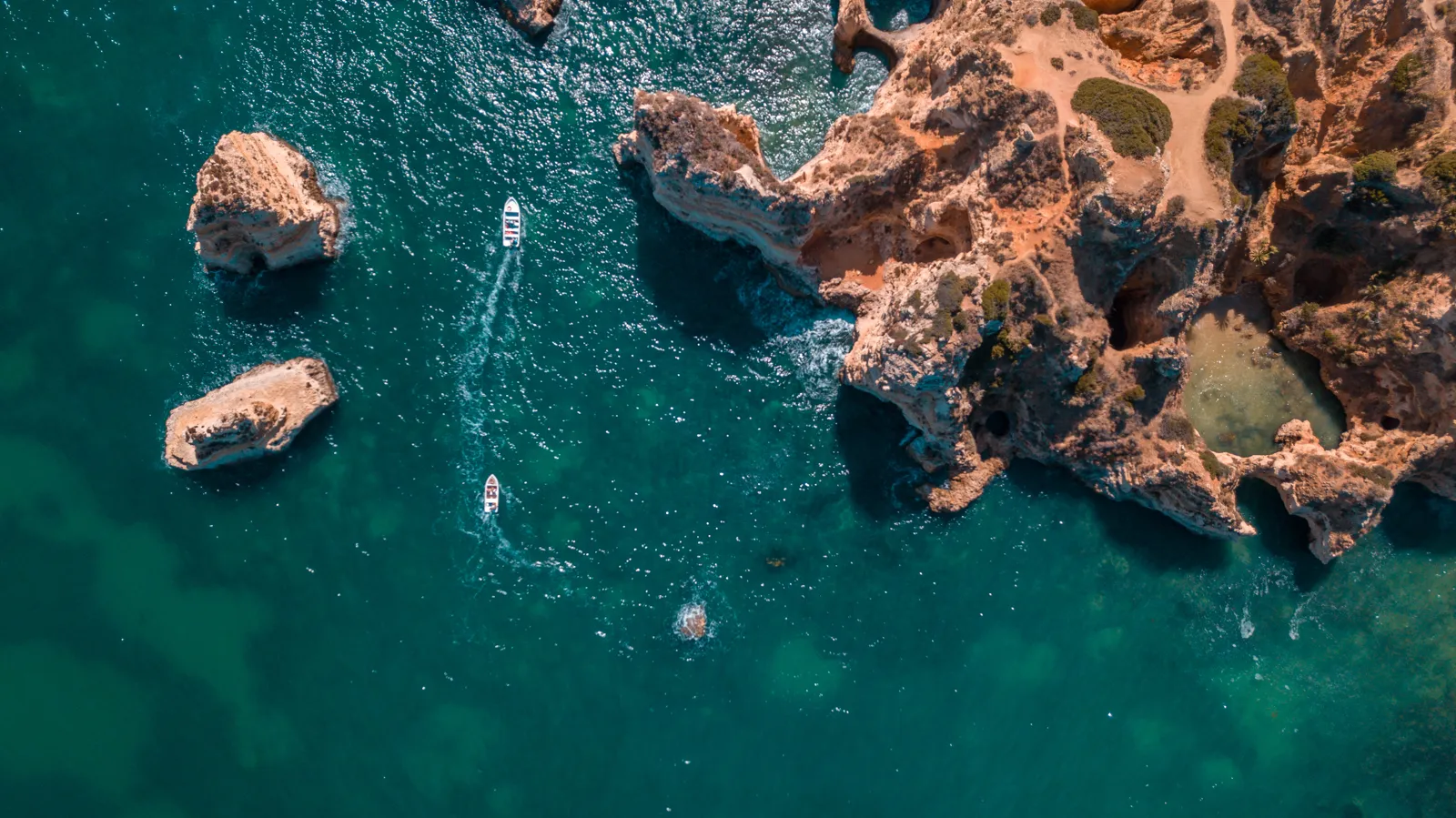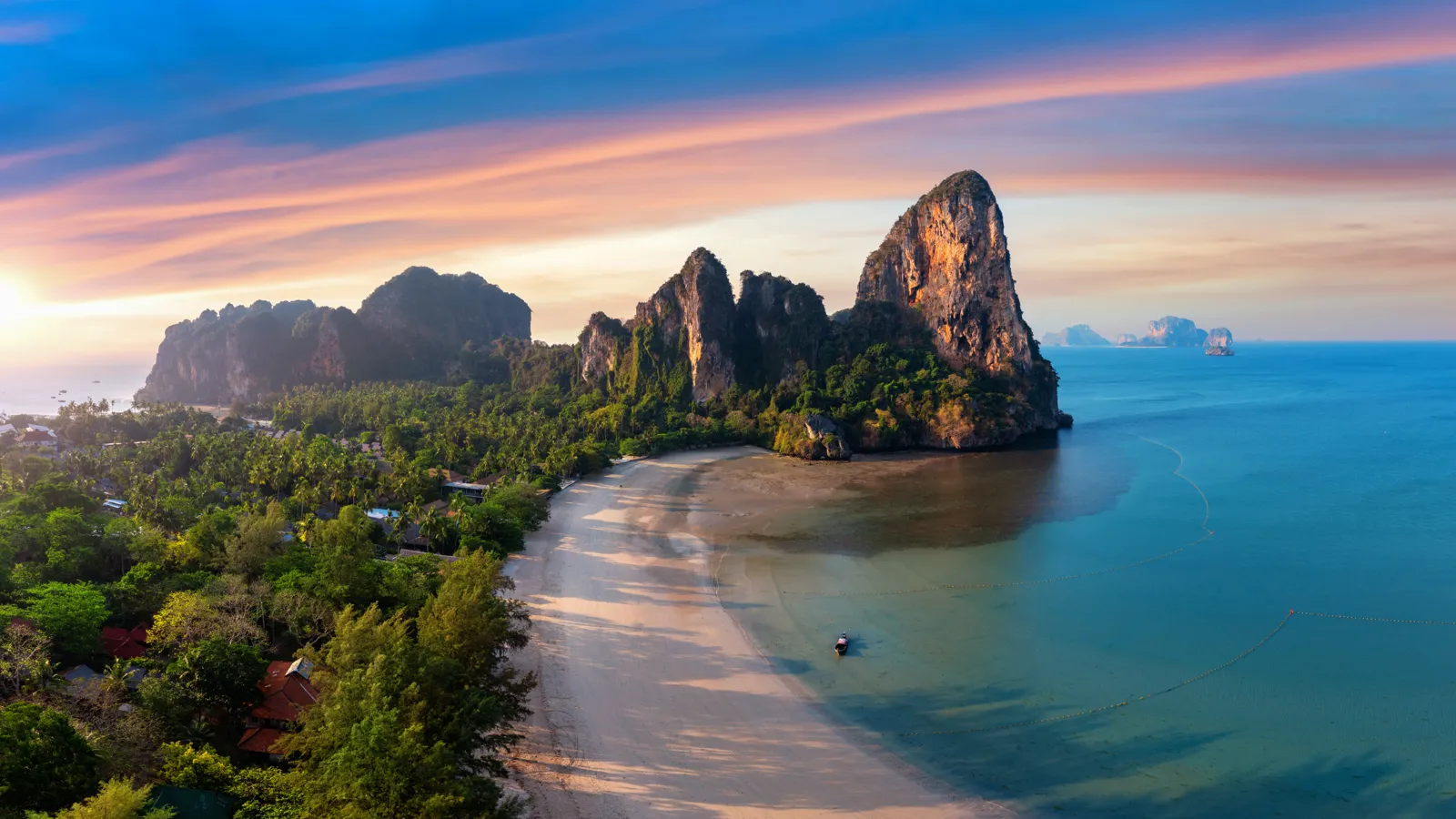
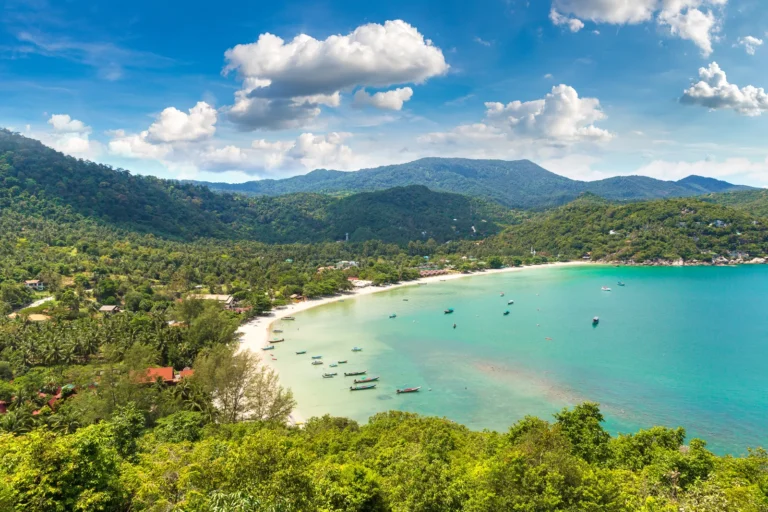
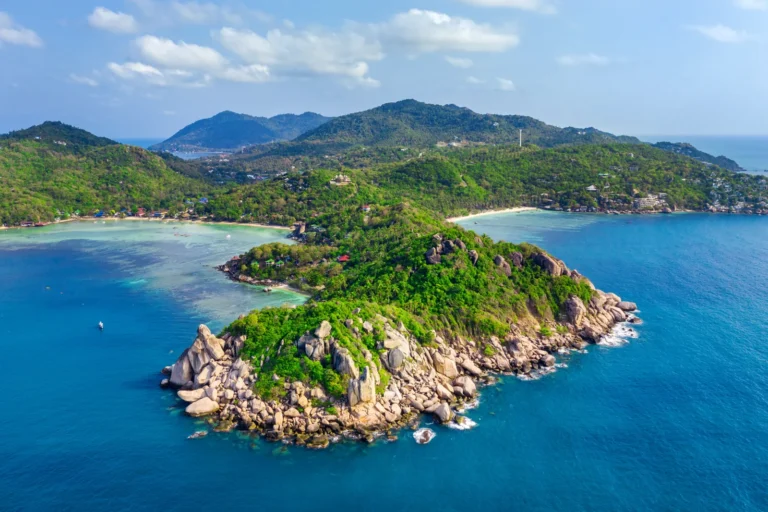
What is there to do on Koh Samui? Thailand’s second-largest island by area, in the Gulf of Thailand, Koh Samui combines coconut-fringed sandy beaches, temples visible from the coast, a jungle-covered interior with waterfalls, and easy access to Ang Thong Marine Park and the neighbouring islands of Koh Phangan and Koh Tao. Better equipped than its neighbours, it suits families and couples alike. This Koh Samui travel guide helps you choose what to see, where to stay and how much to budget.
Koh Samui at a glance
- Province Surat Thani (southern Thailand), Gulf of Thailand
- Language Thai; English is widely used in tourism
- Currency Thai baht (THB) · currencies
- Time zone UTC+7, no daylight saving · detailsLocal time now: –:–
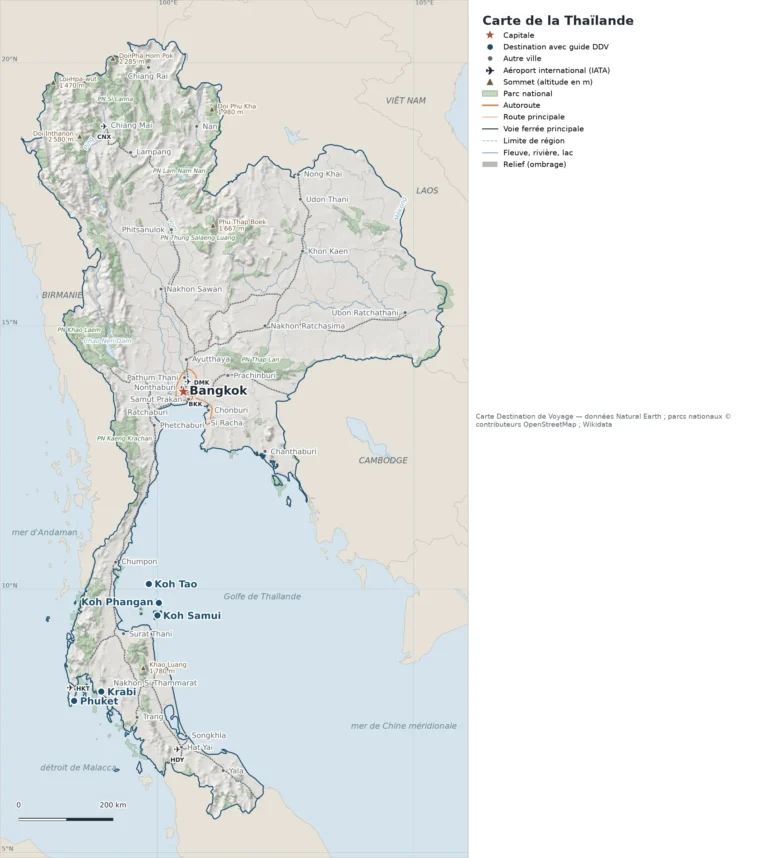
- Airports Samui Airport (USM)Most international travellers connect via Bangkok Suvarnabhumi; alternatively, fly to Surat Thani and take the ferry
- Entry US and UK: visa-exempt up to 30 days per entry, tourism only, since 15 September 2026; TDAC arrival card required; passport valid 6 months · tatnews.org · travel.state.gov · GOV.UK
- Electricity 220 V, type A, B, C and O plugs; US plugs usually fit, UK travellers need an adapter · plugs
- Budget see our budget section
When to go to Koh Samui
✅ Best months: February, March, April, may, June, July, August, September
❌ Period to avoid: November
Koh Samui is at its best from February to August: according to Thai Meteorological Department normals, it gets 64 to 134 mm (2.5 to 5.3 in) of rain a month, compared with 445 mm (17.5 in) in November, the heart of the Gulf’s rainy season (October to December). It is the opposite of Phuket: in July and August, Samui is dry while the Andaman coast is in the monsoon. All the figures are on our best time to visit Koh Samui page.
Things to do on Koh Samui: the highlights
Big Buddha and Wat Plai Laem
In the northeast, the Big Buddha (Wat Phra Yai) is a seated golden statue on an islet linked to the shore, near the airport. Close by, Wat Plai Laem brings together a many-armed statue of Guanyin and colourful pavilions on the edge of a lake. Cover your shoulders and knees and take off your shoes to enter the shrines.
Chaweng and Lamai
On the east coast, Chaweng is the island’s longest and liveliest beach, with restaurants, bars and hotels in every category. Further south, Lamai is a little quieter. At its southern tip, the suggestively shaped Hin Ta and Hin Yai rocks draw plenty of visitors. These two beaches are the most exposed to swell at the end of the year.
Bophut and Fisherman’s Village
On the north coast, the old fishing village of Bophut has kept its wooden houses, now converted into shops and restaurants. Its night market, held on certain evenings of the week, is one of the busiest on the island: check the days locally. The sheltered beach suits families.
Maenam and the north coast
Maenam, Bang Po and the nearby beaches are quieter, with more affordable accommodation and views of Koh Phangan. Many boats to the neighbouring islands also leave from the north coast.
Na Muang waterfalls and the Secret Buddha Garden
Inland, the Na Muang 1 and 2 waterfalls are the best known; they are more impressive in the rainy season, and the rocks are slippery. Up in the hills, the Secret Buddha Garden (Magic Garden), created by a local farmer, displays statues in the jungle; the access track is steep, so take a 4×4 or join a tour.
Ang Thong National Marine Park
This archipelago of around forty limestone islands is visited on a day trip by boat from Samui: kayaking, snorkelling, a climb to a viewpoint and the inland lagoon of Ko Mae Ko. Trips are often cancelled from October to December when the sea is rough. A national park entrance fee is usually added to the price of the tour.
The south and west: villages and sunsets
The less developed south and west still have fishing villages such as Hua Thanon, quieter temples and west-facing beaches (Lipa Noi, Taling Ngam). Nathon, on the west coast, is the island’s main town and the port for several ferries.
Wat Khunaram and the southern temples
On the road between Lamai and Na Muang, Wat Khunaram keeps in a glass case the mummified body of a revered monk who died while meditating in the 20th century. Further south, the Laem Sor pagoda, by the water, is far less visited than the northern temples. These visits are easy to combine with the waterfalls in a single day.
Markets, food and muay thai
Night markets are the best place to taste southern Thai food, often spicier than Bangkok’s: yellow curry, grilled fish, papaya salad, fresh fruit. Besides Fisherman’s Village, Lamai and Chaweng have their own markets, on days that vary: ask at your accommodation. Muay thai (Thai boxing) fights are held several evenings a week at the stadiums in Chaweng and Lamai; beginner classes are also offered at many training camps on the island.
Day trips to Koh Phangan and Koh Tao
Koh Phangan is about half an hour away by speedboat and Koh Tao about 1.5 to 2 hours, depending on the company. A day trip is possible, but these islands deserve a few nights: see our Koh Phangan and Koh Tao guides.
Itinerary ideas for Koh Samui
7 days: Koh Samui
- Day 1: arrival, check in at Chaweng, Bophut or Lamai
- Day 2: Big Buddha, Wat Plai Laem, Fisherman’s Village in the evening
- Day 3: day trip to Ang Thong Marine Park
- Day 4: round-the-island tour: Lamai, Hin Ta and Hin Yai, Na Muang, Secret Buddha Garden
- Day 5: day on Koh Phangan or at the beach
- Day 6: south and west of the island, sunset
- Day 7: departure
2 weeks: Bangkok and the three Gulf islands
- Days 1-3: Bangkok
- Days 4-7: Koh Samui (flight, or night train and ferry via Surat Thani)
- Days 8-10: Koh Phangan
- Days 11-13: Koh Tao (diving or snorkelling)
- Day 14: back to Bangkok via Chumphon or Samui
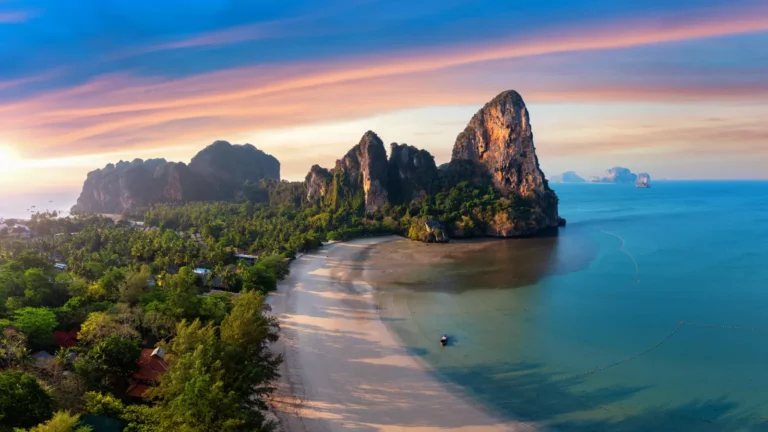
To plan the capital leg, see our Bangkok guide. From December to March the Andaman coast is drier: Phuket or Krabi are then better beach options.
Koh Samui: who is it for?
Our verdict by traveller type, based on the information in this guide:
| Traveller type | Our verdict | Why |
|---|---|---|
| Couples | ✅ Ideal | Bophut’s Fisherman’s Village, west-facing beaches for sunsets (Lipa Noi, Taling Ngam), a less developed south and west. |
| Families | ✅ Yes | Bophut’s sheltered beach suits families; Chaweng and Lamai are more exposed to swell at the end of the year. |
| Summer beach holiday | ✅ Ideal | In July and August, Samui is dry while the Andaman coast is rainy; October to December is the Gulf’s rainy season. |
| Nature | ✅ Yes | Kayaking and snorkelling in Ang Thong Marine Park, Na Muang waterfalls, trips to Koh Phangan and Koh Tao. |
| Nightlife | ✅ Yes | Chaweng is the island’s liveliest beach, with restaurants and bars. |
| Tight budget | ⚠️ Possible | Samui is more expensive than the other Gulf islands: roughly 1,700–3,000 THB per person per day on a tight budget; the north coast (Maenam) is more affordable. |
How much does a trip to Koh Samui cost?
Koh Samui is more expensive than the other Gulf islands. Indicative amounts per person per day, excluding flights:
| Item | Budget | Comfort |
|---|---|---|
| Accommodation (based on a shared double room) | roughly 600–1,300 THB | roughly 1,900–5,700 THB |
| Meals | roughly 400–800 THB | roughly 1,100–2,300 THB |
| Transport (scooter or taxis, songthaews) | roughly 200–600 THB | roughly 600–1,100 THB |
| Activities (Ang Thong, entrance fees, massages) | roughly 400–800 THB | roughly 1,000–2,300 THB |
| Total per day | roughly 1,700–3,000 THB | roughly 4,500–9,500 THB |
Getting around Koh Samui
- Getting there: fly into Samui airport, or travel by plane, bus or train to Surat Thani, then take the ferry from Donsak (about a 1.5-hour crossing).
- Songthaews: shared pick-up trucks that follow the ring road; agree on the fare before getting in.
- Taxis: convenient but expensive; agree on the fare in advance or use a ride-hailing app where available.
- Scooter: very common, but according to the UK FCDO (GOV.UK, updated 12 October 2026), Thailand has a high number of road accidents, particularly with motorcycles; a helmet is compulsory by law, and riding without a valid licence could invalidate your travel insurance.
- Rental car: a safer way to tour the island (about 50 km / 31 mi).
Where to stay on Koh Samui
| Area | Best for | Good to know |
|---|---|---|
| Chaweng | First visit, nightlife | Lively, noisy at night |
| Lamai | Beach and mid-range budget | Quieter than Chaweng |
| Bophut | Couples, families | Charm of Fisherman’s Village, close to the airport |
| Maenam | Peace and quiet, tight budget | Long beach, relaxed atmosphere |
| Choeng Mon | Families, upscale hotels | Small sheltered bays in the northeast |
| South and west (Lipa Noi, Taling Ngam) | Peace and quiet, sunsets | A vehicle is recommended |
Entry requirements, health and safety
- US citizens (U.S. Department of State, travel.state.gov, page updated August 20, 2026): pre-arrival online registration is required; a passport valid at least six months beyond arrival is strongly recommended; you may be asked for an onward or return ticket or proof of funds.
- British citizens (FCDO, GOV.UK, updated 12 October 2026): passport valid at least 6 months after arrival with 1 blank page; from 15 September 2026, visa-exempt entry is up to 30 days for tourism only; land-border visa-exempt entries are normally limited to 2 per calendar year; you may need proof of funds (10,000 THB per person / 20,000 THB per family) and onward travel; overstay fine of 500 THB a day, up to 20,000 THB.
- Thailand Digital Arrival Card (TDAC): mandatory for all foreign nationals since 1 May 2025; it can be completed within the 3 days before arrival.
- 30 days for US citizens too: The U.S. State Department page (last updated August 20, 2026) still mentions 60 days, but it predates the change: under the Thai rules in force since 15 September 2026, US citizens are also limited to 30 days (Tourism Authority of Thailand, 1 September 2026). Check with the Royal Thai Embassy in Washington before you travel.
- Health: according to the UK FCDO, a yellow fever certificate is required only if you arrive from a country with a risk of yellow fever transmission; make sure routine vaccinations are up to date and, depending on your trip, ask your doctor about additional vaccines (the UK FCDO lists rabies among the risks). Dengue: protect yourself against mosquitoes. Drink only bottled water.
- Safety: The FCDO advises against all but essential travel to Pattani, Yala, Narathiwat and parts of southern Songkhla (Thailand–Malaysia border) and to areas within 20 km (12 mi) of the Cambodian land border (land crossings with Cambodia are suspended); these areas are far from Koh Samui. The main risks are the roads, bag snatching and scams (gems, tours) in tourist areas, according to the UK FCDO and the U.S. Department of State. The FCDO also reports items taken from bags while passengers slept on buses and trains.
- Sea: respect red flags, especially from October to December on the east coast.
To compare cover, see our travel insurance guide.
Practical tips
- Money: ATMs are everywhere, but Thai banks charge a fee for each withdrawal, so take out larger amounts. Small shops work in cash.
- Internet: Wi-Fi almost everywhere; an eSIM or a local SIM card helps you avoid your home carrier’s roaming charges.
- Etiquette: cover up in temples, never criticise the monarchy, and avoid any disrespectful gesture towards images of the Buddha.
- Drugs: Thai law remains very strict; never carry a package for someone else.
- Environment: do not touch coral, and choose a reef-safe sunscreen.
Further reading to plan your trip
To choose your dates, see the best time to visit Koh Samui and, for the rest of the country, the best time to visit Thailand; our Thailand time difference page gives the gap with London and New York throughout the year.
Still deciding on a destination? Our Thailand or Vietnam and Bali or Thailand comparisons set climate, budget and trip styles side by side.
Frequently asked questions
How many days do you need on Koh Samui?
Four to seven days let you see the northern temples, Chaweng and Lamai, the waterfalls and Ang Thong Marine Park. Add a few days for Koh Phangan and Koh Tao.
How do you get to Koh Samui?
Most international travellers connect in Bangkok, then either fly to Samui or travel by plane, bus or train to Surat Thani and take a ferry from Donsak.
What is the best beach on Koh Samui?
Chaweng is the longest and liveliest; Bophut, Maenam and Choeng Mon are quieter. The choice depends on the atmosphere you are looking for.
Koh Samui, Koh Phangan or Koh Tao: which island should you choose?
Koh Samui for comfort and families, Koh Phangan for the Full Moon Party and wilder beaches, Koh Tao for diving. All three are easy to combine by boat.
Do you need a visa for Koh Samui?
Not for a short tourist stay. Since 15 September 2026, US and UK citizens can stay up to 30 days per entry visa-free for tourism (Tourism Authority of Thailand, 1 September 2026; GOV.UK, updated 12 October 2026). The U.S. Department of State page (last updated August 20, 2026) still mentions 60 days, but it predates the change. The TDAC arrival card is mandatory, and a passport valid at least 6 months beyond arrival is advised by both sources. Check with the Royal Thai Embassy before you travel.
Our sources
- Entry requirements, safety and health checked on 24 October 2026: Tourism Authority of Thailand, TAT Newsroom, 1 September 2026: new 30-day visa exemption rules from 15 September 2026; UK FCDO, GOV.UK foreign travel advice: Thailand (updated 12 October 2026); U.S. Department of State, travel.state.gov: Thailand (last updated August 20, 2026)
- Thai Meteorological Department / World Meteorological Organization: 1991-2020 climate normals for the Ko Samui station, published by the World Meteorological Organization
- Places and topics cross-checked against online travel guides (generationvoyage.fr, tourlane.fr, voyagesautenteo.com), consulted on 6 October 2026
- Our methodology
Updated October 2026.
To keep planning, see our Thailand travel guide, the best time to visit Thailand and our other destinations in Asia.
Our guides: Koh Samui (1 guide)
When to go
Other destinations in the region

Transparency: this page contains affiliate links, labelled as such. If you book through them we may earn a commission at no extra cost to you; it does not influence our content or recommendations. How we fund the site.