Chichén Itzá is the most famous Maya city in Mexico, in the heart of the Yucatán Peninsula. Its Pyramid of Kukulcán (El Castillo), its Great Ball Court, the Temple of the Warriors and the Sacred Cenote make it one of the most visited archaeological sites in the Americas, a UNESCO World Heritage Site. This guide to visit Chichén Itzá details what to see, how to get there from Cancún, Mérida or Valladolid, the best time to go based on official normals and the « serpent of light » at the equinoxes, with its dates calculated up to 2030.

Our travel deals for Chichén Itzá
Affiliate links: we earn a commission, at no extra cost to you.
 FlightsKiwi.comCompare flights and airline combinations to Chichén Itzá.Compare flights
- eSIMAiraloData plan to install before you leave (eSIM-compatible phone).See plans


Chichén Itzá at a glance
- Location Yucatán StateAbout 40 km (25 mi) from Valladolid, 120 km (75 mi) from Mérida and 200 km (124 mi) from Cancún; see our guide to the Yucatán Peninsula
- Language Spanish; Yucatec Maya is spoken in the villages
- Currency the Mexican peso (MXN) · currenciesThe entry fee is usually paid in two parts (federal fee and Yucatán State tax)
- Time zone UTC−6 all year · detailsCancún is 1 h ahead of Chichén Itzá all year (see below)Local time now: –:–
- Airports Cancún International (CUN) or Mérida (MID) · detailsCheck current routes with the airlines
- Entry US: passport book required to fly in; UK: no visa as a tourist · travel.state.gov · GOV.UK
- Electricity check voltage and plug types before you go · plugs
- Visit length 2 to 4 hours on site · details
- Best time November to March; at opening time, all year
- Budget see our budget section
What to see at Chichén Itzá: the highlights
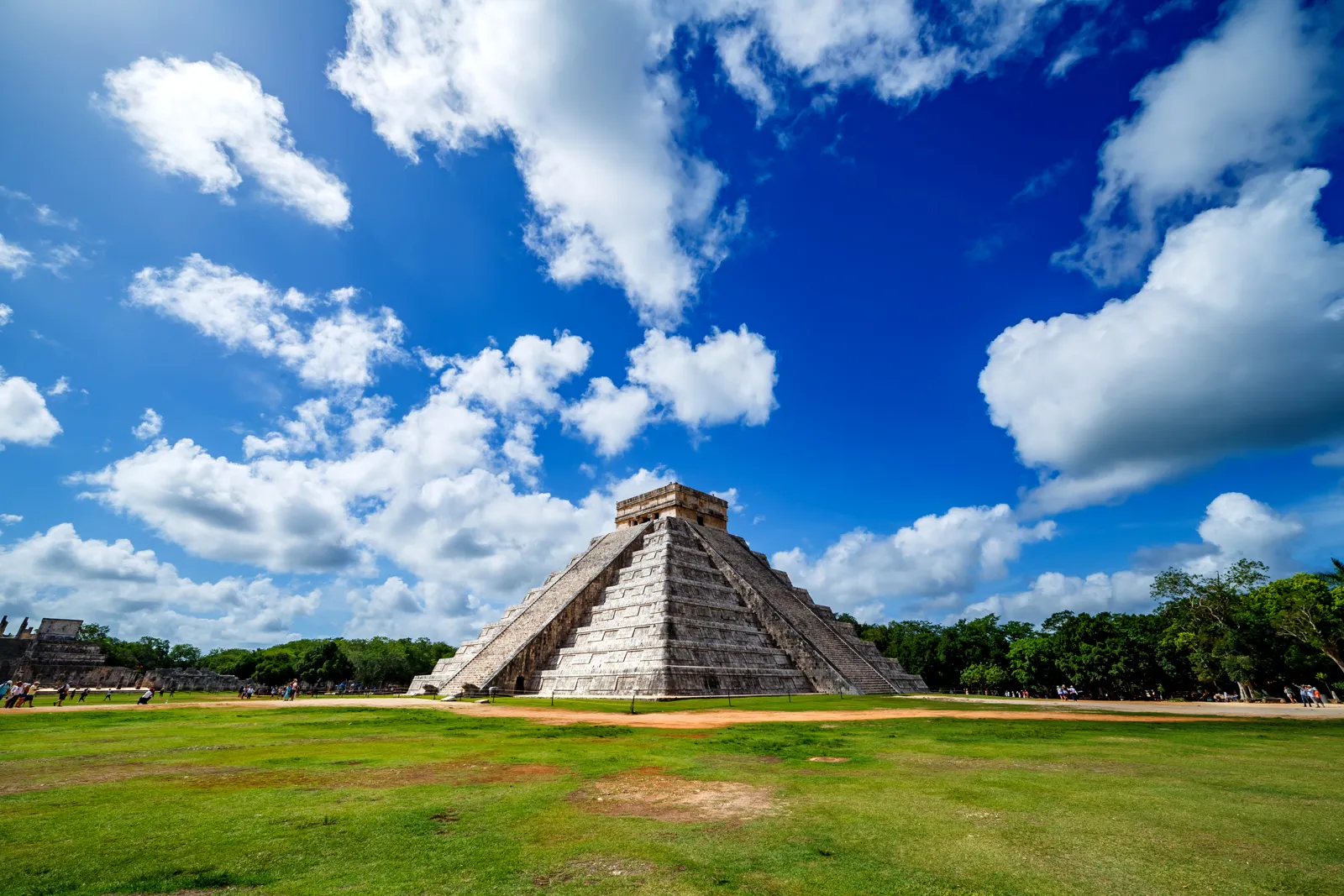
The Pyramid of Kukulcán (El Castillo)
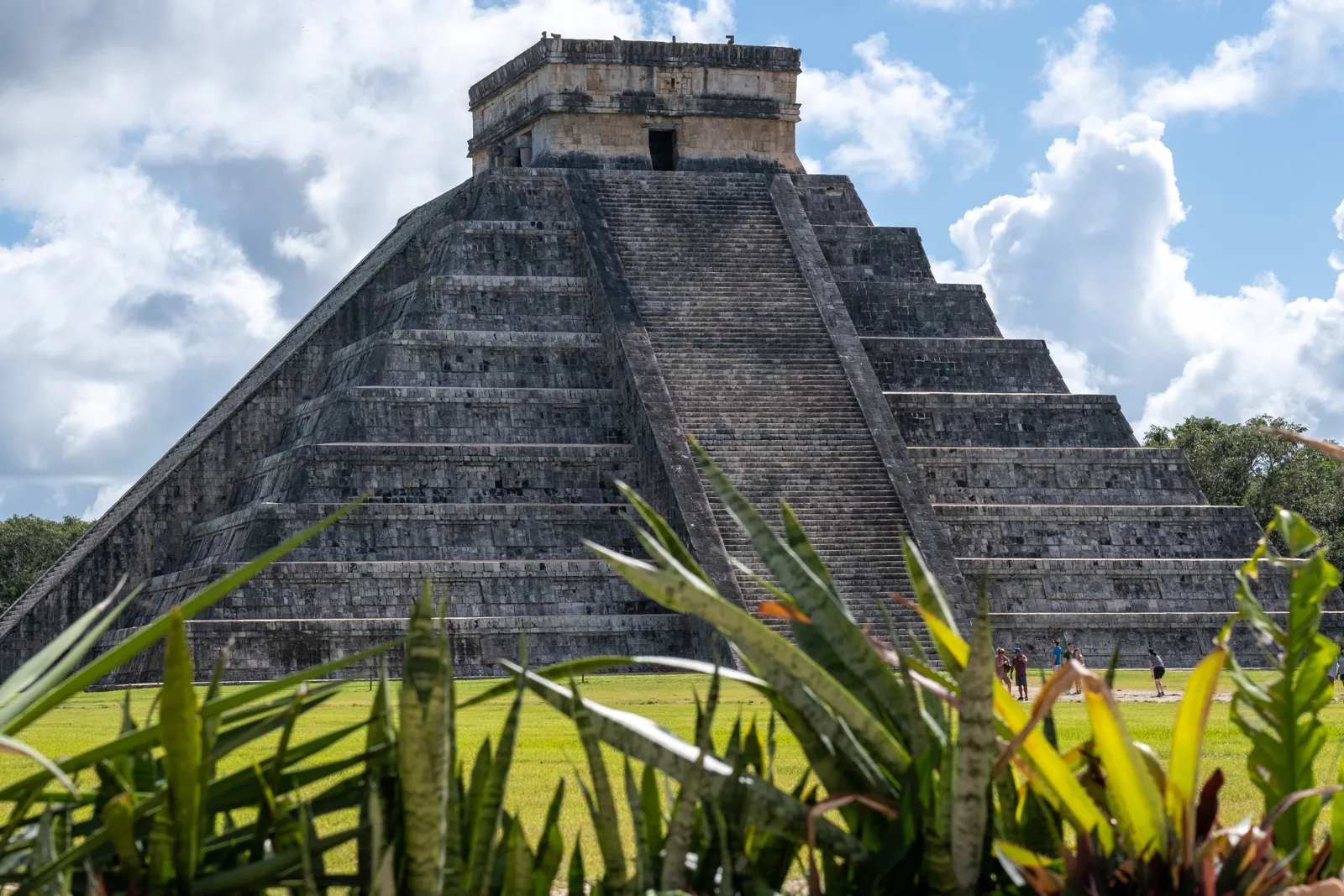
About 30 meters (98 ft) high, the pyramid dedicated to the feathered serpent Kukulcán dominates the main esplanade. It has four stairways of 91 steps which, with the summit platform, add up to 365 steps, like the days of the solar year. An older pyramid is buried inside. Climbing has been forbidden to visitors for several years: you admire the pyramid from the esplanade.
The Great Ball Court
This is the largest known ball court in Mesoamerica, about 170 meters (558 ft) long. The stone rings are set very high on the side walls, and bas-reliefs show sacrificial scenes linked to the game. The acoustics are remarkable: a voice carries from one end of the court to the other.
The Temple of the Warriors and the Group of a Thousand Columns
At the top of the Temple of the Warriors sits a statue of Chac Mool, a reclining figure holding a tray on its stomach. At its feet are rows of hundreds of columns carved with warriors, the remains of a vast covered hall. The influence of central Mexico (Toltec) is particularly visible here.
The Tzompantli and the Venus Platform
The Tzompantli, or Platform of Skulls, is covered with rows of carved skulls: it was used to display the heads of the sacrificed. Nearby, the Venus Platform and the Platform of the Eagles and Jaguars show the importance of astronomy and the warrior orders.
The Sacred Cenote
A white causeway (sacbé) leads north of the esplanade to this natural well some sixty meters (200 ft) across. The Maya threw offerings into it, and excavations have brought up gold and jade objects and bones. Swimming is forbidden.
El Caracol, the observatory
In the southern part of the site, known as « Chichén Viejo », El Caracol owes its name to its internal spiral staircase. Its windows appear to be aligned with positions of Venus and the Sun: it is one of the buildings that best illustrate Maya astronomical knowledge. Nearby, the Nunnery complex (Las Monjas) has facades decorated with masks of the rain god Chaac.
The « serpent of light » at the equinoxes: dates calculated up to 2030
Around the spring and autumn equinoxes, in the late afternoon, the shadow of the pyramid’s nine terraces falls on the balustrade of the north stairway. Triangles of light and shadow then form an undulating body that seems to descend to the carved serpent head at the foot of the stairs. The effect is visible for several days before and after the exact date, if the sky is clear, in the last two to three hours before sunset.
To help you plan, we calculated the exact moment of each equinox in Chichén Itzá local time, and the sunset time at the site that day.
| Year | Equinox | Exact local date and time | Sunset that day |
|---|---|---|---|
| 2027 | Spring | March 20 at 2:24 pm | 6:05 pm |
| 2027 | Autumn | September 23 at 12:01 am | 5:49 pm |
| 2028 | Spring | March 19 at 8:17 pm | 6:05 pm |
| 2028 | Autumn | September 22 at 5:45 am | 5:49 pm |
| 2029 | Spring | March 20 at 2:01 am | 6:05 pm |
| 2029 | Autumn | September 22 at 11:37 am | 5:50 pm |
| 2030 | Spring | March 20 at 7:51 am | 6:05 pm |
| 2030 | Autumn | September 22 at 5:27 pm | 5:50 pm |
- September is often cloudier than March: it is the heart of the rainy season (18.4 days with precipitation in September against 3 in March according to the SMN). To maximize your chances of seeing the effect, aim for the week of the March equinox.
- Crowds: the March equinox draws huge numbers of visitors. Arrive at opening time, check opening hours and any restrictions on those days, and bear in mind that the site generally closes before sunset.
- Later years: the March equinox falls on March 19 or 20 in Yucatán, the September one on the 22nd or 23rd.
Getting to Chichén Itzá
From Cancún and the Riviera Maya
Allow about 2.5 to 3 hours by road from Cancún on the toll highway, a little more from Playa del Carmen or Tulum. Day tours are plentiful, but they often arrive in late morning, at the hottest and busiest time. ADO buses also link Cancún to the site.
From Valladolid
The colonial town of Valladolid is the nearest base: about 45 minutes by road. Staying there the night before lets you be there at opening time. Buses and colectivos make the trip.
From Mérida
Mérida, the capital of Yucatán State, is just under 2 hours by road. The site combines well with Izamal, the « yellow town », on the way.
The Tren Maya
The Tren Maya, which began service in late 2023, serves a station near Chichén Itzá, from which shuttles run to the site. Frequencies and timetables still change often: check them on the train’s official website before relying on it.
The time trap: Cancún and Chichén Itzá are not on the same time
Since Mexico abolished daylight saving time in 2022, the state of Quintana Roo (Cancún, Tulum, Playa del Carmen) has been on UTC−5 all year, and Yucatán State (Chichén Itzá, Valladolid, Mérida) on UTC−6. In practice, when it is 8 am in Cancún, it is only 7 am at Chichén Itzá. A tour advertised as « leaving at 7 am » in Cancún therefore arrives around 8:30-9 am, site local time. Your phone changes time when you cross the border between the two states: check which time zone your booking uses.
| Period | London → Cancún | London → Chichén Itzá | New York → Cancún | New York → Chichén Itzá |
|---|---|---|---|---|
| Winter (London on GMT, New York on EST) | −5 h | −6 h | same time | −1 h |
| Summer (London on BST, New York on EDT) | −6 h | −7 h | −1 h | −2 h |
Visiting tips: the checklist
- Arrive at opening time (usually 8 am, to be checked): the heat and the groups arrive around 10-11 am.
- Bring cash in pesos and a bank card: the entry fee includes a federal fee and a Yucatán State tax, which may be paid separately.
- Take at least 1.5 liters of water per person, a hat and sunscreen: shade is rare on the esplanade.
- An official guide (at the entrance) helps you understand the monuments, the astronomy and the history of the site.
- Craft vendors are very numerous along the paths: a polite « no, thank you » is enough.
- Drones: do not fly one without checking the rules and obtaining any required permission.
- Do not climb any monument and stay on the marked paths.
- Bring swimwear for a cenote after the visit.
Around Chichén Itzá: cenotes, towns and other Maya sites
- Ik Kil cenote: a few kilometers from the site, a deep natural well where you swim among hanging vines; very busy in the middle of the day.
- The cenotes of Valladolid: Zací in the town itself, Suytun, Samulá and X’Kekén nearby. Showering is compulsory and no sunscreen before swimming.
- Valladolid: a colonial town with colorful facades, the San Bernardino convent and Yucatecan cuisine.
- Ek Balam: a smaller Maya site half an hour north of Valladolid, known for the stucco sculptures of its acropolis.
- Izamal: the « yellow town », with its Franciscan convent built on a pyramid.
- Uxmal: south of Mérida, the other great Maya site of Yucatán, in the highly ornate Puuc style.
- Cobá: near Tulum, a site in the forest, with great white causeways.
To put together a complete circuit, see our guide to the Yucatán Peninsula and our Mexico travel guide. For food, our page on Mexican cuisine presents cochinita pibil and other Yucatecan specialties.
Suggested itineraries
Chichén Itzá in a day from Cancún
- Leave Cancún early (remember the one-hour time difference)
- Visit the site from opening time, 3 hours
- Lunch and a swim at the Ik Kil cenote or a Valladolid cenote
- A stroll in Valladolid late in the day, back to Cancún in the evening
Yucatán in 7 days with Chichén Itzá
- Days 1-2: Cancún or Playa del Carmen, arrival and rest
- Day 3: drive to Valladolid via Ek Balam, night in Valladolid
- Day 4: Chichén Itzá at opening time, a cenote in the afternoon
- Day 5: Izamal then Mérida
- Day 6: Uxmal and the Puuc route
- Day 7: back to the coast, or an extension to Tulum and Cobá
When to visit Chichén Itzá: climate and best time
The best time to visit Chichén Itzá is November to March: the dry season, with 30 to 33 °C (86 to 91 °F) in the afternoon, mornings around 17-18 °C (63-64 °F) and little rain. April and May are the hottest months (above 35 °C / 95 °F on average). From June to October, the rainy season brings frequent thunderstorms and high humidity, and the UK FCDO (GOV.UK, updated 20 October 2026) says the hurricane season normally runs from June to November. The table uses the official SMN normals for Valladolid, the nearest station with published normals.
| Month | High °C (°F) | Low °C (°F) | Rain mm (in) | Rainy days | Crowds | Prices | Verdict |
|---|---|---|---|---|---|---|---|
| January | 29.8 (86 °F) | 17.1 (63 °F) | 39 (1.5 in) | 6.1 | High | High | ✅ Dry, cool mornings |
| February | 31.3 (88 °F) | 17.5 (64 °F) | 56.8 (2.2 in) | 4.2 | High | High | ✅ Dry and pleasant |
| March | 33 (91 °F) | 18.5 (65 °F) | 59.1 (2.3 in) | 3.0 | High (equinox) | High | ✅ Fewest rainy days, equinox |
| April | 35.2 (95 °F) | 20.6 (69 °F) | 33.8 (1.3 in) | 3.1 | High (Holy Week) | High | ⚠️ Very hot |
| May | 36.2 (97 °F) | 22.1 (72 °F) | 74.6 (2.9 in) | 7.3 | Medium | Medium | ⚠️ The hottest |
| June | 34.5 (94 °F) | 23.1 (74 °F) | 172 (6.8 in) | 12.9 | Low | Low | ⚠️ Rains begin |
| July | 34.6 (94 °F) | 22.2 (72 °F) | 141.9 (5.6 in) | 15.5 | High (vacations) | High | ⚠️ Rain and humid heat |
| August | 34.6 (94 °F) | 22.2 (72 °F) | 141.5 (5.6 in) | 17.1 | High (vacations) | High | ⚠️ Storms, hurricanes possible |
| September | 33.9 (93 °F) | 22.2 (72 °F) | 176.8 (7.0 in) | 18.4 | Low | Low | ❌ The wettest, hurricane peak |
| October | 32.4 (90 °F) | 21.2 (70 °F) | 145.9 (5.7 in) | 14.6 | Low | Low | ⚠️ Still rainy |
| November | 31.1 (88 °F) | 18.9 (66 °F) | 46.4 (1.8 in) | 5.9 | Medium | Medium | ✅ Dry weather returns |
| December | 29.9 (86 °F) | 17.6 (64 °F) | 53.5 (2.1 in) | 5.8 | Very high (holidays) | Very high | ✅ Dry; Christmas crowds |
What is the chance of rain on the day of your visit?
A visit to Chichén Itzá only takes half a day: what matters is not the monthly total but the chance of rain on the day you are there. We estimated it by dividing the average number of days with precipitation in the month by its number of days.
| Month | Days with precipitation (SMN) | Probability that a given day is rainy |
|---|---|---|
| January | 6.1 | about 20% |
| February | 4.2 | about 15% |
| March | 3.0 | about 10% |
| April | 3.1 | about 10% |
| May | 7.3 | about 24% |
| June | 12.9 | about 43% |
| July | 15.5 | about 50% |
| August | 17.1 | about 55% |
| September | 18.4 | about 61% |
| October | 14.6 | about 47% |
| November | 5.9 | about 20% |
| December | 5.8 | about 19% |
From March to April, the risk is about 10%: the safest period. In September, it exceeds 60%: plan your visit for the morning, as storms break mostly in the afternoon. For the rest of the region, see the best time to visit Yucatán and the best time to visit Mexico, or our ideas for where to go in January and where to go in March.
Sunrise and sunset at Chichén Itzá, month by month
To plan your arrival at opening time and estimate the available light, here are the sunrise and sunset times on the 15th of each month, in local time.
| Month | Sunrise | Sunset | Daylight |
|---|---|---|---|
| January | 6:33 am | 5:34 pm | 11 h 01 min |
| February | 6:24 am | 5:52 pm | 11 h 29 min |
| March | 6:02 am | 6:03 pm | 12 h 01 min |
| April | 5:35 am | 6:13 pm | 12 h 37 min |
| May | 5:17 am | 6:24 pm | 13 h 07 min |
| June | 5:13 am | 6:36 pm | 13 h 23 min |
| July | 5:22 am | 6:38 pm | 13 h 16 min |
| August | 5:33 am | 6:23 pm | 12 h 50 min |
| September | 5:41 am | 5:57 pm | 12 h 16 min |
| October | 5:49 am | 5:30 pm | 11 h 41 min |
| November | 6:04 am | 5:13 pm | 11 h 09 min |
| December | 6:22 am | 5:16 pm | 10 h 53 min |
Close to the tropic, Chichén Itzá has days of 11 to 13 hours all year: unlike in higher latitudes, the season hardly changes the possible length of a visit.
Budget for visiting Chichén Itzá
Entry fees are set by the National Institute of Anthropology and History (INAH) and Yucatán State and change regularly: check them before you go. The amounts below are rough guides per person per day in Yucatán, excluding flights.
| Item | Tight budget | Comfort |
|---|---|---|
| Accommodation (shared double room) | about MXN 400 to 750 | about MXN 1,250 to 2,500 |
| Meals | about MXN 300 to 550 | about MXN 650 to 1,050 |
| Transportation (ADO bus, colectivo / rental car) | about MXN 100 to 300 | about MXN 650 to 1,050 |
| Sightseeing (entry, guide, cenote) | about MXN 200 to 400 | about MXN 650 to 1,050 |
| Total per day | roughly MXN 1,050 to 1,700 | roughly MXN 2,500 to 4,200 |
To save money: stay in Valladolid rather than Cancún, travel by ADO bus rather than on an organized tour, and share a guide.
Where to stay to visit Chichén Itzá
- Near the site (Pisté and hotels in the archaeological zone): ideal for being first at the entrance; limited choice, very quiet in the evening.
- Valladolid: the best compromise: varied accommodation, restaurants, cenotes, 45 minutes from the site.
- Mérida: to combine Chichén Itzá, Uxmal and Izamal from a large colonial city.
- Cancún and the Riviera Maya: convenient for a day trip, but a long round trip.
Entry requirements, health and safety
- US citizens: according to the U.S. Department of State (travel.state.gov, last updated August 11, 2025), you need a passport book to fly into Mexico (a passport card is not accepted for air travel). Mexican immigration decides how long you may stay and issues a digital entry record (FMMD) at international airports; you may be directed through an e-gate that prints a receipt with a QR code.
- UK citizens: according to the UK FCDO (GOV.UK, updated 20 October 2026), you do not need a visa as a tourist; your passport must be valid for the length of your stay (the Mexican Embassy recommends at least 180 days), and you get a stamp showing how many days you may stay. Keep the printed e-gate ticket, as you must show it when you leave. You may be asked for a return ticket, proof of accommodation and sufficient funds. Tourists cannot do any paid or voluntary work.
- Quintana Roo tax: if you go via Cancún, you must pay the Quintana Roo state entry tax, online before or during your stay, and show proof of payment at the airport when leaving (UK FCDO).
- Health: the UK FCDO lists Zika virus and dengue among the health risks in Mexico: protect yourself against mosquitoes, and pregnant women should seek advice before traveling. Check vaccine recommendations with TravelHealthPro (UK) or the CDC (US) at least 8 weeks before your trip (see our vaccines guide). Drink bottled water and protect yourself from the heat.
- Safety: Yucatán State is not among the areas where the UK FCDO advises against all but essential travel (GOV.UK, updated 20 October 2026). The main risk is the road: the U.S. Department of State notes that motor vehicle accidents are a leading cause of death of US citizens in Mexico; avoid driving at night. On toll highways, dial 078 for the Green Angels roadside assistance service. In Quintana Roo, the U.S. Department of State suggests the state government’s Guest Assist app.
- Hurricanes: from June to November, follow the US National Hurricane Center and the advice of local authorities and your tour operator (UK FCDO).
- Emergencies: dial 911 (ambulance, fire, police); not all operators speak English.
Private hospitals often require a payment guarantee: insurance covering medical costs and repatriation is essential (see our travel insurance guide).
Practical tips for Chichén Itzá
- Money: withdraw pesos during the day, preferably from ATMs inside banks or shopping centers; keep small change for toilets, parking and tips.
- Tipping: customary in restaurants (about 10 to 15%) and for guides.
- Clothing: light, covering clothes and closed shoes: the ground is uneven.
- Respect the site: do not touch the sculptures or pick anything up.
- Internet: mobile coverage is decent on the site and in Valladolid; an eSIM avoids roaming charges (see our travel eSIM guide).
Frequently asked questions
What is the best time to visit Chichén Itzá?
From November to March, during the dry season: 30 to 33 °C (86 to 91 °F) in the afternoon and little rain according to SMN normals. March has the fewest rainy days and is the month of the equinox. Visit at opening time in every season.
Can you climb the pyramid at Chichén Itzá?
No. Climbing the Pyramid of Kukulcán has been forbidden to visitors for several years, to protect it. You see it from the esplanade.
When can you see the serpent of light at Chichén Itzá?
For a few days around the equinoxes, in the late afternoon: March 20, 2027 and September 23, 2027 in Yucatán according to our astronomical calculation. March gives much better chances of a clear sky than September, in the middle of the rainy season.
How long does it take to visit Chichén Itzá?
Allow 2 to 4 hours on site. Add a cenote and the town of Valladolid for a full day.
Are Cancún and Chichén Itzá on the same time?
No. Cancún (Quintana Roo) is on UTC−5 all year, Chichén Itzá (Yucatán) on UTC−6: it is one hour earlier at the site. Check which time zone your tour times are given in.
How do you get to Chichén Itzá without a car?
By ADO bus from Cancún, Mérida or Valladolid, by colectivo from Valladolid, on an organized tour, or by Tren Maya and then a shuttle from the nearest station.
Our sources
- Climate normals: 1981-2000 climate normals for the Valladolid observatory (about forty kilometers from the site), published by the Servicio Meteorológico Nacional (SMN, Mexico), reproduced by Wikipedia (article « Valladolid, Yucatán »)
- U.S. Department of State, Mexico country information (travel.state.gov, last updated August 11, 2025), and UK FCDO, foreign travel advice for Mexico (GOV.UK, updated 20 October 2026), read on 26 October 2026
- IANA time zone database (America/Merida, America/Cancun, Europe/London and America/New_York zones), via the Python zoneinfo module
- Astronomical calculations: NOAA solar algorithm (Global Monitoring Laboratory) and Jean Meeus, Astronomical Algorithms (ch. 27, equinoxes), applied by Destination de Voyage
- European Central Bank, euro reference exchange rates of 23 October 2026 (budget conversion)
- Our methodology
Updated October 2026.