A trip to Djerba starts with a flat, luminous island in southern Tunisia, ringed with fine-sand beaches and dotted with white houses, old mosques and olive trees. But the island is more than its hotel zone: things to do in Djerba include the souks of Houmt Souk, the Djerbahood murals, the Ghriba synagogue and the potters’ workshops of Guellala. Linked to the mainland by a causeway and a ferry, it is also a gateway to southern Tunisia. This guide helps you choose what to do in Djerba, where to stay and how to plan your trip.
Our travel deals for Djerba
Affiliate links: we earn a commission, at no extra cost to you.
FlightsKiwi.comCompare flights and airline combinations to Djerba.
Djerba: according to the UK FCDO (GOV.UK, updated 24 July 2026), terrorists are likely to try to carry out attacks in Tunisia, and a state of emergency has been in place since 2015; in 2023, a fatal shooting took place at a Jewish pilgrimage site on Djerba, with 3 security personnel and 2 civilians killed
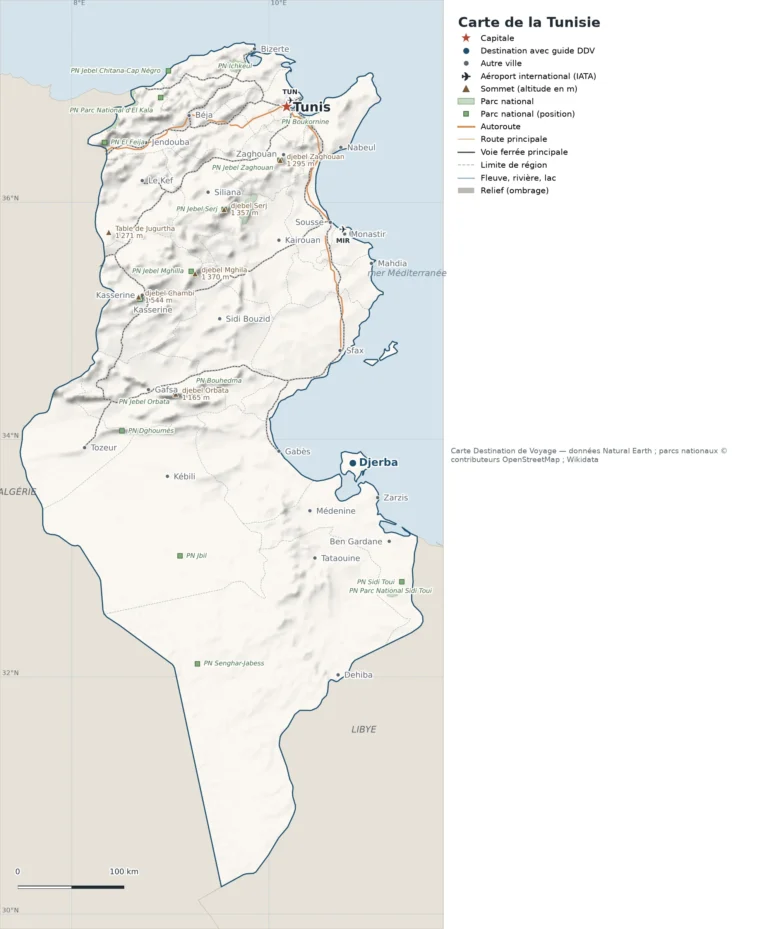
Advised against: the FCDO advises against all travel to the town of Ben Guerdane, on the mainland towards Libya, about an hour’s drive from the island, and against all but essential travel to within 75 km (47 mi) of the Libyan border (excluding Zarzis, the C118 road and the areas of Medenine Governorate north of it)
US advice: the U.S. Department of State says US citizens should not travel within 16 km (10 mi) of the Libyan border in southeastern Tunisia: check the maps before any desert trip
AirportDjerba-Zarzis International Airport (DJE), in the northwest of the island, 20-40 minutes from the tourist zone; check current routes with the airlines
Ideal stay5 to 8 days, including 1 to 2 days of excursions
Best timeMay-June and September-October
Time zoneUTC+1, no daylight saving; 1 h ahead of London in winter, same time in summer
CurrencyTunisian dinar (TND), which cannot be taken out of the country
Indicative budgetroughly US$40 to $65 per person per day on a small budget, US$100 to $190 for comfort
Things to do in Djerba: the top sights
Houmt Souk, the main town
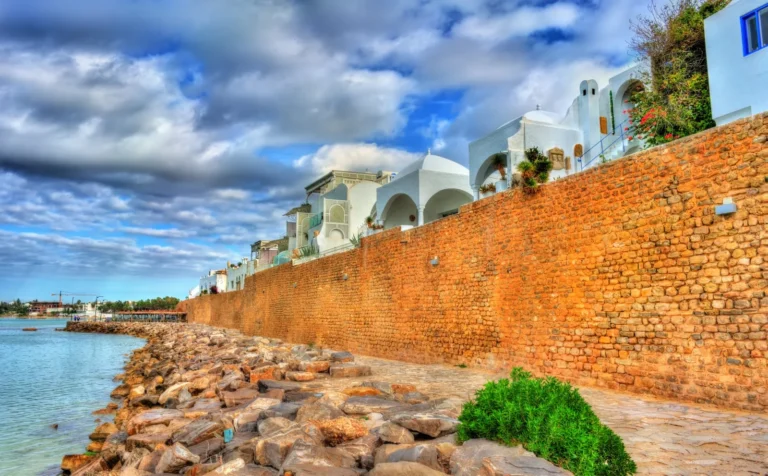
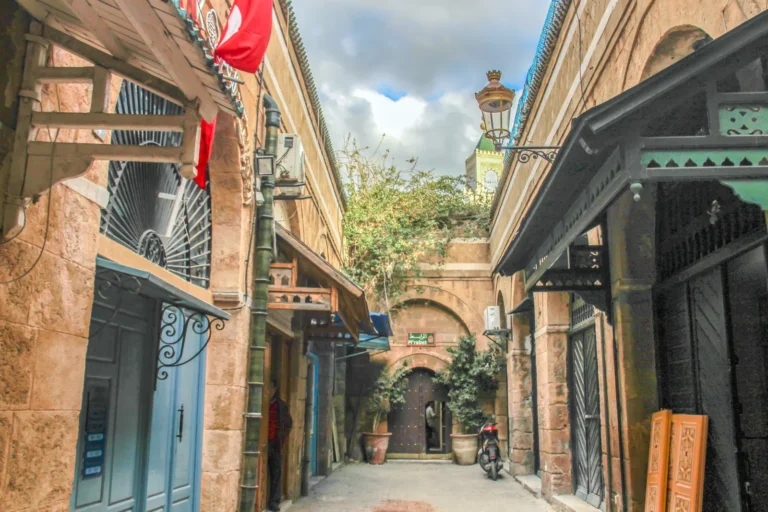
On the north coast, Houmt Souk is the island’s commercial center. Its covered souks sell spices, weavings, jewelry and pottery; some of the old fondouks, caravanserais around an inner courtyard, have been turned into accommodation. The fish market holds an auction on some mornings. By the sea, Borj el Kebir (Borj Ghazi Mustapha), a 15th-century fort remodeled in the 16th, overlooks the port. The Museum of Traditional Heritage displays costumes and objects from Djerbian life.
Erriadh, the Ghriba and Djerbahood
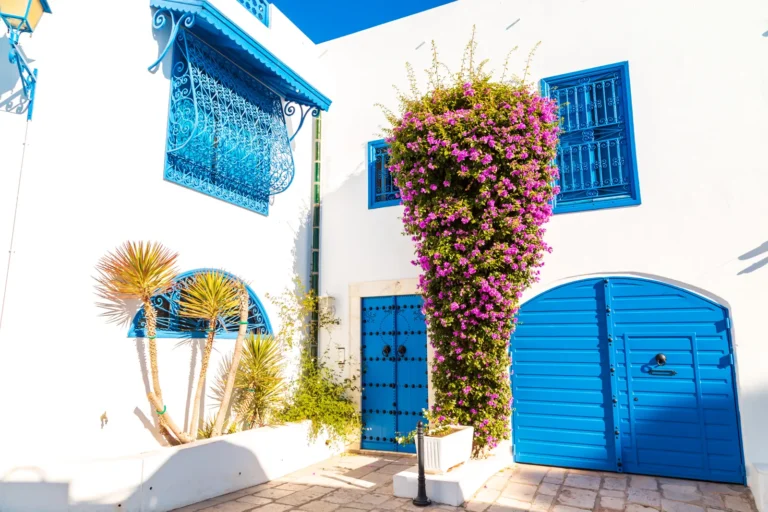
The village of Erriadh is home to the Ghriba synagogue, a Jewish pilgrimage site traditionally considered the oldest in North Africa, with an interior decorated in blue tiles. Visits are subject to security checks, and modest dress is required. In the village lanes, the Djerbahood project brought together artists from around the world in 2014, and their murals still cover many façades, to be explored on foot.
Guellala and the potters
In the south of the island, Guellala is the potters’ village: you can visit workshops where jars and pottery are still shaped from clay. The Guellala Museum, on a hill, presents Djerba’s traditions and festivals through reconstructed scenes, with a view of the sea.
Midoun and the interior of the island
The island’s second town, Midoun, close to the tourist zone, has a lively weekly market. Djerba’s interior is dotted with « menzels », traditional walled farmsteads, and small white mosques, often fortified, linked to the island’s Ibadi community. Several of these sites are part of the property « Djerba: testimony to a settlement pattern in an island territory », inscribed on the UNESCO World Heritage List in 2023. A tour of the island by bike or scooter is a good way to discover them.
The east-coast beaches
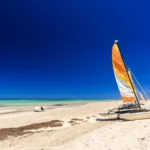
The tourist zone stretches along the east coast, from Sidi Mahrez to Aghir via Seguia. The sand is fine and the sea shallow near the shore, which suits families. The beaches in front of the hotels are equipped; further south, towards Aghir, some stretches are quieter. Water sports (kitesurfing, windsurfing, jet-skiing) are offered by hotel clubs.
Flamingo Island (Ras Rmel)
Northeast of Houmt Souk, the Ras Rmel peninsula, nicknamed « Flamingo Island », is reached by boat from the port. Excursions, often on boats decorated as pirate ships, combine swimming and lunch on the beach. The flamingos are easier to see outside summer.
Djerba Explore and the Lalla Hadria Museum
Near Midoun, the Djerba Explore park brings together a crocodile farm, a village recreating Djerbian architecture and the Lalla Hadria Museum, devoted to Islamic arts and Tunisian traditions. It is a popular family outing, especially in hot or cloudy weather.
Excursions to southern Tunisia
From Djerba, one- or two-day trips go to the troglodyte houses of Matmata, the ksour (fortified granaries) of the Tataouine region or the edge of the desert. The UK FCDO (GOV.UK, updated 24 July 2026) advises against all travel to the town of Ben Guerdane and its immediate surroundings, and against all but essential travel to within 75 km (47 mi) of the Tunisia-Libya border, excluding Zarzis, the C118 road and the areas of Medenine Governorate north of that road. In western Tunisia, it advises against all travel to the Chaambi Mountains National Park and the designated military zones. The U.S. Department of State says US citizens should not travel within 16 km (10 mi) of the Libyan border. Check the maps before booking, use registered agencies, and note that the Tunisian National Guard encourages people traveling into the desert to register beforehand, generally through tour operators (U.S. Department of State).
Getting there: Djerba airport transfer by taxi, regional bus or private transfer
Djerba-Zarzis International Airport, run by the Office de l’aviation civile et des aéroports (OACA), is in the northwest of the island. Most hotels in the tourist zone are on the east coast. OACA lists three options for leaving the airport: taxi, tourist taxi and a regional bus.
Metered taxi: the official tariff
According to OACA, every taxi has a meter in Tunisian dinars and the regulated tariff is displayed inside: TND 0.900 pick-up charge, TND 4.500 on the meter from the start when the ride leaves from the airport, TND 1 per bag over 10 kg (22 lb), and a 50% surcharge from 21:00 to 05:00. Check that the meter is running when you set off; if the driver offers a flat rate, compare it with this tariff.
Tourist taxi
For trips between governorates (to Zarzis or the mainland, for example), OACA mentions tourist taxis, larger vehicles also fitted with a meter: TND 1.350 pick-up charge, TND 4.500 from the airport, the same luggage supplement and the same night surcharge.
Regional bus: airport – Houmt Souk
A regional bus links the airport with Houmt Souk for TND 1. Departures from the airport published by OACA: 7:30, 8:30, 12:40, 17:40 and 18:40 (in the other direction: 7:00, 8:00, 12:15, 17:15 and 18:15). It is cheap, but not well suited to a late arrival or a hotel in the tourist zone: you then need a taxi.
Option
Where to catch it
Official fare
Source
Taxi
Terminal exit
Meter: TND 0.900 + TND 4.500 from the airport; night +50%
oaca.nat.tn
Tourist taxi
Airport
Meter: TND 1.350 + TND 4.500; night +50%
oaca.nat.tn
Regional bus
Airport, to Houmt Souk
TND 1; 5 departures a day
oaca.nat.tn
Official fares published by OACA, checked on 24 October 2026.
Booking a private transfer in Djerba
A private transfer booked in advance is useful if you arrive late at night, travel as a family or with lots of luggage, or if your accommodation is far from bus routes. Before paying, check the total price (tolls, luggage, child seats, night supplement), the meeting point at the airport, flight tracking in case of delay, the waiting time included and the cancellation terms. Compare with the official fares above: for a single traveler with light luggage, public transport is often enough. Many hotel packages already include the transfer: check your booking before buying one.
Source: OACA, Djerba-Zarzis International Airport, « Leaving the airport » and « Getting to the airport » sections, checked on 24 October 2026.
Where to stay in Djerba: the areas
Tourist zone (Sidi Mahrez, Seguia, Aghir): beachfront hotels and resorts, often all-inclusive; ideal for swimming and families
Houmt Souk: small hotels, guesthouses and former fondouks; convenient for sightseeing, more authentic, but no beach
Midoun: close to the tourist zone, with a few guesthouses
Erriadh and the interior: renovated menzels and quiet guesthouses, with a car or a bike
Itinerary: suggested routes
5 days on the island
Day 1: settle in, beach in the tourist zone
Day 2: Houmt Souk, its souks, Borj el Kebir fort and the port
Day 3: Erriadh (Ghriba and Djerbahood), then Guellala and its museum
Day 4: boat trip to Flamingo Island
Day 5: Midoun, Djerba Explore and a last swim
8 days: Djerba and southern Tunisia
Days 1 to 4: Djerba (Houmt Souk, Erriadh, Guellala, beaches)
Days 5 and 6: a two-day trip to Matmata and the ksour of the Tataouine region, after checking the GOV.UK and travel.state.gov maps
Days 7 and 8: back on the island, Flamingo Island and the beach
For a fuller tour (Tunis, Carthage, Sousse, Tozeur), see our Tunisia travel guide. If you are torn with the north coast, read our comparison Djerba or Hammamet.
Getting around Djerba
Taxis: plentiful and cheap; check that the meter is running or agree the price before you set off.
Bike, scooter or car rental: the island is flat and easy to get around; a car lets you visit the interior and the villages at your own pace.
Buses and louages: buses link Houmt Souk with the villages; louages (shared taxis) serve the mainland.
To the mainland: by the El Kantara causeway to Zarzis, or by the ferry between Ajim and Jorf, with waits sometimes in summer.
Tourist train: it links some hotels in the tourist zone with Houmt Souk and Midoun.
When to go to Djerba
✓ Ideal~ Good, with caveats✕ AvoidAverage max. temperature · click a month to see where to go
✅ Best months: April, may, June, September, October
The best times are May-June and September-October: 27 to 31 °C (81 to 88 °F) in the afternoon, almost no rain and a pleasant sea, according to the normals of Tunisia’s National Institute of Meteorology (INM). July and August are hot (up to 33.5 °C, 92 °F) and very busy. Winter is mild (about 17 °C, 63 °F) but too cool for the beach. Month-by-month climate: our article when to go to Djerba.
Djerba: who is it for?
Our view by traveler profile, based on the information in this guide:
Profile
Our view
Why
Families
✅ Ideal
Fine sand and shallow water near the shore on the east coast, the Djerba Explore park, a boat trip to Flamingo Island.
Couples
✅ Yes
Guesthouses and the souks of Houmt Souk, quieter beaches towards Aghir.
Small budget
✅ Ideal
Roughly US$40 to $65 per day on a small budget; all-inclusive packages often good value outside peak holidays.
Culture
✅ Yes
The Ghriba synagogue, the Djerbahood murals, the Guellala potters, the Ibadi mosques of the interior.
Desert and adventure
⚠️ With caution
Trips to Matmata or the Tataouine ksour, but some southern areas are advised against by the FCDO and the State Department: check the maps.
Winter beach
❌ Not really
Winter is mild (about 17 °C, 63 °F) but too cool for the beach.
Destination de Voyage summary.
Budget for a stay in Djerba
Djerba remains an affordable destination, especially outside July-August. Many travelers choose an all-inclusive package with the flight, often good value outside peak holiday periods. Indicative amounts per person per day, excluding flights, converted to US dollars at the European Central Bank rate of 23 October 2026:
Item
Small budget
Comfort
Accommodation (based on a shared double room)
roughly US$17 to $34
roughly US$56 to $123 (all-inclusive)
Food
roughly US$11 to $22
roughly US$28 to $45 (or included)
Local transport
roughly US$3 to $9
roughly US$11 to $28
Sightseeing and excursions
roughly US$6 to $11
roughly US$17 to $45
Total per day
roughly US$40 to $65 per person per day
roughly US$100 to $190 per person per day
Indicative estimates, varying with the season and the exchange rate. Prices peak in July-August and during European school holidays.
To cut costs: go in spring or autumn outside the holidays, stay in a guesthouse in Houmt Souk, eat in the small restaurants in the center and bargain in the souk with a smile.
Entry requirements, health and safety
US citizens: according to the U.S. Department of State (travel.state.gov, last updated June 4, 2026), a valid passport is required and no visa is needed for stays of up to 90 days.
UK citizens: according to the UK FCDO (GOV.UK, updated 24 July 2026), you can visit without a visa for up to 90 days; make sure your passport is stamped, as the length of stay is checked on departure. Your passport should be valid for the duration of your stay and in good condition. Border officials may ask for a return or onward ticket and proof of accommodation.
Currency: Tunisia has strict currency controls: keep your exchange receipts, and note that you cannot take dinars out of the country (GOV.UK).
Health: there is no free medical care for foreigners and private clinics must be paid on the spot (GOV.UK); the U.S. Department of State also reports shortages of medications. Insurance covering medical costs and repatriation is essential (see our travel insurance guide). In many areas tap water is not drinkable.
Terrorism: according to the UK FCDO (GOV.UK, updated 24 July 2026), terrorists are likely to try to carry out attacks in Tunisia; a state of emergency has been in place since 2015. Stay alert in tourist sites, religious sites and crowded places, and keep away from demonstrations.
Southern areas: The UK FCDO (GOV.UK, updated 24 July 2026) advises against all travel to the town of Ben Guerdane and its immediate surroundings, and against all but essential travel to within 75 km (47 mi) of the Tunisia-Libya border, excluding Zarzis, the C118 road and the areas of Medenine Governorate north of that road. In western Tunisia, it advises against all travel to the Chaambi Mountains National Park and the designated military zones. The U.S. Department of State says US citizens should not travel within 16 km (10 mi) of the Libyan border.
Emergencies: ambulance 190, police 197 in towns, fire and car accidents 198 (GOV.UK).
Practical tips for Djerba
Money: dinars cannot be taken out of Tunisia, so change or withdraw money locally and keep your exchange receipts (GOV.UK). Cards are accepted in hotels and many shops; keep cash for the souks and taxis.
Souks: bargaining is customary; decide on a price before you start.
Dress: beachwear is fine in resorts, but dress modestly when visiting religious sites or remote areas (GOV.UK); modest dress is required at the Ghriba.
Ramadan: eating, drinking or smoking in public in the daytime may cause offence (GOV.UK); shop hours change.
Water: drink bottled water.
Internet: check your provider’s roaming charges; a local SIM card or an eSIM is often cheaper.
Five days let you see Houmt Souk, Erriadh, Guellala and Flamingo Island while enjoying the beach. Allow a week or more to add an excursion to southern Tunisia.
What is the most beautiful beach in Djerba?
The beaches of Sidi Mahrez and Seguia, on the east coast, are the best known, with fine sand and shallow water. Towards Aghir, some stretches are quieter. The Ras Rmel peninsula, reached by boat, has a wilder beach.
Is Djerba safe for tourists?
Most visits are trouble-free, but the UK FCDO says terrorists are likely to try to carry out attacks in Tunisia and recalls the 2023 shooting at the Ghriba pilgrimage site. Ben Guerdane, on the mainland, is advised against, as are areas near the Libyan border: check the maps before you go.
Do you need a car in Djerba?
Not for a hotel stay: taxis are plentiful and cheap. A car, scooter or bike is useful to discover the interior of the island and the villages at your own pace.
Can you go to the desert from Djerba?
Yes, on an excursion to Matmata and the ksour of the Tataouine region, ideally from October to April. Some trips pass near areas close to the Libyan border that the FCDO and the State Department advise against: check the maps before booking.
Our sources
Entry, health and safety information read on 26 October 2026: U.S. Department of State, Tunisia country information (travel.state.gov, last updated June 4, 2026), and UK FCDO, foreign travel advice for Tunisia (GOV.UK, updated 24 July 2026)
Djerba climate normals: 1981-2010 normals for the Djerba station, National Institute of Meteorology of Tunisia (INM); rainy days: 1961-1990 normals
Office de l’aviation civile et des aéroports (OACA), Djerba-Zarzis International Airport: leaving and getting to the airport, checked on 24 October 2026
UNESCO World Heritage List: Djerba, testimony to a settlement pattern in an island territory (2023)
European Central Bank, euro reference rates of 23 October 2026 (budget conversion)


 FlightsKiwi.comCompare flights and airline combinations to Djerba.Compare flights