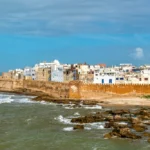
This Essaouira travel guide starts with its 18th-century fortified medina, a UNESCO World Heritage Site, its fishing port with blue boats and a long beach swept by the trade winds. What is there to do in Essaouira? Walk the ramparts of the Skala, wander the souks, eat grilled fish at the port, learn to kitesurf or head for the beaches of Sidi Kaouki. The town, about three hours from Marrakech, has a mild, windy climate all year. This guide brings together the highlights, the best time to go, the budget and practical tips.
Our travel deals for Essaouira
Affiliate links: we earn a commission, at no extra cost to you.
FlightsKiwi.comCompare flights and airline combinations to Essaouira.
Morocco in general: the UK FCDO (GOV.UK, updated 19 August 2026) considers that terrorists are likely to try to carry out attacks in Morocco, including in places popular with tourists; petty crime is common in medinas and on beaches.
Swimming: many beaches have limited or no lifeguard cover, and strong currents and unexpected waves can occur (UK FCDO).
Water sports: providers of adventure tourism may not meet UK safety standards: check standards and make sure you are insured (UK FCDO).
Read the GOV.UK and travel.state.gov pages for Morocco before you leave.
When to go to Essaouira
You can go to Essaouira all year; the most pleasant periods are spring (April-May) and late summer (September-October), with 20 to 22 °C (68 to 72 °F) in the afternoon, little rain and plenty of sun. Summer is dry and sunny but rarely hot (22 °C / 72 °F in August) and very windy. Winter stays mild by day (18 to 19 °C / 64 to 66 °F); it is the rainy season, with about 50 mm (2 in) a month from November to January.
Essaouira is one of the coolest towns in Morocco in summer: the ocean and the cold Canary Current limit the heat, and the trade wind blows strongly, especially from May to August. That is an advantage when Marrakech exceeds 37 °C (99 °F), less so for sunbathing out of the wind. The water stays cool all year.
When to go to Essaouira: the essentials
Best periods: April-May and September-October
To escape the heat inland: June to August, 21 to 22 °C (70 to 72 °F) in the afternoon
For kitesurfing and windsurfing: summer, when the trade wind is most consistent
For surfing: autumn and winter, with the Atlantic swell (Sidi Kaouki, Moulay Bouzerktoune)
Warmest month: September, an average high of 22.6 °C (73 °F)
Wettest month: December (56 mm / 2.2 in), then November (55 mm / 2.1 in)
Sunniest month: July, about 300 hours of sunshine
Essaouira climate month by month
Month
High °C (°F)
Low °C (°F)
Rain mm (in)
Sunshine (h)
Crowds
Prices
Verdict
January
18.4 (65 °F)
11.1 (52 °F)
48.5 (1.9 in)
209
Low
Low
⚠️ Mild, winter rains
February
18.7 (66 °F)
12 (54 °F)
37.3 (1.5 in)
205
Medium (winter vacations)
Medium
⚠️ Mild, some rain
March
19.4 (67 °F)
13.3 (56 °F)
38.1 (1.5 in)
247
Medium
Medium
✅ Mild and drier
April
19.5 (67 °F)
14.1 (57 °F)
17.3 (0.7 in)
264
High (Easter)
High
✅ Ideal for sightseeing
May
20.6 (69 °F)
15.7 (60 °F)
9.4 (0.4 in)
290
Medium
Medium
✅ Sunny, little rain
June
21.4 (71 °F)
17.1 (63 °F)
0.5 (0.0 in)
291
Medium
Medium
✅ Dry, cool and windy
July
21.9 (71 °F)
17.7 (64 °F)
0 (0.0 in)
302
High
High
⚠️ Very windy, crowds
August
22.4 (72 °F)
18.1 (65 °F)
0.8 (0.0 in)
291
Very high
Very high
⚠️ Windy, the most expensive
September
22.6 (73 °F)
18 (64 °F)
4.3 (0.2 in)
252
Medium
Medium
✅ The warmest, fewer people
October
22.2 (72 °F)
17 (63 °F)
33.3 (1.3 in)
234
High (autumn vacations)
High
✅ Mild, one of the best months
November
20.5 (69 °F)
14.4 (58 °F)
54.5 (2.1 in)
197
Low
Low
⚠️ Rains return
December
19.4 (67 °F)
12.6 (55 °F)
55.7 (2.2 in)
198
High (holidays)
High
⚠️ The wettest, still mild
Temperatures, rainfall and sunshine: 1991-2020 normals for the Essaouira station, Direction générale de la Météorologie du Maroc, published by the World Meteorological Organization (NOAA archive). Crowds and prices: estimates based on European and Moroccan school vacations.
Essaouira season by season
Spring (March to May): 19 to 21 °C (66 to 70 °F) in the afternoon, much less rain from April (17 mm / 0.7 in) and more than 260 hours of sunshine a month. The best time to combine the medina, the beach and day trips. The wind picks up in May.
Summer (June to August): 21 to 22 °C (70 to 72 °F) by day, almost no rain, but an often strong trade wind and sometimes haze. Board-sports fans are delighted; families look for sheltered beaches. July and August are the busiest months.
Autumn (September-October): the warmest days of the year (22 to 23 °C / 72 to 73 °F), a dropping wind and fewer people after the summer holidays. The first rains arrive in October (33 mm / 1.3 in).
Winter (November to February): 18 to 20 °C (64 to 68 °F) by day, 11 to 14 °C (52 to 57 °F) at night, about 4 to 5 rainy days a month. Guesthouses in the medina are often damp and poorly heated: check before booking.
Essaouira month by month
January: 18 °C (65 °F) by day, 11 °C (52 °F) at night, 49 mm (1.9 in) of rain. Quiet, with low prices after the holidays; bring a sweater.
February: 19 °C (66 °F), slightly less rain. European winter school vacations fill the riads: book early.
March: 19 °C (67 °F) and nearly 250 hours of sunshine. A good month to visit the medina and the surroundings.
April: 20 °C (67 °F), little rain (17 mm / 0.7 in). In high demand during the Easter vacations.
May: 21 °C (69 °F), almost dry and sunny. One of the best months, before the summer crowds; the wind strengthens.
June: 21 °C (71 °F), dry skies. The Gnaoua World Music Festival is usually held in June: check the dates on the official website and book early if you are aiming for that period.
July: 22 °C (71 °F), the sunniest month, but also the windiest. Ideal for kitesurfing, less so for the beach.
August: 22 °C (72 °F), strong wind, many Moroccan and European visitors. Prices at their highest.
September: the warmest (22.6 °C / 73 °F), less wind, fewer people: a very good month.
October: 22 °C (72 °F) and the first showers. A good compromise between beach, sightseeing and prices, outside the autumn school vacations.
November: 20 °C (69 °F), the rains return (55 mm / 2.1 in). Quiet, with falling prices; good swell for surfing.
December: the wettest (56 mm / 2.2 in), 19 °C (67 °F) by day. High demand around the holidays.
The medina of Essaouira, the former Mogador, was laid out in the second half of the 18th century at the request of Sultan Sidi Mohammed ben Abdallah, on plans partly inspired by European fortified towns. Its straight streets, white houses with blue shutters and monumental gates set it apart from the medinas of Fez or Marrakech. It has been a UNESCO World Heritage Site since 2001 and is easy to explore on foot without a guide. To compare with a denser, older medina, our guide to visiting Fez covers tanneries, madrasas and souks.
The ramparts and the Skala
On the sea side, the ramparts carry a long artillery platform, the Skala de la Ville, lined with bronze cannons facing the rocks. People come for the ocean view and the sunset. Below, workshops of thuya wood marquetry, the town’s specialty, operate in the old vaults. The Skala du Port, near the quays, gives another view of the medina and Mogador Island.
The fishing port
The port is one of the liveliest places in Essaouira: boatyards where wooden boats are still built, the blue boats returning in late morning, the fish auction and clouds of seagulls. At the entrance, stalls let you choose fish and seafood to be grilled on the spot. Ask the price by weight before ordering.
The souks and Moulay Hassan square
Around the main street of the medina, the souks gather spices, argan oil, jewelry, carpets, thuya wood objects and art galleries. The atmosphere is more relaxed than in Marrakech and the bargaining less insistent. Moulay Hassan square, between the medina and the port, is the town’s meeting point, with its café terraces.
Museums and Jewish heritage
The Sidi Mohammed ben Abdallah Museum presents the arts and folk traditions of the region. In the former mellah, Bayt Dakira, « the house of memory », traces the history of Essaouira’s Jewish community, long very important in the town’s trade. The Slat Lkahal synagogue and the Simon Attias synagogue can also be visited; check opening times on site.
The beach and board sports
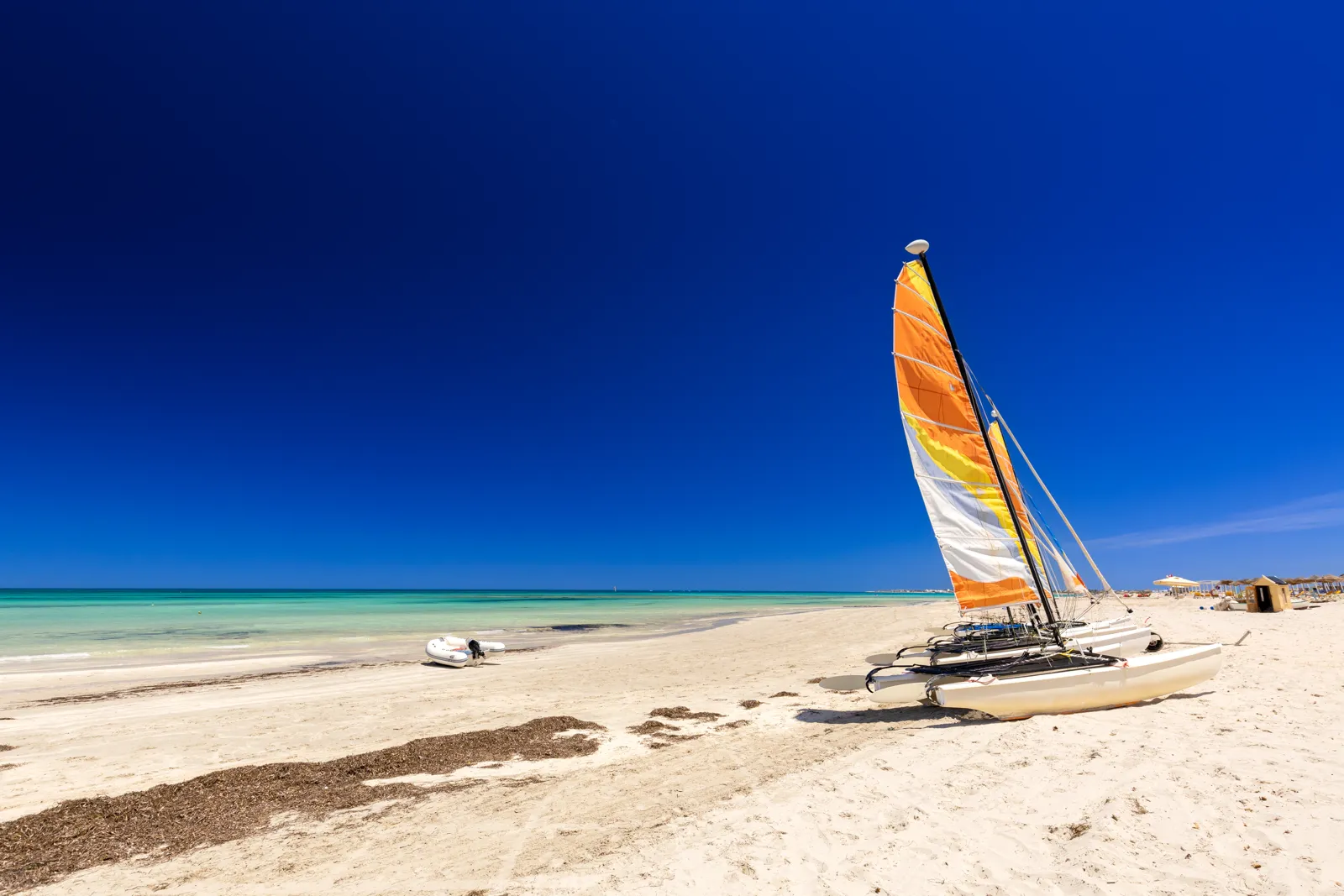
The main beach stretches for several kilometers south of the medina. The almost constant wind makes it a well-known spot for kitesurfing and windsurfing, with schools and equipment rental. Horse and camel rides are offered on the sand. For swimming, stay near the supervised areas: the UK FCDO notes that many beaches in Morocco have limited or no lifeguard cover and that strong currents can occur.
Diabat and Sidi Kaouki
At the south end of the bay, the village of Diabat lies near the ruins of an old fort, the half-buried Borj el Berod. Further on, about 25 km (16 mi) away, Sidi Kaouki is a surfers’ village with a long wild beach, less windy than Essaouira’s on some days. Allow half a day or a full day by taxi, car or, for the sporty, bicycle.
Argan cooperatives and the hinterland
The argan tree grows mainly in southwestern Morocco, around Essaouira and Agadir. On the road to Marrakech, many women’s cooperatives demonstrate argan oil extraction and sell their products. Choose cooperatives that display their prices. The rural hinterland, among argan trees and hills, can also be explored by quad bike, on horseback or on foot.
Mogador Island
Opposite the port, Mogador Island is a protected nature reserve, known for its colony of Eleonora’s falcons. It is not open to unaccompanied visits: admire it from the Skala du Port or the beach.
Suggested itineraries
Essaouira in 3 days
Day 1: the medina, the souks, the Skala de la Ville and sunset on the ramparts
Day 2: the fishing port in the morning, museums and the mellah, an afternoon at the beach or a kitesurfing lesson
Day 3: Diabat and Sidi Kaouki, or an argan cooperative and a walk in the hinterland
A week between Marrakech and the coast
Days 1 to 3: Marrakech (medina, gardens, souks)
Days 4 to 6: Essaouira (medina, port, beach, Sidi Kaouki)
Day 7: the coast road to Agadir, or back to Marrakech
Indicative estimates, varying with the season and the exchange rate, converted from euros at the European Central Bank rate of 23 October 2026 and rounded. Prices peak in July-August and during European school vacations.
To cut costs: go in March, November or January, eat in the small eateries of the medina or at the port, and book riads early for school vacations.
Getting to and around Essaouira
By plane: Essaouira Mogador Airport is about 15 km (9 mi) south of the town; a taxi is essential, so agree on the fare before setting off. Direct international routes are limited: check with the airlines.
Via Marrakech: the most common option. Allow about 3 hours by road for some 190 km (118 mi), by bus (Supratours, CTM), grand taxi or car with driver.
From Agadir: about 3 hours by the coast road, by bus or car.
In the medina: everything is on foot; cars stay in the parking lots on the edge. Porters with carts carry luggage to your riad for a tip.
Petit taxis: blue in Essaouira, handy for reaching the southern beach or the bus station.
Car: useful for Sidi Kaouki and the hinterland. The U.S. Department of State describes traffic accidents as a significant hazard in Morocco and driving practices as very poor; avoid driving at night.
Where to stay in Essaouira
Medina: riads and guesthouses within walking distance of everything; an authentic atmosphere, but no car access and rooms sometimes damp in winter
Seafront and Avenue Mohammed V: more recent hotels facing the beach, convenient by car and for families
Diabat and the golf course: quieter resort hotels a few kilometers south
Sidi Kaouki: guesthouses and surf camps for a nature stay
Entry requirements, health and safety
US citizens: according to the U.S. Department of State (travel.state.gov, last updated July 30, 2026), you need a valid passport with at least one blank page; no visa is required for visits of less than 90 days. If you stay beyond 90 days without requesting an extension, you will have to appear before a judge before leaving. Carry a copy of your passport at all times.
UK citizens: according to the UK FCDO (GOV.UK, updated 19 August 2026), you can visit without a visa for up to 90 days for tourism. Your passport must be valid for at least 3 months after the date you arrive and must not be damaged; make sure it is stamped on entry. A polio vaccination certificate is required if you come from a polio-affected country.
Health: check vaccine recommendations at least 8 weeks before your trip (TravelHealthPro for UK travelers, the CDC for US travelers). Rabies is present and stray dogs are common: do not approach them and seek medical advice immediately after a bite or scratch (UK FCDO). In many areas tap water is not drinkable and ice may be made with tap water (U.S. Department of State).
Crime: petty crime is common in tourist areas, especially in medinas and on beaches (pickpocketing, bag-snatching, theft by motorcyclists), and criminals have used knives in street attacks in major cities and along beaches (UK FCDO, updated 19 August 2026). People posing as official guides commonly harass tourists: use a guide with an official badge.
Terrorism: the UK FCDO considers that terrorists are likely to try to carry out attacks in Morocco, including in places popular with tourists and in crowded places; stay aware of your surroundings and follow the advice of the local authorities. Protests can occur without warning in large cities.
Swimming: many beaches in Morocco have limited or no lifeguard cover; strong currents and unexpected waves can occur, so avoid swimming in isolated areas (UK FCDO). Board sports require suitable precautions.
Local laws: drinking alcohol anywhere other than a licensed restaurant or bar is illegal; possession of any drugs, including cannabis, carries severe penalties; same-sex relations are illegal (UK FCDO). There have been deaths caused by alcoholic drinks containing methanol.
Emergencies: police 190, gendarmerie 177, ambulance and fire 150 according to the UK FCDO; the U.S. Department of State gives 15 for emergency services and 190 for police from a mobile phone. Check locally on arrival.
Money: the dirham is a closed currency that cannot easily be exchanged outside Morocco (UK FCDO); keep your exchange receipts, as dirhams can be changed back into US dollars only with proof that you exchanged them in Morocco (U.S. Department of State). Be alert at ATMs. Our currency converter helps you estimate your spending. There are ATMs at the entrance to the medina and in town; keep cash for the souks, the port and petit taxis.
Wind: bring a windbreaker and sunglasses, even in summer.
Dress: swimwear on the beach, covered clothing in the medina.
Argan oil: buy it from a cooperative or a shop with displayed prices; be wary of products that are too cheap.
Ramadan: eating or drinking in public in the daytime may cause offense (UK FCDO); opening hours change.
Internet: a local SIM card or an eSIM is practical and inexpensive; riad Wi-Fi is patchy behind the thick walls.
Who is Essaouira for?
Board sports: yes: kitesurfing and windsurfing in summer, when the trade wind is most consistent, and surfing in autumn and winter at Sidi Kaouki.
Culture: yes: a World Heritage medina, the Skala ramparts, thuya marquetry workshops, museums and the Jewish heritage of the mellah.
Tight budget: yes: roughly US$40 to 65 per person per day on a tight budget, with plenty of riads and the small eateries of the medina.
Families: possible: the seafront hotels are convenient for families, but the water stays cool all year and swimming requires great care.
Beach and sunbathing: less suitable: strong wind and cool water. Essaouira is better for escaping the summer heat of Marrakech (21 to 22 °C / 70 to 72 °F in the afternoon).
A circuit in Morocco: yes: an easy stop about 3 hours from Marrakech, or by the coast road from Agadir.
May, September and October are among the most pleasant: 21 to 22 °C (70 to 72 °F) in the afternoon, very little rain and less wind than in high summer. April also works, outside the Easter vacations.
Is Essaouira hot in summer?
No: the average high does not exceed 22 °C (72 °F) in July-August, and the trade wind often blows hard. It is a good stop for escaping the heat of Marrakech, less so for sunbathing.
How many days do you need to visit Essaouira?
Two to three days are enough for the medina, the port, the ramparts and the beach. Add one or two days for Sidi Kaouki, a kitesurfing lesson or the hinterland.
How do you get from Marrakech to Essaouira?
Allow about 3 hours by road. Supratours and CTM buses run several times a day; grands taxis, cars with drivers and organized tours are other options.
Can you swim in Essaouira?
Yes, but the water is cool all year and the wind strong. Swim near the lifeguard posts: the UK FCDO warns that many Moroccan beaches have limited lifeguard cover and strong currents.
Is Essaouira safe?
The UK FCDO considers that terrorists are likely to try to carry out attacks in Morocco and reports petty crime in medinas and on beaches. In practice, the main risks are swimming and the roads.
Our sources
Entry, health and safety information read on 26 October 2026: U.S. Department of State, Morocco country information (travel.state.gov, last updated July 30, 2026), and UK FCDO, foreign travel advice for Morocco (GOV.UK, updated 19 August 2026)
Climate data: 1991-2020 normals for the Essaouira station, Direction générale de la Météorologie du Maroc, published by the World Meteorological Organization (NOAA archive)
European Central Bank, euro reference exchange rates of 23 October 2026 (budget conversion)


 FlightsKiwi.comCompare flights and airline combinations to Essaouira.Compare flights