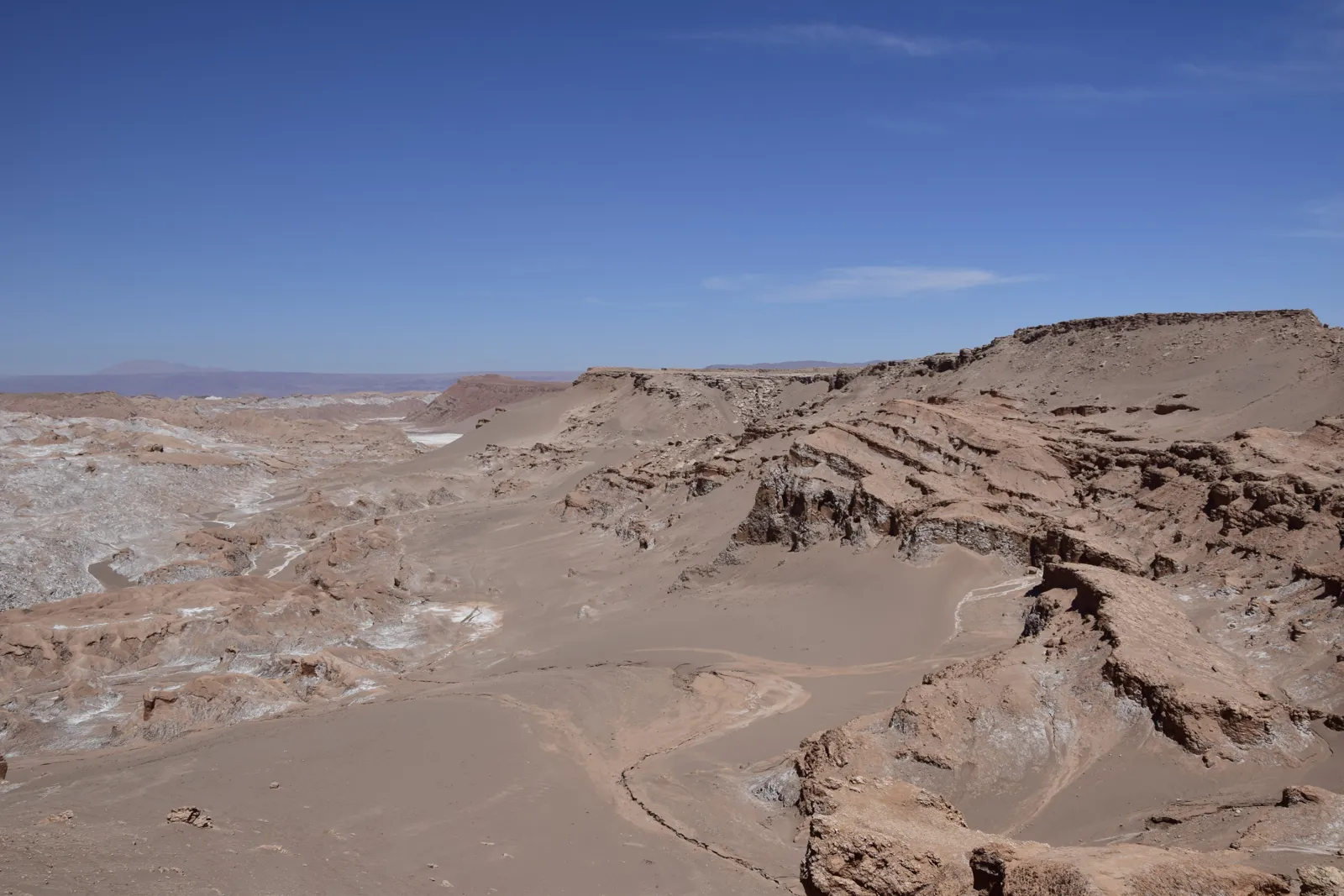
Merzouga is the Moroccan village at the foot of the Erg Chebbi, a mass of dunes some of which rise up to 150 m (490 ft) above the stony plateau. People come for a camel ride, a night in a desert camp and sunrise over the sand. The Merzouga desert is best visited from October to April: in summer, average highs approach 40 °C (104 °F) in the region.
This guide gathers what you need to know before you go: what to do, how to get there, the month-by-month climate, official safety advice, and two calculations of our own: the temperature gap between day and night (to know what to pack for the camp) and the time of sunrise and sunset over the dunes.

Our travel deals for Merzouga
Affiliate links: we earn a commission, at no extra cost to you.
 FlightsKiwi.comCompare flights and airline combinations to Merzouga.Compare flights
- eSIMAiraloData plan to install before you leave (eSIM-compatible phone).See plans


Merzouga at a glance
- Location Errachidia province (Drâa-Tafilalet region), on the western edge of the Erg Chebbi; about 35 km (22 mi) southeast of Rissani and 50 km (31 mi) from the Algerian border, which is closed (Wikipedia, UK FCDO)
- Language Arabic, Amazigh (Berber); French is often understood in tourism
- Currency the Moroccan dirham (MAD); bring cash, as ATMs are rare locally
- Time zone UTC+1, UTC+0 during Ramadan — see the time difference in Morocco
- Access no airport in Merzouga; the nearest is Errachidia (Moulay Ali Cherif). Fly to Marrakech, Fez or Ouarzazate and continue by road, or take a connecting flight to Errachidia
- Entry US and UK citizens can visit without a visa for up to 90 days (travel.state.gov, GOV.UK)
- Safety near the closed Algerian border; see the official advice below
Things to do in Merzouga and the Erg Chebbi desert
Camel ride and a night in a desert camp
This is the main activity: departure in the late afternoon from the inns lined up along the dunes, one to two hours by camel to a fixed camp, dinner and music, then back at sunrise. Camps range from a simple tent to a « luxury camp » with private bathrooms: check what is included (water, toilets, blankets, luggage transfer). The UK FCDO advises checking safety standards with adventure tourism providers.
Sunrise and sunset over the dunes
The big dunes on the Merzouga side can be climbed on foot, slowly, in the sand. Go up at least 30 minutes before the sunrise or sunset time shown in our table below, with a headlamp in the morning.
Around the erg by 4×4
A 4×4 trip lets you circle the dunes in half a day or a day: villages at the foot of the dunes, a black-stone plateau, mines and nomad camps. Choose a vehicle with a local driver rather than venturing onto the tracks alone.
Khamlia and Gnaoua music
The neighboring village of Khamlia is known for its Gnaoua music groups, a tradition brought by people from sub-Saharan Africa. Several houses welcome visitors for a concert and tea.
The seasonal lake Dayet Srji (Lake Yasmina)
Northwest of the dunes, a depression fills in some years after heavy rain, attracting migratory birds. The lake re-formed in 2024 according to Wikipedia, but it may be dry: ask locally.
Rissani and Erfoud
On the road to Merzouga, Rissani occupies the site of ancient Sijilmasa, a prosperous caravan city from the 8th to the 14th century. Its souk is busy on certain days of the week. Erfoud, further north, is known for its fossil workshops.
Sandboarding and quad biking
Sandboarding is done on the slopes of the dunes; quad bikes are offered by many rental outfits. Choose supervised tours and respect the camp areas.
Getting to Merzouga
Merzouga is far from the big cities. We calculated the straight-line distance from the main arrival points: the road is much longer, as it crosses or skirts the Atlas.
| Starting point | Straight-line distance to Merzouga |
|---|---|
| Errachidia (nearest airport) | 101 km (63 mi) |
| Ouarzazate | 277 km (172 mi) |
| Fez | 341 km (212 mi) |
| Marrakech | 385 km (239 mi) |
- From Marrakech: most « desert » tours leave from Marrakech over 3 days, via the Tizi n’Tichka pass, Ouarzazate and the Dades and Todra gorges.
- From Fez: the route crosses the Middle Atlas, Midelt and the Ziz valley; a good option for a Fez-desert-Marrakech trip.
- By plane: Errachidia airport is served by Royal Air Maroc from Casablanca and Rabat according to Wikipedia; check the season’s schedules.
- By rental car: the U.S. Department of State describes traffic accidents as a significant hazard in Morocco and roads through the Atlas as steep, narrow and dangerous, and notes frequent flash flooding in rural areas during the rainy season (November-March); avoid driving at night and plan short stages.
When to go to Merzouga
The best time is mid-October to April: the only official normals available are those of the Errachidia station, about 100 km (62 mi) northwest of Merzouga and higher, where it is generally a little cooler than at the foot of the dunes. In Errachidia, average highs range from 16 to 27 °C (61 to 80 °F). But nights are cold from December to February (average lows of 2 to 5 °C / 36 to 41 °F): at the camp, bring proper warm layers. From June to August, average highs exceed 35 °C (95 °F) in Errachidia, and it is usually even hotter in lower-lying Merzouga: outings are then limited to early morning and evening. Rain is rare (fewer than 3 days a month), but flash floods have already hit the village, as in 2006.
| Month | High °C (°F) | Low °C (°F) | Day/night range °C (°F) | Rain mm (in) | Rainy days | Verdict |
|---|---|---|---|---|---|---|
| January | 15.9 (61 °F) | 2 (36 °F) | 13.9 (25 °F) | 10 (0.4 in) | 1.4 | ⚠️ Mild days, cold nights |
| February | 18.2 (65 °F) | 4.6 (40 °F) | 13.6 (24 °F) | 12.6 (0.5 in) | 1.7 | ✅ Pleasant, cool nights |
| March | 22.1 (72 °F) | 8.8 (48 °F) | 13.3 (24 °F) | 14 (0.6 in) | 1.9 | ✅ Ideal |
| April | 26.1 (79 °F) | 13 (55 °F) | 13.1 (24 °F) | 9.4 (0.4 in) | 1.4 | ✅ Ideal |
| May | 30.3 (87 °F) | 17.3 (63 °F) | 13 (23 °F) | 8.7 (0.3 in) | 1.5 | ⚠️ Hot |
| June | 35.4 (96 °F) | 22 (72 °F) | 13.4 (24 °F) | 5.6 (0.2 in) | 1.3 | ❌ Very hot |
| July | 39.5 (103 °F) | 25.8 (78 °F) | 13.7 (25 °F) | 3.1 (0.1 in) | 0.9 | ❌ Extreme heat |
| August | 38.2 (101 °F) | 24.9 (77 °F) | 13.3 (24 °F) | 6.3 (0.2 in) | 1.7 | ❌ Extreme heat |
| September | 32.9 (91 °F) | 19.9 (68 °F) | 13 (23 °F) | 18.2 (0.7 in) | 2.8 | ⚠️ Hot |
| October | 26.8 (80 °F) | 14.2 (58 °F) | 12.6 (23 °F) | 20.8 (0.8 in) | 2.8 | ✅ Ideal |
| November | 20.6 (69 °F) | 7.7 (46 °F) | 12.9 (23 °F) | 16.3 (0.6 in) | 2.4 | ✅ Ideal |
| December | 16.7 (62 °F) | 3.5 (38 °F) | 13.2 (24 °F) | 8 (0.3 in) | 1.5 | ⚠️ Mild days, cold nights |
The average gap between afternoon and night stays close to 13 °C (23 °F) all year (12.6 to 13.9 °C), peaking at 13.9 °C (25 °F) in January: the key figure for packing. To compare with Marrakech, the coast or the Atlas, see the best time to visit Morocco.
What time to get up for sunrise over the dunes
| Month | Sunrise | Sunset | Daylight |
|---|---|---|---|
| January | 8:14 am | 6:36 pm | 10 h 21 min |
| February | 6:57 am | 6:03 pm | 11 h 06 min |
| March | 6:25 am | 6:23 pm | 11 h 58 min |
| April | 6:47 am | 7:44 pm | 12 h 56 min |
| May | 6:20 am | 8:04 pm | 13 h 44 min |
| June | 6:11 am | 8:21 pm | 14 h 09 min |
| July | 6:22 am | 8:21 pm | 13 h 58 min |
| August | 6:42 am | 7:59 pm | 13 h 17 min |
| September | 7:00 am | 7:22 pm | 12 h 22 min |
| October | 7:18 am | 6:44 pm | 11 h 26 min |
| November | 7:43 am | 6:18 pm | 10 h 35 min |
| December | 8:06 am | 6:15 pm | 10 h 09 min |
Desert camp checklist for Merzouga
- Warm clothes for the night from October to April (fleece, hat), even if the day is mild.
- A scarf or shesh and sunglasses against blowing sand.
- A headlamp for climbing the dune before dawn.
- A small bag for the night: large luggage usually stays at the inn.
- Cash in dirhams for tips and purchases in the village.
- Enough water, especially from May to September.
Where to stay in Merzouga
| Type | Best for | Strengths |
|---|---|---|
| Inn or kasbah-hotel at the foot of the dunes | All travelers, first night | Dunes within walking distance, pool in some, start of the rides |
| Standard desert camp | Tight budget, simple experience | A night in a tent, dinner and music; basic comfort |
| « Luxury » camp | Couples, comfort | Tents with beds and private bathrooms; often 4×4 access |
| Neighboring villages (Hassilabied, Khamlia) | Peace and quiet | A more village atmosphere, a few kilometers away |
Entry requirements, health and safety
- US citizens: according to the U.S. Department of State (travel.state.gov, last updated July 30, 2026), you need a valid passport with at least one blank page; no visa is required for visits of less than 90 days. If you stay beyond 90 days without requesting an extension, you will have to appear before a judge before leaving. Carry a copy of your passport at all times.
- UK citizens: according to the UK FCDO (GOV.UK, updated 19 August 2026), you can visit without a visa for up to 90 days for tourism. Your passport must be valid for at least 3 months after the date you arrive and must not be damaged; make sure it is stamped on entry. A polio vaccination certificate is required if you come from a polio-affected country.
- Details in our guide visa and entry requirements for Morocco.
- Algerian border: the authorities have closed the land and sea borders between Morocco and Algeria and patrol them closely; do not attempt to cross, as it is illegal without authorization (UK FCDO, updated 19 August 2026). Stay away from border areas and keep to a local guide for desert outings.
- Terrorism: the UK FCDO considers that terrorists are likely to try to carry out attacks in Morocco, including in places popular with tourists and in crowded places; stay aware of your surroundings and follow the advice of the local authorities. Protests can occur without warning in large cities.
- Stray dogs: rabies is present and packs of dogs can behave aggressively, especially in quieter areas: do not approach or feed them, and seek medical advice immediately after a bite or scratch (UK FCDO).
- Health: adequate medical care is mainly found in the largest cities; most providers only accept cash and may require a deposit (U.S. Department of State). Insurance covering medical costs and repatriation is essential. Protect yourself from the sun and drink plenty of water.
- Emergencies: police 190, gendarmerie 177, ambulance and fire 150 according to the UK FCDO; the U.S. Department of State gives 15 for emergency services and 190 for police from a mobile phone. Check locally on arrival.
Read also our travel insurance guide.
Practical tips for Merzouga
- Booking: compare what is included in the packages (transfer, dinner, breakfast, length of the ride) rather than price alone.
- Respect the place: take your rubbish with you; Wikipedia notes waste management problems linked to tourism.
- Photos: ask permission before photographing local people.
- Internet: mobile coverage can be weak at the camp.
Frequently asked questions
What is the best time to go to Merzouga?
From mid-October to April, when average highs stay between 16 and 27 °C (61 and 80 °F) in Errachidia, the nearest official station. Winter nights are cold: bring warm clothes.
Is Merzouga dangerous?
Merzouga is close to the Algerian border, which is closed and closely patrolled (UK FCDO). The UK FCDO also considers that terrorists are likely to try to carry out attacks in Morocco. Stay with a local guide and follow the instructions of the authorities.
How many nights should you spend in Merzouga?
One night in a desert camp is enough for sunset and sunrise; two nights let you add the 4×4 tour of the erg and Khamlia.
Can you go to Merzouga from Marrakech in one day?
Not realistically: Merzouga is more than 350 km (217 mi) from Marrakech as the crow flies (our calculation) and the road, longer still, crosses the Atlas. Plan several days with stops.
How high are the dunes of Merzouga?
Some dunes of the Erg Chebbi rise up to 150 m (490 ft) above the surrounding plateau; the dune field stretches for about 28 km (17 mi) from north to south.
Our sources
- Climate: 1991-2020 normals for the Errachidia station (World Meteorological Organization, published by NOAA), via the Wikipedia article « Errachidia »
- Destination de Voyage calculation: day/night temperature range, straight-line distances (haversine), sunrise and sunset (NOAA solar algorithm)
- Wikipedia (EN), « Merzouga », « Erg Chebbi » and « Moulay Ali Cherif Airport », consulted on 21 October 2026
- Entry, health and safety information read on 26 October 2026: U.S. Department of State, Morocco country information (travel.state.gov, last updated July 30, 2026), and UK FCDO, foreign travel advice for Morocco (GOV.UK, updated 19 August 2026)
- Our methodology
Updated October 2026.
To go further, see our Morocco guide and our other destinations in Africa.