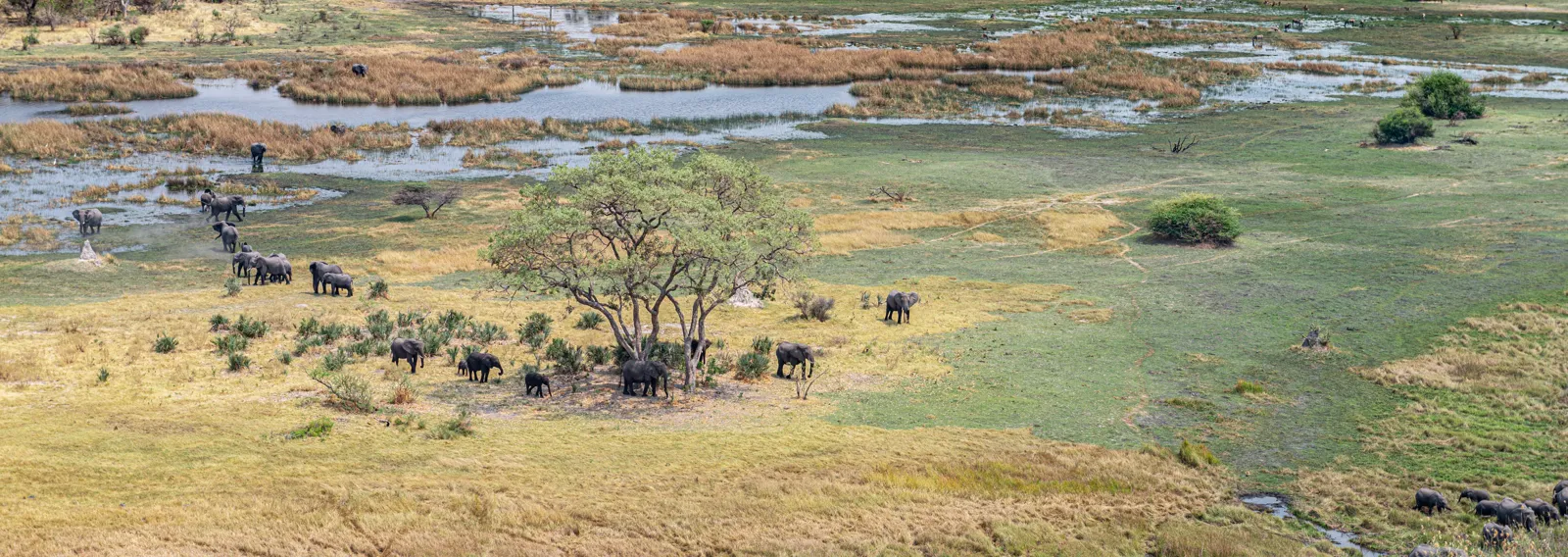
The best time to visit Botswana is the dry season, from May to October: it hardly rains any more, the vegetation thins out and animals concentrate around waterholes, the Okavango Delta and the Chobe River. June to September is the ideal window for a safari; October offers spectacular wildlife viewing but in intense heat.
From November to April, the rainy season (or « green season ») brings thunderstorms, green landscapes, births among many species and often lower rates. It is also when the Kalahari plains and the Makgadikgadi pans attract large herds. Here is how to choose, based on the climate normals of the Botswana Meteorological Services, published by the World Meteorological Organization.

Our travel deals for Botswana
Affiliate links: we earn a commission, at no extra cost to you.
 FlightsKiwi.comCompare flights and airline combinations to Botswana.Compare flights
- eSIMAiraloData plan to install before you leave (eSIM-compatible phone).See plans


When to go to Botswana at a glance
- Best overall period May to October, the dry season
- Safari in the Okavango, Moremi and Chobe June to October, when animals gather near water
- Kalahari and Makgadikgadi the rainy season, roughly December to April, for the herds and the greenery
- Cold nights June and July, an average minimum of about 7.5 °C (46 °F) in Maun and 4.6 °C (40 °F) in Gaborone
- Intense heat October, an average high of 34.5 °C (94 °F) in Maun and Kasane
- Rainy season roughly November to March, peaking from December to February
- High season and high prices July to October; book delta camps very early
When to go to Botswana by priority
- Best weather: the dry season, May to October; July, August and September are the most favorable for a safari in the Okavango, Moremi and Chobe
- Cheapest: the green season, December to March, then April–May, with often lower rates at many lodges
- Fewest crowds: January to March, then May and November; July and August are the busiest months
- Events: gathering of zebras at Nxai Pan and Makgadikgadi (roughly December to April), peak of the Okavango flood in mid-year, Botswana Day on September 30; natural phenomena vary with the rains
Still undecided on the destination? Compare with our selection: where to go in July.
Botswana: the calendar at a glance
✅ Best months: April, may, June, July, August, September, October
Climate and weather in Botswana month by month
The table below gives the normals for Maun, the gateway to the Okavango Delta and Moremi park, from where most safaris depart. The northeast (Kasane, Chobe), the Kalahari and the south are detailed below.
| Month | Avg. max | Avg. min | Rain | Crowds | Prices | Verdict |
|---|---|---|---|---|---|---|
| January | 32.2 °C (90 °F) | 19.8 °C (68 °F) | 109 mm (4.3 in) | Low | Low | ⚠️ Rainy season, thunderstorms |
| February | 32.1 °C (90 °F) | 19.6 °C (67 °F) | 97 mm (3.8 in) | Low | Low | ⚠️ Rainy, some tracks difficult |
| March | 31.9 °C (89 °F) | 18.7 °C (66 °F) | 67 mm (2.6 in) | Low | Low | ⚠️ End of the rains, green landscapes |
| April | 30.7 °C (87 °F) | 15.9 °C (61 °F) | 25 mm (1.0 in) | Moderate (Easter) | Moderate | ✅ Transition, clearer skies |
| May | 28.4 °C (83 °F) | 11.0 °C (52 °F) | 5 mm (0.2 in) | Moderate | Moderate | ✅ Start of the dry season, mild |
| June | 25.7 °C (78 °F) | 7.7 °C (46 °F) | 0.7 mm (0.03 in) | High | High | ✅ Dry, cool nights, delta flooded |
| July | 25.6 °C (78 °F) | 7.5 °C (46 °F) | 0.1 mm (<0.01 in) | Very high | High | ✅ Coolest month, excellent safari |
| August | 28.8 °C (84 °F) | 10.3 °C (51 °F) | 0.4 mm (0.02 in) | Very high | High | ✅ Very good wildlife viewing |
| September | 32.8 °C (91 °F) | 15.3 °C (60 °F) | 3 mm (0.1 in) | High | High | ✅ Concentrated wildlife, rising heat |
| October | 34.5 °C (94 °F) | 19.1 °C (66 °F) | 16 mm (0.6 in) | High | High | ✅ Safari at its peak, but very hot |
| November | 34.0 °C (93 °F) | 19.8 °C (68 °F) | 47 mm (1.9 in) | Moderate | Moderate | ⚠️ Heat, first thunderstorms, births |
| December | 32.9 °C (91 °F) | 19.9 °C (68 °F) | 79 mm (3.1 in) | Moderate (holidays) | Moderate | ⚠️ Rainy season under way |
Worth noting: Botswana is a semi-arid country. Even in the heart of the rainy season, about 100 to 135 mm (3.9 to 5.3 in) falls a month in the north, in the form of thunderstorms, with on average 2 to 4 days of significant rain a month according to the normals. The big contrast is in temperatures: more than 34 °C (93 °F) in the afternoon in October–November, but nights close to 5 °C (41 °F) in the south in June–July.
The seasons in Botswana: pros and cons
Botswana is in the southern hemisphere: austral winter corresponds to northern-hemisphere summer. In practice there are three periods: the cool, dry season (May to August), the hot, dry season (September to October, sometimes until mid-November) and the rainy season (roughly November to April).
Cool, dry season (May to August): the most comfortable
It hardly rains any more: less than 5 mm (0.2 in) a month in Maun and Kasane from May to August. Days are pleasant, around 25 to 29 °C (77 to 84 °F) in Maun, but nights are cold, especially in the Kalahari and the south: in July, the average minimum falls to 4.1 °C (39 °F) in Ghanzi and 4.6 °C (40 °F) in Gaborone. A paradox of Botswana: it is in the middle of the dry season that the Okavango Delta holds the most water, because the flood comes from rain that fell several months earlier on the Angolan highlands. The flood usually peaks in mid-year, with large variations from one year to the next.
- Pros: ideal conditions for safaris and mokoro trips, passable tracks
- Cons: very cool nights and dawn safari departures in open vehicles; crowds and prices at their highest from July
- Our tip: bring a fleece, a hat and gloves for morning outings
Hot, dry season (September to October): the safari peak
Water becomes scarce outside the delta and rivers: animals, notably the large elephant herds of Chobe, converge on permanent waterholes. This is the most spectacular period for wildlife viewing. In return, the heat climbs: an average high of 34.5 °C (94 °F) in October in Maun and Kasane, 33 °C (91 °F) in Ghanzi.
- Pros: highly concentrated wildlife, low vegetation, clear skies
- Cons: strong afternoon heat, dust, very dry landscapes; high prices
- Who is it for? Travelers focused on wildlife viewing, ready to get up early and nap during the hot hours
Rainy season (November to April): the green season
The rains arrive as thunderstorms, often late in the day. They are heavier in the northeast (134 mm (5.3 in) in January and February in Kasane) than in the center and south. Landscapes turn green, many antelope give birth early in the season and migratory birds arrive. In the central Kalahari and around the Nxai and Makgadikgadi pans, fresh grass attracts zebras and wildebeest, making this the best time for these regions. Kasane, the central Kalahari and the Makgadikgadi pans are located on our map of Botswana.
- Pros: green landscapes, births, birdwatching, fewer visitors and « green season » rates at many lodges
- Cons: animals more dispersed in the north, humid heat, muddy or cut tracks
- Be careful: some tracks and camps can be hard to reach in the middle of the rainy season; ask your rental company or agency
When to go to Botswana by region
Botswana is a vast plateau, largely covered by the Kalahari. The climate varies mostly from the wetter north to the drier southwest. Comparison of the normals for four stations:
| Month | Maun (Okavango) | Kasane (Chobe) | Ghanzi (Kalahari) | Gaborone (southeast) |
|---|---|---|---|---|
| January | 32.2 °C (90 °F) / 109 mm (4.3 in) | 30.8 °C (87 °F) / 134 mm (5.3 in) | 32.4 °C (90 °F) / 104 mm (4.1 in) | 32.5 °C (90 °F) / 114 mm (4.5 in) |
| February | 32.1 °C (90 °F) / 97 mm (3.8 in) | 30.6 °C (87 °F) / 134 mm (5.3 in) | 31.9 °C (89 °F) / 95 mm (3.7 in) | 31.5 °C (89 °F) / 89 mm (3.5 in) |
| March | 31.9 °C (89 °F) / 67 mm (2.6 in) | 31.1 °C (88 °F) / 70 mm (2.8 in) | 31.1 °C (88 °F) / 66 mm (2.6 in) | 30.2 °C (86 °F) / 66 mm (2.6 in) |
| April | 30.7 °C (87 °F) / 25 mm (1.0 in) | 30.5 °C (87 °F) / 23 mm (0.9 in) | 29.3 °C (85 °F) / 27 mm (1.1 in) | 27.8 °C (82 °F) / 33 mm (1.3 in) |
| May | 28.4 °C (83 °F) / 5 mm (0.2 in) | 28.6 °C (83 °F) / 2 mm (0.1 in) | 26.9 °C (80 °F) / 5 mm (0.2 in) | 25.4 °C (78 °F) / 11 mm (0.4 in) |
| June | 25.7 °C (78 °F) / 0.7 mm (0.03 in) | 26.2 °C (79 °F) / 0.5 mm (0.02 in) | 24.1 °C (75 °F) / 0.2 mm (<0.01 in) | 22.5 °C (72 °F) / 5 mm (0.2 in) |
| July | 25.6 °C (78 °F) / 0.1 mm (<0.01 in) | 26.2 °C (79 °F) / 0 mm (0 in) | 24.0 °C (75 °F) / 0 mm (0 in) | 22.8 °C (73 °F) / 0.4 mm (0.02 in) |
| August | 28.8 °C (84 °F) / 0.4 mm (0.02 in) | 29.4 °C (85 °F) / 0 mm (0 in) | 27.2 °C (81 °F) / 0.6 mm (0.02 in) | 25.7 °C (78 °F) / 3 mm (0.1 in) |
| September | 32.8 °C (91 °F) / 3 mm (0.1 in) | 33.0 °C (91 °F) / 1.5 mm (0.1 in) | 31.2 °C (88 °F) / 5 mm (0.2 in) | 29.6 °C (85 °F) / 19 mm (0.7 in) |
| October | 34.5 °C (94 °F) / 16 mm (0.6 in) | 34.5 °C (94 °F) / 20 mm (0.8 in) | 33.2 °C (92 °F) / 26 mm (1.0 in) | 31.0 °C (88 °F) / 44 mm (1.7 in) |
| November | 34.0 °C (93 °F) / 47 mm (1.9 in) | 33.1 °C (92 °F) / 63 mm (2.5 in) | 33.6 °C (92 °F) / 40 mm (1.6 in) | 31.5 °C (89 °F) / 80 mm (3.1 in) |
| December | 32.9 °C (91 °F) / 79 mm (3.1 in) | 31.4 °C (89 °F) / 127 mm (5.0 in) | 33.3 °C (92 °F) / 71 mm (2.8 in) | 32.3 °C (90 °F) / 89 mm (3.5 in) |
In one table: the recommended period for each main region, month by month.
| Region | Jan | Feb | Mar | Apr | May | Jun | Jul | Aug | Sep | Oct | Nov | Dec |
|---|---|---|---|---|---|---|---|---|---|---|---|---|
| Okavango Delta and Moremi | ⚠️ | ⚠️ | ⚠️ | ⚠️ | ⚠️ | ✅ | ✅ | ✅ | ✅ | ✅ | ⚠️ | ⚠️ |
| Kasane and Chobe park | ⚠️ | ⚠️ | ⚠️ | ⚠️ | ⚠️ | ⚠️ | ✅ | ✅ | ✅ | ✅ | ⚠️ | ⚠️ |
| Central Kalahari, Nxai Pan and Makgadikgadi | ✅ | ✅ | ✅ | ✅ | ⚠️ | ⚠️ | ⚠️ | ⚠️ | ⚠️ | ⚠️ | ⚠️ | ✅ |
| Gaborone, Francistown and the southeast | ⚠️ | ⚠️ | ⚠️ | ✅ | ✅ | ⚠️ | ⚠️ | ⚠️ | ✅ | ⚠️ | ⚠️ | ⚠️ |
The Okavango Delta and Moremi
From Maun, you reach the delta by light aircraft, by boat or by track to the Moremi reserve. The best time runs from June to October: it is dry, the flood fills the channels and allows mokoro (traditional dugout canoe) outings, and wildlife concentrates on the islands. From December to March, rain, humid heat and a lower water level change the experience, with often gentler rates.
Kasane and Chobe National Park
In the far northeast, Kasane is the base for Chobe park, known for its very large concentrations of elephants along the river. It is the wettest region of the country (127 to 134 mm (5.0 to 5.3 in) a month from December to February), but also the mildest in winter (an average minimum of 9.5 °C (49 °F) in July). The ideal window runs from July to October, when animals come down to drink at the river. Boat cruises on the Chobe are possible all year.
Central Kalahari, Nxai Pan and Makgadikgadi
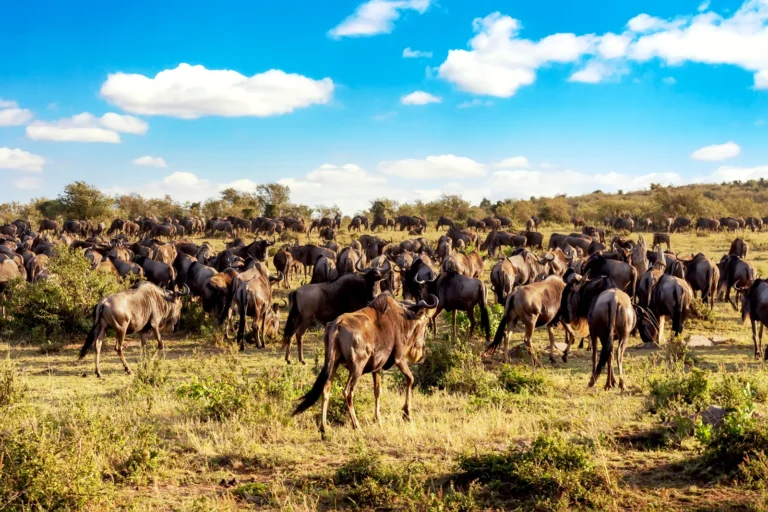
These vast semi-desert expanses are the exception to the classic calendar: it is during the rainy season, roughly December to April, that the grass grows back and zebras, wildebeest and antelope gather there, followed by predators. In the dry season, the Makgadikgadi salt pans offer lunar landscapes, but nights are cold (an average minimum of 4.1 °C (39 °F) in July in Ghanzi, to the west). Access is by well-equipped 4×4 or organized safari.
Gaborone, Francistown and the southeast
The more populated southeast is often just a stopover. Gaborone has the coldest winters of the selected stations (an average minimum of 4.6 °C (40 °F) in June and July) and hot, stormy summers (114 mm (4.5 in) in January). Francistown, in the east, follows a similar pattern (115 mm (4.5 in) in January, an average minimum of 4.6 °C (40 °F) in July). The transition months, April–May and September, are the most pleasant there.
When to go to Botswana by trip type
| Trip | Best time | Where? |
|---|---|---|
| First safari (delta, Moremi, Chobe) | June to October | Maun, Okavango, Moremi, Kasane |
| Mokoro in the delta | Roughly June to September, depending on the flood level | Okavango Delta |
| Chobe elephants | August to October | Chobe River, Kasane |
| Kalahari and zebra herds | Roughly December to April | Nxai Pan, Makgadikgadi, central Kalahari |
| Birdwatching | November to April (migratory birds) | Okavango, Chobe |
| Photography | May to June (light, mild temperatures); or the green season for stormy skies | Delta, Makgadikgadi |
| Cutting the budget | Green season (December to March), or April–May | All over the country, with « green season » rates at many lodges |
| Combining with Victoria Falls | March to May for the water flow, August to October for a combined safari | Kasane, then Zimbabwe or Zambia |
Comparing several southern African countries? See also the best time to visit Namibia, often combined with Botswana, and the one for South Africa.
Major events to plan your trip around
| Date | Event | Location |
|---|---|---|
| Roughly December to April | Gathering of zebras and other herbivores on the Kalahari plains and pans | Nxai Pan, Makgadikgadi |
| Roughly November–December | Births among many antelope at the start of the rains | Throughout the country |
| Mid-year (variable) | Peak of the Okavango flood, from the Angolan rains | Okavango Delta |
| July 1 | Sir Seretse Khama Day (public holiday) | Nationwide |
| September 30 | Botswana Day, independence day (public holiday) | Nationwide, especially Gaborone |
Botswana month by month
January: Heart of the rainy season: 109 mm (4.3 in) in Maun, 134 mm (5.3 in) in Kasane, in the form of thunderstorms. Humid heat (32 °C (90 °F) in the afternoon). A good month for the Kalahari and the pans, less so for the delta.
February: Still rainy in the north (134 mm (5.3 in) in Kasane). Very green landscapes, many birds, « green season » rates. Some tracks can be difficult.
March: The rains ease (67 mm (2.6 in) in Maun). A good time for photographers and for Nxai Pan. Few visitors.
April: Transition to the dry season: 25 mm (1.0 in) in Maun, nights cooling (15.9 °C (61 °F)). Landscapes still green, moderate crowds outside Easter.
May: Start of the dry season, mild temperatures (28.4 °C (83 °F) in the afternoon in Maun) and almost no rain. A very good balance of conditions and price.
June: Dry everywhere. Nights become cold (7.7 °C (46 °F) in Maun, 4.6 °C (40 °F) in Gaborone). The Okavango flood is generally well established: ideal for mokoro trips.
July: The coolest month: 25.6 °C (78 °F) in the afternoon and 7.5 °C (46 °F) at night in Maun, 4.1 °C (39 °F) in Ghanzi. No rain. High season: delta camps are in great demand.
August: An excellent safari month: dry, sparse vegetation, animals near water. Temperatures rise (28.8 °C (84 °F) in Maun). Book well in advance.
September: Very good wildlife viewing, rising heat (32.8 °C (91 °F) in Maun, 33 °C (91 °F) in Kasane). Elephants flock to the Chobe River.
October: The hottest month (34.5 °C (94 °F) in Maun and Kasane). Wildlife is closest to waterholes. A few thunderstorms possible late in the month.
November: Heat and first thunderstorms (47 mm (1.9 in) in Maun, 63 mm (2.5 in) in Kasane). Births among antelope, arrival of migratory birds, falling visitor numbers.
December: The rainy season is under way (79 mm (3.1 in) in Maun, 127 mm (5.0 in) in Kasane). Landscapes turning green, herds heading for the Kalahari plains. Demand rises for the holidays.
When to book your trip to Botswana
Botswana relies on low-density tourism: camps in the Okavango Delta and Moremi are few and fill up quickly. For a safari from June to October, book 6 to 12 months ahead, especially camps reached by light aircraft. Campsites in the national parks, essential for self-drive trips, also go very early in high season. In the green season, 2 to 3 months is generally enough. Check itineraries and connections to Maun, Kasane or Gaborone when booking.
Planning your trip to Botswana
- Entry requirements: see our country guide for the entry requirements for Botswana.
- Time difference: Botswana is on UTC+2 all year: 2 hours ahead of London in winter (1 in summer) and 7 hours ahead of New York in winter (6 in summer).
- Currency: the pula (BWP). Use our currency converter to estimate your budget.
To go further, see our complete Botswana travel guide.
Frequently asked questions
Is August a good time to visit Botswana?
An excellent safari month: dry, sparse vegetation, animals near water. Temperatures rise (28.8 °C (84 °F) in Maun). Book well in advance.
What is the best month to visit Botswana?
For a classic safari in the Okavango, Moremi and Chobe, July, August and September are the most favorable months: dry weather, wildlife concentrated near water and the delta in flood. May and June offer similar conditions, with slightly lower rates.
When is the Okavango Delta flooded?
Paradoxically in the dry season. The flood comes from rain that fell on the Angolan highlands several months earlier and usually peaks in mid-year. Its extent varies greatly from year to year.
Is Botswana cold in July?
By day, no: about 25 °C (77 °F) in the afternoon in Maun and 26 °C (79 °F) in Kasane. But nights are cold, with an average minimum of 7.5 °C (46 °F) in Maun and about 4 °C (39 °F) in Ghanzi and Gaborone. Dawn safaris in open vehicles call for warm clothing.
Can you go on safari in Botswana in the rainy season?
Yes. Thunderstorms fall mostly late in the day. Animals are more dispersed in the north, but it is the best time for the central Kalahari, Nxai Pan and Makgadikgadi, and many lodges apply « green season » rates.
What is the cheapest time to visit Botswana?
The green season, December to March (outside the holidays), then April and November. July to October is the most expensive period.
When can you see the most elephants in Chobe?
At the end of the dry season, from August to October, when inland waterholes dry up and herds come down to drink at the Chobe River.
Our sources
- World Meteorological Organization (World Weather Information Service): 1971–2000 normals of the Botswana Meteorological Services for the Maun, Kasane, Gaborone, Ghanzi and Francistown stations
- Government of Botswana, public holidays (Sir Seretse Khama Day on 1 July, Botswana Day on 30 September), checked 11 November 2026
- Our methodology
Updated November 2026.
To continue a trip through southern Africa, see also when to go to Namibia.