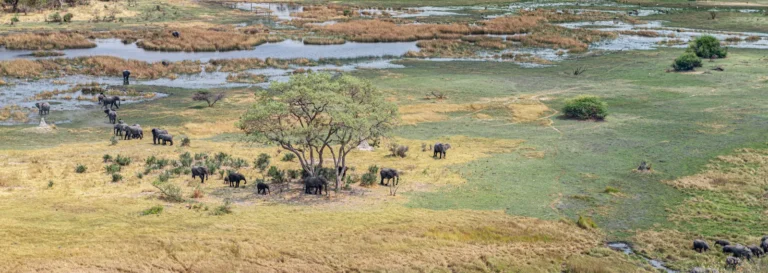
When is the best time to visit Namibia? The dry season, from May to October: it hardly rains, the tracks are passable and the animals of Etosha gather around waterholes, which makes game viewing easier. June to August is the mildest period in the daytime, but also the time of cold nights; September and October offer the best safari conditions, with heat building up markedly. The same September–October safari conditions apply next door: see the best time to visit Botswana. Our guide to Etosha National Park details gates, rules and waterholes.
From November to April, the rainy season brings thunderstorms, mainly in the north and center, greener landscapes and fewer visitors. The coast (Swakopmund, Walvis Bay) follows a completely different rhythm: cool, dry and often foggy all year. Here is how to choose, based on the climate normals published by the Namibia Meteorological Service, the national weather service.

Our travel deals for Namibia
Affiliate links: we earn a commission, at no extra cost to you.
 FlightsKiwi.comCompare flights and airline combinations to Namibia.Compare flights
- eSIMAiraloData plan to install before you leave (eSIM-compatible phone).See plans


When to go to Namibia at a glance
- Best overall period May to October, the dry season
- Etosha safari July to October, when vegetation is sparse and waterholes are busy
- Namib Desert and Sossusvlei May to September for bearable days; start at dawn all year round
- Cold nights June to August, an average low of about 7 °C (45 °F) in Windhoek and 3 °C (37 °F) in Gobabis in July
- Rainy season roughly November to April, with a peak from January to March in the north and center
- Atlantic coast 16 to 20 °C (61 to 68 °F) in the afternoon all year in Walvis Bay, frequent fog
- High season and high prices July to October and the year-end holidays; book park camps early
When to go to Namibia by priority
- Best weather: May to October, the dry season; July to October for Etosha wildlife
- Cheapest: February–March, in the green season, and May–June; prices are often lower in the rainy season outside the holidays
- Fewest crowds: February and March; in the dry season, May and June
- Events: Independence Day in March, Windhoek Oktoberfest in October (dates vary)
Namibia: the calendar at a glance
✅ Best months: April, may, June, July, August, September, October
Namibia’s climate and weather month by month
The table below gives the normals for Windhoek, the capital, located at about 1650 m (5,413 ft) above sea level on the central plateau. It is the arrival point for almost every trip. The coast, the south and the north are detailed further down. Windhoek, the coast and the desert south are shown on our map of Namibia. For your arrival stop, see our guide to visiting Windhoek.
| Month | Avg. max | Avg. min | Rain | Crowds | Prices | Verdict |
|---|---|---|---|---|---|---|
| January | 30.5 °C (87 °F) | 17.8 °C (64 °F) | 91 mm (3.6 in) | Moderate (local holidays) | Moderate | ⚠️ Rainy season, afternoon thunderstorms |
| February | 29.1 °C (84 °F) | 17.2 °C (63 °F) | 87 mm (3.4 in) | Low | Low | ⚠️ Rainy, tracks sometimes cut off |
| March | 27.9 °C (82 °F) | 16.1 °C (61 °F) | 70 mm (2.8 in) | Low | Low | ⚠️ End of the heavy rains, green landscapes |
| April | 26.2 °C (79 °F) | 13.2 °C (56 °F) | 32 mm (1.3 in) | Moderate (Easter) | Moderate | ✅ Transition, greenery and clearer skies |
| May | 23.7 °C (75 °F) | 10.0 °C (50 °F) | 6 mm (0.2 in) | Moderate | Moderate | ✅ Start of the dry season, mild |
| June | 21.0 °C (70 °F) | 7.1 °C (45 °F) | 1 mm (0.0 in) | Moderate | Moderate | ✅ Dry and sunny, cool nights |
| July | 21.3 °C (70 °F) | 7.0 °C (45 °F) | 0.4 mm (0.0 in) | High | High | ✅ Dry, cold nights, European summer holidays |
| August | 23.9 °C (75 °F) | 9.0 °C (48 °F) | 0.8 mm (0.0 in) | Very high | High | ✅ Excellent for Etosha |
| September | 27.6 °C (82 °F) | 12.6 °C (55 °F) | 4 mm (0.2 in) | High | High | ✅ Very good wildlife viewing |
| October | 29.7 °C (85 °F) | 15.0 °C (59 °F) | 11 mm (0.4 in) | High | High | ✅ Wildlife at its best, but strong heat in the north |
| November | 30.4 °C (87 °F) | 16.2 °C (61 °F) | 26 mm (1.0 in) | Moderate | Moderate | ⚠️ Very hot, first thunderstorms |
| December | 31.6 °C (89 °F) | 17.3 °C (63 °F) | 33 mm (1.3 in) | High (holidays) | High | ⚠️ Thunderstorms, strong demand over the holidays |
Note: even in the rainy season, Namibia remains a dry country. In Windhoek, less than 100 mm (3.9 in) falls a month at the height of the season, and the rain comes mainly as late-afternoon thunderstorms, between long sunny spells. The real contrast is in temperatures: more than 30 °C (86 °F) in the afternoon in the southern summer, around 7 °C (45 °F) at night in winter.
The seasons in Namibia: pros and cons
Namibia is in the Southern Hemisphere: the southern summer corresponds to the Northern Hemisphere winter. In practice, there are three periods: the dry, cool season (May to August), the dry, hot season (September to November) and the rainy season (roughly December to April, sometimes from November in the north).
Dry and cool season (May to August): the most comfortable
It hardly rains anywhere: less than 7 mm (0.3 in) a month in Windhoek from May to August, and zero or almost zero in Grootfontein, near Etosha. Days are mild, 21 to 24 °C (70 to 75 °F) in Windhoek, but nights are cold on the plateaus and in the desert: in July, the average low falls to 7 °C (45 °F) in Windhoek, 6.4 °C (44 °F) in Keetmanshoop and 3.2 °C (38 °F) in Gobabis, with frost possible.
- Pros: pleasant temperatures for driving and hiking, no rain, tracks in good condition
- Cons: cold nights, especially when camping; crowds and high prices from July
- Our tip: bring a proper fleece, a hat and a warm sleeping bag if you sleep in a rooftop tent
Dry and hot season (September to November): the safari peak
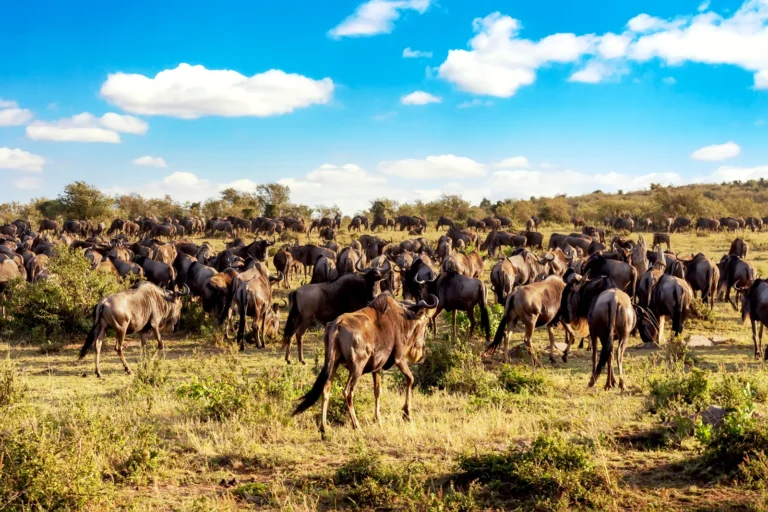
Vegetation is at its lowest and water is scarce: animals converge on the waterholes of Etosha, which makes this the most spectacular period for game viewing. In return, the heat builds quickly: in October, the average high reaches 34.5 °C (94 °F) in Ondangwa and 34.6 °C (94 °F) in Rundu, in the north, and more than 30 °C (86 °F) in Keetmanshoop, in the south.
- Pros: optimal wildlife viewing, clear skies, nights milder than in winter
- Cons: strong heat in the afternoon, dust, very dry landscapes; first thunderstorms possible in November
- Who is it for? Travelers focused on safari, who accept getting up early and taking a break in the hot hours
Rainy season (December to April): the green season
The rains arrive from the north and northeast. They are much heavier in the Zambezi strip (169 mm (6.7 in) in January in Katima Mulilo) and around Etosha (142 mm (5.6 in) in January in Grootfontein) than in the south (24 mm (0.9 in) in Keetmanshoop). Thunderstorms can suddenly fill dry riverbeds and make some tracks impassable.
- Pros: green landscapes, births among many species, migratory birds, fewer people and often lower prices (outside the holidays)
- Cons: animals more dispersed in Etosha, heat and humidity, tracks sometimes cut off
- Watch out: never cross a flooded riverbed, even with a 4×4
When to go to Namibia by region
Namibia is vast, and its climates vary strongly between the coast cooled by the cold Benguela Current, the central plateau, the desert south and the wetter north. Comparison of the normals of four stations:
| Month | Windhoek (center) | Walvis Bay (coast) | Keetmanshoop (south) | Grootfontein (north, toward Etosha) |
|---|---|---|---|---|
| January | 30.5 °C (87 °F) / 91 mm (3.6 in) | 20.4 °C (69 °F) / 1 mm (0.0 in) | 34.8 °C (95 °F) / 24 mm (0.9 in) | 30.9 °C (88 °F) / 142 mm (5.6 in) |
| February | 29.1 °C (84 °F) / 87 mm (3.4 in) | 19.1 °C (66 °F) / 1 mm (0.0 in) | 34.0 °C (93 °F) / 42 mm (1.7 in) | 29.8 °C (86 °F) / 127 mm (5.0 in) |
| March | 27.9 °C (82 °F) / 70 mm (2.8 in) | 20.4 °C (69 °F) / 4 mm (0.2 in) | 32.2 °C (90 °F) / 36 mm (1.4 in) | 29.4 °C (85 °F) / 100 mm (3.9 in) |
| April | 26.2 °C (79 °F) / 32 mm (1.3 in) | 19.1 °C (66 °F) / 0.4 mm (0.0 in) | 28.8 °C (84 °F) / 15 mm (0.6 in) | 28.5 °C (83 °F) / 30 mm (1.2 in) |
| May | 23.7 °C (75 °F) / 6 mm (0.2 in) | 19.6 °C (67 °F) / 1 mm (0.0 in) | 25.0 °C (77 °F) / 5 mm (0.2 in) | 26.5 °C (80 °F) / 4 mm (0.2 in) |
| June | 21.0 °C (70 °F) / 1 mm (0.0 in) | 18.7 °C (66 °F) / 1 mm (0.0 in) | 21.7 °C (71 °F) / 2 mm (0.1 in) | 24.0 °C (75 °F) / 0.4 mm (0.0 in) |
| July | 21.3 °C (70 °F) / 0.4 mm (0.0 in) | 18.3 °C (65 °F) / 0 mm (0.0 in) | 21.3 °C (70 °F) / 1 mm (0.0 in) | 23.8 °C (75 °F) / 0 mm (0.0 in) |
| August | 23.9 °C (75 °F) / 1 mm (0.0 in) | 16.5 °C (62 °F) / 0.2 mm (0.0 in) | 23.5 °C (74 °F) / 0.5 mm (0.0 in) | 26.8 °C (80 °F) / 1 mm (0.0 in) |
| September | 27.6 °C (82 °F) / 4 mm (0.2 in) | 15.7 °C (60 °F) / 0.1 mm (0.0 in) | 27.2 °C (81 °F) / 3 mm (0.1 in) | 30.6 °C (87 °F) / 5 mm (0.2 in) |
| October | 29.7 °C (85 °F) / 11 mm (0.4 in) | 16.9 °C (62 °F) / 0.2 mm (0.0 in) | 30.1 °C (86 °F) / 6 mm (0.2 in) | 32.1 °C (90 °F) / 22 mm (0.9 in) |
| November | 30.4 °C (87 °F) / 26 mm (1.0 in) | 17.6 °C (64 °F) / 0.4 mm (0.0 in) | 32.4 °C (90 °F) / 11 mm (0.4 in) | 31.9 °C (89 °F) / 52 mm (2.0 in) |
| December | 31.6 °C (89 °F) / 33 mm (1.3 in) | 19.5 °C (67 °F) / 0.1 mm (0.0 in) | 34.5 °C (94 °F) / 13 mm (0.5 in) | 31.3 °C (88 °F) / 71 mm (2.8 in) |
Windhoek and the central plateau
The climate is tempered by altitude. Days stay pleasant all year (21 to 32 °C (70 to 90 °F)), but winter nights are cool. The rainy season runs mainly from December to March.
The coast: Swakopmund and Walvis Bay
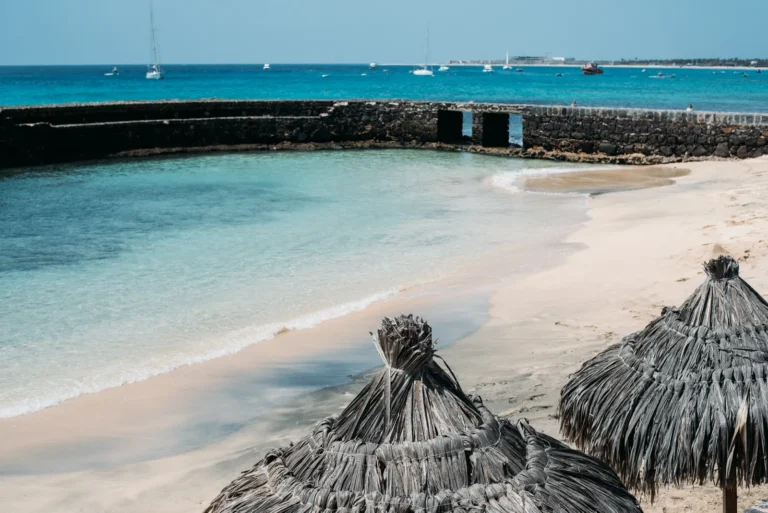
The coast is a world apart. The cold Benguela Current keeps temperatures cool and very stable: in Walvis Bay, the average high varies only between 15.7 °C (60 °F) (September) and 20.4 °C (69 °F) (January and March), and it almost never rains. However, coastal fog is frequent, often in the morning, and can stay for a good part of the day. Swakopmund, about 30 km (19 mi) to the north, has very similar conditions. Pack a windbreaker, even in the southern summer.
The Namib Desert: Sossusvlei and Deadvlei
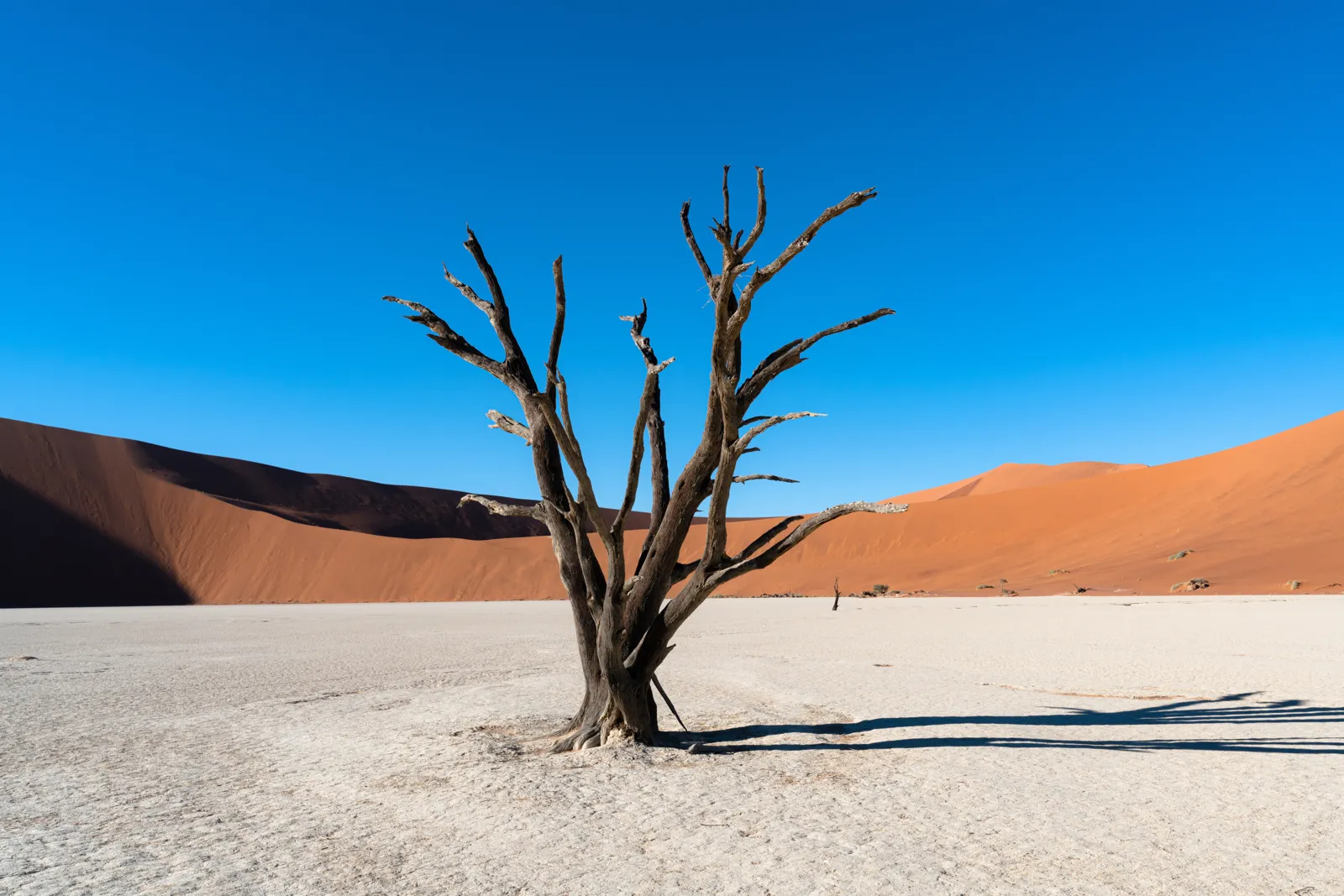
No published official station is located in the heart of the dunes, where rain is rare all year. From May to September, days are bearable and the low morning light is ideal for photos; from November to March, the heat makes climbing the dunes difficult after mid-morning. Whatever the season, arrive at the dunes at sunrise.
The south: Fish River Canyon, Lüderitz
The south is the most arid region of the interior. In Keetmanshoop, the average high exceeds 34 °C (93 °F) from December to February, while lows fall to about 6 to 7 °C (43 to 45 °F) in June–July. Multi-day hiking in Fish River Canyon is best done in the cooler months; check opening dates with the park operator (Namibia Wildlife Resorts) before planning.
The north: Etosha and the Zambezi strip
This is the wettest part of the country. For Etosha, the best window is July to October: dryness, low vegetation, animals concentrated around waterholes. From December to March, Grootfontein receives more than 100 mm (3.9 in) of rain a month and game disperses. Further east, the Zambezi strip (Caprivi) is even wetter in the southern summer, with more than 150 mm (5.9 in) of rain in January in Rundu and Katima Mulilo.
Region-by-region summary: the right month depending on the part of the country you are visiting (Namibia Meteorological Service normals cited above). On the coast, fog is frequent all year.
| Month | Etosha and the north | Namib (Sossusvlei) | Coast (Swakopmund, Walvis Bay) | South (Fish River Canyon) |
|---|---|---|---|---|
| January | ⚠️ Rain, animals dispersed | ⚠️ Heat | ✅ Cool, dry | ⚠️ Very hot (34.8 °C (95 °F)) |
| February | ⚠️ Rain, animals dispersed | ⚠️ Heat | ✅ Cool, dry | ⚠️ Very hot, thunderstorms |
| March | ⚠️ Rain decreasing | ⚠️ Heat | ✅ Cool, dry | ⚠️ Hot |
| April | ⚠️ Greenery | ⚠️ Transition | ✅ Cool, dry | ✅ Milder |
| May | ✅ Start of the dry season | ✅ Bearable days | ✅ Cool, dry | ✅ Mild |
| June | ✅ Dry | ✅ Bearable days | ✅ Cool, dry | ✅ Cold nights |
| July | ✅ Busy waterholes | ✅ Bearable days | ✅ Cool, dry | ✅ Cold nights |
| August | ✅ Excellent | ✅ Bearable days | ✅ Cool, dry | ✅ Mild |
| September | ✅ Very good | ✅ Bearable days | ⚠️ The coolest (15.7 °C (60 °F)) | ✅ Mild |
| October | ✅ Wildlife at its best, heat | ⚠️ Rising heat | ✅ Cool, dry | ⚠️ Hot (30 °C (86 °F)) |
| November | ⚠️ Heat, first thunderstorms | ⚠️ Heat | ✅ Cool, dry | ⚠️ Very hot |
| December | ⚠️ Thunderstorms | ⚠️ Heat | ✅ Cool, dry, holidays | ⚠️ Very hot (34.5 °C (94 °F)) |
✅ favorable conditions, ⚠️ possible with reservations, ❌ avoid. Summary based on the normals cited on this page and the regional advice above.
When to go to Namibia by trip type
| Your trip | Best time | Where? |
|---|---|---|
| First trip (desert, coast, safari) | May to October | Sossusvlei, Swakopmund, Damaraland, Etosha |
| Safari and wildlife viewing | July to October | Etosha, Zambezi region |
| Landscape photography | May to September; or February–April for stormy skies and greenery | Sossusvlei, Deadvlei, Damaraland |
| Hiking | May to August | Fish River Canyon, Naukluft, Waterberg |
| Birdwatching | November to April (migratory birds) | Walvis Bay, Etosha, Zambezi region |
| Avoiding the crowds and cutting costs | February–March, or May–June | Everywhere, adapting the itinerary to passable tracks |
| Family trip | School holidays in Europe and North America | Etosha, Swakopmund, Sossusvlei |
| Honeymoon | May–June or September | Sossusvlei, Damaraland, Etosha |
Tempted by Namibia for a safari but undecided? Compare it with the best time to visit Tanzania, another major wildlife destination in Africa.
Major events to plan your trip around
| Period | Event | Location |
|---|---|---|
| March | Independence Day (national holiday) | Across the country, especially Windhoek |
| Late December – early January | Year-end holidays: strong demand in camps and lodges | Coast (Swakopmund), national parks |
| July to October | International tourist high season | Etosha, Sossusvlei |
| October (dates vary) | Windhoek Oktoberfest, a legacy of the German presence | Windhoek |
Namibia month by month
January: Heart of the rainy season in the north and center: 91 mm (3.6 in) in Windhoek, 142 mm (5.6 in) in Grootfontein, with afternoon thunderstorms. It is hot (more than 34 °C (93 °F) in Keetmanshoop).
February: The wettest month in the south (42 mm (1.7 in) in Keetmanshoop), still very rainy in the center (87 mm (3.4 in) in Windhoek). Green landscapes, lower prices, but some tracks may be cut off by floods. Animals dispersed in Etosha.
March: The rains gradually ease. A good time for photographers: greenery, dramatic skies, few visitors.
April: A transition month: 32 mm (1.3 in) of rain in Windhoek, nights getting cooler. Landscapes stay green and crowds rise over the Easter holidays.
May: Start of the dry season. Mild temperatures (23.7 °C (75 °F) in the afternoon in Windhoek), very little rain and still moderate crowds. One of the best conditions-to-price ratios of the year.
June: Dry and sunny everywhere. Nights become cold inland (7.1 °C (45 °F) average low in Windhoek). Ideal for the desert.
July: The coolest month: 21.3 °C (70 °F) in the afternoon and 7 °C (45 °F) at night in Windhoek, 3.2 °C (38 °F) in Gobibabis. Almost no rain. The European summer holidays push crowds up.
August: Excellent for Etosha: marked dryness, animals around the waterholes. Nights remain cool. One of the most in-demand months: book well in advance.
September: A very good safari period, temperatures rising (27.6 °C (82 °F) in Windhoek). On the coast, it is the coolest month (15.7 °C (60 °F) average high in Walvis Bay).
October: End of the dry season: wildlife viewing at its peak, but strong heat in the north (34.5 °C (94 °F) in Ondangwa). A few thunderstorms may appear at the end of the month.
November: Heat and first thunderstorms, especially in the north (52 mm (2.0 in) in Grootfontein). Crowds falling. A good compromise if you accept the heat.
December: The rainy season is established in the north, with frequent thunderstorms. Demand rises sharply for the holidays, particularly on the coast and in park camps.
When to book your trip to Namibia
Namibia is mostly visited by self-drive, and it is rental vehicles (especially 4x4s equipped with rooftop tents) and park accommodation that go first. For a trip from July to October or over the holidays, book the vehicle and your nights in Etosha and near Sossusvlei 6 to 9 months ahead, or even more for camps inside the parks, where the number of places is limited. In the green season (February–March) or in May–June, 2 to 3 months is generally enough.
Planning your trip to Namibia
- Entry requirements: see our page with the entry requirements for Namibia, and check your government’s current travel advice before you book.
- Currency: cards work in towns and most lodges, but keep some cash for remote areas. Use our currency converter to estimate your budget.
- Health: consult your doctor or a travel health clinic well before departure.
To go further, see our complete Namibia travel guide.
Frequently asked questions
What is the best month to visit Namibia?
For a first trip combining the desert, the coast and Etosha, August and September are the most favorable months: dry weather, pleasant days and animals concentrated around waterholes. May and June offer similar conditions with fewer people and gentler prices.
When can you see the most animals in Etosha?
From July to October, at the end of the dry season. Vegetation is sparse and water scarce: animals gather around the waterholes, easy to watch from the park roads or camps.
Is Namibia cold in July?
During the day, no: about 21 °C (70 °F) in the afternoon in Windhoek. But nights are cold inland, with an average low of 7 °C (45 °F) in Windhoek and 3.2 °C (38 °F) in Gobabis, and frost possible. On the coast, it is cool all day, often under fog.
Can you visit Namibia in the rainy season?
Yes. Namibia remains a dry country and the rain falls mostly as thunderstorms, mainly in the north and center, from December to March. Landscapes are green and prices lower, but animals are more dispersed in Etosha and some tracks may be cut off.
What is the cheapest time to go to Namibia?
The green season, from February to April (outside the Easter holidays), then May and November. Vehicle rental and accommodation rates are generally lower than in July–October and over the holidays.
Why is it so cool in Swakopmund?
The cold Benguela Current, which runs along the Atlantic coast, cools the air and causes frequent fog. In Walvis Bay, the average high does not exceed 20.4 °C (69 °F), even in the southern summer, while it is more than 30 °C (86 °F) inland.
What is the weather like in Namibia in August?
Dry and sunny: in Windhoek, about 23.9 °C (75 °F) in the afternoon and 9.0 °C (48 °F) at night, for less than 1 mm (0.0 in) of rain. It is an excellent month for Etosha, but also one of the busiest: book early. To compare, see where to go in August.
When can you see flamingos in Etosha?
In particularly wet rainy seasons, the Etosha pan turns into a shallow lake, about 100 mm (3.9 in) deep, and thousands of flamingos come to breed there, along with white pelicans. The phenomenon does not happen every year: it depends on how abundant the rains are.
Our sources
- Namibia Meteorological Service (Ministry of Works and Transport), « Tabulation of Climate Statistics for Selected Stations in Namibia »: long-term normals for the stations of Windhoek, Walvis Bay, Keetmanshoop, Grootfontein, Ondangwa, Rundu, Katima Mulilo and Gobabis
- Wikipedia, article « Etosha pan » (pan flooding and flamingos), read on 5 October 2026
- Our methodology
Updated November 2026.