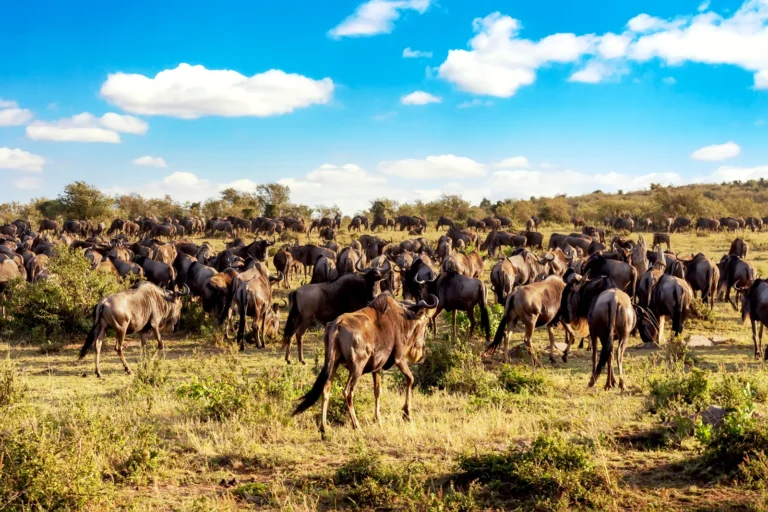
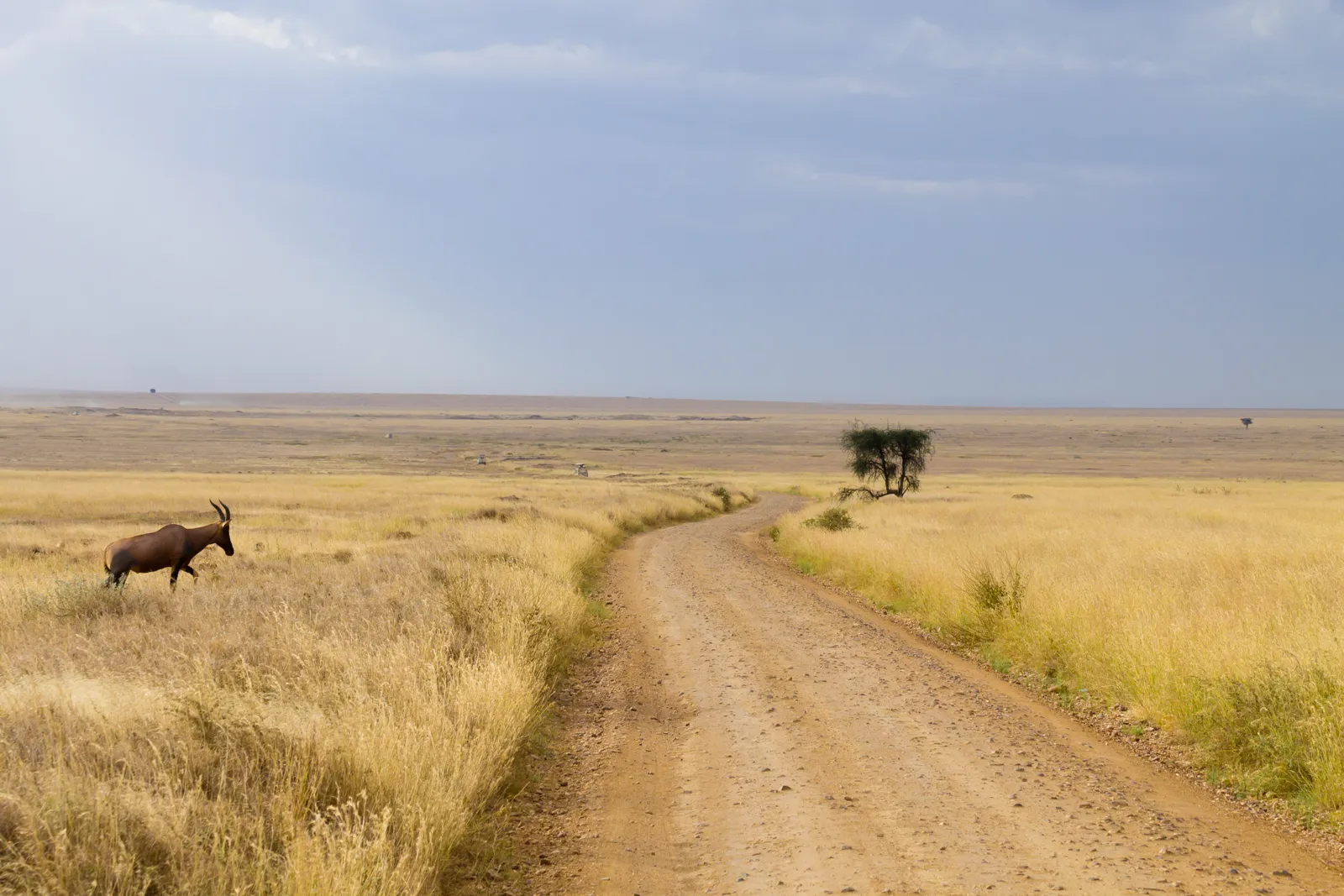
The best time to visit Tanzania is the dry season, from June to October: little or no rain in the north of the country, animals easy to spot around waterholes and ideal weather to combine safari and beach in Zanzibar. January and February make a second good window, hotter, which usually coincides with wildebeest calving in the southern Serengeti. The months to avoid are April and May, in the heart of the long rains.
The country has two rainy seasons: the « long rains » (roughly March to May) and the « short rains » (roughly November–December). Here is how to choose when to go to Tanzania, month by month, based on the official 1991–2020 climate normals of three stations: Kilimanjaro airport for the north and safaris, Dar es Salaam for the coast, and Zanzibar.

Our travel deals for Tanzania
Affiliate links: we earn a commission, at no extra cost to you.
 FlightsKiwi.comCompare flights and airline combinations to Tanzania.Compare flights
- eSIMAiraloData plan to install before you leave (eSIM-compatible phone).See plans


When to go to Tanzania and Zanzibar at a glance
- Best overall time June to October (dry season, safaris and beach)
- Second window January–February, hot and generally fairly dry, the usual period for wildebeest calving in the southern Serengeti
- Zanzibar June to October, then January–February; avoid April and May (more than 400 mm (15.7 in) of rain in April)
- Kilimanjaro January to March and June to October
- Long rains roughly March to May, peaking in April; some lodges and camps close
- Short rains roughly November to December, showers generally short
- Best value November, early December and March, outside the long rains
When to go to Tanzania by priority
- Best weather: July, August and September for a safari followed by beach; January and February are a good alternative
- Cheapest: November, early December, March and late May, outside the long rains; April and May are the cheapest but the wettest
- Fewest crowds: April–May and November, during the rains; October, still dry, is a good compromise
- Events: wildebeest calving in the southern Serengeti (usually January–February), Sauti za Busara festival in Zanzibar (March 19–21, 2027), Mara River crossings (usually July to September); check dates
Still undecided on the destination? Compare with our selection: where to go in July.
Tanzania: the calendar at a glance
✅ Best months: January, February, June, July, August, September, October, December
❌ Period to avoid: April
Tanzania climate: temperatures and rain month by month
The table below gives the normals of the Kilimanjaro airport station (891 m (2,923 ft) above sea level), between Arusha and Moshi. It is representative of the north of the country, the starting point for safaris to the Serengeti, Ngorongoro and Tarangire. Arusha, a little higher, is slightly cooler, and nights are cold on the heights of the Ngorongoro crater. Arusha, Moshi, the Serengeti and Tarangire are shown on our map of Tanzania.
| Month | Avg. max | Avg. min | Rain | Crowds | Prices | Verdict |
|---|---|---|---|---|---|---|
| January | 33.1 °C (92 °F) | 18.9 °C (66 °F) | 43 mm (1.7 in) | High | High | ✅ Hot and fairly dry |
| February | 33.7 °C (93 °F) | 19.0 °C (66 °F) | 39 mm (1.5 in) | High | High | ✅ Wildebeest calving in the southern Serengeti |
| March | 32.8 °C (91 °F) | 19.9 °C (68 °F) | 94 mm (3.7 in) | Moderate | Moderate | ⚠️ Start of the long rains |
| April | 29.8 °C (86 °F) | 20.0 °C (68 °F) | 132 mm (5.2 in) | Low | Low | ❌ The wettest month |
| May | 27.4 °C (81 °F) | 18.7 °C (66 °F) | 73 mm (2.9 in) | Low | Low | ⚠️ End of the long rains |
| June | 26.4 °C (80 °F) | 16.3 °C (61 °F) | 9 mm (0.35 in) | Moderate | Moderate → high | ✅ Start of the dry season |
| July | 26.2 °C (79 °F) | 15.1 °C (59 °F) | 4 mm (0.16 in) | Very high | Very high | ✅ Dry, cool at night |
| August | 27.4 °C (81 °F) | 15.4 °C (60 °F) | 6 mm (0.24 in) | Very high | Very high | ✅ Dry, high safari season |
| September | 29.6 °C (85 °F) | 16.0 °C (61 °F) | 5 mm (0.20 in) | High | High | ✅ Dry, animals around waterholes |
| October | 31.3 °C (88 °F) | 17.6 °C (64 °F) | 25 mm (1.0 in) | Moderate | Moderate | ✅ Still dry, fewer people |
| November | 31.9 °C (89 °F) | 19.1 °C (66 °F) | 51 mm (2.0 in) | Low | Moderate | ⚠️ Short rains, brief showers |
| December | 32.3 °C (90 °F) | 19.1 °C (66 °F) | 45 mm (1.8 in) | High (holidays) | High | ✅ Short rains easing, year-end holidays |
Sea temperature month by month
On the coast, in Dar es Salaam, the sea stays warm all year: 25 °C (77 °F) from July to September and 28 °C (82 °F) from December to April.
| Month | Dar es Salaam |
|---|---|
| January | 28 °C (82 °F) |
| February | 28 °C (82 °F) |
| March | 28 °C (82 °F) |
| April | 28 °C (82 °F) |
| May | 27 °C (81 °F) |
| June | 26 °C (79 °F) |
| July | 25 °C (77 °F) |
| August | 25 °C (77 °F) |
| September | 25 °C (77 °F) |
| October | 26 °C (79 °F) |
| November | 27 °C (81 °F) |
| December | 28 °C (82 °F) |
Seasons in Tanzania: pros and cons
Dry season (June to October): the high safari season
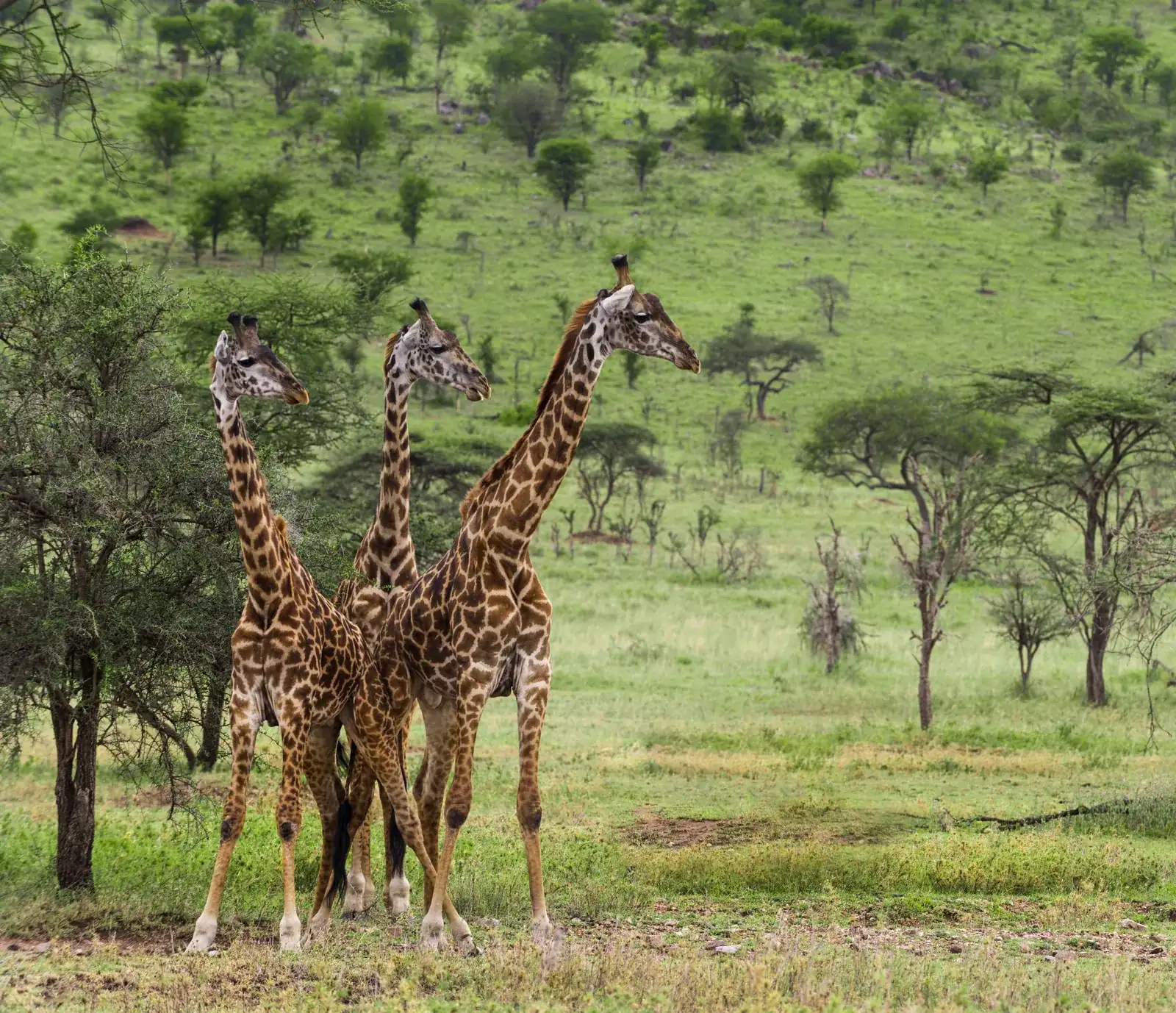
This is the most in-demand period. At Kilimanjaro airport, less than 10 mm (0.39 in) of rain falls a month from June to September. Vegetation dries out, the grass is short and animals gather near rivers and waterholes, which makes wildlife viewing easier. Temperatures are also the mildest of the year: about 26 °C (79 °F) in the afternoon and 15 °C (59 °F) at night in July.
- Pros: easier wildlife viewing, passable tracks, few mosquitoes, a very good time for Zanzibar and for climbing Kilimanjaro
- Cons: prices at their highest and lodges full early in July–August, many vehicles at the famous sites of the Serengeti and Ngorongoro
- Our tip: September and October offer conditions as good as July–August, with slightly fewer crowds
Short rains (November–December): an in-between season
The short rains generally arrive in November. They are mostly showers or thunderstorms, often late in the day, that do not prevent safaris. In the north, totals stay moderate (about 50 mm (2.0 in) in November at Kilimanjaro airport). On the coast and in Zanzibar they are heavier: 201 mm (7.9 in) in November in Zanzibar.
Hot, fairly dry season (January–February)
Between the two rainy seasons, January and February are hot (more than 33 °C (91 °F) in the afternoon at Kilimanjaro airport and in Zanzibar) and generally fairly dry. It is a good time to combine safari and beach, to climb Kilimanjaro and, usually, to see the wildebeest calving in the southern Serengeti.
Long rains (March to May): the low season
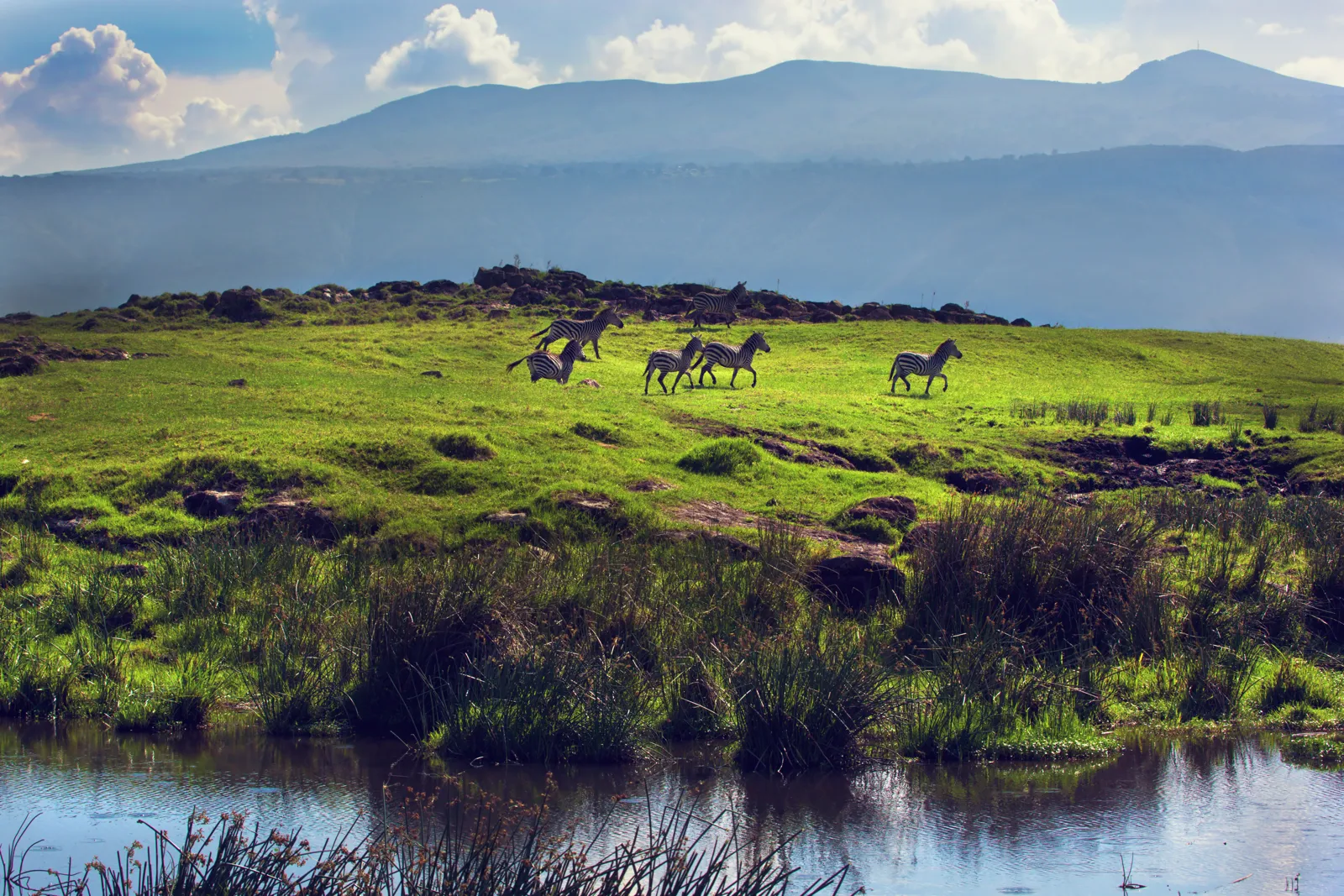
The long rains are the real season to avoid if you have a choice. April is the wettest month everywhere: 132 mm (5.2 in) at Kilimanjaro airport, 264 mm (10.4 in) in Dar es Salaam and 409 mm (16.1 in) in Zanzibar. Some tracks become difficult, and some safari camps and Zanzibar hotels close during this period.
- Pros: the lowest prices of the year, almost empty parks, very green landscapes
- Cons: heavy rain, muddy roads, reduced accommodation choice, sea often rough on the coast
- Who is it for? Small budgets willing to accept rainy days, preferably in March or late May
When to go to Tanzania by region
The differences come mainly from altitude: the northern safari region is drier and more temperate, while the coast and Zanzibar are hot, humid and wetter during the two rainy seasons. A comparison of the normals of three stations:
| Month | Kilimanjaro (north) | Dar es Salaam (coast) | Zanzibar |
|---|---|---|---|
| January | 33.1 °C (92 °F) / 43 mm (1.7 in) | 32.4 °C (90 °F) / 54 mm (2.1 in) | 32.6 °C (91 °F) / 74 mm (2.9 in) |
| February | 33.7 °C (93 °F) / 39 mm (1.5 in) | 32.8 °C (91 °F) / 71 mm (2.8 in) | 33.2 °C (92 °F) / 51 mm (2.0 in) |
| March | 32.8 °C (91 °F) / 94 mm (3.7 in) | 32.4 °C (90 °F) / 170 mm (6.7 in) | 32.5 °C (91 °F) / 177 mm (7.0 in) |
| April | 29.8 °C (86 °F) / 132 mm (5.2 in) | 31.1 °C (88 °F) / 264 mm (10.4 in) | 30.6 °C (87 °F) / 409 mm (16.1 in) |
| May | 27.4 °C (81 °F) / 73 mm (2.9 in) | 30.3 °C (87 °F) / 172 mm (6.8 in) | 29.7 °C (85 °F) / 298 mm (11.7 in) |
| June | 26.4 °C (80 °F) / 9 mm (0.35 in) | 30.0 °C (86 °F) / 31 mm (1.2 in) | 29.3 °C (85 °F) / 52 mm (2.0 in) |
| July | 26.2 °C (79 °F) / 4 mm (0.16 in) | 29.7 °C (85 °F) / 16 mm (0.63 in) | 29.0 °C (84 °F) / 31 mm (1.2 in) |
| August | 27.4 °C (81 °F) / 6 mm (0.24 in) | 30.1 °C (86 °F) / 18 mm (0.71 in) | 29.4 °C (85 °F) / 38 mm (1.5 in) |
| September | 29.6 °C (85 °F) / 5 mm (0.20 in) | 30.8 °C (87 °F) / 20 mm (0.79 in) | 30.4 °C (87 °F) / 37 mm (1.5 in) |
| October | 31.3 °C (88 °F) / 25 mm (1.0 in) | 31.5 °C (89 °F) / 77 mm (3.0 in) | 31.2 °C (88 °F) / 116 mm (4.6 in) |
| November | 31.9 °C (89 °F) / 51 mm (2.0 in) | 31.7 °C (89 °F) / 114 mm (4.5 in) | 31.0 °C (88 °F) / 201 mm (7.9 in) |
| December | 32.3 °C (90 °F) / 45 mm (1.8 in) | 32.1 °C (90 °F) / 110 mm (4.3 in) | 31.8 °C (89 °F) / 168 mm (6.6 in) |
In one table: the recommended period for each major region, month by month.
| Region | Jan | Feb | Mar | Apr | May | Jun | Jul | Aug | Sep | Oct | Nov | Dec |
|---|---|---|---|---|---|---|---|---|---|---|---|---|
| North: Serengeti, Ngorongoro, Tarangire | ✅ | ✅ | ⚠️ | ❌ | ❌ | ✅ | ✅ | ✅ | ✅ | ✅ | ⚠️ | ⚠️ |
| Kilimanjaro | ✅ | ✅ | ✅ | ❌ | ❌ | ✅ | ✅ | ✅ | ✅ | ✅ | ⚠️ | ⚠️ |
| South: Nyerere and Ruaha | ⚠️ | ⚠️ | ⚠️ | ❌ | ❌ | ✅ | ✅ | ✅ | ✅ | ✅ | ⚠️ | ⚠️ |
| Zanzibar | ✅ | ✅ | ⚠️ | ❌ | ❌ | ✅ | ✅ | ✅ | ✅ | ✅ | ⚠️ | ⚠️ |
The north: Arusha, Serengeti, Ngorongoro, Tarangire, Manyara
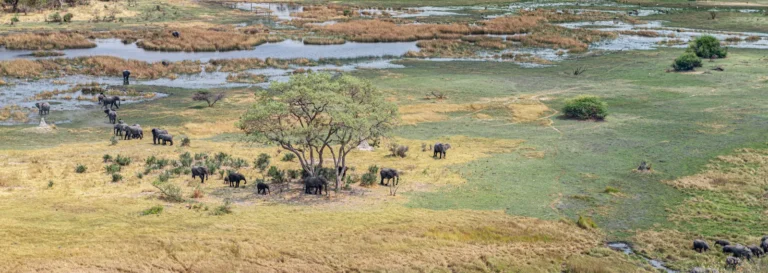
This is the region of the great safaris. The ideal period runs from June to October, then from January to February. Tarangire is particularly interesting in the dry season, when elephants gather along the river.
Kilimanjaro
Africa’s highest peak (5,895 m (19,341 ft)) is climbed mostly during the dry periods: January to March and June to October. During the long rains, trails are muddy and visibility is reduced.
The south: Nyerere (formerly Selous) and Ruaha
These large parks, less visited than the north, are best visited in the dry season, from June to October. During the long rains, some camps close.
When to go to Zanzibar
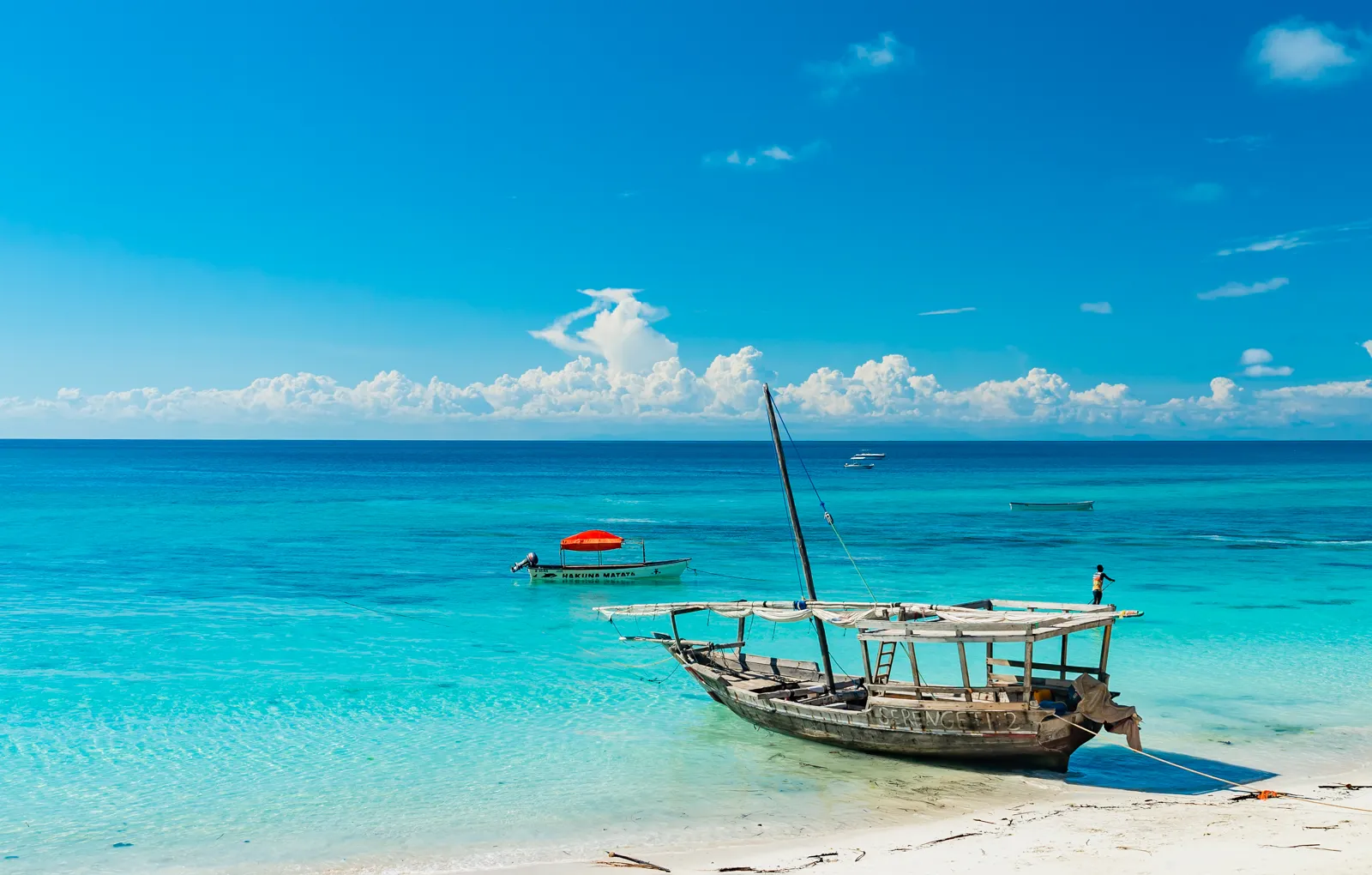
For Zanzibar, the best periods are June to October and January to February. From June to September, between 31 and 52 mm (1.2 and 2.0 in) of rain falls a month, with highs around 29–30 °C (84–86 °F): it is the most comfortable period. January and February are hotter (33 °C in the afternoon in February) but stay fairly dry. The island is, however, very wet in April (409 mm (16.1 in)) and May (298 mm (11.7 in)), in the heart of the long rains, and also gets the short rains in November–December. The month-by-month detail for the island is in our article when to go to Zanzibar.
| Month | Avg. max | Avg. min | Rain | Crowds | Prices | Verdict |
|---|---|---|---|---|---|---|
| January | 32.6 °C (91 °F) | 24.5 °C (76 °F) | 74 mm (2.9 in) | High | High | ✅ Hot, fairly dry |
| February | 33.2 °C (92 °F) | 24.3 °C (76 °F) | 51 mm (2.0 in) | High | High | ✅ The hottest, very warm sea |
| March | 32.5 °C (91 °F) | 24.5 °C (76 °F) | 177 mm (7.0 in) | Moderate | Moderate | ⚠️ Arrival of the long rains |
| April | 30.6 °C (87 °F) | 24.5 °C (76 °F) | 409 mm (16.1 in) | Low | Low | ❌ The wettest month |
| May | 29.7 °C (85 °F) | 23.8 °C (75 °F) | 298 mm (11.7 in) | Low | Low | ❌ Very rainy |
| June | 29.3 °C (85 °F) | 22.9 °C (73 °F) | 52 mm (2.0 in) | Moderate | Moderate | ✅ Fine weather returns |
| July | 29.0 °C (84 °F) | 22.1 °C (72 °F) | 31 mm (1.2 in) | Very high | Very high | ✅ The driest month |
| August | 29.4 °C (85 °F) | 21.1 °C (70 °F) | 38 mm (1.5 in) | Very high | Very high | ✅ Dry and breezy |
| September | 30.4 °C (87 °F) | 21.0 °C (70 °F) | 37 mm (1.5 in) | High | High | ✅ Dry, one of the best months |
| October | 31.2 °C (88 °F) | 22.0 °C (72 °F) | 116 mm (4.6 in) | Moderate | Moderate | ✅ Still pleasant, showers at the end of the month |
| November | 31.0 °C (88 °F) | 23.1 °C (74 °F) | 201 mm (7.9 in) | Low | Moderate | ⚠️ Short rains |
| December | 31.8 °C (89 °F) | 24.0 °C (75 °F) | 168 mm (6.6 in) | High (holidays) | High | ⚠️ Showers, high prices over the holidays |
A few points specific to the island:
- East and north coasts: the eastern beaches (Paje, Jambiani, Michamvi) have strong tides: at low tide the sea retreats far and swimming becomes difficult for part of the day. In the north (Nungwi, Kendwa), the tide has less effect on swimming.
- Winds and kitesurfing: the steady winds from June to September, then from December to February, make Paje a renowned kitesurf spot.
- Ramadan: according to GOV.UK (updated 20 October 2026), there is a high proportion of Muslims in Tanzania, particularly in Zanzibar and Pemba. During Ramadan, whose dates shift by about 11 days each year, avoid eating or drinking in public, outside hotels or restaurants, and dress modestly.
- Combining with a safari: domestic flights connect northern Tanzania to Zanzibar. The June to October dry season is ideal for this combination.
The Serengeti Great Migration: where and when to see it
More than a million wildebeest, accompanied by zebras and gazelles, move in a loop all year between Tanzania’s Serengeti and the Masai Mara reserve in Kenya, following the rains and fresh grass. The calendar below describes the cycle in general: it depends on the rains and shifts by several weeks from one year to the next.
| Period (usually) | Where are the herds? | What you can see |
|---|---|---|
| December to March | Southern Serengeti and the Ndutu area (Ngorongoro Conservation Area) | Calving, especially around January–February; many predators |
| April–May | Movement toward the center and west | Long rains: harder access |
| June–July | West (Grumeti corridor) then north | Grumeti River crossings |
| July to September | Northern Serengeti and Masai Mara (Kenya) | Mara River crossings |
| October–November | Return from the north toward the center and south | Herds on the move with the short rains |
When to go to Tanzania by type of trip
| Your trip | Best time | Where? |
|---|---|---|
| First safari | June to October | Tarangire, Ngorongoro, Serengeti |
| Wildebeest calving | Usually January–February | Southern Serengeti, Ndutu area |
| Mara River crossings | Usually July to September | Northern Serengeti |
| Safari + beach | June to October, January–February | Northern part of the country then Zanzibar |
| Beach only | June to October, January–February | Zanzibar (Nungwi, Kendwa, Paje), Pemba, Mafia |
| Climbing Kilimanjaro | January to March, June to October | Kilimanjaro National Park |
| Kitesurfing | June to September, December to February | Paje (Zanzibar) |
| Small budget | November, early December, March, late May | Northern part of the country, Zanzibar outside the long rains |
| Honeymoon | June to October, January–February | Serengeti then Zanzibar |
Major events to build into your trip
| Period | Event | Place |
|---|---|---|
| March 19 to 21, 2027 (usually February in other years) | Sauti za Busara festival (African music) | Stone Town, Zanzibar |
| Usually January–February | Wildebeest calving | Southern Serengeti, Ndutu |
| Usually June–July | Zanzibar International Film Festival (ZIFF) | Stone Town, Zanzibar |
| Usually July to September | Mara River crossings | Northern Serengeti |
| According to the lunar calendar | Ramadan and Eid al-Fitr | Zanzibar and the coast |
| Late December – early January | Year-end holidays (prices at their highest) | Lodges and beaches |
Tanzania weather month by month
January: Hot and fairly dry in the north and in Zanzibar. Start of the wildebeest calving period in the southern Serengeti. A good window for Kilimanjaro.
February: The hottest month (33.7 °C at Kilimanjaro airport, 33.2 °C (92 °F) in Zanzibar), usually the peak of calving. The Sauti za Busara festival, in Stone Town, usually takes place in February (in 2027, exceptionally March 19–21).
March: The long rains set in: 94 mm (3.7 in) in the north, 177 mm (7.0 in) in Zanzibar. Falling prices.
April: The wettest month everywhere (409 mm (16.1 in) in Zanzibar). Many camps and hotels close: avoid, unless on a small budget with great flexibility.
May: Still very rainy on the coast and in Zanzibar (298 mm (11.7 in)), improving in the north at the end of the month.
June: Start of the dry season: less than 10 mm (0.39 in) of rain in the north, fine weather returns in Zanzibar.
July: Dry and cool at night (15 °C in the north), the driest month in Zanzibar. Very high demand: book early. First Mara crossings possible.
August: High safari season, Mara River crossings usually at their best. Prices at their highest.
September: Still dry, animals concentrated around waterholes, slightly fewer people than in August. One of the best months for Zanzibar.
October: End of the dry season, heat rising. A very good month for a safari at gentler prices. First showers in Zanzibar at the end of the month.
November: Short rains: brief showers in the north, heavier in Zanzibar (201 mm (7.9 in)). Good value.
December: Short rains easing in the north, herds returning toward the southern Serengeti. Very high prices and crowds over the holidays.
When to book your trip to Tanzania
For a safari in July–August or over the year-end holidays, book 6 to 9 months ahead: well-placed lodges and camps, especially in the northern Serengeti during the Mara crossings, have limited capacity. For the other dry-season months and for January–February, 3 to 6 months is generally enough.
Planning your trip to Tanzania
- Entry requirements: see the entry requirements for Tanzania in our country guide. According to GOV.UK (updated 20 October 2026), all visitors to mainland Tanzania and Zanzibar, except residents, must have mandatory Tanzanian government-provided inbound travel insurance, even if they already have a personal policy.
- Time difference: Tanzania is on UTC+3 all year with no clock change: 3 hours ahead of London in winter and 2 in summer; 8 hours ahead of New York in winter and 7 in summer.
- Currency: the Tanzanian shilling (TZS). Use our currency converter to estimate your budget.
- Health: GOV.UK (updated 20 October 2026) lists dengue, malaria and cholera among the health risks: get vaccine and malaria advice well before departure. A yellow fever certificate is required if you are coming from a country listed as a transmission risk; according to travel.state.gov (last updated September 3, 2026), this includes 12+ hour airport transit and layovers in such countries.
- Plastic bags: they are banned in Tanzania; travelers arriving by air are asked to hand them over on arrival (GOV.UK), so do not pack any.
To go further, see our complete Tanzania travel guide. For another Indian Ocean island, see also when to go to Mauritius.
Frequently asked questions
What is the best month to visit Tanzania?
For a safari followed by a few beach days, July, August and September are the most favorable months: dry season in the north, animals easy to spot and fine weather in Zanzibar. September and October are slightly less crowded. January and February are a good alternative.
When is the best time to go to Zanzibar?
From June to October, then in January–February. July is the driest month, with 31 mm (1.2 in) of rain on average according to the official normals. Avoid April (409 mm (16.1 in)) and May (298 mm (11.7 in)), the wettest months.
When can you see the Great Migration in Tanzania?
The cycle varies each year with the rains. In general, wildebeest calving takes place in the southern Serengeti around January–February, and the Mara River crossings in the north of the park around July–September. Ask your agency or Tanzania National Parks (TANAPA) for the year of your trip.
What is the cheapest time to go to Tanzania?
The long rains, from March to May, are the cheapest period, but many accommodations close in April–May. November and early December offer a better compromise between price and weather.
When should you climb Kilimanjaro?
During the dry periods: from January to March and from June to October. Avoid April and May, the wettest months. At the summit it is cold all year, especially at night.
What is the weather like in Tanzania in July and August?
This is the heart of the dry season. At Kilimanjaro airport (north of the country), the normals give about 26 to 27 °C (79 to 81 °F) in the afternoon, 15 °C (59 °F) at night and less than 10 mm (0.39 in) of rain a month. Pack a fleece for safari mornings and the heights of Ngorongoro. It is also the most in-demand period: book early.
Our sources
- World Meteorological Organization, 1991–2020 climate normals (NOAA archive): Kilimanjaro Airport, Dar es Salaam (Julius Nyerere airport) and Zanzibar stations
- Entry, health and cultural information retrieved on 26 October 2026: UK FCDO, foreign travel advice for Tanzania (GOV.UK, updated 20 October 2026), and U.S. Department of State, Tanzania country information (travel.state.gov, last updated September 3, 2026)
- Deutscher Wetterdienst (DWD), Klimatafel for Dar es Salaam: average sea water temperature
- Our methodology
Updated November 2026.
To plan the rest of your trip, see our Tanzania travel guide (what to see, itineraries, budget). Hesitating with a neighboring country? See when to go to Kenya.