The best time to visit Zanzibar is June to October, then January to February. From June to September, between 31 and 52 mm (1.2 and 2.0 in) of rain falls a month, on only 4 to 6 days, with highs around 29–30 °C (84–86 °F): it is the most comfortable season. January and February are hotter (33 °C in the afternoon in February) but are the months with the fewest rainy days. April and May are best avoided: these are the long rains, with more than 400 mm (15.7 in) in April.
Zanzibar lies 6° south of the equator: temperatures vary little, and it is the two rainy seasons that set the rhythm of the year. The « long rains » fall from March to May, the « short rains » in November–December. To know when to go to Zanzibar and what the climate is like month by month, the figures on this page are the official 1991–2020 normals of the Zanzibar weather station, next to the airport, published by the World Meteorological Organization.
Safety: the UK FCDO (GOV.UK, updated 20 October 2026) advises against all but essential travel within 20 km (12 mi) of the Tanzania-Mozambique border (Cabo Delgado province), in the Mtwara area, and reports incidents in Zanzibar in Stone Town, at hotels and on popular tourist beaches. Details in our Zanzibar guide.

Our travel deals for Zanzibar
Affiliate links: we earn a commission, at no extra cost to you.
 FlightsKiwi.comCompare flights and airline combinations to Zanzibar.Compare flights
- eSIMAiraloData plan to install before you leave (eSIM-compatible phone).See plans


When to go to Zanzibar at a glance
- Best time June to October (driest in July, 31 mm (1.2 in)), then January–February
- Months to avoid April (409 mm (16.1 in), 17 to 18 rainy days) and May (298 mm (11.7 in))
- Short rains November–December, about 170 to 200 mm (6.7 to 7.9 in) a month, often in showers
- Temperatures 29 to 33 °C (84 to 91 °F) in the afternoon all year; coolest nights in August–September (21 °C)
- High season July–August and the year-end holidays
- Kitesurfing steady winds from June to September, then from December to February, on the east coast
When to go to Zanzibar by priority
- Best weather: June to October, then January–February
- Cheapest: early March, late May, June and November
- Fewest crowds: June and September, with the same weather as July–August
- Events: Sauti za Busara festival on March 19–21, 2027, film festival (ZIFF) usually late June–July, Mwaka Kogwa usually in July
September is one of the best months in Zanzibar: compare with our ideas for traveling in September.
Zanzibar: the calendar at a glance
✅ Best months: January, February, June, July, August, September, October
❌ Period to avoid: April, may
Zanzibar climate: temperatures and rain month by month
The table below gives the normals of the Zanzibar station, at 18 m (59 ft) above sea level near the airport, a few kilometers south of Stone Town. As the island is small and flat, these values give a good idea of the climate of the northern, eastern and southern beaches.
| Month | Avg. max | Avg. min | Rain | Crowds | Prices | Verdict |
|---|---|---|---|---|---|---|
| January | 32.6 °C (91 °F) | 24.5 °C (76 °F) | 74 mm (2.9 in) | High | High | ✅ Hot, few rainy days |
| February | 33.2 °C (92 °F) | 24.3 °C (76 °F) | 51 mm (2.0 in) | High | High | ✅ The hottest month, the fewest rainy days |
| March | 32.5 °C (91 °F) | 24.5 °C (76 °F) | 177 mm (7.0 in) | Moderate | Moderate | ⚠️ Arrival of the long rains |
| April | 30.6 °C (87 °F) | 24.5 °C (76 °F) | 409 mm (16.1 in) | Low | Low | ❌ The wettest month |
| May | 29.7 °C (85 °F) | 23.8 °C (75 °F) | 298 mm (11.7 in) | Low | Low | ❌ Very rainy, hotels sometimes closed |
| June | 29.3 °C (85 °F) | 22.9 °C (73 °F) | 52 mm (2.0 in) | Moderate | Moderate → high | ✅ Fine weather returns |
| July | 29.0 °C (84 °F) | 22.1 °C (72 °F) | 31 mm (1.2 in) | Very high | Very high | ✅ The driest month |
| August | 29.4 °C (85 °F) | 21.1 °C (70 °F) | 38 mm (1.5 in) | Very high | Very high | ✅ Dry, breezy, cooler nights |
| September | 30.4 °C (87 °F) | 21.0 °C (70 °F) | 37 mm (1.5 in) | High | High | ✅ Dry, one of the best months |
| October | 31.2 °C (88 °F) | 22.0 °C (72 °F) | 116 mm (4.6 in) | Moderate | Moderate | ✅ Often pleasant, showers possible |
| November | 31.0 °C (88 °F) | 23.1 °C (74 °F) | 201 mm (7.9 in) | Low | Moderate | ⚠️ Short rains |
| December | 31.8 °C (89 °F) | 24.0 °C (75 °F) | 168 mm (6.6 in) | High (holidays) | High | ⚠️ Showers, high prices over the holidays |
Rain in Zanzibar: number of days and year-to-year variation
The monthly total does not tell the whole story: a single heavy downpour can lift a month’s average. The number of rainy days confirms that February, July, June and September are the months when it rains least often.
| Month | Rainy days (≥ 1 mm (0.04 in)) | Heavy-rain days (≥ 10 mm (0.4 in)) | Lowest and highest total (1991–2020) |
|---|---|---|---|
| January | 5.6 | 2.2 | 0 to 277 mm (0.0 to 10.9 in) |
| February | 3.6 | 1.4 | 0 to 258 mm (0.0 to 10.2 in) |
| March | 11.0 | 5.1 | 30 to 425 mm (1.2 to 16.7 in) |
| April | 17.5 | 9.6 | 32 to 812 mm (1.3 to 32.0 in) |
| May | 13.8 | 7.3 | 28 to 838 mm (1.1 to 33.0 in) |
| June | 5.3 | 1.8 | 0 to 196 mm (0.0 to 7.7 in) |
| July | 4.3 | 0.9 | 0 to 133 mm (0.0 to 5.2 in) |
| August | 6.0 | 0.9 | 4 to 105 mm (0.16 to 4.1 in) |
| September | 5.1 | 0.9 | 1 to 147 mm (0.04 to 5.8 in) |
| October | 6.9 | 2.7 | 4 to 530 mm (0.16 to 20.9 in) |
| November | 13.7 | 6.2 | 31 to 393 mm (1.2 to 15.5 in) |
| December | 12.2 | 5.2 | 30 to 412 mm (1.2 to 16.2 in) |
October is more variable than it looks: its average (116 mm (4.6 in)) is pulled up by a few very wet years, such as 2019 (530 mm (20.9 in)), while three years out of five it receives less than 97 mm (3.8 in). And April and May can be extreme: more than 800 mm (31.5 in) were measured in April 2020 and May 2019, and the station recorded up to 203 mm (8.0 in) in a single day (April 17, 2020).
On the heat side, the station has 28 to 30 days above 30 °C (86 °F) in January, February and March, against 5 in July; days above 35 °C (95 °F) remain rare (about 6 a year).
Seasons in Zanzibar: pros and cons
Dry season (June to October): the high season
Little rain, highs around 29–30 °C (84–86 °F) and cooler nights (21 °C in August–September). The south-east wind, the kusi, cools the air and attracts kitesurfers to Paje. It is also the dry safari season in the north of the country.
- Pros: often clear skies, bearable heat, ideal after a safari
- Cons: prices at their highest in July–August, hotels in the north and east full early, wind sometimes strong on the east coast
- Our tip: June and September offer the same weather as July–August, with fewer people
Hot, dry season (January–February): escaping the northern winter
January and February are the hottest months (32.6 and 33.2 °C (91 and 92 °F)) and those with the fewest rainy days (5.6 and 3.6). The wind turns north-east (kaskazi). A very good time to escape the northern winter.
- Pros: sun, warm sea, can be combined with the wildebeest calving in the southern Serengeti
- Cons: humid heat, high prices in early January; Ramadan partly falls in this period in 2027
Long rains (March to May): the low season
The rains arrive in March (177 mm (7.0 in)) and peak in April (409 mm (16.1 in), more than 17 rainy days). Heavy downpours, sometimes whole days of rain; some hotels and restaurants close in April–May.
- Pros: lowest prices, a very quiet island, green vegetation
- Cons: flooded roads in places, canceled excursions, reduced choice, more mosquitoes
Short rains (November–December): an in-between season
About 200 mm (7.9 in) in November and 170 mm (6.7 in) in December, over 12 to 14 days, mostly in showers or thunderstorms. Moderate prices until mid-December.
Zanzibar, Dar es Salaam and northern Tanzania: comparison
Normals for the country’s three main gateways:
| Month | Zanzibar | Dar es Salaam (coast) | Kilimanjaro (north, safaris) |
|---|---|---|---|
| January | 32.6 °C (91 °F) / 74 mm (2.9 in) | 32.4 °C (90 °F) / 54 mm (2.1 in) | 33.1 °C (92 °F) / 43 mm (1.7 in) |
| February | 33.2 °C (92 °F) / 51 mm (2.0 in) | 32.8 °C (91 °F) / 71 mm (2.8 in) | 33.7 °C (93 °F) / 39 mm (1.5 in) |
| March | 32.5 °C (91 °F) / 177 mm (7.0 in) | 32.4 °C (90 °F) / 170 mm (6.7 in) | 32.8 °C (91 °F) / 94 mm (3.7 in) |
| April | 30.6 °C (87 °F) / 409 mm (16.1 in) | 31.1 °C (88 °F) / 264 mm (10.4 in) | 29.8 °C (86 °F) / 132 mm (5.2 in) |
| May | 29.7 °C (85 °F) / 298 mm (11.7 in) | 30.3 °C (87 °F) / 172 mm (6.8 in) | 27.4 °C (81 °F) / 73 mm (2.9 in) |
| June | 29.3 °C (85 °F) / 52 mm (2.0 in) | 30.0 °C (86 °F) / 31 mm (1.2 in) | 26.4 °C (80 °F) / 9 mm (0.35 in) |
| July | 29.0 °C (84 °F) / 31 mm (1.2 in) | 29.7 °C (85 °F) / 16 mm (0.63 in) | 26.2 °C (79 °F) / 4 mm (0.16 in) |
| August | 29.4 °C (85 °F) / 38 mm (1.5 in) | 30.1 °C (86 °F) / 18 mm (0.71 in) | 27.4 °C (81 °F) / 6 mm (0.24 in) |
| September | 30.4 °C (87 °F) / 37 mm (1.5 in) | 30.8 °C (87 °F) / 20 mm (0.79 in) | 29.6 °C (85 °F) / 5 mm (0.20 in) |
| October | 31.2 °C (88 °F) / 116 mm (4.6 in) | 31.5 °C (89 °F) / 77 mm (3.0 in) | 31.3 °C (88 °F) / 25 mm (1.0 in) |
| November | 31.0 °C (88 °F) / 201 mm (7.9 in) | 31.7 °C (89 °F) / 114 mm (4.5 in) | 31.9 °C (89 °F) / 51 mm (2.0 in) |
| December | 31.8 °C (89 °F) / 168 mm (6.6 in) | 32.1 °C (90 °F) / 110 mm (4.3 in) | 32.3 °C (90 °F) / 45 mm (1.8 in) |
Zanzibar receives clearly more rain than the northern safari region during the two wet seasons, but both regions share the same good window from June to October. For the parks, the Great Migration and Kilimanjaro, see our article when to go to Tanzania.
Coasts and tides: what changes from one beach to another
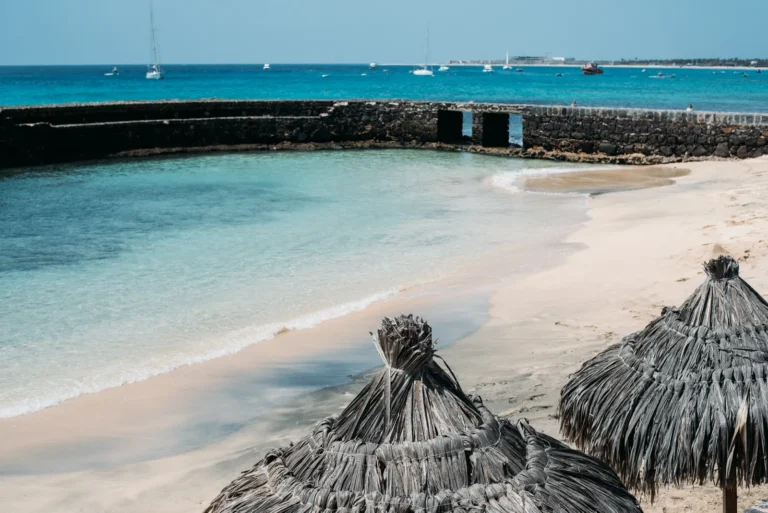
The climate is the same across the island; what changes is the wind and the tide. In the north (Nungwi, Kendwa), swimming is possible at almost any time: it is the best choice in July–August, when the wind blows hard on the east coast. In the east (Paje, Jambiani), the sea retreats very far at low tide, especially around the full and new moon, and the steady wind delights kitesurfers. Details by coast in our Zanzibar guide.
When to go to Zanzibar by type of trip
| Your trip | Best time | Where? |
|---|---|---|
| Beach and swimming | June to October, January–February | Nungwi, Kendwa (swimming at any time) |
| Safari then beach | June to October, January–February | Northern Tanzania then Zanzibar |
| Kitesurfing | June to September, December to February | Paje, Jambiani |
| Diving and snorkeling | Outside the rainy seasons: June to October, January–February | Mnemba Atoll, Pemba, Mafia |
| Stone Town and culture | June to February outside the heavy rains; March 19–21, 2027 for Sauti za Busara | Stone Town |
| Honeymoon | June to October, January–February | North-east, Nungwi, Michamvi |
| Small budget | Early March, late May, June, November | Paje, Jambiani, Stone Town |
Major events to build into your trip
| Period | Event | Place |
|---|---|---|
| January 12 | Zanzibar Revolution Day (public holiday) | Whole island |
| March 19 to 21, 2027 (usually February or March) | Sauti za Busara festival (African music) | Stone Town |
| According to the lunar calendar | Ramadan then Eid al-Fitr; in 2027, Ramadan should begin in early February | Whole island |
| Usually late June – July | Zanzibar International Film Festival (ZIFF) | Stone Town |
| Usually July | Mwaka Kogwa, a traditional New Year festival | Makunduchi (south of the island) |
| Late December – early January | Year-end holidays (prices and crowds at their highest) | Beach hotels |
Ramadan in practice: according to GOV.UK (updated 20 October 2026), there is a high proportion of Muslims in Tanzania, particularly in Zanzibar and Pemba. During Ramadan, avoid eating or drinking in public, outside hotels or restaurants, and dress modestly.
Zanzibar weather month by month
January: Hot (32.6 °C) and few rainy days (5.6). North-east wind good for kitesurfing. See also our selection where to go in January.
February: The hottest month (33.2 °C) and the fewest rainy days (3.6). In 2027, probable start of Ramadan; the Sauti za Busara festival is moved to March 19–21.
March: Arrival of the long rains (177 mm (7.0 in), 11 days). Falling prices.
April: The wettest month (409 mm (16.1 in), 17 to 18 rainy days). Best avoided.
May: Still very rainy (298 mm (11.7 in)), improving at the end of the month. Lowest prices, reduced choice.
June: Dry weather returns (52 mm (2.0 in), 5 days). A very good month, still quiet.
July: The driest month (31 mm (1.2 in)). High season: book early.
August: Dry and breezy, the coolest nights of the year (21 °C). Prices at their highest, strong wind on the east coast.
September: Still dry (37 mm (1.5 in)), fewer people than in August: one of the best months of the year.
October: Often pleasant and quieter, but very wet in some years.
November: Short rains (201 mm (7.9 in), 14 days), often in showers. Moderate prices. See also where to go in November.
December: Showers (168 mm (6.6 in)), quiet until mid-December then strong demand over the holidays. See also where to go in December.
When to book your trip to Zanzibar
For July–August and the holidays, book 4 to 6 months ahead: well-located hotels in the north and north-east fill up fast. With a safari, lodges often need more notice. For the other good months, 2 to 4 months is generally enough.
Planning your trip to Zanzibar
- Entry requirements: see the entry requirements for Tanzania in our country guide. According to GOV.UK (updated 20 October 2026), all visitors except residents must have mandatory Tanzanian government-provided inbound travel insurance, even if they already have a personal policy.
- Time difference: Tanzania is on UTC+3 all year: 3 hours ahead of London in winter and 2 in summer; 8 hours ahead of New York in winter and 7 in summer.
- Currency: the Tanzanian shilling (TZS). Our currency converter helps you estimate your budget.
- Health: GOV.UK (updated 20 October 2026) lists dengue, malaria and cholera among the health risks: protect yourself from mosquito bites and get vaccine and malaria advice well before departure. A yellow fever certificate is required if you are coming from a country listed as a transmission risk (GOV.UK).
- Do not pack plastic bags: they are banned for environmental reasons, and travelers arriving by air are asked to hand them over on arrival (GOV.UK).
On the ground, see our Zanzibar travel guide and our Tanzania guide. Other Indian Ocean islands: when to go to Mauritius and when to go to the Seychelles.
Frequently asked questions
What is the best month to visit Zanzibar?
July is the least rainy month (31 mm (1.2 in) of rain on average according to the 1991–2020 normals), but it is also the most in demand. June and September offer almost as dry weather with fewer people. February is the month with the fewest rainy days, with more marked heat.
What is the rainy season in Zanzibar?
There are two: the long rains from March to May, peaking in April (409 mm (16.1 in)), and the short rains in November–December (about 170 to 200 mm (6.7 to 7.9 in) a month). The rest of the year is relatively dry.
Can you go to Zanzibar in April or May?
It is possible, but not recommended if you come for the beach: it rains more than 17 days in April on average, some years exceed 800 mm (31.5 in), and several hotels close. Prices, however, are the lowest of the year.
When is the best time to combine safari and Zanzibar?
From June to October, when the dry season prevails over both the parks of northern Tanzania and the island. January–February is a good, hotter alternative.
Do tides depend on the season?
No. Tides follow the moon: they are strongest around the full moon and new moon, every month of the year. On the east coast, check a tide table to know when to swim.
What is the weather like in Zanzibar in July?
July is the driest month of the year: 31 mm (1.2 in) of rain on average over about 4 days, with 29 °C (84 °F) in the afternoon and 22 °C (72 °F) at night (1991–2020 normals for the Zanzibar station). It is also the high season: book early.
What is the climate in Zanzibar?
A hot tropical climate all year (29 to 33 °C (84 to 91 °F) in the afternoon), shaped by two rainy seasons: the long rains from March to May (409 mm (16.1 in) in April) and the short rains in November–December. The dry season runs from June to October, with a second dry window in January–February.
Our sources
- Zanzibar: 1991–2020 normals for the Zanzibar station (Kisauni airport, WMO station 63870), published by the World Meteorological Organization (NOAA archive)
- Dar es Salaam and Kilimanjaro: 1991–2020 normals for the Kilimanjaro Airport and Dar es Salaam (Julius Nyerere airport) stations, published by the World Meteorological Organization (NOAA archive)
- Entry, safety, health and cultural information retrieved on 26 October 2026: UK FCDO, foreign travel advice for Tanzania (GOV.UK, updated 20 October 2026), and U.S. Department of State, Tanzania country information (travel.state.gov, last updated September 3, 2026)
- Our methodology
Updated November 2026.
To plan the rest of your trip, see our Zanzibar travel guide (what to see, which coast, where to stay). Hesitating with another Indian Ocean coast? See when to go to Mozambique, or combine with a safari: when to go to Kenya.