Since 1 April 2026, a foreign visitor (non-SADC) pays N$280 per adult to enter Etosha National Park, N$180 for ages 8 to 16 and nothing up to age 8, plus N$60 for a car with 10 seats or fewer, according to the Namibian Ministry of Environment (MEFT) fee schedule. The gates open and close with the sun, and their times change every Monday. This page sets out the official fee schedule, the 2026 gate calendar published by Namibia Wildlife Resorts (NWR), the park rules and what they mean for driving in the park.
Etosha is the highlight of a Namibia itinerary: to plan the trip, see our Namibia travel guide and our page on Windhoek, the arrival point for international flights.

Our travel deals for Etosha National Park
Affiliate links: we earn a commission, at no extra cost to you.
 FlightsKiwi.comCompare flights and airline combinations to Etosha National Park.Compare flights
- eSIMAiraloData plan to install before you leave (eSIM-compatible phone).See plans


Etosha National Park: key facts
- Entry fees (foreigners outside SADC): N$280 per adult, N$180 for ages 8 to 16, free up to age 8; vehicle with 10 seats or fewer: N$60 — checked on 27 October 2026 on nwr.com.na (MEFT fee schedule)
- Hours: gates open from sunrise to sunset; in 2026, from 06:09 to 19:39 at the longest and from 07:29 to 18:25 at the shortest (NWR calendar, which changes every Monday).
- Key rule: it is prohibited to leave a camp before sunrise, to arrive at one after sunset, or to cross the park boundaries between sunset and sunrise (park regulations).
- Area: 22,935 km² (8,855 sq mi), park first proclaimed in 1907 (MEFT).
- Accommodation in the park: Okaukuejo, Halali, Namutoni, Dolomite and Onkoshi camps and the Olifantsrus campsite (NWR).
Etosha in numbers
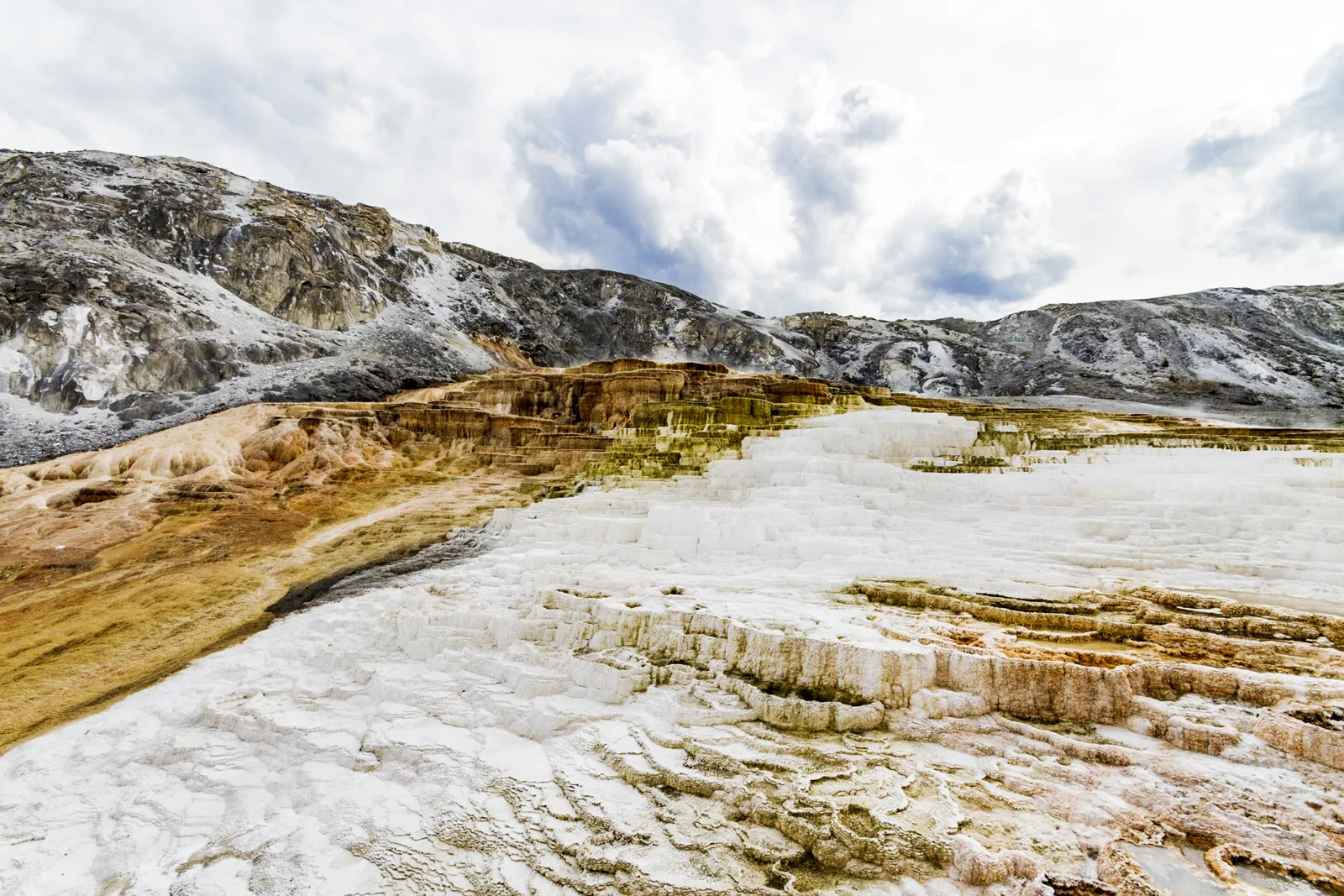
MEFT describes Etosha as a park dominated by a vast salt pan and several small ones, on flat, open veld; the only hills are around Halali and in the far west. The name is said to come from the Oshindonga word « Etotha », « the place where nothing grows ».
| Item | Value according to MEFT |
|---|---|
| Area | 22,935 km² (8,855 sq mi) |
| First proclaimed | 1907 |
| Mammals | 114 species |
| Birds | More than 400 species (407 recorded) |
| Large mammals mentioned | Elephant, black and white rhino, lion, leopard, giraffe, eland, Burchell’s zebra, springbok, blue wildebeest, gemsbok, black-faced impala, Damara dik-dik |
| Floodlit waterholes | Okaukuejo, Halali, Namutoni |
The ministry highlights Etosha’s long tradition of black rhino conservation, where the white rhino was reintroduced more recently. The camp waterholes are the park’s great strength: at Okaukuejo, you can watch black rhinos, lions and elephants there at night.
Entry fees: the official 2026 schedule
MEFT revised its entry fees after public consultation; the circular of 15 January 2026 sets the new schedule from 1 April 2026. Etosha belongs to the most expensive category, along with Namib-Naukluft (excluding Sandwich Harbour), Skeleton Coast, Waterberg and Cape Cross. Each total adds an entry fee and a conservation fee in equal parts.
| Category | Entry fee | Conservation fee | Total |
|---|---|---|---|
| Age 8 and under (all nationalities) | Free | Free | Free |
| Over 8 and under 16, foreigners outside SADC | N$90 | N$90 | N$180 |
| Over 8 and under 16, SADC nationals | N$50 | N$50 | N$100 |
| Adult, foreigners outside SADC | N$140 | N$140 | N$280 |
| Adult, SADC nationals | N$90 | N$90 | N$180 |
| Adult, Namibians | N$30 | N$30 | N$60 |
| Vehicle with 10 seats or fewer | N$30 | N$30 | N$60 |
| Vehicle with 11 to 25 seats | N$75 | N$75 | N$150 |
For a couple with a rental car, entry therefore comes to 2 × N$280 + N$60 = N$620 per entry (Destination de Voyage calculation based on the MEFT schedule). Visitors from the United States or the United Kingdom are not SADC nationals, so the « Other foreign nationals » rate applies. Bring an ID document to show at the gate.
Gate times: they follow the sun
NWR publishes the official calendar of Etosha gate opening and closing times each year, with this note: times change every Monday. The park regulations prohibit leaving a camp before sunrise or arriving at one after sunset. We cross-referenced this calendar with our astronomical calculation, on the 15th of each month.
| Month | Gates open (NWR 2026) | Gates close (NWR 2026) | Sunrise (calculated) | Sunset (calculated) |
|---|---|---|---|---|
| January | 06:30 | 19:39 | 06:30 | 19:40 |
| February | 06:47 | 19:32 | 06:48 | 19:31 |
| March | 06:57 | 19:13 | 06:58 | 19:11 |
| April | 07:06 | 18:45 | 07:06 | 18:46 |
| May | 07:15 | 18:29 | 07:16 | 18:29 |
| June | 07:27 | 18:26 | 07:27 | 18:26 |
| July | 07:29 | 18:35 | 07:30 | 18:34 |
| August | 07:18 | 18:44 | 07:17 | 18:44 |
| September | 06:50 | 18:51 | 06:52 | 18:51 |
| October | 06:26 | 18:57 | 06:26 | 18:57 |
| November | 06:11 | 19:09 | 06:10 | 19:11 |
| December | 06:13 | 19:30 | 06:12 | 19:29 |
What the comparison shows: the gates open and close within a few minutes of the calculated sunrise and sunset, all year round. In June and July the safari day is shortest (gates open from 07:29 to 18:25 at the end of June); in December and January it exceeds thirteen hours. Time your last drive to the camp well before closing time: distances between waterholes are long and speed is limited.
Park rules
The park regulations (Park Regulations, « Conditions » section) list what is prohibited by law. The points that directly concern a visitor in a car:
- leaving a camp before sunrise, arriving at one after sunset, or crossing the park boundaries between sunset and sunrise;
- spending the night anywhere other than in a camp;
- driving off the signposted roads, or faster than the official limit;
- getting out of the vehicle or leaning out anywhere other than in a camp or an allocated campsite;
- entering the park in an open vehicle or on the back of a truck without a protective cage;
- killing, injuring or needlessly disturbing an animal, or picking or uprooting a plant;
- making noise, dropping litter, lighting fires outside the fireplaces provided, bringing a pet, or hitchhiking.
The regulations also ask you to report your arrival to the nearest management office and state that you visit at your own risk.
Where to sleep: the park camps
NWR, a state-owned company, runs the accommodation inside the park. According to MEFT, Okaukuejo has chalets by the waterhole, rooms and a campsite, with a restaurant, shop and swimming pool; Halali has chalets, rooms and a campsite; Namutoni has chalets, rooms and a campsite, with restaurants and a craft shop. Dolomite, in the west, gives access to a restricted part of the park for a limited number of visitors, in permanent tents; Onkoshi has 15 units. NWR also mentions the Olifantsrus campsite and guided day and night safaris.
Booking your safari or accommodation in Etosha
There are two ways to visit: self-drive with a rental car, or on an organized tour. In both cases, book nights in the park early, as they are the only way to be on site when the gates open and to enjoy the floodlit waterholes. When booking, check whether entry fees are included, and for how many days. On 27 October 2026, NWR stated that its online booking system was unavailable and referred visitors to its reservations email address.
Common mistakes to avoid
- Relying on old prices: the schedule changed on 1 April 2026.
- Arriving at the gate or a camp after sunset: it is prohibited by the regulations.
- Getting out of the vehicle for a photo outside the camps.
- Leaving too little time before the gates close: distances between waterholes are long and speed is limited.
- Booking the park camps too late.
What to see nearby
For visas and passports, see entry requirements for Namibia.
- Windhoek: the capital and international airport.
- The best time to visit Namibia: dry season, rainy season and official normals.
- Botswana: the Okavango Delta and Chobe, as an extension.
- Safari in Africa: compare the big parks.
- Serengeti: the other great safari, in East Africa.
Frequently asked questions
How much does it cost to enter Etosha National Park?
Since 1 April 2026, N$280 per foreign adult outside SADC, N$180 for ages 8 to 16, free up to age 8, plus N$60 for a vehicle with 10 seats or fewer (MEFT schedule, checked on 27 October 2026).
What are Etosha’s opening hours?
The gates open at sunrise and close at sunset; in 2026, NWR publishes a calendar that changes every Monday, from 06:09 to 19:39 at the longest and from 07:29 to 18:25 at the shortest.
Can you visit Etosha without a guide?
Yes, by car, on the signposted roads. The regulations prohibit getting out of the vehicle outside the camps, driving off the roads and driving after sunset.
How big is Etosha?
22,935 km² (8,855 sq mi) according to the Namibian Ministry of Environment, which dates the park’s first proclamation to 1907.
Do you need a 4×4 for Etosha?
The park regulations we read only prohibit open vehicles and truck beds without a protective cage; they do not mention a 4×4 requirement. Check the conditions of your rental contract.
Can you sleep in Etosha National Park?
Yes, in the camps run by NWR (Okaukuejo, Halali, Namutoni, Dolomite, Onkoshi, Olifantsrus). Spending the night anywhere other than in a camp is prohibited.
Our sources
- Ministry of Environment, Forestry and Tourism (MEFT): « Etosha National Park » page, consulted on 27 October 2026
- MEFT: entry and conservation fee schedule from 1 April 2026 (circular of 15 January 2026), consulted on 27 October 2026
- Namibia Wildlife Resorts: Etosha gate times 2026, park regulations and Etosha page, consulted on 27 October 2026
- Coordinates of Okaukuejo: Wikipedia
- Sunrise, sunset and day length: Destination de Voyage calculation, NOAA solar algorithm, Africa/Windhoek time zone, coordinates of Okaukuejo (Wikipedia), on the 15th of each month (year 2027)
- Our methodology
Updated November 2026. Prices, hours and access rules may change: check official sources before you go.